But when you pray, go into your room and shut the door and pray to your Father who is in secret. And your Father who sees in secret will reward you. Matthew 6:6 (ESV)
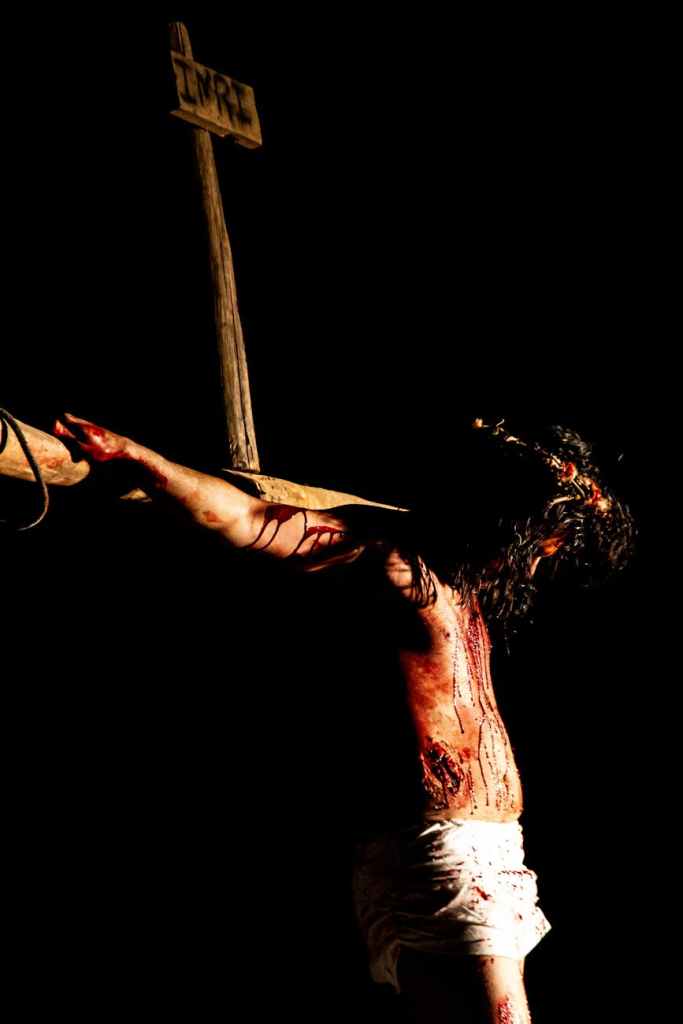
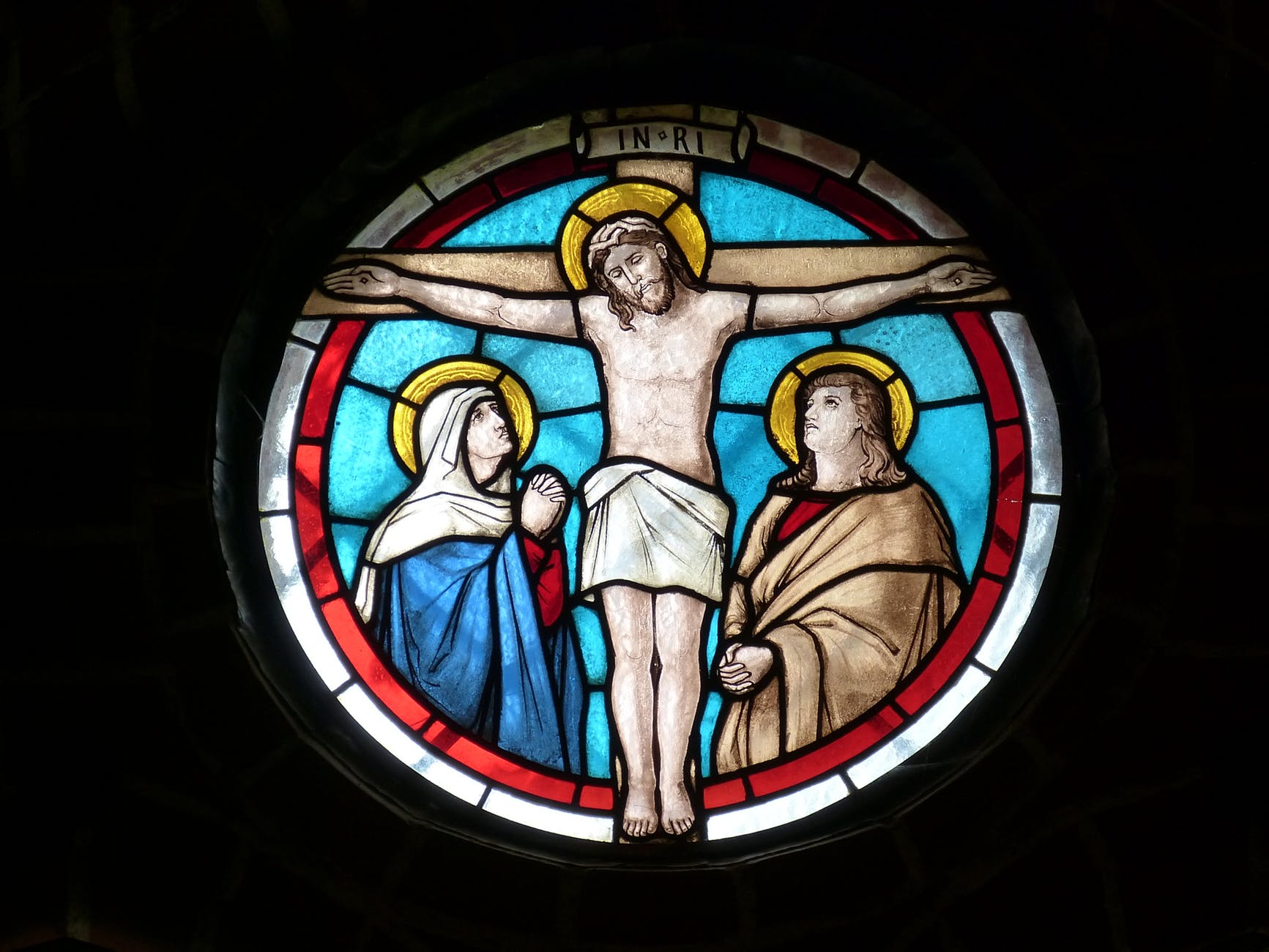
Prayer can sometimes seem like a cowardly action. It seems passive; it relies on faith and, often, patience. We connect courage to action– courageous people DO something; cowards sit on the sidelines or hide in their closets. Yet Jesus told His disciples to go into their rooms or closets, close the door, and pray in secret. Jesus himself often went out into the desert to pray alone. Jesus’s ministry was filled with passive moments. He spoke, or he walked along from town to town. He stopped to heal people by touching them or speaking to them. He rarely raised his voice or let his temper show. He allowed himself to be arrested, tried, sentenced, beaten, and crucified, without making a vigorous defense or protesting his horrific and unjust treatment. On the cross, his one impassioned outburst was a prayer to His Father–“My God, My God, why have you forsaken me?” (Mark 15:34)
We don’t think of Jesus as a coward. Yet, we often sneer at Christians who spend more time praying and less time “doing.” Being active is not a bad thing. Jesus commanded His disciples with many active words– “GO,” “teach,” “feed My sheep.” And there are busy people who are courageous in their own way. They go into dangerous places to preach the Gospel. They risk their health and safety to reach the lost with the Good News that Jesus Saves! They stand firm for the truth, and they defend it with vigor and passion. But Jesus also commanded His disciples to “Follow Me.” That means that we need to look at and model our lives after the ways that Jesus responded to various situations, and how He lived. The question we often ask is “what would Jesus do?” But the real question we should ask is “what did Jesus DO?”
Jesus prayed. He prayed for people; He prayed with people; and He prayed alone for hours and even days. And Jesus prayed courageous prayers. He didn’t pray “safe” prayers. Even His anguished prayer in the garden ended with courageous and humble resignation– “Father, if you are willing, remove this cup from me. Nevertheless, not my will, but yours, be done.” (Luke 22:42) Jesus also engaged lovingly and personally with the kinds of people that others ignored or wrote off or dismissed as broken, damaged, or irredeemable.
Just this week, a young Christian apologist and conservative speaker, Charlie Kirk, was assassinated. He was well-known and admired (or detested) for speaking up about family values, and Christian principles on American college campuses. He often faced hostile critics and smug detractors– atheists, anarchists, and those who called him a racist, a homophobe/transphobe, a bigot, and a “hater.” I never met Mr. Kirk. I watched some of the videos his group posted of him patiently and passionately arguing for marriage, faith, morality, hard work, ethical behavior, and national issues like immigration reform, tariffs, and foreign policy matters. I respected much of what he said, and some of how he said it. One of the things I most respected was his commitment to listening and asking questions, instead of merely attacking. But the most amazing thing about Mr. Kirk was his passionate and outspoken commitment to Jesus Christ. His faith was the center of everything he said, and in the way he interacted with supporters and detractors alike. He did not shy away from difficult questions, and he rarely resorted to easy answers, but he always pointed others to the example and the words of Jesus.
In the wake of his death, many people are asking, “What now?” Mr. Kirk was articulate, passionate, and willing to put himself in danger in order to defend the truth and his personal views. He trusted God to use him, and he was willing to pay a horrible price– being hated, threatened, and ultimately shot to death–to do what he saw as God’s work. He left behind a family (wife and two children), several close friends, and a host of people who followed him on social media and looked to him as a Godly example. Fellow Christians, while we may grieve his loss here, rejoice that he is Home with his Savior for eternity. But many people are wondering what will happen if no one steps forward to take his place and carry on his mission. While I believe that many young people will be inspired to speak out and engage in discussions, I don’t think most of us are meant to step into a spotlight. I think we NEED more people who will commit to going into their closets and pray. While Mr. Kirk put himself in the public arena, there have been hundreds and thousands of people praying for him. They continue to pray for his family, his outreach organization, “Turning Point”, and they even pray for those who instigated and committed this violence.
Prayer is NOT cowardly. Prayer warriors are needed to intercede, to call on Heaven’s Armies to continue in the age-old battle. We should be willing to have the difficult conversations when they arise. Some of us will be called to initiate such conversations openly and with fierce determination. And we should all be ready to “give a reason for the hope that is in you” (1 Peter 3:15) even when it is with “trembling and fear.” And we should always remember to be humble and show kindness, even to those who despise us. But some of us need to be lifting up those who are being attacked. Some of us need to pray more boldly, more often, and more confidently in light of the violence that has exploded in our world. We need to pray, not just for the Charlie Kirks of the world, but for the salvation of all the would-be assassins. We need to pray for the hearts and minds of those who want to argue and “cancel” all those who stand for God’s Word. And for all those who do not know the truth, who are confused, befuddled, or deceived.
We need those who can be courageous– whether in the public square or in a private room.
Today is Memorial Day. For anyone who is unfamiliar with the American holiday, also known as Decoration Day, it is a day set aside primarily to honor soldiers who were killed in battle. In recent years, it has come under some criticism from those who feel that it celebrates a culture of war, or that it places too much focus on the past– especially a past that has been idealized at the expense of progress. Instead, it has become a time of recreation– backyard barbecues, beach parties, and bargain hunting at flea markets and yard sales.
But much of the real focus of Memorial Day has been lost. Memorials should not be used to idolize or idealize the past; but they serve a purpose in reminding us of hard lessons and the need to keep learning from them. Memorial Day is not about being thrilled or puffed up by our past– it is to be reminded of both the good and the bad, and the need to see the larger picture. We have inherited both freedoms and frustrations; triumphs that came at the expense of others, and trials that will impact future generations. It is right and good that we take time to reflect on such things.
The Bible gives us several examples of memorials– signs and altars and ceremonies that are meant to call things to memory. Some of the memorials involve battles, but many more involve both promises and prophecy. We are to remember God’s faithfulness; His power to rescue, redeem, and restore.
Our greatest memorial as Christians, is not a soldier’s tomb– it is the Empty Tomb! It is the reminder that our greatest battle has already been won, and the one who died to bring us the victory has conquered both Sin and Death.
For God so Loved the world, that He gave His only Begotten Son, that whosoever believeth in Him should not perish, but have everlasting Life. (John 3:16 KJV)
Memorial Day is also a good time to remember others in prayer– pray for those who have lost loved ones in the service of our nation; but also those who sacrifice daily for their families, communities, and around the world. Pray for wisdom and opportunity to serve others around us better. Pray for healing and grace– for those who fight internal battles with unforgiveness, betrayal, guilt, vengeance, and more. And don’t forget praise– thank God for His redemptive plan; for the victory won; for the sufficiency of His grace. Thank others around you for their services and sacrifices. Finally, as we honor the sacrifices of others, let’s look for ways we can serve one another better.
Yesterday was Mother’s Day here, celebrating and honoring the mothers in our lives. Mother’s Day can be a wonderful day of celebration. But it can also be one of the most painful days of the year. Millions of women each year face acute heartbreak on this day– instead of celebration, they face the haunting memories of abandonment or separation, infertility, miscarriage, infant deaths, broken relationships, missed opportunities, regrets, suicide, and the loss of their own mothers. There are no cheery greeting cards or perky flower baskets that can erase that kind of gut-wrenching pain– no pithy words or consolation gift that makes this day easy or comfortable.
I have an awesome mother-in-law, the world’s best sister, world-class sisters-in-law, a remarkable step-daughter, daughter-in-law, granddaughter, and a host of other wonderful women in my life. I love being an auntie, step-mom, daughter-in-law, (step) grandma, great-aunt, and great-grand-aunt! I love that I am still in touch with former students and story hour kids, Sunday School and Bible School attendees, and others I have had the honor to mentor. So I celebrate Mother’s Day and honor those people and all the ways their lives have impacted mine, and (hopefully) my life has connected with theirs.
But none of that chases away the ache of never having a child of my own– never knowing the joy of tucking my own child into bed; never being able to kiss away a boo-boo or a bad dream and say the words, “Mommy loves you.” None of that will bring back my beloved mom or grandma my favorite aunts, mentors and friends who are gone. I miss them more each year; I miss their wisdom, their strength, their comfort.
Maybe because of my own experience, I’m more attuned to it, but I see and hear a lot of pain around this time each year. My heart goes out to all of the women with empty arms– the women who had to bury a huge chunk of their heart along with a child they can never hold; the women who had to say goodbye to the only one who could ever reassure them that, “Mommy loves you.”
My prayer today is that you would know that even in those moments when your heart is crushed, and your arms ache to hold or be held, that you are not alone; you are not forgotten. God knows the aching loss of seeing his only son on the cross as he took his last gasping breath before he died. Jesus experienced the sting of rejection from the people who should have called him brother, and “Father.” Throughout the Bible, God gave us examples of women (Eve, Sarah, Hagar, Rebecca, Leah, Rachel, Hannah, Elizabeth, Mary and others) who knew the ache of barrenness, rejection, strife, and loss of children. God saw their pain; he heard their cries of distress and their prayers. He sees you too. He hears you. He loves you beyond anything you can imagine, and beyond where any grief, guilt, or despair can take you.
More than this, he has promised to be close to the poor in spirit, those who mourn, the broken-hearted, and to those who need rest and comfort. He promises his presence, and he promises to turn our mourning into joy and bring us peace. He is eager to restore us, to renew our strength, and to reassure us that we are loved with an everlasting love. God created us in his image– and that includes the image of a mother hen gathering chicks, It includes the image of Mary who wrapped the God of the Universe in swaddling cloths and tucked him into a manger of hay, and who watched as that same God of the Universe died for her.
God knows the passion, the pain, and the pure love of a woman’s heart– even when “Mother’s Day” hurts.
“‘Holy, holy, holy| is the Lord God Almighty, who was, and is, and is to come.” Revelation 4:8b (NIV)
Not so much a name of God as a description of His Character, the word Holy means “sacred, separate or set apart, morally blameless; complete; whole; lacking nothing; worthy of worship.” God is Holy. There is no force, no person, no entity who can rival God or be a peer of God. Satan is not God’s equal. Sin, death, evil, none of these can successfully oppose God, or cause Him to stumble or challenge Him. God is Supreme– Alone in His Power and Glory and Sovereignty.
I pray to a Holy God. I pray with the guidance of His Holy Spirit. I follow Christ, who demonstrated Holiness in human form during His time on earth. Sinless perfection, He walked among sinful men and women, healing, teaching, and showing perfect Love and Mercy.
We live in a world that constantly questions this aspect of God. How can a Holy God allow people to suffer injustice, doubts and struggles, and even death? Surely, this is a mistake! God must have failed at some point, or we would live in a perfect world.
God doesn’t make mistakes! And sometimes, that is a concept that can be difficult to fully comprehend. Yes, we know God is “good.” And we know He is powerful. But He is so much more than that. He is without guilt, without doubt, without confusion, without failure. When I see and experience injustice or disease, disappointment, misunderstanding, exhaustion, grief–these are not from God. They come from a fallen world in rebellion against our perfect maker.
Except we once did! Adam and Eve lived in the Garden of Eden, and God provided for their every need. They didn’t need clothing– it never got cold, and the insects, animals, and plants posed no threats. They didn’t need the Law, because they walked with God and knew only good. They didn’t need jobs or houses, money or banks, governments, medicine, dictionaries, alarm clocks or Wikipedia. God didn’t sin– they did. And God didn’t get caught by surprise by the Fall– He already had planned for mankind’s redemption. God didn’t fail. He was, is, and will always be Holy.
This also means He is always “wholly” sufficient for our every need. Even the needs to be understood and to be rescued from our own failures. God, who is Holy, sent His Holy Son to live IN our fallen world– to taste OUR failure, and to set things right. Whatever we suffer now is not God’s “fault,” and it has already been made right in His perfect plan. He understands our temporary pain and suffering differently than we do, because He sees the finished product– our renewal, redemption, and “perfection” in Him!
So I am very thankful today for the Holiness of God. It is something I cannot fully understand until I experience it first-hand, but I can trust in it, put my hope in it, and LIVE in the promise of it, even when I stumble, fail, and struggle.
Then sings my soul, my Savior God to Thee; How great Thou art, how great Thou art!
Clouds dot the cerulean sky, A gentle breeze whispers, And flowers nod as I walk A country path. Then sings my soul.
Trees bow and rain coils, Gales roar and city streets Shiver as I wait In sheltered awe. Then sings my soul.
A newborn nestles in my arms Making sucking noises In its slumber, As arms and legs Learn to measure open space. Then sings my soul.
Families gather in black Murmuring comfort In somber tones As they learn to Measure the empty space. Then sings my soul.
How Great Thou Art! How awesome in power! How glorious your Creation! How mysterious your ways! How lavish in Life, And triumphant over Death!
My souls sings; Sometimes sweet and low, And sometimes keening. My soul dances; It reels and skips and sways. My soul cries and laughs and trills. But always, it says, “How Great Thou Art!”
Abraham put the wood on Isaac’s shoulder, but he carried the hot coals and the knife. As the two of them walked along, Isaac said, “Father, we have the coals and the wood, but where is the lamb for the sacrifice?” “My son,” Abraham answered, “God will provide the lamb.” (Genesis 22:6-8 Contemporary English Version)
The next day John saw Jesus coming toward him and said, “Look, the Lamb of God, who takes away the sin of the world! (John 1:29 NIV)
After this I looked, and there before me was a great multitude that no one could count, from every nation, tribe, people and language, standing before the throne and before the Lamb. They were wearing white robes and were holding palm branches in their hands. 10 And they cried out in a loud voice: “Salvation belongs to our God, who sits on the throne, and to the Lamb.” (Revelation 7:9-10 NIV)
In my last post, I spoke of Jesus being “The Good Shepherd.” But He is also the Lamb– the Lamb of God, who takes away the sin of the world! This image may seem to contrast with the previous Names of God– names full of authority, power, might, wisdom, and strength. A lamb is powerless and has no authority. So, what can this name possibly tell us about God?
From the beginning, God used a lamb to represent innocence and sacrifice. Cain and Abel brought sacrifices to God– Cain brought crops he had grown; Abel brought a lamb. God was pleased with Abel’s sacrifice, more than Cain’s. The Bible doesn’t spell out exactly why, but I think the context of the rest of the Bible gives us a clue. When God gave His laws and regulations to the nation of Israel, He specified that the sacrifice for sin, for guilt, for peace, and for worship were to be animals–pure and innocent– their blood the factor that would bring atonement and peace. The innocent lambs would be killed, their blood poured out on the ground, their meat sacrificed on the altar, and the rest of their bodies (skin, bones, offal, etc.,) taken outside of the camp and destroyed. Vegetables, bread, herbs, wine– these could all be offered as free-will offerings, but they were not to be used for sacrifice. And the lambs (or other animals) had to be spotless and free of disease or disfigurement– perfect.
Sin is death– it doesn’t just bring disruption– it is fatal. Because God is HOLY, He cannot dismiss Sin with a shrug and say, “humans will be humans…”, or “it’s ok this once…” or “at least you learned your lesson.” But because the world is infected with Sin, even lambs and goats are not good enough to fully remove the stain and sentence of Sin. Only Holiness could do that.
Jesus is the Lamb of God. Just as Abel offered a lamb for a sacrifice; just as Abraham was ready and willing to offer his beloved son of the promise, God offered His only begotten Son as the only possible perfect sacrifice for Sin. Jesus came as a helpless, powerless babe. He lived a humble and obedient life of service and sacrifice. And He became the ultimate Sacrifice on the Cross.
Jesus is also the victorious Lamb of Revelation, worthy of all praise and adoration! God’s Might and Power are equaled only by His Grace and Lovingkindness. He is both Shepherd and warrior– fiercely protective of His people– and the sacrificial Servant Lamb who humbly serves both God and mankind. He is NOT a lamb without power or authority. But He willingly lays aside all the trappings of authority in order to teach us how to obey and follow Him.
He is God ALMIGHTY, and Ruler of All– but He is also gentle and humble. I do not pray to a God who is far off, aloof, distant, or unfeeling. I pray to the Lamb of God who was wounded for me, who willingly offered to become the sacrifice for my sins, and who died the death I deserved. And I pray to the Lamb who rose victorious, making what should have been the darkest day of history Good Friday!
What does it mean when I pray to “the Alpha and the Omega?”
“I am the Alpha and the Omega,” says the Lord God, “who is, and who was, and who is to come, the Almighty.” Revelation 1:8 (NIV)
God exists. He is not bound by space or time. He was, and is, and will always be. And He is LORD of all that is, or was, or is to come. He is the source of all things, and they do not exist before or after or beyond Him.
As that relates to prayer– there is NOTHING that can take God by surprise; nothing that can exhaust His energy or His resources; nothing He has begun that won’t be completed; nothing lost that cannot be recovered or renewed. I can pray to Him about the most hopeless situation, knowing that God has already seen it from beginning to end.
He is Alpha– “The Beginning”–Except that God has no beginning or end. We do, and we understand time as a linear function. Everything else that we experience has a beginning, a middle, and an end in time. Dawn signals the beginning of the day; sunset marks the end of the day. Weeks, months, and years all have a beginning and an end. Our life cycle has a beginning and an end– we are conceived and born; we live; and we die. But we have a God-given curiosity to know “beyond” our own beginning. We study to see what came before us– history, genealogy, archaeology, paleontology– we want to know where we came from. And this is distinctly human. Cats don’t wonder about their lineage; dolphins don’t scour the seabed looking for bones and shells that may tell them about their ancestors. Humans, created in the image of God, want to understand and experience eternity past. And that is what God is– He was before the beginning. He is the source of our beginning. The Apostle John sums it up:
In the beginning was the Word, and the Word was with God, and the Word was God. 2 He was in the beginning with God. 3 All things were created through Him, and without Him nothing was created that was created. 4 In Him was life, and the life was the light of mankind. 5 The light shines in darkness, but the darkness has not overcome it. John 1:1-5 (Modern English Version)
He is Omega–“The Ending”–God has no end. But we do (at least our earthly life does). We do not want to think of death as the “end.” Scientists are constantly trying to explain what happens “after” death. And in spite of those who claim that there is “nothing,” most people have a hope (or dread) of what comes next. Even those who do not “know” God have a sense of immortality and eternity. We obsess about our “impact” our “legacy” on earth. How will we be remembered by those who come after? How long will our name still be part of someone’s memory or history? What is our ultimate destiny? Our ultimate “end” is to be with God. It is our purpose. It is how our earthly lives will be judged to have had real meaning. Was God our beginning and our end? Was He our first and last priority? Our best and highest thought? Heaven awaits us. There will be an “end” to life as we know it. But for those who trust in Jesus, there will be no endless darkness or soulless existence:
No longer will there be any curse. The throne of God and of the Lamb will be in the city, and his servants will serve him. 4 They will see his face, and his name will be on their foreheads. 5 There will be no more night. They will not need the light of a lamp or the light of the sun, for the Lord God will give them light. And they will reign for ever and ever. Revelation 22:3-5 (NIV)
When I pray to God, I’m not praying to the God of the Old Testament, the God of Ages Past, or the God of my parents– well, I AM– but more than that, I am praying to the God who always was, who surrounds me every second of NOW, and who will always be exactly as He always has been– Almighty, All-Knowing, Holy, Abundant, Gracious, Loving, Trustworthy, and All-Sufficient.
When I was growing up, there was a man in our church named Mr. Teeter. He seemed impossibly old when I was a child– he’d been born in the 1800s! And he and his wife often looked like they were still living in the previous century. Mrs. Teeter wore dark-colored dresses that came past her calf, sturdy shoes, and a white cap over her carefully arranged, long white hair. Mr. Teeter always wore a suit to church, complete with a gray fedora. Mr. and Mrs. Teeter were both short–he was probably no taller than 5’4″, and she barely cleared five feet in height.
One of the weekly church meetings we attended was mid-week prayer meeting. Sometimes, we would start with worship and singing. Various people would call out old favorite hymns. Sometimes we had a pianist; sometimes we sang a Capella. And almost invariably, Mr. Teeter would request the same old hymn. He liked other hymns–“What a Friend We Have in Jesus,” or “He Lives! He Lives! I know He lives; He lives within my heart.” But his clear favorite was “I Love to Tell the Story.”
As a child, I found this frustrating. First of all, I liked to sing a variety of songs; this one was NOT one of my favorites, and I thought we were “wasting time” by always singing the same old songs. Secondly, because of his age, everyone deferred to Mr. Teeter, so even if other songs were called out, it was a given that his choice would probably win out.
But one evening, Mr. Teeter explained WHY he loved this old hymn so much. He said he had lived a rough life in his younger years– he drank more than he should, and he had a short temper. I was shocked. I could not imagine this tiny, wrinkled, gentle man as being anything other than how I knew him. He was dapper, soft-spoken, kind, and wise. When his wife suffered a stroke, he patiently and lovingly cared for her. He was generous and compassionate, even if I thought his musical taste was more limited than it might have been.
Instead of singing the song, he read it aloud. And after a couple of phrases, he would linger and talk about how, all these years later, he was still in love with the simple Gospel message– that Christ died for sinners, rose again and offered forgiveness and redemption to all who believed in Him. Mr. Teeter had never forgotten the joy and wonder of his Salvation. He never tired of “the old, old story” because it had changed his life in a dramatic and eternally satisfying way. Mr. Teeter died when I was still a teenager. He had cared for his wife until she died, and he was at peace when it came time to leave his life on earth. In fact, his face almost glowed as he lay in his casket. He was absent from the body, and ready to sing the “new, new song.”
There was nothing slick or intellectually challenging about Mr. Teeter’s testimony, but it was very real and powerfully moving. There was nothing musically exciting about the song he loved, but the message was eternally true, and worth singing over and over again. So many years later, whenever I hear this timeless hymn, I am reminded of how Jesus changed my life, and how grateful I am to sing His praises.
Today, as I remember Mr. Teeter and his faithful witness of God’s love and mercy, I pray that you know the simple and enduring truth of Christ’s love for you. And I pray that we would be as faithful in proclaiming the “Old, Old story of Jesus and His Love” as we go through life.
I’m very grateful for all the many blessings that God has given me– for Salvation, most of all. But God has blessed me with family, health, freedom, and so many other wonderful things. But there are several things God didn’t give me. Some of them are things I wanted (or thought I needed!) Others are things I never even imagined.
God didn’t give me a pony when I was younger. God didn’t give me blonde hair. God didn’t give me the genetics to be 5’9″ tall, athletic, and thin– I never became a ballerina or a model. God didn’t make it possible for me to study in France my junior year of college like I had wanted. God didn’t see fit to make “Mr. Right” fall in love with me in high school or college. God didn’t give me children to raise. God didn’t let my father live long enough to walk me down the aisle when I finally got married. And I never won the lottery (probably because I don’t play!– but still…)
It’s very human to look around and see what others have that we might desire– things that God did not choose to give us; even things that God has taken from us–and feel resentment, envy, and even anger. But we rarely look at those things others have that we would NOT desire. And we rarely look back and see how things we thought we wanted would not have been good for us, or how God removed things from our lives–even good things–for a better purpose. Sometimes, we cannot know or understand such things this side of heaven. But it might be a good practice once in awhile to look back and see what God DIDN’T give us– and thank Him for His wisdom and provision!
God allowed me to get chicken pox as a child– but He didn’t let me get Polio, or Diphtheria, Scarlet Fever or Whooping Cough. God didn’t give me blue eyes like my dad– but He didn’t give me Dad’s color-blindness, either. God prevented me from going on a date with one cute and popular boy who asked me out in high school. And the one in college. And the one I worked with. But God delivered me to my husband a virgin, and free of the guilt and shame of a string of failed relationships. God took my father at age 68. But He healed my father after a heart attack at age 50 (the reason I never got to study in France). We had and “extra” 18 years with Dad, and while Dad was sick most of the last years of his life, we didn’t have to see him suffer years of pain, misery, and helplessness. And about that semester in France? Some of my friends went that year– and they were plagued by injuries, nationwide strikes, and other issues. God knew what I wanted in each case; He also knew what was best for me.
A couple of years ago, I was diagnosed with Diabetes. God did not “give” me Diabetes. (That’s another mistake we often make.) God gives good gifts. (James 1:17) But we live in a fallen and imperfect world. Disease, injustice, pain, and heartache are part of this world. Someday, God will redeem the world and put an end to all of these, but for now, there is no guarantee that God will keep us in perfect health or happiness. So, I’m Diabetic. I’m not grateful because I have the disease, but I am grateful for so many things related to it. I am grateful that I live in a time when treatments are both available and accessible. I am grateful that I was diagnosed, rather than suffering a coma or dying without help. I am grateful that I have access to healthful foods and the ability to exercise– two things necessary to keep the Diabetes under control. I am grateful that I lived for so many years without the disease. I am grateful for a supportive husband and family members who help keep me motivated. And I am grateful that nothing about having Diabetes changes IN ANY WAY God’s love for me, and His plans to give me eternal life in Him!
Are there things, people, or situations in your life that God DIDN’T give you? Healing that was denied, or blessings withheld? Hurtful things that He allowed to happen in your life? That He took away from your life? God doesn’t want us to pretend that all is perfect in our world. He knows the pain of NOT getting what we wanted, and the agony of losing what we did want. But He also knows the joy that we haven’t yet experienced– the joy of renewal; the joy of restoration; and the joy of completion.
God didn’t give me a pony– nor the hard work of caring for it, or the heartbreak of losing it. God didn’t let me date the popular boy– but He gave me a man of gentleness and integrity. God didn’t give me children to raise, but He gave me grown children, and grandchildren to love. God didn’t “give” me the semester in France, but He did give me opportunities to meet people from France. He gave me opportunities to use the French language I studied– in Florida, Texas, and even the Dominican Republic! God didn’t let my father walk me down the aisle at my wedding. But He allowed Dad and David to meet and even know each other– years before we were married. God didn’t give me perfect health here on Earth– but there will be no disease or death in Heaven.
Thank you, God, for all that you have given me– even Diabetes–and for all that you have allowed to shape my life. Help me see You in every detail of my life– the pleasant, the painful, the difficult, and the mysterious– and to praise You in every circumstance. Thank you for today, and for all the plans you have for it, and for me. Thank You for being You!
We are preparing for Advent season. We celebrate the coming of our Savior, and His humble birth in Bethlehem over 2000 years ago. We count down the days with advent calendars, candles, and other traditions. And it can be difficult to wait for Christmas Eve and Christmas Day to come.
But imagine those people who lived BEFORE the Advent…those who held the promise, but had not seen it fulfilled. Imagine waiting an entire lifetime without ever hearing the Good News– He is Here! The Messiah has come!
There are promises and hints and prophecies throughout the Bible in what we call the “Old Testament.” And the New Testament is filled with the story of Jesus’ life, death, resurrection, and rule, as well as the outcome of His mission to bring Salvation and Hope to a darkened world. But in between the two testaments there stretches a period of nearly 400 years when God was silent.
I get frustrated when I have to wait 45 minutes at the doctor’s office! Imagine listening to stories from grandparents and elders about promises made a thousand years before, knowing that there was no word, no glimmer of fulfillment for over a dozen generations or more!
And yet, we celebrate the glory of the fulfillment. And on the strength of that glory, and Jesus’ teachings, we are waiting for His triumphant return. A return that hasn’t come in nearly 2000 years.
The difference for us is that we live in the aftermath of the Advent. He HAS already come. He HAS Risen! He has assured us of His return– with His own mouth, in His own words. How long will we have to wait? Will He return within our lifetime? Christians have been asking this question for almost 100 generations now, but we ask with wonder and hope.
The mystery of Advent has become the mystery of the Revelation. We don’t just celebrate the promise given to Abraham or Moses– we celebrate the ongoing promise of Eternity– past and present and future.
I’m reminded of the classic tale by Charles DIckens– A Christmas Carol– where Ebenezer Scrooge is visited by three spirits. He is transported to his own past, sees the present through a different lens, and gets a terrifying glimpse into the future he can expect if he does not repent of his ways. So much of the tale is dark and foreboding, but the ending is rapturous– almost literally. Scrooge’s life has been a narrow life, filled with bitterness, greed, and fear. He spends much of his Christmas Eve adventure wondering about time– how long has Marley been dead? Why appear to Scrooge now? How long before the next spirit will appear? How long will Tiny Tim live? How long has he been haunted– has he missed Christmas Day? Does he still have time to change?
How Long? Ebenezer Scrooge never gets a clear answer about his own future– how long does he have to live? How long will Tiny Tim survive? At first, he is not even sure he HAS survived the night. But he DOES get a clear picture of the glory of hope; the value of time; the joy of promises made and kept; and the true riches of redemption.
We have just under four weeks before we celebrate Christmas Day. In this season of Advent, may we use our time to reflect and rejoice in the promise that was fulfilled so long ago, and in the promise that awaits us for all eternity!