When God is “Too Early…”

We spend a lot of time wondering about God’s timing– usually when we are waiting for God to act as we expect! But there are times when God acts before we expect– sometimes before we even ask!

Photo by Andrea Piacquadio on Pexels.com

Tucked in the pages of the book of Acts is a curious little story about Peter’s miraculous escape from prison. https://www.biblegateway.com/passage/?search=Acts%2012&version=ESV

Photo by RODNAE Productions on Pexels.com

Peter’s situation was dire. Herod had already killed James, the brother of the Apostle John; he was planning to make a spectacle of Peter, likely by having him executed at the time of Passover. In verse 5, we see that earnest prayers were being made for Peter’s rescue. But just a few verses later, when Peter shows up at the prayer meeting, everyone is incredulous– “you are out of your mind,” they told poor Rhoda when she brought the good news. They left Peter standing outside knocking and trying to gain entry to the prayer meeting being held for his rescue!

Photo by Vlad Fonsark on Pexels.com

(Point of clarification— in verse 17, Peter says to “Tell James and the brothers” about his release…this is NOT the James who was martyred, but likely either James the son of Alpheus, or James, the brother of Christ, both of whom were leaders in the early church.)

God’s timing is not our timing– but God is ALWAYS “on time.” This can be difficult for us to accept. We may be waiting for a loved one to be cured, or for an abusive situation to be ended. When it ends in tragedy or death, we feel that God “didn’t show up on time.” But the same can happen when God seems to show up “too early.” We may wonder whether the rescue was really “of God” or just “coincidence.”

We must remember that God is not bound by time the way we are. We see time in one dimension–from the present going backward through the past. We cannot see the future; we cannot see “what might have been.” We cannot see at what moment God’s intervention will have the greatest impact.

Photo by HASSAN YAR JANJUA on Pexels.com

The rest of Acts 12 tells the “rest of the story,” one often overlooked. Peter reassured the believers, and then quietly escaped from Jerusalem. The next day, there was a massive search for Peter, which resulted in a sentence of death for the guards who “let him escape.” Herod’s campaign against the early Christ-followers was interrupted by political turmoil. But Herod, in his success and in his arrogance, failed to turn to God. “Immediately an angel of the Lord struck him down, because he did not give God the glory, and he was eaten by worms and breathed his last.” (v.23) The earnest prayers of the believers were answered in a way that far surpassed their expectations– not only was Peter rescued in a miraculous way, but God eliminated one of their fiercest enemies in a dramatic (and graphic) way! Not only that, but “the word of God increased and multiplied.” (v. 24)

Someone might say, “God could have removed Herod from authority long before He did.” Or, “God could have rescued Peter in a different way.” But who can argue that God was “early” or “late” in doing what He did? Who can argue that God “should” have acted differently?

Photo by ZaetaFlow Sec on Pexels.com

As difficult as it may be to accept in the moment, we can learn to trust God’s timing and His ways. And when we pray, we must remember that God will answer us as He chooses–and it will always be “on time.”

The Urgency of Death

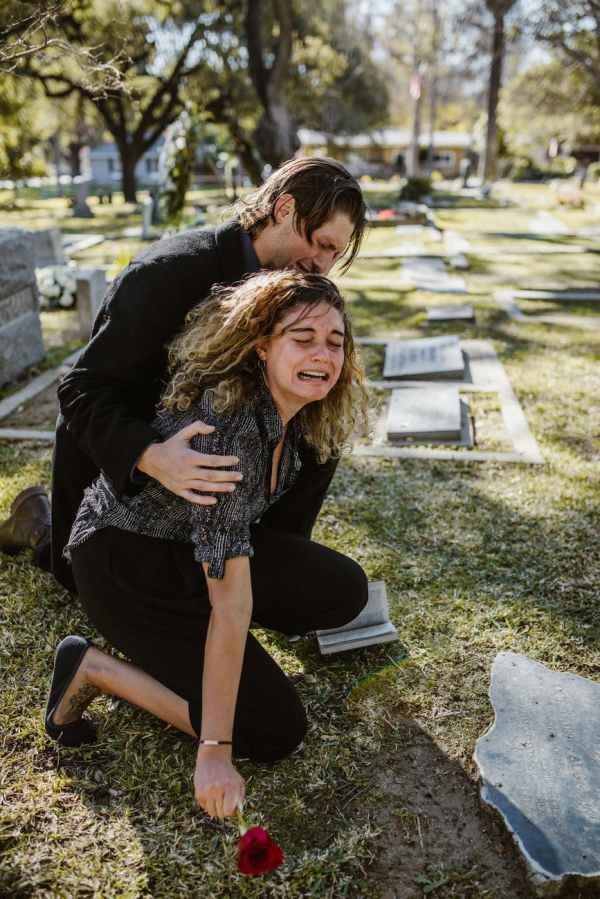
Just last week, one of my high school classmates died unexpectedly.  I’m getting to “that age” when more and more of my contemporaries are experiencing health issues– diabetes, heart problems, cancer, arthritis, even early-onset dementia– but this friend seemed to be in good health.  She had just been celebrating the birth of a grandson, and other milestones.  Death sometimes comes when (and to whom) we least expect it.  It is shocking, saddening, and frightening all at once.  

Photo by Andrea Piacquadio on Pexels.com

Death has an urgency that pushes other concerns away.  Death is final; permanent.  Death is powerful– we can’t cheat it, defeat it, or comprehend it.  Death frightens us, angers us, and mystifies us.  We begin to look at our own life and ask questions–Who am I?WHY am I?  What makes me “me”– individual and uniquely different from everyone else?  Is there a purpose to my being– to my being “me”, “here” and “now”?  How can I find and fulfill that purpose if it exists?  Do I have an eternal destiny after this life?  If so, how can I know what it might be?  Can I change that eternal destiny?

sunset ship boat sea
Photo by Pixabay on Pexels.com
Photo by Liza Summer on Pexels.com

Some people argue that our origins are accidental; our uniqueness is merely a random generation of genetic code; our purpose non-existent or self-determined; and our destiny no more than dust. They avoid talking about death–and the meaning of life. They want to “live in the moment,” but they don’t want to ask any questions of the past or future. And they mock anyone who does. Many of them hear me or read what I write and dismiss me as intellectually lazy, gullible, or crazy.  I’m all right with that, as long as they will be intellectually honest enough to admit to the questions; and open enough to acknowledge that there may be more than a quick denial as an answer.  Crazy– well crazy is as crazy does, I guess…I’ll let my actions answer that one.

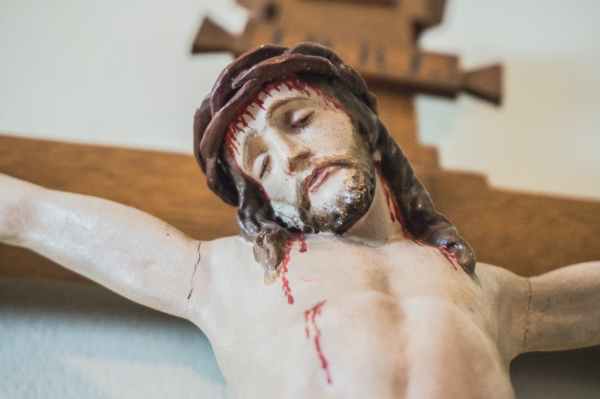
Death is powerful and mysterious, but I believe that God is more powerful, and omniscient– he has already crushed the power of death, and invites us to view death from a different perspective.  When we take everything– including death– to the Lord in Prayer, he takes the weight of it, the fear of it, the pain of it off our shoulders and carries it to the cross.  HIS death overshadows even our own, in its power to overcome. The urgency of death is not that it is the end of all things.  The urgency of death is that it signals the end of our opportunity to recognize and live out the purpose of this short life.

art cathedral christ christian
Photo by Pixabay on Pexels.com

If that isn’t an urgent reason to pray for those you love, I don’t know of a better one…

It’s also an urgent reason to pray for those around you who are grieving the recent loss of a loved one.  And don’t just be someone who prays..be an answer to prayer– reach out with a card, a note or e-mail, or spend some time with them.  Let them know that a) their loved one is not forgotten, and b) neither are they!

The Lion’s Share

Because of the Lord’s great love we are not consumed,
for His compassions never fail.
They are new every morning;
Great is Your faithfulness.
I say to myself, “The Lord is my portion;
Therefore I will wait for Him.”

Lamentations 3:22-24
Photo by Jonathan Petersson on Pexels.com

We live in a world of seemingly finite resources. We work hard to save money, save time, protect our joints, take care of our teeth, maintain our house or yard, repair our vehicle, conserve water, protect our air quality, etc.. And we work hard to ensure that we get our “fair share”–vacation time, wages, tax breaks, sale prices, the best return on our investments, the lot with the best view, the window seat on the plane or bus, credit for our hard work, and more.

Photo by Charles Parker on Pexels.com

God’s resources are unlimited and bountiful. Through Christ, we are joint heirs to all the riches of God. God is our “portion.” And no one who trusts in Him will be left with less than a cup filled to overflowing (Psalm 23:5). We may not fully comprehend or receive our great good fortune in this life, but we will enjoy it the next for eternity! And there is no need to scramble and scrimp, worry, or wrangle trying to get it– it’s our promised “portion” and our inheritance.

Photo by Bri Schneiter on Pexels.com

What a world of worry, stress, desperation, and trouble we might avoid if we carried this promise in our memory and LIVED it out. The prophet Jeremiah wrote these words– Jeremiah, the weeping prophet; Jeremiah, whose life was in constant danger as he watched his homeland being invaded, conquered, and exiled. Jeremiah, in the midst of his anguish, took time to write some of the most hopeful and joyful words of prophecy. Jeremiah knew that, even if the nation of Judah was conquered and destroyed, the LION of Judah would still bring ultimate victory. And to the victor belong the “spoils!” Jesus is our victor and our victory. His are the spoils of war to lavish upon those He chooses.

Photo by Alexas Fotos on Pexels.com

Jesus (called the Lion of Judah, an image found in both Genesis and Revelation) has already given us victory over Sin and Death. And the “Lion’s Share” of the spoils– abundant life, restoration, redemption, and the Righteousness of God– are for all those who call on His name and worship Him in Spirit and in Truth! He’s reserved a “Lion’s Share” for each of us.

Photo by Liza Summer on Pexels.com

“The Lord is my portion; Therefore, I will wait for Him.” ” I will trust and not be afraid.” (Isaiah 12:2) “You too be patient; strengthen your hearts, for the coming of the Lord is near.” (James 5:8) https://bible.knowing-jesus.com/topics/Waiting-On-The-Lord (See also Psalm 37)

Instead of scrambling for a “lion’s share” today, let’s call on the Lion, and allow Him to give us our “daily bread,” knowing that His portion is more than sufficient today and forever!

Looking Back

Photo by cottonbro studio on Pexels.com

Another year is nearing an end, and it is common to look back and take stock of what the year has brought to, taken from, or challenged us with…

It can also be a time of regret– things not done, opportunities not taken, mistakes not corrected, hopes and dreams unrealized.

I keep two journals– a daily planner, filled with goals I hope to accomplish and plans I hope to fulfill; and my prayer journal, filled with requests, praises, answers to prayer, and names of people and places I wish to lift up in prayer. I spent some time the other day remembering and reflecting on this past year.

Photo by Guy Kawasaki on Pexels.com

As I stop to pray over the next/last few days of 2022, I want to remember two things in particular: God knew everything that would happen this year. And God was “there” for everything that happened; not just aware of what was going on, but as close as our own breath–loving, caring, and providing strength and comfort in every moment. He shared our tears and our laughter, and sent us mercies in the form of friends, neighbors, and even strangers– “angels unaware.”

God knew that on January fifth, my mother would fall and break her leg, starting her on a sixth month odyssey of hospitalization, rehabilitation, assisted living, and finally, moving into a new living arrangement near my sister’s house. He knew that my mother-in-law would fall the very next day, breaking her leg and requiring a similar journey through hospitalization, and two nursing homes, before finally being able to return to her home before Christmas.

Photo by Andrea Piacquadio on Pexels.com

God knew that I would be diagnosed with diabetes, and that David would face a challenging wound in his leg this year. Our lives and routines have been altered in ways we could never have predicted.

God knew that our extended family would face divorce, death, illness, job changes, and more. He knew that members of our church family would face cancer, heart disease, and death; just as many others would experience healing, weddings, and new birth.God knew what would happen worldwide– the death of a Queen, the changing of world leaders, war, famine, earthquakes and blizzards and hurricanes.

And God was there for every moment, joyous or terrifying; heart-breaking and uplifting moments, personal triumphs and worldwide tragedies. Miracles and losses, devastating news from the doctor, and joyous answers to prayer.

Looking back can be painful. Dwelling in the past–even on good memories, can be unproductive. But looking back to see how God has provided in our need, given us strength for life’s challenges, and brought unexpected opportunities gives us cause to sing praises and cause to hope for the coming year.

Photo by cottonbro on Pexels.com

Thank you God! Thank you for bringing us through another year– hopefully wiser and closer to You. Thank you for the opportunities you’ve given, and those you will bring into our lives in the year to come. Prepare us to be patient, hopeful, strong, and kind in the time to come. And help us to share this hope and strength, kindness and endurance to those around us, by pointing them to You. Amen!

Praying On “Borrowed” Time

When do you pray each day? Do you have a time set aside in the morning and/or evening? Do you say grace at meal time? Do you stop during the day to pray for a certain period of time? Do you wait for “the right moment?” Do you miss precious time spent in prayer?

Photo by Tima Miroshnichenko on Pexels.com

Most of us have a “regular” prayer time– even if it’s just a short burst of prayer in the morning or tucked into the period just after Bible study, or even a quick “Thank you” at meal times. But, for some reason, it often feels like we’re praying on “borrowed” time– time when we are planning to do other things, but a situation or feeling overwhelms us and causes us to pause for “unexpected” prayer.

Photo by Pavel Danilyuk on Pexels.com
Photo by Efigie lima Marcos on Pexels.com

Sometimes, we feel awkward, stopping to pray in the middle of some other activity; sometimes it feels forced or rushed somehow. Yet we are encouraged to “pray without ceasing” (1 Thessalonians 5:17) and to be “constant in prayer” (Romans 12:12).

We can be grateful for the privilege to coming to God in prayer– anytime, anywhere, for any reason! Imagine if we only had one opportunity every day to “catch up” with God. Imagine if we actually had to “borrow” time to be in His presence. What a wonderful gift– the omnipresence of God. What a marvelous comfort to be able to pause and know that God is always listening and always available.

Photo by RODNAE Productions on Pexels.com

In one sense, however, we are praying on “borrowed” time. Our lifetime is a gift. And our Spirit is eternal. But our physical earthly life is finite. Our ability to call on God is immediate and ever-present. But our ability to live in peace and harmony with Him depends on our acknowledgement of His Sovereignty and acceptance of His Salvation and Reconciliation. God is gracious and loving– every moment we are alive we have the opportunity to seek His face. But for those who choose to ignore or reject His invitation, there will be a moment that is “too late.” There will be no borrowing, begging, or buying another opportunity.

Today–right now!– is a perfect time to accept, claim, celebrate, and utilize the precious gift of God’s loving presence, and His desire to share all that is on our hearts and minds. Even on “borrowed” time!

Photo by Andrea Piacquadio on Pexels.com

No Greater Love…

This coming Monday we will be celebrating Memorial Day in the U.S. It is a day to remember those who gave their lives in battle, defending our nation, our people, and our way of life over the course of almost 250 years. We decorate the graves of fallen soldiers with flowers and flags and plaques honoring their sacrifices. It is a strange sort of “holiday.” We don’t like to think of wars and battles– we ache for those who are terrorized by wars in the current days. We don’t celebrate war and violence– our highest goal is to achieve and preserve peace and safety. And it can seem somewhat morbid to “celebrate” the fallen soldiers of bygone days.

Photo by RODNAE Productions on Pexels.com

But we are not celebrating their deaths. We are celebrating the causes for which they fought and died. We celebrate freedom, and justice; the rights of individuals to pursue liberty and fulfill their dreams. These are causes worth fighting for, and yes, even dying for. We mourn the loss of life, and we grieve the necessity of fighting and struggling to preserve basic rights. But we are grateful for and humbled by the examples of those who have shown the courage and strength to give their all. We honor these sacrifices when we decorate the graves of fallen soldiers, or hold services and memorials at cemeteries. It is not meant to be a time of joyful celebration, but a time of solemn reflection and humble gratitude.

Photo by Pixabay on Pexels.com

But Memorial Day can also be a time of reflecting on an empty grave– that of Jesus Christ, who gave His all for a cause even greater than liberty and justice in a particular nation or time or for a particular group of people. Jesus gave His life to reconcile an unholy human race with a Holy and Righteous God. He fought against Sin and Death, and conquered them both. And we cannot decorate a grave to honor His sacrifice, because, unlike all the soldiers we honor next week, Jesus did not just preserve a cause or a way of life– He became Life for us. His grave is empty as a symbol of Death’s defeat!

It was Jesus Himself who said, “Greater love has no one than this, that one lay down his life for his friends.” (John 15:13 NASB) Soldiers who lay down their lives often do so to save the lives of their comrades at arms– their friends and fellow warriors– as well as their countrymen and women, their neighbors, and their families. And it isn’t just soldiers who give their lives. Recent news stories tell of teachers, police officers, and other individuals who have sacrificed their lives for the sake of innocent shoppers, students, and neighbors. Such sacrifices are tragic, but they are also heroic, and deserving of our acknowledgement.

We take time to honor those who died for a cause. How much more should we honor the One who died to bring eternal freedom and life to each one of us! And how much more should we be willing to give our lives for the sake His Kingdom! There is no greater love that we can show.

Photo by RODNAE Productions on Pexels.com

Who Do I Think I Am?

(This post was originally published in March of 2021. I am re-posting it.)

I was struck the other day by the parable of Lazarus and the Rich Man (Luke 16: 19-31). I’ve heard sermons and talks and done Bible studies on this passage, and the focus is always on the rich man. In life, he did nothing to help the poor beggar who was literally on his doorstep. In death, he ends up in torment, and seeing Father Abraham with Lazarus in Heaven, he tries to strike a bargain with Abraham to ease his own tormented soul.

Photo by sergio omassi on Pexels.com

But I was struck by several things I had never considered:

  • Jesus named Lazarus, but not the Rich Man. This is a parable– a metaphorical story– so Jesus did not need to have specific names for any of the characters. He often told such stories with no names. This one contains a specific person, Lazarus, and very specific details about his earthly life. He was not just a beggar, but a beggar covered with sores and starving. Jesus even related that the “dogs came and licked his sores” (v.21). And Jesus makes it clear that the rich man recognized and knew Lazarus by name. Yet he had done nothing to help Lazarus when he had the chance. We never hear in the story whether or not Lazarus was ever cured or helped; we don’t know if he had been a wealthy or prominent man at one time, of if he had always been a diseased beggar. The point is that Jesus, and Abraham, and the rich man all KNEW Lazarus. He mattered enough to call by name. The Rich Man in this story also had a name. He probably was well-known in the town or city where the story took place. And we know that he had five brothers who were likely well-known and highly respected. But NONE of them are named in the story. Only Lazarus.

  • The Rich Man looks up into Heaven. He can see and recognize Lazarus and Father Abraham. But he never looks for, sees, talks to, or wonders about the Heavenly Father. He never asks for comfort from God– he doesn’t even ask a favor of the Patriarch– he only considers that someone like Lazarus should be made to help him and/or his brothers.
Photo by Andrea Piacquadio on Pexels.com
  • Abraham explains that Lazarus cannot and will not be allowed to do as the Rich Man requests– but the parable does not tell us that Lazarus can either see the Rich Man or hear his requests, nor does it say that Lazarus is unwilling to help.
  • Jesus tells this story in a straightforward manner, even though it is a Parable and has hidden meanings. The Rich Man wants help in his hour of torment, even though he was unwilling to help others in their need. But he isn’t without feeling or pity– he loves his brothers enough to try to warn them. Jesus could have used this parable to say much more about Social Justice, and the plight of the poor and the wealthy. He could have said much more about greed or apathy. He could have pressed the point about loving one’s neighbor. He did NOT make some of the connections we add to this story. We often assume that the Rich Man is in hell only because he did not help Lazarus during his lifetime, and that Lazarus is in Heaven solely because he was oppressed and afflicted in life. But is that really what Jesus says?
Photo by Pixabay on Pexels.com

What struck me the most about this story is that I always look at it as an outsider. I don’t relate with either of these characters. Of course I don’t want to think that I am cold and selfish like the Rich Man in this story, but neither do I think I am Lazarus. So who do I think I am when I read this parable? Do I pat myself on the back for sending a check to a charity a couple of times a year, or speaking up for the poor or marginalized in my community? Do I indignantly point out all the “others” who are not doing their part to help? Do I see myself, not as a poor diseased beggar, but as someone who has been “oppressed” by nameless, faceless rich people– someone who deserves to be rescued and comforted while “they” suffer through eternity?

Photo by Charles Nunes on Pexels.com

I don’t have any answers as to how I “should” see myself (or others) in this parable. But I think Jesus wants us to grapple with some of the realities it presents:

  • Our world is filled with situations like that of Lazarus and the Rich Man–situations of injustice, struggle, disease, poverty, inequality, suffering, and luxury. And while it is clear that we should do what we can to help others, and to bring justice and mercy, and to reach out and connect with our neighbors in love, it is also clear that such situations are not for us to make blanket judgments. I know many who see poverty as a judgment– those who are poor are lazy or unworthy. And I know others who see luxury and wealth as a judgment–those who are wealthy are greedy and selfish and unworthy. God will not judge us by our circumstances or the injustices done against us. He WILL judge us by our response to Him– when we look toward Heaven, do we see Him, or do we see the place we think we deserve to be?

  • Our ultimate situation has very little to do with our earthly circumstances. Are we sick, poor, suffering, grieving, or in pain? God is aware, and He offers eternal comfort. We can endure and hope because we know that this is not all there is to life. Are we blessed with comfort and ease right now? We should not take our circumstances for granted, but be willing to share in our abundance, knowing that our future is sure, and that God will care for our needs as we care for others. But wealth or poverty, status or shameful circumstances, do not predict our eternal destiny.
Photo by ding lei on Pexels.com
  • God sees us! He sees our circumstances, and He cares! He sees our heart and our motives. He knows our every thought.
  • We need to look with God’s eyes. The Rich Man in this story thought he was important– in life and even in the afterlife. He thought Lazarus was worthy only to serve him or stay out of his way as he enjoyed life’s luxuries. But he also thought he was more important than Heaven! Sitting in eternal torment, he was not humbled or repentant– he was still trying to see the world through his own self-importance. Lazarus may have spent his life thinking that he was NOT important– a beggar, alone, forgotten, and unwanted. But God knew his name and saw his suffering. Lazarus could have been bitter, cursing God for his circumstances, or spending his days trying to steal or take revenge on the Rich Man.
  • I need to look with God’s eyes, not only at who I am in relation to God and others, but at OTHERS in relation to God and to me. I may see someone like the Rich Man– selfish, pompous, self-important– and dismiss them as unlovable and unworthy of mercy or grace. But God sees someone He created; someone who is needy and lost– someone He loves enough to die for. I may see someone like Lazarus–hurting and forgotten– and think they are a lost cause or fear that they will prove to be “undeserving” of my help. But God sees someone He created; someone He aches with; someone He loves enough to die for!

Commencement Exercises

We’re entering graduation season. I’m already seeing notices of friends and family members who are, or who have family members, graduating from colleges and universities. Others are graduating from local high schools in the coming weeks. It’s an exciting time, when we celebrate achievements, encourage future success, and show support.

Photo by RODNAE Productions on Pexels.com

We often call the graduation ceremony “commencement exercises.” Commencement means “beginning.” But so often, the celebrations seem to focus on the past. We look back on memories and accomplishments, we bid tearful farewells to friends who will go their separate ways, we console parents whose children will be “leaving the nest.”

Photo by Feedyourvision on Pexels.com

Graduation is supposed to be a time of looking forward. But it can be difficult to celebrate things that have not happened yet. We wish all the graduates well, but we cannot guarantee that the road ahead will be filled with success. In fact, we can almost guarantee that the road ahead will hold obstacles, failures, struggles, and suffering along the way! Sometimes, it may be easier to focus on what we already know and have experienced, than to dwell on the unknown. But—

We are also heading into a season that has traditionally been one of many weddings. My parents, one set of grandparents, my brother and sister and their spouses– all were married in the month of June. At weddings, we don’t focus on the past– we look forward and celebrate all the possibilities of the future. It truly IS a time of “commencement”– a beginning of a new family. We don’t console the parents on “losing” their child; instead we congratulate them on adding a new member to the family. We don’t focus on the past achievements (and certainly not the past relationships!) of the new couple– instead, we eagerly anticipate the new life they will forge together.

Photo by Fernanda Latronico on Pexels.com

In light of weddings, graduations, and commencements, it may seem odd that I would be thinking about funerals, but I see a connection. Funerals are not celebrations in the same sense as weddings and graduations. They are solemn times of mourning loss and the end of life. We honor the memory of our loved one– we cherish the memories and achievements and relationships that were in the past, but we don’t decorate with balloons and ribbons; we don’t sing and dance and make joyful noises; we don’t speak of the future…

Photo by Pavel Danilyuk on Pexels.com

This is appropriate and natural. But at some point, as Christians, we should think beyond the end of this life and celebrate the “commencement” of eternal life. This short chapter of life has ended, but our loved one has merely “graduated” to a new and better life. Of course we grieve– we will miss the relationship we have shared in this life; our loved-one’s presence; shared jokes and memories of the past, or in the present; the familiar voice and listening ear; words of wisdom just when we need them– but our grieving is tempered with hope and joy. Not only will we meet again, but we will share a new life and a new relationship. The present may seem bleak, but the future looks very bright, indeed!

Photo by Aaron Burden on Pexels.com

Whatever type of “commencement” exercises await us this season, I hope we will take joy and find peace in the knowledge that God is planning exciting new beginnings at every stage of our lives and in the lives of others. Commencement awaits!

For Righteousness’ Sake

Blessed are those who are persecuted for righteousness’ sake,
For theirs is the kingdom of heaven.

Matthew 5:10 (NKJV)
Photo by Meruyert Gonullu on Pexels.com

Yesterday was Easter (in parts of the world)–the celebration of Christ’s resurrection and victory over Sin and Death. We have much to celebrate. But we also have a mission. We have the assurance of eternity in Heaven, but in THIS world, Jesus warned us, “you will have trouble.” (John 16:33). We will be misunderstood, mocked, and persecuted. We will have to face the temporary consequences of living in a fallen world– anger, greed, abuse, violence, betrayal–even bad weather and natural disasters!

In giving the Beatitudes, Jesus turned common expectations upside-down. Blessed are the poor in spirit; blessed are the meek; blessed are those who are persecuted for righteousness’ sake… We don’t consider poverty, powerlessness, suffering and persecution blessings to be desired. Yet Jesus, the One we follow, gladly endured all of these for our sake! Notice that the “blessing” is the same here as in the first of the Beatitudes– “for theirs is the kingdom of heaven.” The Kingdom of Heaven is not reserved for those who are victorious in their own power or through force of will or extraordinary effort. But it is reserved for those who persevere in the face of evil–those who lean, and those who rest, and those who stand IN THE POWER of God.

Notice, too, that we are blessed if we are persecuted “for righteousness’ sake.” There is no blessing for suffering due to our own stubbornness or foolishness. There is no blessing for those who are persecuted for their own pride and judgmental nature and unforgiveness toward themselves or others. (see 1 Peter 3) https://www.biblegateway.com/passage/?search=1+Peter+3%3A8-17&version=CEV

Photo by MART PRODUCTION on Pexels.com

We live in a culture that celebrates “victimhood.” Those who suffer injustice– even perceived of implied injustice–are considered to have a special status. Those who claim to have been offended or hurt by individuals or groups often demand recognition for their “bravery” or retribution for their suffering. This happens even among certain Christians, who claim to be “persecuted,” when they are merely suffering the consequences of their own hubris and self-righteous posturing. This is a monstrous injustice to fellow Christians who are truly suffering persecution “for righteousness’ sake.”

Photo by Cameron Casey on Pexels.com

My prayer today is that I will emulate the example of Christ– that I will serve, humbly, willingly, sacrificially, enduring any persecution that comes as a result, and lifting up fellow Christians who are suffering, as well as their persecutors! For righteousness’ sake– for the sake of the Kingdom of Heaven.

Of Broken Femurs, Hearts, and Toilets

The past two weeks have been just a bit chaotic for our families. My mother fell and broke her femur, near her hip–not the hip she broke over a year ago, but the other one! Less than twenty-four hours later, my mother-in-law fell–and broke her femur. Each mom ended up in a different hospital for surgery, and in a different rehabilitation facility, located nearly fifty miles apart. Last week, two members of our extended family died on the same day in the same city; their funerals were a day apart in two different parts of the city, but handled by the same funeral home. On the day of the first funeral, we found out that another member of the family died. That same night, our toilet broke. Water poured into our upstairs bathroom, soaking the floor, running into the next room, and dripping down to the floor below. In the middle of all this, I slipped on the ice, fell hard, and bruised my ribs.

Photo by Liza Summer on Pexels.com

Where was God in all this? He was right there in every situation. God doesn’t disappear when the going gets tough– He is steady, sure, and faithful.

  • Neither of our moms suffered a concussion or any other major damage from their falls. They were able to get treatment and surgery, and they are receiving care and therapy. And, while this is something we might have taken for granted at one time, it is something for which we praise God, because it could have been much more tragic in both cases.
  • We live close enough to both moms that we have been able to help and visit (where we can because of continuing COVID restrictions). Though the facilities are fifty miles from each other, neither is fifty miles from our home. Also, both moms are able to receive phone calls, and we are able to receive updates from the staff at each place.
  • We have close families, and wonderful neighbors and friends– we are not alone in caring for our moms or grieving our loved ones, and there is a network of prayer, support and concern that staggers my imagination! I cannot imagine trying to navigate this without help– again, this is something we might take for granted, but God has been in the details long before any of this happened. Our families, friends, and neighbors represent dozens of church bodies from around the country and the world, as well as a significant group close to home– how marvelous that God allows us to work together as a body in every situation.
Photo by Pixabay on Pexels.com
  • Though we have lost three family members in rapid succession, all three were believers! All three left a legacy of faith, love, and hope. We mourn their loss, but we also celebrate their lives with joy and not regret.
  • David HATES plumbing, but he knew what to do to fix the toilet. The damage from the flooding was minimal, all of our towels are freshly laundered, and the toilet works again!
  • My fall could have resulted in ANOTHER broken femur– or a broken arm, concussion, etc.. While it hurts to sneeze or yawn or blow my nose, at least it doesn’t hurt to breathe, and I can move and go about my day, cautiously, but normally.

God allows difficult things to come into our lives– and I don’t have any definitive answer for WHY we have been experiencing so many trials all at once. But I can say this:

Photo by Andrea Piacquadio on Pexels.com
  • Trials make us stop and look and question– and that can be a good thing. God is big enough, wise enough, and sovereign “enough” to handle our tears, our fears, our weakness, and our momentary doubts. In fact, it is in recognizing our limitations that we can focus more on God’s limitless grace and boundless love!
  • Trials bring us closer to each other. Our chaotic couple of weeks are just a drop in the bucket among all the other problems of the world, but so many wonderful people have called or sent messages of hope and encouragement over the past two weeks, my heart is bursting– not with the pain, but with joy and gratitude.
  • Trials teach us patience (see my post on “Be Careful What You Pray For.”) The toilet breaking was my low point this past week– even though it did not directly touch on our health or a loved one. But God sent friends and angels to remind me that this was a very minor problem– even among all the others– and that God was “flushing” away some unnecessary angst if I would just let it go!

There is nothing that takes God by surprise– nothing that causes Him to pause and wonder, “what happens next.” I can praise God in the hospital as I watch my mom cry in pain. I can praise God when my husband finds his mother “alive” (when he couldn’t be sure). I can praise God when I’m flat on my face on the ice, winded and sore. I can praise God when toilet water is soaking my socks. I can praise God when I hug cousins who have lost their parents to cancer or dementia, or age, knowing that God is with us every moment, in every tear, every hug, every shared memory, and every hope that our loved ones now experience what we will also know someday.

I’m ready for 2022 to calm down a little bit. But if it doesn’t, I’m also ready to be broken again– whether through broken legs, broken toilets, or broken hearts. God is in the business of repairing and restoring broken things and broken people. And no one does it better!

Blog at WordPress.com.

Up ↑