I can do all things through Christ which strengtheneth me. (Philippians 4:13 KJV)

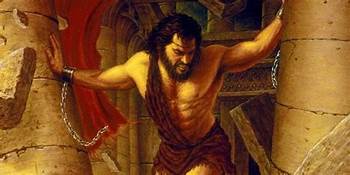
I remember memorizing this Bible verse (in the King James version above) as a child. It is one of the most quoted (and, I think, misunderstood) verses I know. Taken out of context, it seems to promise unlimited potential for the Christian. I can… perform miracles, do six impossible things before breakfast, leap over a tall building, bring about world peace, and finish folding the laundry from last week!
The reality is that I can’t do ALL things. There are many things I simply cannot do– even as a Christian. I cannot grow six inches taller or shed 45 pounds overnight. I cannot cure cancer. I cannot bring about world peace. Christ CAN do any of that and more; and He can work through me to accomplish great things– more than I can do in my own power. But if I expect to do whatever I imagine or aspire to– I will be disappointed. Even with God’s Power working in my life.
But God is not only a source of power– He is the source of wisdom and love. And in His wisdom and love, he often limits what He will allow me to do. So, there are supernatural things I cannot do without God’s help and power, and there are seemingly ordinary things I cannot do without God’s permission and grace, because doing those things will go against God’s perfect plan.

I was speaking recently with a friend of mine from church. We were speaking of infertility– a problem we have both experienced. Most of the women I know who experience infertility, barrenness, multiple miscarriages, etc., have to come to terms with the ache of being “abnormal.” We assume that “normal” women can become pregnant and have children. We accept that sometimes a woman will lose a child in the womb. But when it happens over and over again, or when a woman can’t seem to get pregnant, it causes a woman to question her identity and worth. “Am I even a ‘real’ woman?” “What kind of woman can’t do the most basic “womanly” thing– give life?” We also have to come to terms with the fact that God has chosen to allow this in our lives. Does God still love me, or is He angry with me or punishing me for being “not enough”? How can God love me and let me suffer such emptiness?
And we’ve all heard stories– amazing stories in the Bible and elsewhere– of women who DID get pregnant through a miracle. Sarah, Mary, Elizabeth, Rachel, Hannah…In fact, we hear nothing of women who are barren in the old Bible stories…or do we? Anna in Luke chapter 2 is an old widow who lives in the temple. There is no mention of any children, only of her devotion to the Temple and to her God. Dorcas, who was raised from the dead by the Apostle Peter in Acts 9, is praised, not for her motherhood, but for her charitable deeds among her neighbors. Deborah, the prophetess and judge who led the Israelites into battle along with their general Barak, is mentioned as a wife, but not a mother. In ancient societies, very few women were singled out for praise outside of their roles as wives and mothers.
As women, we may question many aspects of our “role” in society. Some of us chafe at the traditional roles we are expected to perform, while others question why their traditional roles seem to be denied. I spent decades questioning why I remained “on the sidelines”– unmarried, lackluster dating opportunities, out of step with other women my age. When I first was diagnosed with Stein-Levinthal syndrome and told that it would almost eliminate any chance that I could become a mother, it was almost a relief. At least I could “congratulate” myself for not disappointing a husband I didn’t have, or go through the pain of watching him question his manhood when no children came, not knowing if the “problem” was his or mine. Other friends of mine question their role as “the weaker sex,” going to great lengths to prove that they don’t need a man in their life, or that they can compete with men for jobs, status, wealth, and power.

But God didn’t just create me to “DO” things. God created me to BE. And He created me to be in relationship with Him. And my experience gives me the opportunity to speak into the lives of other women who are hurting. I have found purpose and comfort, love and abundant joy, challenge and opportunity in the midst of infertility. And now that I’m in my sixties, I find it easier to reconnect with women my age who are empty-nesters, grandmas, widows, and “maiden aunts.” God has allowed us to DO many things.
I am struck by the fact that Philippians 4:13 was written by the Apostle Paul. Paul was in prison when he wrote this letter. “I can do all things” did not mean that Paul was able to escape prison walls or the sentence he was under. It didn’t mean that he could compel his friends to stay and attend to his needs. It didn’t mean that he could escape this “thorn in the flesh” that he wrote about in 2 Corinthians or defy the aging process. Paul didn’t mean that he could literally do “all” things. But he was reminding the Philippian believers of all the amazing things that he could and did do in his work as a missionary. He didn’t cheat death altogether, but he cheated it several times, living through beatings and shipwrecks and snakebites. He didn’t escape the thorn in the flesh, but he persevered in spite of it. And remarkably, though Paul never married or had biological children, he built relationships with people like Timothy, whom he considered a son. And He accomplished amazing things for the Kingdom of God!
So, no, I cannot do ALL things– I cannot do some of the miraculous things I want to do. Sometimes, it is even God’s will that I should be prevented from doing such things– even good and “normal” things– in order that God can mold me into a shape and for a purpose that is just right for HIS perfect plan. I may not see it in my lifetime or understand it perfectly. I will still grieve for what “might have been” in my life. But I will continue to experience joy in the journey the God has mapped out for me. And whatever He asks– well, I CAN do that! Not on my own, but beyond what I can imagine!