I like having choices. When I go to a restaurant, I get a menu, with several choices– appetizers, entrees, beverages, desserts. I have choices at the grocery store– brand X cereal or brand Y, different sizes of laundry detergent, which cucumber to put in a produce bag– sometimes even a choice between paper and plastic and reusable bags! I have a choice to buy or rent a house or apartment/condo. I have a choice about the car I drive or the choice not to drive, but to walk or take public transportation. I choose which church to attend, or not to attend at all. I choose when I get up in the morning and when I go to sleep. I choose what to wear each day. I choose to obey the law, including speed limits on the highway and slowing down in school zones, paying whatever taxes are due, and registering for the census, voting, and other civic duties.
Many of these choices seem benign. It doesn’t really matter to anyone else which brand of cereal I buy or when I eat it, or even if I decide not to eat it, but end up throwing it out. It doesn’t matter to most people where I live, or go to church, or what I am wearing. It doesn’t hurt anyone else if I drive a couple of miles faster than the speed limit on a back road somewhere.
But some choices DO matter– they matter a lot. If I choose to drive at high speed through a school zone, I might end up accidentally killing a student or school worker. If I live in a house or apartment I cannot afford, or if I refuse to maintain my house or apartment, I may end up evicted or homeless. If I choose to use drugs– even prescription drugs– in an unwise manner, I may end up in the hospital or in the cemetery! And I may hurt others around me in the process.
I live in a nation that prizes “freedom” and “freedom to choose.” But in the past century, more and more voices are being raised in an effort to make all choices “equal.” And they are not. Many of our “choices” are in direct contradiction to the Word of God, to traditional values, and even to common sense! Our choices have consequences– some benign, and some catastrophic. Voices are shouting about their “right to choose” even as they are also raised in righteous indignation about others’ rights and choices.
I could speak to this for days on end, defending my own choices, and pointing out which “choices” break my heart or offend me. But I feel compelled to point out just three things to consider about individual choices:
How does this choice honor God? I think it is easy to focus on “big” choices when we think of this, but I have been challenged lately to see how even my “easy” and “little” choices honor Him. Does it really matter which brand of cereal I eat in the morning? Probably not. But what about brands and manufacturers that support causes that do not honor God? Most of the time, I am unaware of such considerations. But the money I spend on my favorite sugary breakfast treat may help sponsor evil. And if I am aware of which manufacturers are giving large donations to causes I despise, but I am still buying their products every week, I am helping to sponsor that evil.
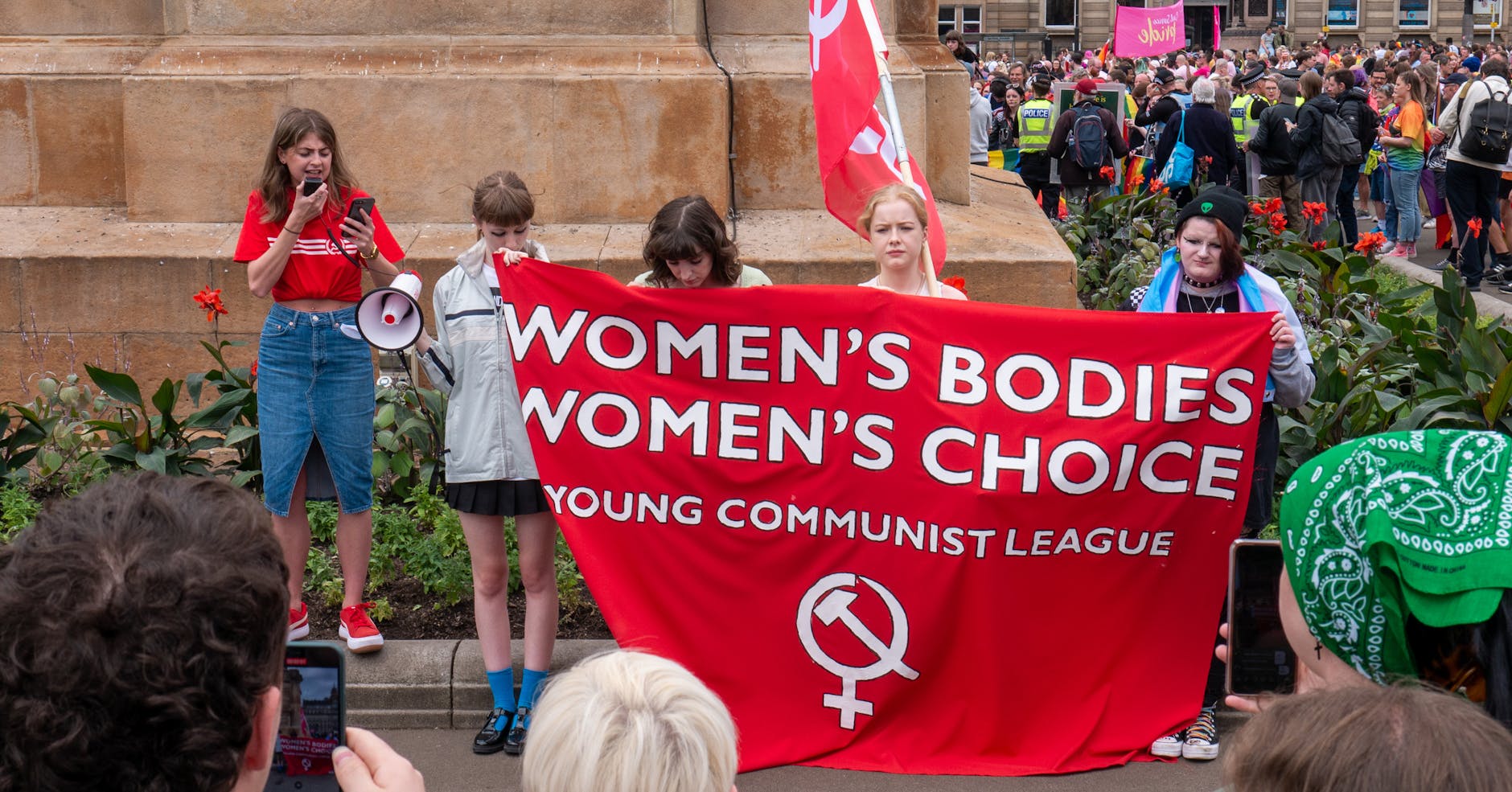
How does this choice impact others? We DO have the freedom to choose our actions, but we do NOT have freedom from the consequences of those actions. “My Body, My Choice” looks good on posters and banners, but things like abortion or gender reassignment have an impact beyond a single person. Abortion always ends with the death of a second “body”– one without any choice in the matter. Gender reassignment impacts more than just one person– it impacts their present and future relationships, as well as impacting their future physical health and reproductive system. It is also important to establish whether my choices are made to try to please or influence others. It’s easy to blame others after the fact, citing “peer pressure” or claiming “I didn’t have another choice,” but is that really true, or was one choice just a lot easier or more popular than another? That same group that pressured you make certain choices– will they be there for you afterward? No matter the consequences? Will they still be your friends if you make a different choice?
Does this choice help me grow into a better person? Many of our choices come from wanting to be a happier, wealthier, or more popular person– NOT a healthier, more mature, or wiser person. And most of our choices focus on immediate gratification, rather than long-term growth. Doing something because you have the “right to choose” is not the same as “doing the right thing.” Doing the right thing often involves sacrifice and even a season of suffering. Our present choices–even the small ones– will impact our future circumstances, and our development as an individual. Eating a donut today may be tasty, but eating donuts every day may lead to obesity, diabetes or heart disease, and even a lessening of enjoyment for donuts– they’re no longer a tasty treat, but a habitual threat to my health!
Am I angry and defensive about my “choice?” Years ago, I was stopped for speeding on my way to work. Of course, I had been running a little late, and being stopped made me even later. I had to explain my tardiness to my boss, who dismissed the whole incident with a sly “next time, don’t get caught..” But one of my co-workers self-righteously handed me a two-page pamphlet on the evils of driving over the speed limit. At that time, I was indignant and offended. (I still would be a bit miffed– I don’t agree with either of the reactions I got that day, but that’s another post…) As I have grown older, however, I have come to value the three questions above– and it changes my perspective. I KNOW it’s “wrong” to drive over the speed limit. I know many people do it anyway and get away with it. But the bottom line is this–speeding does not honor God. It does not help anyone else, and could potentially harm someone. And it does not grow my character. I don’t automatically become a “good” person if I DON’T speed– let me be clear about that. But I do grow in character when my choices are made out of a heart that prioritizes God and others over my own selfishness (and procrastination!) When I find myself getting angry and defensive, I need to consider whether or not it is really guilt. If I wasn’t speeding that day, I wouldn’t have had any reason to be angry with my co-worker or ashamed of being “caught.” If someone is angry and defensive about his or her behavior, it is often brought about by guilt, shame, and a rebellious spirit, tired of defending what everyone else (and sometimes their own conscience) tells them is “wrong.”
We make choices every day– some benign, some “good,” some “bad.” Let’s pray for wisdom to make the best choices, confess the “wrong” choices, and offer encouragement and truth, rather than judgment, to those around us.
Today, I’m praying about the “choice” of abortion and its impact on my nation (as well as worldwide). In the 50+ years since Roe v. Wade attempted to make abortion “legal” in all 50 of the United States, over 60 million abortions have been reported in the U.S. during those years.* This figure does not include other nations, unreported (back alley or non-clinical) abortions, or natural miscarriages. Not only does this represent the “choice” to end the lives of over 60 million precious individuals, it represents millions of women (along with men and other family members) who have been impacted by the deceptive offer of “freedom” and the increasing pressure to make this “choice” seem both normal and healthy. For my friends, family, and others who have made this choice– my heart aches for what you have been through, and I rejoice with those of you who have found Grace and renewed hope through Jesus. God loves you– YOU, not your past choices– and welcomes you to choose Him today and every day. For those who have not been in a position to be tempted by this “choice”– I pray that we live with compassion, and that we stand up for and speak up for TRUTH and LIFE– not self-righteousness and fear. * A more conservative estimate still places the number at well over 40 million https://www.pewresearch.org/short-reads/2024/03/25/what-the-data-says-about-abortion-in-the-us/ https://www.statista.com/statistics/185274/number-of-legal-abortions-in-the-us-since-2000/
The Offer of Life or Death
11 Now what I am commanding you today is not too difficult for you or beyond your reach. 12 It is not up in heaven, so that you have to ask, “Who will ascend into heaven to get it and proclaim it to us so we may obey it?” 13 Nor is it beyond the sea, so that you have to ask, “Who will cross the sea to get it and proclaim it to us so we may obey it?” 14 No, the word is very near you; it is in your mouth and in your heart so you may obey it. 15 See, I set before you today life and prosperity, death and destruction. 16 For I command you today to love the Lord your God, to walk in obedience to him, and to keep his commands, decrees and laws; then you will live and increase, and the Lord your God will bless you in the land you are entering to possess. 17 But if your heart turns away and you are not obedient, and if you are drawn away to bow down to other gods and worship them, 18 I declare to you this day that you will certainly be destroyed. You will not live long in the land you are crossing the Jordan to enter and possess. 19 This day I call the heavens and the earth as witnesses against you that I have set before you life and death, blessings and curses. Now choose life, so that you and your children may live 20 and that you may love the Lord your God, listen to his voice, and hold fast to him. For the Lord is your life, and he will give you many years in the land he swore to give to your fathers, Abraham, Isaac and Jacob. Deuteronomy 30: 11-20 (NIV)
2 At dawn he appeared again in the temple courts, where all the people gathered around him, and he sat down to teach them.3 The teachers of the law and the Pharisees brought in a woman caught in adultery. They made her stand before the group4 and said to Jesus, “Teacher, this woman was caught in the act of adultery.5 In the Law Moses commanded us to stone such women.Now what do you say?”6 They were using this question as a trap,in order to have a basis for accusing him. But Jesus bent down and started to write on the ground with his finger.7 When they kept on questioning him, he straightened up and said to them, “Let any one of you who is without sin be the first to throw a stoneat her.”8 Again he stooped down and wrote on the ground. 9 At this, those who heard began to go away one at a time, the older ones first, until only Jesus was left, with the woman still standing there.10 Jesus straightened up and asked her, “Woman, where are they? Has no one condemned you?”| 11 “No one, sir,” she said. “Then neither do I condemn you,”Jesus declared. “Go now and leave your life of sin.” St. John 8:2-11
16 Shadrach, Meshach and Abednego replied to him, “King Nebuchadnezzar, we do not need to defend ourselves before you in this matter. 17 If we are thrown into the blazing furnace, the God we serve is able to deliver us from it, and he will deliver us[c] from Your Majesty’s hand. 18 But even if he does not, we want you to know, Your Majesty, that we will not serve your gods or worship the image of gold you have set up.”
Daniel 3:16-18 (NIV)
I hear a lot of American Christians complaining about the “dark days” in which we live. And indeed, they are dark. There is great evil in the world– wars, famines, injustices, hatred, division, greed, and immorality. But, along with complaints, I hear a note of whining. Isn’t God supposed to deliver us from just such evil? Isn’t He supposed to clear the way for us to love one another in peace and harmony? Surely, it can’t be His will for us to be laughed at, spit upon, misunderstood, and treated with contempt?!
The ancient nation of Israel was conquered and sent into exile. Israelites who had abandoned their faith, as well as those who had steadfastly served the Lord, were ripped from their homeland and marched to Babylon. Worship in the Temple of Jerusalem ceased. The Temple itself had been destroyed. There were no tabernacles, no festivals– none of the systems and structures of worship left available to God’s people. Yet some still worshipped– in homes, isolated from their fellow Jews, or in secret groups. They were not surrounded by reminders of when “their” religious beliefs were considered the cultural norm. Nor did they live in a culture that practiced religious “toleration” as we understand it today.
In the book of Daniel, the commitment of s handful of exiles is detailed as it comes in conflict with the oppressive control of the Babylonian (and later the Persian) Empire. Daniel and his three friends are challenged by the pressure to compromise and adapt to their surroundings. They are tempted and bribed by the promise of power in the court– if they can compete with other Babylonians. But they secretly hold fast to their “old” diet, and religious practices. They refuse to eat the rich food of Babylon– or bow to its gods.
In Chapter 3 of Daniel, the three friends, Shadrach, Meshach, and Abednego, refuse to bow to a golden statue of Nebudchadnezzar, the megalomaniac for whom they worked. Even though he had appointed them to high offices, he refused to “coddle” them in their worship of a foreign god. He demanded that they bow to his statue– something God had commanded them NOT to do.
It might have been easy enough to secretly meet in homes and celebrate Passover without alerting those around them. It would have been possible for them to hide scrolls containing the ancient words of their historians and prophets, to be read or studied. But they were being asked to publicly bow to a statue of their King– to acknowledge him as a “god.” And they refused. As court officials, their refusal was not just a minor snub, but a scandalous insult. Yet they stood firm.
Shocked and angered, Nebuchadnezzar, a notoriously cruel and impulsive king, gave them a generous “second chance” to save their careers and lives by obeying his orders. Amazingly, the three did not even spend a moment considering their options. They answered, boldly, courageously, and graciously, that they would not bow down to the statue. And God rescued them from the fiery furnace, so that not even their hair was singed by the flames– even though their captors were killed in the very act of pushing them into the furnace! God not only rescued them– He appeared WITH them in the midst of the flames. This so astonished Nebuchadnezzar, that he ordered them released and proclaimed that no one should say anything against the God of Shadrach, Meshach, and Abednego–an incredible act of religious toleration for that culture and time.
The story of The Fiery Furnace is well-known. I’ve used it before in my posts. But today, I’d like to focus on just one little phrase that stood out to me this week. When brought before Nebuchadnezzar the first time, the three men said, “we do not need to defend ourselves before you in this matter…” (v. 16).
How tempting it might have been to have defended their refusal– to give Nebuchadnezzar a lecture on God’s Law and His past miracles. But they refused to explain or defend their actions. They merely gave testimony of their faith that God COULD save them, and that, “even if He does not..” they were willing to die rather than dishonor Him. And Nebuchadnezzar SAW the proof of their faith in a way that their words and arguments could not have accomplished!
Most of the time, when I hear Christians talking about this story, they focus on the miraculous deliverance of the three men from the flames. The lesson is that God will be with us, no matter what. He can deliver us FROM the flames, but often, He chooses to deliver us THROUGH the flames. And that is a wonderful lesson and a true promise.
But that deliverance should not overshadow the quiet dedication of the three men. Before God joined them in the fire, they were already committed to dying in silence to obey God rather than their earthly king. They stood to lose everything– their lives, their legacy of faith, their service, their families (who might have been left destitute or even subject to punishment)– all of it was riding on their willingness to suffer injustice and torture. We know that God “showed up”– literally– in their defense. And they certainly knew that God COULD save them. But they also acknowledged that “if He does not..” they were still willing to die. And they were willing to do so, not acknowledged as martyred heroes, but as convicted criminals.
Centuries later, Jesus Christ would appear before Pontius Pilate, who asked Him to give a defense. Astonished at Jesus’ refusal to argue and plead for His life, Pilate came to the conclusion that “I find no fault in Him.” (John 19:4) Jesus willingly accepted an unjust sentence of Death, offering no argument or defense, except the Truth. No one came to His rescue. And God did NOT spare His life! The Son of God died as a criminal on a Roman cross, betrayed by Jewish leaders. Yet, Jesus’ obedience; His willingness to die brought US life, and forgiveness and peace!
There are millions of believers in Christ today who must be prepared to face a “fiery furnace” moment–maybe it involves death or torture. Perhaps it only involves being teased or despised by a neighbor or a classmate at school. And we may pray for deliverance–that is natural. But how often do we give up the chance to argue, and justify our diligence, our “right” to worship “our” way? How ready are we to be seen as foolish, or even rebellious to the culture of the day? We long for God to come to our physical rescue– to join us IN the fire– but are we willing to let Him be our defense? Are we willing to be humble in the face of obvious injustice, and let God speak up on our behalf? And what if He does not?
The Apostle Paul also faced this dilemma. Not only were there Greek and Roman officials who thought him a fool, there were Jews– his own people– who were going around defaming him, denouncing him, and spreading lies and rumors. Paul (never one to let a good argument go unargued!) spent much of his time in letters writing out his defense of the Gospel. But, in his own defense, he downplayed his position and his great knowledge of the scripture. He was not defending himself “in these matters”– he was defending the Truth of the Gospel! He also acknowledged that God could use even detractors and tormentors to spread the Gospel. And he often urged fellow believers to live in peace with their unbelieving neighbors, even those who taunted them!
It is tempting in Western Culture, where Christianity has been normalized, to think that when we defend ourselves, we are defending Christianity. But what if, like Shadrach, Meshach, and Abednego, we let God be our defense– in the flames, in the courtroom of public opinion, in our own families? What if we followed Jesus’ example and remained calm and confident, even under duress? What if we lived humble and quiet lives of integrity, ready to submit even to the flames or the cross, serving even those who would stoke the fires or pound the nails? God might just “show up” in ways we never could have imagined! Courage is often seen as boldness and speaking up in our own defense. But, sometimes, it takes greater courage to stand silent and let our actions– even when they are disparaged and misinterpreted– speak as a testimony of God’s power.









 Pursuing Prayer