Declaration of Dependence

Today, America marks the 249th anniversary of the signing of the Declaration of Independence. In it, colonial leaders listed several reasons why they no longer held allegiance to the British Crown. Many of their reasons involved abuses by the King or by Parliament in relating to their colonial citizens. Taxation without representation; passing unjust laws; requiring people to quarter (feed and house) soldiers who often harmed and cheated them; refusing to hold the soldiers accountable for their offenses– even murder; refusing to allow the colonials to trade with other nations, etc. But there was something more.

We hold these truths to be self-evident, that all men are created equal, that they are endowed by their Creator with certain unalienable Rights, that among these are Life, Liberty and the pursuit of Happiness.–That to secure these rights, Governments are instituted among Men, deriving their just powers from the consent of the governed, –That whenever any Form of Government becomes destructive of these ends, it is the Right of the People to alter or to abolish it, and to institute new Government, laying its foundation on such principles and organizing its powers in such form, as to them shall seem most likely to effect their Safety and Happiness.

In drafting and ratifying these words, the founders of the United States did something unique. They did not just establish an independent government; they established a model for both independence and dependence IN government. Government is not independent of certain inalienable rights, nor of the Creator of those rights. Governments are not the highest authority in the land. Governments are instituted and derive their power, not by their own actions and decisions, but from the consent of the governed. Governments DEPEND on their ability and willingness to serve the people.

Of course, there are wicked and improper governments, and Britain’s rule in 1776 was not the worst example of tyranny or despotism the world had ever seen. The United States has not always lived up to the ideals and principles of the Declaration of Independence. Less than a century after the Declaration was adopted, the United States was engulfed in a war that tested its ideals. The nation was divided by the issue of slavery. Nearly half of the states still practiced slavery, meaning that hundreds of thousands of people were being treated far worse than the “rebellious” colonists of previous generations. Our nation as a whole was not delivering on its promised declaration that “all men are created equal” or that they were endowed by their creator with rights to “life, liberty and the pursuit of happiness”.
But when our nation has remembered its Dependence– our need for God and our need to care for the safety and opportunity for those under our jurisdiction–remarkable things have happened. The union was “saved.” Voting rights were not just extended but enshrined in our Constitution. Americans joined the fight in Europe and around the world on more than one occasion to secure rights for people who were being oppressed, tortured, and even exterminated. The “Promise of America” draws people from diverse nations and cultures and stands as a model for the rest of the world.

Sadly, today, many here in the United States want Independence from America. Our culture has devalued life, exchanged liberty for conformity, and traded the pursuit of happiness for indulgence and selfishness. We want to be independent of responsibility– to our families, to our neighbors, to our nation, and to God. We do not want a government that protects those rights that are endowed; instead, we want a government to give us assumed “rights” that are really permissions to defy God’s laws. We want to be free to redefine morality, escape the consequences of our own poor choices, and feel virtuous without pursuing virtue.

What will happen to our country if this trend continues? On the eve of celebrating our 250th year, we may be on the brink of falling apart. Issues like abortion, immigration, health care mandates, and transgenderism threaten to divide our country, just as slavery did over 150 years ago. Americans are divided on political, economic, religious, and cultural issues. We can’t seem to agree on what we mean by “rights, ” “freedom,” or “pursuit of happiness.” We can’t even seem to define what a “woman” is or decide how many genders to fight for. Everyone wants to speak out, but no one seems willing to listen– except to find another point of disagreement. We are no longer “united” states– we are warring factions in a series of culture wars.

But what happens when American Christians declare our Dependence on God and on His Word? Many around us have declared their independence from God’s laws–even to the point of denying His existence. Many people live in a self-imposed despotism; they are enthralled by a false “freedom” from morality, reverence, and even common sense. But Christians– wherever they live– are called to submit to the authority of Christ above all. We depend on Him– not on our customs, not on our history, not even on the words of the Declaration of Independence. And we are to lean on God, not on our own understanding or our superior morality or our ability to shout louder than the next person! Our Freedom comes through Christ alone!

True “freedom” comes from dependence, not independence. When we depend on Christ’s finished work on the Cross, we are free from the weight of Sin and the power of Death. When we depend on God’s wisdom, we find understanding. When we depend on God’s guidance and discipline, we gain freedom from guilt and shame. When we depend on God’s power to channel our emotions and energy, we find purpose and joy.

Today, I declare my utter dependence on God– on the Salvation He provided through Jesus Christ, and on the power of His Holy Spirit to lead me through this life. I am glad to be an American, but my ultimate citizenship is in Heaven. The “promise of America” is a good thing: the promise of Heaven is glorious and life-changing!

“I Would Prefer Not To..”

Years ago, our high school class read a classic short story by the American author, Herman Melville. Bartleby the Scrivener tells the story of an unusual clerk– one who begins as a good worker, efficient and conscientious, but ends up dying in prison, hopeless, ruined, and broken. His tragic downward spiral begins one day when the lawyer for whom he works asks him to examine a short document. This is a commonplace request, much like asking a writer to proofread her final draft before submitting it to the editor. However, Bartleby responds by saying “I would prefer not to.” The startled lawyer decides not to force the issue, and gives the task to someone else.

Bartleby’s refusal to do what is expected of him escalates until he no longer does ANY work. He refuses to work, refuses to leave the office, and refuses to eat. He isn’t angry or violent, but he remains defiant until the very end.

So it is with us when we are living in sin and rebellion against God. It may start out small– some little habit or attitude. We know it is wrong, but instead of obeying God’s word, we calmly say, “I would prefer not to…” not to tell the truth, not to turn away from porn, not to help my neighbor, not to agree with God about my behavior.

8 The Lord is merciful and gracious,
    slow to anger and abounding in steadfast love.
He will not always chide,
    nor will he keep his anger forever.
10 He does not deal with us according to our sins,
    nor repay us according to our iniquities.
11 For as high as the heavens are above the earth,
    so great is his steadfast love toward those who fear him;
12 as far as the east is from the west,
    so far does he remove our transgressions from us.

Psalm 103:6-12 (ESV)

God is patient. He is gracious and kind. He does not treat us as our offenses deserve. He gives us the chance to repent. He offers forgiveness. But every time we say to God, “I would prefer not to,” we get a little more like Bartleby– isolating ourselves, wasting our potential to be all that God created us to be, growing more defiant and more rebellious, until we waste away into a prison of our own making, and, finally, death.

One of the things that makes Melville’s story so disturbing is that the narrator keeps trying to explain away Bartleby’s defiance–perhaps he is having trouble with his eyesight and doesn’t want to admit it; perhaps he was traumatized at a previous job; maybe there is a reason for his passive aggression. But in all of his attempts to understand, the narrator cannot save Bartleby from prison and death.

Understanding sin cannot change us. Excusing sin does nothing to stop its consequences (see Romans 6:23). No one killed Bartleby, yet he died because he “would prefer not to” do the things he needed to do to live. His small act of defiance, which starts out singular and almost heroic (after all, who wouldn’t like to tell the boss, “I would prefer not to,” every once in awhile?), sounds innocuous. Such a little thing to refuse. Surely God would not punish us for so small a thing…until one small thing leads to another…and another; a bigger rebellion; a numbing complacency; loss of perspective; a heart of stone; isolation; starvation; imprisonment; death.

What am I refusing to do for God today? What am I refusing to give up? Refusing to admit? Refusing to listen to? Am I excusing myself? Do I tell myself I am not in rebellion because I have been polite in my refusal to obey? Do I comfort myself that my rebellion is really just a matter of “preference,” and will not be consequential? That God’s Holiness is less important than my comfort or convenience?

Many people coast through life in the belief that God is SO merciful and SO loving that He can’t also be Holy and Just– that His commands are really suggestions; that His wrath is mythical; that our own wisdom is sufficient for living a “good” life and pleasing Him. But God isn’t concerned about whether we live a “good” life– He wants us to have an abundant life– filled with joy and peace, love and relationship, both now and forevermore. In fact, He would “prefer not to” punish us. He is not “willing” (i.e. desirous) that any should perish (2 Peter 3:9), but that everyone would some to repentance. That doesn’t mean that He won’t punish those who refuse to obey Him, or those who refuse to turn from their rebellion and trust Him; only that He will continue to give us the opportunity to recognize our need for forgiveness.

10 If you keep my commandments, you will abide in my love, just as I have kept my Father’s commandments and abide in his love. 11 These things I have spoken to you, that my joy may be in you, and that your joy may be full.12 â€œThis is my commandment, that you love one another as I have loved you. 13 Greater love has no one than this, that someone lay down his life for his friends. 14 You are my friends if you do what I command you. 15 No longer do I call you servants, for the servant does not know what his master is doing; but I have called you friends, for all that I have heard from my Father I have made known to you.

John 15:10-15 ESV– taken from biblegateway.com

God has made it possible for us to be more than servants. We don’t have to respond to God as Bartleby responded to his boss– though God has the ultimate authority to demand our loyalty and obedience. Through Jesus, we are sons and daughters and friends! When God gives us commands, like “Love one another,” they are still commands. But His heart is that we should trust that all of His commands are righteous, life-giving, and in our eternal best interest. But some of us are still saying, “I would prefer not to.”

Afraid to Pray?

Are you ever afraid to pray? Afraid that God will not hear, or worse yet, that God will hear but reject your prayers?

The Bible has much to say about fear and our worship of God and in our conduct before God. We are supposed to have a healthy “fear of the Lord.” After all, God is Sovereign. He holds absolute power over life and death, both in this life and throughout eternity! We should have the kind of awe and respect we have for one whose power is so great. We fear forces of nature, such as fire, floods, earthquakes and tornados. We should be afraid of God’s power in relation to our own. But what does this mean in relation to prayer? Does fear have any place in our pursuit of prayer?

So we have come to know and to believe the love that God has for us. God is love, and whoever abides in love abides in God, and God abides in him. By this is love perfected with us, so that we may have confidence for the day of judgment, because as he is so also are we in this world. There is no fear in love, but perfect love casts out fear. For fear has to do with punishment, and whoever fears has not been perfected in love. We love because he first loved us.

1 John 4:16-19 (ESV)

The “fear of the Lord” has to do with God’s power and authority to punish sin. We live in a fallen, sinful world, and we are fallen, sinful people. Our natural response is that of Adam and Eve in the Garden of Eden– to hide from God, and try to avoid His righteous judgment against us. Those whose consciences have been seared will lose this healthy and natural fear– they will be proud in their defiance against God. They will say that God is not sovereign or Holy; that He does not have the power to judge them; that they can “bargain” with God about their eternal destiny– they will even deny His very existence. Others will claim that God is Holy, but not “Good.” They claim that He is disposed to judge harshly; that He is vindictive and without mercy; that He demands too much of us. On the other end of the spectrum, Christians and others can become so disposed to seeing God as their friend and advocate that they forget His awesome Holiness and Power. Christians have no reason to be afraid of God, but we have every reason to stand in AWE of Him!

The Truth of God, as revealed in Jesus Christ is that God is LOVE– perfect and everlasting Love! While He has the power and the authority to judge, it is His desire to lavish mercy on us! Such love should compel us to run TO God, rather than run away from Him! We fall on our knees in worship and adoration, not in abject terror.

So what could still cause us to be afraid to pray?

Perhaps we are still in sin, or we have strayed back into sin. Christ has already paid the penalty for Sin– it has no real power over the believer who “abides in God.” But it still has the power to draw us away from God and damage our relationship so long as we hide it, refuse to confess it, or repent of it. Even as we know that Christ has paid the price for our Sin, we also know that we need to abide in His Love to grow into a more perfect relationship with Him.

Perhaps we are holding on to old patterns of thinking and old guilt. Satan is an accuser. Even after we have confessed our sin and received God’s forgiveness, Satan will try to keep us enslaved to our guilt and shame. He will try to bring it to mind, or have others treat us with condemnation or condescension, so that we feel unforgiven or unlovable. We need to follow the advice of the Apostle Paul:

So here’s what I want you to do, God helping you: Take your everyday, ordinary life—your sleeping, eating, going-to-work, and walking-around life—and place it before God as an offering. Embracing what God does for you is the best thing you can do for him. Don’t become so well-adjusted to your culture that you fit into it without even thinking. Instead, fix your attention on God. You’ll be changed from the inside out. Readily recognize what he wants from you, and quickly respond to it. Unlike the culture around you, always dragging you down to its level of immaturity, God brings the best out of you, develops well-formed maturity in you.

Romans 12:1-2 (The Message)
Photo by Rubenstein Rebello on Pexels.com

God’s love is PERFECT. But our love is not. Sometimes we are praying, not out of love, but out of duty or even selfish motives. We pray for God to give a green light to our wants and desires and plans, rather than listening for His wisdom and grace in our situation. We pray for God to “change” that person who annoys us or persecutes us, rather than praying for God’s blessing on them, and listening to the ways He may want to “change” us! Sometimes we cannot see the wisdom of an outcome we don’t like, and we are afraid of the unknown path we must take– even with God’s continued presence by our side.

We don’t have to be afraid to pray. But when we feel apprehensive, it may be a sign that we NEED to pray–honestly telling God what He already knows and asking for the grace and wisdom to listen to what He so lovingly wants to tell us.

Therefore, since we have a great high priest who has passed through the heavens—Jesus the Son of God—let us hold fast to our confession.  For we do not have a high priest who is unable to sympathize with our weaknesses, but one who has been tempted in every way as we are, yet without sin. Therefore, let us approach the throne of grace with boldness, so that we may receive mercy and find grace to help us in time of need.

Hebrews 4:14-16 (CSB)

Pursuing Discipline

Prayer can take many forms and be many different things. I write about prayer as a pursuit– something done with purpose and with some kind of discipline. Prayer is not meant to be just another discipline in the life of a believer. “Pray without ceasing,” Paul says in 1 Thessalonians 5:17; but this is not meant as an exercise to pursue quantity of prayer over quality, or to spend every waking moment consumed with prayer to the exclusion of all else.

Photo by Karolina Grabowska on Pexels.com

However, we are called to be disciples– and that necessarily entails learning discipline. Any activity taken on without discipline can’t really be called a pursuit. It may be a hobby or an entertainment, but pursuit involves direction, dedication, and focus. And this includes our prayer life.

I want to be very careful in discussing this aspect of prayer, because I believe that there is a real danger of letting the discipline overshadow the purpose of prayer. HOW we pray is never more important than WHY we pray, or to WHOM we pray! But failing to make a plan for prayer can cheat us of the benefits of learning to pray deeply, consistently, and with greater focus.

Photo by Claire Morgan on Pexels.com

With this in mind, I want to spend some time each month talking about ways to “grow” a life of prayer. Today, I want to focus on journaling as a way to pursue prayer.

As with any discipline, the key is consistency. That’s why journaling can really help. Keeping a record every day of things to pray about, of reasons for praise, of people or issues to bring before the throne of Grace, can keep us focused. It can also help us chart God’s answers and His work in our lives and the lives of others. I keep four separate notebooks– one for each quarter of the year. But there are wonderful daily journals and notebooks that can work as well. Some come pre-printed with scripture or prayer prompts for each day. Some people use a pocket calendar or calendar app on their phone or computer. The method isn’t as important as having a planned approach.

Photo by Bich Tran on Pexels.com

I recommend having a daily focus that is consistent from week to week. For instance, on Sunday, I focus on The Church– missions, local church congregations, persecuted churches, evangelism effort, etc.. On Monday, I focus on Family and Friends. Tuesday, I pray for the Government– local, state, federal, and leaders of other nations. Wednesday is Community–community services, schools, businesses, neighbors, even roads and parks and utilities! Thursday is Global Day– things like war and drought, natural disasters and diseases. Friday, I focus on business and finances– my own, and others. Saturday is a day to pray about cultural issues, like abortion, marriage, gender issues, etc. That doesn’t mean that I don’t pray about family members on Thursday, or about a school shooting on Sunday. But it means that I pay special attention to those matters on particular days. Here are some reasons why:

  • God wants to hear from me about everything. But without a plan, I tend to pray about the same few things over and over. I pray about whatever is worrying me in the moment. And only that. God wants me to be aware of all that He is doing. He also wants to remind me that He is LORD of everything; big and small, immediate and long-term, far away or around the corner.
  • God wants me to be consistent and persistent in praying. But that doesn’t mean praying obsessively. Obsessive prayer can become nagging, doubt-ridden, desperate pleas. God listens to our prayers. And we can trust Him, even when we don’t get immediate answers or relief. We don’t stop praying, but we also don’t stop trusting Him for the next step in the journey. God is bigger than just one aspect of my life– no matter how urgent or overwhelming that aspect may seem today. My focus needs to be on God’s sovereignty, and not just my immediate circumstances.
  • God works in mysterious ways. I may not feel like praying for my Governor, or my neighbor, but it may be that my faithful prayer today is what God will use to make changes in some other aspect of my life. Praying for what I have on my list, rather than just what pops into my mind may actually remind me of something else, and help me see how God is working in an area I might have missed otherwise!
  • By practicing this discipline in prayer, I am learning discipline in other areas of my Christian walk.

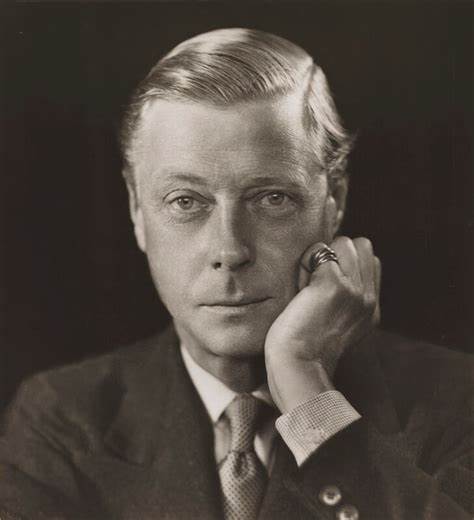
I read an interesting article on-line the other day about the late Duke of Windsor. Born as the heir to the throne of Great Britain, he was trained from an early age. His father, the King, wanted him to learn discipline and honor, so as to be prepared to assume his role. But Edward despised his father’s training. He found his father to be harsh and critical, prim and joyless. And he rebelled. He took little interest in the affairs of state, preferring to focus on his own pleasure. As his father grew older and weaker, Edward was asked to take on more royal duties. He enjoyed making appearances at parties, but despised many of the other tasks– letter writing, or visiting factories or various parts of the Commonwealth. He refused to settle down and marry, until he met Wallis Simpson, who was twice-married, and separated from her second husband. She was also an American citizen.

Edward VIII wanted to defy the laws and traditions of his own nation in order to marry. When this proved to be contentious, he decided to abdicate his throne, marry Mrs. Simpson, and live abroad. Instead, his brother became the next king (George VI), guiding his nation and the commonwealth through the difficult days of the second world war.

For many years, the myth of a king who gave up his throne to be with “the woman I love” has prevailed. But there was more to Edward’s abdication than blighted love. Edward was not incapable of ruling, but he was unfit to rule it well. His lack of dedication to his duties and citizens became evident in the very first crisis. Those who were working with him during his short reign witnessed his lack of care or concern about paperwork, and his selfish insistence on doing what he wanted to do, and not what was expected of him or of benefit to his people. He was a man without discipline and without a clear moral compass https://www.dailymail.co.uk/news/article-417388/Prince-Charmless-A-damning-portrait-Edward-VIII.html.

Photo by nappy on Pexels.com

The Bible is filled with many examples of kings throughout the history of Israel and Judah who also failed to learn discipline or restraint. Their desire to reap the benefits of their position without learning to fulfill their responsibilities led to the moral, and eventually the physical and political collapse of their nations. They did not make a habit of seeking God, or of listening to His prophets. They sneered at good advice, and defied the laws of Moses and the rules God had given for the kings. Some of them worshiped other gods; some even sacrificed their own children to foreign gods or goddesses. They failed to keep the sacred holidays; they failed to read the Word of God; they failed to pray– except as a last resort!

We often perceive prayer as a personal practice– and it is. But how we choose to develop our prayer life may be tied to how we choose to develop the rest of our lives. We don’t need to be rigid and legalistic about it. But we do need to live– and pray– with purpose, if we wish to follow the example of Jesus and grow in our walk with Him. Not only does it impact our life and growth– it impacts our witness and our influence as well. Pursuing prayer in a disciplined way may have a far-reaching impact on our life and the lives of others– even in the generations to come. For more, see the page Why I Keep a Prayer Journal

Blog at WordPress.com.

Up ↑