
Praying and Waiting

I write a lot about praying. I believe in the power of prayer. But I am often challenged by people who say, “God helps those who help themselves.” The power of prayer is not found in the people who pray but in the God who answers. And sometimes, those answers take time and require patience.

I’ve had prayers that were answered almost before I finished saying, “Amen!” But there are other prayers that tested my patience and my faith; prayers for which I’m still waiting for a definite answer; prayers that were answered with a final and unexplained, “NO!”

But some of the most amazing moments in my life have been the ones where God “showed up” at just the right (and seemingly last) moment. The time that we needed a certain amount of money to pay bills– and it showed up almost to the penny! Or that time I prayed about the teaching position. I lost out to another, more experienced candidate and spent much of the year doing substitute teaching in another county. And then, without warning, the school called to ask if I would consider coming back on probation for the same position I had lost out on– the teacher they had hired had developed significant health issues, and they needed a permanent sub for the end of the year. I was able to prove my worth, restoring order and bringing the classes back on track– I stayed for seven more years!

Waiting is not easy or pleasant. When I was almost five, I had a chance to go to kindergarten– My birthday is in November, and the school would allow “young fives”– students who would turn five before December 1st could interview for a chance to be accepted in the current year’s kindergarten. My parents considered it. I desperately wanted to go to school. But I had some lingering health issues from early childhood, and my parents worried that I would be susceptible to viruses and injuries. So, they held me back. I can still remember the ache of watching the school bus pass by my house– the humiliation of having adults ask if I was in school and having to answer, “not yet. I got held back.” It was like a badge of failure in my mind. “Not ready. Not healthy enough. Not good enough.” Years later, I can say that my parents made the best choice they knew how, and it worked out just fine for me. I loved school. I loved my classmates and teachers. And I had more time to be with my baby sister before I spent every day at school. I was older when I made decisions about college and career. I was more mature.

I waited a long time for a husband. I prayed for decades about marriage. And always, the answer seemed to be, “Not yet!” No explanation. No insight into whether I ever would be married. But in the waiting, I grew as a teacher and librarian. I found out that I could not have children of my own. I learned to manage on my own, and also how to reach out for help when needed. And I developed habits of Bible Study and Prayer that have become precious to me. My marriage is a fulfillment of patient waiting and listening to God’s voice, instead of making impatient and rash choices and shutting out the lessons along the way. Oh, and those children I could never have? I never had them. But I ended up with stepchildren and grandchildren who bless my life with love, laughter, and excitement.

God’s best is worth waiting for! I can testify to this on many levels. God doesn’t help “those who help themselves.” They literally “help themselves!” But God blesses those who wait patiently for Him. He doesn’t just show up at the last minute. He stays beside us in the waiting, He encourages us along the way, and He rejoices with us when we see the end from the beginning.

For more, see the following verses (and their context!):
Isaiah 40:31, Lamentations 3:25, Micah 7:7, Psalm 130:5, Romans 8:25, Psalm 40:1, Isaiah 49:23, 2 Peter 3:9, Psalm 27:13…

Revolutionary Thoughts

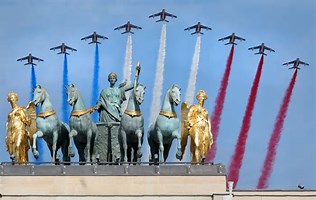
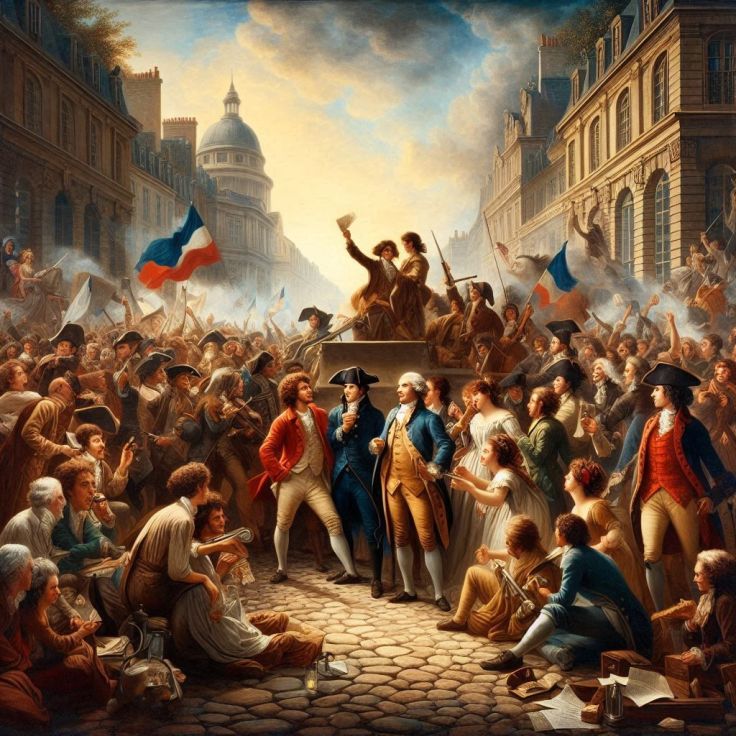
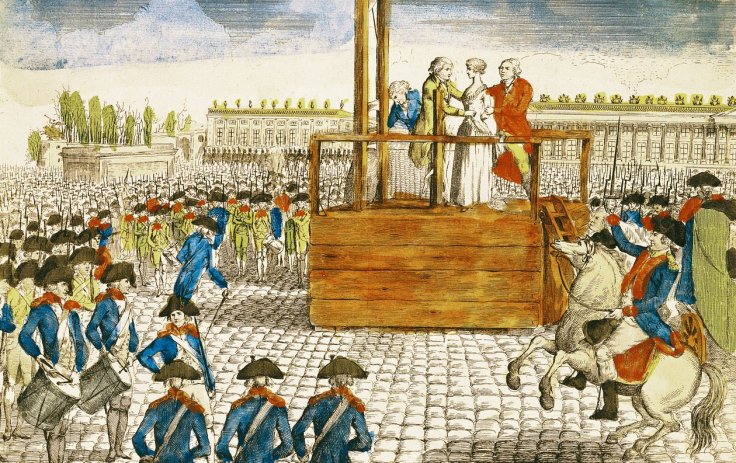
Yesterday was Bastille Day. We don’t celebrate Bastille Day in America, but we should reflect on it. On July 14, 1789, many citizens of Paris stormed the ancient fortress of the Bastille, seizing its munitions and freeing its prisoners. It marked the beginning of the French Revolution, and the end of the ruling monarchy there.

The French Revolution was an indirect result of the success of the American Revolution, which raged just a decade before. The French admired the Americans, and dreamed of throwing off the repressive monarchy and ruling class and creating a new republic with Liberty, Equality, and Brotherhood for all.

But the French Revolution became known over time, not primarily because of its success, but because of its excess. The French Revolution is remembered for its murder of the royal family, the extensive use of the guillotine to execute aristocrats and opponents, for the rise of cruel and vindictive leadership, and a general bloodbath in around the capital city of Paris. While the French still celebrate Bastille Day, they tend to downplay the immediate aftermath of their “freedom”.

The American Revolution certainly wasn’t without bloodshed and power struggles, and by 1789, the fledgling nation was still ironing out its Constitution and dealing with rebellious outbreaks. But the French Revolution led to the rise of dictators, including Napoleon, keeping France in a state of almost perpetual warfare and internal power struggles for the next 50 years. So what made the difference?

Well, I’m not an acknowledged expert, though I have studied this period of history, but I think there are at least three differences that are worth noting:

  • The American Colonies were not trying to overthrow the entire British Government or demolish the monarchy. They were thousands of miles away from the seat of government that controlled them, and they were breaking away from an existing nation, not pulling it down from the inside. There were many aspects of the British Parliamentary government that the Americans respected and even copied. And they already had colonial governments and structures in place, though their power had been limited under British Rule. They were not trying to destroy Britain– just kick them out of the Americas! The French, however, were ready to destroy over a thousand years of French Monarchy in their own backyard. The French aristocracy wasn’t oppressing them from thousands of miles away– in fact the French Colonials in Canada and the West Indies often had more freedom than their citizen counterparts living just outside of Paris.
  • Second, the American Revolution was about justice, not revenge. The Declaration of Independence outlined specific injustices that had been either ignored or perpetuated by the British Government and the King– often in direct contradiction to their own founding principles. The Revolution, though bloody, was considered a necessary evil to correct those injustices, and the resulting Constitution was created to address ongoing injustices in the newly formed United States. In France, the arrests and trials of the nobility were not enough to satisfy the thirst for revenge against those who had been oppressed. Those who rose to power succumbed to its lure and desired more authority and wealth. What started out as a noble dream turned into a chaotic nightmare as innocent idealists were punished, not for crimes they had committed, but for threatening the new balance of power.
  • Finally (and controversially, perhaps), I would argue that the American Revolution was bathed in Prayer in ways the French Revolution was not. I don’t mean to suggest either that American patriots were all Christians or were all prayer warriors, nor that the French were evil or morally bankrupt. But if one reads the documents of the founders of The United States and those of the leaders of the French Revolution, there is a striking difference in the way they reference God and Prayer. France– and Europe in general– had experience the Age of Enlightenment. And while those ideas (both good and bad) spanned the Atlantic, the Americans had maintained a culture of reverence for God and dependence on Prayer in their daily lives that had diminished in “the old world.”

Revolutions can change (or build) a nation. Rebellions can sometimes lead to change for the better. But without prayer, insight, humility, and dependence on God, cries for “Liberty” can unleash chaos and revenge, before any real change can come about.

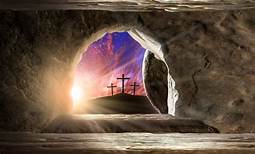
Lastly, I want to remember another “storming of the fortress” that happened long before either the American or the French Revolution– nearly 2000 years ago, Christ stormed the gates of Hell, after being crucified. This was not a Revolution in the same sense as the wars of the 18th century, but a revolution in the way we related to the tyranny of Sin. Christ single-handedly broke the curse of Sin and Death, so that we can live in freedom! We have Liberty to walk with God, washed clean of the guilt and weight of Sin, and free of the sting of Death. We can live in the Freedom to do what is right and good, noble and true.

In our daily lives, we must also be careful in our freedom. We must not become complacent about evil and injustice, nor so comfortable with our liberty that we forget the price Jesus paid for it. We must take a stand against injustice and evil, but we must also call out in prayer and remember that justice is not the same as revenge or power. It belongs, ultimately, in the hands of God. May the French celebrate their republic and the freedom it has brought them. May they also give thanks to God for preserving it for 247 years, in spite of challenges and threats. May those of us who live in freedom continue to depend on God for wisdom in using it to make the world a better place for all.

Prayer and Pyrotechnics

There have been a LOT of fireworks in our area over the past week, and we’re gearing up for even more this weekend. Tomorrow is July 4– Independence Day in America. This year marks 250 years since the signing of the Declaration of Independence from Britain by the American colonists.

What does this have to do with Pursuing Prayer?

There will be a lot of talk about Freedom tomorrow. Freedom from tyranny. Freedom from colonialism. Freedom to pursue happiness, etc. It IS called Independence Day, after all, so there will be much talk about the freedom to make one’s own way in the world; freedom from restrictive rules and old traditions. Freedom to dream new dreams and forge new paths.

Freedom is precious. It SHOULD be celebrated. But it can also be a dangerous ideal, when divorced from God’s Truth. The very first sin resulted from the wish for “freedom.” Free from God’s rule; free to choose disobedience, to protest God’s decisions and challenge His sovereign wisdom.

The Founding Fathers of the United States wanted freedom from the tyranny of distant and deaf kings and Parliament. They protested unfair taxation, soldiers who could come into their homes with no warrant, and laws passed thousands of miles away with no representation or recourse. They wanted freedom from corrupt laws and the indifferent men who made and enforced them. They believed so strongly in a form of government that would be described four score and seven years later as “of the people, by the people, and for the people” that they risked their lives and their legacies to bring it about.

Modern historians have championed the idea that our Founding Fathers were Deists– that they were not Christians, not devoted to the worship of a Judeo-Christian, sovereign and all-powerful GOD, but rationalists who paid scant lip-service to the prevailing monotheistic beliefs of the time. They argue that God was an afterthought for most of these men– that the bulk of their thought and planning revolved around Greek and Roman government and civics.

That line of thought dismisses the strongest language of the Declaration of Independence. “We hold these truths to be self-evident, that all men are created equal, that they are endowed by their Creator with certain unalienable rights…”

WE– not just a few of the members, but all who signed this document agreed with this language, so much so that “for the support of this Declaration, with a firm reliance on the protection of divine Providence, we mutually pledge to each other our Lives, our Fortunes and our sacred Honor.” (emphasis added)

HOLD– the founders weren’t just expressing a noble possibility about truth, justice, and rights. They were staking their lives on the absolute belief that God was THE creator and giver of all rights and freedoms.

THESE TRUTHS–not a plurality of good ideas or noble aspirations, but the very specific and timeless truths about our origins and heritage as human beings created by a loving, wise, and just God.

TO BE SELF-EVIDENT– even those founding fathers who were less devoted to the Bible teachings of the Church, recognized, as the Apostle Paul wrote: “…what may be known about God is plain to them, because God has made it plain to them. For since the creation of the world God’s invisible qualities—his eternal power and divine nature—have been clearly seen, being understood from what has been made, so that people are without excuse” (Romans 1:19-20 NIV). In fact, it was the self-evident nature of these truths that compelled later generations to root out the hypocrisy of slavery in a land founded on the truth that “all men are created equal” and that they have been given the “unalienable” right to liberty!

The Founding Fathers, in holding to these self-evident Truths, challenged, not God, but all existing human forms of government. Their Declaration ignited discussions, arguments, revolutions, and counter-movements around the world. Two hundred and fifty years later, we are still arguing about the meaning behind the Declaration of Independence, as well as the Constitution and Bill of Rights that arose from it. We celebrate our INDEPENDENCE with pyrotechnic shows and sparklers, parades, and concerts. But the fireworks, noise, and bursts of light also echo the explosions, bombs, gunfire, and deadly force that have been risked and braved ever since the Declaration was issued. We also celebrate a legacy of prayer and DEPENDENCE on God. America is not great because its people were better than the people of other nations. It did not become great by its military might or its wealth. It started out as a ragged smattering of colonies, and it came with many flaws and “baggage” from its colonial days. But throughout our history, we have held to “unalienable” truths– eternal truths– that echo God’s Word and God’s wisdom.

Many people today argue for freedom, not from tyrannical government, but freedom from God, from the Bible, from tradition, and from even common sense. The same people who claim oppression from their government are free to criticize it, march in protest, and move freely around and away from their “oppressors.” Protesters demand the freedom to be wealthy, well-fed, comfortable, and supported, without the responsibility to defend their neighbors, share their wealth (only ask that others do all the sharing!), or work for the common good. Others take for granted their right to own property and goods, to pursue an education (including free public schools and libraries), to have and express opinions and beliefs that do not conform to those of elected or appointed officials, to meet in public or private without fear of losing their lives or livelihoods, and the right to worship (or not) without being told how or who or when to do so.

This year, we can expect protests and expressions of disrespect for our government and its leaders. We can also expect that many Americans will claim to celebrate “freedom” even as they are slaves to sin and rebellion.

True Freedom calls for worship. The Founding Fathers laid a foundation for governmental and social freedoms, but they could not grant us–even in the amazing documents they created– eternal Freedom from sin and death. Only the Creator and Giver of All good gifts can do that.

Tomorrow, as we celebrate two hundred fifty years of American Freedom, let’s not forget nearly 2000 years of Christian Freedom! That’s worth more than just a great fireworks’ show. That’s worth a lifetime of worship and joy!

Risky Prayers

When I was a teenager, I read about Solomon and how he prayed for wisdom. God granted his request, and made Solomon the wisest ruler in Israel’s history. He also blessed Solomon with riches and fame, peace, and power. (see 1 Kings, chapter 3) I thought about what I should pray for in my own life– what attribute would I need as I became an adult, a wife, a parent, etc. I prayed for patience.

When I said that I wanted to pray for patience, several wise and respected adults cautioned me NOT to pray such a prayer! “You know what will happen…God won’t “give” you patience…He’ll bring all kinds of things into you life to “teach” you patience. You never pray for such things. It’s like asking for trouble. Be careful what you pray for.”

Looking back over 40 years later, I would have to say that God answered my prayer. And, as I was warned, He allowed things to come into my life to try my patience and develop my patience. I remained unmarried until I was 46. I never had children of my own. Perhaps some people would wag their finger and say, “See, I told you so.” But I would not change my prayer or change my life’s circumstances. God’s answers were not what I expected, but His ways were better than my expectations. I wanted patience so that I could better handle life’s little ups and downs– so I could be the kind of wife and mother who was always composed; always at peace. Instead, I worked with teenagers and toddlers– many of whom knew very little peace at home. I wasn’t perfectly composed. Sometimes, I yelled at my class or lost my temper with colleagues. Sometimes, I had to deal with crises–students who died in tragic accidents or by suicide; toddlers at story time whose parents were going through divorce or facing cancer. And all the while, I waited for the husband and family of my hopes and expectations.

I had prayed for patience– and I found it ONLY when I depended on God. All those years I was single and working with “other people’s” children, I learned to lean on God’s timing and wisdom. Even through the pain and tears, and wondering why God seemed silent and my dreams seemed to be out of reach, God was there, listening to my cries, giving me strength to keep going. And He is still doing the same for me now. My circumstances and expectations didn’t change who God was. But they helped shape who I was becoming, and who I am today.

During this time, I also watched peers who seemed to “have it all.” They had beautiful families, beautiful houses, handsome husbands, and fast-track jobs. But underneath, many were lonely and unfulfilled. Many of them ended up divorced, disillusioned, or burned-out. Some of them have turned (or returned) to God; others still struggle, trying to do everything their own way, and trying to juggle too much alone.

God doesn’t demand that we pray “risky” prayers. But when we choose to follow Him, we will have to take some risky steps. We may have to let go of our expectations; we may have to go through rejection and hardship. But what God has in store for us is worth the risk.

I’m not wealthy or famous. I wouldn’t recommend that everyone pray for patience, or wisdom, or some other virtue, thinking that God will make life easier or richer. (I think that’s what worried some of the people who “warned me off” praying this way.) But if you want to know God in a richer, deeper way, it will require a leap of faith.

What “risky prayer” have you been putting off? Today is a perfect day to take that next step. I promise, you won’t regret it.

Declaration of Dependence

Today, America marks the 249th anniversary of the signing of the Declaration of Independence. In it, colonial leaders listed several reasons why they no longer held allegiance to the British Crown. Many of their reasons involved abuses by the King or by Parliament in relating to their colonial citizens. Taxation without representation; passing unjust laws; requiring people to quarter (feed and house) soldiers who often harmed and cheated them; refusing to hold the soldiers accountable for their offenses– even murder; refusing to allow the colonials to trade with other nations, etc. But there was something more.

We hold these truths to be self-evident, that all men are created equal, that they are endowed by their Creator with certain unalienable Rights, that among these are Life, Liberty and the pursuit of Happiness.–That to secure these rights, Governments are instituted among Men, deriving their just powers from the consent of the governed, –That whenever any Form of Government becomes destructive of these ends, it is the Right of the People to alter or to abolish it, and to institute new Government, laying its foundation on such principles and organizing its powers in such form, as to them shall seem most likely to effect their Safety and Happiness.

In drafting and ratifying these words, the founders of the United States did something unique. They did not just establish an independent government; they established a model for both independence and dependence IN government. Government is not independent of certain inalienable rights, nor of the Creator of those rights. Governments are not the highest authority in the land. Governments are instituted and derive their power, not by their own actions and decisions, but from the consent of the governed. Governments DEPEND on their ability and willingness to serve the people.

Of course, there are wicked and improper governments, and Britain’s rule in 1776 was not the worst example of tyranny or despotism the world had ever seen. The United States has not always lived up to the ideals and principles of the Declaration of Independence. Less than a century after the Declaration was adopted, the United States was engulfed in a war that tested its ideals. The nation was divided by the issue of slavery. Nearly half of the states still practiced slavery, meaning that hundreds of thousands of people were being treated far worse than the “rebellious” colonists of previous generations. Our nation as a whole was not delivering on its promised declaration that “all men are created equal” or that they were endowed by their creator with rights to “life, liberty and the pursuit of happiness”.

But when our nation has remembered its Dependence– our need for God and our need to care for the safety and opportunity for those under our jurisdiction–remarkable things have happened. The union was “saved.” Voting rights were not just extended but enshrined in our Constitution. Americans joined the fight in Europe and around the world on more than one occasion to secure rights for people who were being oppressed, tortured, and even exterminated. The “Promise of America” draws people from diverse nations and cultures and stands as a model for the rest of the world.

Sadly, today, many here in the United States want Independence from America. Our culture has devalued life, exchanged liberty for conformity, and traded the pursuit of happiness for indulgence and selfishness. We want to be independent of responsibility– to our families, to our neighbors, to our nation, and to God. We do not want a government that protects those rights that are endowed; instead, we want a government to give us assumed “rights” that are really permissions to defy God’s laws. We want to be free to redefine morality, escape the consequences of our own poor choices, and feel virtuous without pursuing virtue.

What will happen to our country if this trend continues? On the eve of celebrating our 250th year, we may be on the brink of falling apart. Issues like abortion, immigration, health care mandates, and transgenderism threaten to divide our country, just as slavery did over 150 years ago. Americans are divided on political, economic, religious, and cultural issues. We can’t seem to agree on what we mean by “rights, ” “freedom,” or “pursuit of happiness.” We can’t even seem to define what a “woman” is or decide how many genders to fight for. Everyone wants to speak out, but no one seems willing to listen– except to find another point of disagreement. We are no longer “united” states– we are warring factions in a series of culture wars.

But what happens when American Christians declare our Dependence on God and on His Word? Many around us have declared their independence from God’s laws–even to the point of denying His existence. Many people live in a self-imposed despotism; they are enthralled by a false “freedom” from morality, reverence, and even common sense. But Christians– wherever they live– are called to submit to the authority of Christ above all. We depend on Him– not on our customs, not on our history, not even on the words of the Declaration of Independence. And we are to lean on God, not on our own understanding or our superior morality or our ability to shout louder than the next person! Our Freedom comes through Christ alone!

True “freedom” comes from dependence, not independence. When we depend on Christ’s finished work on the Cross, we are free from the weight of Sin and the power of Death. When we depend on God’s wisdom, we find understanding. When we depend on God’s guidance and discipline, we gain freedom from guilt and shame. When we depend on God’s power to channel our emotions and energy, we find purpose and joy.

Today, I declare my utter dependence on God– on the Salvation He provided through Jesus Christ, and on the power of His Holy Spirit to lead me through this life. I am glad to be an American, but my ultimate citizenship is in Heaven. The “promise of America” is a good thing: the promise of Heaven is glorious and life-changing!

Jehovah Jireh– The God Who Provides

Often when I am praying, I’m asking for something– “Bless this food,” “bring healing to _______,” “help the victims of (insert recent natural disaster) to find shelter, food, water, etc.,”..

God is a provider. He is the owner of everything, yet He chooses to share good things with us. He provides for the birds of the air and the flowers of the field. He provides for insects and elephants. He provides water and sunlight for all the plants– whether in the rain forest or the desert. He provides air for us to breathe and provides plants to recycle what we breathe out. He provides for the orphan and the widow, the homeless and the dispossessed. And for those who seem to “have it all”– God is the ultimate source of their riches, too.

In the book of Job, we meet a man who seemed to “have it all.” He was wealthy, healthy, respected, and surrounded by family. And when it all disappeared in a flash, his response was very telling. He said, ” Naked I came from my mother’s womb, and naked I will leave this life. The Lord gives, and the Lord takes away. Blessed be the name of the Lord.” (Job 1:21 CSB). Job had learned that in good times or bad, God was his provider. And Job’s faith in God’s provision and His faithfulness gave him hope, even in the worst of his troubles.

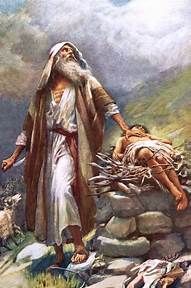
The first time we hear of Jehovah (or Yahweh) Jireh is in the story of Abraham and Isaac and the sacrifice at Mount Moriah. God asks Abraham to take his son– the son of the promise; the son for whom he had waited so long– and give him as a sacrifice. Nowhere else in the Bible does God ask for a human sacrifice– in fact, God says He detests the practices of the nations and religions who sacrifice their children to Molech or other gods. Yet, when Abraham obeys, in spite of whatever fear or horror is conjured up by the command, God stops him and provides a ram as an alternate sacrifice. Abraham names Him Jehovah Jireh– the LORD who will provide–as a result of that experience. (See Genesis 22)

But Jehovah Jireh means more than just God providing what we need in the moment or what we ask for in prayer. It also means, “the LORD who perceives, or experiences.” God does not just stand removed from our situation and write a blank check for us to cash when or how we see fit. God is with us (Emmanuel) and sees our deepest and most profound needs. He also sees our daily and even seemingly silly needs. He knows, He cares, and He provides good gifts. God did not send Abraham and Isaac alone on their perilous mission. He was right there, ready to step in and provide what was needed. What an amazing turn-around for Abraham. He went from anguish to absolute joy in those precious moments, and learned to know God in a personal, experiential, and powerful way.

Sometimes, we lose sight of that. Sometimes, it seems as though God is far away and indifferent, or even cruel. When Job accepted the loss of his wealth, his health, his status, and all of his children, it was not easy for him to say, “Blessed be the name of the LORD.” God had taken away nearly everything– in fact, the only things Job had left were some unhelpful finger-pointing friends and a complaining wife! But God restored everything that Job had lost, and then some! God does take away. And it hurts. He doesn’t stop us from experiencing heartache and grief. But even then, He is Jehovah Jireh– the LORD who experiences; the LORD who perceives. He does not leave us without hope or comfort, if we seek His face. As the Psalmist says: “The nights of crying your eyes out give way to days of laughter.” (Psalm 30: 5b The Message)

The story of Abraham and Isaac; the story of Job and his losses– each points us to another truth about how God is our provider. He provided His own Son to be our sacrifice– to pay the debt for our Sin, and to give us Eternal Life (see John 3:16). God experienced all the anguish and loss of death so that we would only have to taste it once. Jesus lost everything to gain our redemption. And He rose victorious over death, so we can have hope and joy in this life and in the life to come!

Recently, I was worried about finances– not because we had no money, but we had unexpected bills. I asked the LORD to provide, knowing that He could, but expecting that we would have to raid our “rainy day” fund to get through the week. But God had an amazing surprise– an unexpected gift of $100! Just when we needed it. God could have provided ten dollars, or a thousand dollars. He could have allowed us to dip into the “rainy day” fund and provided some unexpected money the following week. But I believe God saw, not just our monetary need, but my need to be reminded of His loving care and faithfulness. God knew what we needed. He provided what we needed. And He shared in our experience of dependence on Him and joy in His creative answer.

I don’t know where I will be today or tomorrow. I don’t know what needs are on the horizon. And I don’t know how or what God will provide. He may not provide healing for a disease, but strength for the fight. He may not provide a cash gift for our material needs, but He may provide opportunities to trade with neighbors or earn extra money when we need it next. Whatever God chooses to do– whatever He gives or takes away– He is my provider of abundant life. “Blessed be the Name of the LORD!”

(For more about this Name of God, see https://www.christianity.com/wiki/god/what-does-it-mean-that-god-is-jehovah-jireh.html)

Why Say Grace?

When I was growing up, we always said grace before our meals. It wasn’t an afterthought; it wasn’t an affectation. It was just part of the meal. We sat down, said grace, and started eating. Sometimes, Dad did the honors; sometimes, it was Mom. And sometimes, my sister or I were asked to say it. It was usually something simple, though it wasn’t always the same. We would say grace at home, around our own table, and we would say grace at restaurants– wherever and whenever our family was together for a meal.

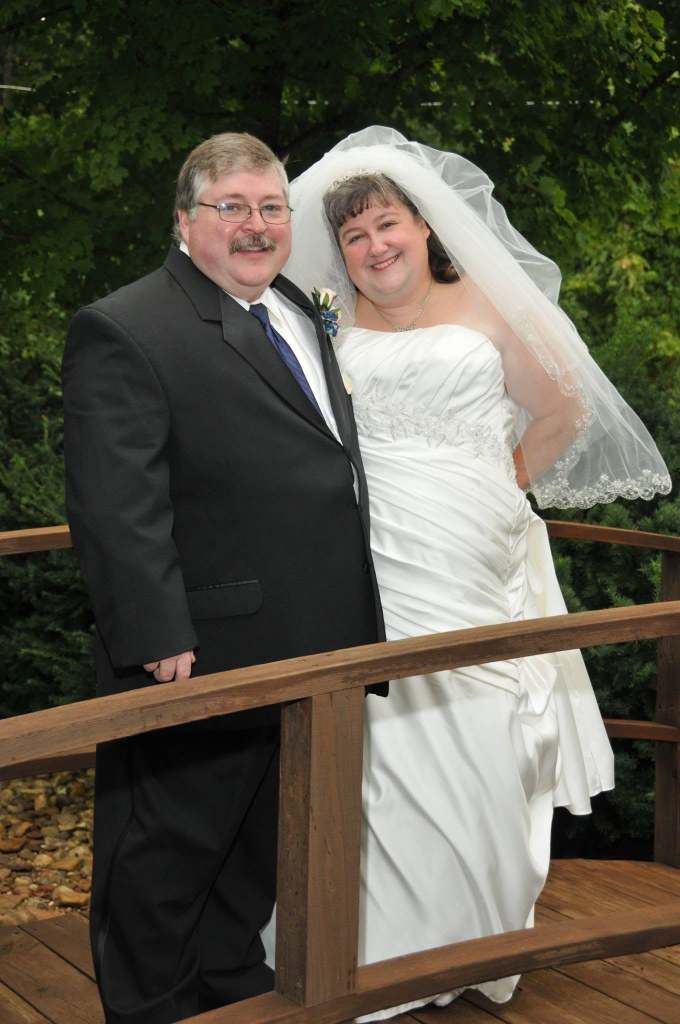
Today, my husband and I have the same tradition. We don’t have children in the house, but he and I take turns saying grace, and if one of the grandkids happens to visit, they know they may be asked to take a turn, as well. If David and I are eating out, we still take a quiet moment to hold hands, close our eyes, and say grace. Some times, other diners or wait staff will stare (or glare) or comment, but most of the time, they don’t even notice.

So why do we do it? Is it no more than force of habit? Are we just “holier” than other diners? Do we really think it impresses God if we say grace, or that God will be angry if we don’t say it?

No. But we believe saying grace is important. Here are some reasons why:

  • Grace is about gratitude. In our busy lives, it can be tempting to take things for granted– even things like food and family. We are BLESSED to have food to eat, and family with whom to share it. We are blessed when we go out to eat to have others cook and clean up for us. We are blessed whenever our family or neighbors can share a meal with us. God is a loving and gracious God, and grace is a time to remember our blessings.
  • Grace slows us down for just a minute to REMEMBER who we are, and who God is! All our blessings– including food and family and time to share them– come from God. Grace reminds us to be humble as well as thankful. It reminds us to see God’s hand at work in even the smallest and most mundane happenings in our lives. And it reminds us that God is faithful in all things, big and small.

  • Grace also helps us to remember to thank the people involved in our meals– the ability to buy groceries; the work it takes to prepare our food; friends and family who share our meals; neighbors who have given or traded with us for food; the cooks and wait staff that serve us at restaurants. Saying grace helps us SEE how we are interconnected; how we depend on God and on others in every area of our lives.
  • Grace gives us the opportunity to lift up our immediate worries and give them to God, instead of holding on to them. Grace is more than just a quick word about food. It is a time for us as a couple (or a family) to pray together about worries that are on our minds. Then, instead of being stressed as we eat, we can stay “in the moment” with each other, and enjoy mealtime together! It’s also a great way to share our thoughts, feelings, and concerns in a safe and informal environment. How much better mealtime is when stress and frustration are diminished, and joy and peace are given a seat at the table, instead!

Saying grace is much more than just a quaint habit from a bygone era. It is a vital part of our growth as individual Christians, and as a Christian couple. I believe it is a simple and quiet witness to others. I believe it has benefits for our digestion, our attitudes, and our emotions, as well.

Grace– not just the mealtime prayer, but the concept of Grace– is not loud or showy. It is, however, consistent, lovely, and powerful. May we say grace; may we show grace; may we live in the power of Grace today!

Faith, Faithfulness, and Moving Forward

Now faith is confidence in what we hope for and assurance about what we do not see. This is what the ancients were commended for.By faith we understand that the universe was formed at God’s command, so that what is seen was not made out of what was visible… And without faith it is impossible to please God, because anyone who comes to him must believe that he exists and that he rewards those who earnestly seek him.

Hebrews 11:1-3; 6 (NIV) taken from http://www.biblegateway.com

Faith is essential to prayer. Not only is it essential that we know the truth, we must depend on it. Those who lift up general prayers to some unknown “force” in the universe have no real hope that their prayers will be heard, instead of bouncing around among the planets in silent expectation. We pray to a God who sees, hears, loves, and works among us. And He will answer our prayers– in His way, in His time, and to our ultimate benefit.

That does’t mean that we must blindly believe everything we hear about God, or that we must agree exactly with everyone else who claims to believe. None of us has ever seen God face-to-face, nor can we claim perfect knowledge. But there are certain truths that do not change– God is GOD; creator, ruler, unchanging and Holy. God is who He says He is, not who someone speculates or imagines Him to be. God is mysterious, but He is “Knowable”–we see His character in the natural world, and we can see His reflection in the people around us who are all created in His image. Most of all, we have the testimony of Jesus Christ and of all who have followed Him and been transformed by Him. To all who earnestly seek Him, He has given us His Word, and His Spirit to guide us. And God is Good. Even though nature (and human nature) has been tainted and twisted by sin, God remains true to His own goodness. Even in the hard times, when God seems distant–especially when He seems distant–faith looks beyond our present circumstances, and the taunts of our enemies, to remind us of God’s providence, His Power, and His promises. Our present trials and calamities are not beyond His ability or His willingness to turn to good purpose, and they do not compare to the promises God has given.

Faith is essential to prayer, but so is faithfulness. Prayer is part of a growing relationship with our Maker. And like any relationship, it must be maintained. God is eternally faithful, but we are not–not in our own power or in our own will. And our faith, without faithfulness (in prayer, in devotion, in our everyday thoughts and actions) will wither and die. The same thirst we have for prayer in the valleys of life should be present when we reach the mountaintops. The same need we have to cry out for help should be the need we feel to cry out in praise. This will not happen without discipline, developed by daily seeking His face.

As we approach a new year, we can make many plans and resolutions– let one of them be to strive for faithfulness, especially in our pursuit of prayer. We know it is the right thing to do. And our faithfulness is not just for us. It blesses the heart of the One who was faithful even unto death. And it shines as an example to those around us– inspiring some to faith, and others to renewed faithfulness.

Finally, let’s also resolve to move forward a step each day, remembering that
“The steadfast love of the Lord never ceases;
    his mercies never come to an end;
23 they are new every morning;
    great is your faithfulness. (Lamentations 3:22-23 ESV)

God’s mercies are new every morning. And our resolve should be renewed every morning. It is God’s faithfulness that allows us to work toward greater faithfulness. We will not keep our resolutions in our own power, nor will we keep them by remaining stuck in our past failures.

Let’s embrace the coming new year as an opportunity to stretch our faith muscles, grow in faithfulness, and move forward in mercy!

Leaning– “Eutychus and Hot Dogs” Revisited

*Note: This is a revision of an older post– you can visit the original here: https://wordpress.com/post/pursuingprayer.blog/2156

I was reminded today of an old hymn; one that I heard as a child and did not understand at all. Have you ever heard a new song, and completely mis-heard the lyrics? As a young child, I often heard hymns sung that were familiar to the adults but “new” to me. This was one of them. I paid little attention to the first verse, but the chorus!?! I was convinced the congregation was singing, “Wienies (the word my grandparents sometimes used for hot dogs)! Wienies! Wienies on the everlasting arms…” It sounded like a righteous chorus of hot dog vendors at a baseball game. What could hot dogs possibly have to do with living for Christ? I giggled and snorted, and my grandmother, who was standing next to me, quietly leaned over and asked what I found so funny. When I explained it to her, she too began to giggle a little, and we shared a (quieter) giggle and smiles throughout the rest of the hymn. (Sacrilegious, I know, but it seemed very funny to a five-year-old.) Later, my grandmother lovingly explained the hymn–turning a “silly” song into a wonderful testament of God’s tender, loving care that touches me to this day.

There is another old hymn, known as “The Solid Rock” or “On Christ the Solid Rock I Stand. ” One of the lines of the hymn states, “I dare not trust the sweetest frame, but wholly lean on Jesus’ Name.” Jesus IS the solid rock, the everlasting arms, and the “frame” on which we can both stand and rest secure. He is also our anchor in any storm (see “My Anchor Holds” https://wordpress.com/post/pursuingprayer.blog/5828)

There is a curious story in the Bible about the Apostle Paul and a young man named Eutychus. https://www.gotquestions.org/Eutychus-in-the-Bible.html. The story is found in Acts 20:7-12 https://biblia.com/bible/esv/acts/20/7-12, and involves a young man listening to the Apostle Paul. As Paul talks on into the night, the young man, sitting in the third story window, falls asleep, falls out of the window, and plummets to his death. Luke, who authored the the gospel which bears his name and the book of Acts, was a doctor, and an eyewitness of this event. He clearly states that Eutychus died from his fall. But Paul runs outside and immediately brings Eutychus back to life, returning inside to finish his talk and eat with the crowd– who are amazed and relieved to find their friend alive and well. The Bible doesn’t say what they had to eat– certainly NOT hot dogs– nor does Luke spend time giving details of the aftermath of such a miracle. Paul simply picks up the limp form in his arms, lets everyone know that the young man is alive, and they all return upstairs and pick up where they left off: “breaking bread” and talking!

Luke’s story doesn’t say whether or not Eutychus was alone in the third story window, or leaning against a wide window frame or perched precariously before he fell into “a deep sleep.” I have always imagined him perched comfortably leaning against the side of a wide and open window frame, one leg drawn up and the other dangling as he listened to Paul speak. As the night wore on, he may have slouched a bit, or even turned to lean his whole back against the frame, pulling both legs up onto the wide ledge. I imagine there were others sitting close by. There may even have been others leaning against the window frames! But as they were engrossed in Paul’s message, and whatever questions were being asked and answered, Eutychus drifted into sleep and lost his balance. My mental picture may be completely wrong, but I don’t think of him hugging a narrow space and sitting tense or afraid and clinging to the window frame before sleep claimed him. I imagine that he felt safe and secure in his position, never expecting to fall to his death; never expecting to become famous for falling asleep during one of Paul’s sermons!

I don’t recommend to anyone that they trust themselves to a window frame, a third story balcony, a too-comfortable seat at the theater, or to hot dogs eaten in bleacher seats at the baseball game. God doesn’t call us to get comfortable! Even if we are listening, and trying to follow Jesus, we may still fall– literally, like Eutychus, or figuratively. We may misunderstand, or get confused or weary and lose our focus. We may put ourselves at risk by leaning on the wrong frame. I believe that the story of Eutychus has several lessons for us.

  • First, we should be on guard. Eutychus wasn’t doing anything especially risky or unusual at the time of his death. It would have been common for people to sit where they could see and hear a speaker– not unlike sitting in bleachers at a baseball game!–and most houses were constructed so that windows were open. We often do things that seem natural and even good, but we, too, can “fall asleep” in complacency, routine, tradition, and other things that can lead to a “fall.”
  • Second, we should be slow to condemn. Again, Eutychus wasn’t doing anything that “deserved” death. There was nothing overtly sinful about his situation, nor does the Biblical account suggest any reason to judge Eutychus: this was an accident that might have happened to anyone. There is something cold and un-Christlike that sometimes arises in modern Christian culture. Many of us are quick to see any misfortune as “proof” of something lacking in others. Lacking in Faith; lacking in commitment or obedience; lacking in knowledge; lacking in God’s favor. Such an attitude shows a lack of compassion and a lack of humility! Eutychus is one of US! His death would have been a tragedy– his resurrection was a source of joy. We don’t know WHY Eutychus fell– but we know that God intended for him to be saved. And isn’t that where our focus should always be?
  • Lastly, the story of Eutychus reminds us of Paul’s marvelous words to the Roman believers:

35 Who shall separate us from the love of Christ? Shall tribulation, or distress, or persecution, or famine, or nakedness, or danger, or sword? 36 As it is written, “For your sake we are being killed all the day long; we are regarded as sheep to be slaughtered.” 37 No, in all these things we are more than conquerors through him who loved us. 38 For I am sure that neither death nor life, nor angels nor rulers, nor things present nor things to come, nor powers, 39 nor height nor depth, nor anything else in all creation, will be able to separate us from the love of God in Christ Jesus our Lord.

Romans 8:35-39 ESV

God could have kept Eutychus from falling from that third story window, but I believe He meant for that story to come down through the ages. It is not just a miracle, and a testament to the power of God and given to the Apostle Paul. It is a great reminder that even when we are trying to listen and follow God, we can still end up trusting in the wrong things and “falling asleep”. But no matter how far we fall, or how broken or “dead” we may seem to be, God sees us, cares for us, and wants to give us new life! Nothing– not even death– can separate us from God’s loving care or His ability to give us restoration and renewed life! We can rest “safe and secure from all alarms” when we remain in (or return to) the reassuring, everlasting arms of our Savior.

Some days, I feel like Eutychus– lying broken and useless three stories below where I began. Other times, I feel like a confused hot dog vendor, calling out to God for “Wienies”, when I really need Wisdom and Grace. Still other times, I feel like one of the crowd– wondering why Eutychus fell, instead of wondering at God’s miraculous ways. But God is faithful to bring me back time after time, wrapping me in his amazing “Everlasting Arms”:

But Did I Pray?

I cried a bit.
I threw a fit.
Made a fuss;
Kicked up some dust…
But did I pray?

I made a plan.
I took a stand.
I marched around;
Made some sound.
But did I pray?

Photo by Andrea Piacquadio on Pexels.com

I went on-line;
Looked for a sign.
I read a book;
Took another look.
But did I pray?

I hit a wall.
I made some calls.
I spoke to friends.
I followed trends.
But did I pray?

I shook my head
And then I said
A hasty word.
I felt unheard.

I wondered why;
Had another cry.
I drove my car
And searched the stars.
But did I pray?

Prayers are simple.
Prayers are quiet.
I wanted answers.
I wanted a riot.

My heart was proud.
My voice was loud.

But what can I say?
I didn’t pray.

“Be still, and know that I am God..” Psalm 46:10

Blog at WordPress.com.

Up ↑