Who Are We Feeding?

“An old Cherokee man told his grandson, ‘..My boy, there is a great battle between two wolves that live inside us all. One is evil–it is anger, jealousy, greed, lies, resentment, regret, and arrogance. The other is good– it is joy, love, peace, hope, kindness, humility, empathy, and truth.’ The boy thought for awhile, and then he asked, ‘ Grandfather, which wolf wins the great battle?’ The wise old man replied quietly, ‘The one you feed.'”

The Story of the Two Wolves– a Cherokee legend

 “Don’t store up treasures here on earth, where moths eat them and rust destroys them, and where thieves break in and steal. 20 Store your treasures in heaven, where moths and rust cannot destroy, and thieves do not break in and steal. 21 Wherever your treasure is, there the desires of your heart will also be. 22 “Your eye is like a lamp that provides light for your body. When your eye is healthy, your whole body is filled with light. 23 But when your eye is unhealthy, your whole body is filled with darkness. And if the light you think you have is actually darkness, how deep that darkness is! 24 “No one can serve two masters. For you will hate one and love the other; you will be devoted to one and despise the other. You cannot serve God and be enslaved to money. 25 “That is why I tell you not to worry about everyday life—whether you have enough food and drink, or enough clothes to wear. Isn’t life more than food, and your body more than clothing? 26 Look at the birds. They don’t plant or harvest or store food in barns, for your heavenly Father feeds them. And aren’t you far more valuable to him than they are? 27 Can all your worries add a single moment to your life?28 “And why worry about your clothing? Look at the lilies of the field and how they grow. They don’t work or make their clothing, 29 yet Solomon in all his glory was not dressed as beautifully as they are. 30 And if God cares so wonderfully for wildflowers that are here today and thrown into the fire tomorrow, he will certainly care for you. Why do you have so little faith? 31 “So don’t worry about these things, saying, ‘What will we eat? What will we drink? What will we wear?’ 32 These things dominate the thoughts of unbelievers, but your heavenly Father already knows all your needs. 33 Seek the Kingdom of God above all else, and live righteously, and he will give you everything you need.

Matthew 6:19-33 NLT

Just a short while ago, I published a blog entry called, “You Are Not What You Eat.” But sometimes, you DO become what you consume. I’m not talking literally about food, but figuratively you become what you read, and listen to, and spend time and money on– what you consume can end up consuming You!

“Watch your thoughts, they become your words; watch your words, they become your actions; watch your actions, they become your habits; watch your habits, they become your character; watch your character, it becomes your destiny.”

― Lao Tzu

Just like the two wolves in the Cherokee legend, there are two forces at work inside us. The Bible calls them “flesh” and “spirit.” The Apostle Paul also writes about this great battle:

15 For I do not understand my own actions. For I do not do what I want, but I do the very thing I hate. 16 Now if I do what I do not want, I agree with the law, that it is good. 17 So now it is no longer I who do it, but sin that dwells within me. 18 For I know that nothing good dwells in me, that is, in my flesh. For I have the desire to do what is right, but not the ability to carry it out. 19 For I do not do the good I want, but the evil I do not want is what I keep on doing. 20 Now if I do what I do not want, it is no longer I who do it, but sin that dwells within me.

Romans 7:15-20 ESV

We all start with “good intentions.” We want to be known as a “good person.” We want to have healthy relationships. We want the trust and respect of others. But Sin works in us against our own good intentions. We get hurt, so we lash out in anger. We see others achieving success or enjoying benefits we think we should have, and we become envious or resentful. We allow fear, greed, or bitterness to overpower us. We lie, or we isolate ourselves from others. We give up in despair, or reject the help and advice of those who want what’s best for us. We rely on our own resources and “will power” to achieve success, even to lose weight– but we always seem to fall short! We compare ourselves to others– sometimes ending in arrogance and apathy, sometimes ending in shame and humiliation.

But the battleground is not always so obvious as arrogance or despair, hurting others or being victimized. Who are we feeding in those moments of relaxation and ease? Are we scrolling through websites that waste our valuable time or encourage us to devalue others around us? Are we listening to music that encourages us to anger and pleasing ourselves at any expense? Are we reading books or watching movies that honor God? Are we spending money in ways that please Him? Are we spending our “down” time on our knees? Who are we feeding when times are tough? Are we spending time worrying or scurrying around trying to “make things happen” a certain way? Are we grateful, or fearful? Are we terrified or trusting? Our small choices in things that don’t seem to matter can start to change the way we think, and speak, act, and live.

There IS a great battle. But there are also tiny battles in the little moments of our day: opportunities to inch closer to God or to lose ground to the distractions and temptations of the world. And on our own, we will lose the battle, for the “flesh” will conspire to steal even the “good” food we think we are feeding ourselves. Thankfully, Christ came to feed the “good wolf.” In following Christ; in developing a relationship with Him, we allow His Spirit to nourish us. He is the “bread of life.” He is the “living water.” He alone provides the power to win the battle. Paul follows up in Romans by saying:

Likewise the Spirit helps us in our weakness. For we do not know what to pray for as we ought, but the Spirit himself intercedes for us with groanings too deep for words. 27 And he who searches hearts knows what is the mind of the Spirit, because the Spirit intercedes for the saints according to the will of God. 28 And we know that for those who love God all things work together for good, for those who are called according to his purpose. 29 For those whom he foreknew he also predestined to be conformed to the image of his Son, in order that he might be the firstborn among many brothers. 30 And those whom he predestined he also called, and those whom he called he also justified, and those whom he justified he also glorified.

Romans 8 26-30 ESV

So who are we feeding today? Or rather, who is feeding us? What are we consuming, and is it consuming us in turn? I hope we are feeding on God’s Word today, and walking with Him in each moment– whether in quiet reflection or in desperate need. May we be nourished and satisfied as we walk forward with Him!

I Shall Not Want..

Of all the 150 Psalms in the Bible, Psalm 23 is the most well-known. It speaks of our Lord as a Shepherd who takes care of us, leading us to green pastures and calming our fears even in the valley of the shadow of death. But these four words in the very first verse, though comforting to many, have also been a source of grief to others. If the Lord is my Shepherd, I should have no reason to want. But what if I still have wants? Unanswered prayers? Struggles and trials and lacks?

Photo by Ken Ozuna on Pexels.com

Let’s look at the phrase carefully. “I shall not want” is the wording in the King James (English) version of scripture. More modern translations render the phrase as “I lack nothing (NIV),” “I have what I need (CSB),” or other variations of “I shall not want.” Let’s stick with “I shall not want,” and look at it word by word.
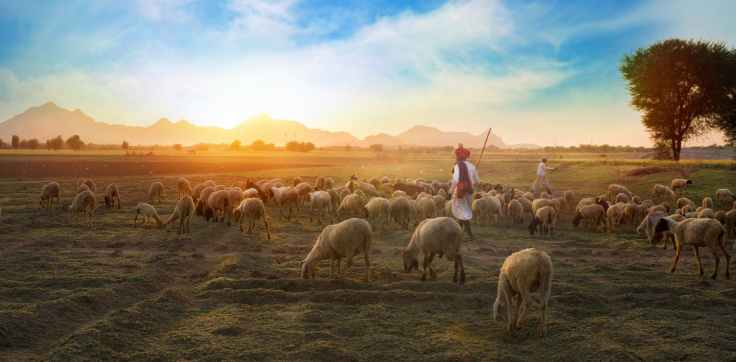
This Psalm is very personal. The Lord is MY Shepherd– I shall not want. This is between me and my Shepherd. I may be tempted to look around and compare, to want what someone else has, even if I don’t need it; even if it isn’t good for me. But when I depend on my Shepherd to provide, I can trust that whatever comes, He knows what I want and what I need. He knows what is best. Therefore, I shall not worry or wonder or want.

Photo by kailash kumar on Pexels.com

I am a former English teacher, so the verb “shall” interests me here. “Shall” and “will” are sometimes used interchangeably in English, but they are not exactly the same. “Shall” is not used much, but it indicates a future condition, or a condition that is ongoing into the future. It is not the active verb in this phrase, but rather the indicator of when that action (wanting, lacking, needing) will take place and how. The difference between “shall” and “will” in this case is not one of action, or time, but of volition. “Will” indicates a conscious decision– I “Will not want” means I will determine the action and outcome–without a Shepherd’s guidance or provision. I “Shall not want” means the outcome is determined by my Shepherd (in this case), not by my own volition or actions. There may be things I “will” still want– if I’m trying to go my own way and depend on my own wisdom and abilities, but that doesn’t change my condition–God has provided. God has given. God WILL continue to provide.

Photo by Jigar Maru on Pexels.com

“I shall NOT want”– I may desire something else; I may not have what others have; I may be poor or sick or sad. I may respond to my circumstances with grumbling, doubt, anger, envy, greed, or disbelief. But I can also respond with trust, gratitude, wonder and worship, knowing that God sees me, knows me, and cares for my always. God doesn’t force me to respond positively to hard times– the Psalmist doesn’t say, “The Lord is my Shepherd, I shall be grateful,” or “I shall never complain.” He doesn’t say, “The Lord is my Shepherd, I shall have whatever gives me pleasure or makes my life easier.” Rather, he gives us a true picture life– I will NOT have everything I wish for; I will NOT understand or take pleasure in all the circumstances of my life, but I shall NOT be abandoned, left alone and without help or resources, lacking any source of hope, joy, peace, or love.

Photo by Denniz Futalan on Pexels.com

Finally, we come to the word “want.” In this context, it is meant to signify lack– I shall lack for nothing; I shall not be without (God who provides). And this is where many people struggle with the verse; with the Psalm; with the Shepherd Himself. We DO lack– many things. We lack money to pay the bills, we lack in our relationships, we lack perfect health, we lack patience…the list is endless. We “want” for many things. And we read Psalm 23, and it seems to mock us. If God is our Shepherd, why do we lose loved ones to disease? Why do we have to declare bankruptcy? Why did our spouse file for divorce? Why can’t we break that bad habit or addiction? Why do we see “good” people suffering? Doesn’t God see or care? God doesn’t give us easy answers. He doesn’t promise ease and comfort in this fallen world. But He is with us, not matter where, no matter what, no matter how we got there. And He promises to renew, restore, and redeem all that we lack in the present– perfectly and forever after.

Photo by rawpixel.com on Pexels.com

I shall not WANT. I shall suffer in the present– loss, pain, confusion, heartbreak, disappointment, failure. But I am not without– not without God’s presence in this world, and not without His promise of justice, mercy, hope, and love now and in the world to come. I am still a sheep–I have needs, I make unwise decisions, and I don’t have the ability to see or defend against the dangers of this world. But I have a Shepherd– all-knowing, all-powerful, and extravagant in Love and Grace. I will depend on Him. I will call out to Him. I will follow Him. And I shall not want!

Blog at WordPress.com.

Up ↑