We the People

Yesterday and today mark two important milestones in North America. September 16 is Mexican Independence Day, and September 17 is Constitution Day in the United States. On these days, people in our two countries celebrate some of the great things that can be accomplished by “we the people.” The founders of our nations were not perfect, but they fought and worked and came together to make “a more perfect union,” and a brighter future for their citizens.

All around the world, governments are instituted to protect the rights and lives of people– to protect them from danger, to allow them to interact in peace and safety, and to provide for “the general welfare” of all. But governments– even the best–are run by fallible people.

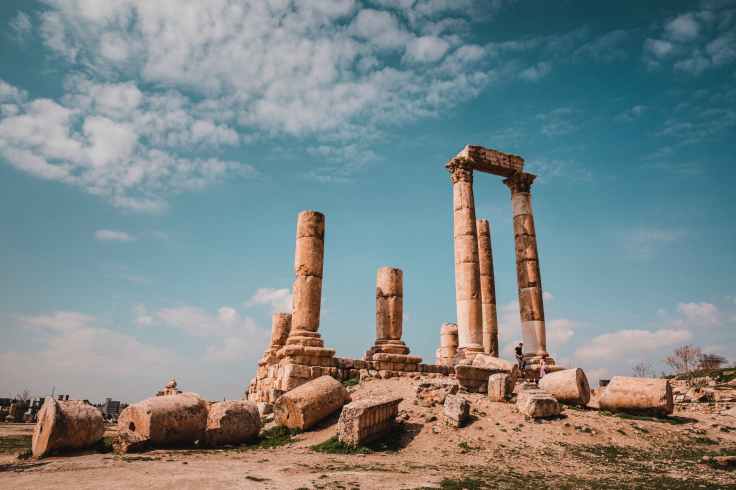
Photo by Hugo Entrepreneur on Pexels.com

The Bible tells a long and complex story of the ancient nation of Israel. Tracing its origins to a single patriarch (Abraham), the family grew to be a powerful nation, ruled first by priests and judges, and then by a series of kings. The nation split into two distinct countries, before being scattered and sent into exile. The story of the nation is chronicled (literally) in the books of 1 and 2 Samuel, 1 and 2 Kings, and 1 and 2 Chronicles. In the books of the prophets, the same message comes from God again and again–Israel and Judah have both fallen into the same idolatry and corruption that doomed the nations they had conquered in former times. Instead of seeking justice for all the people, and providing order and protection, the leaders had become drunkards, liars, thieves, and murderers. They betrayed their allies, made foolish treaties, oppressed the poor and helpless, and celebrated their own cleverness. “We the People” had devolved into “us versus them.” Worship of God had been replaced by worship of a pantheon of foreign gods–worship that involved ritual prostitution and human sacrifice. Family members and fellow citizens were sold into slavery, robbed and beaten, used and abused, and slaughtered–without remorse or fear of retribution. God’s warnings were followed by His justice and punishment, and the demise of both nations, as well as punishment for their neighbors.

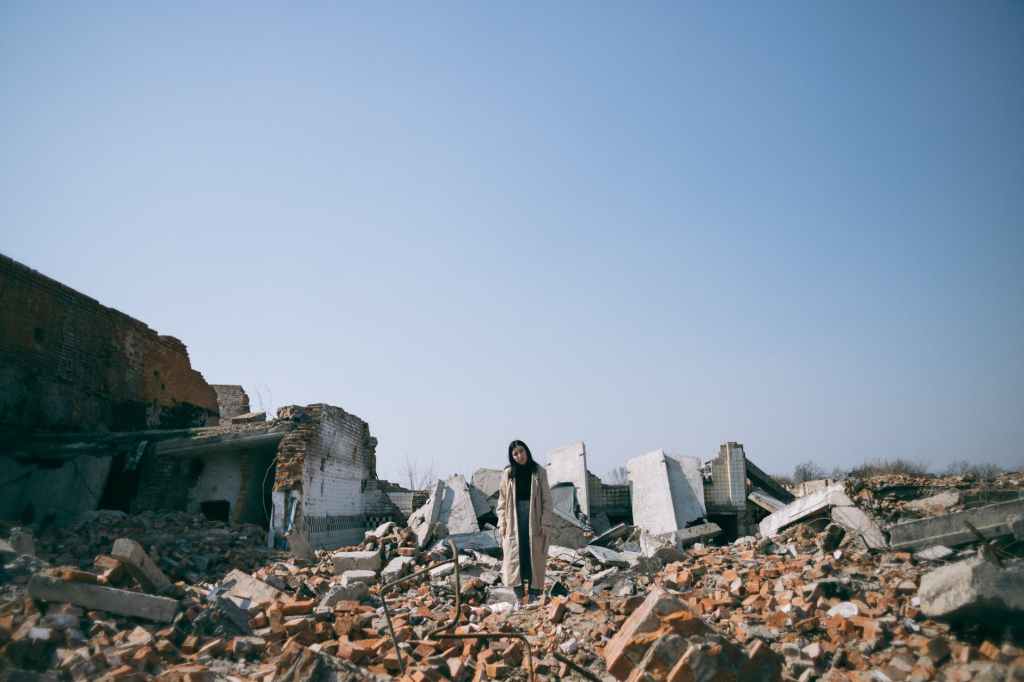
Photo by u0404u0432u0433u0435u043du0456u0439 u0421u0438u043cu043eu043du0435u043du043au043e on Pexels.com

Israel’s story, while very detailed, isn’t unique in history. Instead, it is a case study of what can happen when the people abandon unity and the rule of law for division and corruption. It is what happens when “who we are” becomes more important than “whose” we are; when “we” are more important than anyone else–even God. Israel and Judah continued to be religious right up to the point where they were dragged off to exile. They brought offerings and sacrifices, sang songs, prayed, and memorized scripture. Their leaders assured them that God would protect them and continue to let them prosper as their enemies marched up to the gates of Jerusalem. They had not abandoned the worship of God– they had just added idolatry to it. They worshipped their own prosperity, they worshipped gods and goddesses of the harvest, of war, of wealth, and wisdom. They still thought God was great– but not necessarily Sovereign.

Who or what are we worshipping today? What “new” and additional principles have we added to our own Constitution? To the laws of the land? To our way of being good citizens in our respective countries? To the eternal Word of God? When we hear the phrase, “We the People,” does it bring to mind people who look and live differently than us? Does it bring thoughts of justice and unity? Does it humble us?

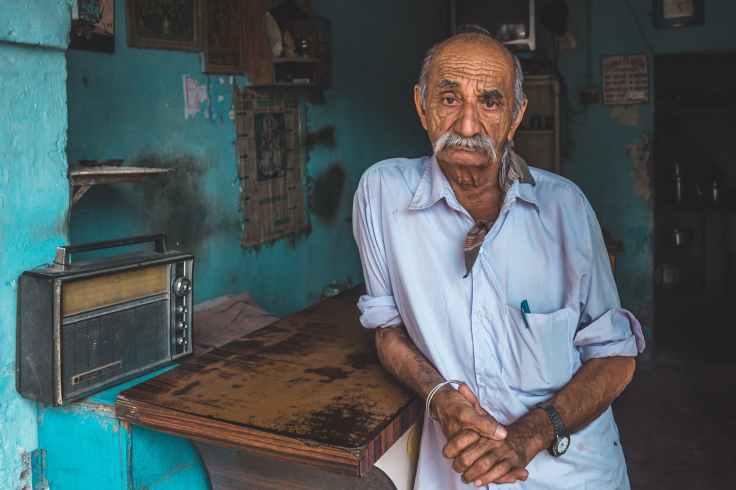
Photo by Life Matters on Pexels.com

King David, the second, and one of the greatest of Israel’s kings wrote: “Know that the Lord, He is God; It is He who has made us, and not we ourselves; We are His people and the sheep of His pasture.” (Psalm 100:3 NKJV) “We the People,” by ourselves, will scatter and fall into destruction, like sheep without a shepherd.

Praying from Nineveh

It’s depressing to watch the news, lately–the reports include the COVID-19 pandemic, rioting and violence, injustice, crime, natural disasters…there is very little to celebrate. And yet, my nation just recognized the 244th anniversary of our declaration of independence from Great Britain. In that declaration are the immortal words, “We hold these truths to be self-evident, that all men are created equal, that they are endowed by their Creator with certain unalienable Rights, that among these are Life, Liberty and the pursuit of Happiness.–That to secure these rights, Governments are instituted among Men, deriving their just powers from the consent of the governed, –That whenever any Form of Government becomes destructive of these ends, it is the Right of the People to alter or to abolish it, and to institute new Government, laying its foundation on such principles and organizing its powers in such form, as to them shall seem most likely to effect their Safety and Happiness..” America has never realized perfection of these truths. No nation can claim perfection, just as no individual person can claim perfection. “All have sinned and fall short of the glory of God.” (Romans 3:23). But the truth still stands. All men (and women, children…human beings) are created equal, and are endowed by their Creator with certain inalienable rights. God does not favor the rich or the poor, men or women; He doesn’t favor one skin tone over another; He doesn’t love Baptists more than Catholics, or agnostics! He is not partial to citizens of one nation over another; He doesn’t favor Republicans over Democrats. Governments and individuals may deny or withhold these rights; they may pervert the truth or twist and shape circumstances to their favor at the expense of others. But the truth still stands.

Photo by Ketut Subiyanto on Pexels.com

Long ago, there was an empire called Assyria– powerful, ruthless, domineering. They were not governed by principles of fairness, equality, or justice. They conquered and slaughtered other people at will. Their capital city was Nineveh. The prophet Jonah, a man thoroughly familiar with their cruelty and lack of justice, was dispatched by God to warn the people of their coming judgment. Instead of obeying, Jonah fled. It would seem understandable that Jonah might fear the people of Nineveh. Delivering such a warning could put him in danger. But that wasn’t why Jonah fled.

Photo by Jose Aragones on Pexels.com

The story of Jonah is well-known. After fleeing toward Tarshish on the first available ship, God sent a storm. Fearing that the ship would sink, the sailors cast lots to choose a human sacrifice to appease the sea gods. Jonah volunteered, saying it was his sin that “caused” the storm. Reluctantly, the sailors threw him overboard, and the storm ceased immediately. Jonah was “saved” when a giant fish swallowed him. From the belly of the fish, Jonah prayed, and God rescued him again, causing the fish to spit him out onto dry land. Jonah took advantage of his second chance, and went to Nineveh, preaching the message of destruction.

But when Jonah’s message results in mass repentance and a “second chance” for the Ninevites, Jonah is disgusted. THIS was why he didn’t want to go to Nineveh– because he did not want them to receive a warning and a potential reprieve! He knew that God was sending him, not with a message of doom, but with a message of hope! There was a chance to repent– to try again–to seek justice and avoid destruction. They didn’t deserve it. Certainly, they had never given mercy to any of the peoples they had already conquered. God had every right to destroy them without any warning– and Jonah had counted on it.

Photo by Nishant Aneja on Pexels.com

I almost always focus on the character of Jonah when I read through this story. https://www.biblegateway.com/passage/?search=Jonah+1&version=NIV (follow this link to see chapter 1 and use the site to read the other three chapters). But what about the people in the city of Nineveh? Imagine a stranger walking around one of America’s major cities– Washington, New York, Seattle (in light of recent events there)… His face and skin are unnaturally white and blotchy; bleached by stomach acid from an enormous fish. He looks like a zombie, and his message is delivered in utterly horrible assurance–“yet forty days, and this city will be destroyed.” Not by a spike in COVID-19 cases; not by looters or protesters tearing down a couple of buildings here or there–total destruction by the hand of God.

Photo by Євгеній Симоненко on Pexels.com

What might we do differently if we had forty days to convince God to stay His hand and give our nation a chance to repent. We claim we are not like the Assyrians– we were founded on truthful principles and ideals. We “hold” these truths, but we do not live them out as a nation.

The Ninevites did not have time to amend or rewrite a Constitution. They did not have forty weeks or forty years to “reconstruct” their empire or implement social justice legislation.

Photo by Life Matters on Pexels.com

But they had time to pray. They had time to fast, and repent, and seek the mercy of God. From the least to the greatest, they fasted and prayed. Even their animals fasted! They stopped frantically trying to grab power, and turned their eyes toward their Maker and Judge. And God listened! God forgave! God showed mercy!

Photo by Ali Arapou011flu on Pexels.com

May we pray– in every nation, region, city, village, or settlement– for God’s mercy in these times, and at all times. God is not waiting for us to “get it right.” He is waiting for us to come to Him. May we be humble and hopeful and turn to Him today. And may we learn from their example.*

Photo by Josh Willink on Pexels.com

*Spoiler alert– while the Assyrians in Nineveh repented after the message of Jonah, they quickly forgot God’s mercy and returned to their wickedness. Just a few decades later, God DID bring destruction on the entire empire– this time without warning!

Vacant “Lot”

I’m continuing to explore the life of Lot in the Biblical story of Genesis. Lot, the nephew of the Biblical patriarch, Abraham, chose to live near, and then in, the wicked city of Sodom. His circumstances have made him wealthy, but they have also made him a pawn and a victim of greed and war all around.

When we left Lot (see Friday’s entry), he had been rescued by his uncle Abram (later renamed Abraham), along with all his possessions, after being kidnapped from Sodom. This might have been a good time for him to move on with his life, make a fresh start, and get away from the wars and wickedness surrounding him. But he didn’t. Nor does he seem to have had any kind of positive impact on his neighbors and friends. The Bible doesn’t mention whether or not Lot joined in any of the wicked behavior of his fellow Sodomites, but he seems to have turned a (mostly) blind eye to it.

Photo by omar alnahi on Pexels.com

The Biblical narrative leaves Lot for a few chapters, to concentrate on the life of Abraham, the changing of Abram’s name to Abraham, the birth of his son, Ishmael, and the promised coming of Isaac. But at the end of chapter 18, the LORD speaks to Abraham about the impending destruction of the cities of Sodom and Gomorrah:

17 The LORD said, shall I hide from Abraham what I am about to do, 
18 seeing that Abraham shall surely become a great and mighty nation, 
and all the nations of the earth shall be blessed in him? 19 For I have 
chosen him, that he may command his children and his household after 
him to keep the way of the LORD by doing righteousness and justice, so 
that the LORD may bring to Abraham what he has promised him.”
20 Then the LORD said, “Because the outcry against Sodom and 
Gomorrah is great and their sin is very grave, 21 I will go down to see 
whether they have done altogether according to the outcry that has come to me. And if not, I will know.” 22 So the men turned from there and went toward Sodom, but Abraham 
still stood before the LORD. 23 Then Abraham drew near and said, “Will 
you indeed sweep away the righteous with the wicked? 24 Suppose there 
are fifty righteous within the city. Will you then sweep away the place 
and not spare it for the fifty righteous who are in it? 25 Far be it from 
you to do such a thing, to put the righteous to death with the wicked, 
so that the righteous fare as the wicked! Far be that from you! Shall not
the Judge of all the earth do what is just?” 26 And the LORD said, “If I
find at Sodom fifty righteous in the city, I will spare the whole place for
their sake.” 2Abraham answered and said, “Behold, I have undertaken 
to speak to the Lord, I who am but dust and ashes. 28 Suppose five of the fifty righteous are lacking. Will you destroy the whole city for lack of 
five?” And he said, “I will not destroy it if I find forty-five there.” 
29 Again he spoke to him and said, “Suppose forty are found there.” He
 answered, “For the sake of forty I will not do it.” 30 Then he said, “Oh let not the Lord be angry, and I will speak. Suppose thirty are found there.” He answered, “I will not do it, if I find ththirty there.” 31 He said, “Behold, I have undertaken to speak to the Lord. Suppose twenty are found 
there.” He answered, “For the sake of twenty I will not destroy it.” 
32 Then he said, “Oh let not the Lord be angry, and I will speak again
but this once. Suppose ten are found there.” He answered, “For the sake
 of ten I will not destroy it.” 33 And the LORD went his way, when he had finished speaking to Abraham, and Abraham returned to his place.

(Genesis 18:17-33 ESV via http://www.esv.org)

The Bible is not explicit in describing the evil that occurred in Sodom and Gomorrah. But two things stand out in this passage. The LORD speaks of “the outcry” against these two cities and the gravity of their “sin.” Some people have suggested that there is a single egregious sin– “sodomy”– that roused God’s especial judgment. Certainly, in chapter 19 (https://www.biblegateway.com/passage/?search=Genesis+19&version=NIV) the men of the city demand that Lot’s “guests” be brought out so they can have sex with them. Lot offers his virgin daughters, but the men refuse and become so violent that the “guests” have to intervene. However, a parallel story is reported later in the Old Testament, this time in the city of Gibeah in the region of Benjamin. (https://www.biblegateway.com/passage/?search=Judges+19&version=NIV) And, while judgment is delivered to the city, it is not singled out for especial judgment by fire from heaven.

Photo by Engin Akyurt on Pexels.com

Whatever the evil in Sodom, it included rape, sodomy, and likely human trafficking and human sacrifice (see the end of Genesis 14, where the king of Sodom offers Abram all the material spoils of war, in exchange for all the people). It was not just the evil of sexual promiscuity or occasional violent practices, but something that caused an enormous “outcry” from victims, and possibly even angelic messengers reporting on the level of depravity, destruction, and oppression involved. Yet Lot lived there for years, raising his family, going about his business, and ignoring or excusing the evil all around him. There is no record of him making any positive difference, any positive contribution; no record of Lot doing anything to stand out from among his neighbors.

Photo by Krunal Parmar on Pexels.com

And when judgment comes, it is swift and terrible. The Angelic messengers must drag Lot and his family away from their home and possessions. They urge him to flee into the mountains, but he balks and asks to be allowed to flee to the small town at the edge of the destruction. (More about this at a later time…) Lot has lost almost everything of value– he ends up bankrupt; materially, and spiritually. Lot is a vacant shell of a man–fearful and snivelling, weak and empty.

What evil occurs in our neighborhoods today? What are we doing to alleviate it? Combat it? Excuse it? Enable it? If God were to bring judgment to our city or country, would He have to send angels to drag us out of the fire? Would he find even 10 righteous people on our block? In our apartment complex? God didn’t find 10 righteous people in Sodom…In fact, the Bible doesn’t say that he found ANY! Lot and his daughters were spared, but the stench of Sodom and Gomorrah lingered in this family to their ruin.

Lot’s legacy is one of emptiness, loss, and depravity. But there is one bright spot, which we’ll look at next time. God is slow to anger, and rich in mercy. His redemptive plan will include even Lot with all his flaws and weakness. And it extends to each of us, regardless of where we’ve lived, or what we’ve experienced. God didn’t find any righteous people in Sodom; He knew He wouldn’t! More than once the Bible tells us “there is no one righteous; not even one; there is no one who understands; there is no one who seeks God.
All have turned away, they have together become worthless; there is no one who does good, not even one.” (Romans 3:10-12; Psalms 14:1-3, others…) God’s plan is not to find people who are already righteous– His plan is to rescue people like Lot; people like US! And His plan is to include us in the rescue effort, too.

Photo by Julian Jagtenberg on Pexels.com

I’m learning a “lot” from Lot. There are a couple more things I want to explore in the coming days. I hope you will join me.

Blog at WordPress.com.

Up ↑