Three Things I Pray…

In the Broadway musical, Godspell, there is a simple ballad, “Day By Day,” in which the singer(s) express a desire to be closer to Jesus. Day By Day/YouTube  There are three “prayers”– 1) to see thee more clearly; 2) Love thee more dearly, and 3) follow thee more nearly.  I have heard various opinions and critiques of the musical, from the use of clown makeup and vaudeville tunes, to the marginal grammar of this song.  But I’d like to spend some time digging in to the three simple prayers.

clear close up dark dew

Today, I want to look at (literally) the first prayer– “to see thee more clearly”.  There is one prayer, but I think it can be broken down into two parts.

First, I want to SEE God.  God is Spirit–an invisible essence– and yet he manifests himself in a million different ways all around us.  God is in the inky, endless blackness of a moonless night, and in the vibrant colors of spring blossoms; in the glaring reflection of the sun off the lake, or the gray and palpable mist over the meadow.  He is in the wrinkled face of my neighbor, and the exuberant smile of a toddler, and the beauty of a horse running or an eagle soaring.  But I can see all of this and more and still not see God.  I can focus on the creation and miss the creator.  I can focus on the beauty and learn nothing of the artist.  I can see the amazing variety of people in the world– skin tones and eye shapes, facial expressions, and body language, dimples and hairstyles and nose-wrinkling, and hand-wringing, and miss the Love of God for each one.

brand trademark cobblestones community denim pants

Sadly, I can sing this prayer, pray for insight, and still miss seeing God.  I can trample His creation, dismiss His presence, and hate the people He loves enough to die for; people who bear the stamp of His image.

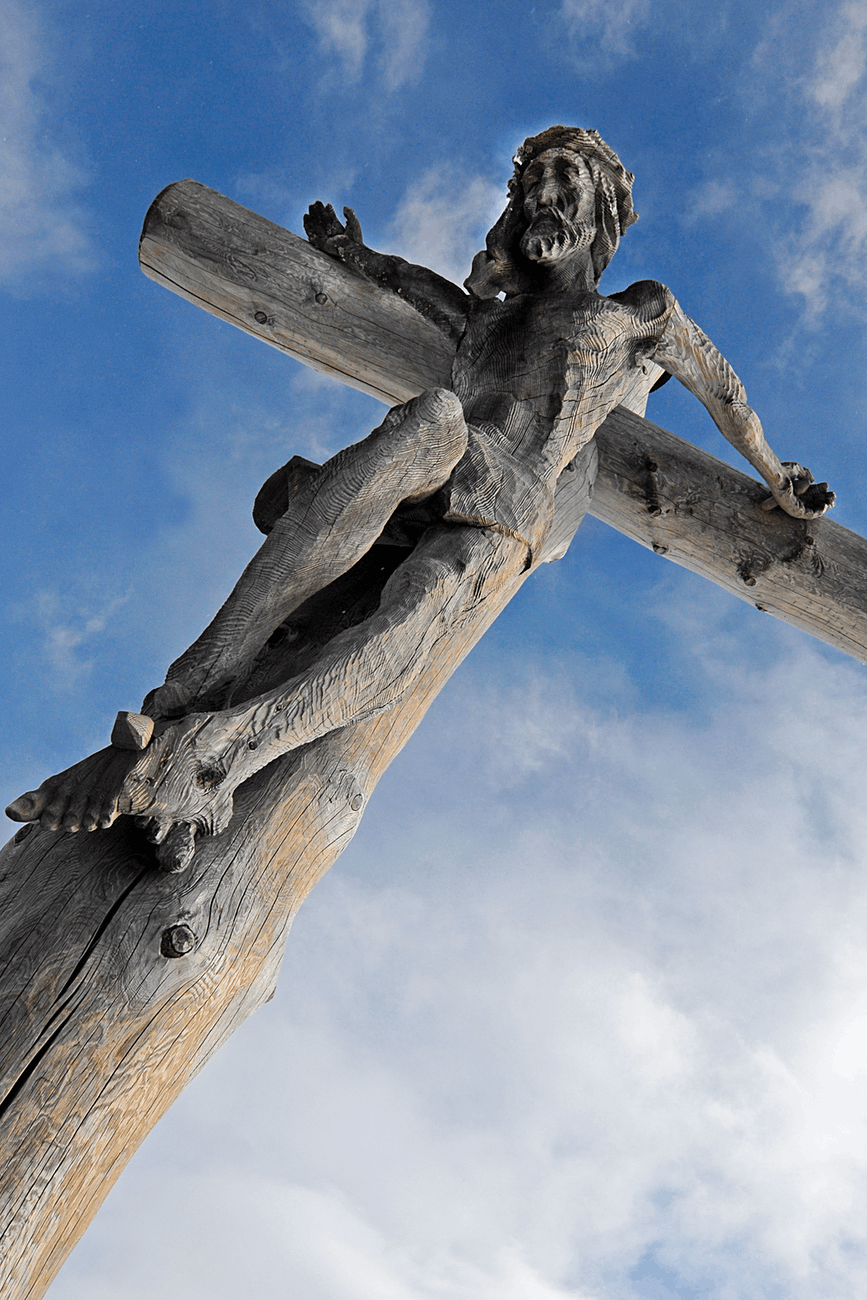
And I want to see Him “more clearly”–I want to see him as he really is, and not as I imagine him to be.  We live in an age of glossy retouched photos of models and celebrities; we “see” their image, without knowing what they truly look like, and without knowing anything about who they really are inside.  In many ways, God is only slightly less invisible than the real people around us.  How many people do we ignore in a day’s time?  How many do we glance at, only to get stuck on a single detail (a hair on their sweater, or something caught in their teeth, or a receding hairline or blotchy face).   How many people surprise us by not being like the image they project?   I don’t want to see a Photoshop Jesus; a glossy, smiling image of someone who says only what I want to hear, and looks like nothing ever touches him.  I want to see the Jesus who wept over the death of his friend; the Jesus who laughed with delight as he talked with children; the Jesus whose eyes were full of compassion even as he was dying on the cross.  I want to see the Living Word of God.
cross jesus summit cross

Jesus is close– closer than we think.  I want to spend today seeing him more clearly.

“Little” Prayers

Do you ever wonder if your prayers are “too little?”  Are you bothering God, pestering him with requests to help you find your misplaced keys, or help you make the green light on your way through a busy part of town?  After all, God is the ruler of galaxies– there are over six billion people, let alone the cattle on thousands of hills, sparrows, and lilies of the field for him to consider just on our planet.

I know many people who find it awkward, or even impossible, to offer up “little” prayers.  They believe that God is too busy, too important, and “too Holy” to be concerned with their petty wishes.  I know others who pray about almost everything– what flavor of ice cream to choose; what color nail polish to wear; whether to join  their friends for a game of Monopoly or a trip to McDonald’s…  Is there a happy medium; a guideline on what constitutes an “appropriate” subject for prayer?  Is there such a thing as a prayer that is “too” little to bring to our Father?

I don’t think so.  I think there are prayers that exasperate God because they are selfish and prideful.  I think there are prayers that come to God with disrespect and disbelief, and a lack of consideration for who he is.  But I think those who come to God asking for his help, his wisdom, his grace, and his protection– no matter how small their request may seem–bless the heart of God and receive his full attention.

God constantly uses the small and seemingly unimportant things of this world to make huge statements of great value.  Consider sand.  Sand is almost everywhere– it is under our feet, blowing in the wind, all along the beach; it gets in our shoes, between our toes, even in our hair!  Sand seems unimportant, even annoying sometimes.  We use it for all kinds of things, most of which we consider unimportant– sandbags for weight, sand to play in, or build a temporary sand castle.  We use sand to make glass, or to polish stones, or to keep time.  A single grain of sand has no value to us, except in the rarest of circumstances, when it becomes the nucleus of a pearl.  But God sees each grain of sand.  He knows the value of sand.  In explaining to Abram about his promise, God said that he would make Abram’s descendants like the grains of sand– beyond counting!

sosua.jpg

God uses tiny seeds to produce and reproduce big harvests.  God uses bugs and insects to create amazing (and sometimes terrifying) structures–giant anthills, enormous beehives and hornet nests, spider webs and more.  He uses the simple and even foolish things of this world to confound the wise.

Moreover, God delights in the little things– the details and minutiae.  King David, and later Jesus, would be moved to compare our day-to-day living to that of grass, and common birds, and flowers– not because we are not important to God, but because THEY ARE– if the things we take for grated are under God’s constant care, how much more are we!?

Lastly, God ASKS us to be faithful in the little things–to care for the grass and sand and flowers in our midst– to offer up the little prayers and share our “small” concerns with him.  I like to remember childhood, and the shared delight of my parents when we made “little” discoveries on nature walks, or learned to make cookies, or grew another inch.  It was much easier for them to tie our shoes, but they loved watching us learn to do it.  God doesn’t want us to hide in a corner and try to figure out all of life before we come to him.  He wants to teach us, help us, and celebrate the small victories with us– as well as the great triumphs.

I think our society has lost its appreciation for the “small” moments and the “stuff” of life.  We try to cram our lives full of importance and purpose, only to find it slipping through our fingers like sand.

“Father, thank you for being a God of galaxies and grains of sand. Thank you that no detail is too small for you to notice; that you care about each one. Help me to see the blessings in the “little things” and to seek you first– with my praise and with my ponderings, life’s triumphs and its trials.”


Prayer Requests

As someone who pursues prayer passionately, you might suspect that I hear a lot of prayer requests. And I do. And even so, it’s not enough. I always look for more! I admit to trolling on Facebook for prayer requests; following the church newsletter for prayer requests; and even asking friends if they have any requests when we chat. But what about prayer requests that aren’t exactly requests–

“Oh. It’s really nothing. I’m not worried about it or anything…”
“We’re just going through a rough patch. Nothing to be really concerned about…”
“It’s just something I have to deal with..”
“The doctor says it’s a chronic condition, so it’s just something I have to get used to…”
“I know so many other people who are hurting worse than we are…”

Sometimes, prayers are shortened or even missed because we are looking for prayer requests instead of prayer opportunities. Prayer is an opportunity to talk to God about anything that is on MY mind or in MY heart. Often, it comes in the wisp of a stray thought about someone else. Maybe I haven’t heard from them in weeks (or even years!), but suddenly, they are on my mind. Suddenly, I have an opportunity to pray for them. Do I know what is on their heart or mind? Probably not. But God knows! That schoolmate from fifth grade? Pray for them. So what if I only remember their first name– or their maiden name or their childhood nickname–God knows! That former co-worker who was having a rough time with her teenage son ten years ago? Ten years have passed! I know the son is now an adult. I don’t know if the relationship is better or worse now than it was a decade ago. I don’t even know for sure that the co-worker or her son are still alive. But God knows! My neighbor who seems to be doing fine, but I keep thinking about them, and I don’t know why– God knows! Each one is an opportunity to pray– nothing elaborate or specific– just to lovingly lift them up before God’s throne!

And what about the “actual” requests that I hear or see on-line? Sometimes, there are no details or specifics about “what” I am praying for. But it doesn’t matter. Because God already knows. Even more, He knows the end from the beginning, even if it isn’t exactly what is being requested. I can lift up in prayer situations about which I know very little– because God knows. And for those situations that seem dire or impossible– God knows those, too. And I can lift them up with confidence, even when I have no answers and the problems seem overwhelming.

This sounds easy, but it’s not. It forces me to step away from each request, each situation in which I might try to stake my own “claim.” Yes, I want my friend’s cancer to disappear, or my co-worker and her daughter to have a repaired and healthy relationship. But I don’t have the first clue how to make that happen. I don’t have any answers. I don’t know what GOD has planned in those situations. And while I know what sounds or feels good in the moment, I don’t know what is best in the grand scheme of things. But God knows! He doesn’t want me to solve each problem; He doesn’t need me to offer my “best” suggestion of how He should solve it. All He wants is for me to trust HIM to care for each need. In HIS way, in HIS time, and in the fulness of HIS love!

During Jesus’ ministry here on earth, He prayed many times, but His prayers rarely dwelt on details about specific situations. In fact, in teaching His disciples how to pray, He included the phrase, “THY kingdom come, THY Will be done in earth as it is in Heaven.” (Matthew 6:10) And that is a perfect phrase to exercise, whether I have a specific request, or a flash of memory, or a nagging worry about someone or something.

The same is true when it is my turn to request prayer. There are many times I find myself like the people I quoted above– trying to make light of a situation or avoid actually requesting prayer. It may sound humble and self-deprecating, but there is an element of arrogance in saying “I don’t need prayer for …”(whatever situation). We ALL need prayer. We ALL need to live in the assurance that we can “cast all our cares upon Him, for He cares for us” (1 Peter 5:7 paraphrased). And we need to acknowledge that we should share our cares with others as they share their cares with us. And that we need to allow for God to involve others in the way He cares for us. Asking for prayer is a way of allowing others to share our concerns– and share in our joy of receiving answers to prayer! Requesting others to pray for us is not a weakness. We are not being a burden on others when we allow them to pray for us.

That is not to say that I need to publish every problem and concern on Facebook or in the Church Newsletter! Nor should I try to dictate how or when or what others should pray for me. But it does mean that I must be open to sharing the very real struggles I have with trusted friends, especially if they ask how they can pray for me. Even the “chronic” ones; even the “silly” ones. Because I don’t know how God may use that opportunity in THEIR life; nor do I know how God may use their prayers to bless my life.

But GOD knows!

No Detail Too Small

Have you ever wondered about some of the minute details that made it into the Biblical accounts? And some of the details that DIDN’T?

Photo by Luis Quintero on Pexels.com
  • There are hundreds of prophesies about the birth of Christ, and at least two detailed genealogies listed in the gospels. We know that He was born in Bethlehem (and the circumstances that caused Him to be born there). We know about the angels and the visits of the shepherds and Wise Men (right down to the dreams that caused the Wise Men to change the route of their return!) Yet, the Bible never tells us the exact date of His birth.
  • Parts of Leviticus go into great detail describing skin rashes and infectious diseases; other parts discuss in detail the kinds of animals that are acceptable for food, and those that are not; and there are the various types of sacrifices– which to offer when, what could be offered, and how it should be prepared (and/or disposed of) before and after. But in the very few descriptions of festivals or Temple procedures throughout the time of the Kings and Judges, there is very little detail, except in the number of sacrifices offered, or in the way that some of the priests disregarded the rules. (See 1 Samuel 2:12-36; 2 Samuel 6:-7; Micah 3, etc.)
  • During the building of the Temple, and the rebuilding of Jerusalem, there are long lists of names of workers; in Paul’s letters, there are dozens of names of people to whom he sent special greetings. Yet we never learn the names of many Biblical “characters.” What was the name of Naaman’s wife, or her servant girl who directed Naaman to Elisha the prophet for healing? What was the name of Job’s wife? The Rich Man who ignored poor Lazarus in Luke 16?
Photo by Oladimeji Ajegbile on Pexels.com

The Apostle John comes closest to addressing this issue near the end of his gospel. He says: “Jesus performed many other signs in the presence of his disciples, which are not recorded in this book. But these are written that you may believe that Jesus is the Messiah, the Son of God, and that by believing you may have life in his name.” (John 20:30-31 NIV via biblegateway.com). Details help us visualize, understand, and remember. Details remind us that God sees and knows everything about us. And they confirm for us that God is interested in the details of life– from our scattered thoughts, to the hairs on our head; from our rising up to our lying down; from the grain of rice on our fork to the hole in our sock; from our first breath to our last gasp.

And so it is with prayer. There are times when we lift up to God the details of our day– the unkind word we regret saying about our neighbor, or the ache in our right pinky finger, or the amount we need (but don’t have) to pay the water bill or buy flour. There are other times when we cry out in desperation– no time for details. Sometimes, we make the mistake of believing that the details will make a difference in whether or not God will hear or answer our prayers. But God hears each prayer, and He already knows. He knows the details, whether we include them or not, and He knows our heart. He loves to hear from us–details or desperation– He is waiting with delight to meet with us! And each type of prayer involves “believing” and “(having) life in His Name.”

Photo by Mary Taylor on Pexels.com

Sometimes, we get tired of listening to details; tired of reading the lists of names in our Bible; tired of slogging through a long description, or waiting for someone to “get to the point.” God has infinite patience. God who already knows the end of every story, who already knows the “point” we long to make, never shuts us down or rolls His eyes as we pour out our heart to Him. Nor does he get upset when we cry out in panic or frustration, with groans and wordless expressions that don’t begin to “tell the whole story.” There is no detail too small to share with God– and no detail so important that God cannot understand or meet our need.

Any One Who Is Without Sin…

I was re-reading a familiar passage in the gospel of John recently, and I was struck by a truth I had missed before. In the first part of John 8, there is a story about a woman caught in adultery https://www.biblegateway.com/passage/?search=John+8%3A1-11&version=NIV I have read this story many times, and even heard sermons preached on this passage. What struck me this time wasn’t exactly new material, or a new reading, but a new understanding of a detail that was there all along.

The story begins with Jesus teaching a crowd of people in the temple courts in Jerusalem. His teaching is interrupted by a group of Pharisees and teachers of the law. They have a woman caught in the act of adultery, and they come to Jesus asking his opinion about stoning her. They obviously know the laws of Moses, because they cite them. But they cite only a certain portion of the law, and they want Jesus to weigh in (so they can use his own words to trap him).

Photo by Sharefaith on Pexels.com

Jesus turns the tables, and passively bends down to write letters in the sand. He says only, “If any one of you is without sin, let him be the first to throw a stone at her.” One by one, the accusers and the crowd– everyone except Jesus–melts away. Finally, Jesus asks who is left to condemn the woman. There is no one. Jesus refuses to condemn her, and sends her on her way, telling her to “Go, and sin no more.”

Photo by Engin Akyurt on Pexels.com

Four details I want to highlight in this story:

  • There was already a crowd around Jesus before the Pharisees and teachers arrived. They did not bring this woman to Jesus to get an honest answer to a question, or to bring about justice (for that, they should have brought both her AND the man involved!); they brought her to a very public spot to humiliate her and trap Jesus. She was a pawn in a political and religious game, and she was guilty of a crime that was punishable by death. She was accused and forced to stand before a crowd to be condemned without a trial. So often, I read this passage, and my focus is on Jesus and the woman and the Pharisees– I forget that there is a crowd of ordinary people being “played” by the Pharisees for their own purposes.
  • Jesus never answers the question at hand. According to the laws of Moses, the woman should be stoned. That is the point the Pharisees want Jesus to address. They have set him up. If he agrees with their interpretation of the laws of Moses, he should insist that the woman be stoned. But this will be in violation of the Roman laws, and will lead to Jesus being arrested by the Romans. But if Jesus upholds the Roman law, he will be turning his back on centuries of Jewish tradition dating back to Moses. The problem is that the Pharisees have resorted to some half-truths. The laws of Moses DO speak of stoning; they speak of adultery being punishable by death– for both the man and the woman involved. However, the Priests and leaders of Israel have not followed this practice. King David committed adultery with Uriah’s wife. Neither one was stoned or condemned to death. There are no records of other adulterous couples being stoned throughout Israel’s history. So it is rather disingenuous for the Pharisees to bring this case to Jesus and ask him to speak judgment where they will not. Jesus knows this is not about actual justice; it isn’t really about the law of Moses– because they are not following it themselves! By turning the tables back on them, Jesus exposes their hypocrisy and failure in front of the very crowds they are trying to impress with their clever plans.
  • One by one, the woman’s accusers melt away. But it’s not just them, it’s the crowd of ordinary people– the ones who were likely riled up by the Pharisees and teachers. Think about the mob mentality–a guilty woman, caught in the act and brought before a teacher with moral authority–there is nothing like scandal to get a crowd of anonymous bystanders worked up and ready for blood. Yet, Jesus’ gentle reminder that any of us could be found “guilty” of something and condemned to shame and punishment puts out the flame of anger and resentment, and causes the mob to evaporate. No one is left to accuse, to curse, to insult, to humiliate, or condemn.
  • Finally, it’s down to Jesus and the sinful woman. There IS one person there who is without sin– one person who has the right to throw stones, to judge, to punish. Yet he reaches out with compassion and mercy. He is still righteous– he doesn’t shrug off the woman’s sin. He doesn’t say, “Well, that’s no big deal. Let’s just pretend that never happened.” or “I think you’ve learned a valuable lesson here today, young lady.” He simply says, “Neither do I condemn you. Go now and leave your life of sin.”
Photo by Ivandrei Pretorius on Pexels.com

Next time, I want to address each of these details from a practical standpoint in light of modern circumstances, and what lessons I am taking from Jesus’ actions.

The Smallest Detail

Have you ever looked at a series of pictures that “zoom” in or out (or both)?  Something that seems “normal” in size suddenly becomes a tiny detail in a much larger picture.  Or one tiny detail grows large enough to show intricacies hitherto unseen.  It is mind-blowing to think of how many details there are in God’s universe–little things that go unnoticed and unappreciated every day.  But not by God.  God knows and cares about every single detail– from the  individual hairs on your head, to the variations and whorls of each of your fingerprints; from the gradations of colors in each moment of each sunrise, to the exact air temperature in each square foot of atmosphere around the world; from the wings of every butterfly to the fins of every fish– nothing escapes his notice or falls through the cracks.

pexels-photo-121646.jpeg

We can pray with confidence that God hears every word we say, and knows the thoughts we can’t even put into words.  I believe God loves to hear all our details.  He loves listening to us, because of his great love for us.  He wants us to hold nothing back.  This is especially true when we pour out our deepest delights and our most pressing burdens.  He wants to share them with us– to double our joy, and shoulder our pain.sea-nature-animals-fish.jpg

I was reminded about God’s attention to detail while reading His word this morning.  I was reading through one of the books of history (II Kings) in which the various kings of Israel and Judah are listed, along with short accounts of “what happened” during their reigns–some kings are given several paragraphs or a couple of chapters;  others merely a sentence or two.  In the midst of all this, there is a curious reference in II Kings 14:25.  King Jeroboam II of Israel is accounted a generally wicked king, but he did restore some of the ancient boundaries of the country, “in accordance with the word of the Lord, the God of Israel, spoken through his servant Jonah, son of Amittai, the prophet from Gath Hepher”– that’s right, THAT Jonah– the one of the giant fish and the adventure in Ninevah (see Paltry Prayer ).  How many times have I read the story of Jonah, and passed right over this reference to him in another book!  The Bible is full of such hidden hints and corroborating details.  I believe that God put them there to remind us of his great attention to detail.  The God who lists genealogies throughout his word— long lists of otherwise forgotten names;  the one who makes a point of listing palace guards and minor officials, and builders and temple workers–this God sees ME!  He sees YOU!  He hears us when we call.  He knows all of our quirks and idiosyncrasies– and loves each unique detail of our makeup.

Praying hands

Blog at WordPress.com.

Up ↑