Who Are My Enemies?

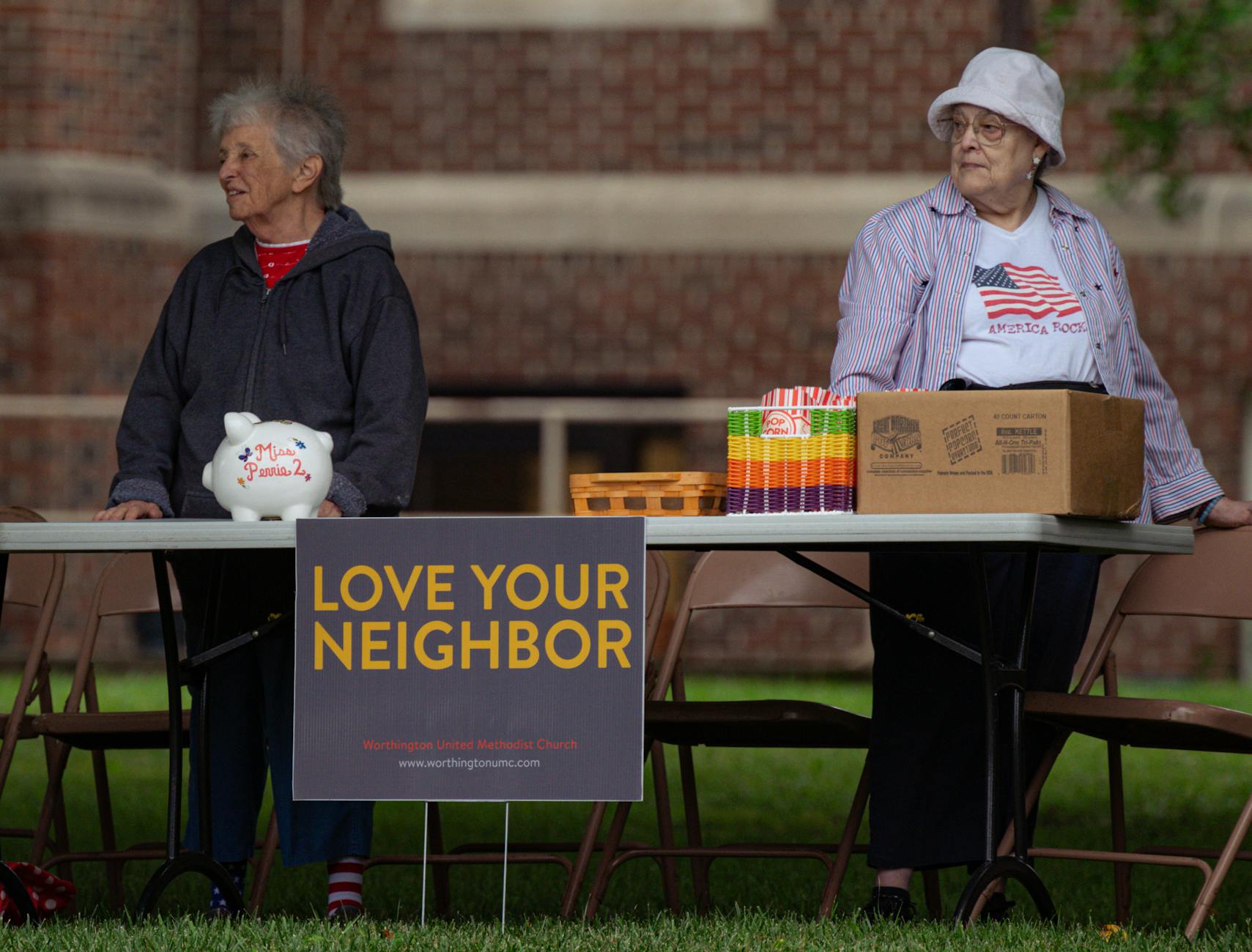
In the Parable of the Good Samaritan (see Luke 10:25-37), an expert in the law asks Jesus, “What must I do to be saved?” Jesus, as he so often does, answers with a question of his own. “What is written in the law? How do you read it?” Of course, the expert in the law answers with confidence, and Jesus commends him for his answer. But the law expert isn’t mollified by Jesus’s affirmation. The law is clear, but it is not necessarily specific. “Love the Lord your God with all your heart and with all your soul, and with all your strength, and with all your mind.” That seems pretty clear. But the rest– “Love your neighbor as yourself”– Just who IS my neighbor?

Jesus answers with the famous parable about a man who is beaten and left for dead on the side of a dangerous road. Two religious leaders see him, but each refuses to help. Instead, a Samaritan (despised by the Jews) offers help and compassion, beyond what the law would dictate. Thus, the expert in the law must conclude that a “neighbor” is one who shows mercy and kindness to those whose path he crosses.

In another instance, Jesus talks about enemies:

“You have heard that it was said, ‘Love your neighbor and hate your enemy.’  But I tell you, love your enemies and pray for those who persecute you, that you may be children of your Father in heaven. He causes his sun to rise on the evil and the good and sends rain on the righteous and the unrighteous.” Matthew 5:43-45 (NIV)

So, who is my enemy? If my neighbor is anyone who crosses my path, who is left to hate? Jesus IS more specific here. He commands us to pray for those who persecute us; that God causes the sun and rain (and other good and life-giving things) to happen for both the evil and the good; both the righteous and the unrighteous benefit from His mercy. God loves sinners so much that Jesus came to die for them! Jesus met a lot of needy people. He also met some nasty characters who never sought His forgiveness or His help. Yet He did not march in protest against oppression by Roman soldiers. He did not campaign to have the hypocritical Pharisees removed from their positions of power. He did not advocate stealing from the greedy tax collectors to pay for welfare programs. He allowed Himself to be arrested and even (unfairly) convicted and sentenced to death on a cross. His “enemies” were allowed to win a battle. But Jesus Christ has won the war. And when the war is over, there are no “enemies” left to fight!

There is a lot of talk today about enemies, and how they should be treated. We see enemies among our own neighbors who disagree with us politically, or who practice a different religion (or none at all). We see enemies in those who taunt us, or those who live more lavishly, or those whose position in life causes us to think of them as unfairly privileged, or unworthy of certain benefits. And, in many regions of the world, we see as enemies those who are causing war or inciting violence and damage against another nation. These are battles, indeed, but they are battles that, in God’s eyes, have already been won!

Jesus commands us to pray–even for those we may view as enemies! And we are to show mercy and love toward those who view US as the enemy! Not smug self-righteousness, or cold indifference. Not vengeful action or hateful rhetoric. Not name-calling or “cancelling,” “doxing,” or “ghosting” people. We are to pray for their well-being. We are to love them as we love ourselves!

In our own power, we cannot do this. It goes against our nature. We want to be “right.” We want to “win” our battles. We want to see justice done– NOW! We want to be able to dismiss and condemn those who are unrighteous. We want to see them pay. We want to be proved and justified. We want them to be found wanting in comparison with our own righteousness.

We do have a very real enemy– one who does not deserve our love or prayer. But it is not a person. Our enemy is Sin. Our “enemies” are godless spirits– of rebellion against God, of pride, of greed and rage and chaos. People may display behaviors and cling to false teachings; their actions may threaten us, horrify us, or disgust us. But there is a priceless soul involved– a soul who is in slavery to Sin. There is no person on earth who was not created in God’s image, or who is so far from God’s love and forgiveness that we are allowed to condemn. Therefore, there is no person for whom we cannot pray or show love.

Let me be very clear, however. There are certain actions that require us to stand up for truth and justice. Condoning dangerous, violent, unjust, evil actions– worse yet, promoting or participating in such actions in the name of kindness, empathy, “social justice,” equity, vengeance, or solidarity with a particular group–is not loving. We may defend the vulnerable, prosecute the violators of law, or work to remove ourselves from relationships that are abusive or oppressive, while still praying for our oppressors, persecutors, or self-described enemies. We may still show them forgiveness, work toward peace, and even treat them with respect without compromising our own dignity and adherence to the truth. We may (and should) continue to pray for justice. We may pray that the true enemy’s plans will be frustrated and ineffective, and that healing and righteousness will prevail.

Praying for our “enemies” is hard work. It requires us to be humble. It requires us to remember that we, too, are sinners saved by Grace, and not by our own actions or beliefs, but by God’s intervention and design. It requires us to see that our enemy is also our neighbor.

God, grant me the loving eyes to see others as You see them, and the wisdom to see my actions as others experience them.


Nacho Prayers

Have you ever ordered nachos at a restaurant? I’m not talking about just tortilla chips with sauce– I mean the loaded, deluxe, supreme nachos that some with everything but the kitchen sink. There are several layers of goodness: crispy tortilla chips, smothered in rich, gooey nacho cheese sauce, and piled with spiced meat, tomatoes, green onion, black olives, salsa, chilies, beans, more cheese (shredded), maybe even some mango or avocado, and sour cream. Each flavor is distinct– different textures, different temperatures–yet they come together as they land on your taste buds. And each bite is just a little different– a different ratio of cheese to meat to veggies to chips in each taste.

And that means that my nacho is “not ‘cho” nacho. Even with all the same ingredients, my nacho experience will never be exactly the same as yours.

In a strange way, prayers are kind of like nachos. Prayers have many distinct “ingredients”– confession, praise, anguish, supplication, thankfulness, even questions. And many people can pray with the same ingredients and still offer up unique prayers. My prayer is “nacho” prayer– and your prayer is not mine; even when we are praying together about the same thing.

God loves the variety and uniqueness of our individual prayers. He never tires of “nacho” prayers. And He never compares my “nacho” prayers with yours, or your prayers with mine. Indeed, He loves tasting the individual ingredients in their unique ratio of flavors and elements. He loves hearing our gooey, cheesy emotions, as well as our crisp list of needs; He appreciates the savory outpouring of our praise, as well as the spicy and even bitter tang of our grief.

Can you imagine the tantalizing aroma of our prayers as they rise to Heaven? What satisfaction it brings to God as we pour out our thoughts and concerns to the One who loves us best? God isn’t looking for gourmet prayers. Our prayers may be neatly arranged or completely sloppy. They may contain lumps of worry, or be soggy with emotion; they may be spiced with urgency, or smothered in majestic outpourings of praise. God is still hungry to hear from us!

God Is Not Color-blind

My father was color-blind. He could distinguish the color red, but all other colors registered as shades of gray. Certain forms of colorblindness are treatable today, but Dad went through his whole life not seeing most colors. He knew the sky as light or dark, not piercing blue or deep blue or sunset indigo. He even told people his eyes were brown, because he couldn’t see how startlingly, wonderfully blue they were. He was cautious about getting dressed for events and such, worried that he would “clash.” He generally preferred neutrals. He liked that his company provided uniforms– it was much easier that way.

As I write this, I am looking out the window at a cornucopia of colors on the autumn trees– glowing shades of orange, deep reds, bright yellows, a few dark browns, and even some leaves still vibrant green. Autumn has come late this year, and the cold weather will bleed all the colors and cause the leaves to fall into a single great carpet (except where rakes gather them up into piles). It is marvelous to see so much variety in the individual trees; so much color and life, and beauty. God loves color! He loves to dazzle with surprising touches of unique shades, designs, and combinations. Towering trees with golden leaves, shorter, squat bushes with fiery reds, evergreens providing contrast. And in a few weeks, it will all be a memory, as leaves give way to snow-covered branches, and ice-trimmed bushes.

It made me think of the marvelous variety of people in our world. Each one unique, beautiful, and precious in God’s eyes. We tend to waste so much of our time comparing ourselves to others. Sometimes we wish we were like “them”– taller or darker, blue-eyed, or thinner, with hair that is curlier or blonder or just different from what God created. We feel that our bodies are “not good enough,” or not “right.” We long to be something else; someone else. At other times, we judge others by similarly narrow standards. “They” don’t look like us; they are “not good enough,” or “inferior” in some way. Of course, we don’t like to admit to any hint of bigotry or prejudice. We like to say that we are “color-blind” when it comes to people.

But God is not color-blind. He is deeply away of all the genetic differences in our skin and eyes and hair; all the high cheekbones and stubby fingers and freckles that are passed from generation to generation in some of our families. And God approves! God loves us all the same– lavishly, intimately, eternally! Just like the colors on the trees, God delights in our variety and differences– our “crooked” teeth; our “large” noses, our “mousey” brown hair, our “wide” hips. After all– He planned each one! He designed each of us to be who we are–from our bodies to our talents to our personalities. And someday, in Heaven, we will all be as one–not divided or obsessed with our “deficiencies” or differences, but united in our love and worship as never before– a great carpet of redeemed souls, spread around the Throne of God!

God isn’t color-blind; and neither should we be. We should celebrate each other, encourage each other, and love each other for who God made us to be. Sometimes, that can be difficult in our fallen world. Hurting people, fearful people, angry people– they may not be easy to love. They may judge us, reject us, even persecute us unfairly. But that’s not God’s original intention or purpose. We were meant to add our own unique beauty to an equally beautiful world.

Let’s pray that God would teach us how to show our “true colors” to the world, and reflect the beauty He planted in each one of us today!

Infinite Variety

As I look out my window today, I see a wonderful palette of fall colors waving in the wind. There are trees still filled with dark green; others with variegated shades of red and orange and yellow; some have brown leaves– so brown, they are tinged with purple! Back in the spring, the trees had so many subtle shades of green– bright green, yellow-green, and un-nameable greens in between. The colors of nature are astounding in their variety and their ability to change throughout the seasons.

Photo by Taryn Elliott on Pexels.com

God loves variety– not just in colors, but in all of life. Giraffes and gerbils; elephants and eels; ladybugs and llamas; koalas and kingfishers; swans and sloths; trees and termites; roses and raccoons…different shapes and sizes, with different lifespans and different habitats. Nature is a kaleidoscope. And precious people, too. Skin tones that span a vast spectrum; different hair; different eyes; different noses; different heights. But also different speech; different ways of thinking and doing; different ways of life–people living in city apartments, isolated huts, houseboats, underground houses–infinite variety.

Photo by Kureng Workx on Pexels.com

Our prayers are also uniquely different from those of other people. And God LOVES to hear the differences as we lift up our unique praises and petitions. God created us to be uniquely ourselves– and uniquely His!

Photo by Luis Quintero on Pexels.com

Just think– at this very moment, someone is praying in a language you’ve never spoken, in a place you’ve never visited. Someone else is praying for needs you have never even imagined, and thanking God for blessings you’ve never dreamed of.

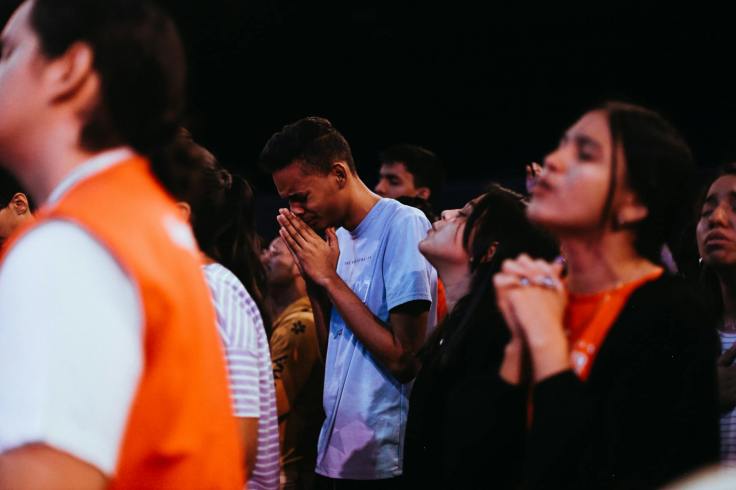
It is a wonderful exercise to pray in a group– dozens, even hundreds of God’s people speaking the same thing in agreement; raising united hearts in praise or even in pain. But there is also something wonderful about listening to others as they express their hearts, knowing that God values each of us for the unique person He made us to be. We can be just as awed by the variety of amazing people we meet as we are by the amazing colors of the autumn leaves. The same God loves to fill the world with infinite variety and beauty.

Today, let’s try to see people for who God made them to be–infinitely precious and unique. And don’t forget that person in the mirror! God loves you. He loves to hear from you. He loves to lavish His love on you and through you, in ways that only He and You can experience.

8,000,000,000 Cousins

I wrote a couple of weeks ago about what I call, “Prayer Points.” Each day of the week, I make a “point” of spending some of my prayer time on a particular issue– one day a week, I focus on the community; another day on global issues like poverty, war, and the environment. The other day, I was focused on “family and friends,” when I realized something, or rather, remembered something. I began by focusing on immediate family– my husband, our kids and grandkids. Then I spread the focus a little wider–our moms, siblings, and their families. Then aunts, uncles, and cousins…and their families! Pretty soon, I was thinking about second cousins and third cousins– the ones I see at family reunions, or catch up with on Facebook every once in awhile.

Photo by Quang Nguyen Vinh on Pexels.com

And that got me thinking about my family tree. I research and work on genealogy for my family. My family tree stretches back several generations, and “branches” out several times over. There are nearly 28,000 names in my family tree, and I’ve only scratched the surface! My family tree is a tiny drop in the world population of nearly 8,000,000,000 people (7.96 billion as of this month, and growing). But it represents an incredible mix of people. Some of my family are of European origin; some are Native American; some are of African descent, or Asian. Many of us are a mixture of races, ethnicities, and native languages. Some of us are rich; some are barely getting by. Some of us are tall; others are short. Some are healthy; others have health or developmental issues. But we are all family.

Photo by fauxels on Pexels.com
Photo by Cameron Casey on Pexels.com

And, by extension, we are ALL family– all nearly 8 billion of us! We are all God’s children, and when we pray for “family and friends,” we can include anyone! That’s a mind-blowing thought, and I was really excited to be reminded of the fact. But it’s also a sobering thought. I certainly don’t know all of the living people I’ve included in my family tree– most of the information has come from public records and other family’s research, rather than personal knowledge. No one can possibly know 7.96 billion people– we’re lucky if we can remember the names and faces of more than 5 thousand in a lifetime. We could not possibly pray for them all.

But far more sobering is the thought that there are people I do know for whom I might not WANT to pray– people who have hurt me, or people I have judged unworthy of my time or effort. Yet are they not also “my family?” What difference does it make in the way I pray when I remember that I have, not 50 cousins, or 500 or even 5,000 cousins, but almost 8 billion? That the next person I meet on the street or at the post office, or at church–she or he is not just my neighbor, or my friend (or enemy), but my cousin? Shouldn’t I consider how I can pray for them– even a quick prayer? Shouldn’t I listen better, look closer, and seek out opportunities to show love for another of God’s children?

Photo by RODNAE Productions on Pexels.com

It’s easy to speak in “relative” terms, but it can be a challenge to really live as “family.” Praying– sincerely and thankfully–for others can be a start.

Celebrate Variety

It’s growing and harvesting season in our area for many vegetables. Gardens have been spilling over with zucchini, cabbages, carrots, summer squash, onions, green beans, peas, tomatoes, potatoes, sweet corn, and much more. Similarly, the flower gardens are blooming with every color and variety imaginable– bright yellow sunflowers, tiny blue and white blossoms, and red cardinal flowers. I’m amazed at the variety of wonderful things God designed for us.

Photo by Solare Flares on Pexels.com

Did you know there are dozens of different varieties of just carrots?! Orange, yellow, purple, red, white, long and skinny, or short and fat, rounded ends or tapered…and that doesn’t begin to cover varieties of tomatoes, potatoes, squash, etc. Not to mention fruits, nuts, grains, herbs, flowers, fungi, and bark that are edible. Plants of every size, color, shape, taste, and texture. And many plants have other uses– medicine, fibers for clothing and rope, dyes, wood for building or burning as fuel, oils, and so much more.

Photo by Mike on Pexels.com

And that’s just the plant world. There are millions of different varieties of insects in the world, and animals ranging from bats to butterflies, pandas to pigs, geese to giraffes, wolves to whales, ocelots to octopuses, and ponies to platypuses.

God could have provided only grass or leaves for us to eat, instead of giving us such a variety of tastes and textures for our nourishment. He could have made all trees look alike with the same texture of leaves/needles, and wood. He could have made just one kind of fish to swim the lakes and oceans. In the same way, God could have created us to act and look just the same. But God loves variety. He loves for us to discover and celebrate all the uniqueness of His creation– including our neighbors and family and friends.

Photo by cottonbro on Pexels.com

We have a tendency to look down on or make fun of differences– we say that some people are a little “corny,” while others are just plain “nuts,” or go “against the grain.” But the truth is, God designed each of us to reflect His nature in all Its infinite, glorious variety. We shouldn’t try to be someone else, or belittle someone else for not being just like us. Instead, we should reach out and celebrate those fellow “human beans” who carry a unique imprint of God’s image.

Photo by Meruyert Gonullu on Pexels.com
Genesis 1:27-30 NIV
Photo by Ron Lach on Pexels.com

Blog at WordPress.com.

Up ↑