“The Willing Suspension of Disbelief”

It’s been nearly 45 years since I first heard this phrase, but it has resonated with me ever since.  Samuel Taylor Coleridge wrote of it over 200 years ago, speaking of how readers interact with literature, especially when it contains fantastical or supernatural elements.  Our high school English teacher and drama coach, Mrs. Barr spoke of it not only in the context of literature but in the context of the theater.  In fact, in all art, the artist depends on at least some willing suspension of disbelief on the part of his/her audience. 

 In visual art, we must believe that a few strategic blobs of color, or carefully shaped pieces of marble or wood have captured something timeless and true about a single moment in time– that movement and emotion and life can be held immortal on a canvas or a statue or a tapestry.  We must suspend our disbelief that paint, or wood, marble or stone exists only as itself– in the artist’s capable hands, mere matter transcends its ordinary form to touch our very soul.   In music, we can hear, in the well-played notes of an instrument, the sounds of birds, the falling rain, the crashing of thunder, the marching of armies, or the buzzing of bees.  Music doesn’t just touch our ears, it can touch our souls. Shakespeare also alluded to this in a comical way: “Is it not strange that sheep’s guts should hale souls out of men’s bodies” (Much Ado About Nothing– Act II, Scene 3) We can listen to a symphony without being moved, but in the willing suspension of disbelief, we can be transformed and inspired by notes on a page and breath being blown into wood or brass or fingers or bows being drawn over “sheep’s guts”.

 In literature or in the movies, we must suspend our disbelief that mythical creatures, aliens, monsters, and talking animals live among us as a normal occurrence– for the duration of the story…Dragons must be vanquished, Fairy Godmothers must be allowed to help poor Cinderella to the ball, and The Raven must repeat his ominous line, “Nevermore.”  Frodo must hide from orcs and Nazgul in order to reach the Fires of Doom and destroy the One Ring. Charlotte must spin her wordy webs and Papa Bear must exclaim, “someone has been sitting in my chair.”  As children, we shed our disbelief readily and enter into the story, falling in love (or having nightmares about) imaginary characters. As adults we become cynical, and lose some of our ability to enter into imagination and other-wordly realms.

I was recently reminded of this concept of the willing suspension of disbelief in two different contexts– loss of Faith, and the deception of the internet– including “fact checking” and AI.  Very different experiences, but I think they both tie in.

First, in the loss of Faith.  I know so many people, family, friends, even strangers, who write passionately about their loss of Faith.  Oh, they don’t call it that.  They have other terms, other catchphrases– they talk about their “Deconversion” or their “Awakening”.  They are too smart, too savvy, too enlightened to give credence to Faith in Jesus, or in any “god” or divine being.  After all, they cannot see “Him” or “it”; they cannot prove His existence (they can’t prove His non-existence either, but that’s another story). Believing in God, they claim, is the same as believing in fairy tales.

And yet…Keats once posited, “Beauty is truth, truth beauty– That is all ye know on earth, and all ye need to know” (Ode on a Grecian Urn).  Earlier in his poem, he also says, “Heard melodies are sweet, but those unheard are sweeter;  therefore, ye soft pipes, play on; not to the sensual ear, but, more endear’d, pipe to the spirit ditties of no tone…”  There is an acknowledgement that we do not just exist in a physical plane, but in a world of metaphysical marvels– memory, hope, and yes, even “fairy tales”.

Of course, we know that there is no Cinderella– no “happily ever after” in this world.  Life is not a fairy tale story.  But our lives ARE stories– we have a beginning and an end.  We want to find a purpose, a reason for being who we are, where we are, and even when we are.  We search for our “true” identities.  We dream dreams and harbor hopes.  We battle evil forces– the demanding boss, the annoying neighbors, blizzards and tornadoes, cancer…And we believe very strongly in concepts of justice and injustice, fairness and unfairness, goodness and evil–metaphysical concepts.  We long to be understood, accepted, “seen,” and loved (ever after!).  And we must suspend our disbelief in the face of evil to search for the good.  We must suspend our disbelief in our own worth to make choices that preserve our health and develop our latent talents.  Indeed, we must believe and cherish what we do NOT see or have never experienced, or we will be crushed by our (often temporary) realities.  When cynicism and disbelief BECOME our belief system, we become the living dead.  Oh, we can continue doing “good” things without believing in God; we can espouse a code of “good living”, we can take care of our bodies and emotions within a framework of humanism and self-esteem.  But we will not experience the fullness of Truth, or Beauty, or majesty, that lives in Faith.

Loss of Faith represents, what I would call an “unwillingness” to suspend disbelief, or a tendency to cling to only that which can be experienced on a physical plane. But there is another danger– that of an “unwilling” suspension of disbelief–believing things that are deceptive, because they are presented as “truth.” This includes such things as “fake news” on the internet, “fact checkers” who tilt the truth and “throw shade” on inconvenient or uncomfortable truths, and AI-generated stories meant to “create” truth  where none exists.

I would like to say that I am immune to such things; that my knowledge and dependence on truth cannot be subjected to manipulation.  But that is not always true.  I see a touching story on Facebook about a young person who is missing– please spread the word– only to find out that the post is several months out of date.  I see a meme that accuses one political big-shot or a celebrity or even a corporation or business of being corrupt, unfair, evil, etc., and I am outraged– until I realize that the original post was generated by a person or group that is completely unknown to me.  I don’t know their true experience, or their motivation in spreading this information (or false information).  It MAY be true, it MAY be completely false, but it is most likely somewhere in between– not nearly as bad as portrayed, or as every bit as bad as other politicians, celebrities, or companies who aren’t mentioned in the meme or article.

Outrage— especially outrage that is deliberately and manipulatively generated– is the suspension of not just disbelief, but of discernment. We immediately judge.  We immediately feel our blood pressure rise, our cheeks flame, and our breathing accelerate.  We become passionately angry, but we also become instantly indignant and self-righteous.  I would never I cannot tolerate… But what have we done on a smaller scale? Are we SO innocent? Do we have the authority to judge based on a single article or photo?

But it is not just outrage that can be deliberately and manipulatively generated.  AI and bad actors on the internet and other media sources can also manipulate our hopes, our disappointments, and our beliefs in what has happened and what is happening around us.  Stories appear online that sound authentic, narrated by well-modulated voices (many of which seem familiar), telling us that this event took place and changed someone’s life, or that this celebrity has finally “spilled the dirt” about beloved co-stars who died a couple of decades ago.  Others purport to give “wise words” from aging actors or writers or recently dead corporate gurus.  We suspend our disbelief, or our suspicions, because we trust the voice or the photoshopped picture.  We choose to believe the worst of people we already dislike.  We choose to believe only the best of people we like.  If a stranger came up to me on the street with a story like this, I would be suspicious.  Who are they? Why are they telling me this?  Why should I trust them?  But we suspend our disbelief if we see it in print with what looks like credible photos and when narrated by what we assume to be a credible voice.  If we bother to look at the source, even that seems credible– I may not have heard of this news service, but it has the word “news” in its heading…

We put our Faith in things seen– even if they are false, while we hold truth and beauty to be suspicious, because we have lost the ability to hope and trust in something beyond our own wisdom and personal perceptions.  

We need dreamers and artists and writers who see truth and beauty in the universal and metaphysical realities of faith and hope and majesty.  And we need people with the discernment to disbelieve what strangers claim to “show” and “tell” us with their clever manipulations.

Both Faith and “the willing suspension of disbelief” depend on the Will.  We have to make choices in what we are willing to believe and how far we are willing to search for the truth– both in what we can see, and in what we cannot.


That Voice in Your Head

Most days, I post about Pursuing Prayer from the “praying” end…how do I pray, what attitude do I have about praying, why do I pray, etc.

Today, I want to explore the “responding” end…how do I know when God is answering my prayer, or what he’s asking me to do in response to his will?  While I don’t have a complete answer, I do want to share some wisdom– some from experience and some from Biblical principles and others’ testimony.

Isaiah 55:8-9 English Standard Version (ESV)

For my thoughts are not your thoughts,
    neither are your ways my ways, declares the Lord.
For as the heavens are higher than the earth,
    so are my ways higher than your ways
    and my thoughts than your thoughts.

God moves in a mysterious way, His wonders to perform. He plants his footsteps in the sea, and rides upon the storm. William Cowper

It often surprises people to learn that “God works in mysterious ways” is not actually in the Bible.  God’s ways are NOT our ways, and his thoughts are not our thoughts, but his answers to prayer are not always obscure and unknowable.  God does not delight in vexing us and making us guess and second-guess his will.  It would be easy if God always answered our prayers with a flashing neon sign that gave a simple, one-sentence directive– “Take two aspirin and call me in the morning.”  “Click your heels together and say, ‘There’s no place like home.'” “Hakuna Matata.”  But pithy platitudes and easy answers are not God’s way, either.  God created each of us as a unique reflection of his divine image– his answers will be uniquely designed to fulfill his will and meet our deepest needs, not always in ways we expect or understand.

pexels-photo-942317.jpeg

So how do we discern God’s will when there is no neon sign or simple answer to our prayers?  Here are a few guiding principles:

  • God will NEVER answer your prayer by contradicting himself or compromising his holiness.
    • God will not answer your prayer for money by giving you an opportunity to cheat or steal.  He will not answer your prayer for a husband by throwing you into the arms of someone else’s.
    • Just because God doesn’t send a lightning bolt or physically stop you from doing something doesn’t mean that he has given his OK.  If he ALLOWS you to sin, that doesn’t mean that he APPROVES of your sin or that it is his answer to your prayer.
    • God will never ask you to do harm to yourself or others as an answer to your prayer.  Vengeance, sacrifice, atonement, and retribution are the province of God alone.  I believe that God asks us to be vigilant in defense, and allows us to take up arms in defense, but to initiate a feud, to seek personal vengeance, or to act out vigilante justice is to flout both God’s authority and the authority of the powers God has set in place over us.
  • God MAY use circumstances or people to answer your prayer.  But the same principle above applies– circumstances that lead to sinful actions are NOT God’s answer to your prayer; people who advise you to do what you know is contrary to God’s holiness are not sent from God– no matter how appealing the prospect, no matter how powerful the person or persons.  That being said, God may choose to use the most unlikely of persons or events to bring about a resolution to your need–LET HIM!  Don’t judge a gift by the size, the shape, or the wrapping paper!

gift-made-surprise-loop-39006.jpeg

  • God may use time to answer your prayer.  I prayed for a husband from the time I was a young girl– I married at age 46.  Waiting doesn’t mean that God has forgotten about you; it doesn’t mean that you aren’t worthy of an answer or ready for an answer– sometimes your answer isn’t ready for you!  There are two caveats I want to share from my own experience of waiting for an answer:
    • Don’t give up!  God knows the desires of your heart– but keep praying anyway.  Well-meaning people will say awful, hurtful things– that you aren’t praying enough, or praying the “right” way; that you must be hiding un-confessed sin; that you need to try some other way to get what you want, or to hurry God along.  In my case, I had people trying to fix me up, suggest dating services, remind me that my “clock” was ticking (it was broken, but they didn’t know that), or suggest that it just wasn’t God’s will that I marry, and I should pray for him to take away the desire for a husband.  Listen to folks like this (if you must) with half an ear and less than 10% of your heart– let them cause you to re-examine your heart and your desires, but don’t let them cause you to give up or doubt God.  That was not their intention, but it can often be the result of their ill-considered words.
    • Do the next right thing.  Doing nothing while you wait for the perfect answer gets you nowhere.  Wringing your hands and pacing gets you nowhere.  God wants our trust and our obedience.  As we wait for more specific direction, we need to trust that doing the next right thing IS the RIGHT thing to do.  This was the hardest lesson for me, but the one I most needed to learn.  So while I waited, I moved ahead step-by-step.  I made a lot of friends, gained a lot of experiences, and learned about marriage by watching the examples of others (both good and bad).  I got involved working with children, first as a secondary teacher, and then as a librarian.  I got to spend nearly thirty years of my working life surrounded by young people.  I got to laugh with them, love on them, mentor them, dream with them, discipline them, and cry over them (and send them home).  I didn’t just “settle for” a single lifestyle– I learned to embrace it.  I learned to be grateful for the wonderful opportunities I had as a single woman, and to anticipate the changes that marriage would bring, should it come along.  I learned that marriage should be a means to an end, not the end itself– that marriage done right is not about my growth and fulfillment; not even about his growth and fulfillment; but about OUR growth together and toward Godliness.
  • Trust “that voice in your head”– (not the one that speaks out loud and gets you strange looks!) –but your God-given conscience, and the guidance of the Holy Spirit.  “That still, small voice” is often the most personal way God speaks to us.  In my own life, it was taking the risk to leave a career I loved (teaching) to reach for a deeper dependence on God.  I left the security of my teaching position for three part-time jobs (at one point), no health insurance, and a move to a new community where I knew virtually no one.  I had other choices, other more appealing options, chances to reconsider.  I wasn’t being pushed out of teaching–in fact, I left just as my options at the school were opening up for bigger and better things.  Yet I felt compelled to leave.  I had no safety net waiting– I ended up in libraries, but that wasn’t my original plan.  There were many people counseling me to reconsider– and their reasons were compelling.  But as I stood firm, other voices came along to encourage me.  I believe they were sent by God to confirm that this risk was from him and for my good.
  • Don’t trust “that voice in your head”–No, I’m not trying to confuse you or contradict what I just said.  But this is another caveat (see above).  We are told to “test the spirits”, and sometimes, that voice in your head is NOT the Holy Spirit.  In the case I mentioned above, I had to follow all the other principles of discerning God’s will.  In my case, leaving teaching did not violate God’s holiness or come about because I wasn’t willing to follow God’s leading–I wasn’t leaving teaching to try my hand at a get-rich-quick scheme, or because I had lost my desire to work with students, or had lost faith in God’s sovereignty in my life.  God DID use circumstances and people to confirm my decision and help me grow through the experiences that followed.  God used time to help me transition from schools to libraries, and prepare me for other opportunities, including short-term missions trips and marriage.  I can’t even begin to list all the ways I tested and examined what I felt God was leading me to do before I made the leap.  That much testing may not always be necessary, but we need to be careful not to rely on our own understanding (Proverbs 3:5-6), but to Trust in the Lord with all our hearts.  He WILL direct our paths when we do that.

pexels-photo-618955.jpeg

  • Finally, Pray for it– pray for discernment, for wisdom, for strength to do the right thing!  Won’t God DO IT!

Shibboleth

Beware of false prophets, which come to you in sheep’s clothing, but inwardly they are ravening wolves. (Matthew 7:15 KJV)
Behold, I am sending you out like sheep in the midst of wolves; be wary and wise as serpents, and be innocent (harmless, guileless, and without falsity) as doves. (Matthew 10:16)
Beloved, do not believe every spirit, but test the spirits, whether they are of God; because many false prophets have gone out into the world. By this you know the Spirit of God: Every spirit that confesses that Jesus Christ has come in the flesh is of God, and every spirit that does not confess that Jesus Christ has come in the flesh is not of God. And this is the spirit of the Antichrist, which you have heard was coming, and is now already in the world. You are of God, little children, and have overcome them, because He who is in you is greater than he who is in the world. They are of the world. Therefore they speak as of the world, and the world hears them. We are of God. He who knows God hears us; he who is not of God does not hear us. By this we know the spirit of truth and the spirit of error. (1 John 4:1-6 NKJV)


Hucksters, charlatans, con-artists, false prophets– we’ve all seen or heard them. Some are easy to spot; while others seem sincere. They “talk the talk”–they “Praise the Lord,” they pray, they quote scripture. They speak about Love and compassion; about joy and peace; about caring and service to others. How can we tell if they are “wolves in sheep’s clothing?”

In the Old Testament book of Judges, two tribal groups had a battle. Afterwards, the victors set up a “test” for soldiers trying to cross the Jordan River. The Ephraimites spoke a dialect that did not contain the “sh” sound. When asked to say the word, Shibboleth, they could not pronounce it correctly, and so were unable to hide their identity as enemy soldiers, even though they looked just like the others waiting to cross.

There is an old Irish prayer that says, “May those who love us, love us; and those who don’t love us, may God turn their hearts; and if He doesn’t turn their hearts, may he turn their ankles so we’ll know them by their limping.” God doesn’t always “turn their ankles,” but He will give us the wisdom to discern false prophets– If we ask and listen. Even those who “talk the talk” will speak with a worldly “accent” that gives them away. They will fail the test of “Shibboleth.” Their talk will be filled with spiritual-sounding words and phrases, but it will deflect honor away from the only One truly worthy of our worship. Their teaching is described in 2 Timothy as “having a form of godliness but denying its power. Have nothing to do with such people.” (2 Timothy 3:5 NIV) Beware of teaching that proclaims the power of the Human Spirit over that of God’s Spirit; or speaks of God’s power being demonstrated only in terms of worldly success. They may not “limp,” but they will “lisp.”

When the Gileadites used the “Shibboleth” test, they were looking for a specific mistake in pronunciation to identify their enemies. When we are testing Christian teachers, we should also look for specific “mis-pronouncements.” And just as important, we should look for words that don’t match actions and attitudes. For example, anyone who wants to call themselves a Christian or Christ-follower, but won’t proclaim Jesus Christ– His ministry, life, death, and resurrection– should be suspect. Many people want to proclaim a Jesus who will appeal to the masses– a Jesus who will be your pal, your guru, your cheerleader, or your “life coach,” but NOT your Lord. Others will present Him as a Savior who is distant, whose love is conditional on abject obedience and blind trust. Neither of these are accurate pictures of the biblical Jesus Christ. We must also beware the teachers who present a Jesus whose lifestyle is nothing like the one they practice. None of us is perfect, but we should be living a life that testifies to God’s faithfulness, not our own popularity or power or purse.

The best way to learn to detect imposters and false teachers is to spend time each day with “the real thing.” When I spend time reading scripture each day, it become easier for me to detect a “lisp” when someone misquotes it or takes it out of context. When I spend time asking God to reveal more of his character, I will learn to spot His character (or absence!) in those around me.

Father, may I have ears to discern Your voice and Your power today. May I be wise as I listen to those who speak of You. And may all that I do and say reflect Your Truth and Your Glory. Thank You for Your wise counsel, Your examples throughout Scripture and in those who desire to follow You faithfully, and for Your Spirit, who reveals Truth.

Look-alike Morals

It is Morel season in my home state of Michigan. Morels are mushrooms that only grow in mid-Spring. They are usually found in or near wooded areas, and they are delicious! Thousands of eager hunters search woods, roadsides, forests, orchards, and glades looking for the elusive spores each year. While morels can be “grown,” they are not easy to cultivate. Finding them is like a treasure hunt in all the freshness of spring’s new growth!

Morel mushroom

But there are several look-alike mushrooms– some of which are dangerous and even poisonous– growing now, too. It takes a good eye and some knowledge to tell the difference. False morels may have a similar shape, but they usually are slightly different in color and texture. Some false morels will appear brown, reddish, or even slightly purple, while true morels range from yellow, yellow-gray, or gray-black. False morels may be “puffier” or “spongier” than true morels. And while true morel “caps” attach to their stems, false ones may be detached or flared. It is important to know the difference and to be cautious when collecting the elusive morel.

false morel–gyromitra esculenta

The same is true of morals–there are plenty of people masquerading as men and women of integrity. They are polite, clean, charming; many are even respected members of the community. They may volunteer, give to charities, attend a local church, run for public office, hold a job requiring responsibility and trust. They look and act like honest, kind people. But they may be dangerous– even poisonous. They may even rise to positions in the church, destroying faith and trust among members of their flock, or spreading distrust and confusion among neighbors and even families.

So how do we “spot” the difference? Just as importantly, how do know which type we are!?

There are a few principles in the Bible that we can use to identify “false prophets” and those with “look-alike morals.”

  • First, we need to study what a true “Christ-follower” should look like. It is vital that we take the time to study for ourselves what the Bible says. Asking “what would Jesus do?” does us no good if we don’t know what He actually did and said! Putting all our trust in a role model or a dynamic leader is like choosing a mushroom because it “looks tasty–it could be a morel…”
  • Second, we need to look for people who try to “color” or “shade” the truth to look “tastier.” All the way back in the Garden of Eden, Satan used this trick with Eve– twisting God’s words, adding supposedly “hidden” knowledge, and dismissing the severity of God’s warning:

The woman said to the serpent, “We may eat fruit from the trees in the garden, but God did say, ‘You must not eat fruit from the tree that is in the middle of the garden, and you must not touch it, or you will die.’” “You will not certainly die,” the serpent said to the woman. “For God knows that when you eat from it your eyes will be opened, and you will be like God, knowing good and evil.”

Genesis 3:2-5 (NIV)
  • Closely related to this, we need to look for people who use words to spread division or discontent–including constant critics and complainers. It is tempting to get caught up in arguments about certain traditions, worship styles, external standards, new practices, personal revelation, etc.. But we must avoid such poison, and avoid spreading it! One poisonous mushroom can poison the whole “batch!”
    • Beware of those who arrogantly claim to have “new knowledge” or “new interpretations”– God does NOT change; nor does His Word. New insights and deeper or personal understanding should stand up under testing. Someone who is not willing to be questioned or asked to explain themselves may have a bad reason for their unwillingness. Just because something is traditional, or “old” doesn’t mean it must change.
    • Also beware those who are dismissive toward others in the church, whether they are critical of the teaching, the music, certain ministry programs, or individuals who serve. We are commanded to build one another up, not pass judgment based on personal prefrerences.
  • Look (and listen) closely to make sure we are still “attached” to our stem– the Living Word of God. Many Christians will quote “moral” sayings that are found nowhere in the Bible:
    • “God helps those who help themselves.”
    • “The devil made me do it.”
    • “There are many paths to God.”
    • “All you need is love.”
    • “God just wants us to be happy.”
    • “God will never give you more than you can handle..”
  • Finally, we need to look at the person’s “fruit.” Someone can have an impressive outward show of morals, yet miss out on “bearing fruit.” Such people may display all the trappings of earthly success, yet they seen to have no peace, or their lives seem joyless or filled with discontent or intemperence. In my own life, am I demonstrating Love, Joy, Peace, Patience, Kindness, Goodness, Faithfulness, Gentleness, and Self-Control? (see Galatians 5:22-23) Am I humble? Or am I impatient, unkind, judgmental, fickle, reckless, complaining, bitter, envious, angry, dissatisfied, greedy, worried, and prone to mock others– especially those in the church?

Beware of false prophets, who come to you in sheep’s clothing but inwardly are ravenous wolves.  You will recognize them by their fruits. Are grapes gathered from thorn bushes, or figs from thistles?  So, every healthy tree bears good fruit, but the diseased tree bears bad fruit.  A healthy tree cannot bear bad fruit, nor can a diseased tree bear good fruit.  Every tree that does not bear good fruit is cut down and thrown into the fire. Thus you will recognize them by their fruits.

Matthew 7:15-20 (ESV)

When we find true followers of Christ, we should be able to recognize the treasure of a life redeemed and transformed. While none of us is perfect while we remain in our present bodies, we should be producing a harvest of good fruit that sets us apart from “look-alikes” who are merely outwardly moral.

Where Does My Help Come From?

I read an on-line article the other day https://www.verywellhealth.com/perils-of-using-the-internet-to-self-diagnose-4117449 about people using the internet to find medical information, rather than seeing a doctor. The article focuses on self-diagnosis, and the dangers of using only on-line sources to diagnose and treat a chronic medical condition. But I was astonished to note that over two-thirds of American adults (according to various studies) are using the internet to get at least some of their medical advice, and many of them prefer to get their medical information in this way. Why is this?

I think there are several factors, many of which are not discussed in the article:

  • Convenience–The internet is easy, quick, and convenient. I can look up medical terms, symptoms, treatment options, find testimonials and comparisons of various medications and procedures all at the touch of a few buttons, all from the privacy of my own home. I can stay in my pajamas!
  • Cost (in both time and money)– I can save hours of sitting in waiting rooms and thousands of dollars by seeking help from the internet. I don’t need to “waste” time or money on multiple appointments in multiple locations with multiple specialists. I don’t need to spend more on medication if the internet offers alternative treatments.
  • “Confirmation Bias”– the article does discuss the idea that using the internet often helps us achieve a sense that we “know” ourselves better than our health care provider– that the information on the internet can be customized to confirm our already-held beliefs about what is wrong and how to treat it. And we can find on-line groups and sites that will confirm and support whatever we already believe about our health or treatment options, or steer us toward a course of treatment that more closely aligns with our established preferences and habits.
  • Community–One of the positive points about using the internet is that we can connect with a community of others who also suffer from similar chronic conditions. We can receive support and advice from people near and far, and connect with resources that would otherwise be unknown to us, given by those who seem to understand and sympathize.
  • Credibility–The article does NOT go into much detail about this, but many Americans (and I suspect others) no longer have a blind trust in the medical profession. Even once respected institutions, such as the National Institutes of Health, the Center for Disease Control, and the World Health Organization have lost much of their status and credibility due to their handling of COVID and other recent medical crises. We no longer trust the “experts” to give us the best medical advice. We are looking for someone (anyone) who seems to have a better answer–one that doesn’t require us to trust where we have felt disappointed or hurt.

Of course, this poses danger and risk to anyone who is trying to “go it alone” in their medical journey. We risk getting it wrong and causing more harm– even risking our lives. We may end up spending more time, energy, and money “fixing” the damage we cause by trusting the wrong people, and end up confused, frustrated, and angry at ourselves and everyone else we trusted to help us. Even “support” groups have been known to give false encouragement and even prey on people or families who are struggling with chronic illness.

But this article also reminded me that we can risk our spiritual health in the same way– going it alone instead of getting connected to a local church, or substituting on-line articles and blogs (even this one!) for daily personal prayer and Bible study. How does this happen, and WHY?

  • Do we find it more convenient to pick and choose our counsel from the abundance of resources available on-line? Do we only want to read or listen to those who tell us what we want to hear? (See 2 Timothy 4:3-5)
  • Are we trying to “cut corners” in the cost of being a Christian? Do we find it too much to spend time in church, wrestle with questions, accept correction from others, or ask for help?
  • Are we worried about “fitting in” or are we trying to create a “holy huddle” of like-minded people, regardless of our call to be part of the “Body of Christ?” (see 1 Corinthians 12:12-30)
  • Have we lost faith in the Church because of past encounters with others, or the attacks of unbelievers? Do we find it easier to “customize” our spiritual life, closing ourselves off from the kind of challenges that cause us to grow, and falling into a comfortable compromise?

The internet can be a wonderful tool, allowing us to share encouragement, testimonies, warnings, and valuable information globally with a few keystrokes! But it is not without risks. Ultimately, we need to trust, not the makers of websites, or the self-proclaimed “experts” of the world, but in the Sovereign God– the Maker of Heaven and Earth, the one who holds the future of our health (both physical and spiritual) in His Almighty Hands!

Trust in the LORD with all your heart and lean not on your own understanding;
In all your ways submit to Him, and He will make your paths straight.

Proverbs 3:5-6 (NIV)

I lift my eyes toward the mountains.
Where will my help from from?
My help comes from the LORD,
The Maker of heaven and earth.

Psalm 121:1-2

My prayer today is that we would look beyond the mountains of information we find on the internet, and fix our sight and our trust in God for our daily bread, our health, and our future. May we rely on His wisdom to help us seek the right counsel, and to learn, even from our sufferings, that His Presence and His Promises are eternal, sufficient, and sure!

Trusting God for Common “Cents”

I found a penny lying on the pavement the other day. It was a little dirty, and only a penny, but I picked it up anyway, put it in my pocket, and said a quick prayer of thanks.

When I was growing up, my grandfather had a real gift for spotting dropped coins. We would walk along the sidewalk or in the parking lot, and he would stop and point out a penny or nickel that someone must have dropped and others must have overlooked. He’d let us pick it up and put it in our pockets, feeling like we had stumbled upon a treasure. There it was, lying in plain sight– for anyone looking for it! As a grown-up, I have often found loose coins, and they remind me of Grandad’s love of simple gifts and unexpected pleasures.

Some people won’t pick up such coins. “They’re filthy!” “It’s not your money.” “Who knows where that money’s been, or where it came from?!””It’s just a penny. Big deal.” That’s okay. I’ll never get rich picking up stray coins, and I wouldn’t keep someone’s lost wallet. It’s not really about the money. It’s about the adventure of an unexpected blessing. Grandad was equally excited about sharing other interesting finds–a four-leaf clover, a robin’s nest, spotting a family of bunnies at the edge of the garden,

Photo by Pixabay on Pexels.com

I read an anecdote once about a wealthy man who always picked up stray pennies. Someone asked him why, with all his wealth, he chose to pick up such small change. He pointed out that each coin was stamped with the phrase, “In God we Trust.” He said the coins reminded him that God was the author of all his wealth, and that God’s blessing were like the coins–there for anyone who was looking for them! And so, each penny WAS indeed a treasure– not in material value, but for the reminder of God’s faithful provision and His goodness. I think that was what my Grandad was trying to teach us.

God gives good gifts– whether they are worth a lot materially, or good for our physical, emotional, or spiritual health. God gives freely, and often unexpectedly. I am reminded of how God provided Manna in the wilderness. It didn’t look like food. It was lying on the ground and had to be gathered up. It was there in the morning, and gone with the hot sun. Anyone could gather it, but not everyone gathered wisely. It was an unlooked-for gift: a reminder that God saw His people, cared for them, and provided for their needs.

Another time, God sent healing to a man named Naaman (see 2 Kings 5). Naaman was looking for a miracle cure, but was told to dip himself in the Jordan River seven times. The miracle wasn’t in the Jordan River–Naaman himself complained that there were more important (and cleaner) rivers back in his own home country. But the miracle was in the willingness to trust God’s instruction. Naaman did what God commanded, and his leprosy disappeared! Sometimes, God’s provision doesn’t seem to make “sense” in human terms. Naaman expected something magical and showy–something complex and important. And he got a miracle– but one that came from simple faith and humble circumstances.

24 When they came to Capernaum, the collectors of the two-drachma tax went up to Peter and said, “Does your teacher not pay the tax?” 25 He said, “Yes.” And when he came into the house, Jesus spoke to him first, saying, “What do you think, Simon? From whom do kings of the earth take toll or tax? From their sons or from others?” 26 And when he said, “From others,” Jesus said to him, “Then the sons are free. 27 However, not to give offense to them, go to the sea and cast a hook and take the first fish that comes up, and when you open its mouth you will find a shekel. Take that and give it to them for me and for yourself.”

Matthew 17:24-27 ESV

In another instance, Jesus sent Peter on a miraculously small adventure. Peter was a fisherman, so it was no great adventure to catch a fish. But in this case, the fish had, in its mouth, the exact amount of money needed to pay the Roman tax for himself and His master! Jesus could have made the coin appear from nowhere. He could have refused to pay the tax. He could have asked one of His other wealthy followers to pay the tax. Instead, He had Peter do something so ordinary as to be ridiculous. But the result was just what was needed. Peter didn’t catch a fortune. But he caught a blessed reminder of God’s care and provision.

Photo by cottonbro on Pexels.com

In the same way, we can ask God for good sense– wisdom and discernment– as well as good “cents”. God will meet our needs. Often He will do it in unexpected and surprising ways. Sometimes, it will require us to look down, stoop, and even get our fingers in the dirt (or the river, or even a fish’s mouth!). But we can rejoice to remember that God sees us, knows our needs, and sends us Manna, or sometimes pennies from Heaven, when we least expect it!

“How Are You Today?”

I got a scam phone call the other day. The lady on the other end started the conversation by saying something like, “Hello. My name is Jane, and I’m calling from the Business Lending Department. How are you today?” Her voice was pleasant, and her question innocuous, yet my “radar” went off, and I hung up the phone, rather than answering her question.

Photo by Andrea Piacquadio on Pexels.com

Why?

Three things:

  1. I answered the phone by saying, “Hello” and the name of my little shop. It’s a business phone number, and I get many calls from customers, and from salespeople as well. Usually, as soon as I say my greeting, they jump right in with their request, or their name and request, i.e. “This is Sharon. I was in the other day, and I was wondering about…” or “This is Matt from (Name of my insurance agency), and I need to speak with you about a change in your coverage.” A business person may occasionally say something like, “I hope you’re doing well today.” or “Is this a good time to talk?” A friendly customer or a friend will often ask, “How are you?” or “How are things going?” But this was different. There was a long pause, which seemed odd, as though the call might be from far away. The phone number that came up on caller ID was not from a local area code and didn’t include a state listing or a company name (Pennsylvania or Wyoming, State Farm, or Citibank, etc.) This can happen with cell phone calls, but it can also be an indication that the call is coming from a hidden number. “Jane,” while she sounded pleasant, also sounded like she was reading from a script. “My name is Jane” indicated that she was not someone I would have met before, and “How are you today?” sounds like the opening line from a stranger’s sales pitch.
  2. I have read articles about scam calls. One of the first things they do is ask an innocuous question like, “Can you hear me, ok?” It seems like a simple, silly, harmless question, but if they ask you a Yes/No question, and you say “Yes,” they can record your answer and use it to “prove” that you agreed to a product or program by phone– even if you didn’t. “How are you today?” isn’t a Yes/No question, but it is the kind of question most people will answer without thinking, and it naturally leads to other seemingly innocuous questions, like “Can you hear me?” Call me hyper-cynical or super-suspicious, but these questions seem– from a complete stranger– like “set ups” to me after reading about how they are sometimes used.
  3. “Jane” is such a common and unassuming name. I have friends named Jane. One of my favorite novels is “Jane Eyre.” I love reading books about Miss Jane Marple, the unassuming, crime solving spinster of the equally unassuming village of St. Mary Mead. She was just “Jane.” Not Jane Torquist, or Jane Sullivan, or Jane Suzuki. And “just Jane” was calling from “the Business Lending Department.” Not the business lending department of a particular bank or business group. Not Wells Fargo, or Chase, or even a local banking chain. Not Visa or American Express. Just “the Business Lending Department.” Again, call me paranoid, but that set all my alarm bells ringing.
Photo by Andrea Piacquadio on Pexels.com

Now– what does any of this have to do with prayer? Bear with me, as I tell the “rest of the story.”

Photo by RODNAE Productions on Pexels.com

After I hung up, I felt bad. Hanging up–even when I suspected the call was far from innocent–seems very rude. “Jane” had been very pleasant. It felt churlish and even cowardly to hang up on her. I started stewing. I don’t like to think of myself as rude, churlish, or cowardly. After all, what would Jesus do, right? So I prayed for forgiveness, even though I wasn’t sure precisely what I had done wrong.

And God answered my prayer immediately. “Jane.” The woman had given her name as “Jane.” I have a friend named Jane who is going through a tough time right now. I have been praying for her for weeks. Had I prayed for her today? Not yet! God had sent me a reminder of my friend Jane via a scam call! Aren’t God’s ways mysterious and magnificent?! He also gave me a great idea to help me be at peace about the phone call. I thought, “if “Jane” ever calls back, I’m not going to answer her question, and play a passive role in the conversation. I will simply ask her what company she works for, and how SHE is today!”

And guess what! About an hour later, “Jane” called back. The call started exactly like the earlier call. The script was exactly the same– the same pause, the same wording. So when she asked, “How are you today?” I simply asked her, “which company do you work for? You said you are calling from the Business Lending Department, but which one?” And this time, SHE hung up! I had been right to be suspicious– right to stand my ground and not get involved in a scam– on any level.

Such a simple encounter, but so many lessons to be learned:

  • God answers “little” prayers; “awkward” prayers; He answers earnest and simple prayers when we just don’t even know what to pray or why. Things that seem silly (like whether or not I seemed rude or cowardly to a scam artist!) are never too silly or unimportant to take to the very Throne of Grace.
Photo by Engin Akyurt on Pexels.com
  • God uses simple things to call our attention to bigger things. This woman could have chosen any name, but she said her name was Jane, and I believe that was God-ordained, to remind me to lift up my dear friend– to move my mind from something silly, like a phone scam, to something infinitely more important, like thanking God for Jane’s friendship over the years, and sharing in her immediate concerns.
  • God teaches us to recognize authenticity– and insincerity–as we follow Him. My “alarm bells” went off almost immediately when I answered this phone call. Why? Even though “Jane” was pleasant, she didn’t seem authentic. She used words and phrases that seemed friendly and harmless on the surface, but the delivery just seemed “off.” The same thing can happen when I read an on-line article, or listen to an advertisement, or even get involved in conversations. God sends us a spirit of Discernment that is sharper than just “being savvy.” But it comes from Him– not our own intelligence or listening to “smart people.” I know this because I know people who are acknowledged as “intelligent” who fall for amazingly stupid schemes and make appallingly bad life choices, while others who are called “simple” avoid such things without even being able to explain how. It reminds me of a story about a famous pianist practicing a complicated piece. She was playing along and suddenly stopped, saying she had missed a single note. “How can you tell?,” asked her friend who was standing nearby. “Your fingers are flying over the keys. How can you tell that you missed anything. The piece sounded fine to me.” “But I practice hours each day. I’ve heard myself play this piece hundreds of times correctly. I know what it SHOULD sound like. And this time, I missed a note.” When we practice listening to God’s voice– whether in the Bible, or in our conscience, or in the advice of others, we learn to hear “what it SHOULD sound like!”
Photo by Juan Pablo Serrano Arenas on Pexels.com
  • God teaches us wisdom, and gives us “second chances” to put it into practice. Jesus faced malicious Pharisees who tried to trick Him with seemingly innocuous questions. They came to Him with polite but false flattery, and tried to catch Him “off guard.” Jesus generally responded by asking them simple questions in return– questions that often exposed their real motives. He didn’t lose His temper; He didn’t passively fall into their traps. He didn’t walk away without an answer, either.
  • God can use “bad” experiences to teach us good things. He is teaching me to recognize a “scam” when I start to hear it. But (hopefully) He is also teaching me to speak and act more authentically myself! How often do I ask someone “How are you today?” not because I actually want to hear the answer, but because it is the “polite” thing to do? How often do I ask seemingly harmless questions without thinking? My words can bring healing– or suspicion, harm, or confusion. Jesus asked some probing questions, but always with the intent of helping others see the truth.

Lord, I am so thankful for the lessons you give us– even in the simplest situations in the midst of our busy lives. Help me to listen for your voice– even when “Jane” is on the line. What an amazing and wise God you are!

Hi-Fi or Wi-Fi?

(Please note:  This is an updated post from a few years ago.  Please enjoy.)

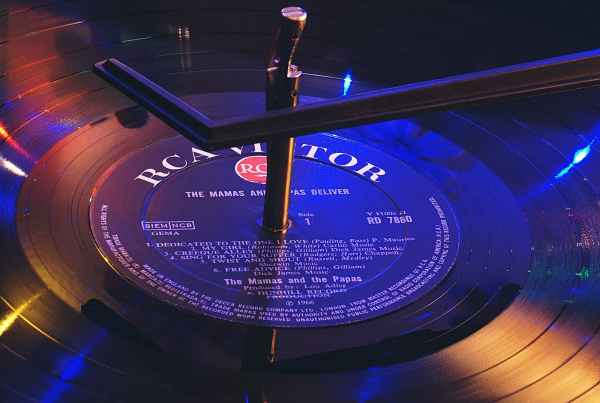
I know by writing this, I’m dating myself a bit, but when I was younger (MUCH younger!) we used to listen to a Hi-Fi stereo system.  It was a piece of furniture, made of wood, complete with legs and fabric-covered speakers, and it had an enormous hinged cover that had to be locked into the “open” position or it would slam shut as your head and upper body was “inside” trying to adjust the settings!  It had a turn-table for records, an AM/FM radio, and even storage for albums and other gear.  It stood proudly, if awkwardly, in the living room or family room, off to the side of the other large piece of entertainment furniture, the giant television set, complete with rabbit-ear antenna.  Hi-Fi stood for “High Fidelity”, reassuring us that the sounds issuing from this box were as close as we could get to “being there” for concerts, broadcasts, and other recordings.  Our model was “old school”– there was no remote control, no way to record in any other medium (no tape deck or USB port), no “pause” or “mute” function– all the knobs and buttons and “arms” had to be operated by hand.

person holding vinyl player in shallow focus photography
Photo by Ivan Boban on Pexels.com

Today, we have “Wi-Fi”– a word that looks and sounds very much like the earlier “Hi-Fi.”  Many people think that Wi-Fi probably stands for “Wireless Fidelity.”  I looked it up– the “Wi-” does stand for wireless, meaning that information is transferred via radio waves, eliminating the need for a wire or cable connection.  But the “Fi” part does NOT stand for fidelity (or anything else, exactly).  It is simply a brand name for a particular wireless protocol See more about the definition of Wi-Fi here.   Still, wireless communications, including cell phone service and internet, has radically changed our world, making it possible to connect with virtually anyone, anywhere, any time.  It is a marvelous innovation with potential for great good.  In our world and culture of global communications, we rely on Wi-Fi or wireless connections every day.  We use them for information, entertainment, business, and social networking.  I rely on it for this blog.

person using black android smartphone
Photo by rawpixel.com on Pexels.com

When it comes to prayer, it’s important to recognize the important difference between Hi-Fi  and Wi-Fi .  Both are important, but they are not the same.

Photo by Tima Miroshnichenko on Pexels.com

High Fidelity Prayer (as I see it) is consistent, daily prayer.  Faithfully coming before God and seeking His face.  Some may use a rote prayer for grace, or bedtime prayers, matins, or other standardized prayers.  Others may set aside a daily time to pray–15 minutes in the morning, or an hour after breakfast, or even 10 minutes before bedtime.  Some people set an alarm to pray at a certain time each day.  Many even make a habit to pray with a group once or twice a week.  To some, this type of prayer may seem passe, outmoded, old fashioned–after all, if God already knows our every thought, why does it matter if we pray every day or meet with the same group?  It matters because fidelity matters– faithfulness, even in the “small” things, matters to God.

Photo by Tima Miroshnichenko on Pexels.com

High Fidelity Prayer may seem awkwardly placed in the middle of our “living room”–forcing us to take time; to make and keep a commitment; to face questions or ridicule–it may seem clunky and wooden at first, even scratchy and hard to tune.  And it depends on being “plugged in” to our power source! Hi-Fi prayer is meditative, deliberate, and worship-focused. We should be careful, however, of making Hi-Fi prayer a relic. Many Hi-Fi stereos from “my day” are now collecting dust, or being used to hold plants or books! Hi-Fi prayer must be practiced– even in an age of Wi-Fi lifestyles– if it is to do us any good.

Wi-Fi Prayer is not the opposite of Hi-Fi Prayer.  It is not “wrong”, or illegitimate.  In fact, it is great to know that we can talk to God anywhere, any time, for any reason.  Wi-Fi Prayer (again, as I see it) is spontaneous prayer that is poured out to God “in the moment”.  It can happen as you are driving or walking down the street (just don’t close your eyes!)  It can happen alone or with a group.  It can happen in response to something you overhear on a bus or a train, or read in an e-mail, or hear on the news.  It is not a substitute for Hi-Fi Prayer, but it is certainly a healthy addition to it.

photo of a woman using her smartphone
Photo by bruce mars on Pexels.com

But Wi-Fi Prayer, just like Wi-Fi communication, can be taken for granted.  Wi-Fi prayers can become “small” and “hand-held”– things we bring before God because it seems like the thing to do.  We tend to put little thought, and even less grammar, into our wireless messages; we sometimes put little thought, and even less doctrine, into our Wi-Fi prayers, relying on common phrases that sound religious, but lose meaning.  “Jesus just be with _____________ during this time”, “put a hedge of protection around ________________”, “I’m just claiming your promises, Lord.”  There is nothing “wrong” with any of these statements, but what do we really mean?  Isn’t Jesus always with us?  Why is protection always a “hedge”?  Which promises are you claiming?  Again, there is nothing wrong with any of these phrases, and we know that the Holy Spirit can understand even our deepest utterances and wordless groaning.  But just like auto-correct can mess up the simplest message, so our auto-pilot praying can mimic real communication with our Lord and Creator.  There are entire comedy routines built around this kind of praying– but it creates an uncomfortably convicting kind of laughter.  We should not be shamed out of Wi-Fi prayer, but we should also be careful not to let our prayer lives become a joke.  Thankfully, God listens to our hearts and not just our words!

Hi-Fi or Wi-Fi, prayer is a sure connection to a faithful God.

Photo by Kevin Malik on Pexels.com

On a final note, whether we have to turn down the knob or hit mute, there is another important “sound” principle of prayer– LISTEN!  There have been some voices mocking this element of prayer, claiming that those who claim to “hear” from God are hallucinating or just plain crazy.  God rarely ever speaks aloud and directly to an individual–even Jesus, while He claimed that He only did what His Father “told” Him to do– never claimed to hear the audible voice of God telling Him what to do or where to go next.  There are only a few recorded instances of anyone else “hearing” the voice of God directly throughout history.  But there are countless instances of people discerning the “voice” of God, and the leading of the Holy Spirit throughout the ages.  How?  Often through changes in circumstances, other trusted voices, new insights into scripture, or the “still small voice” of their own conscience giving confirmation.  One caveat about “listening” for the voice of God– it will NEVER lead you to contradict God’s own word or act in contradiction to His character.

We have a Hi-Fi, Wi-Fi kind of God–let’s keep in tune, log in, and listen!

Of Lighthouses, Watchtowers, and “Friendly” Reminders…

I live just about an hour away from one of the Great Lakes. Within a comfortable driving distance, there are at least three beautiful lighthouses along the lake. Driving to or from the lighthouses, we pass through an area known as the “Fruit Belt.” Orchards, vineyards, and croplands are bursting this time of year–the very air is redolent with the smell of ripening apples, grapes, corn, beans, berries, wheat, and more. Some of the orchards and vineyards still have old watchtowers, though many have been removed or replaced with digital cameras.

Photo by Chris F on Pexels.com

Lighthouses and watchtowers serve a purpose– one that is still important today. Lighthouses help ships and other lake traffic avoid dangerous reefs and rocks along the shore, as well as sandbars. They guide travelers in the dark, and through storms. Watchmen in towers protect crops from dangers such as fire and predators. They watch for storms, and signs of draught and frost. Both lighthouses and watchtowers are fixed, steady, visible, and convey safety and security.

Photo by Travis Rupert on Pexels.com

I’ve been reading through the prophets lately– Isaiah, Jeremiah, Ezekiel…the prophets were sending out a warning to the rebellious people of Israel and Judah. Even though the imagery is often graphic and stark, the message was one of steady love and warning from God. God loves us enough to guide us through the rocks and perils of life. He sends warnings– not to harm us but to keep us from harm. He sends faithful friends and other messengers to stand firm with us through the storm and drought and danger around us.

Photo by SHVETS production on Pexels.com

Just like the light from the lighthouse, or the sound of a foghorn, the message may be glaring and unpleasant, sometimes. We may be sailing along with no notion of the rocks ahead. Or we may be strolling through the vineyard, unaware of a prowling animal or a fire just over the next rise. We may even resent the warnings we read in the Bible or hear from friends. We may be afraid to BE the one giving out the warning– afraid of being misunderstood or resented or even rejected.

God asks us to be watchmen– to be lighthouses– ready to shout out a warning to those who may be in danger. He also asks us to be vigilant and ready to heed the warnings He sends through others.

Photo by Monstera on Pexels.com

How do we know when “friendly” reminders and warnings are true? How can we be sure that they are not just petty criticism or overreactions?

Check them against Scripture. And check them in the context of Scripture. A single verse, taken out of context, that seems to contradict other passages should always be suspect. But a general principle, found throughout the Old and New Testaments should be heeded.

Look for consistency. Lighthouses and watchtowers don’t bend and sway with the winds of change. “Warnings” that change with circumstances, or seem relative to certain situations should be suspect.

Listen for (and speak with) Love. Friends may speak words of warning, but they will also speak of mercy and hope.

Listen for (and speak) truth–warnings should contain specifics, rather than vague fears or blanket accusations.

Listen (and speak) with humility. That doesn’t mean that we cannot speak in our defense, but we should not be defensive or resentful– even if the warnings are spurious. Remember, Jesus was accused of being “from Satan” during His own ministry, yet He answered firmly and gently, not with anger or hatred.

Give Thanks! Give thanks that God sends us warnings, and gives us opportunities to recognize danger and error, and opportunities to repent and change course, and encourage others to do the same!

Two Ears

“We have two ears and one mouth so that we can listen twice as much as we speak!”

Epictetus
Photo by Anna Shvets on Pexels.com
Photo by Lord Pixel on Pexels.com

I write about prayer–how I pray, when I pray, how other people pray, what the Bible says about prayer– but prayer is a two-way street. God desires to hear from us. But He also desires that we should listen. In fact, there is really nothing that we can “tell” God that He doesn’t already know. But there is much that we can learn when our mouth is shut and our eyes and ears are attuned to what God is telling us!

God rarely speaks to us directly, as another human would. God spoke to Moses face-to-face (see Exodus 33), and Jesus spoke directly to hundreds of people during His earthly life and ministry. He also spoke directly to Saul of Tarsus on the road to Damascus, though not face-to-face (see Acts 9). But most of us never hear the actual voice of God. Yet He is constantly sending us messages– if we are listening.

Photo by Ricardo Esquivel on Pexels.com

Often, He sends messages through His word. When we read the Bible, or hear it read aloud, a certain passage or phrase will suddenly stand out, offering comfort, conviction, or insight as we need it. Sometimes, it is the gentle prick of our conscience, or an urgent “sense” that we are to do something (or NOT do something). It may even sound like a voice in our head– our own or someone else’s–urging us to do something out of the ordinary or out of our comfort zone. Sometimes, He speaks to us through the wisdom and insight of someone else–a neighbor, a friend, a family member; sometimes even a stranger–and we get a sense that what we are hearing is “bigger” or more important than just words. And sometimes, God “speaks” through our other senses– in the beauty of a sunset, or the cool breeze at the end of a hot day; through the wordless songs of a bird or a rippling brook; the smell of warm bread–His way of reminding us that He is present, and He is Good.

Photo by Andrea Piacquadio on Pexels.com

We need to listen for such moments and messages. But we also need to listen carefully. Not all “feelings” are from God; not all “wisdom” is inspired. God will NEVER send us messages that are in conflict with His character. He may call us to do things that seem impossible, uncomfortable, “strange,” or even potentially “dangerous,” but He will not tell us to do something that contradicts His own word. God may nudge you to leave a toxic relationship, or move to another city or country to spread the Gospel. He may urge you to speak to a stranger on a bus, or give something away to a friend without knowing why. He may ask you to befriend someone who is homeless, or mentor a child, or volunteer your time in ways or places you never imagined. But God will never suggest (or send someone else to suggest) that you cheat on your spouse, or abuse the trust of a child, or mislead your neighbor, or steal from a stranger– NEVER.

Photo by Eren Li on Pexels.com

It isn’t just that God gave us two ears (and two eyes!) so that we can look and listen twice as much as we speak– we NEED to listen twice as much and twice as closely.

How will I listen today? How will God speak? When will I close my mouth, so that I can open my ears? Will I watch as well as listen? Lord, help me to hear You. Help me to discern your voice above the noise and busyness around me today.

Blog at WordPress.com.

Up ↑