Be Ready!

5-9 So don’t lose a minute in building on what you’ve been given, complementing your basic faith with good character, spiritual understanding, alert discipline, passionate patience, reverent wonder, warm friendliness, and generous love, each dimension fitting into and developing the others. With these qualities active and growing in your lives, no grass will grow under your feet, no day will pass without its reward as you mature in your experience of our Master Jesus. Without these qualities you can’t see what’s right before you, oblivious that your old sinful life has been wiped off the books.

2 Peter 1:5-9 (The Message–emphasis added)
Photo by Syed Qaarif Andrabi on Pexels.com

Do you plan for emergencies? Most people have some basic idea or plan for expected circumstances; a first-aid kit for home accidents; a small store of food or water; perhaps a generator in case of a power outage… But how many of us have a plan for the unexpected? Not just a vague idea of “what if…” but a plan. Some people have a stock of toilet paper and bottled water for their house or apartment, but no plan for what to do if they need to evacuate or relocate due to a flood or hurricane, or if they lose electricity for more than three days due to a storm, or if their building should catch fire.

Photo by Roger Brown on Pexels.com

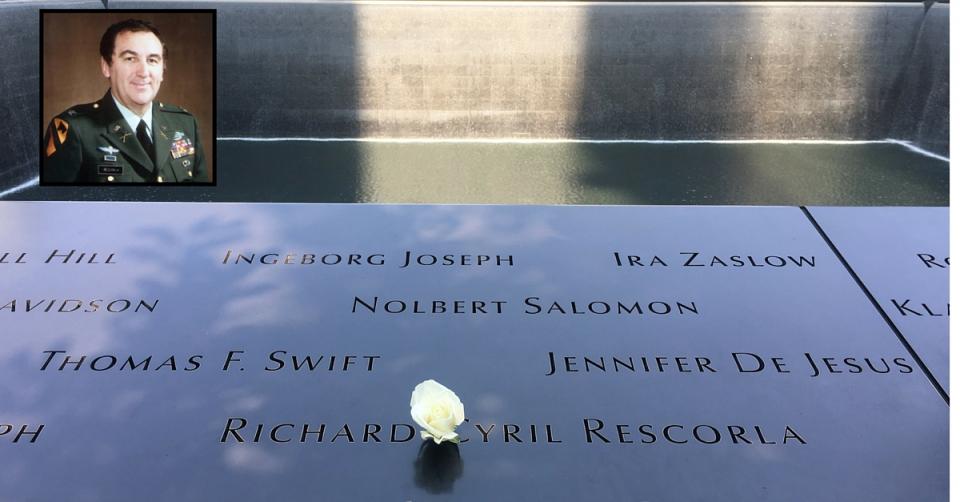
On September 11, 2001, when airplanes flew into the Twin Towers in New York City, several thousand people had to be quickly evacuated from the burning buildings. There were some plans in place; most had been misplaced or forgotten. And the chaos and confusion led to mixed messages– “stay put and wait for help…”,” don’t use the elevators…”,”get out as quickly as possible…”,” the stairways are unsafe…” But the vice president for corporate security at Dean Witter/Morgan Stanley, Richard Cyril Rescorla, was prepared for the worst. He had been planning and rehearsing for years after the failed attacks in 1993. He quickly implemented his detailed plans, ushering hundreds out of offices and into the stairwells, where they descended to safety in spite of the smoke and panic. He went back several times, checking to see who else needed help and guidance. Regardless of where they worked or who they were, Rescorla came with calm reassurance and authority, sending them into the path of rescue workers who could then offer greater assistance. Rescorla himself never made it safety– as he kept going up to get others out, he became trapped and perished when the towers fell. However, his years of planning, and his dedicated efforts on that fateful day saved the lives of hundreds, if not thousands of people. (See more here: https://www.911memorial.org/connect/blog/recognizing-war-hero-who-led-wtc-survivors-safety-911 )
We may not be called on to face another disastrous day like 9/11, but we are called to be alert and ready as we follow Christ. Those who followed Christ during His earthly ministry were called disciples. The name comes from the same root as discipline. They literally “walked” with Christ. They went where He went; they ate what He ate; they slept where He slept; they did whatever He asked them to do. If we seek to follow Christ, we must be ready to live lives of alert discipline. This comes after we take our first steps of Faith, and build on our character and understanding of God’s will. Our actions should not just be spontaneously “good” in the short-term, but patterned on the need to be prepared for the kind of challenges and trials we should expect to face. Just as Jesus was prepared for those who came to challenge Him with trick questions and false accusations, we need to be prepared to be challenged, rejected, and subjected to persecution. And we need to be prepared to respond, not with haughty complacency, outraged panic, or defensive tantrums, but with calm confidence and compassion.

The Apostle Peter, earlier in his letters, urges believers to be ready to give an answer (or a reason) for the hope that they have in Christ. (1 Peter 3:15) And this should not be a knee-jerk reaction to being challenged, or a snide commentary on doctrinal matters. We should be ready to be witnesses for the Majesty, Power, Grace, and Love of God as it has been experienced in our life and the lives of those around us. God never asked us to be His defense lawyers. He asks us to be faithful witnesses–not just of the facts about Him, but about our relationship WITH Him.

Photo by Andrea Piacquadio on Pexels.com

We also need to be prepared to be relocated or evacuated from lives of comfort, complacency, and expectation, in order to GO into the world and spread the Gospel. We will not all be called to be “missionaries” in the traditional understanding of the word, but we ARE all called to be on mission– to be ready to share our hope, our resources, our time, and our love– with others, near and far.

Photo by Porapak Apichodilok on Pexels.com

Today, I pray that God would continue to teach me as I live in obedience…that I would be alert and ready to speak, to walk, and to serve where and when and how HE sends. May I be ready to usher many others to safety as I share and live out the Gospel of Christ!

Go! Tell! Witness! Believe!

15 When the angels went away from them into heaven, the shepherds said to one another, “Let us go over to Bethlehem and see this thing that has happened, which the Lord has made known to us.” 16 And they went with haste and found Mary and Joseph, and the baby lying in a manger. 17 And when they saw it, they made known the saying that had been told them concerning this child.

Luke 2:15-17 (ESV)

Go! Tell It on the Mountain! The ancient prophets foretold it. The Angels brought the news to the shepherds, who told it to their neighbors: Jesus, the Christ, is born! He is here among us! God in the flesh! What amazing and glorious news! This same Jesus told parables, shared prophecies, and spoke the Truth– and taught His disciples to do the same! Through the centuries, witnesses have spoken words of hope, healing, and salvation to the next generation, taking the Word as they spread throughout the world.

Photo by cottonbro on Pexels.com

In the beginning was the Word, and the Word was with God, and the Word was God…And the Word became flesh and dwelt among us, and we have seen his glory, glory as of the only Son from the Father, full of grace and truth.

 
John 1:1; 14
Photo by Pixabay on Pexels.com


“Good Christian, fear, for sinners here the silent Word is pleading..”

What Child is This?

Jesus, who spoke the universe into existence, came into His own creation in silence as a newborn baby. The angels announced His coming; the shepherds spoke of Him; the Wise Men came to honor Him. But His arrival was just the beginning. In His ministry, He would speak words that echo through the centuries– words of hope; words of warning; words of life and salvation. And He challenges us to speak as well– to share the Gospel; to be His witnesses to the uttermost parts of the earth (see Acts 1:8).

Our words matter. Our words have power– power to build up, and power to destroy. We have opportunities each day to speak Truth, Hope, Joy, Peace, Compassion, Love…or to stay silent. And we must be careful to speak the truth– even when it is inconvenient, unpopular, or risky. We must not compromise by speaking pleasant platitudes or ignoring danger. Truth is not always pleasant–Jesus’s words were not always welcomed; not always comforting. But they brought healing where it was most needed, and hope where there was darkness.

Photo by Ivan Samkov on Pexels.com

And more than words must go out into the world– Jesus didn’t sit in a comfortable corner of a bistro waiting for the hurting and hopeless to come to Him and hear His words. He climbed mountains and crossed lakes; He traveled from town to town; He shared meals and participated in the Synagogue services; He touched lepers and spoke to outcasts. Today, we have amazing opportunities to spread the Good News–technology and media; the ability to meet others in person (COVID permitting!) or via Zoom or Skype or even cell phone; and, in many places, the freedom to speak without fear.

Photo by Daria Shevtsova on Pexels.com

 For God so loved the world that he gave his one and only Son, that whoever believes in him shall not perish but have eternal life.

John 3:16 (NIV)
Photo by Min An on Pexels.com

The Word came down at Christmas. Let’s make sure the Word goes out this Christmas– the Savior has arrived! He is Christ, the Lord! Joy! Peace! Hope! Celebration! Go! Tell it on the mountaintops and in the valleys and across the seas!

God of the Impossible

35 On that day, when evening had come, he said to them, “Let us go across to the other side.” 36 And leaving the crowd, they took him with them in the boat, just as he was. And other boats were with him. 37 And a great windstorm arose, and the waves were breaking into the boat, so that the boat was already filling. 38 But he was in the stern, asleep on the cushion. And they woke him and said to him, “Teacher, do you not care that we are perishing?” 39 And he awoke and rebuked the wind and said to the sea, “Peace! Be still!” And the wind ceased, and there was a great calm. 40 He said to them, “Why are you so afraid? Have you still no faith?” 41 And they were filled with great fear and said to one another, “Who then is this, that even the wind and the sea obey him?”

Mark 4:35-41 ESV

I’ve been reading through the Gospels this month, and one of the phrases that has stood out for me this year is “ye of little faith.”(or “you have so little faith!) Jesus uses this phrase to chastise His disciples, as well as the crowds– they claim to want miracles, yet when Jesus does miracles, they seem astonished almost to the point of fear. Or they attempt to “explain them away.”

Photo by Andrea Piacquadio on Pexels.com

We live in a world of possibilities– when we are young, we see possibilities everywhere. “When I grow up…” we imagine ourselves as astronauts, or world leaders, or Olympic champions. As we grow older, our world of possibilities grows narrower. We become cynical (or more aware of our own limitations!) and, while we long to see miracles, we neither expect them nor ask for them. We know some difficult or unexpected things are still possible, but we tend to see more “impossibilities.” “My health will never get better.” “My boss will never listen to me.” “I can’t…”

Photo by Andrea Piacquadio on Pexels.com

One of the biggest roadblocks to becoming a Christian (and to continue to grow in faith) is to accept that NOTHING is impossible for God. We set limits on God’s ability, His willingness, His goodness–we expect to be disappointed, disillusioned, and disheartened. And it becomes a self-fulfilling prophecy– we end up disappointed, disillusioned, and disheartened in others, in ourselves…

Photo by Dimitry Zub on Pexels.com

Yet, God has given us an entire book filled with miracles and impossible events that are meant to show us that He is the God of the Impossible; the God of Miracles. From the beginning, God has demonstrated His willingness to make a way when there seems to be no way. From Noah and the Flood, to Abraham becoming the Father of many nations, to bringing Joseph from a pit to becoming the second-most powerful man in Egypt, to the story of Moses leading the Israelites out of slavery…the stories abound. Whether sending food from heaven, water from a rock, or fire from the sky, God’s power is on display throughout the Old Testament. The crowds following Jesus grew up hearing these stories. But after four hundred years of silence, they seemed to remember what God COULD do, but doubt what God WOULD do for those who call on Him.

Jesus walked on water, healed the sick, turned water into wine, cast out demons, raised the dead, and much more. And still the people wanted “proof.” But we are not so very different. Not only do we have all the stories of the Old Testament; we have all the stories of Jesus’ miracles. Yet we still wonder whether God will hear and/or answer our prayers. And it doesn’t take 400 years of silence to cause us to doubt. Sometimes it is four hours, or four days, or four months of seeming silence.

Photo by Skyler Ewing on Pexels.com

Nothing is impossible with God. There are some things that are not productive; some things that are not part of His plan. Imagine Shadrach, Meshach and Abednego praying that God would not allow them to go into the fiery furnace? That wasn’t the plan. Instead, God chose to do the unexpected, the unthinkable–the impossible. He rescued them IN the fire– caused them to come through without being singed. Imagine those who prayed that Lazarus would recover from his illness. That wasn’t the plan. Instead, Jesus did the impossible– raising Lazarus after four days; after the funeral, after the burial, after all possible hope was gone.

God excels in the impossible. He delights in it. What impossible situation are you facing today? God may not choose to remove the situation. But He can take an impossible situation and turn it into a miraculous victory. Not because we demand “proof” of His divinity or power. But because His plans are bigger and better than what we can comprehend.

Photo by Anna Shvets on Pexels.com

I’ve shared a bit about one of my current struggles. My Mom is in her 88th year, and her health is failing. She is very independent and lives alone. My siblings and I are being “stretched” in trying to help Mom navigate several decisions and several changing conditions. God has not taken away her health issues, or conveniently provided an easy transition or simple answers to our questions. But He has been “with us in the fire.” That doesn’t mean that I understand all that Mom is going through, or how best to help her from moment to moment. And I’m not asking God to provide a dramatic “rescue” for Mom as she navigates this part of her journey. But I trust that God has already seen the end from the beginning– none of the “setbacks” or “unexpected events” we face can take God by surprise or leave Him unprepared to use them for His glory and our ultimate good.

Armchair Olympians

24 Don’t you know that the runners in a stadium all race, but only one receives the prize? Run in such a way to win the prize. 25 Now everyone who competes exercises self-control in everything. They do it to receive a perishable crown, but we an imperishable crown. 26 So I do not run like one who runs aimlessly or box like one beating the air. 27 Instead, I discipline my body and bring it under strict control, so that after preaching to others, I myself will not be disqualified.

1 Corinthians 9:24-27 CSB

I must confess, I haven’t been watching much of the Olympic games currently taking place in Tokyo. Over the years, I’ve spent hours glued to the television, watching the competitions, gobbling up the emotional stories of various athletes and their struggles to qualify and chase their dreams. In fact, I used to get so involved in watching the Olympics, that I would fall behind in my housework, social obligations, and sleep! It can be very inspiring to watch as various athletes from around the world challenge themselves (and their competitors) to go faster, reach farther, and climb higher. And many of the stories and names have stayed with me over the years.

Photo by Guduru Ajay bhargav on Pexels.com

There is nothing wrong with watching sports, and cheering on those who have worked so hard. And I love the pageantry and good will of the Olympic games, where I find myself cheering for athletes and sports I would never know otherwise–those who have overcome tragedy and incredible obstacles just to participate; those whose achievements have set new standards and inspired others to greater heights. But as Christians, we should consider our OWN level of achievement. Not in a competitive sense, and not in the sense of “earning” God’s salvation or approval, but in the sense of growth and development of self-discipline.

Photo by Leon Ardho on Pexels.com

We admire athletes, not only for their natural abilities, but for their discipline and spirit. They train for years, undergoing rigorous drills, keeping tight schedules, pushing their bodies– often to the point of injury–to get a little more speed or distance or strength. They prepare for the stress of competition and the pressure of expectation. They learn to leave behind the failures and the victories of yesterday as they get ready for tomorrow. We watch them, and we talk about being inspired. But inspired to do what? I have never developed the level of self-discipline to rise every day at 6 a.m. to run or stretch, let alone train for a race or a swimming meet. I briefly flirted with becoming a gymnast after watching Nadia Comaneci score a perfect 10.0 in the Montreal Olympics of 1976, but I quit after only one weekend!

Photo by Anastasiya Gepp on Pexels.com

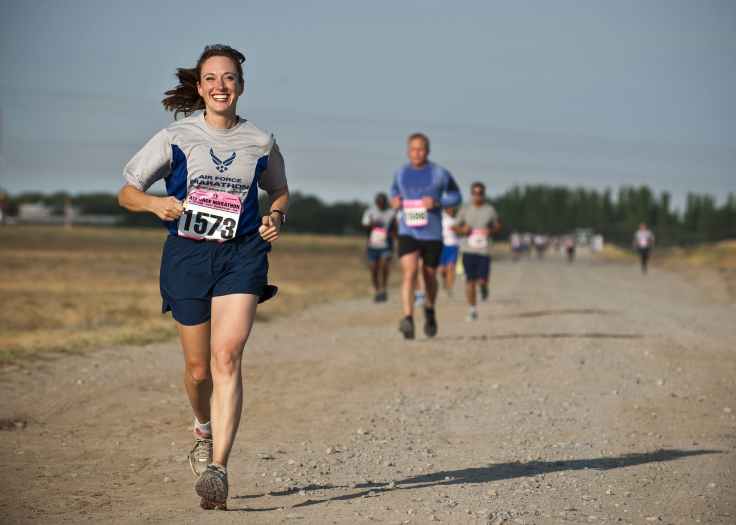
The Apostle Paul calls us to follow his example and “run the race” as we live for Christ–we are to develop our character and practice spiritual discipline in the same way that an athlete develops her body and practices physical and mental discipline. And our motivation is not a gold medal or a world record that will eventually be broken, but eternal victory over Sin and Death!

Photo by RUN 4 FFWPU on Pexels.com

I’m ashamed to say that I have not always followed this example. I’ve been an “armchair Olympian”– content to watch others do the hard work, and enjoy the vicarious feeling of victory when they cross the finish line. I cheer for those Christians who are called to foreign missions–I’ve even traveled on “short term” mission trips– but I don’t always see my everyday life as a “mission.” But that’s exactly what it is. Jesus didn’t watch the disciples heal the sick or preach about the Kingdom of God as He sat on the sidelines. And He certainly didn’t spend time analyzing and dissecting the “performances” of the prophets and patriarchs of old. He didn’t even tell the disciples to analyze His miracles or study His sermons. He simply said, “Follow Me!” “Walk with Me.” Christianity is not passively cultivating a feeling of victory in Jesus. It is living victoriously THROUGH Jesus.

Photo by Andrea Piacquadio on Pexels.com

Our character won’t be changed by sitting on the couch or in an armchair, watching others do the hard training and running their race. Cheering from the sidelines isn’t going to increase our patience, or develop our faith, or make us more Christlike. Listening to Christian Radio or watching sermons on television won’t automatically translate into a life of integrity and peace. Even reading the Bible, or keeping a prayer journal, or writing a blog about spiritual things won’t teach us humility, gentleness, or love for others. We need to make the effort. And we need to seek the wisdom and discipline of the Holy Spirit– our “coach”– as we follow the example of Christ. It starts with small decisions– daily habits–and learning to be consistent. It also takes a willingness to repent and get back on track when we fail. And we will fail in our own efforts!

Photo by Ric Rodrigues on Pexels.com

We can admire earthly athletes. But we shouldn’t worship them. And we shouldn’t let them become idols that substitute for the kind of work WE need to be doing to learn discipline and faithfulness. I want to reach the finish line, knowing that I’ve run my best race for the King!

Photo by Pixabay on Pexels.com

Laughing With the Sinners

There is a line in a song by Billy Joel (Only the Good Die Young) which reads, “I’d rather laugh with the sinners than cry with the saints. The sinners are much more fun.”

There is a myth about sin– that sin is fun and obedience is drudgery. Sinners laugh and live carefree, happy lives, while “saints” lead gloomy lives filled with tears, worry, and anguish. Heaven will be filled with sour-faced do-gooders playing harps, while Hell will be an eternal party.

Photo by Julia Larson on Pexels.com

Nothing could be further from reality. While sin gives momentary pleasure and temporary laughter, it also leads to devastating pain and haunting regret. Broken families, lost relationships, stress, and guilt are just some of the consequences of sin. The idea that “I’m not hurting anybody– I’m just doing what makes me happy” is a false comfort.

Photo by Victoria Borodinova on Pexels.com

Similarly, while obedience may require us to make sacrifices or suffer momentarily, it also leads to great reward–discipline, wisdom, integrity, and a legacy of hope and help. The idea that “I’m missing out on the fun” is also a false one. “Saints” may cry, but often their tears are for the misfortunes of others!

Unfortunately, the common stereotype of sinners laughing while saints cry or, more often, sit in judgment, is based on observation. I have known some very sour Christians. They may not be crying, but they frequently make others around them cry! They nag, scold, wag their fingers, consign their neighbors and family members to Hell, and act as though they are too good for everyone else. When challenged about their negative attitude, sometimes they suggest that they are just “waiting for Heaven.” Others plead a genuine concern for others, and they worry that the laughter they hear now will turn to mourning in the future.

Photo by Paul Theodor Oja on Pexels.com

But I have also known joyful Christians– laughing, singing, encouraging others, whistling while they work, even laughing in the face of suffering and persecution! They, too, are “waiting for Heaven.” But in the meantime, they are celebrating their new and abundant life in Christ. Their attitude and actions attract others, and reflect the love, joy, peace, and hope that transcends the mere “happiness” of a moment’s sinful pleasure.

Photo by Akshar Dave on Pexels.com

The Bible says much about the value of both laughter and tears; of joyous celebration and sober reflection. In the end, ALL of us are “sinners”–no one is righteous on her/his own. Jesus, when He walked the earth and interacted with people, wept and celebrated with them. The Pharisees reprimanded Jesus and His disciples for their “feasting” and spending time with prostitutes and tax collectors. And yet, Jesus had harsh words about sin and Hell, and often spent time alone and in anguish of heart.

Photo by Andrea Piacquadio on Pexels.com

The crying of saints is not, in itself, of any more value than the laughter of sinners. But laughter and happiness in the moment cannot save us from the sting of death or the yawning emptiness of an eternity without God. And that is no laughing matter! Unfortunately, the song is based on an empty myth. Death comes to all of us, young or old, “good” or “bad,” gloomy or exuberant in life. What makes the difference is not our laughter or tears, or even our efforts to obey or live “good” lives– what makes a difference is GRACE and FAITH. And I’d rather live with the redeemed than die with the defiant!

Fishers of Men

My husband and I had the opportunity recently to go fishing on Lake Michigan. Lake Michigan is huge– the fifth largest lake in the world– and is home to many species of freshwater fish, including bass, catfish, trout, salmon, walleye and whitefish.

Photo by Brett Schaberg on Pexels.com

Our daughter had chartered a boat for the day. The captain and first mate did most of the “work” involved– they piloted the boat, set up the fishing reels, put on the lures, and dropped them to the desired depths. Then, they trolled; they slowly ran the boat back and forth along a stretch of water where the fish were feeding, hoping for a bite. Once a fish was on the line, they would hand us the reel, and it was our job to “land” the fish. Mostly, this involved a lot of reeling and making sure to “hold the line” so the fish would not escape or drag the line. With lures at depths up to 200 feet and several yards away from the boat, this could take up to 10 minutes, fighting against the fish and the drag of the boat’s motion. But eventually, we could see the fish rise to the surface and soon enough, it was in the net and on the boat.

We had a fantastic day, and reached our “limit” of fish to take home– several lake trout and a few salmon.

Our day of fishing reminds me that Jesus’s first disciples were fishermen https://www.biblegateway.com/passage/?search=Matthew+4%3A18-22&version=NIV. Jesus told them to leave their nets and follow Him, and He would make them fishers of men. Jesus used a lot of parables and imagery in His teaching. And He never wasted an analogy. So what is it about fishing that can teach me about how Jesus wants me to share the good news and/or help disciple others?

  • Go where the fish are! This seems kind of obvious for our trip the other day, but how often do I go looking for those who need to hear good news? Am I willing to go out into deep waters, willing to take risks, willing to leave the comfort of the shore?
  • Listen to your captain! Our captain really knew the waters and the fish who lived there. He knew how the different kinds of fish would respond to being hooked. Some fish needed to be reeled in with a steady, even pull. Others would try to jerk and “run”– they needed to be given some slack, but kept on the line. People react differently to the Gospel. Some respond eagerly; some resist; some seem indifferent. God wants us to listen to Him– and also to each other. My goal should not be to force someone into a relationship with Jesus– to trick them or frighten them into a confession of a faith they don’t really have. I want people to come to KNOW Jesus and experience His grace and immeasurable love. I want them to be drawn to Him—even if that means answering their questions, listening to their doubts and fears, and waiting.
  • Be patient; but be prepared. Our first couple of fish were caught within just a few minutes of reaching our first “spot.” But then we waited. And waited. Our captain took us to another spot. And we waited…and waited. But then, there was a small frenzy– at one point there were three of us reeling in fish at the same time! And then, we waited… and waited. One last fish– our largest of the day! Sometimes, we think nothing is happening. No one is listening. No one notices our Christian walk– or they mock and steer clear of us because of it. Don’t give up, and don’t give in.
  • Pray! We prayed for safety, for good weather, and that we would enjoy our day, regardless of the results. And God gave us an abundance. God will not always give us the results we imagine or hope for. And sometimes, He will give us more than what we ask for–more work, more strength, more patience, more obstacles– but He will be there in the rain, or fog, or sun. Whether we have fished all day without success or we bring in our limit before 10 a.m., the most important thing is to have followed Him.
Photo by Public Domain Pictures on Pexels.com

Jesus Slept

I’ve had a difficult time sleeping lately. Not just because these are stressful times (though they are), and not just because we’ve had a couple of stormy nights (which we have), and not even because I’ve lost track of time, and slept in late and stayed up too late doing things like writing my blog entries…

Photo by bruce mars on Pexels.com

But the combination has meant that I’ve slept badly for several nights, and I’ve been paying the price– tired in the early evening, grumpy in the mornings… Sleep is essential for good health; not just physical health, but mental and emotional health, too. And it is just as necessary– in some ways more so– when we face trying times.

Photo by Pixabay on Pexels.com

When I cannot sleep, I can still pray. Sometimes, I pray through tears, sometimes through exhaustion. And sometimes, I cannot sleep because I have not prayed– I have worried and wearied my mind, but have not given my worries and concerns over to the One who holds the universe in His hand. Often, once I resolve to spend time in prayer–I find I can sleep, after all! (Isn’t that just the way, sometimes?!) I pray for the storm to pass, or the worries to melt away, but they don’t. However, as soon as I begin to pray about things bigger than what is keeping me awake– unsaved loved ones, those who are suffering much worse than my headache or stuffy nose–suddenly I’m out like a light! ( BTW– I’m not recommending this as a course of action. I don’t believe God works that way. It’s just an observation. God grants us what He knows we need most–rest is important, but God will send it in His time, not because we say or do things in a particular, even contrary, manner.)

Photo by Pixabay on Pexels.com

Jesus was fully human. He needed sleep, and the Bible records that he slept. But the recorded instance of him sleeping doesn’t center on peaceful circumstances and luxurious surroundings– no soft beds and tropical breezes gently whispering him to slumber. And we don’t see him falling asleep after an intense prayer session. Instead, we see Jesus sleeping through a raging storm in the middle of a lake . (Matthew 8:23-27; https://www.biblegateway.com/passage/?search=Mark+4%3A35-41&version=NIV; Luke 8:22-25). With great waves churning the lake, and tossing the boat about, even seasoned fishermen were terrified; yet Jesus lay asleep in the stern of the boat. And it seems that his sleep was deep and restful, in spite of his surroundings and circumstances. When he was awakened, he didn’t worry or panic– he simply told the wind and waves to “be still.” The disciples were in awe of Jesus’ power, but they had failed to consider praying before they woke him up. Instead, they had exhausted themselves with worry and fear.

Photo by Arthur Brognoli on Pexels.com

Lest we fall into thinking that Jesus was just supernaturally “chill” about danger, we need to look at his experience in Gethsemane. This time, it was the disciples who slept, even when Jesus asked them to keep watch as he prayed, even when he had explained to them that he was about to be betrayed. There are circumstances that drive us to our knees, that won’t let us sleep– trials and pains that draw us to our Father. But in His mercy, He will often grant us rest and renewal in the midst of the worst circumstances. Jesus did not find sleep in the Garden– he found the power he needed to face his trial and death on a cross. But his victory means that WE can have peace and hope– and rest– even in times of crisis.

Photo by Pixabay on Pexels.com

There is a time to sleep, and a time to pray. Anxiety, trouble, and sickness may make sleep difficult, and even impossible for awhile, but God knows we need it in times like these. And He knows that in the sleepless hours, we can lift our deepest cares to Him. May God grant me the wisdom and the faith and the ability to find time for sleep and prayer. May God grant the same to you, and to all of us.

Photo by Aldo Picaso on Pexels.com

Christians, Christ-followers, and Jesus Freaks

I see a lot of articles, posts, and religious sites as I wander around the internet. And there has been a lot written and shared lately about the word Christian getting a “bad rap.” Many writers and church goers are no longer comfortable calling themselves Christians. They don’t want to be identified with “bad” Christians– hypocrites, political extremists, etc., who loudly and proudly use the label while treating others with contempt, and generally acting like bullies and/or clowns. The growing trend is to use the term “Christ-follower” to describe a lifestyle that seeks to mirror that of Jesus Christ during His life on earth.

Photo by Pixabay on Pexels.com

Proponents of this practice point out that Jesus never called His followers “Christians.” Instead, He consistently invited people to “Follow me.” The term “Christian” is associated with the earliest Gentile churches and with the scattering of the persecuted church across Judea, Samaria, and Asia Minor. The term originated in Antioch a few years after Jesus’ resurrection:

19 Now those who were scattered after the persecution that arose over Stephen traveled as far as Phoenicia, Cyprus, and Antioch, preaching the word to no one but the Jews only. 20 But some of them were men from Cyprus and Cyrene, who, when they had come to Antioch, spoke to the Hellenists, preaching the Lord Jesus. 21 And the hand of the Lord was with them, and a great number believed and turned to the Lord. 22 Then news of these things came to the ears of the church in Jerusalem, and they sent out Barnabas to go as far as Antioch. 23 When he came and had seen the grace of God, he was glad, and encouraged them all that with purpose of heart they should continue with the Lord. 24 For he was a good man, full of the Holy Spirit and of faith. And a great many people were added to the Lord. 25 Then Barnabas departed for Tarsus to seek Saul. 26 And when he had found him, he brought him to Antioch. So it was that for a whole year they assembled with the church and taught a great many people. And the disciples were first called Christians in Antioch. (emphasis added)

Acts 11:19-26 (NKJV via biblegateway.com)

For a more detailed look, check out this link: http://www.bible.ca/ef/expository-acts-11-19-26.htm

Photo by Paul Theodor Oja on Pexels.com

Christian was not a positive or honorable label for the early followers of Jesus Christ. There are still many places in the world where the label “Christian” invites arrests, beatings, and death threats. There are places where the name “Christian” invites scorn and derision. What has changed (or seems to have changed) in the intervening years is that we see and hear of more and more places in the world where the label “Christian” brings up images of sneering protesters condemning gays or smug white faces spouting self-righteous phrases to justify greed, racism, and/or injustice. “Christians” are not just unwanted or misunderstood by others–Christians are unwanted by their own; misunderstood and misrepresented, at odds and at war with one another.

So what can be gained by followers of Jesus Christ in re-branding themselves as “Christ-followers?” After all, it’s just a name. In the 1960s, many Christians were condescendingly labeled “Jesus Freaks.” Jesus Freaks were viewed much like Hippies. They spoke of Peace and Love and Acceptance. They taught about kindness and unity. They were often young, and generally disillusioned with the older generation and its way of life. They acted a lot like Hippies; they just didn’t do as much experimenting with drugs and free sex. Much like the early Christians, they were labeled by those who dismissed their message and their way of life. They rejected traditional or mainstream Christianity, and were dismissed by many who called themselves Christians. Some were openly critical of previous generations of Christians. Many of those who wish to be called “Christ-followers” now are the descendants (or remnants) of the Jesus Freaks of the 60s. The mind set is very similar– disillusionment with others who have misused or abused the name of Christ, and a desire to “rescue” the reputation of the church.

Photo by Matthew T Rader on Pexels.com

There have been other groups across the centuries who have tried to re-brand and re-label their devotion to Jesus– God-fearers, Disciples, Reformers, Witnesses, Saints, Fellowships, etc.. And there is no command in Scripture that we must all call ourselves by a particular label.

But is seems odd to me that the very label, “Christian,” that came about because of persecution, that came about as a derisive, sneering, condescending term, was embraced by those it sought to shame and intimidate. Why didn’t the original “Christians” re-brand themselves to make their cause less offensive? Why has this term, “Christian,” endured over the centuries?

Photo by Francesco Paggiaro on Pexels.com

I think there are a few very good reasons:

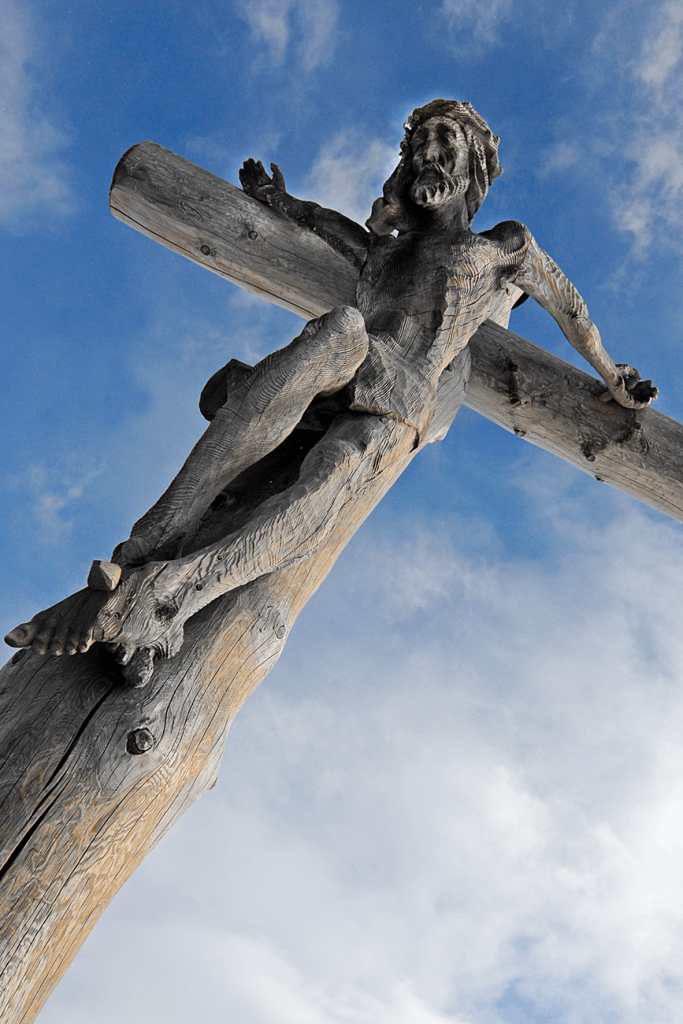
  1. “Christians” bear the name of Christ, whatever other name they give themselves. When I say I am a Christian, I know that there are people who will compare me to others who make this claim. But I am not just a member of a group that likes the idea of Christ; I’m not just a Facebook follower of Christ, or a fan of Christ, or a student of Christ. Christ is my Lord; my life; my identity. Christ– Jesus the Christ, the Messiah. Not Joe Smith down the road who also attends my church, or a famous evangelist or Bible teacher, or even one of the Apostles, or Saints. Jesus– son of Mary and Joseph; Son of God and Son of Man. This same Christ was arrested, given a sham trial, condemned to be crucified like a common criminal, and hung, naked and tortured before a mocking crowd. He was humiliated, misunderstood, and abandoned by those who claimed to care the most. THAT is the name I willingly bear.
  2. “Christian” is a label. I can label myself in any number of different ways– “Woman,” “American,” “Caucasian,” “College graduate.” But there are many others who can use those same labels. They may define what I am, but they don’t define who I am. I may be appalled (and I am, sometimes) at things other women do, at things other Americans say, at the history of Caucasians and their interactions with indigenous peoples in other parts of the world, at the snobbery of other college graduates…But I don’t say, “I’m no longer going be an American; I want to be known as a resident of the United States, but I have my own system of government and culture and language independent of those living in Missouri or Idaho or Chicago– they don’t represent who I am.” Of course they don’t represent who I am–they never did. We all, collectively, are Americans AND residents of the United States. I can’t decline to be a woman because I don’t like the way other women behave or speak. And I can’t choose to be “other than” a Christian…all I can do is give it another label.
  3. Finally, who I am is not found in a name or title or label. It is the sum total of my character and the way I live my life. Jesus didn’t tell His disciples that they would be known by any particular name, but He did say they would be known and identified by their love: 34 A new commandment I give to you, that you love one another; as I have loved you, that you also love one another. 35 By this all will know that you are My disciples, if you have love for one another.” (John 13:34-35 NKJV). That doesn’t mean I have to approve of everything other “Christians” do– in fact, if they use the name Christian and do not have love for others, they prove they are liars– but it means that I must do everything in the name of Christ.
    I am a Christian first, before I am a woman or an American or any other label. That means that I am the co-heir and sister to a young man in India who has been rejected by his family and expelled from his school for being a Christian. I am an ambassador of Christ to the woman I meet in the grocery store whose children are taxing her patience and whose cart is blocking the aisle I want to enter. I am an example of Christ’s love to the young couple who have been victimized by other “Christians” because they are “different.” And I am a Christian in a world of “fake” Christians, and confused Christians, and faulty and very human Christians just like me, who need correction, mercy, justice, and wisdom to follow Christ, to die to self, and to bear the honor of His name. Ultimately, I can call myself a Christian, a Christ-follower, a Jesus Freak–any other label I want. Whether I AM a Christian or not will be determined by how I live, not what I call myself.
Photo by Pixabay on Pexels.com

If you are a Christian reading this– how are you bearing His name today?

Blog at WordPress.com.

Up ↑