Spiritual Understanding

5-9 So don’t lose a minute in building on what you’ve been given, complementing your basic faith with good character, spiritual understanding, alert discipline, passionate patience, reverent wonder, warm friendliness, and generous love, each dimension fitting into and developing the others. With these qualities active and growing in your lives, no grass will grow under your feet, no day will pass without its reward as you mature in your experience of our Master Jesus. Without these qualities you can’t see what’s right before you, oblivious that your old sinful life has been wiped off the books.

2 Peter 1:5-9 (The Message– emphasis added)
Photo by Tobias Bju00f8rkli on Pexels.com

“For my thoughts are not your thoughts,
and your ways are not my ways.”
This is the Lord’s declaration.
“For as heaven is higher than earth,
so my ways are higher than your ways,
and my thoughts than your thoughts.

Isaiah 55:8-9 (Christian Standard Bible)

I do not understand God’s ways. If I try to work it out with human understanding, I will never make sense of how God works. I don’t have His wisdom or omniscience; I don’t have His eternal perspective or omnipotence. God will never answer all of my questions; He will never reveal all of His plans or reasoning to me. He calls me to walk in Faith, not by sight (2 Corinthians 5:7) This is a stumbling block to many. It is especially frustrating for those who think they already DO know (almost) everything, and believe that they should be able to speak to God as a peer, even to be able to consult Him! I knew of a man (a convicted felon) who refused to repent of his actions. He admitted that he had done wrong, and that his prison sentence was deserved, but when challenged with how he would answer before God, he simply said–“God and I will come to an understanding.” He simply felt that if he explained “his side of the story,” God would change his immutable commandments and make an exception.

Photo by Armin Rimoldi on Pexels.com

God doesn’t need anyone to “explain” anything to Him. Nor does He “owe” any of His creation an explanation for His actions or seeming inactions. I will never understand why certain injustices are allowed to happen, and seem to go unpunished in my lifetime. I don’t understand God’s timing in my life– why my father died when he did, or why I had to wait so long to be married. But I am learning to trust that God knows every injustice, every need, every situation we face, and that He WILL make all things “right” in HIS time and in His perfect way.

Photo by Munmun Singh on Pexels.com

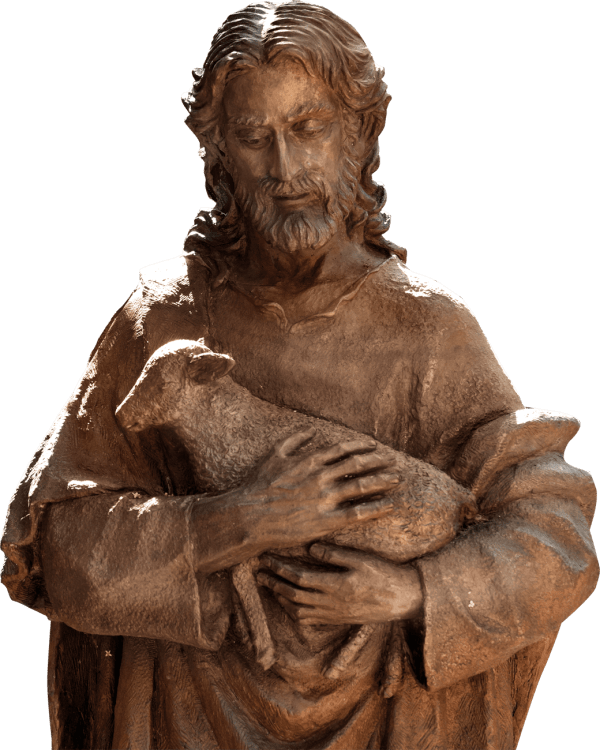
Spiritual Understanding has to come from the Spirit. It cannot come through our own wisdom or learning. It has to be built, not just on Faith, but on acting in Faith and walking humbly in conformity to our Good Shepherd’s example. We must become, not just “fans” of Christ, or even just students of Christ, but disciples of Christ, if we want to begin to have greater understanding. Like the apprentice, who must learn by doing, so we must learn through practice of God’s Word. We must also ASK for wisdom and understanding. (James 1:5) They are gifts, just like Salvation. We don’t earn understanding; we are granted it as we walk in obedience and faith.

Photo by Keenan Constance on Pexels.com

Today, my prayer is that I would receive insight as I learn to trust, and I would trust that God will give the wisdom I need for the day ahead– no more or less, and not a moment too late or too soon. And experience confirms that He is faithful to do just that!

For Goodness’ Sake!

5-9 So don’t lose a minute in building on what you’ve been given, complementing your basic faith with good character, spiritual understanding, alert discipline, passionate patience, reverent wonder, warm friendliness, and generous love, each dimension fitting into and developing the others. With these qualities active and growing in your lives, no grass will grow under your feet, no day will pass without its reward as you mature in your experience of our Master Jesus. Without these qualities you can’t see what’s right before you, oblivious that your old sinful life has been wiped off the books.

2 Peter 1:5-9 (The Message)
Photo by Lukas on Pexels.com

What does it mean to be “good?” This is a question that Jesus posed to the Rich Young Ruler in Luke 18:

18 A certain ruler asked him, “Good teacher, what must I do to inherit eternal life?” 19 “Why do you call me good?” Jesus answered. “No one is good—except God alone. 

Luke 18:18-19 (NIV)
Photo by The Lazy Artist Gallery on Pexels.com

Jesus went on to list several Biblical commandments– you shall not commit adultery, you shall not murder, you shall not steal, etc.., but even when the young man answers with confidence that he has kept all these commandments, Jesus says, “you still lack one thing. Sell everything you have and give to the poor, and you will have treasure in Heaven. Then come, follow me.” (v. 22)

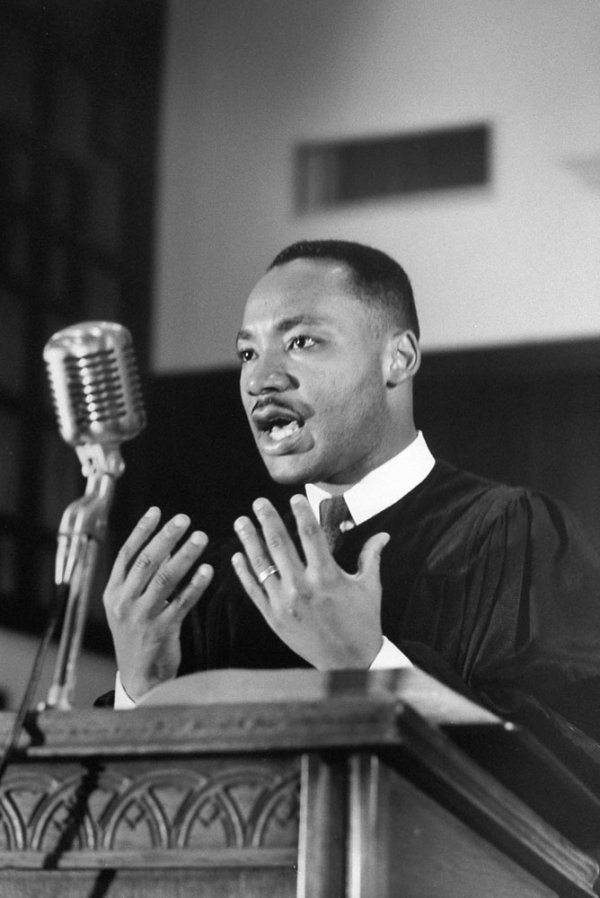
Civil Rights activist Rev. Dr. Martin Luther King Jr. gesturing during sermon at Ebenezer Baptist Church. (Photo by Donald Uhrbrock//Time Life Pictures/Getty Images)

Being “good” is not a matter of avoiding evil. It is more than being “correct” in our principles, and upright in our actions. Martin Luther King, Jr., in his famous address in 1963 said that he dreamed of a day when his children… would not be judged by the color of their skin but by the “content of their character.” Character, and more specifically the “good character” mentioned by Peter in the above passage, includes thoughts, principles, actions, and habits by which we are judged. I may never commit murder in the literal sense, but I will be judged wanting in character if my words and actions are vicious, snide, malicious, sarcastic, and brutal. I may never be convicted of theft, but I may be judged harshly for being ungenerous or miserly toward those in need. Dr. King wanted his children to be judged–positively–for their character, not for something as superficial and arbitrary as skin color, nor for whatever they hadn’t done.

Photo by HASSAN YAR JANJUA on Pexels.com

The young ruler in Luke’s story, not willing to give away his possessions, went away disappointed. But he missed the more important calling– “Then come, follow me.” Jesus wasn’t being self-effacing when He asked, “Why do you call me good?” Far from it! Jesus WAS good– He was (and is) the embodiment of Goodness! It is not through ritualistically following the commandments that anyone becomes “good.” It isn’t even in the self-sacrificing act of giving away one’s possessions. It is in the humble act of following the Master! To follow Christ is to step out in faith, and to walk in goodness.

Photo by Taryn Elliott on Pexels.com

Peter makes the natural connection that James also makes in his epistle– that Faith, while fundamental, must build good character through our actions, words, and habits. Faith, without works, is dead. (James 2:14-26) So the next building block is developing a good (or Godly) character. Our lives should reflect the Goodness of Christ. We won’t be perfect. But we will be given strength and guidance by the Holy Spirit to walk in Goodness. And as we walk, we will build on that foundation with the next step…Spiritual Understanding. (More about that next time.)

Today, I pray that God will show me how, and His Spirit empower me, to develop in goodness; that I would become more like the “Good Teacher” who is also my savior and Lord. For Goodness’ Sake!

Turn, Turn, Turn

Back in the 1960s, Pete Seeger “wrote” a new folk song, later recorded by a group called The Byrds.  All but the title and the last six words of the song were taken directly (though the word order was changed) from the book of Ecclesiastes.  Essentially, Pete Seeger wrote seven words and some music; the rest was written by King Solomon almost three thousand years ago!  Learn more about the song here…

timelapse photography of stars at night
Photo by InstaWalli on Pexels.com

When God created the world, he instituted times and seasons– day and night; winter and summer; weeks and months.  We are bound by time while we live here.  Sunlight and darkness help determine when we are active or sleeping (less so since the advent of electric lighting); summer and winter (or rainy/dry seasons) determine when we plant or harvest, what we wear, how we travel, and what activities we plan.

snow nature forest winter
Photo by Pixabay on Pexels.com

But Solomon reminds us that there are also “seasons” that don’t depend on the weather or the amount of light filling the horizon.  There is a time to be born and a time to die; a time for laughter and a time for weeping; a time for war and a time for peace.  Our world is not static– it is filled with changes, and times for turning away from one thing and facing another.

For everything there is a season, and a time for every matter under heaven:

a time to be born, and a time to die;
a time to plant, and a time to pluck up what is planted;
a time to kill, and a time to heal;
a time to break down, and a time to build up;
a time to weep, and a time to laugh;
a time to mourn, and a time to dance;
a time to cast away stones, and a time to gather stones together;
a time to embrace, and a time to refrain from embracing;
a time to seek, and a time to lose;
a time to keep, and a time to cast away;
a time to tear, and a time to sew;
a time to keep silence, and a time to speak;
a time to love, and a time to hate;
a time for war, and a time for peace.

Ecclesiastes 3:1-8 (ESV)
Photo by Jenn on Pexels.com

Our prayers will change with these seasons– prayers of wonder and prayers of wondering why; prayers of great boldness and reluctant, halting prayers; prayers that come from joy, and those that come with wracking grief.  There will be seasons of chaotic busyness, and seasons of loneliness and long hours; seasons when we help lift the burdens of others before our own, and seasons where others help us lift burdens we cannot bear alone.  There will be seasons of fierce, pounding spiritual warfare, and seasons of relative peace and rest.

green grass field during sunset
Photo by Brett Sayles on Pexels.com

Solomon lays out the concept, but I like Pete Seeger’s addition of the phrase, “turn, turn, turn.”  It reminds me that the seasons of my life will change, but I need to change as well.  I need to turn, first of all, to see where God is working in my life and the lives of others– that’s where I need to be and where I need to be focused.  God will never leave me nor forsake me, but He loves me too much to “leave” me in a rut– He needs me to move on and finish the race He has set out for me.  Change can be difficult, but without it, there is no growth!

Photo by jonas mohamadi on Pexels.com

Second, I need to turn from habits and activities that are “out of season”–young parents will have a completely different way of mapping out their time, including time for prayer and Bible study, than empty-nesters.  People in mourning will have a different approach to prayer and worship than those who are in a season of celebration.  There is a season to break down–to end bad relationships and turn from bad habits–and a time to build up healthy relationships and habits.  There is a time to speak– to share prayer requests and spend time in corporate prayer; to ask questions and persist in our requests.  But there is also a time to stay silent– to meditate and listen more than we talk; to be still and know, instead of pace and ponder.  I don’t wear a heavy coat in the middle of summer or run barefoot in the snow– I need to turn in alignment with the season I am passing through.

barefoot basket blooming blossoming
Photo by Pixabay on Pexels.com

Finally, I need to turn away from temptation and sin.  God gives me the power, through His Spirit, to turn and walk away from the quicksand of complaisance, the tidal waves of desire, the live wire of unchecked rage, or the bottomless pit of envy, but I must turn away from them.

This life is full of seasons and change– some good, some dangerous.  But God is outside of time and seasons.  He provides endless variety, but He never changes His essential nature.  No matter where we turn, He can be found!

photography of maple trees
Photo by Johannes Plenio on Pexels.com

Fishers of Men

Earlier this week, my husband and I went fishing. As we were enjoying our time on the lake, and catching a few fish, I was reminded of the old song I learned in Sunday School:
“I will make you “fishers of men”…if you follow me.” Jesus said these words to His early followers, who were fishermen by trade (see Matthew 4:19). But what does it mean to be a “fisher of men?”

Photo by Public Domain Pictures on Pexels.com

The primary meaning is that we have a commission– found in Matthew 28:19: “Therefore, go and make disciples of all nations..” We are to go and “catch” men and women, taking them out of the sinful lifestyles we see around us, and bringing them into the Kingdom of God, much as fishermen take fish out of a lake or sea and bring them into the boat. But what practical implications can we take from the practice of fishing, that might help us as we carry out our spiritual commission?

  • First we much go where the “fish” are, and actively work to catch them. I can go to the lake, dip my toes in the water, even get into a boat and go sailing, and never catch a fish. The fish will not jump into my boat, or jump out of the water into a net. I must make an effort. I can follow Christ, and go to church every Sunday, participate in many spiritual activities, even pray every day, but if I never interact with lost and hurting people I am unlikely to become a “fisher of men.”
  • Next, we must recognize that we won’t “catch” all the fish! I know some Christians who become discouraged and depressed if they go out for one day of “evangelizing” and don’t make converts. They give up after one negative or unsuccessful encounter. “I’m not an evangelist.” “I can’t share the gospel– I just don’t have what it takes…” Imagine if fishermen responded that way– “I cast out three times, and never got a fish– I give up!” This is especially discouraging because our Great Commission is not to “convert” everyone; not just to go out and “catch” men and women with a hook or a net, but to make disciples. It is a process, but it comes with risks and no guaranteed “return” on our investment. Some “fish” are not ready to be caught. Some are meant for other fishermen. This should not lead us to be apathetic about lost neighbors or relatives, but it should remind us that we are God’s witnesses, not His SWAT team. Even Jesus didn’t “convert” everyone He met! But He did love them!
  • Third, and closely related, we must expect resistance. It is not natural for most people to respond immediately to the Good News of the Gospel. After all, it involves admitting our need for salvation, and submitting to the will of God. Fish that are taken from the water will die! And we must “die” to our selves and our selfish nature if we are to become Disciples of Christ.
  • Finally (and this is a bit of a stretch of the analogy, but bear with me…), we must have the right bait. This is not to say that the Gospel is inadequate or insufficient for the task. Rather, that we are not meant to hit people over the head with only our words– even when they come from Scripture! We do not create disciples by offering a bare hook. People are hungry– hungry for answers; hungry for hope; hungry for peace; and hungry for love. The Gospel lives in US– WE need to offer more than just the words of the Gospel–we need to LIVE the Gospel! To offer only condemnation or smug arrogance makes a mockery of the very Gospel we are supposed to share. Likewise, we do not create disciples by offering a shiny but “fake” gospel of easy answers and “cheap” grace without truth or repentance. It may hook a few desperate or gullible people for a moment, but once again, it is not our mission to merely “hook” people.
FISHERMAN#3/OK, 5/30/01, 3:52 PM, 8C, 8808×10935 (0+505), 150%, FISH, 1/10 s, R120.4, G94.7, B105.7

David and I enjoy fishing– we enjoy spending time in God’s beautiful nature; we enjoy the quiet and peace; and we enjoy the challenge of finding where the fish are “biting” on a particular morning. And I’m so glad that Jesus gave us such wonderful analogies and word-pictures to help us understand His love for us and His plan for spreading the Good News. Finally, I’m glad that I’ve been taken from the “lake” of sin and given new life by the great “Fisher of Men!” I pray that I can help others find and follow Christ, as well.

Praying for Bahrain

I have never been to Bahrain. I know very little about Bahrain. All I know is that it is a small country in the Middle East, located on a series of islands in the Persian Gulf. But I prayed for Bahrain the other day. It’s on my prayer calendar/journal. Every day of the year, I have a nation, city, or geographic region (desert, ocean, continent) to pray for. It’s somewhat random, and personal–many of the “cities” are really local small towns or places close to my heart–and it doesn’t make my prayers virtuous or important. My prayers can’t “save” the world, or any corner of it, from natural disaster or political corruption, disease, or any other malady common to our fallen world. So why do it?

Photo by Anna Shvets on Pexels.com

First, because God loves and cares about the whole world. It’s easy for me to focus on my surrounding community; my state; my country. I know the people and language and culture here. But there is nothing exclusive about God’s love. Throughout the Bible, it is clear that our God is a global God. Sure, God “chose” Abraham and the nation of Israel to display His Holiness. But He also raised up other nations and leaders– Pharaoh, Nebuchadnezzar, the Queen of Sheba, Caesar Augustus–and sent prophetic warnings to Babylon, Edom, Assyria, Egypt, and many other nations who neither knew Him nor worshipped Him. I don’t know enough to know how many of the people of Bahrain are Christians, Muslims, Atheists, or any other religion. I don’t know how many of them are suffering from depression, domestic abuse, or disease. But I know that God knows– and cares. Even though I am praying “blind,” I am making an effort to “see” God’s heart for others.

Photo by Monstera on Pexels.com

Second, as I pray for various nations, I become more interested in them. I learn more about them. I recognize them when they are mentioned in the news, or when I hear about people who live or visit there. Again, this doesn’t make me a better person, or my prayers better than anyone else’s–but it helps me be a more informed (and hopefully more compassionate) person than I was yesterday or last year.

Photo by Cameron Casey on Pexels.com

Praying for others reminds me of two important truths: I am very small in the scheme of things– one of more than 8 billion people on the planet! I cannot know them all; I cannot care for them all or influence them, or change their situations. But God can! I serve a God who not only knows all 8 billion individuals; He knows their thoughts, their pasts and their futures–He even knows the number of hairs on each head! The second truth that arises from that is that, small as I am, I am known by God. He cares about ME, just as He cares about each person that breathes. HE can change the small circumstances of my life, and the lives of those I know and love; AND He can raise up kingdoms and break down empires!
Photo by Karolina Grabowska on Pexels.com

Pursuing prayer is about following God. Part of that is learning discipline. God isn’t “grading” me on whether or not I pray for Bahrain, or Belarus, or Boston, or the tiny local town of Baroda. He isn’t going to turn His back on me if I don’t pray for any of these places. And He won’t love me more if I do. But I will get better insight into His character as I learn to pray faithfully, consistently, and compassionately for others– wherever they are.

November Poem

God is:

Worthy
Omnipotent
Never changing, the
Desire of the Ages
Eternal
Revered
Father
Unlimited
Light

Photo by Jonathan Petersson on Pexels.com

Jesus is:

Forever faithful
Accessible
Incomparable
Trustworthy
Hope for the hopeless
Full of
Unending
Love

Photo by cottonbro on Pexels.com

I am:

Grateful
Redeemed
Aspiring to be like Christ
Trusting that I am
Empowered by His Spirit to
Forgive others, even as I am
Unworthy of His unending
Love

Photo by Edu Carvalho on Pexels.com

We are:

Transformed
Humble
Able to do “all things” through Christ
No longer slaves to Sin
Known by our Love for each other
Fruitful
Upheld in the power of His
Love

Photo by Min An on Pexels.com


God of the Impossible

35 On that day, when evening had come, he said to them, “Let us go across to the other side.” 36 And leaving the crowd, they took him with them in the boat, just as he was. And other boats were with him. 37 And a great windstorm arose, and the waves were breaking into the boat, so that the boat was already filling. 38 But he was in the stern, asleep on the cushion. And they woke him and said to him, “Teacher, do you not care that we are perishing?” 39 And he awoke and rebuked the wind and said to the sea, “Peace! Be still!” And the wind ceased, and there was a great calm. 40 He said to them, “Why are you so afraid? Have you still no faith?” 41 And they were filled with great fear and said to one another, “Who then is this, that even the wind and the sea obey him?”

Mark 4:35-41 ESV

I’ve been reading through the Gospels this month, and one of the phrases that has stood out for me this year is “ye of little faith.”(or “you have so little faith!) Jesus uses this phrase to chastise His disciples, as well as the crowds– they claim to want miracles, yet when Jesus does miracles, they seem astonished almost to the point of fear. Or they attempt to “explain them away.”

Photo by Andrea Piacquadio on Pexels.com

We live in a world of possibilities– when we are young, we see possibilities everywhere. “When I grow up…” we imagine ourselves as astronauts, or world leaders, or Olympic champions. As we grow older, our world of possibilities grows narrower. We become cynical (or more aware of our own limitations!) and, while we long to see miracles, we neither expect them nor ask for them. We know some difficult or unexpected things are still possible, but we tend to see more “impossibilities.” “My health will never get better.” “My boss will never listen to me.” “I can’t…”

Photo by Andrea Piacquadio on Pexels.com

One of the biggest roadblocks to becoming a Christian (and to continue to grow in faith) is to accept that NOTHING is impossible for God. We set limits on God’s ability, His willingness, His goodness–we expect to be disappointed, disillusioned, and disheartened. And it becomes a self-fulfilling prophecy– we end up disappointed, disillusioned, and disheartened in others, in ourselves…

Photo by Dimitry Zub on Pexels.com

Yet, God has given us an entire book filled with miracles and impossible events that are meant to show us that He is the God of the Impossible; the God of Miracles. From the beginning, God has demonstrated His willingness to make a way when there seems to be no way. From Noah and the Flood, to Abraham becoming the Father of many nations, to bringing Joseph from a pit to becoming the second-most powerful man in Egypt, to the story of Moses leading the Israelites out of slavery…the stories abound. Whether sending food from heaven, water from a rock, or fire from the sky, God’s power is on display throughout the Old Testament. The crowds following Jesus grew up hearing these stories. But after four hundred years of silence, they seemed to remember what God COULD do, but doubt what God WOULD do for those who call on Him.

Jesus walked on water, healed the sick, turned water into wine, cast out demons, raised the dead, and much more. And still the people wanted “proof.” But we are not so very different. Not only do we have all the stories of the Old Testament; we have all the stories of Jesus’ miracles. Yet we still wonder whether God will hear and/or answer our prayers. And it doesn’t take 400 years of silence to cause us to doubt. Sometimes it is four hours, or four days, or four months of seeming silence.

Photo by Skyler Ewing on Pexels.com

Nothing is impossible with God. There are some things that are not productive; some things that are not part of His plan. Imagine Shadrach, Meshach and Abednego praying that God would not allow them to go into the fiery furnace? That wasn’t the plan. Instead, God chose to do the unexpected, the unthinkable–the impossible. He rescued them IN the fire– caused them to come through without being singed. Imagine those who prayed that Lazarus would recover from his illness. That wasn’t the plan. Instead, Jesus did the impossible– raising Lazarus after four days; after the funeral, after the burial, after all possible hope was gone.

God excels in the impossible. He delights in it. What impossible situation are you facing today? God may not choose to remove the situation. But He can take an impossible situation and turn it into a miraculous victory. Not because we demand “proof” of His divinity or power. But because His plans are bigger and better than what we can comprehend.

Photo by Anna Shvets on Pexels.com

I’ve shared a bit about one of my current struggles. My Mom is in her 88th year, and her health is failing. She is very independent and lives alone. My siblings and I are being “stretched” in trying to help Mom navigate several decisions and several changing conditions. God has not taken away her health issues, or conveniently provided an easy transition or simple answers to our questions. But He has been “with us in the fire.” That doesn’t mean that I understand all that Mom is going through, or how best to help her from moment to moment. And I’m not asking God to provide a dramatic “rescue” for Mom as she navigates this part of her journey. But I trust that God has already seen the end from the beginning– none of the “setbacks” or “unexpected events” we face can take God by surprise or leave Him unprepared to use them for His glory and our ultimate good.

No Particular Place to Go..

Back in 1964, singer Chuck Berry released a song called “No Particular Place to Go.” It was a catchy tune about a couple driving along on a date and having trouble with a new feature in the car– the safety belt– which ends up ruining their plans for a romantic stroll.

This may seem to have nothing whatsoever to do with prayer or Christian living, but stick with me…

Photo by Anna Shvets on Pexels.com

The writer of Proverbs includes a unique chapter https://www.biblegateway.com/passage/?search=Proverbs+9&version=NIV in which Wisdom and Folly–both women–call out to passersby inviting them to visit. Both say the same thing: “Let all who are simple come to my house.” But Wisdom has built her house, prepared the food and wine, and even sent out servants to help. Folly lounges outside her door, offering “stolen” water and “food eaten in secret–though she has done nothing to prepare for visitors, and so has nothing real to offer.

Photo by KoolShooters on Pexels.com

Both women call out, both women extend an invitation–the people are not looking for them; they are just passing by. And most of them have “no particular place to go.” And isn’t that the way with us sometimes? We don’t intend to fall into foolish habits, or get caught up in addictions. Nor do we look for wisdom in our fellowship over a meal, or in spending time at someone’s house. We can be very intentional in our actions, but fall victim to our interactions.

Photo by Julia Larson on Pexels.com

Spending time with people of wisdom– people who will pray with us and for us–is so important. Preparing our hearts for fellowship with others, and for time spent with God is not something we should leave for chance. Just as we take time to “map out” our goals for work or health or finances, we should take care to map out our relationships.

Photo by Mary Taylor on Pexels.com

That doesn’t mean we avoid reaching out to others, and inviting them to enjoy fellowship, or that we must turn down all invitations from others. But we must be careful not to be drawn into folly. Jesus ate with sinners– but He didn’t carouse with them. He spent most of His time with those who wanted to share His love for the Father, and those who wanted to learn wisdom.

Folly never has a “particular place to go.” She wanders aimlessly. She doesn’t see the danger ahead, and she doesn’t look for a better road. Folly drives off recklessly without fastening her safety belt. Folly scrolls through lies and ads and half-truths on the internet. She gets pulled into relationships that are unhealthy and activities that are unproductive. And she wakes up dazed and confused and unfulfilled.

Photo by MART PRODUCTION on Pexels.com

Wisdom walks in the way of insight– well-marked paths that lead to a clear destination. Wisdom seeks traveling companions who share the same destination. Wisdom pursues the truth, in person and on-line. Wisdom drives defensively and wears a safety belt (and knows how to operate it!) Wisdom seeks shelter that is safe, where she can be well-fed and find rest. She wakes up refreshed and ready to continue the journey.

Photo by Pixabay on Pexels.com

The fear of the Lord is the beginning of wisdom,
    and knowledge of the Holy One is understanding.
 For through wisdom your days will be many,
    and years will be added to your life.
 If you are wise, your wisdom will reward you;
    if you are a mocker, you alone will suffer.

Proverbs 9:10-12 (NIV)

Armchair Olympians

24 Don’t you know that the runners in a stadium all race, but only one receives the prize? Run in such a way to win the prize. 25 Now everyone who competes exercises self-control in everything. They do it to receive a perishable crown, but we an imperishable crown. 26 So I do not run like one who runs aimlessly or box like one beating the air. 27 Instead, I discipline my body and bring it under strict control, so that after preaching to others, I myself will not be disqualified.

1 Corinthians 9:24-27 CSB

I must confess, I haven’t been watching much of the Olympic games currently taking place in Tokyo. Over the years, I’ve spent hours glued to the television, watching the competitions, gobbling up the emotional stories of various athletes and their struggles to qualify and chase their dreams. In fact, I used to get so involved in watching the Olympics, that I would fall behind in my housework, social obligations, and sleep! It can be very inspiring to watch as various athletes from around the world challenge themselves (and their competitors) to go faster, reach farther, and climb higher. And many of the stories and names have stayed with me over the years.

Photo by Guduru Ajay bhargav on Pexels.com

There is nothing wrong with watching sports, and cheering on those who have worked so hard. And I love the pageantry and good will of the Olympic games, where I find myself cheering for athletes and sports I would never know otherwise–those who have overcome tragedy and incredible obstacles just to participate; those whose achievements have set new standards and inspired others to greater heights. But as Christians, we should consider our OWN level of achievement. Not in a competitive sense, and not in the sense of “earning” God’s salvation or approval, but in the sense of growth and development of self-discipline.

Photo by Leon Ardho on Pexels.com

We admire athletes, not only for their natural abilities, but for their discipline and spirit. They train for years, undergoing rigorous drills, keeping tight schedules, pushing their bodies– often to the point of injury–to get a little more speed or distance or strength. They prepare for the stress of competition and the pressure of expectation. They learn to leave behind the failures and the victories of yesterday as they get ready for tomorrow. We watch them, and we talk about being inspired. But inspired to do what? I have never developed the level of self-discipline to rise every day at 6 a.m. to run or stretch, let alone train for a race or a swimming meet. I briefly flirted with becoming a gymnast after watching Nadia Comaneci score a perfect 10.0 in the Montreal Olympics of 1976, but I quit after only one weekend!

Photo by Anastasiya Gepp on Pexels.com

The Apostle Paul calls us to follow his example and “run the race” as we live for Christ–we are to develop our character and practice spiritual discipline in the same way that an athlete develops her body and practices physical and mental discipline. And our motivation is not a gold medal or a world record that will eventually be broken, but eternal victory over Sin and Death!

Photo by RUN 4 FFWPU on Pexels.com

I’m ashamed to say that I have not always followed this example. I’ve been an “armchair Olympian”– content to watch others do the hard work, and enjoy the vicarious feeling of victory when they cross the finish line. I cheer for those Christians who are called to foreign missions–I’ve even traveled on “short term” mission trips– but I don’t always see my everyday life as a “mission.” But that’s exactly what it is. Jesus didn’t watch the disciples heal the sick or preach about the Kingdom of God as He sat on the sidelines. And He certainly didn’t spend time analyzing and dissecting the “performances” of the prophets and patriarchs of old. He didn’t even tell the disciples to analyze His miracles or study His sermons. He simply said, “Follow Me!” “Walk with Me.” Christianity is not passively cultivating a feeling of victory in Jesus. It is living victoriously THROUGH Jesus.

Photo by Andrea Piacquadio on Pexels.com

Our character won’t be changed by sitting on the couch or in an armchair, watching others do the hard training and running their race. Cheering from the sidelines isn’t going to increase our patience, or develop our faith, or make us more Christlike. Listening to Christian Radio or watching sermons on television won’t automatically translate into a life of integrity and peace. Even reading the Bible, or keeping a prayer journal, or writing a blog about spiritual things won’t teach us humility, gentleness, or love for others. We need to make the effort. And we need to seek the wisdom and discipline of the Holy Spirit– our “coach”– as we follow the example of Christ. It starts with small decisions– daily habits–and learning to be consistent. It also takes a willingness to repent and get back on track when we fail. And we will fail in our own efforts!

Photo by Ric Rodrigues on Pexels.com

We can admire earthly athletes. But we shouldn’t worship them. And we shouldn’t let them become idols that substitute for the kind of work WE need to be doing to learn discipline and faithfulness. I want to reach the finish line, knowing that I’ve run my best race for the King!

Photo by Pixabay on Pexels.com

The Greatest Commandment

36 “Teacher, which is the great commandment in the Law?” 37 And he said to him, “You shall love the Lord your God with all your heart and with all your soul and with all your mind. 38 This is the great and first commandment. 39 And a second is like it: You shall love your neighbor as yourself. 40 On these two commandments depend all the Law and the Prophets.”

Matthew 22:36-40 (ESV via biblegateway.com)
Photo by cottonbro on Pexels.com

This is a familiar Bible passage, and one that Jesus quotes from the ancient writings (in Deuteronomy and Leviticus). All the laws and regulations of history boiled down to two commands. And they are not what one might expect. The greatest commandment isn’t to believe; it isn’t a “shalt not”; it isn’t even to “obey.” Instead, the greatest commandment is to LOVE– love God wholly and without reserve, and love your neighbor “as yourself.”

It sounds so simple, but we don’t do it. In fact, we spend countless hours and waste energy trying to make the commandments MORE complicated and adding conditions, additions, interpretations, excuses, and critiques.

There is not enough time or space to list all the ways we try to avoid the greatest commandment, but here are a few I struggle with:

Photo by Engin Akyurt on Pexels.com
  • My heart–I love the Lord, but I don’t always love Him with my whole heart. I love His creation; I love His promises; I love the “idea” of God. But I also love my comfort zone; I love my own moods (especially happiness and self-esteem); I love the admiration of my peers; I love God, but…I don’t always pray to God the way I would talk to my best friend. I don’t seek Him out ahead of everyone else. I don’t always seek His correction or welcome His Lordship.
  • My soul–Most of us would claim that we are “spiritual” on some level. But many of us (including me) don’t do a very good job of tending to our souls. We assume that behaviors and habits and a list of beliefs are “enough.” We spend very little time in prayer, worship, and Bible study (compared to the time we spend on chores, sleep, entertainment, driving around, daydreaming, etc.). I’m not suggesting that we all need to go into a cloister (especially in light of the second great commandment to love our neighbor). But souls, like bodies and minds, need to be nourished, exercised, and cared for. Very few of us make it a priority to nourish our soul-connection with God–to Love Him with all our soul. We skim over this part of the commandment, assuming it is much the same as loving Him with all our heart or all our mind.
Photo by Rakicevic Nenad on Pexels.com
  • My mind– My mind wanders– a lot! And I spend a lot of time learning “about God,” instead of learning “from God.” I want to know what God is like– to be able to explain Him or comprehend Him. But God is bigger than my ability to “know” or even to imagine. And yet, He invites me to “know” Him, not just know about Him. In fact, He invites me to “follow” Him, to be His disciple, to model my character and my thoughts after His own.
  • My neighbor–I want to love humanity. I want to love “everybody”– from a comfortable distance! But God calls me to love my neighbor– that person who cuts in front of me at the grocery store, or revs their car engine outside my bedroom window at 3 in the morning, or laughs at me when I’m having a bad hair day. And not just “love” them in the sense of tolerating them– God wants me to love them “as myself.” To value them, reach out to them when I might rather avoid them, or seek peace when they are “pushing my buttons.” God wants me to offer them grace and forgiveness, when I might expect to demand justice or recognition.
Photo by Keira Burton on Pexels.com
  • “As Myself”–Sometimes, I don’t love myself. Sometimes, I idolize myself. Other times, I despise myself. And the attitude I have rubs off on to others. God doesn’t call me to idolize my neighbor; to lie to my neighbor about Sin and its consequences, or to let my neighbor’s wicked behavior go unchallenged. Just as God wants to call me to repentance, He wants me to lovingly reach out to my neighbor, not enable her/him to live a lie. But if I am living a lie–not dealing with my own sin– I cannot demand from my neighbor what I am not willing to give to God. Similarly, I can’t give honest love to my neighbor when I despise myself– God created us both and loves us with an everlasting love! How can I give love I am not willing to receive?
  • My understanding of “commandment.” God has the authority to command my attention, my obedience, my worship, and my loyalty. But my “love?” God has given us the CHOICE to Love Him, and to Love others– He also gives us the imperative to live our lives filled with Love. It is not God’s will that we Love out of coercion, robot-like and against our own free will. Rather, God commands us to submit our will to Love in every situation. We are slaves to Sin, powerless to love perfectly–even when we try, or think we are doing well, we will fall into faulty thinking, ungoverned emotions, and uninformed, unloving reactions. We WILL break this greatest commandment, just as we will break other, lesser commandments. But God has also promised to listen to our confession and forgive us, redeeming our soul, cleansing our heart, and renewing our mind as we follow Him. God does not command us to Love perfectly in our own power. He does command us to choose Love–first and foremost for Him, and then for those around us whom He loves. In so doing, we will grow to understand the power of God’s commands as we experience the power of His Love!
Photo by Anna Shvets on Pexels.com

Blog at WordPress.com.

Up ↑