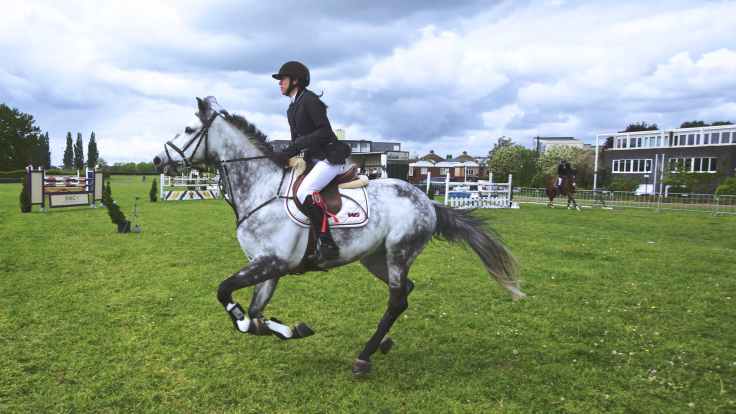
Do you not know that in a race all the runners run, but only one receives the prize? So run that you may obtain it. I Corinthians 4:24 (ESV)
I mentioned the other day that the county fair is on in our area. Each day of the fair, young people from around the county (and some from neighboring counties) have been showing livestock. The animals are judged on their general health and appearance, weight, height, and other factors that mark them as the best of their breed or class. The young people are judged on their presentation, their knowledge of their animal (anatomy, breed, hygiene, health, etc.), and their ability to “show” the animal– to keep in still, to pose it, and, in some cases, to walk or trot it in a pattern. Different shows and different judges will determine which animals are worthy of prizes and which of the youth deserve a prize for “showmanship.” Both are coveted awards.
The young competitors spend countless hours and work incredibly hard to get their animals (and themselves) ready for the judging. Animals and their handlers are scrubbed, groomed, brushed, gussied, and polished. They preen and pose for the judges, and the students answer questions, listening for instruction and correction, and show both self-confidence and respect for those in charge of the show. They also show respect for each other, and often lend a hand (or a brush) to help someone else.
The Apostle Paul spoke of the Christian life as a race–one that we should run so as to receive the prize. When we serve, when we worship, when we pray, when we study– we should be giving it all our passion, all our energy, all our focus.
Most of these competitors will not win the trophy or the purple ribbon– but most of them will still go home winners– because they gave it their all. They did the work, and built the discipline, and came prepared to win or lose with grace. The trophies and ribbons are wonderful and colorful, but the true prize is the discipline, the knowledge, and the character that are built long before the judgment day.
May that be true for all of us as we travel through this life– may we grow in discipline and character to be more like Christ. He is the prize for which we work and train and run and pray. May we “show ourselves approved” (2 Timothy 2:15).
And may we pray for a spirit that does not grow weary or apathetic; a spirit willing to listen for correction and instruction; may we show up ready to give our best, even if the prize (and the praise) goes to someone else today.
A few months ago, I went to the theater to see the movie “Paul, the Apostle of Christ.” It was an excellent movie, not the least because I found so much of it relevant to what is happening in the world today. The movie was centered around Paul’s time in prison in Rome; the upheaval and persecution facing the early church, and the looming certainty that Paul would be martyred and his words and leadership sorely missed. The church in Rome was facing division– some were militantly opposed to the corruption in Rome under Nero, and wanted to form a rebellion. Others wanted to flee Rome in hope of supporting outlying churches, starting new churches, or just finding a safer haven. Still others were losing hope and wanted to give up or hide.
The movie also covered (in a series of flashbacks) scenes of Paul’s earlier life. I don’t want to spoil the movie for anyone who hasn’t seen it, but this part of Paul’s life is covered in the Bible, so I will stick to the facts presented there, rather than the drama from the screen…
Saul of Tarsus was both a Jew and a Roman citizen by birth. He had studied God’s word intensely his whole life, and became a Pharisee. He had studied under some of the greatest scholars of his age–in today’s world, he would have been one of the greatest legal minds of our time– a superstar in the arena of law, philosophy, and logic. Of all the people in Jerusalem and throughout the Jewish world, Paul KNEW right from wrong. He KNEW the words of God, the laws of God, the traditions of God’s people. The result of all that knowledge was an obsession with wiping out those people (Jews, especially, but also Gentiles) who followed Jesus of Nazareth and “The Way.” Saul was a man filled with righteous anger, and a zeal to have everyone conform to what was “right.” He was a man of power and influence– a man to be feared and respected. In his letters, we can still see some of that intensity and the way he has of arguing both sides to their logical ends. But something happened to Saul..something that changed his entire future, including his name.
Paul, the Apostle of Christ, was still a Jew and a Roman citizen. He was the same man who had studied vigorously and knew the laws of Moses and God’s words through the centuries written by prophets and historians and psalmists. But the Paul we see in scripture, while still bearing the intensity of his youth, is a man of gratitude and peace. Here is a man who works steadily with his hands for honest but meager wages compared to what he might have made as a Pharisee. He is a man who boldly faces down even Peter and James in Jerusalem, but who nevertheless takes orders from a council made up of former fishermen and tradesmen. Paul undergoes flogging, arrests, prison, cold, hardship, physical pain, poverty, and disgrace with the kind of stoic acceptance, and even joy, that makes him a great hero of the early church. Never once does he return to the anger that drove him to persecute others who did not agree with him. Instead, he is willing to be the victim of persecution at the hands of those he used to serve.
I was scrolling through Facebook the other night, and I chanced upon posts from two women I know. Both are about the same age, both mothers of five children, and both are practicing Christians. The first woman was posting about two recent difficulties faced by her family, and how God had been faithful and gracious in spite of a huge loss and a tense situation that could have turned into another tragedy. She spoke of God’s answers to prayer, and how their family was reminded of God’s goodness as people came alongside at just the right moment, and the loss was not as great as it might have been. I was inspired and encouraged by the way she saw God’s love, and gave credit to all who had helped them.
The second woman spoke in vicious tones about how she would not associate with certain Christians who hold political and social views she sees as hateful. She cursed fellow followers of Christ for being “anti-Jesus,” and condemned several of her early teachers and pastors. I read her remarks with great sadness, because I remember her as a younger woman, eagerly memorizing scripture and being a loving and encouraging example to others. I also read her remarks with pain, because I think she includes me in the “hateful” group based solely on the type of church I attend.
It is not my place to say that one woman is a “better” Christian than the other– on another day, their FB posts might cause me to think very differently. And God sees more than just what we post on FB or say in passing conversation–He knows our every thought and motive. So I want to be careful–these women, though similar in some superficial ways, lead very different lives and have very different experiences of following God. But I saw in their posts two ways of “seeing” Christ.
When Saul of Tarsus, in his anger and zeal, traveled toward Damascus intending to kill people he may have never met, he was already a crusader for Jehovah– ready to mete out justice against anyone who didn’t meet his standards. He KNEW all about God. He knew what it took to be righteous.
But when he actually encountered Christ– he was knocked off his horse, blinded and overwhelmed by a vision. And when Christ spoke to him, “Saul, Saul, why do you persecute me?” (Acts 9:4), Saul didn’t recognize the voice of the very God he so proudly served. Saul remained blinded for three days, but his vision was never the same again.
As Paul, he became a man of prayer– his letters are filled with prayers for the well-being and spiritual growth of those he misses and longs to see. They overflow with doxologies and prayers of worship for the Savior he loves and serves with gladness. He can’t stop talking about God’s goodness– to him, to Israel throughout the centuries, and to the Gentiles who now have access to the throne of Grace. He still has harsh things to say to some of the followers who “don’t get it.” To those who want to compromise with sin or go back to legalism. But he pleads with them; he doesn’t throw stones.
It can be very frustrating in today’s world and in our society to see Christians who have very different ideas about worship styles, ways of interacting with others, even ways of living out the words of Christ. Sometimes, it seems that fellow Christians are blind to the needs of the poor, or the sins of their friends, or the hypocrisy in their lifestyle. I think scripture gives us a clear directive:
Why do you see the speck that is in your brother’s eye, but do not notice the log that is in your own eye? Or how can you say to your brother, ‘Let me take the speck out of your eye,’ when there is the log in your own eye? Hypocrite! First get rid of the log in your own eye; then you will see well enough to deal with the speck in your friend’s eye.
Matthew 7:3-5 (English Standard Version)
We should not rush to condemnation, name-calling, and finger-pointing. Instead, we should do a “vision” test and see if we are looking and acting in love or in self-righteous hypocrisy.
God doesn’t want us to be blinded by the light of our own knowledge and self-righteousness. Instead, He wants us to walk in the light of His Word–His Word made flesh! May we live in the light of Paul’s example of prayer, loving correction, and running the good race.
Recently, my husband and I took a weekend trip. We had a destination in mind, but had to decide on a route. Looking it up on the computer, we were given an estimated distance and travel time based on a programmed route that was found to be the “fastest.” However, this route was not necessarily the shortest, or the most scenic, or the safest. Knowing our destination, my husband was able to reconfigure the program to map out a route that fit our needs. It got us to the correct destination, and allowed us to travel safely, leisurely, and confidently.
After we reached our initial destination, we decided to take a side trip. Since we hadn’t counted on taking the side trip, we didn’t have a route. We relied on the same technology, but, not knowing our exact destination, we typed in a general location and followed the instructions we were given. We missed an important exit and had to reconfigure…we changed our plans and had to reconfigure…we misspelled the name of the new destination and were sent miles out of our way before we realized what had happened…we ran into an unexpected detour which sent us more miles out of our way.
Knowing your destination, and having a good map or set of directions can make a huge difference. We still had an enjoyable trip, but we might have been able to do more if we had planned a little better–one of the places we decided to visit had just closed by the time our reconfigured driving directions got us there! And we might have been able to cut several miles off of the detour route if we knew the local roads better (it didn’t help that our map application wasn’t working at the critical moment, either!)
In life, there are many “programs” that offer advice, direction, and focus to get us to a destination. There are weight-loss programs, “life coaches,” self-help books, universities, “mindfulness” seminars, even religions that promise to guide us along a particular path. But if we don’t have a clear destination in mind, we can end up wandering down a detour or even a dead end. What started out with such promise becomes a maze of questions, unmet expectations, and frustrating twists and turns.
So what is my destination in pursuing prayer? Where do I want to end up at day’s end? In a year? When I face the end of my life (if God chooses to let me see the end approaching)? I want to experience the kind of prayer life that honors God, deepens my relationship with Him, and has an impact. There are many “paths” of prayer– but they have different destinations. Meditation, recitation, fasting and praying, praying corporately or in isolation–I need to map out a course that will get me to the goal. And I need to rely on the guidance provided by the Bible, the Holy Spirit, and godly counselors and teachers.
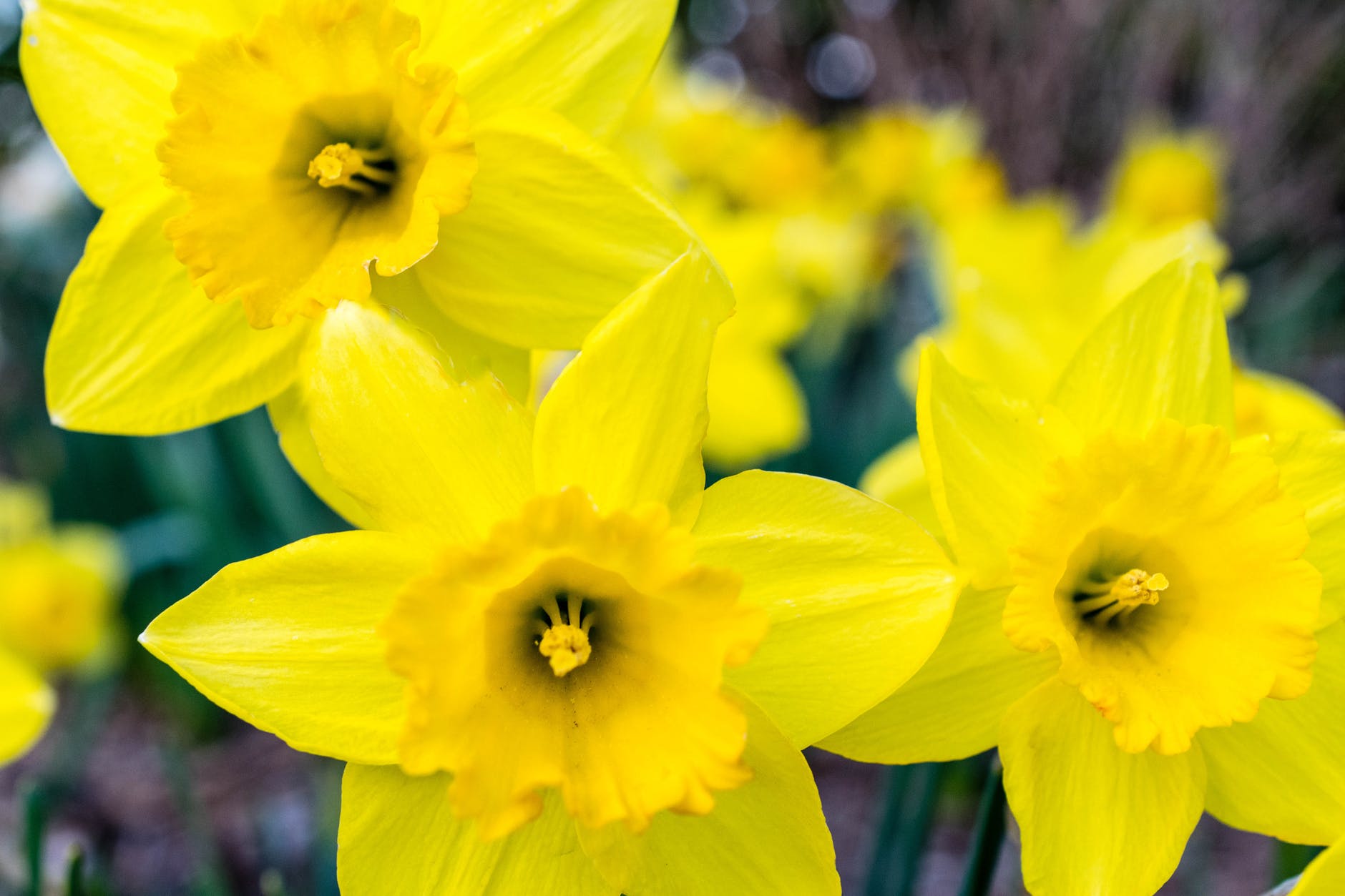
I love living in Southwest Lower Michigan– especially in the spring. We have blossoms everywhere– apple blossoms, cherry blossoms, dogwood, red buds, tulips and irises, hyacinth and daffodils. The rich earthy smell of freshly plowed gardens and fields permeates the air, and rides on the breezes coming off Lake Michigan. Birds, newly returned from their winter wanderings are busily building nests, chirping away, while the sun’s rays chase away the last of the winter chill each morning. There is color and new life everywhere you turn.
We have a lot of spring festivals in the area, most of them centered on the blooms and blossoms that fill the countryside. Gardens, orchards and fields are not just for show around here– they are also important parts of our economy and eco-system. Without a good spring full of blossoms, buds, and blooms, we may have a disastrous harvest in the fall, and run-off of the soil; bees will die off, wild and domestic animals will have less grass and fewer berries to eat. A late spring can shorten the growing season and shrink the harvest; an early spring can bring buds out too soon, only to have them lost to a late season frost or to have them mature too early and be burned in a mid-summer drought.
And yet, I have seen crocuses burst through two inches of snow; buds that defy harsh weather and cruel winds. I have seen daffodils blooming where there once was a house and a yard, but now there are only brambles and foundation stones. I have seen trees twisted and split by long-ago storms– one side dead and rotting, but with buds and new branches on the other side.
It is easy to bloom when you are in a lovely flower bed, with tilled earth, fertilizer, gentle rains, just the right amount of sun, and protection from the winds and pests and birds. But it is more spectacular to bloom in the desert; to defy the odds and stand in stark contrast to brambles, a broken-up sidewalk, or a litter-filled back alley; to bloom in the snow and sleet or weather a flood or a tornado.
Not always so with prayer. Sometimes, it is easier to pray when we feel our own needs and shortcomings; when we are driven by our circumstances to call out for help. When all is well, we may be grateful, but we may also begin to slack off. We stop asking for wisdom and guidance, coasting in the beauty and ease of a good life, and forgetting that the beauty and the ease– indeed the life itself– is not our right, but a gift. Amid so many other beautiful prayers, ours seem drab and ordinary, almost unworthy of God’s notice.
But God DOES notice– he has placed each of us where he wants us to bloom and grow– to pray, to fellowship, to walk with other believers and give off the fragrance of His grace as we live our lives in obedience to Him. Have you been planted in an apartment complex? Have you been planted as a suddenly single parent of three kids? Have you been planted on a campus? In a group of friends that all have Harleys? Or one block from a rescue mission or homeless shelter? A classroom full of high-energy first-graders? A community that has had a lot of crime and blight?
God has not placed you in circumstances to reward or punish you, but to grow you in the soil that can produce the best harvest. Is your prayer list filled with needy people who live in turmoil and rebellion? Bloom where you are planted– you may be the only person praying for your cantankerous neighbor– the only raindrop or fertile soil s/he will ever encounter. Has God placed you in a family of people who taunt you for your faith? Bloom where you are planted– pray for strength to stand firm in the beauty of meekness and compassion in the face of their taunts and disdain. Are you in a greenhouse full of self-righteous orchids making you feel dowdy and wilted by comparison? Bloom where you are planted– pray for God’s eyes to see the beauty in yourself, as well as those around you, and stop trying to be an orchid where God needs a lily.
Has God planted you in trying circumstances? Bloom where you are planted– pray for God’s Peace as you face each day:
Matthew 6:25-34English Standard Version (ESV)
Do Not Be Anxious
25 “Therefore I tell you, do not be anxious about your life, what you will eat or what you will drink, nor about your body, what you will put on. Is not life more than food, and the body more than clothing?26 Look at the birds of the air: they neither sow nor reap nor gather into barns, and yet your heavenly Father feeds them. Are you not of more value than they?27 And which of you by being anxious can add a single hour to his span of life?[a]28 And why are you anxious about clothing? Consider the lilies of the field, how they grow: they neither toil nor spin,29 yet I tell you, even Solomon in all his glory was not arrayed like one of these. * 30 But if God so clothes the grass of the field, which today is alive and tomorrow is thrown into the oven, will he not much more clothe you, O you of little faith?31 Therefore do not be anxious, saying, ‘What shall we eat?’ or ‘What shall we drink?’ or ‘What shall we wear?’32 For the Gentiles seek after all these things, and your heavenly Father knows that you need them all.33 But seek first the kingdom of God and his righteousness, and all these things will be added to you.*
34 “Therefore do not be anxious about tomorrow, for tomorrow will be anxious for itself. Sufficient for the day is its own trouble.