Am I a “Picky” Pray-er?

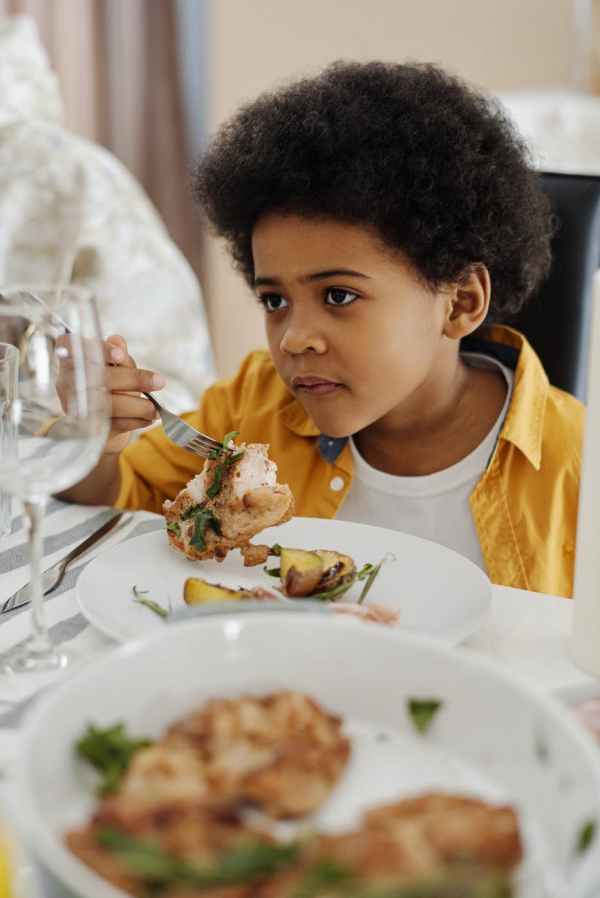
When I was a child, I was something of a picky eater. I didn’t like peas, or beets, or spinach , I wasn’t fond of lumpy mashed potatoes, and I didn’t like peanut butter sandwiches, or mustard on my hamburger. Of course, my parents were not sympathetic– I had to at least try some of my vegetables or potatoes, and, like it or not, I often found a peanut butter sandwich in my school lunch bag. I didn’t have to add mustard to a hamburger at home, but if it came on my burger at the drive-in, I either had to eat it with mustard, try to scrape it off, or go without! I didn’t have to be enthusiastic about dinner, but I was taught to be grateful for it.

Now that I am an adult, I still am not fond of peas, though I have learned to like beets and spinach. I don’t eat mashed potatoes very often, lumpy or otherwise. I eat the occasional peanut butter sandwich, and I actually love mustard on my hamburgers. I have learned to like foods that I didn’t like as a child, and learned that certain foods (even peas) are good for me, whether I like them or not.

Photo by Shohei Ohara on Pexels.com

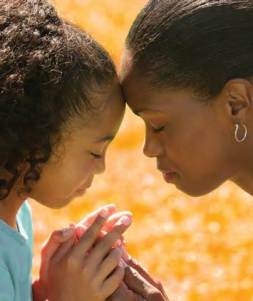
I also learned to pray as a child–we had grace at meals, family prayer time, corporate prayer at church, and bedtime prayers. I learned that sometimes prayer is spontaneous and filled with praise; other times, prayer is dragged out of pain, or anger, pride, or shame. Prayer isn’t always “palatable.” But, like eating, it is necessary and good.

Just as I needed to learn not to be a picky eater, I have to practice prayer in all its aspects. God doesn’t just want the sweet prayers of praise that I am eager to sing out. He doesn’t just want the earnest requests I set before Him. He wants the rotten, stringy, overripe confession that I’ve been hanging on to. He wants the tormented “Why?” when things are falling apart. He wants me to chew on the unanswered requests and unfulfilled longings, and swallow the pride that insists on having its own way. He wants to savor those prayers when I can’t even find the words, but I come to Him anyway, hungry for answers, but even more thirsty for His presence.

Photo by sergio omassi on Pexels.com

Prayer isn’t always easy. It isn’t always “satisfying” in its daily practice. But it gives life and nourishment for the soul.

So I ask myself today: What am I praying about? What do I need to bring to God in prayer? What have I held back? What have I stopped praying for (and why)? Who has been on my heart or mind, but not in my prayers? What have I been trying to do in my own way that I haven’t shared with God in prayer? What does God know about me that I haven’t acknowledged? What praise or thanks have I withheld today? What worries have I borrowed from tomorrow?

What prayer practice do I need to try, or try again? It may take some stretching, but in the end, it’ll be better than peas!

Every Day Counts

Tomorrow, my mother will celebrate her 87th birthday. Her life spans an incredible period of history. She can remember times of poverty and hardship during the Great Depression. She remembers hearing about the attack on Pearl Harbor on the radio, and worrying about her father in the Navy, and her mother working long hours in the factory. As a young wife, she sent a husband to fight in Korea, while she awaited the birth of their son. In her day, she cooked on a coal-fired stove, attended a one-room schoolhouse, wore poodle skirts and saddle shoes, and used outhouses. She has lived through the age of television and the internet– she watched a man walk on the moon (in black and white) and watched the World Trade Center towers burn and collapse (in color) on TV screens in real time. She learned to take shorthand in pencil, to type on a manual typewriter, and has done data-entry on a desktop computer.

Photo by Pixabay on Pexels.com

Mom has seen a lot of changes in her life. But years ago, she developed habits that have not changed. Every day, she reads a passage of scripture, and every day, she spends time in prayer and meditation. That doesn’t mean she is perfect–some days she misses, due to illness or unexpected interruptions–and this practice, in itself, doesn’t make her a “better” person than anyone else. But daily habits do matter. When Mom lost her parents and her only sister in a matter of nine months, and then lost my Dad just three years later, her faith was tested. But it never wavered. When she had to undergo heart surgery a few years ago, her faithful habits made an impression on the hospital staff, as well as her friends and family. Throughout the recent COVID-19 lockdown, when Mom has lived alone and had to deal with cancelled doctor’s appointments, limited access to medicines, changing her routines, not being able to socialize, not being able to attend worship services, losing a close friend, etc., she has shown resilience, patience, and faith that set a marvelous example to anyone who knows her. Whether her day turns out to be momentous, boring, disastrous, or just ordinary, Mom determines to spend part of it connecting to, and worshiping, her Savior.

This seems like simple advice, but it takes practice and determination, and help from the Holy Spirit. It is tempting to look at our lives in hourly increments, trying to fill each moment and each day with meaningful activity. It is tempting to make prayer and Bible study “part of the plan,” two of the many activities in our busy schedule. And when things don’t go according to our plan, we wring our hands and lament the “waste.” Even when things go “as planned” we still consider worship and meditation one of many routine practices, like exercise, or dusting, or taking a shower. But each day is a gift– each moment is more than an opportunity to be busy “doing” and “making plans.” Each day– even the ones we think of as failures and wasted time–matters. Every day is a new opportunity to see God or to hear His voice–whether in the beauty of a sunrise, or the tears of our children; in the aftermath of a disaster, or an unexpected promotion at work; in stillness, or the noisy commute; in success and in setbacks.

Photo by Pixabay on Pexels.com

Daily habits like prayer and Bible study won’t change the circumstances that come our way; they won’t necessarily help us make plans that make life easier or less frustrating. But they will teach us to place our focus where it truly belongs–on the One who is with us every day and every moment, through good times and bad–on the One who holds today (and tomorrow) in His hand. It doesn’t matter that we fill out a chart, or make a certain goal of pages read or half-hours spent on our knees– it DOES matter that we make it the cry of our heart to seek God every day that we can. Seek His wisdom, seek His mercy, seek His glory. Today.

Time Flies

Yesterday had 24 hours, the same as every other day. Yet it seemed to zoom past, leaving me “behind” in getting my blog ready for today. So here I am, writing “under the gun” so that I can publish today.

Photo by Ivan Samkov on Pexels.com

Blogs like this don’t have “deadlines” in the sense of print publications or broadcasts. I don’t have advertisers or managers demanding that I have content by a certain time or date. There are no editors to determine the length of any particular blog post. This one is likely to be shorter than most, in fact. And God isn’t standing by waiting to scold me for being late today. It is my own sense of expectation that gives me grief.

But God has placed all of us in time and space with a purpose. We do not have the power to “stretch” time, to reclaim it, or to bargain for more of it. Time “flies”–and what we do in the time we have flies, too. And He wants us to give our time to Him first of all.

Photo by Rakicevic Nenad on Pexels.com

Falling behind on a blog entry is not a life-or-death matter. Falling behind in life is another matter.

I pray that today will be a productive day, a restful day, even a challenging day– and that, as it flies by, we will fulfill God’s purpose in it. And He’ll take care of the timing!

Thy Rod and Thy Staff, They Comfort Me

I don’t know about anyone else, but this phrase always made me feel uncomfortable. Growing up, I thought of rods and staffs (staves?) the same way I thought of the teacher’s wooden paddle at school– something to be avoided at all costs. They didn’t comfort me one bit; instead, they inspired fear and loathing. “Spare the rod and spoil the child (Proverbs 13:24)*,” meant that someone was due for a spanking. Spanking was in fashion when I was young, though my parents used it extremely rarely, and the dreaded teacher’s paddle never touched my tiny terrified tush. A rod, staff, switch, paddle, or hand– all were threats of punishment– sometimes inspiring fear and even resentment.

Photo by Ian Panelo on Pexels.com

And yet, in all my youth, I never stood in fear of my parents. They never beat me, or spanked me without cause, or withheld loving forgiveness and reconciliation. Their discipline, which rested almost exclusively with other methods, was for my benefit– teaching me to respect just authority, recognize the limits of my will, and develop patience, compassion, and responsible behavior.

Photo by Agung Pandit Wiguna on Pexels.com

God does not hold the rod and staff as instruments of terror. God’s love and wisdom are infinitely greater than the love and wisdom of human parents. And God’s sovereignty and authority are infinitely greater than that of any ruler or earthly power we know. God’s rod and staff are not weapons to be used against us. Instead, they are the symbols of authority and tools of our Good Shepherd. His staff is like the scepter of the King of Kings, or the staff of a warrior. He will gently use the rod to direct our steps or keep us from going off the path. And he will use the staff to protect us from the advances of the enemy. He has the authority to use these tools, and the grace and wisdom to use them for our good.

Photo by Ekrulila on Pexels.com

During times of trial and confusion, the Shepherd’s authority should bring us enormous comfort. When disease and fear are closing in, when we travel down the valley of the shadow of death, when evil seems to be prowling, stalking, and ready to pounce– we have a Shepherd who has every resource to keep them from devouring us. Circumstances like the current pandemic are not sent by God to terrorize us. In fact, God holds the rod and staff in hand– He has set the limits of COVID-19; He has provided (and will provide) opportunities for us to learn many good lessons and see many astonishing developments– treatments, protocols, cooperative efforts– that will be for our ongoing benefit; for those who do get ill, suffer loss, or even die from COVID-19, He gives grace and peace to those who seek Him. He comforts us in ways that go beyond our natural understanding.

One of my favorite stories is The Lord of the Rings, by J.R.R. Tolkein. In this saga, the wizard, Gandalf, always carries a staff. It looks harmless enough– a walking stick in the hands of an old man. But when faced with an enemy, or when members of the Fellowship are threatened, Gandalf uses his staff effectively to chase away shadows, defend his friends, and battle the most fearsome of monsters. Gandalf is no threat to the frightened Hobbits, or even to the mad king Theoden. But to the traitorous Saruman and wicked steward, Denethor, he stands in fearless opposition. That doesn’t mean that the Hobbits never face danger or that Gandalf fights all their battles for them. And, because Gandalf is not all-powerful and omniscient, he cannot guarantee their ultimate victory. But his presence is enough to instill hope and comfort wherever he goes.

God will let us see uncertain days– days when things look grim and we don’t see how anything good can come of our circumstances. But one thing is certain–our God is ever-present, and more than able to bring us hope, peace beyond understanding, joy, and comfort along the way– no matter, where; no matter what!

  • Note–If we see the “rod” and “staff” only as instruments of punishment, we are missing the point of this proverb. If we “spare” the rod of authority– never providing discipline and correction or teaching respect and responsibility– that is when we spoil the child. And whatever one’s views about corporal punishment, it should never be used to promote terror or abuse.

Why Journal?

In this blog, I try to focus on three basic aspects of prayer:

  • The purpose of prayer
  • The power of prayer and
  • The practical pursuit of prayer.

Today, I’d like to just put in a plug for journals as a very practical way to pursue a better prayer life.  For a more detailed list of ideas to get started, please see this page:  Prayer Journal

Journals are as individual as the people who create them, but the very practice of writing and keeping a journal has certain universal benefits.

  1. It develops discipline.  Prayer should be a daily practice, but having a journal can provide structure, accountability, and motivation.  Writing down requests, answers to prayer, questions I want to bring before God, even feelings or events of the day, can help establish a routine and a reason to come back to the same place (physically, emotionally, and spiritually) each day.
  2. It serves as a focus for each day’s prayers.  There are times when prayer is difficult–maybe the stresses of the day are distracting; maybe I just can’t think how to begin because there are so many thoughts running through my head or needs that I want to bring up.  If I begin with items in my journal, and add others to a list, it can be easier to bring order, focus, and steadiness.
  3. It serves as a witness and testimony.  One of the values of writing things down is that it gives me a chance to look back and review.  Sitting down every few weeks or months can reveal how many times God has answered prayers that I’ve already forgotten about.  It can also show how my ongoing prayers for certain situations may reveal changes God has made in my own heart and my own thinking, which sometimes helps me see why God didn’t “answer” my prayer when or how I imagined.

    abstract black and white blur book
    Photo by Pixabay on Pexels.com
  4. It serves as a reminder of God’s general faithfulness.  In times of doubt or pain, it can be encouraging to see and remember how God has helped or healed so many others around me.  Even if it brings up questions, like “Why did you heal that person, and not me”, in the end, there are mountains of examples of God’s care and faithfulness that allow me to see that He works “All things” together for good.  All of which can be written in and added to the journal as a further reminder!
  5. It serves as a reminder of God’s specific faithfulness.  If I look at the list of people and situations in the past and present, I am often overwhelmed at the amount of love that God has showered on me in the form of friends, family, opportunities to meet and be inspired, or share and give kindness.  In big ways and small ways, God has brought in and through my life miracles, amazement, and blessings– so very many.  It is tragic that I can so easily dismiss such blessings, or be distracted by the same worries and fears that God has brought me through in the past.  The journal sparks powerful memories of God’s enduring love for each one of us.
  6. It convicts.  As I mentioned above, it is tragic to think that I can so easily be dissuaded and discouraged by present troubles, when there is so much clear evidence of God’s faithfulness in the past.  But the journal can also show times when I have been unfaithful or lacking in faith.  This is important, not to beat myself up or become despondent, but to turn me back from such behavior and help me get back on track.

    analysis blackboard board bubble
    Photo by Pixabay on Pexels.com
  7. It inspires.  As mentioned above, each person’s journal is unique and personal.  God has given each of us passions and interests that can be brought into our prayer journal.  If I have a heart for missions, I can include prayer requests from missionaries of my acquaintance, or from web sites.  I can research cities and nations and people groups being reached by missions organizations.  If I have a passion for art, I can include drawings and sketches that flow out of my worship time.  My journal (and yours) can be filled with unique expressions of our heart for God– our deepest questions, hopes, worries, aspirations, and worship.

If you don’t already keep a prayer journal, I hope you will consider starting one.  It’s never too late or “the wrong time” to start one, and it can be as personalized as you wish– keep a notebook, a sketch pad, index cards, a electronic journal, a calendar– whatever works best for your resources, your personality, and your needs.


The Season’s Not Over, Yet!

Last Friday, I attended a high school football game in my home town.  It was homecoming, complete with floats and balloons, face paint, and screaming fans (myself included).

My hometown team is having a fantastic season so far– their record is 6 and 0, and they are winning by wide margins each week.  I’m a little biased, not only since this is my home town, but because I have a nephew and a cousin on the team!  They have already qualified for a spot in the playoffs for their division, and they have dreams of becoming state champions.

nfl stadium field full with crowd watching the game during daytime
Photo by Robert Villalta on Pexels.com

I hope they make it.  I pray that they will play their best; that they will stay safe and healthy, too.  I want them to win, and I think they have a good chance.  But the season’s not over yet.  They still have to play a couple of tough teams in the regular season, and they will face stiff competition in the playoffs.

american sports
Photo by Skitterphoto on Pexels.com

As good as they have been so far, the teammates and coaches will still drill, train, and learn how to adjust the way they play based on whatever the next game throw at them.  Next week’s team may be better at passing, or rushing.  Their players may be bigger, or more agile, or more experienced than others.  The weather conditions may play a bigger role next week.

All that to say that we all go through seasons– sometimes even “winning” seasons– and each one requires that we prepare, work, train, and persevere until the season is over.  Some of us are facing a season of trials and losses–we’re waiting and hoping for the season to end.  And it will.  But the season’s not over yet.  Stay in the game– keep praying, keep training, and keep believing that there will be a new season of hope.  Some of us are in a season of victory!  That’s great, but the season’s not over yet.  Stay focused– keep training and preparing, and learning, knowing that there will come a season of trial.  Some of us are watching others in their success–but the season’s not over yet.  Stop comparing– reach out and connect.  Show respect; show compassion.

action activity adult athletes
Photo by Pixabay on Pexels.com

This is true in all areas of life– there are seasons in our education, seasons in parenting and relationships, seasons in our careers and service, seasons in politics, economics, and even in our faith walk.  And in every season, God is there.  Like a proud parent or an ardent fan, He is cheering you on; like a great coach, He gives guidance and instruction; like a cherished teammate, He has your back.  In all of this, God roots for all His children– not that some will “win” and others will “lose”, but that all will learn to play their very best and become “victors”.

boy child clouds kid
Photo by Porapak Apichodilok on Pexels.com

No matter what kind of season we are in, or where we are in our season, we should remember a few things:

  • Life is both an individual and a team activity.  None of us can “win” on our own, nor can we expect the team to “carry” us to victory without any effort on our part.
  • We can’t see the end from the beginning (or even the middle).  But God can.  And we can trust His guidance and His timing, even if we don’t see the whole picture.
  • God goes not see “winning” and “losing” in the same way the world judges it.  What looks like “winning” to us may be superficial and false.  What feels like losing may be building a Godly character that will overshadow the temporary struggles of this season.
  • Seasons come and go, but not everyone experiences them the same way or at the same time.  In other words, don’t compare your winning swim season to someone else’s losing soccer season, or your dry summer to someone else’s monsoon season.  Instead, focus on your own season and your own growth.  Don’t close yourself off to others– you may have an opportunity to give or accept help, advice, training, and encouragement along the way–but don’t let others become more powerful (or less worthy of respect) than they really are.
  • At the end of the “season”, if we know Jesus Christ, we will share in the ultimate victory.  The celebration that occurs over each person who comes to Christ makes any celebration here on earth seem dull and timid–no amount of parade floats, lights, fireworks, screaming fans, balloons, or other excitement can compare to the joy of welcoming a lost soul into the Kingdom of Heaven.

Iron Sharpens Iron

Proverbs 27:17 New Living Translation (NLT)

17 As iron sharpens iron,
so a friend sharpens a friend.

I’m not really sure why this single verse, this single idea, has been rattling around in my mind lately, but I’ve taken a week off from doing the blog, trying to regroup and refocus, and yet this is the phrase that keeps coming back.  So here’s what I’ve been thinking:

Iron –God uses a lot of imagery, analogy, parable, and metaphor throughout the Bible.  What does this image suggest?  Iron is hard.  Iron is used for tools and (in Bible times) weapons.  Iron is strong.  Iron is forged in the fire.  Iron being sharpened can bring out sparks.  Iron crafted by a master blacksmith can be forged, shaped, smoothed, hardened, and, yes, sharpened.

leaves ladder green looking up
Photo by Jeremy Levin on Pexels.com

God calls us to be useful– light, salt, vessels, iron, hands–we have purpose; we have work to do during our time on earth.  Sometimes, that work calls for us to be steadfast, immovable– like iron.  But iron that is not being used can become brittle, or rusty, and lose its edge.

fence railing security barrier
Photo by Pixabay on Pexels.com

“Iron sharpens iron“– We don’t always use iron to sharpen iron– sometimes we use honing stones or grinding wheels or even strops.   But we don’t use cheese to sharpen iron– it won’t work.  We don’t sharpen it with paper or “positive energy” or a block of wood.  How are we staying “sharp”?  Do I make an effort to sharpen my skills, my knowledge, my service, my body, mind, and spirit?  Am I using the right method and materials to stay sharp?

Who or what do I turn to when I want sharpening?  Do I have friends who keep me accountable (and vice versa)?  Do I even WANT to stay sharpened and ready for service?  Or do I serve without guarding my edge until it becomes dull and useless?

Iron sharpens iron– but not always.  Sometimes iron blunts iron.  Sometimes it cuts away at it.  Sharpening is not accomplished by just banging pieces of iron together randomly.  There are circumstances, habits, people, or activities that try to chip away at my surface, that try to crush or bend or destroy.  There are others that are not made of iron; they cannot help me stay strong and sharp.  I need to be deliberate and careful about what and who I include in the sharpening process.  I also need to be as deliberate and as careful about who I “sharpen”.  We are here to live, and work, and build relationships together.  But I need to learn when and how to “sharpen” others in my life.  Otherwise, I can cause great damage to others and to my own soul.

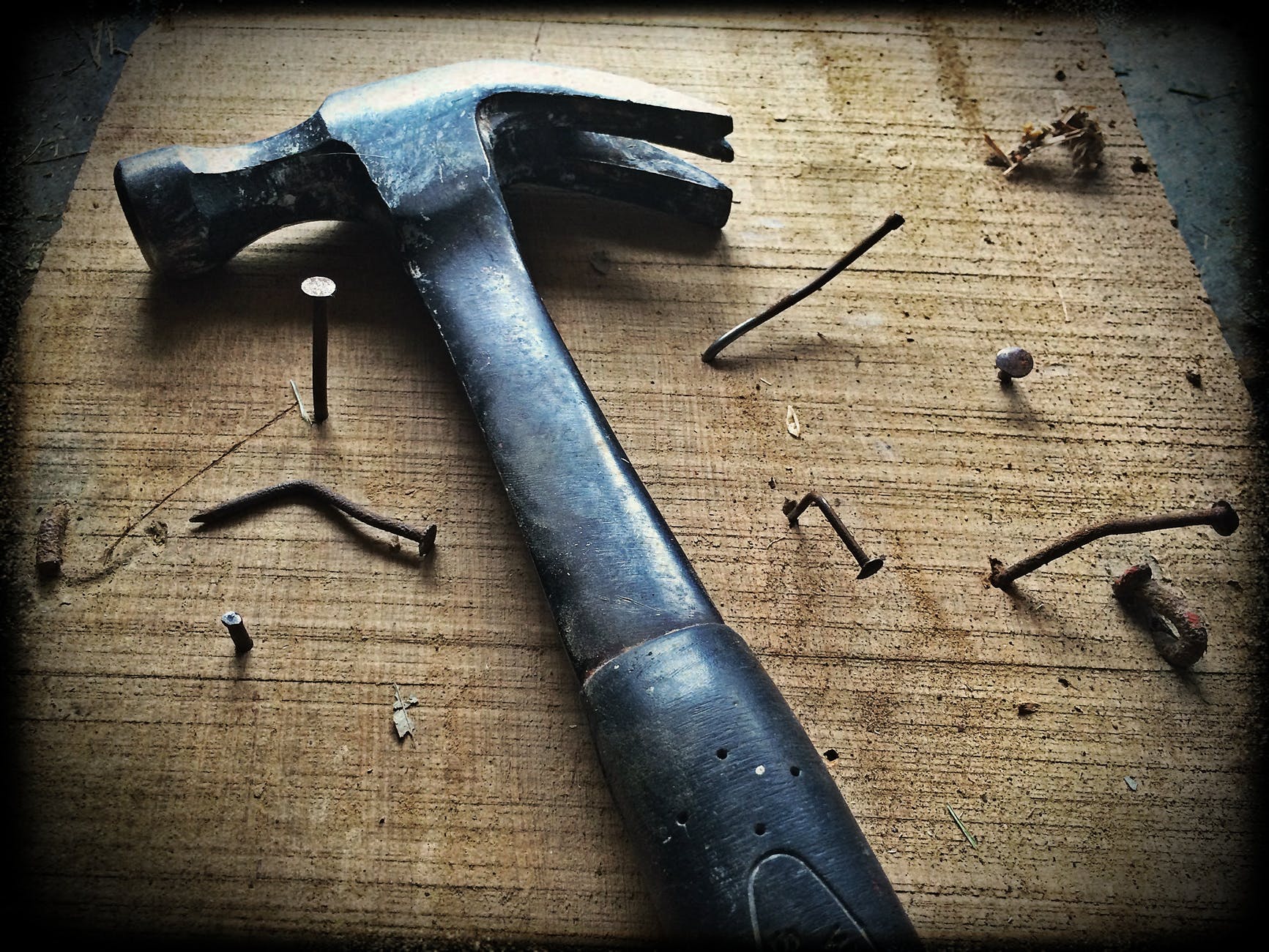
black claw hammer on brown wooden plank
Photo by Pixabay on Pexels.com

What can I do to keep sharpened and help others stay sharp?

  • Pray.  I don’t have answers, I don’t have the power to stay sharp on my own.  But God is the one who can give us wisdom, power, and send us all we need (2 Peter 1:3)  Also, seek out a prayer partner or prayer group.
  • Get involved in Bible Study– seek out a Bible Study group or an on-line resource where you can ask questions, have meaningful discussions, and share insights.

black steel frame on wall
Photo by Alizee Marchand on Pexels.com

  • Seek out “iron” friends– friends who will hold you accountable, who will offer support, but also share their own struggles.  We all have friends who fill one or the other of these roles, but seek out friends who are not merely takers or givers, but true brothers and sisters in the faith.

black chain
Photo by lalesh aldarwish on Pexels.com

  • Don’t run away from challenges, “tough” questions, and earnest discussions–that doesn’t mean that we need to get pulled into senseless arguments, either; but we are disciples— that’s the same root word as discipline!  We need to come out of our comfortable corners and exercise our faith.

antique armor black and white chrome
Photo by Mikes Photos on Pexels.com

As iron sharpens iron, so a friend sharpens a friend— such a short verse, but it’s packed with wisdom and promise.

Going For the Prize

Do you not know that in a race all the runners run, but only one receives the prize? So run that you may obtain it. I Corinthians 4:24 (ESV)

I mentioned the other day that the county fair is on in our area.  Each day of the fair, young people from around the county (and some from neighboring counties) have been showing livestock.  The animals are judged on their general health and appearance, weight, height, and other factors that mark them as the best of their breed or class.  The young people are judged on their presentation, their knowledge of their animal (anatomy, breed, hygiene, health, etc.), and their ability to “show” the animal– to keep in still, to pose it, and, in some cases, to walk or trot it in a pattern.  Different shows and different judges will determine which animals are worthy of prizes and which of the youth deserve a prize for “showmanship.”  Both are coveted awards.

animal countryside agriculture farm
Photo by Skitterphoto on Pexels.com

The young competitors spend countless hours and work incredibly hard to get their animals (and themselves) ready for the judging.  Animals and their handlers are scrubbed, groomed, brushed, gussied, and polished.  They preen and pose for the judges, and the students answer questions, listening for instruction and correction, and show both self-confidence and respect for those in charge of the show.  They also show respect for each other, and often lend a hand (or a brush) to help someone else.

horse action dutch sports
Photo by Matthias Zomer on Pexels.com

What would happen if everyone showed up in ripped shorts or pajamas?  What if the animals were running loose, filthy and un-groomed?

agriculture animals avian beaks
Photo by Fancycrave.com on Pexels.com

The Apostle Paul spoke of the Christian life as a race–one that we should run so as to receive the prize.  When we serve, when we worship, when we pray, when we study– we should be giving it all our passion, all our energy, all our focus.

Most of these competitors will not win the trophy or the purple ribbon– but most of them will still go home winners– because they gave it their all.  They did the work, and built the discipline, and came prepared to win or lose with grace.  The trophies and ribbons are wonderful and colorful, but the true prize is the discipline, the knowledge, and the character that are built long before the judgment day.

man wearing white sweater and black shorts about to run
Photo by nappy on Pexels.com

May that be true for all of us as we travel through this life– may we grow in discipline and character to be more like Christ.  He is the prize for which we work and train and run and pray.  May we “show ourselves approved” (2 Timothy 2:15).

And may we pray for a spirit that does not grow weary or apathetic; a spirit willing to listen for correction and instruction; may we show up ready to give our best, even if the prize (and the praise) goes to someone else today.

Prayer in the “Off-Season”

World Cup fever is at a high this week.  England was stunned by Croatia in the semi-finals–Croatia will face France in the finals on Sunday.  Teams have played hard all season to make it to the World Cup– most of them will go home disappointed (at least a little).  Fans will have to wait until next season to see their favorite team make another attempt at winning it all.

action activity adult athlete
Photo by Pixabay on Pexels.com

In the meantime, the players will be in the “off-season.”  Some will take well-earned vacations, and spend more time with their families.  Some will spend time with doctors and physical therapists to work on injuries sustained during the regular season.  Some will be working with coaches and trainers to develop in areas where they feel they need extra help.  Others will cut back on their training schedule.  Still others will spend time with agents trying to get traded to another team (or avoid being traded to another team).

man jumping above gray concrete surface under blue sky at daytime
Photo by antas singh on Pexels.com

People who study sports often say that what happens in the “off-season” can be as important to players and teams as what happens during the intense training of the regular season.  Habits form, attitudes develop, team chemistry alters– any or all of these factors can change for better or for worse.

corner field football field game
Photo by Lorenzo Cafaro on Pexels.com

The same is true in our prayer lives.  When we are facing struggles or heartaches, we pray with intensity and passion.  But when things are going smoothly, sometimes we let our prayer lives “take a break.”  We pray with less frequency, less intensity, and less focus.  I’m guilty of this; even though I know it can happen, bad habits creep in, and suddenly, my prayer life is haphazard and lackluster.  Using a journal helps, in that I have a focus for each day already written in, and a place to write in new requests, and even answers.

However, a major part of staying on course is to commit to the discipline of prayer.  “Discipline” sounds boring and constrained–something I do out of obligation and not out of love.  But that’s not true of all discipline.  Athletes are disciplined– because they love their sport, and they want to develop and play at the best of their ability.  Musicians are disciplined– because they love music, and they want to develop their art.  Professional athletes and musicians often have a contractual commitment to stay in practice and develop their talents.  When athletes are part of a team, or musicians are part of a band, orchestra, or chamber group, they have an additional reason to be disciplined– to play more effectively with others.

adult art band blur
Photo by Pixabay on Pexels.com

In my personal life, there are disciplines– hygiene, sleep habits, diet, and exercise, that I practice, not because I love saying, “NO” to that piece of chocolate cake or walking that extra mile, but because I want to stay healthy, clean, and active.  Prayer is no different– except that it is for my spiritual health– and it is part of my relationship with God.

Instead of slacking off during the “off-season”, many athletes and musicians will use this time to step back and look at what they have learned, what they would like to do better, and how they can develop their skills.  I think this offers a great opportunity in prayer, as well.  After a season of grief, struggle, doubt, or testing, it is good to take some time to make some assessments.  Sometimes we don’t know all the reasons for the times of testing or trial we have just faced.  But that doesn’t mean that we can’t look back and see whether we have grown, or if we need to make some adjustments, or if we have developed new habits or skills (good or bad).  It is a good time to “count our blessings”, “pray without ceasing”, “ask, seek, and knock”, and look at the ways God has been faithful (and hopefully ways that we have been faithful!) over the years.

activity business calculation chart
Photo by rawpixel.com on Pexels.com

Some of us are in the struggle of a busy, harsh, or painful season.  Let’s not let that struggle go to waste.  Some of us will be facing trials next week, or next month–spending time training in the “off-season” will make us stronger for the fight!  And the best news– we already know the outcome!  Let’s pray harder– pray stronger–and go for the win!

action activity adult athletes
Photo by Pixabay on Pexels.com

Reading the Charts

Many industries rely on charts.  Health care workers chart vital signs, fluid levels, symptoms and reactions to medication.  Publishers  of books and music chart sales by category, age of audience, geographical region, and more.  Transport and shipping companies chart routes, weather, road construction, and fuel efficiency.

Keeping charts, graphs, and records can improve performance, solve mysteries, and increase understanding.  It is good to keep charts in our Christian walk, as well.  Charting scripture can show us where we have or have not studied God’s promises, warnings, and wisdom.  Charting our prayer life can show us patterns in our communication with God, and help us see when and how God has answered our prayers.

pexels-photo-273011.jpeg

I keep a prayer journal.  Each day of the year has its own page, with lists of people to pray for in general, a geographical region, and more immediate special requests.  But the back of each page has blank space.  This way, as God answers prayers in these areas, I can record them.  I’ve been using this journal for three years now, so the back sides are beginning to get filled up.

But that is not the most amazing part of what I wanted to share today.  The most amazing part is that I have had to revisit some of the answers because God keeps answering them!  Here’s a case in point:  About two years ago, I wrote in a request for a friend who was looking for a job.  There was a promising interview, and many friends were praying for a “positive” outcome.  The job seemed like a perfect fit.  But it didn’t happen.  More prayers led to other opportunities and one of them seemed to be working out.  I wrote the “answer” in my journal.  But when I came across it again this year, I realized that God used both the previous opportunities to prepare my friend for something even better:  a job that no one imagined two years ago!  We prayed, expecting God to answer with something good.  When the first answer was “no,” we trusted God to bring about something else.  And He did.  But I’m glad that I had charted this request, because I almost missed seeing how God used prayer to prepare for more that we had asked!

pexels-photo-941693.jpeg

Another friend was going through grief and distress just a little over a year ago, and I was reminded of how God answered prayers for strength, peace, and rest.  But  I was also reminded to lift my friend up again on a painful anniversary, and to offer thanks for the ongoing healing I’ve seen– not just for my friend, but for her entire family.

journal

If you don’t do it already, I highly recommend making a prayer diary or journal.  It doesn’t have to be elaborate or complicated– I use wire-bound theme books and write in them daily.  But you could use an actual bound journal, or a simple memo pad or old address book.  Don’t worry if you miss a day or two– no one is keeping score or grading you–the main thing is to make it a habit to record prayers and answers.  You will gain insight, remember God’s answers and promises kept, and be encouraged in the wait for other answers to come.

Prayer Journal

Proactive Prayer Points

Blog at WordPress.com.

Up ↑