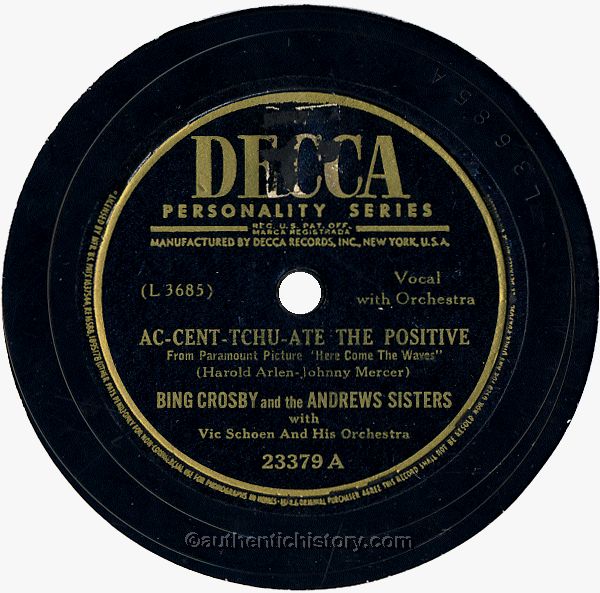
You’ve got to accentuate the positive Eliminate the negative Latch on to the affirmative Don’t mess with Mister In-Between
You’ve got to spread joy up to the maximum Bring gloom down to the minimum Have faith or pandemonium (is) Liable to walk upon the scene “Accentuate the Positive” by Harold Arlen/Johnny Mercer
This popular song came out in 1944, as thousands of soldiers were dying in World War 2, and millions were facing homelessness and starvation in Europe, Asia, and northern Africa. Its syncopated rhythms and upbeat lyrics helped focus minds and hearts on hope in a world torn apart by war, hatred, and despair. Further lyrics refer to biblical characters Jonah and Noah, and their experiences facing “dark” times.
The Bible gives us similar (and more specific) advice. The Apostle Paul wrote from prison to believers in hard-pressed Philippi:
6 Do not be anxious about anything, but in every situation, by prayer and petition, with thanksgiving, present your requests to God. 7 And the peace of God, which transcends all understanding, will guard your hearts and your minds in Christ Jesus. 8 Finally, brothers and sisters, whatever is true, whatever is noble, whatever is right, whatever is pure, whatever is lovely, whatever is admirable—if anything is excellent or praiseworthy—think about such things. Philippians 4:6-8 (NIV)
In other words– Accentuate the Positive and latch on to the affirmative!
To the Ephesian believers, he says:
The Old Way Has to Go (or, Eliminate the Negative):
And so I insist—and God backs me up on this—that there be no going along with the crowd, the empty-headed, mindless crowd. They’ve refused for so long to deal with God that they’ve lost touch not only with God but with reality itself. They can’t think straight anymore. Feeling no pain, they let themselves go in sexual obsession, addicted to every sort of perversion. But that’s no life for you. You learned Christ! My assumption is that you have paid careful attention to him, been well instructed in the truth precisely as we have it in Jesus. Since, then, we do not have the excuse of ignorance, everything—and I do mean everything—connected with that old way of life has to go. It’s rotten through and through. Get rid of it! And then take on an entirely new way of life—a God-fashioned life, a life renewed from the inside and working itself into your conduct as God accurately reproduces his character in you. What this adds up to, then, is this: no more lies, no more pretense. Tell your neighbor the truth. In Christ’s body we’re all connected to each other, after all. When you lie to others, you end up lying to yourself.Go ahead and be angry. You do well to be angry—but don’t use your anger as fuel for revenge. And don’t stay angry. Don’t go to bed angry. Don’t give the Devil that kind of foothold in your life. Did you use to make ends meet by stealing? Well, no more! Get an honest job so that you can help others who can’t work. Watch the way you talk. Let nothing foul or dirty come out of your mouth. Say only what helps, each word a gift. Don’t grieve God. Don’t break his heart. His Holy Spirit, moving and breathing in you, is the most intimate part of your life, making you fit for himself. Don’t take such a gift for granted. Make a clean break with all cutting, backbiting, profane talk. Be gentle with one another, sensitive. Forgive one another as quickly and thoroughly as God in Christ forgave you. Ephesians 4:17-32 (The Message)
But what does it mean when the song says, “Don’t mess with Mister In Between”? The Bible gives some advice on this as well. The Apostle James has much to say about such a man in the first chapter of his epistle. He talks about being steadfast, not doubting, not double-minded, and not swept up in temptation, blaming others, and justifying his own philosophies:
22 But be doers of the word, and not hearers only, deceiving yourselves. 23 For if anyone is a hearer of the word and not a doer, he is like a man who looks intently at his natural face in a mirror. 24 For he looks at himself and goes away and at once forgets what he was like. 25 But the one who looks into the perfect law, the law of liberty, and perseveres, being no hearer who forgets but a doer who acts, he will be blessed in his doing. James 1:22-25 (ESV)
To James, “Mister In Between” is a shadow man, a person without root or discipline, who will listen to the word of truth, but then turn back to the darkness of the world to justify inaction and/or wrong actions. Mister In Between wants to straddle the fence between sin and obedience, revenge and forgiveness, anger and patience, comfort and compassion. But that doesn’t work. Such a person lives in a false reality– one where his/her “truth” changes with each new experience or emotion, each new encounter with pleasure or grief.
Jesus Himself spoke of the dangers of living “In Between”:
Then he said to them all: “Whoever wants to be my disciple must deny themselves and take up their cross daily and follow me. 24 For whoever wants to save their life will lose it, but whoever loses their life for me will save it. 25 What good is it for someone to gain the whole world, and yet lose or forfeit their very self? 26 Whoever is ashamed of me and my words, the Son of Man will be ashamed of them when he comes in his glory and in the glory of the Father and of the holy angels… 62 Jesus replied, “No one who puts a hand to the plow and looks back is fit for service in the kingdom of God.” Luke 9:23-26;62 (NIV)
13 “You are the salt of the earth. But if the salt loses its saltiness, how can it be made salty again? It is no longer good for anything, except to be thrown out and trampled underfoot.14 “You are the light of the world. A town built on a hill cannot be hidden. 15 Neither do people light a lamp and put it under a bowl. Instead they put it on its stand, and it gives light to everyone in the house. 16 In the same way, let your light shine before others, that they may see your good deeds and glorify your Father in heaven. Matthew 5:13-16 (NIV)
We may not be in the midst of a World War (though some reading this may be experiencing war, persecution, and suffering), but we are all involved in a great Spiritual Battle. There are negative forces and philosophies warring with God’s Truth– Anger, Despair, Hatred and Vengeance, Pride, Envy, Power, Greed, and many more. We need to keep our thoughts positively turned toward “whatever is true”.. and noble and praiseworthy– we need to keep our thoughts, prayers, and actions in tune with the teachings of Jesus. We also need to “eliminate” the negativity in our lives– doubts, regrets, shame, lust, bitterness, jealousy, and empty adherence to things of this world– we need to turn our back on old ways of thinking and doing (or NOT thinking or doing) and focus on Jesus. And we need to avoid “messing” with Mister In Between– stop compromising, stop trying to straddle the fence between loving others and making them feel comfortable or superior in their sin at the cost of our own soul.
It sounds easy and jaunty to “accentuate the positive.” But it involves commitment, and the willingness to let go of the negative and the complacent that creeps into our lives. That’s my prayer for today. I hope it is yours, too.
Psalm 46 For the director of music. Of the Sons of Korah. According to alamoth. A song. 1 God is our refuge and strength, an ever-present help in trouble. 2 Therefore we will not fear, though the earth give way and the mountains fall into the heart of the sea, 3 though its waters roar and foam and the mountains quake with their surging. 4 There is a river whose streams make glad the city of God, the holy place where the Most High dwells. 5 God is within her, she will not fall; God will help her at break of day. 6 Nations are in uproar, kingdoms fall; he lifts his voice, the earth melts. 7 The Lord Almighty is with us; the God of Jacob is our fortress. 8 Come and see what the Lord has done, the desolations he has brought on the earth. 9 He makes wars cease to the ends of the earth. He breaks the bow and shatters the spear; he burns the shields with fire. 10 He says, “Be still, and know that I am God; I will be exalted among the nations, I will be exalted in the earth.” 11 The Lord Almighty is with us; the God of Jacob is our fortress.
When I am tempted to fret or worry, I like to read through Psalm 46. I love the way the psalmists use hyperbole to shrink fear and maximize faith– God is an “ever-present help”, we will not fear, “though the earth give way, and the mountains fall into the heart of the sea”, “He lifts his voice, the earth melts!” And I love that the phrase is repeated– “The Lord Almighty is with us; the God of Jacob is our fortress.”
There is so much to unpack in just 11 verses of psalm! But I want to stick to two that always stand out to me.
First, the phrase, “the God of Jacob.” God is the God of Abraham, Isaac, and Jacob. He is the God of Moses, the God of Israel, the God of David…His titles are many. But in this case, He is the God of Jacob. NOT the God of Israel– even though God changed His name. No, He is the God of Jacob– the “heel grabber,” the son who stole his brother’s blessing and tricked his brother out of his birthright– the same Jacob who fled his homeland and worked for twenty years for his duplicitous uncle Laban. This is not the God of the victorious, but the God of those who have had to learn the hard way. He is the God of the one who has acted unjustly, and the God of one who has been treated unjustly. He is the God of the one who wrestles and demands a blessing, the God of the second son, the disappointed husband, and the grieving father. THAT is the God who is with US when we are in trouble and feeling overwhelmed by our own past mistakes, or our own inadequacies, or our unfair circumstances.
Secondly, the phrase “be still and know that I am God.” This same God who wrestled with Jacob, who blessed him in dramatic fashion, was the God who was with him through all the long and lonely night watches as a shepherd. Jacob, with his two wives, their two servants, and all thirteen or more of his children (12 sons and at least one daughter, Dinah)–spent a lot of his time surrounded by noises, nagging, responsibilities, and discord. Yet he took time to ‘be still.” And, though it took many years, and often came “the hard way,” Jacob did learn to “know” his God. He learned to trust that God would protect him, guide him, and bless him– and the generations that would follow him!
I am so grateful for this Psalm to remind me of God’s everlasting presence, His power to save and protect, and His sufficiency for every circumstance in my life. I’m so glad that the “God of Jacob” is the same God who sees me, loves me, and rescues me. I’m humbled to know that I don’t have to be clever enough or brave enough, or “righteous” enough to earn God’s help. I’m glad that the Lord Almighty is always with me. (see Hebrews 13:5) However, I still struggle to “be still and know…” I want to know by doing; by studying and making things happen. But to know God– to really know Him– I have to be still, to wait in silence and anticipation, to trust in what I cannot see and cannot do in my own power. I have to know Him as the Almighty, Omnipotent, Sovereign God that He is, rather than a God of my own imagination or the God I hear about or read about from someone else.
What a mighty God! The God of Jacob is MY fortress! And in stillness, meditation, and trust, I can KNOW Him!
“Objects in the mirror are closer than they appear…” This notice is on the side rear-view mirror of my car. It serves to remind me that I cannot judge distances by what I see– that my mirror is meant to show a wide-range view, rather than one that is precise and in-scale.
Many things in life are similarly distorted. The actual objects in my rear-view mirror don’t appear distorted, but if I back up without considering the warning, I am likely to run into an object and “distort” my back bumper!
The Bible also warns us about distortion and mirrors. In James, chapter 1, the Apostle writes:
22 Do not merely listen to the word, and so deceive yourselves. Do what it says. 23 Anyone who listens to the word but does not do what it says is like someone who looks at his face in a mirror 24 and, after looking at himself, goes away and immediately forgets what he looks like. 25 But whoever looks intently into the perfect law that gives freedom, and continues in it—not forgetting what they have heard, but doing it—they will be blessed in what they do. 26 Those who consider themselves religious and yet do not keep a tight rein on their tongues deceive themselves, and their religion is worthless. 27 Religion that God our Father accepts as pure and faultless is this: to look after orphans and widows in their distress and to keep oneself from being polluted by the world.
James 1:22-27 (NIV)
We can easily read what the Bible says; we can easily hear the truth; we can even recite Scripture– and still be deceived and following a distorted version of God’s Word. As I write this, I can quote James, or another passage of Scripture, and walk away from the keyboard only to spread gossip, or snap at my husband, or in some other way distort what I know to be true about myself and about God.
The Apostle Paul also references mirrors in 1 Corinthians:
8 Love never fails. But where there are prophecies, they will cease; where there are tongues, they will be stilled; where there is knowledge, it will pass away. 9 For we know in part and we prophesy in part, 10 but when completeness comes, what is in part disappears. 11 When I was a child, I talked like a child, I thought like a child, I reasoned like a child. When I became a man, I put the ways of childhood behind me. 12 For now we see only a reflection as in a mirror; then we shall see face to face. Now I know in part; then I shall know fully, even as I am fully known.
1 Corinthians 13: 8-12
Even though this chapter is famously known as the “Love” chapter, it also addresses our need to be alert, humble, and committed to acting on what we know to be true. We can speak of love, even perform acts of self-sacrifice, yet distort what it actually means to practice Love. If we glance at our lives in the distorted mirrors of pride or worldly comparison, we will lose our perspective and our proper focus– and end up damaging more than just a bumper!
This distortion can also infect our prayer life. We can pray on “auto-pilot”– looking at things in a distorted mirror, instead of focusing on God and putting things in their proper perspective. How many times have I prayed that God would help those in need, without ever considering how He might want me to DO something? Have I asked locally if there is a need I can help meet? Not just with money, but in time or service? Do I pray “globally” but ignore those right in my own back yard? Sadly, I must answer than I have been guilty of such distortion. Or how many times have I been in the one in need, praying for a miracle, while refusing the practical help that someone has offered? Have I prayed that God would “change” someone else’s attitude, without seeing that mine needs to change as well (or instead!)? Have I confessed a sin, without really repenting? There is temptation, waiting in my rear-view mirror– and much closer than it appears!–but I want absolution without discipline. I want help without humility. I want to love others– when it is convenient.
Thankfully, God WANTS us to see clearly. He gives us warnings about the mirrors we tend to use, and His Word helps us correct our focus.
God wants us to see things as they really are– both the horror of our sin and rebellion, and the wonder of His Grace. And sometimes, that means grappling with the distortions in the mirrors of our own making.
I was reading the other day, and thinking about how often we read the Bible with preconceived notions. We sometimes think the Bible is a guide that tells us what to do or not to do. But a good portion of the Bible tells us, not what to do, but how to be. Even the Ten Commandments don’t tell us what to do— rather they tell us what we should NOT do.
God has given each of us free will, and created us with distinct skills and personalities and sets of circumstances. We will not– indeed we cannot– all do the same things. God doesn’t expect it of us. And He does not expect us to earn our salvation by what we do. What He does expect is that we will do those things that bring us closer to Him and closer to the people we were meant to be. His power will take care of the rest.
We have a tendency to get caught up in what we (and what others around us) are doing; we tend to judge and compare and criticize. Instead, we should concentrate on who and what we are becoming:
We want to learn–but do we want to be teachable?
We want to make money– but do we want to be generous?
We want to build a reputation– but do we want to be honest and reliable?
We want to have friends– do we want to be available?
We want a family–do we want to be intimately known and knowable?
We want freedom–do we want to be responsible?
We want justice– do we want to be just?
We want happiness–do we want to be content with what we have?
Jesus didn’t give His disciples a long “to do” list. He didn’t give them detailed lists of things to do. He gave them “Beatitudes”– “Be” “Attitudes”
Blessed are the poor in spirit, for theirs is the kingdom of heaven.
Blessed are those who mourn, for they shall be comforted.
Blessed are the meek, for they shall inherit the earth.
Blessed are those who hunger and thirst for righteousness, for they shall be filled.
Blessed are the merciful, for they shall obtain mercy.
Blessed are the pure in heart, for they shall see God.
Blessed are the peacemakers, for they shall be called sons of God.
Blessed are those who are persecuted for righteousness’ sake, for theirs is the kingdom of heaven.
Matthew 5:3-12
Of course, much of who we are and who we become depends on what we do. And it is important to do what is right and honorable, just and compassionate. But it’s the “being” that is the goal, not merely the “doing.” God knows we cannot “do” what it takes to be perfectly righteous in our own power. But He will give us the guidance, the strength, and the encouragement to “become” more like Him as we live out the above attitudes.
10-14 I’m glad in God, far happier than you would ever guess—happy that you’re again showing such strong concern for me. Not that you ever quit praying and thinking about me. You just had no chance to show it. Actually, I don’t have a sense of needing anything personally. I’ve learned by now to be quite content whatever my circumstances. I’m just as happy with little as with much, with much as with little. I’ve found the recipe for being happy whether full or hungry, hands full or hands empty. Whatever I have, wherever I am, I can make it through anything in the One who makes me who I am. I don’t mean that your help didn’t mean a lot to me—it did. It was a beautiful thing that you came alongside me in my troubles.
Philippians 4:10-14 (The Message)
I know many Christians who quote Philippians 4:13–generally in the King James or New King James versions: “I can do all things through Christ, who strengthens (strengtheneth) me.” It is a powerful verse, but taken out of context, it can become twisted and lead to unrealistic expectations. In context, Paul is not talking about achievement, but about endurance. “I can endure all things…” or “I can cope with all circumstances…” is a better understanding, which is why I chose to quote from The Message, instead of another translation. Many times, however, we co-opt this familiar verse to fill our calendar with busy plans for our own achievements, trusting in God to give us the strength to multi-task our way past exhaustion. We end up frustrated, disappointed, and even questioning our faith.
God never meant for any of us to do “all things..” In fact, He wants us to trust Him to direct our paths– even when He directs us away from achievement and into rest or even need. Paul was a doer. He loved to be on the road, preaching and teaching, building up churches, and making new converts. But the letter to the Philippian believers was written from a jail cell. Paul could not be there to minister to them, but they had ministered to him, instead! Paul was thanking his friends for the help they gave him, not because he was abandoned or starving, but because their gifts reminded him of their care for him, and of God’s care for all of us. God had given Paul a season of rest from the road– imposed rest, but rest that gave him time to reflect on God’s goodness in solitude.
When we set ourselves up to “do all things,” it usually means “all the things I think I can or ought to do,” or “all the things I am asked or expected to do as a volunteer or a friend or neighbor or parent…” God is more concerned with our “being” than our “doing.” He wants us to be seeking after righteousness, not self-righteousness. He wants us to be growing in our love for others– even if we can’t “do it all.” He wants us to follow Him, not impress Him!
I’m in a season of “can’t” right now. It’s not that I can’t do anything, but I can’t do “all things.” That’s not a result of my lacking faith or having a wrong view of God– God CAN do anything and “everything.” But I can’t. And God’s plan isn’t to empower me to be autonomous, self-sustaining, or self-righteous. I NEED others! And I NEED Him! What I CAN do, is trust in His timing and His resources to be sufficient for my daily needs. I can get “enough” done today, with God’s wisdom and strength. I can do “enough” to overcome anxiety or depression– with the help that God provides. That may mean allowing someone else to do simple tasks that I can’t do today. It may mean accepting medical help. It may mean changing my schedule or my expectations for today. But I can endure all the setbacks, and the moments of grief or weakness that keep me from “doing” what I had planned. I can weather it all in the power of Christ. And so can you! If you are finding yourself in a season of “can’t,” don’t skim over Philippians 4– study it. Claim it! Christ’s power isn’t for those who “can.” It’s for those who ask!
It’s a great thing to have a “can-do” attitude. But sometimes, we need a season of “can’t do” in order to step back and see what we “can BE” in the power of Christ!
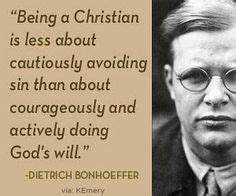
Being a Christian is less about cautiously avoiding sin than about courageously and actively doing God’s will.
Dietrich Bonhoeffer
Dietrich Bonhoeffer was a German pastor and writer who ended up sacrificing his life as he protested the Nazi regime in his homeland. Many of the things he wrote are uncomfortable for modern Christians to read. Sometimes, we want to coast along, joyfully celebrating our own Salvation, and ignoring the evil around us. After all, the ultimate victory is already won in Christ, isn’t it?
I write a lot about the power of prayer. And I stand behind what I write. But a life of prayer and Bible Study that doesn’t result in actively living out and spreading the Gospel is a life of lukewarm and selective obedience. This is not to say that we should skitter around trying to earn our Salvation with random acts and self-righteous crusades. But we must have the courage to “come out of the closet” as Christians in a dark and unfriendly world.
What does this look like? Does it mean wearing a badge or getting in people’s faces with “the Truth.” Perhaps. But mostly, it means every day living out the kind of love and truth that Jesus demonstrated. Jesus didn’t march in protests, hand out pamphlets with convicting messages, or start arguments to humiliate atheists in front of crowds. But He didn’t back down in the face of arguments and tough questions asked by His opponents. He ate with sinners– but He didn’t wink at their sin, or send them away reassured that they were “good enough” to please God. He went where God sent, spoke God’s Truth, and DID God’s work.
Jesus wasn’t a writer; He wasn’t a professor of Theology, or an elected official. The Pharisees were constantly frustrated with His lack of “credentials.” But their frustration came because Jesus spoke with the kind of authority they could never achieve– Jesus was authentic. He spoke, not from cold and lofty intelligence, but from wisdom and love. And Jesus didn’t just speak. He served. He listened. He lived out all that He spoke. He “courageously and actively” DID the will of the Father.
Jesus prayed and studied scripture. Jesus spent time alone communing with the Father. He spent time in rest. He spent time being social with His family and friends. But in every activity, He wove in the Truth of God’s word. And crowds followed Him. They wanted to listen, even as He spoke uncomfortable truths. And some of them came to love Him. Others came to hate Him, and even kill him.
We can’t be true followers of Christ and not risk being mocked, and hated. We WILL be misunderstood, laughed at, persecuted, ignored, and inconvenienced. We should not invite this with obnoxious or arrogant behavior. But we must not shrink away from it when it comes at us, or try to avoid it by being silent in the face of evil and injustice.
One of the recent charges leveled against Christians is that we meet evil with “thoughts and prayers” but little action. We must be wise and careful with such charges. Often, the taunt is thrown at us in an effort to get us to take a specific, ungodly “action” INSTEAD of praying. But we must honestly examine ourselves and ask what Godly actions SHOULD I be taking to make a difference? What actions should I be denouncing as ungodly, even if they are popular and seem to be “right?” And what must I do to defend the power of prayer in the face of ridicule?
One of the other charges leveled against Christians is that we are “intolerant.” Again, we need to be wise and careful in answering this charge. Are we quick to judge others, while giving ourselves a “pat on the back” for merely avoiding a particular sin or sinful lifestyle? What is if about our life and work that makes others see us as “intolerant?” Are we exclusive and prejudiced in our interactions? Or are we humble in presenting the truth of God’s word? Do we speak from a need to defend our own actions or from a desire to help others? Are others offended by our words and actions, or by the truth of God as it convicts them?
In Jesus’ Sermon On the Mount (Matthew 5-7), Jesus listed what have become known as “The Beatitudes”. Each phrase begins with “Blessed are..” or “Happy are…” (depending on the translation). The blessings are specific, but they are also reserved for those who do not appear to be due for blessings– the poor in spirit, those who mourn, the meek, the persecuted, those who hunger and thirst for righteousness. Each group seems pitiable, not suited for accolades and celebration. They’ve done nothing to deserve blessing. Yet Jesus calls them “Happy” and assigns them amazing gifts and blessings– not for their hard work or achievements, but because of their emptiness; their need and their ability to receive the blessings of God.
There are wonderful sermons and analyses and studies on the Beatitudes, but in relation to prayer, I want to look at this aspect. There are no blessings in the list for the doers– the movers and shakers, the revolutionaries and the organizers and life-changers. Throughout the Sermon, Jesus spends more time on attitude than on action–Murder is an action– forbidden by the Ten Commandments– but it is based on attitudes like hatred, disdain, envy, and rage. Clearly, Jesus does not want us to be unproductive or isolated from the needs of others, but our busyness, our stress, our huffing and puffing and scurrying about, does not impress Him, nor does it bring us the kind of happiness only God can offer.
He gives the same emphasis when he discusses prayer– prayer is not about public eloquence or long strings of words or excessive emotional outbursts. In fact, effective prayer has little to do with who is praying, what words or word order or language they use, where they pray, or when they pray. It IS about how and why and TO WHOM they are praying. And the only active verb not assigned to “Our Father” is found in the phrase, “…as we forgive…”
God does not command us to pray seven times a day, or to have a prayer list a mile long, or to pray only when we are in great need. He wants us to “pray without ceasing”, not as a recurring action, but as a constant state of being aware of and responsive to His presence.
I have a niece who has spent several years in dance. When she was a beginner, it was both comical and sad to watch as she and many others agonized and counted the steps out as they performed– often getting all the right steps, but a slight beat ahead of or behind the music and/or the other dancers. But what a delight to see the development of young students into graceful dancers– seeing the transition from just doing the right steps at the (approximate) right time to internalizing and coordinating the music and movement into art.
I have friends who are runners, and while I don’t run, I have watched those who do…there is a difference in the stride, the posture, and the face of someone who is “a runner” and someone who is just “running.” It’s not the action, but the attitude that makes the difference.
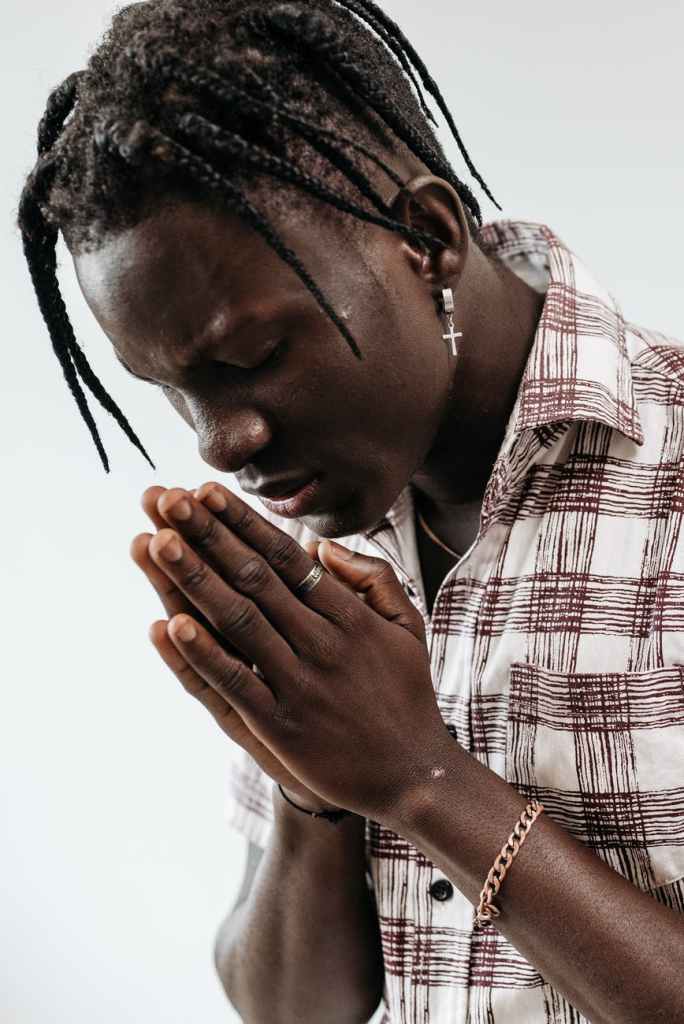
Prayer is a gift; a privilege; a sacred meditative conversation with our Creator, Our Father, and our King. I don’t want to just pray– I want to BE in Prayer!




























 Pursuing Prayer