Of Broken Femurs, Hearts, and Toilets

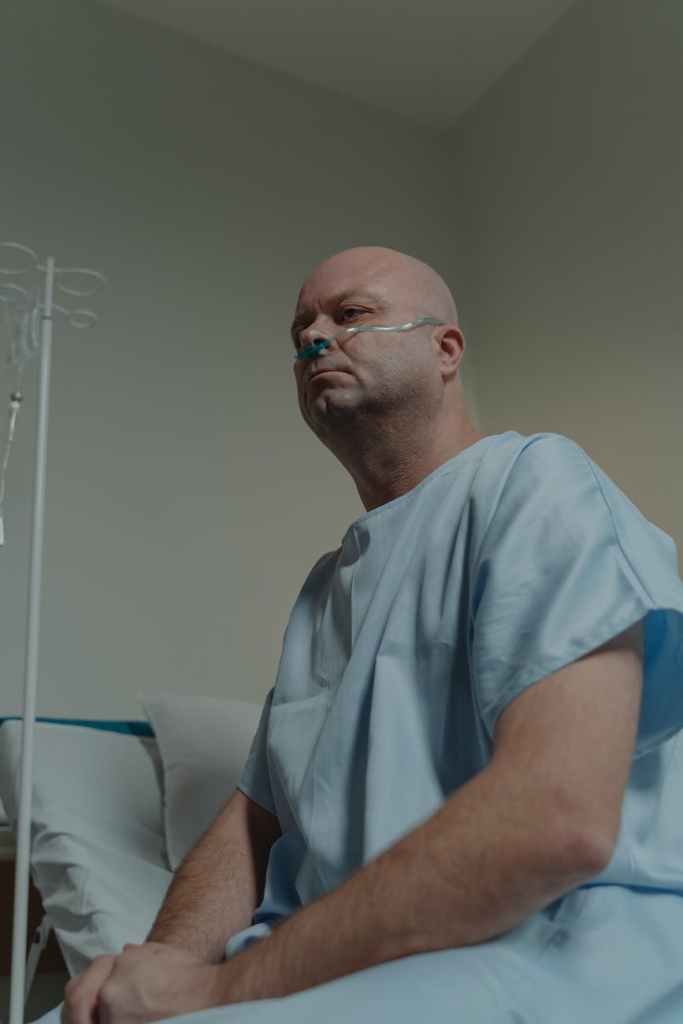
The past two weeks have been just a bit chaotic for our families. My mother fell and broke her femur, near her hip–not the hip she broke over a year ago, but the other one! Less than twenty-four hours later, my mother-in-law fell–and broke her femur. Each mom ended up in a different hospital for surgery, and in a different rehabilitation facility, located nearly fifty miles apart. Last week, two members of our extended family died on the same day in the same city; their funerals were a day apart in two different parts of the city, but handled by the same funeral home. On the day of the first funeral, we found out that another member of the family died. That same night, our toilet broke. Water poured into our upstairs bathroom, soaking the floor, running into the next room, and dripping down to the floor below. In the middle of all this, I slipped on the ice, fell hard, and bruised my ribs.

Photo by Liza Summer on Pexels.com

Where was God in all this? He was right there in every situation. God doesn’t disappear when the going gets tough– He is steady, sure, and faithful.

  • Neither of our moms suffered a concussion or any other major damage from their falls. They were able to get treatment and surgery, and they are receiving care and therapy. And, while this is something we might have taken for granted at one time, it is something for which we praise God, because it could have been much more tragic in both cases.
  • We live close enough to both moms that we have been able to help and visit (where we can because of continuing COVID restrictions). Though the facilities are fifty miles from each other, neither is fifty miles from our home. Also, both moms are able to receive phone calls, and we are able to receive updates from the staff at each place.
  • We have close families, and wonderful neighbors and friends– we are not alone in caring for our moms or grieving our loved ones, and there is a network of prayer, support and concern that staggers my imagination! I cannot imagine trying to navigate this without help– again, this is something we might take for granted, but God has been in the details long before any of this happened. Our families, friends, and neighbors represent dozens of church bodies from around the country and the world, as well as a significant group close to home– how marvelous that God allows us to work together as a body in every situation.

Photo by Pixabay on Pexels.com
  • Though we have lost three family members in rapid succession, all three were believers! All three left a legacy of faith, love, and hope. We mourn their loss, but we also celebrate their lives with joy and not regret.
  • David HATES plumbing, but he knew what to do to fix the toilet. The damage from the flooding was minimal, all of our towels are freshly laundered, and the toilet works again!
  • My fall could have resulted in ANOTHER broken femur– or a broken arm, concussion, etc.. While it hurts to sneeze or yawn or blow my nose, at least it doesn’t hurt to breathe, and I can move and go about my day, cautiously, but normally.

God allows difficult things to come into our lives– and I don’t have any definitive answer for WHY we have been experiencing so many trials all at once. But I can say this:

Photo by Andrea Piacquadio on Pexels.com
  • Trials make us stop and look and question– and that can be a good thing. God is big enough, wise enough, and sovereign “enough” to handle our tears, our fears, our weakness, and our momentary doubts. In fact, it is in recognizing our limitations that we can focus more on God’s limitless grace and boundless love!
  • Trials bring us closer to each other. Our chaotic couple of weeks are just a drop in the bucket among all the other problems of the world, but so many wonderful people have called or sent messages of hope and encouragement over the past two weeks, my heart is bursting– not with the pain, but with joy and gratitude.
  • Trials teach us patience (see my post on “Be Careful What You Pray For.”) The toilet breaking was my low point this past week– even though it did not directly touch on our health or a loved one. But God sent friends and angels to remind me that this was a very minor problem– even among all the others– and that God was “flushing” away some unnecessary angst if I would just let it go!

There is nothing that takes God by surprise– nothing that causes Him to pause and wonder, “what happens next.” I can praise God in the hospital as I watch my mom cry in pain. I can praise God when my husband finds his mother “alive” (when he couldn’t be sure). I can praise God when I’m flat on my face on the ice, winded and sore. I can praise God when toilet water is soaking my socks. I can praise God when I hug cousins who have lost their parents to cancer or dementia, or age, knowing that God is with us every moment, in every tear, every hug, every shared memory, and every hope that our loved ones now experience what we will also know someday.

I’m ready for 2022 to calm down a little bit. But if it doesn’t, I’m also ready to be broken again– whether through broken legs, broken toilets, or broken hearts. God is in the business of repairing and restoring broken things and broken people. And no one does it better!

The Work is “Donne”

Wilt Thou forgive that sin where I begun,
Which is my sin, though it were done before?
Wilt Thou forgive those sins through which I run,
And do them still, though still I do deplore?
When Thou hast done, Thou hast not done,
For I have more.
Wilt Thou forgive that sin by which I have won
Others to sin? and made my sin their door?
Wilt Thou forgive that sin which I did shun
A year or two, but wallowed in a score?
When Thou hast done, Thou hast not done,
For I have more.
I have a sin of fear, that when I have spun
My last thread, I shall perish on the shore;
Swear by Thyself that at my death Thy Sun
Shall sine as it shines now, and heretofore;
And, having done that, Thou hast done,
I have no more.

A Hymn to God the Father John Donne, 1623
John Donne

I enjoy studying the poetry of John Donne. https://www.biography.com/writer/john-donne Even though he lived 400 years ago, he wrote about very timeless and personal topics. Donne lived during a time of religious tumult and persecution. Born into a Catholic family, he later converted to Anglicanism and became a powerful preacher, as well as a poet, and lawyer. Throughout his life, he wrestled with deep theological questions of sin, guilt, redemption, and death. Yet he did so with wit, humor, and passion. The poem above, written during a long illness and near the end of his life, is filled with puns on his last name, Donne. Would God’s redemptive work ever be “done” in “Donne?” He struggles with the knowledge that his sins, having been forgiven, must be forgiven again and again. Does God never say, “Enough! I am done!?” What about stubborn sinful habits? What about sins that have led others to sin? What about last-minute, unconfessed sins?

Photo by Teona Swift on Pexels.com

The real question is, “How sufficient is God’s Grace?” Does God sprinkle out Grace sparingly on each sinful act, or does Christ’s blood cover All? Do our stubborn, habitual acts of rebellion pile up to a point where God cannot forgive? Having forgiven us once, twice, seventy times seven– is there a limit to His willingness to pour out Mercy? Theologically, the Bible is clear. The answer is a resounding, “NO.” God will not withhold His Grace from those who have sought it. God will never be “Done” with “Donne.” Nor will He be “done” with any of us who have chosen to follow Him. But in his all-too-human logic, Donne jokingly suggests that though God “hast” done/Donne, He “hast not” done/Donne. In other words, while Donne “belongs” to God– he has confessed his sins, and eagerly seeks to follow Christ, he still wrestles with fears that his small sinful acts prove that God does not fully “have” him– that He still lives separated from God.

Photo by Sinitta Leunen on Pexels.com

But the final sin of the poem is fear– fear that somehow, at the last, Death will prevail, and Donne will “perish on the shore,” rather than be taken into Heaven. He pleads that Christ’s blood (“Thy Sun/Son”) will be sufficient; that God’s promise of eternal life will indeed hold true, and that the work of salvation is indeed “done.” In the end, the poet hopes that “Thou hast Donne.” And he must trust that God’s promises will hold, for “I have no more.” Donne cannot stop death, he cannot do anything to save himself from sin, but he can be “done” with worry and trust in “Thy Sun/Son.”

Photo by Samuel Theo Manat Silitonga on Pexels.com

I am strangely encouraged by Donne’s poem. We all have moments of questioning and niggling doubts. And even though we “Know” the truth, our fears and emotions can play tricks on our mind. But Donne, even while putting such doubts and fears on paper, takes them to the Source of Hope. This is not a poem of accusation or despair. It is an honest and passionate desire to hear God’s calm assurance. And it is part of a long tradition that runs through the Bible. Jacob literally wrestled with an angel of the Lord (Gensis 32), Moses argued with God about going back to Egypt (Exodus 4), David questioned God (Psalm 10); even Jesus asked God, “Why have you forsaken me?” (Matthew 27). But in our doubts and questions, God’s still, small voice echoes, “I will never leave you nor forsake you.” (Hebrews 13:5), “My Grace is sufficient for you.” (2 Corinthians 12:9), and “Neither height nor depth, nor anything else in all creation, will be able to separate us from the love of God that is in Christ Jesus our Lord.” (Romans 8:39).

Photo by S Migaj on Pexels.com

God’s work is ongoing, but it is also “done”– it is complete, whole, sufficient, and eternal. And even if we occasionally wonder and even question, we can choose to rest in His promises. Just as the poet concluded, if God “hast” done/Donne, “I have no more”– he needed to have no other fear of sin or sin of fear. And through Donne’s poetry, God’s assurance is being passed on– the work continues to be “Donne!”

Photo by Nicholas Githiri on Pexels.com

When Nothing Else Could Help

6 Do not be anxious about anything, but in every situation, by prayer and petition, with thanksgiving, present your requests to God.

Philippians 4:6

Sometimes, I write because I feel as though I have received wisdom to pass on about prayer. But sometimes, like today, I write because I need to confess how much I still need to learn (or put into practice)!

Photo by MART PRODUCTION on Pexels.com

My mother has been in and out of the Emergency Room over the past few weeks. It’s not that she is experiencing actual emergencies–heart attack or difficulty breathing or broken bones or blood clots (though she has been checked for all of these at one point or another). Instead, she is experiencing pain and fear– fear that her pain is related to a larger issue that could be life-threatening. My mother is 88 years old, and there is a reasonable fear that her health is deteriorating and that death is closer than she wants to think about.

Photo by Pixabay on Pexels.com

The other day, I received a call from a dear friend and neighbor of my mom to say that she had stopped by to visit Mom and ended up taking her to the ER at the local hospital. Again, Mom was not in medical distress requiring an ambulance– this was not a “life or death” call; but Mom hadn’t slept well, she was hurting, and she just didn’t feel “right.” She had just seen her physician last week, and she had an appointment to see another doctor the next day, but she was afraid.

Photo by SHVETS production on Pexels.com

I was very much less than gracious about receiving the call. My siblings and I are exhausted, frustrated, and worried. I can’t speak for the others, but I feel guilty about not doing enough, and guilty for doing “too much” all at the same time. My emotions were raw; my gut was churning, and my mind was a complete disaster. I couldn’t think clearly, and I couldn’t “feel” anything. As a “last resort,” I sent out a request via Facebook asking others to pray for my mom– I didn’t feel like I could even do that on my own.

Photo by Alexander Dummer on Pexels.com

Of course, there is a power in prayer that goes beyond anything we can comprehend, much less explain. Within minutes, over three dozen people let me know they were sending prayers for my mom. But more than that, I received a call from my cousin–and he had just the words to assuage my false sense of guilt and refocus my thoughts and emotions. As time passed, our friend called with an update–Mom has severe arthritis in her back, and another minor issue that should respond to simple medication. She will still have pain; but now she has one less reason to worry about the cause.

Photo by Matej on Pexels.com

I can’t say that this is the “end” of the frustration, exhaustion, or even the worry about my mom’s declining health. We are still struggling with various questions and decisions she needs to make for the future.

But this episode reminded me that prayer should not be a “last resort” when facing the unexpected. It’s not that I haven’t prayed about Mom’s health recently– a lot! But in that initial moment of hearing about yet another trip to the ER, my first thought was not to “take it to the Lord in prayer,” but to worry and let my thoughts run everywhere but up.

Thankfully, God is eternally gracious and powerful– willing to give the doctors wisdom in dealing with my Mom, and willing to give me peace and restore my flagging faith. Mom still has to face pain; my siblings and I still have to face the looming reality of life “after” God calls Mom home, and the chaos and uncertainty in the time between now and then. But we can seek Him first, with confidence and hope, rather than letting worry sap our energy and steal our joy. God’s love and grace are more powerful than worry and doubt, fear and guilt.

Photo by Min An on Pexels.com

I’ve mentioned it before, but one of my earliest memories is of my Mother singing and humming an old hymn as my lullaby. Even as I watch her struggling with end of life issues, I am joyfully anticipating that this season will give way to being “lifted” by Love into eternal bliss. I am so grateful that this song is etched in my heart– even when I need a reminder. So I’m going to listen and let it be part of God’s comforting message to me. And I hope, for anyone struggling with stress, guilt, worry, or fear, that it will be “uplifting” for you today, as well.

The Thief Comes

10 The thief comes only to steal and kill and destroy. I came that they may have life and have it abundantly. 11 I am the good shepherd. The good shepherd lays down his life for the sheep.

John 10:10-11 (ESV)

I know a very wonderful and kind-hearted woman who put out a table with several items she wanted to give away to anyone in need. She set up the table, taped a sign to the front, reading, “Free”, and went about her day. She returned to find that not only were all the items gone, but so was the table!

Photo by Andrea Piacquadio on Pexels.com

I also know many other people (including my husband and I) who have been victims of theft, shoplifting, pick-pocketing, mugging, etc. The world is full of honest people, but it is also full of thieves. One of the worst things about theft is not the loss of “stuff.” It is the loss of security; the loss of trust; the loss of innocence and faith. Theft is invasive, even when it is non-violent and impersonal, like fraud or shoplifting. Theft is almost never random– a thief “comes.” A thief has a plan, and a target. Thieves tend to choose their targets based on two factors– the risk and the perceived “payoff.” A thief will target a person or place where the risk is worth the prize–if a target is low-risk, a thief may strike even for a small amount. A high-risk target may still attract thieves, but they will not take such a risk without a lot of planning.

Photo by KoolShooters on Pexels.com

Thieves also come unannounced and unexpected. While thieves plan carefully, their victims have little or no warning. Theft is shocking and upsetting. We don’t set aside a time to be robbed, or items that are meant to be stolen. Thieves creep in, or distract and deceive us. It would be very foolish to leave valuables or cash around unattended or unprotected. As my friend found out, even a table left unguarded can be lost.

Most of us take precautions against theft. We lock our doors, put our valuables in a safe or in hiding, and even install security cameras and alarms to alert us to possible theft. We avoid dark alleys and dangerous places. We keep watch.

Photo by Life Of Pix on Pexels.com

We guard our valuables, but how well do we guard our hearts? Jesus compared us to sheep– helpless and vulnerable to predators, including thieves. He warns that the thief– Satan– comes only to steal and kill and destroy. Satan doesn’t want our money or our watch, though– he wants our time, our attention, our desires, and our worship. He wants to steal them, and kill us, and destroy our relationship with the Eternal Lover of our Souls. He wants us to be distracted by worry, greed, fear, pride, addictions, dysfunctional relationships, anger, abuse, emotional entanglements, empty pursuits, and endless doubts and questions.

Photo by Mikhail Nilov on Pexels.com

Satan doesn’t wait for us to seek him out. He doesn’t give us warning about his intentions. But he does come like a thief. He comes to steal our joy, our faith, our innocence, our rest, our security, our gratitude, our focus, our sense of purpose, and our hope. How much of an effort have we taken to stop him? How much effort do we take to guard what is more valuable than our money– our families, our character, our very soul? We wouldn’t walk down a dark alley with a wad of cash– but will we walk into temptation? Will we ignore warnings, believing it just “won’t happen” to us?

Luckily, we have a Good Shepherd. Even when we, like sheep, aren’t paying attention, and don’t see the enemy, God is still there, laying down His life, so that we can have a more abundant, more joy-filled life. The thief will still come– that’s not just an abstract warning, it’s a guarantee. There will be troubles in life that will threaten to steal all that God intends for us to enjoy. And, if we insist on going it alone, we will become victims of theft– our relationships, our character, our futures– we are at great risk. But if we trust in the Shepherd, we will have the best protection. The thief will still come to attack, but he cannot take what is in the Father’s hand– US!

The thief comes– to take; to destroy. The Shepherd comes– to give; eternal and abundant Life!

Praying with Confidence

What does it mean to pray with confidence?

Does it mean that we pray with the sure knowledge that God will give us whatever we ask for?

Photo by Andrea Piacquadio on Pexels.com

22 Then Jesus said to the disciples, “Have faith in God. 23 I tell you the truth, you can say to this mountain, ‘May you be lifted up and thrown into the sea,’ and it will happen. But you must really believe it will happen and have no doubt in your heart. 24 I tell you, you can pray for anything, and if you believe that you’ve received it, it will be yours.

Mark 11:22-24 (New Living Translation)
Photo by Pixabay on Pexels.com

This is a difficult concept– and one I don’t fully understand. But I do believe the following:

  • “Confidence” means: “A trusting, or reliance; an assurance of mind or firm belief in the integrity, stability or veracity of another, or in the truth and reality of a fact.” (from studylight.org) Our trust is not in the power or our own words or in our worth, but in the power of God’s will to act justly, righteously, and in His sovereignty. I cannot ask God to act against His will and have confidence that He will give me what I ask for. Even if I ask for a miracle– like moving the mountain into the sea–I must trust that God will do it because it is part of His plan; not because God must obey my whims.
  • The more I learn of God’s power and love– by seeking Him, following Him, and experiencing His Grace–the more I will ask in confidence and assurance.
  • The more I seek my own will and ignore God’s wisdom, the more I will ask in arrogance and/or doubt.
  • Confidence will change the tone of our prayers from beseeching to believing–instead of asking for an outcome we don’t really expect, we will ask expecting that God already knows the outcome that is best.
  • Confidence doesn’t need immediate results. That mountain may not be moved in an instant. That doesn’t mean that it won’t be picked up and thrown into the sea–perhaps in our lifetime; perhaps in a year; perhaps in a thousand years. We sometimes trust in God’s power and willingness, but we forget to trust His timing.
Photo by Michelle Leman on Pexels.com

We can pray in confidence. In fact, we must learn to pray with confidence! And we can be confident that it will happen!

Photo by Ian Panelo on Pexels.com

3-6 Every time you cross my mind, I break out in exclamations of thanks to God. Each exclamation is a trigger to prayer. I find myself praying for you with a glad heart. I am so pleased that you have continued on in this with us, believing and proclaiming God’s Message, from the day you heard it right up to the present. There has never been the slightest doubt in my mind that the God who started this great work in you would keep at it and bring it to a flourishing finish on the very day Christ Jesus appears.

Philippians 1:3-6 (The Message)
Photo by Alyona P on Pexels.com

Praying From the Ash Heap

Last week about this time, I was miserable. Feverish, achy, somewhat nauseous, and doubting my own sanity. I had chosen, along with my husband, to get the COVID vaccine– even though we already had the disease earlier this year! We should have a built-up immunity, and medically, there is no compelling reason to get the vaccine and take the risk of suffering all the symptoms I suffered last week.
Photo by Pavel Danilyuk on Pexels.com

Fever and pain have a way of making people cranky, impatient, and rebellious. Especially when they come as a result of trying to do “the right thing.” I was reminded of the Biblical character of Job, who suffered intense pain and suffering through no fault of his own. While my suffering was nothing compared to his– or to many of those who have suffered worse from COVID than I did– it brought some of the same thoughts and complaints. “What did I do to deserve this?” “Why me?” “Don’t you care about my suffering?” “How much longer must I be in pain?” “Wouldn’t it be better if I could just escape this fever and achiness?”

Photo by Klaus Nielsen on Pexels.com

Most of us are not “good patients.” No one likes to suffer, even for a short while. And it can be easy to let our pain determine our prayer life. Our focus narrows to our own circumstances, and how we wish them to change. We tend to go to God with indignation–how could He let us suffer like this?! And yet, even in his indignation and self-centered moaning, Job never lost sight of God’s essential goodness and justice.

Photo by RODNAE Productions on Pexels.com

Job’s friends started out with a sincere desire to offer help and comfort. They heard of his sufferings, left their homes and traveled to visit and comfort their friend. When they arrived, they wept, tore their clothes, and sat, silent and supportive, for seven whole days! (Job 2:11-13) This is in contrast to Job’s embittered wife, who told him to “curse God, and die!” There is no other mention of her throughout all of Job’s suffering–which may have been one of the unheralded mercies of God!

Photo by Tima Miroshnichenko on Pexels.com

Job’s conversation with his friends may not sound much like prayer, but we see into Job’s heart and mind through these conversations. As his friends remind Job that God is Just, and that He punishes those who are wicked and rebellious, Job defends himself. But he also defends God–God IS Just; but He is also merciful and loving. What is happening to Job is not consistent with all that Job has experienced of God. In fact, it seems capricious and unfair. Job’s confusion and his questioning are not only coming from his pain and suffering, but from his surprise at God’s silence and seeming absence. Job’s friends see Job’s circumstances as confirmation of his sin. But though Job is confused by sudden change of circumstances, he is convinced that God will continue to be Just– that He will hear Job’s complaint, even if He has decided against Job for reasons Job may never understand. In fact, Job is still convinced of God’s goodness, declaring that “I know my redeemer lives…I myself will see him with my own eyes…how my heart yearns within me..” (Job 19:25-27), and that “the fear of the Lord–that is wisdom”(Job 28:28)

When we face the “ash heap” of despair, pain, grief, and doubt, whether we are isolated or surrounded by well-meaning friends, we have a choice in our response. We can praise God from the ashes, we can bring Him our doubts and questions. Or we can “curse God and die”– choosing to see only our circumstances and losing sight of who God is (and always has been).

The same God who brought David and I through our bout with COVID brought us through last week’s reaction to the vaccine. He is the same God who has comforted families who lost loved ones to this disease, and who has kept still others healthy throughout this crisis. I don’t know why or how we got sick back in February; I don’t know why I had such a bad reaction last week. I don’t know what the future holds, or what other pains and struggles we may face in the weeks and months ahead. The same God who finally appeared to Job–even though He never answered Job’s questions!–is the same God who holds the universe in His hand. He is the same God who never lost sight of Job. He is the same God who parted the Red Sea, healed lepers and kings, raised the dead, and promises everlasting life with Him.

Photo by Min An on Pexels.com

So I may not know what troubles I will face tomorrow, and I may not have the answers to all my questions. But, like Job, I know that my redeemer lives! I know that whatever happens, God will remain Faithful, Good, Just, and Holy. And one day, “I myself will see him with my own eyes…how my heart yearns within me”!

Just When it Couldn’t Get Any Worse…

It is very discouraging to listen to the news lately…pandemics, riots, economic collapse, lock-downs and social distancing mandates…some days it seems like it can’t get any worse. And yet, if someone were to report that things will soon get better, would we believe it? Even if a prophet of God came to reassure us, would we greet her/his news with joy, or would we react with cynical disbelief?

Photo by Krunal Parmar on Pexels.com

Such was the case hundreds of years ago in Samaria. The capital city of Israel was under siege by the Syrian King, Ben-Hadad. https://www.biblegateway.com/passage/?search=2+Kings+6%3A24-7%3A20&version=ESV The entire city was trapped; surrounded by thousands of soldier, they were terrified, diseased, and starving. It was far worse than most of us have ever experienced. The siege had gotten so bad that the people had resorted to cannibalism–things could not get any worse. The king, desperate and helpless, sent for Elisha. And the prophet had unbelievably good news– in less than twenty-four hours, the fate of Samaria would be completely reversed. There would be food, freedom, and joy throughout the city– plenty for everyone!

Photo by Min An on Pexels.com

Hope! Joy! Salvation! But how could this be? The king’s messenger scoffed–“Impossible! Even if God opened up the heavens, this could not happen.” So Elisha has bad news for the messenger– he will see this prophecy fulfilled, but will not be able to enjoy it.

And it all happens just as Elisha predicted…in the middle of the night, the Syrian army panics and flees. Prompted by the Lord, they believe they hear a mighty host coming to ambush them in their tents. In their flight, they leave everything behind– food, weapons, clothing, medicine–vast resources, and enough to supply the entire city!

Alerted to this miracle by four lepers who brave the enemy camp only to find it deserted, the king and his messenger are still skeptical. But when the report is confirmed, the citizens rush out to plunder the Syrian goods, trampling over and killing the messenger in their haste.

When times are tough, it is easy to hold on to a limp and lifeless form of faith– we keep praying and reciting platitudes; we tell ourselves to be patient and bear up under pressure. And we should not lose heart or compromise the truth for a temporary sense of ease. But our faith has to be prepared to see God do “exceedingly, abundantly, above all that we ask or think, according to the power that works in us..” (Ephesians 3:20 NKJV) Because just when things couldn’t get any worse, they may just be about to get better than we can imagine!

Photo by Johan De Jager on Pexels.com

Lord, may I seek your face with confidence and joy– not because of the circumstances I face, but because of my faith in Your great might and power, and in Your grace and wisdom to turn even the worst night into a glorious and victorious dawn!

I Surrender All?

I have been revisiting old hymns lately as I write about my pursuit of prayer. This is partly because I believe that prayer is a form of worship, and is closely tied to other forms of worship– meditation, singing, etc.. Sometimes, it can be helpful to pray songs or to sing prayers– look at the entire book of Psalms!

Our church has recently been involved in revival services– two weeks of time set aside to evaluate our daily walk with Christ. We need periods of revival and refreshment, conviction and confession, repentance and reflection. Without them, we will wander; without them we will wither and grow cold, and lose sight of our first love.

Photo by Luis Quintero on Pexels.com

One of the first nights, we explored the idea of surrender. We say that we trust God; that Jesus is Lord, that we are followers of Christ…but do we really demonstrate those truths by the way we live? Have we really surrendered our will, our lives, our futures to God? We claim that He is sovereign over big things– all of creation, world affairs, and such–but is He Lord over the little things? Do I trust Him with my reputation when someone misrepresents me to others? Do I trust Him with my diet when I am tempted to overeat? Do I trust Him with my time when someone asks me to help them on my day off?

One of the keys to this hymn (and to prayer) is in the first verse– “..in His presence daily live.” There are times when I feel the need to surrender; times when I feel wholly surrendered and devoted. But there will be other days when the feeling just isn’t there. My surrender needs to happen daily– in the “good” times and in the “difficult” times. Sometimes, I just need to pray that the Holy Spirit will guide and empower me to recognize and surrender those areas that I have tried to “take back” from Him.

Photo by Creative Vix on Pexels.com

And then, I need to be intentional about letting go–one piece at a time, if necessary–each day saying, “Yes” to God instead of “Yes” to those things that pull me away. It’s not always easy to say, “I surrender all.” It’s even harder to actually follow through. We want to hang on to things that are comfortable, familiar, even “good.” We want to hang on to things that seem to promise safety, success, or fulfillment– even when God offers more.

I’m not writing this because I have mastered the discipline of surrender– I need to learn to let go, to trust God more, to risk what I cannot keep to gain what I cannot lose (paraphrasing from Jim Elliot–https://www.brainyquote.com/quotes/jim_elliot_189244.
That is my prayer today, for myself, and for others.

Troubled Waters

I love reading the 23rd Psalm (among many others). I love the picture of the Lord as my shepherd– the green pastures, the still waters, the anointing oil, dwelling in the house of the Lord forever. It is comforting. But there is also the part about walking in the valley of the shadow of death, fearing no evil, and sitting in the presence of my enemies–I tend to gloss over those parts.

The truth is, much of our life is spent somewhere in between. We journey through hills and valleys, in sunshine and shadow, and there are times of green pastures and still waters, but sometimes we are in a dry season or wading through troubled waters. We face stress, chaos, unexpected obstacles, and swirling doubts.

Photo by Alexander Dummer on Pexels.com

Jesus was no stranger to troubled waters. In His life on earth, He faced stormy seas– at least once in the bottom of a wave-tossed boat, and again when He walked on water to reach His disciples late at night. (Matthew 14:22-33; Mark 4:35-41, etc.) In each case, Jesus could have stilled the waters sooner, or forbidden the winds and waves to cause any trouble. This is often what we pray for– for God to keep us away from the shadow of death, from the stormy seas, from the trials and hardships we wish to avoid.

Photo by Muhammad Dompil on Pexels.com

Often, God answers those prayers by keeping us from trouble and hardship. Sometimes, He sends friends, counselors, and sweet reminders from His word to build a bridge over rapids or whirlpools or provide light and song on our journey. Other times, He answers our prayers by staying with us through even the darkest and loneliest of valleys, through the raging storms, the unanswered questions, and the waves of doubt. Sometimes we can look back and see how and why God chose to take us by the narrow winding path or through the churning waves. But even when He is silent, He is still there– reaching out to lift us when we fall, or carry us when we can’t go on.

Photo by Sebastian Voortman on Pexels.com

Lord, help me to follow you, even when the way seems dark or the storms rage. Help me to look up from the troubled waters and see you–ready to swim alongside, or lift me up and bring me to safety. Help me to help build bridges and throw life-lines when needed. And help me to remember that you have promised seasons of still waters and green pastures, as well. Whatever comes this day, may I listen for the voice of the Good Shepherd and Savior. In Jesus’ name, Amen.

But I Don’t Understand…

I’m getting a double whammy this week–two Bible study groups; one studying Daniel and the other Job.  Some of you will groan just reading the first sentence.  Along with the book of Revelations, these are two of the most difficult and misunderstood books in the Bible.  And for good reason.  The book of Daniel doesn’t just contain the favorite stories of Daniel in the Lions’ Den and Shadrach, Meshach, and Abednego, it also contains prophetic visions that seem to foreshadow two distinct sets of events– one set that happened in the time between Daniel’s life and the birth of Christ, and another set of events yet to come.

lion sleeping beside rock
Photo by Aldo Picaso on Pexels.com

The book of Job is puzzling– there are no good clues as to when it took place, or exactly where, or even if it is real or a parable.  There is a curious interchange between God and Satan that is unlike any other passage in scripture.  Finally, it is filled with difficult dialogues from Job and his friends, as they try to make sense of his suffering as God stays silent.  When God finally speaks, He doesn’t directly answer Job’s questions or his friends’ misleading statements.

grayscale photography of man praying on sidewalk with food in front
Photo by sergio omassi on Pexels.com

What happens when I don’t understand what God is doing (or seemingly NOT doing) in my life or the lives of others?  What happens when the world doesn’t make sense, and the Bible doesn’t seem to shed any light?  What happens when I pray, but God seems silent?

I think the answer has a lot to do with where I am in my relationship with Christ:

  • I can panic, lose faith, or become angry and insolent.  If I don’t know God or don’t trust him; if I doubt his goodness or wisdom or power, I may run from his word and his presence.
  • I can lean on my own understanding.  I can substitute my own limited wisdom for God’s, and try to “explain away” all the things I don’t quite understand.  I may ignore the Bible passages I don’t understand, in favor of doubling down on the ones I think I know.  I can insist on my own interpretations of difficult or disturbing passages, even if someone points out inconsistencies in my logic, or context clues that disagree with my view.

arrogant

  • I can lean on someone else’s understanding, listening to their views without question or without reading and praying through it myself.  If someone else has an answer, shouldn’t that be enough?  Even if I still don’t fully understand, at least I have an answer…
  • I can ignore the question–after all, do I really need to know about God?  Isn’t it enough that He exists and He is good?  If I say it loud enough and often enough, won’t that make the questions go away?

adult beautiful casual cute
Photo by Pixabay on Pexels.com

It seems that there is a better way– God never promises us easy answers or complete answers to all the questions in this life.  We can be angry or grateful for that truth, but most of all we must accept it.  God will answer many of our questions–maybe not in the time and manner we expect.  And some of them we won’t understand this side of heaven.  But the Bible is clear in calling us to pursue answers, and be honest when we don’t understand.  God may not give us a simple answer, but He promises to give us wisdom– wisdom to seek, and wisdom to wait; wisdom to trust, and wisdom to keep knocking.
Ask, Seek, Knock, Wrestle, Search, Pray, Plead, Study, and Learn.

pexels-photo-935944.jpeg

Blog at WordPress.com.

Up ↑