“The Willing Suspension of Disbelief”

It’s been nearly 45 years since I first heard this phrase, but it has resonated with me ever since.  Samuel Taylor Coleridge wrote of it over 200 years ago, speaking of how readers interact with literature, especially when it contains fantastical or supernatural elements.  Our high school English teacher and drama coach, Mrs. Barr spoke of it not only in the context of literature but in the context of the theater.  In fact, in all art, the artist depends on at least some willing suspension of disbelief on the part of his/her audience. 

 In visual art, we must believe that a few strategic blobs of color, or carefully shaped pieces of marble or wood have captured something timeless and true about a single moment in time– that movement and emotion and life can be held immortal on a canvas or a statue or a tapestry.  We must suspend our disbelief that paint, or wood, marble or stone exists only as itself– in the artist’s capable hands, mere matter transcends its ordinary form to touch our very soul.   In music, we can hear, in the well-played notes of an instrument, the sounds of birds, the falling rain, the crashing of thunder, the marching of armies, or the buzzing of bees.  Music doesn’t just touch our ears, it can touch our souls. Shakespeare also alluded to this in a comical way: “Is it not strange that sheep’s guts should hale souls out of men’s bodies” (Much Ado About Nothing– Act II, Scene 3) We can listen to a symphony without being moved, but in the willing suspension of disbelief, we can be transformed and inspired by notes on a page and breath being blown into wood or brass or fingers or bows being drawn over “sheep’s guts”.

 In literature or in the movies, we must suspend our disbelief that mythical creatures, aliens, monsters, and talking animals live among us as a normal occurrence– for the duration of the story…Dragons must be vanquished, Fairy Godmothers must be allowed to help poor Cinderella to the ball, and The Raven must repeat his ominous line, “Nevermore.”  Frodo must hide from orcs and Nazgul in order to reach the Fires of Doom and destroy the One Ring. Charlotte must spin her wordy webs and Papa Bear must exclaim, “someone has been sitting in my chair.”  As children, we shed our disbelief readily and enter into the story, falling in love (or having nightmares about) imaginary characters. As adults we become cynical, and lose some of our ability to enter into imagination and other-wordly realms.

I was recently reminded of this concept of the willing suspension of disbelief in two different contexts– loss of Faith, and the deception of the internet– including “fact checking” and AI.  Very different experiences, but I think they both tie in.

First, in the loss of Faith.  I know so many people, family, friends, even strangers, who write passionately about their loss of Faith.  Oh, they don’t call it that.  They have other terms, other catchphrases– they talk about their “Deconversion” or their “Awakening”.  They are too smart, too savvy, too enlightened to give credence to Faith in Jesus, or in any “god” or divine being.  After all, they cannot see “Him” or “it”; they cannot prove His existence (they can’t prove His non-existence either, but that’s another story). Believing in God, they claim, is the same as believing in fairy tales.

And yet…Keats once posited, “Beauty is truth, truth beauty– That is all ye know on earth, and all ye need to know” (Ode on a Grecian Urn).  Earlier in his poem, he also says, “Heard melodies are sweet, but those unheard are sweeter;  therefore, ye soft pipes, play on; not to the sensual ear, but, more endear’d, pipe to the spirit ditties of no tone…”  There is an acknowledgement that we do not just exist in a physical plane, but in a world of metaphysical marvels– memory, hope, and yes, even “fairy tales”.

Of course, we know that there is no Cinderella– no “happily ever after” in this world.  Life is not a fairy tale story.  But our lives ARE stories– we have a beginning and an end.  We want to find a purpose, a reason for being who we are, where we are, and even when we are.  We search for our “true” identities.  We dream dreams and harbor hopes.  We battle evil forces– the demanding boss, the annoying neighbors, blizzards and tornadoes, cancer…And we believe very strongly in concepts of justice and injustice, fairness and unfairness, goodness and evil–metaphysical concepts.  We long to be understood, accepted, “seen,” and loved (ever after!).  And we must suspend our disbelief in the face of evil to search for the good.  We must suspend our disbelief in our own worth to make choices that preserve our health and develop our latent talents.  Indeed, we must believe and cherish what we do NOT see or have never experienced, or we will be crushed by our (often temporary) realities.  When cynicism and disbelief BECOME our belief system, we become the living dead.  Oh, we can continue doing “good” things without believing in God; we can espouse a code of “good living”, we can take care of our bodies and emotions within a framework of humanism and self-esteem.  But we will not experience the fullness of Truth, or Beauty, or majesty, that lives in Faith.

Loss of Faith represents, what I would call an “unwillingness” to suspend disbelief, or a tendency to cling to only that which can be experienced on a physical plane. But there is another danger– that of an “unwilling” suspension of disbelief–believing things that are deceptive, because they are presented as “truth.” This includes such things as “fake news” on the internet, “fact checkers” who tilt the truth and “throw shade” on inconvenient or uncomfortable truths, and AI-generated stories meant to “create” truth  where none exists.

I would like to say that I am immune to such things; that my knowledge and dependence on truth cannot be subjected to manipulation.  But that is not always true.  I see a touching story on Facebook about a young person who is missing– please spread the word– only to find out that the post is several months out of date.  I see a meme that accuses one political big-shot or a celebrity or even a corporation or business of being corrupt, unfair, evil, etc., and I am outraged– until I realize that the original post was generated by a person or group that is completely unknown to me.  I don’t know their true experience, or their motivation in spreading this information (or false information).  It MAY be true, it MAY be completely false, but it is most likely somewhere in between– not nearly as bad as portrayed, or as every bit as bad as other politicians, celebrities, or companies who aren’t mentioned in the meme or article.

Outrage— especially outrage that is deliberately and manipulatively generated– is the suspension of not just disbelief, but of discernment. We immediately judge.  We immediately feel our blood pressure rise, our cheeks flame, and our breathing accelerate.  We become passionately angry, but we also become instantly indignant and self-righteous.  I would never I cannot tolerate… But what have we done on a smaller scale? Are we SO innocent? Do we have the authority to judge based on a single article or photo?

But it is not just outrage that can be deliberately and manipulatively generated.  AI and bad actors on the internet and other media sources can also manipulate our hopes, our disappointments, and our beliefs in what has happened and what is happening around us.  Stories appear online that sound authentic, narrated by well-modulated voices (many of which seem familiar), telling us that this event took place and changed someone’s life, or that this celebrity has finally “spilled the dirt” about beloved co-stars who died a couple of decades ago.  Others purport to give “wise words” from aging actors or writers or recently dead corporate gurus.  We suspend our disbelief, or our suspicions, because we trust the voice or the photoshopped picture.  We choose to believe the worst of people we already dislike.  We choose to believe only the best of people we like.  If a stranger came up to me on the street with a story like this, I would be suspicious.  Who are they? Why are they telling me this?  Why should I trust them?  But we suspend our disbelief if we see it in print with what looks like credible photos and when narrated by what we assume to be a credible voice.  If we bother to look at the source, even that seems credible– I may not have heard of this news service, but it has the word “news” in its heading…

We put our Faith in things seen– even if they are false, while we hold truth and beauty to be suspicious, because we have lost the ability to hope and trust in something beyond our own wisdom and personal perceptions.  

We need dreamers and artists and writers who see truth and beauty in the universal and metaphysical realities of faith and hope and majesty.  And we need people with the discernment to disbelieve what strangers claim to “show” and “tell” us with their clever manipulations.

Both Faith and “the willing suspension of disbelief” depend on the Will.  We have to make choices in what we are willing to believe and how far we are willing to search for the truth– both in what we can see, and in what we cannot.

“Bathed” in Prayer

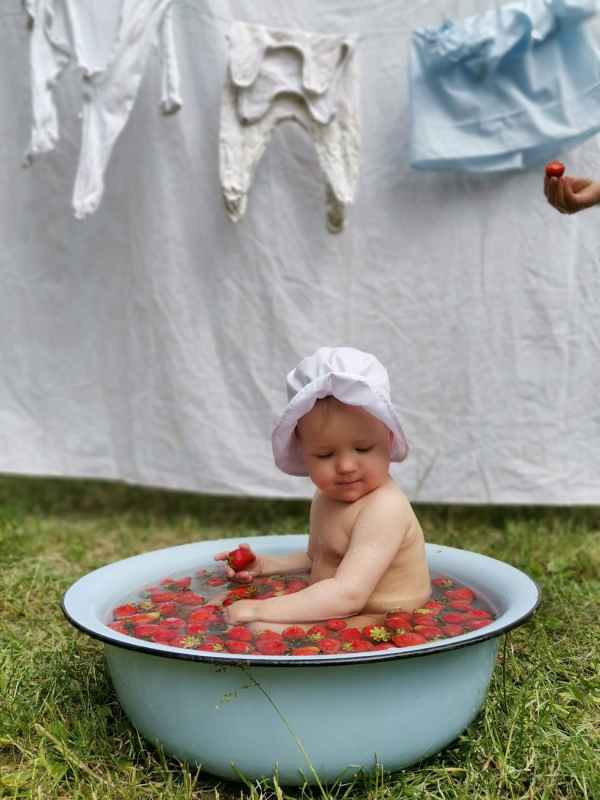
We were reviewing last week’s VBS at our church–sharing stories, “crunching” numbers, evaluating the various elements that made up each day… One of the phrases that came out of our various talks and meetings was that Bible School week had been “bathed in prayer.” What does that actually mean?

For me, it represents how prayer surrounded us– much like bath water.

  • It covered every part of our efforts– we prayed for the children who were registered– and those who came unexpectedly as guests. We prayed for the families of the children–those from our church, those from neighboring churches, and those who are unchurched. We prayed for all the volunteers– teens, adults, those who where there each day of VBS, and those who helped before and after with decorations, building, providing supplies and funding, advertising, etc. We prayed for each team– teaching, drama, singing, videography, sound and lights, registration, group leaders, science and crafts, snacks, sports and games, record-keeping, security, and more! We prayed weeks before VBS, and we are still praying that the seeds planted last week will grow and produce a harvest!
  • It flowed freely. We had organized prayer meetings, and spontaneous outbursts of prayer. We prayed in the “opportune moment” and in the planned schedule. Prayer was a consistent part of each day, but came in random bursts, as well. It came from staff, from volunteers, from children and retirees. Everyone can’t work at VBS– but everyone can pray!
  • It “cleansed” our efforts. It is easy to get side-tracked with the chaos and fol-de-rol of an event like Bible School. It is easy to lose focus and let stress, frustration, and even bitterness worm their way into our efforts. On the very first day, our registration and check-in system crashed– and this could have been a disaster. But we had prayed before; we prayed during our confusion, and we praised God that, system or no, HE knew who was there, where they should go, and how we should respond to THEM. We are in the middle of a construction project in our children’s wing– we had to plan around fewer classrooms available, and less indoor space. On the hottest week of the summer (so far) we had to hope that the weather would cooperate for our games. God provided cloud cover on at least two of the mornings, and overnight showers– we did not have to deal with heavy rains or the worst heat of the day on any of our days! And (at least partly) because we had prayed in advance, we were grateful instead of stressful about our circumstances, marveling at God’s provision.
  • Praying brings peace– like the clean and relaxed feeling you have after a good soak in the bath! And I hope that peace was reflected in the way we welcomed each child each day– in the way we listened, and in the way we spoke; in the way we encouraged, and in the way we taught; in the way we interacted with the children, and with the other volunteers.

We tend to “bathe” our “big concerns” in prayer. But what about our “little things?” What if we spent as much time praying about our next doctor appointment? Our next church service? Our next family outing?

We NEED prayer! Our efforts, without prayer, humility, and submission to the Spirit of the Lord, will be fruitless. With prayer, our lives, efforts, and plans will be clean, and bring Glory to God!

Just a thought– but if we bathed more things in prayer, we might just receive more “showers of blessing!”

Puppet Prayers

I spent last week helping out at Vacation Bible School. But most of the kids didn’t see me “working.” I was behind a curtain, helping with the puppet show. My puppet was a little boy named “JJ.” He was a hand puppet. Hand puppets are pretty simple to operate– you stick your hand inside the puppet, and move its mouth as you talk. There are also “hands” you can operate with your fingers to make the puppet clap or wave, etc. During the course of the week, “JJ” also had one “costume change”– he wore a simple plastic bag poncho, but he put it on backwards. “JJ” was the comic relief of the puppetry team! But his purpose was to expand on the Biblical principles we were teaching throughout the week. “JJ” learned about sin and its effects– often by example– and about God’s forgiveness. And he helped the younger kids review their daily Bible verse.

I have worked with puppets off and on over the years, especially during my time as a youth services librarian. Puppets help tell stories in an entertaining and engaging way. But puppets are merely tools. The same stories can be told using flannel cut-outs, or videos, or illustrated comic books. In fact, everything that “JJ” did was scripted. If he nodded, it was because the script said to nod. If he sang, the song was in the script. And when the puppet show was done for the day, “JJ” rode around in a canvas bag, lifeless and unused.

We use puppets at VBS to teach about Christian principles– but pursuing a Christian life is NOT about being a puppet. Many people reject Christ, because they believe that God is asking them to become puppets. They learn about concepts like the indwelling of the Holy Spirit, and it sounds to them as though God will “possess” them, and take away their free will and their ability to live life on “their” terms. But that is not what Jesus taught. Jesus was perfect in Righteousness– yet he clearly CHOSE to follow His Father’s instructions, and he did it using His own unique personality and style. Jesus did not parrot the words of God when He taught. He told stories– parables– that brought God’s laws and commands to life, and helped people understand them better. Jesus was no puppet. And He doesn’t ask us to be puppets, either. Instead, we are witnesses– telling our own stories, living our own lives–SHOWing others how Christ lives THROUGH us. God doesn’t want “tools” or mindless puppets. He wants a relationship with us that gives our unique experiences an eternal and sacred purpose.

Yes, in Christ, we become a “new creation.” (see 2 Corinthians 5:17) We see the world through a different lens; our minds are renewed (see Romans 12:2); we follow Christ’s example and walk in obedience to God. But we do so out of our desire to be closer to God– our desire to pursue the relationship that only God can offer us. The Holy Spirit indwells us; He doesn’t coerce us or take over our mind– rather, He helps us continue in our newness and progress toward greater Godliness!

It was fun to spend a week using “JJ” to help teach the daily lessons. But we had dozens of amazing volunteers who also made VBS memorable, fun, and, hopefully a life-changing week for the kids who came. There were the actors who did a daily skit; the singers who taught the kids vibrant songs and dance moves; the Bible teachers who explained deep issues with wonderful skill; the volunteers who taught science lessons and crafts that tied in with our daily themes; the food staff, who created treats that told a story; the sports team that provided games (and plenty of water on hot days!) and the group leaders, greeters, and security staff that ensured that the kids were welcomed, introduced to others, and kept safe. Each of us lived out the message of the Gospel– God’s love for each of His children!– in our unique ways.

One of the ways we served last week was in prayer. We prayed together as a team. We prayed in our small groups and areas, and we prayed with the kids. And each person’s prayer was unique. Some people get nervous about praying aloud in a group– others are eloquent speakers. But each person’s prayer shows their heart for God and others. In our puppet skit, JJ talked about wanting to pray with his “granny” after the skit. But the puppets never prayed. And I think that is appropriate. Prayer is not about a “script.” Prayer is not about someone else putting words in your mouth. Prayer doesn’t come from a hand or a finger moving us to speak. Prayer comes from the heart. And I hope the kids (and adults) last week were moved more by our prayers than by our puppets!

Miss Whitcomb

When I was in seventh grade, I had a teacher named Miss Whitcomb. She was notorious throughout the school system as the “toughest” teacher we would ever have. She was ruthless. She demanded absolute quiet, she did not grade “on a curve,” and she never smiled. She had an ongoing war with grape-flavored chewing gum and students who were three seconds late for class. She gave impossible assignments and offered little in the way of help, comfort, or guidance. She had a point system for behavior, and most students ended up earning detentions. Everyone dreaded her class. Many normally confident and competent students failed her class. They worried themselves into sleepless nights and second-guessing their own abilities.

I suffered through two years of Miss Whitcomb’s classes. I had her for American History, English, and introductory drafting class. She was exacting and frustrating. But I learned a lot. Her assignments often seemed impossible, but some of them were creative as well as challenging. I never learned to love Miss Whitcomb’s class, but I learned to survive it– and, while I can’t say I learned to like her, I learned to respect her.

Years later, I returned to my home town as a teacher. And Miss Whitcomb was my colleague. A new generation of students were suffering under Miss Whitcomb’s impossible demands, and many were sure they could petition the school administration to get her fired. They came to me seeking support. I wouldn’t give it. I told them I remembered how difficult her classes were, but that I felt that it was important that they experience tough teachers, like Miss Whitcomb, because they would often experience tough bosses or professors, and tough situations as adults; learning to survive Miss Whitcomb’s class would give them practice for tough times in the future. And I suggested that they look at her classes as a challenge to be faced, rather than a punishment to be feared.

I had a difficult time understanding why Miss Whitcomb was so “tough.” But I got an insight from an unexpected event. A group of high school students were going on a field trip to see the hit musical, “Les Miserables” at a local university theater. They needed chaperones, and I agreed to come, as it was a wonderful chance to see a national touring company perform a terrific play. Surprisingly, Miss Whitcomb also came as a chaperone. I never thought of musicals as “her thing,” but she had decided to give it a try. Of course, the students were terrified of her, and she ended up sitting on the far side of the group (but it was a much quieter ride up to the campus!)

The play was magnificent, but Miss Whitcomb was very disturbed by it. The next day, she tackled the teacher who had organized the trip to complain. Her complaint was not with the students or the performers. It was about the story itself! She was somewhat familiar with the novel’s plot, but seeing it “live,” she was bothered by the character of Javert, and his pursuit of the main character, Jean Valjean. In the story, Javert has spent the better part of 25 years tracking Valjean, an escaped convict. When he finally finds him, Valjean ends up saving his life. Javert cannot reconcile that the “criminal” he has been looking for– his enemy– has saved him. Miss Whitcomb so identified with Javert, that she found the story untenable.

Why was she so upset? Because Javert was “righteous.” He represented the law. His quest was legal–his foe, Valjean, HAD escaped from prison. He had every “right” to pursue him and force him to complete his extra sentence (Valjean had completed his original term). But Javert was the one, in the end, who needed to be saved. And Valjean, who had every reason to let Javert die, risked his life to save his arch-enemy. This was not how Miss Whitcomb viewed life. The righteous should be the saviors; the guilty should be punished, not celebrated. Miss Whitcomb understood right and wrong– but she had no room for grace or forgiveness.

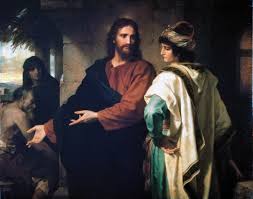
There is a Bible verse that has always caused me to be curious. Romans 5:8 is well known– “But God demonstrates His own love for us in this: while we were still sinners, Christ died for us.” But Romans 5:7 says, “Very rarely will anyone die for a righteous person, though for a good person someone might possibly dare to die.” (emphasis added) Paul is making a distinction that Jesus also often made–not everyone who is “righteous” is “good.” In Mark 10, Jesus is asked by a rich young ruler what he must do to inherit eternal life. The young man calls Jesus, “good teacher.” But before Jesus answers the question, he turns it back on the young man. “‘Why do you call me good,’ Jesus asked. ‘Only God is truly good” (v. 18). The rich young ruler does not want to know how to become “good.” He does not want to learn from Jesus. He merely wants to be judged as “good enough” to inherit eternal life. And he believes that he is “righteous” enough to have earned it.

Miss Whitcomb was a dedicated teacher. She was a “righteous” educator. But she never learned (or was able to teach) compassion, humility, or mercy. And that was a lesson her students missed. It is a lesson far greater than knowing U.S. History, or Government, or English grammar. I have heard from some of her adult education students that she was far less harsh with them. I hope this is true. She had a lot to give, and she suffered greatly from her own high standards and lack of compassion in relation to her younger students. I believe she had “good” intentions– that she believed her high standards were “right” and that any show of mercy was a weakness. But she missed out on so much– so many students who might have liked her better, and learned more from her–by putting righteousness ahead of mercy.

Photo by Ivan Samkov on Pexels.com

We serve a God who is BOTH– completely HOLY and Good, and Righteous, as well as merciful, gracious and compassionate. God forgives us without lowering His standards. He sent His Son to save us– While we were yet sinners! Romans 5 continues, “ Since we have now been justified by his blood, how much more shall we be saved from God’s wrath through him! For if, while we were God’s enemies, we were reconciled to him through the death of his Son, how much more, having been reconciled, shall we be saved through his life!” (Romans 5:9-10) We don’t have to be terrified of God. We don’t have to be constantly reminded of our past guilt and shame. We don’t have to fear that we will “fail” to please God if we choose to follow Him.

Blog at WordPress.com.

Up ↑