Prayer and Marriage

As a young girl, I prayed about being married. Most of my prayers were pretty shallow– more about the wedding than the marriage. I dreamed of dresses and decorations, flowers and a shadowy “prince charming” type of groom, whisking me off into the sunset and living happily, dreamily ever after.

The years went by…MANY years! I prayed and dreamed through my twenties; I prayed and hoped through my thirties; and I prayed with less hope and more desperation in my early forties! But my prayers changed as I saw marriages around me. I saw many marriages that were solid, even through tough times. And I saw many “fairy tale” marriages crumble. I saw a lot of heartbreak, anger, and tears, as people who had once vowed to love one another “’til death us do part” fought over furniture and who got the kids over minor holiday weekends. I heard from frustrated wives who felt like they had made a huge mistake, marrying the “man of their dreams.” Some of them compounded the mistake by looking around for a replacement “Mr. Right.”

Instead of praying about a wedding, I began praying about marriage. Instead of praying for “Mr. Right,” I started praying that God would help me become “Mrs. Right.” And I prayed that God would show me what I should do for others during the time that I was single, as well as what I could do for him in a marriage relationship.
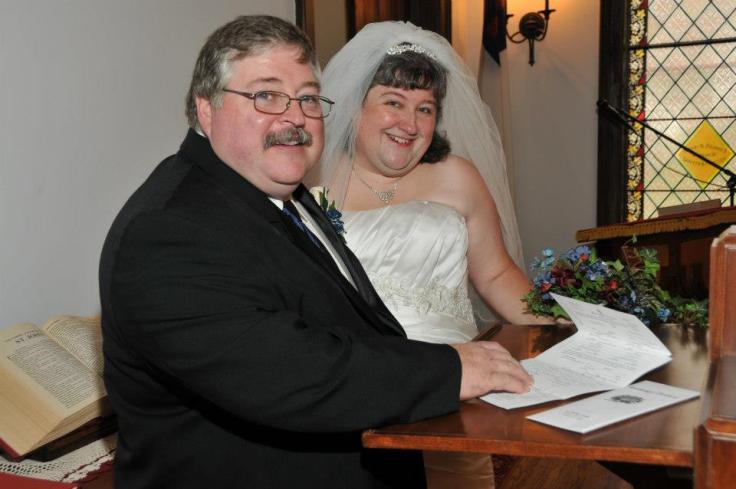
Thirteen years ago, I married my husband, David. He isn’t “Prince Charming,” though he can be charming and noble at times. He is, as I am, a flawed human being. David was married before, and he carries the hurt of betrayal and loss of trust from the past. I carry the hurt of being rejected and passed over for so many years. Marriage doesn’t make the past disappear. Marriage is not a “cure” for such hurts.

But marriage is more. God instituted marriage from the beginning for a man and woman to come together in a mysteriously intimate relationship that models what God’s love is like. (See Genesis 2:24; Matthew 19:5; Ephesians 5:31 and others.) David and I don’t exist to “complete” each other. We don’t cease to be our own individual selves. And yet, we are not the same as we were before our marriage. We are more than the sum of our parts– we are ourselves, yet we are one– the Fairs. He is David Fair, and I am Lila Fair, but WE are THE Fairs. And spiritually, we are also one WITH Christ– as individuals and as a couple. We walk forward as One. We make decisions together. We share hopes and dreams, as well as struggles and disappointments. We fight sometimes– not against each other, but against differences or misunderstandings that could weaken US as a couple and weaken our relationship with Christ.

I don’t pray any less often or less fervently now that I am married, but I pray daily about my marriage. I thank God that He was with me through all the “single” years. I thank God that He continues to work in our marriage– that David and I know more about love and faith, hope and fulfillment than we did 13 years ago! I pray that David and I will grow together for many years to come. I pray that we will impact our family as we live out what a Godly marriage is supposed to be. I pray that our marriage will inspire young men and women who are looking (as I once was) to see what a solid marriage involves– that the way we talk to each other, and behave, and work, and live will give hope to future couples, and glory to God.

Marriage and prayer go hand in hand. Prayer cannot guarantee that marriage will be easy–or even than it will survive. Marriage takes two people praying and walking in the same direction! But marriage–and life– without prayer will never be all that God intends it to be.

The Hand of God

We’ve been going through the book of Daniel. King Nebuchadnezzar played a prominent role in chapters one through four, but he suddenly disappears from the narrative, and a distant successor, Belshazzar, comes to prominence for the space of a single chapter. https://www.biblegateway.com/passage/?search=Daniel+5&version=ESV

The Book of Daniel is a series of stories, disjointed, and filled with signs and wonders. Many scholars and critics over the years have suggested that these stories cannot be true; that they are legends created centuries later and added as Jewish propaganda. The story of Belshazzar in chapter five was a perfect example, they claimed. There was no written evidence for the kingship of Belshazzar. The last king of Babylon was a man named Nabonidus, so how is it that this story assumes that Belshazzar was the king giving a feast on the very night Darius would invade and conquer the empire? Recent discoveries, however, show that Daniel is more accurate in detail than the ancient historians, who were writing about the “big picture.” (For more explanation, visit this site: https://creation.com/archaeology-belshazzar). Belshazzar would have been the ruler/crown prince/regent of Babylon on that night. Not only that, he would have been young, spoiled, and eager to establish his own authority and prominence. This fits with the actions and reactions of these two men–the fact that Belshazzar would casually raid the storehouses for golden goblets that had been untouched in the days of his more powerful predecessor; that he could only offer Daniel the position of “third highest ruler”; the fact that, while Daniel is not contemptuous, he shows less deference to this “king” than he did to Nebuchadnezzar. In fact, he refers more to the glories of Nebuchadnezzar and the judgments of God than he does to the current state of Babylon or ANY of its other rulers.

There is a huge time gap between the earlier chapters and this one. Nebuchadnezzar’s reign was long; his son and grandson reigned after him (though both their reigns were much shorter). Belshazzar’s father, Nabonidus, reigned for over 15 years before losing the empire. The young Daniel of chapters one and two is now likely to be in his 70s or 80s! He has served faithfully under at least five rulers, but he is still considered an “exile” (see verse 13 of chap. 5), a foreigner, and a captive. In Daniel’s life of faith, service, and prayer, he has seen the “hand of God” working in his life and in the lives of those around him. Daniel has learned to trust in God’s provision, to submit to God’s direction, and to wait expectantly for God’s wisdom.

Belshazzar is terrified of the “Hand of God” as it writes on the wall of his father’s royal palace. He is the son of privilege and mysticism–the Babylonians were known for using signs and wonders to plan campaigns, seek power and wealth, and predict success. Their gods were capricious and full of wrath. But Belshazzar had never been visited by the God of the Universe. He had never taken the time to “number his days”, or consider his ultimate destiny.

Compare the judgment of God against Belshazzar (Mene, Mene, Tekel, Peres–God has numbered the days of your reign and brought it to an end; you have been weighed in the scales and found wanting; your kingdom is divided and given to the Medes and Persians) with this psalm of Moses (Psalm 90) https://www.biblegateway.com/passage/?search=Psalm+90&version=NIV. Two take-away points:

  • Belshazzar’s days were numbered and he was found wanting. Daniel’s days were numbered, too. Daniel waited years, living as an exile and second-class citizen, serving kings and powers who ignored, or even scorned his God. Daniel’s life was prolonged, yet he continued to serve with no freedom or personal reward in sight. And his trials and oppression are not over yet! (There is a den of lions in Daniel’s future!) But God doesn’t look at our lives in terms of power, success, wealth, health, position, or another outward factor. God sees the small acts of service, the daily discipline of worship, the humble trust and dependence we place in Him. Daniel’s story has not been about accomplishment. Daniel never built anything; he never accumulated anything; he never preached mighty sermons or wrote beautiful songs of worship. And even though God used him to solve riddles, interpret dreams, and prophesy, Daniel had nothing to put on a scale. Yet he was not found wanting, as Belshazzar was.
  • Daniel was not afraid of the Hand of God because he had learned to number his own days (See Psalm 90: 12-17), and he was able to gain wisdom, satisfaction, peace, and hope in knowing that the Lord God would establish even the smallest works of Daniel’s hands and make him glad for as many days as he had been afflicted. May we pray for, praise, and pursue the Hand of God in our lives today.

From Fiery Furnace to “The Dew of Heaven”

God is all-powerful. He is sovereign over all the universe for all eternity. He is the King of Kings and the Lord of Lords. Yet, in His majesty, He is merciful; unwilling that any should perish.

In the book if Daniel, we encountered the familiar story of Shadrach, Meshach, and Abednego, who were thrown into a fiery furnace for failing to bow down to a giant statue commissioned by King Nebuchadnezzar. The mighty king of Babylon was an absolute ruler, and failure to obey one of his decrees could result in death. That it did not end in death for the three young men baffled and impressed their king. But it didn’t change him.

The very next story in the book of Daniel is one that is less familiar– it is another curious interjection into a book of (seemingly) disjointed stories. In chapter three, Daniel narrates his friends’ story, in which he is curiously absent. In chapter four, Nebuchadnezzar is the narrator, Daniel is one of the characters, and his three friends are never mentioned. (Because Nebuchadnezzar is narrating, he uses Daniel’s Babylonian name, Belteshazzar.)

The chapter begins almost as a mirror image of chapter 2, except the writing style is very different–more formalized, and written more as a proclamation. (https://biblia.com/bible/esv/Dan%204) Nebuchadnezzar is being troubled by a recurring dream. Once again, he calls in all the astrologers, sorcerers, etc., to interpret the dream. However (whether because Nebuchadnezzar is narrating, or because he has learned a little self-control), this time there are no threats involved, and when the lesser wise men fail, Nebuchadnezzar himself sends for Daniel, confident that Daniel can provide an answer. Nebuchadnezzar actually flatters Daniel as he asks for an interpretation, but Daniel is still cautious. This dream is more disturbing than the first, because it is more personal and immediate. God is warning Nebuchadnezzar directly that his pride has gotten out of control and God is about to step in a pronounce judgment on it. God will teach Nebuchadnezzar about humility by causing him to lose everything, including his mind!

Daniel carefully gives Nebuchadnezzar the interpretation and the warning from God, and adds his own wish that his king might escape punishment by humbling himself before the Almighty God. But in a year’s time, Nebuchadnezzar forgets. In the very act of praising himself, Nebuchadnezzar hears the voice of God, who drives him away from his kingdom, from society, and from rationality. For seven years, Nebuchadnezzar lives as a beast, eating grass, roaming outdoors, and covered with “the dew of heaven”. At the end of that time, he comes to his senses and is restored to his mighty kingdom a wiser, humbler, and grateful monarch.

What a contrast between these two rulers! Nebuchadnezzar demanded total loyalty and obedience. When it wasn’t given, the reaction was instant fury and a sentence of death. God is the One who ultimately deserves our total loyalty and obedience. When it isn’t given, the sentence is death (Romans 6:23a). But God, who has the complete authority to pronounce the death sentence, is more interested in deliverance than in destruction. Make no mistake, God will punish Sin; God will destroy those who persist in evil and rebel against Him. But God’s heart is reconciliation and redemption. God did not kill Nebuchadnezzar; He didn’t strike out at him in fury and cast him immediately into the fiery furnace of Hell–though He had the power and authority to do so. God had given Nebuchadnezzar his life, his power and his kingdom. He took it away. And then he restored it. God took away Nebuchadnezzar’s ability to reason– and he restored that too. And while Nebuchadnezzar was living as a brute beast– in the middle of his punishment– he was covered with “the dew of heaven.”

Curiously, this phrase, “the dew of heaven” is used all the way back in the book of Genesis. It is used by Isaac as he blesses his son Jacob (disguised as Esau). https://www.biblegateway.com/passage/?search=Genesis+27%3A+27-29&version=ESV Even as Jacob was practicing deception that would have dire consequences, God’s blessing was being poured out on him by his father. And centuries later, in his midst of punishment, Nebuchadnezzar was blessed by God, who provided for his needs, and ended up giving back all that had been lost because of Nebuchadnezzar’s pride.

God punishes– He punishes those He loves! He teaches, humbles, and disciplines. But He is not in the business of destruction. He was with Nebuchadnezzar throughout his period of madness and humiliation, ready to restore (and even increase) all that he had lost.

May we honor this God of grace and mercy– his mercies are greater than his wrath, and his grace is greater than all our sin! Nebuchadnezzar finally learned to praise, worship, honor, and obey the “Most High God.” May we do the same.

Daniel–Prayer Under Pressure (part 2)

Last time, we looked at the story from Daniel Chapter 2 (see text here:https://www.biblegateway.com/passage/?search=Daniel+2&version=ESV ) Daniel, his friends, and the entire court of magicians, sorcerers, wise men, and counselors of Babylon are under threat of death if they cannot tell the mighty Nebudchadnezzar the meaning of his dreams– dreams he refuses to disclose to them! The power and wrath of the king of Babylon is imposing. The threat is real and very dire.

But today, I want to focus a little more on the larger picture, just as Daniel was able to do so long ago.

Nebuchadnezzar looms large across all his empire– he is the supreme ruler, a despot, and a madman. But he is not God. Even as he strikes fear in the hearts of his counselors, he causes Daniel and his friends to seek help from a higher power. Already, the other learned men, sorcerers and astrologers have come to Daniel for help. Even though he is young, and a foreign captive, there is something about his character that has earned the respect of others in authority. Daniel could easily have become arrogant and proud. Or he could have folded under the pressure, knowing that he had no answers to give the king.

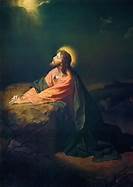
Instead, he did two key things– first, he asked for help from his friends. He asked for their support in prayer. Never discount the power of prayer– especially the prayers of others on your behalf. So often, we worry and wallow in our problems, waiting for God to work, praying in isolation and silent anguish. God wants us to seek His face; He wants to hear our prayers. But He also wants us to seek help and prayer support from those who are close to us. Even Jesus, in the Garden of Gethsemane, asked for support from His three closest friends. (https://www.biblegateway.com/passage/?search=mark+14%3A32-42&version=ESV) He went off alone to pray and pour out His deepest anguish, but He took His closest friends to “keep watch”. Daniel would face Nebuchadnezzar one-on-one, but he would not be “alone.” Not only would he know that God was with him, he would know that his caring friends were “keeping watch,” and providing faithful support. We should do the same.

In weight training, there is a practice called “spotting”, in which another person stands ready to help a weight lifter as s/he attempts to lift a heavier weight than normal. (https://en.wikipedia.org/wiki/Spotting_(weight_training)) Daniel is preparing to shoulder a big weight. He expects to face Nebuchadnezzar, and, while he doesn’t know (yet) the content of the king’s dreams, he knows that they are disturbing and mysterious. Whatever he says to the king, however tactfully he says it, his life (and the lives of many others) may be at stake. Spotters “keep watch”, and offer to step in and help if the weight is too great to bear. In this instance, Daniel’s friends were there, ready to help. They were not required to step up and face Nebuchadnezzar’s wrath. But their time will come soon enough! As Christians, we need to be prepared to be a Daniel– but we also need to be prepared to be a “spotter” for our brothers and sisters in the faith. We need to “keep watch,” ready to step in with prayer, action, and faithful support.

Secondly, Daniel waited with hope and expectation. The Bible does not tell us what Daniel prayed before God sent His answer, but it does record Daniel’s response to God’s vision. And his prayer is not one of selfish relief– “Thank you, God for giving me what I need to save me from the mighty Nebuchadnezzar…”–instead, Daniel rejoices in God Almighty; the one who causes kings to rise and fall, the one who gives wisdom and who knows the future. It is this God Daniel has trusted, and this God Daniel will honor when he goes in to meet with Nebuchadnezzar. It is this God who will deal with Nebuchadnezzar personally, proving once for all that He is the Almighty and Sovereign LORD. It is also this God who will rescue Daniel’s people from their exile and oppression– though Daniel himself will never return home–and restore their relationship with their TRUE king: God Himself.

Today, may we follow the good example of Daniel. Let’s share our concerns with others, and gladly offer to pray for each other, pray with each other, and “keep watch” for each other. And let us expect great things from our great and faithful God– even if we are living –and praying–under pressure!

Daniel–Prayer Under Pressure (Part 1)

In Chapter 2 of the Book of Daniel, there is an interesting story. Most often, students of the Bible focus on the prophetic meaning of Nebuchadnezzar’s dream. But I want to look at the context, and see what this story tells us of Daniel, his friends, his boss, and his God. (see text here: https://www.biblegateway.com/passage/?search=Daniel+2&version=NIV )

First, let’s look at the extraordinary presumption of Nebuchadnezzar. (God will deal with him severely a few chapters later!) The ruler of the vast Babylonian empire, Nebuchadnezzar’s word is absolute. His whims and moods control the destinies of all his courtiers, as well as all the people under his domain. Princes, satraps, governors, advisers, military leaders, and common citizens all live in fear of his absolute power, even as they try to curry favor and rise among the ranks.

Nebuchadnezzar is not (at this point) crazy; he is not a foolish man. He has led campaigns to destroy several strong enemies, and has wisely appointed a number of officials to administer his sprawling empire. Daniel (and his friends, Shadrach, Meshach, and Abednego) are among several captured youth who are being assimilated into this administration. But this story shows the beginning of Nebuchadnezzar’s descent into madness and humiliation. He has had a dream (some translations suggest it was a recurring nightmare) that disturbs him greatly. It has him agitated. It causes him to act in an irrational manner. He calls in all the magicians, enchanters, astrologers and sorcerers of the kingdom. He is desperate for answers.

We don’t know how many various men (or even women) were called in, but they represent all the best minds of the entire Babylonian empire. And Nebuchadnezzar wants the impossible–not only are they to correctly interpret his strange dream; they are to do it without any clue about what happened in it! As they try to reason with their king, he accuses them of wanting to mislead him, and threatens them with death and the destruction of their homes and families! This is a very real threat– the king’s word is absolute, and his wrath inescapable. Nebuchadnezzar’s bizarre actions and irrational fear are signs of much worse to come. As powerful as he is, the king is plagued by insecurities throughout his reign. Pleasing, or even appeasing such a man must be like constantly walking a tightrope.

The story seems to suggest that Daniel and his friends were not included in the first summons before Nebuchadnezzar. Perhaps they were still too young to be included; perhaps they were still in training. But it is clear that they will be included in the execution orders if they cannot please this tyrant. This marks the second trial faced by Daniel in his captivity, but it is the first time he comes to the forefront of Nebuchadnezzar’s notice. While the king raves and threatens his other counselors, he listens to Daniel’s plea for more time. In the end, he is awed by Daniel’s interpretation, by Daniel’s courage– and by the God Daniel serves.

It is not only Daniel’s wisdom and courage that are highlighted in this story. Daniel has a confidence and peace that Nebuchadnezzar lacks. Daniel calmly asks for more time. He asks for help from his friends before he proceeds. And when he recognizes the importance (and the danger) of the dream, he doesn’t respond with panic or theatrics. He very calmy presents God’s answer to the king and gives God the credit for everything. It wasn’t just Daniel’s amazing gift of prophecy and interpretation that saved the lives of all the other wise men, magicians, and counselors. It was his absolute trust that God was in control of the situation– both the current situation with Nebuchadnezzar, and the ongoing situation of Daniel’s captivity.

No matter what irrational situation we may face today, no matter what impossible task we are given; no matter who threatens us or makes ridiculous demands– God is more powerful. He causes kingdoms to rise and fall. He knows the future, and nothing is outside his control. Even the direst circumstances and most impossible situations can lead to opportunities …opportunities that showcase God’s omnipotence and sovereignty.

The Road to Hell…

I started down the boulevard,
Freshly paved, smooth and gleaming,
Its lanes clearly marked and a gentle rise
Toward a glorious horizon.

New construction sites caught my eye;
Here was progress– here was the future!
I drove on, excited in my new course,
Dreaming of destiny and fulfillment.

view of city street
Photo by IKRAM shaari on Pexels.com

Gradually, the scenery changed.
Construction gave way to abandoned projects:
Half-finished high-rises, silent storefronts,
Driveways leading nowhere, weedy parking lots.

Now the road, so smooth at the beginning,
Twisted and turned without purpose.
Gravel and broken pavement lined with
Abandoned cars and broken glass.

white and black house painting
Photo by Pixabay on Pexels.com

Frightening thoughts intruded–
I had seen no open stores, no gas stations,
No houses, or other cars for miles.  I was alone.
There were no crossroads; no places to turn around.

The road that had begun with so much promise
Was now a rutted path going nowhere.

photography of railway
Photo by MESSALA CIULLA on Pexels.com

I woke up in a cold sweat– it had been a dream.
More– it had been a warning.

I had “good intentions” for my journey.
But the easy road, the appearance of future success
Had lured me away from the path marked with suffering
And paved with ancient truths.

I had packed no maps, ignored the GPS, and trusted to “instinct”
To lead me, not to a fixed destination, but to “discovery.”

I drifted back to sleep, and dreamed that I was back at the beginning.
Roads branched out all around me.
The gleaming new boulevard no longer held any appeal.
But now I studied the other roads.

aerial photo of buildings and roads
Photo by Aleksejs Bergmanis on Pexels.com

There were so many; roads leading to “enlightenment”;
Roads offering “fame” and “immortality”;
Narrow paths promising “mysticism”;
Superhighways advertising “happiness.”

Off to the right, there was a tiny filling station–
The old fashioned kind, with a service man.
He offered to fill my tank, but then he said,
“They all end up in the same place, you know.”

abandoned business classic dirty
Photo by Pixabay on Pexels.com

I looked up into his eyes–eyes that held in them
The wisdom of the ages and boundless love.
“Enter in at the narrow gate…”
“I am the way, the truth, and the life…”
“This is the way, walk ye in it…”

He turned and walked through the back door
And I followed him down a sunlit path,
Up a small rise, and into glory.

landscape photo of pathway between green leaf trees
Photo by Skitterphoto on Pexels.com

“Thy Will Be Done”

At the age of 14 months, just after I had learned to walk well, and had learned to say “Mama” and “Da-da”, I became very ill.  Our doctor was baffled– I was tired and weak, I was losing weight, but I wasn’t carrying a fever.  It wasn’t any of the “usual” culprits– we did find out I was allergic to penicillin, but other antibiotics had no effect.  We tried a different doctor– he was also stumped, and all the while, I got weaker.  My desperate parents prayed for healing as the weeks went on.  I was too little to even describe any symptoms– I whimpered and slept; I ate very little, and became too weak to walk.

God was listening to my parents’ prayers, even though the situation seemed impossible and tragic, and God seemed silent and distant.  My mother, in the years since this incident, has shared with me the “breakthrough” moment for her– that moment when her prayers changed from “heal my little girl”, to “thy will be done.”  Not immediately, but shortly after that, the new doctor was inspired to look for another cause.  After some blood tests, he determined that my body wasn’t absorbing and processing protein.  As soon as I began a regimen of protein booster shots, my health began to improve.  I was still sickly as a child; I had immunity issues, and I was small for my age, but I was out of grave danger.  I had to relearn how to walk, and my return to solid foods (especially meat) was a gradual one.  I have no actual memory of these events, but I learned a valuable lesson about prayer.

Praying hands

When we pray “Thy will be done,” we sometimes think it is “our” will vs. “God’s” will… that God’s will is always opposed to ours; that it will lead to us losing whatever it is we are holding on to.  That may be the case, sometimes.  We grapple with God’s will, struggling and wrestling, like Jacob, until we are forced to give in.  Some of us limp our way to the altar of prayer.  But God’s will is not set in relation to ours– His will is His own.  It is higher than ours.  It is perfect and complete.  That doesn’t always make it pleasant, comfortable, or easy.  In my family’s case, it meant months of trips to get shots– every day for the first few weeks; every week for months afterwards, and every month after that until the time I started Kindergarten (a year later than I might have if I had been healthier).  For many, “Thy will be done,” means saying goodbye to a loved one.  Sometimes it means losing a limb, or letting go of a cherished dream.  But what we see; what we experience; these are mere moments in God’s plan for our eternity.  Like the booster shots I had to have as a child, they bring a momentary sting, and the fear of them may loom large, but in God’s plan, they bring us the opportunity for life and health and ultimately, triumph.

Sometimes God’s will means walking through the fire, or walking through the valley of the shadow of death.  Long before my birth and health scare, my mother had lost twins, and been a divorced mother of a young son.  She had already faced death and heartbreak and hardship.  After this incident, she would be hurt by my brother’s teenage rebellion, face depression, and go through health issues with my father before his death; but she would also gain another daughter and live to see grandchildren and great-grandchildren who brought her joy.  In my own life, I have faced the shattered dream of wanting children of my own. I struggled for years with singleness, when I wanted to be married and have a family.  But God’s will was for me to learn patience, compassion, and empathy for others who hurt in these areas.  And he has blessed me with a family I would never have imagined–not only the husband, step-children, and grandkids, but all the students and children I met through my careers in education and public libraries.

It is natural and easy to pray for what our will, our feelings, or our intuition tells us is best– healing for the sick (immediate healing is even better), success for our ventures and those of our families and friends, safety in travels and daily routines, prosperity, and happiness.  It is not wrong to want these things.  But it is better by far to remember that God is sovereign and good.  Giving him complete control over our situations is not weakness; it is not “giving up”.  Instead, it is investing our future– putting it in the hands of the one who holds tomorrow, and all of eternity!  It is trusting the one who is most trustworthy to make the most of our hours and days, our treasures and our dreams.

Even Jesus taught His disciples to pray “thy will be done on earth as it is in heaven” (Matthew 6:10b). But He didn’t just teach that phrase to His disciples– He prayed it Himself in the Garden of Gethsemane. “Father, if you are willing, take this cup from me; yet not my will, but yours be done” (Luke 22:42). Jesus knew he would face humiliation, torture, and death. He knew that He would take on the punishment for all the sins of the world– punishment He did not deserve– and that He would be subject to the full wrath of God. In His humanness, He was anguished to the point of sweating drops of blood. Yet He chose to pray, “Thy will be done.”

I have never been in that kind of anguish– even when I was so very sick or depressed about seemingly broken dreams. But I still find it difficult to fully surrender to God’s sovereign will when the future is in doubt, and when the present looks overwhelming. But growth and victory come when I let God take the reins and guide me through the valleys and wilderness walkways of life. His will is mysterious and sometimes scary, but He is always faithful. And I know that from experience.

My Hope is Built

We are in the midst of a revival week at my church. Our theme is Hope. So what does “hope” mean for the Christian?

Hope is more than just a dream or a wish or an expectation that something good might happen. Hope for the Christian is a confident expectation, based on God’s character and His promises. Hope is not a wispy airy thought; not a feeling that rides on circumstances or predictions. Hope is a future reality BUILT on a solid foundation.

But it must be built on a sure foundation. Hope that is centered on temporary or insubstantial things will itself be temporary and insubstantial. It will fade; it will founder; it will fail. But hope that is built on the eternal character of God will not disappoint us (see Romans 5:5). We may be shaken by circumstances; we may have questions about how or when our future will unfold– but we can have confidence in the final outcome. We can rest securely, even in the middle of the storms of life, knowing that God is in control; that God has a perfect plan and has the power to sustain us and to redeem our situation.

So where is my hope today? Is it being built, or is it flitting around in the clouds of whims and wishes and baseless dreams? When I pray today, will I have hope in God’s sovereignty, or will I hope in my own plans and my own strength?

1 Corinthians 13 ends with this statement: “And now these three remain: faith, hope and love. But the greatest of these is love.” We “love” to quote this verse, and others in the chapter, but the Apostle Paul ties Love to hope and faith. They work together. And notice that Paul doesn’t say these three exist, but that they “remain.” They are solid. They are eternal. They are the core of what makes us followers of Christ, who is the source of all three.

My Hope is Built. Just as a building takes time and stands the test of time, Hope is developed as I experience God’s faithfulness. And that comes as I continue to put my faith in God’s Sovereign control over my life and the lives of those I love. God is the master architect. What He builds will last. And I can Love with confidence and endurance, because it is anchored to a solid Hope that is built up in Faith. My hope is built on nothing less that Jesus’ Blood and Righteousness! On Christ the Solid Rock I STAND!

All I Want for Christmas…

Children are busily writing letters to Santa and making lists for their parents– “I want…” We’re listening to “Christmas Classics” on the radio– “All I Want for Christmas is My Two Front Teeth.” “All I Want for Christmas is You,” “I’ll be home for Christmas…Please have snow and mistletoe and presents on the tree…” “Christmas, Christmas time is here; time for toys and time for cheer. We’ve been good but we can’t last– Hurry, Christmas. Hurry fast!”

Advent is a time of expectation and hope. But it can also be a time of selfishness and greed. “I want…” “I’m dreaming…” Even if the things we want and wish for are not ‘bad’ things, we can get so caught up in the wanting and wishing, that we forget the deeper meaning and purpose– not just of Christmas, but of life! Life isn’t about getting things– even good or nice things. And Christmas, while it is a season of gifts, is primarily a season of giving.

Turning the radio to a Christian station, I can hear old familiar carols reminding me of the real reason for this season. “O Come, O Come, Emanuel!” “Joy to the World!” “Hark, the Herald Angels Sing–Glory to the Newborn King!” “What Can I Give Him, Poor As I Am?” “Yet In Thy Dark Streets Shineth the Everlasting Light…” “This, this is Christ the King; whom shepherds guard and angels sing.”

Even so, it is tempting to spend time this Advent season thinking and praying about all the things we want– noble things like Peace on Earth, Good Will to Men, and good things like health and happiness for our loved ones, and even selfish things, like a new toaster or a new pair of gloves. But what about what GOD wants this Christmas?

Photo by Wolf Art on Pexels.com

God wants us to enjoy the blessings He sends our way. But He also wants us to be grateful for the blessings we already have; the ones we have enjoyed (and even taken for granted) all year long. He wants us to take time in this busy season to reach out, not just with gifts and cookies and lights and greeting cards, but with compassion, warmth of heart, a willingness to listen, an invitation to share tears as well as joys, and efforts to heal old wounds and make peace right in our own families and neighborhoods. Christmas isn’t just about the baby in the manger– it’s about the Christ of the Cross, and the Return of Christ the Triumphant. And this is Our Advent season– awaiting and preparing for His Return!

There are many good things to “want” this Christmas. But all I really want is to be ready for His Coming– ready to receive His Grace, His Hope, His Joy, and to point others to “Thy Glorious Light!”

Praying For the Ashes

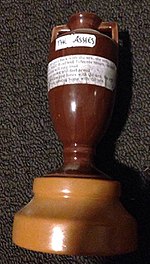
“Playing for the Ashes” may not be a familiar term to many. It refers to a Cricket Rivalry between England and Australia, dating back over 125 years. The term “the Ashes” was first used by a sports writer lamenting the loss of a Cricket match. The team from Australia had defeated the English team on its home soil, and the writer wrote a tongue-in-cheek “obituary.” Over the years, the two teams now play for a trophy shaped like an urn, which supposedly contains ashes of something related to the famous game. The rivalry is real, and the teams give their all to win each match “for the ashes.” But the trophy itself is little more than a joke. The phrase has come to mean playing all out for something that is already (figuratively) dead or worthless.

“Playing for the Ashes” is also the title of a mystery novel, in which a cricket player is murdered. I am not a Cricket fan, but I am a fan of mysteries, and in reading the book, I learned a little bit about a sport I have never followed. But the book builds on rivalry and the theme of investing one’s energy and dreams for “Ashes.” The main characters of the book have wasted their money, energy, and life force in the pursuit of power, revenge, fame, and status, only to find themselves losing everything they ever worked for. The book is very well written, and it made me think. But it also left me sad and somewhat empty at the end.

I began thinking about how various life pursuits might compared to playing for the ashes. I write about pursuing prayer, but what is my goal and aim? Am I pursuing prayer with the right goals? I may answer that it is part of my pursuit of living like Christ; that I want to grow closer to God; that I want to grow in my walk with Christ…any number of “Spiritual” answers. But is that always true?

How often do I spend my time playing for, and even PRAYING for “the ashes?” How many times do I try to “fix” things first, and only pray as a last resort? How many prayers are spent asking for things I “want” to happen, instead of seeking God’s will first? What dreams am I holding on to when I pray– unwilling to lay them on the altar? Am I praying in line with God’s will, or do I feel like prayer is a rivalry (either with God or with my circumstances)? Prayer IS a pursuit, but it is not a game or a rivalry. The “prize” of prayer is not getting the answers I want, or getting God’s “approval” of my desires. The “prize” is eternal, abundant life from– and with– the Father! It is not getting God “on my side”, but growing closer to the heart of God!

God wants to hear our requests and our desires– but He also wants to hear our desire to follow Him above all. We should be running for the true prize, not playing (or praying) for the ashes!

Blog at WordPress.com.

Up ↑