I grew up in a rambling, pre-1860s farmhouse in rural southwestern Michigan. We had a “Michigan basement”,” “– unfinished dirt floors, walls made of fieldstone and rocks, crudely cemented together, exposed floorboards and joists from the ground floor providing a ceiling. A rickety wooden stairway ended in a small cemented landing. It was a haven for dust and cobwebs, and everything in the basement had a grimy film of dust mixed with the residue of an old oil-burning furnace. It was littered with “dead” things– a rusted-out bicycle frame from the 1940s; a long-forgotten set of rattan patio furniture with mildewed pads and broken wicker bits sticking out underneath; a broken rake; and, in one corner, what looked like the skeleton of a small rodent. There was an old cabinet, formerly with two doors, now standing with one door hanging askew, and the other one missing all but half a hinge piece. Inside were old Mason jars, rimmed with lime deposits, holding nails, screws, nuts and bolts, and other odds and ends, and more Mason jars holding home-canned tomatoes from a garden of unknown vintage. There was a single 40-watt incandescent light bulb screwed into an ancient ceramic socket and mounted on one of the overhead floorboards, which did little to diminish the general sense of gloom and decay. There were four small windows–but they had long ago succumbed to grime and dirt from inside and out. It was the stuff of childhood nightmares.
Last week, we had a tornado warning, and one of my friends from church spoke of taking her children to the basement to wait out the weather. It reminded me of my own mother, gathering my sister and I– sometimes pulling us from our beds– and taking us to shelter in the basement until a storm had passed. My father often worked the night shift, and so the job was left to Mom to herd us into the southwest corner of the basement, being sure to bring a blanket and a flashlight, and make sure we were wearing slippers or shoes. She also had an old portable AM/FM radio, so we could listen to the weather bulletins amidst the gloom and dust and damp of the basement.
And yet–
My memories of going to the basement during a storm are not memories that inspire terror or disgust. I never wanted to visit the basement any other time, but during a storm, it was our “safe” place. The winds and rain and hail might rage outside, but we were warm and snug (sometimes too warm!) in our little corner. And no matter how frightened my mom may have been, she always reassured us that we would be safe together in that place. And then, she would lead us in prayer. We prayed that Dad would be safe at work. We prayed for anyone who was in the path of the storm. We prayed that God would protect our house. We prayed for those who were on the road, and for those who would have to go out after the storm to fix electric lines or rescue others. And we thanked God for our basement!
Sometimes, God uses grubby basements to be our “safe” place. What otherwise may seem like a scary situation can become a cause for praise and celebration when we remember that God is with us!
I think of the prophet Jeremiah, who was arrested and thrown into a cistern–a place far worse than our basement– but God caused him to be rescued (https://www.biblegateway.com/passage/?search=Jeremiah%2038&version=NIV). He went from the mud-filled cistern to the palace of the King! And even though Jeremiah faced many other trials and griefs, Jeremiah was able to write: “
I remember my affliction and my wandering, the bitterness and the gall. 20 I well remember them, and my soul is downcast within me. 21 Yet this I call to mind and therefore I have hope:
22 Because of the Lord’s great love we are not consumed, for his compassions never fail. 23 They are new every morning; great is your faithfulness. 24 I say to myself, “The Lord is my portion; therefore I will wait for him.” (Lamentations 3:19-24 NIV)
And I think of Paul and Silas in prison in Philippi (https://www.biblegateway.com/passage/?search=Acts%2016:16-34&version=ESV ). They sang and prayed after having been beaten and unfairly arrested. And they were trapped in the prison when an earthquake hit! But the end result was not only their vindication and freedom, but salvation for the Philippian jailor and his family!
There are seasons when we are forced to go to the basement–literally and figuratively. There are times when we must sit and wait in the dark and damp, uncertain of where the storm will hit or how long it will last. But often, in those basement moments, we find ourselves closer to God than when we climb mountains! God sits with us in the gloom. God has the power to turn our fear and uncertainty into praise and worship. And God will bring those memories of His comfort and strength back to us in other times of trouble.
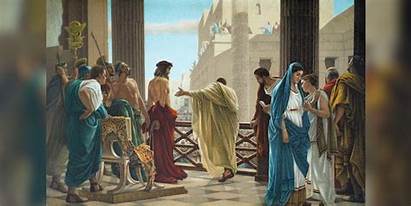
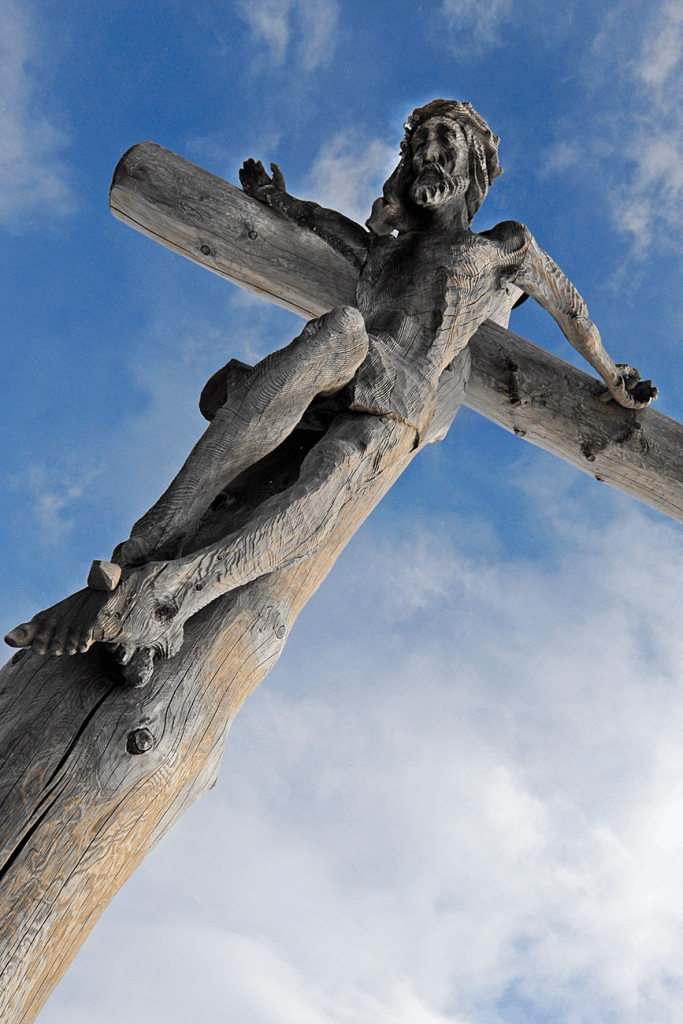
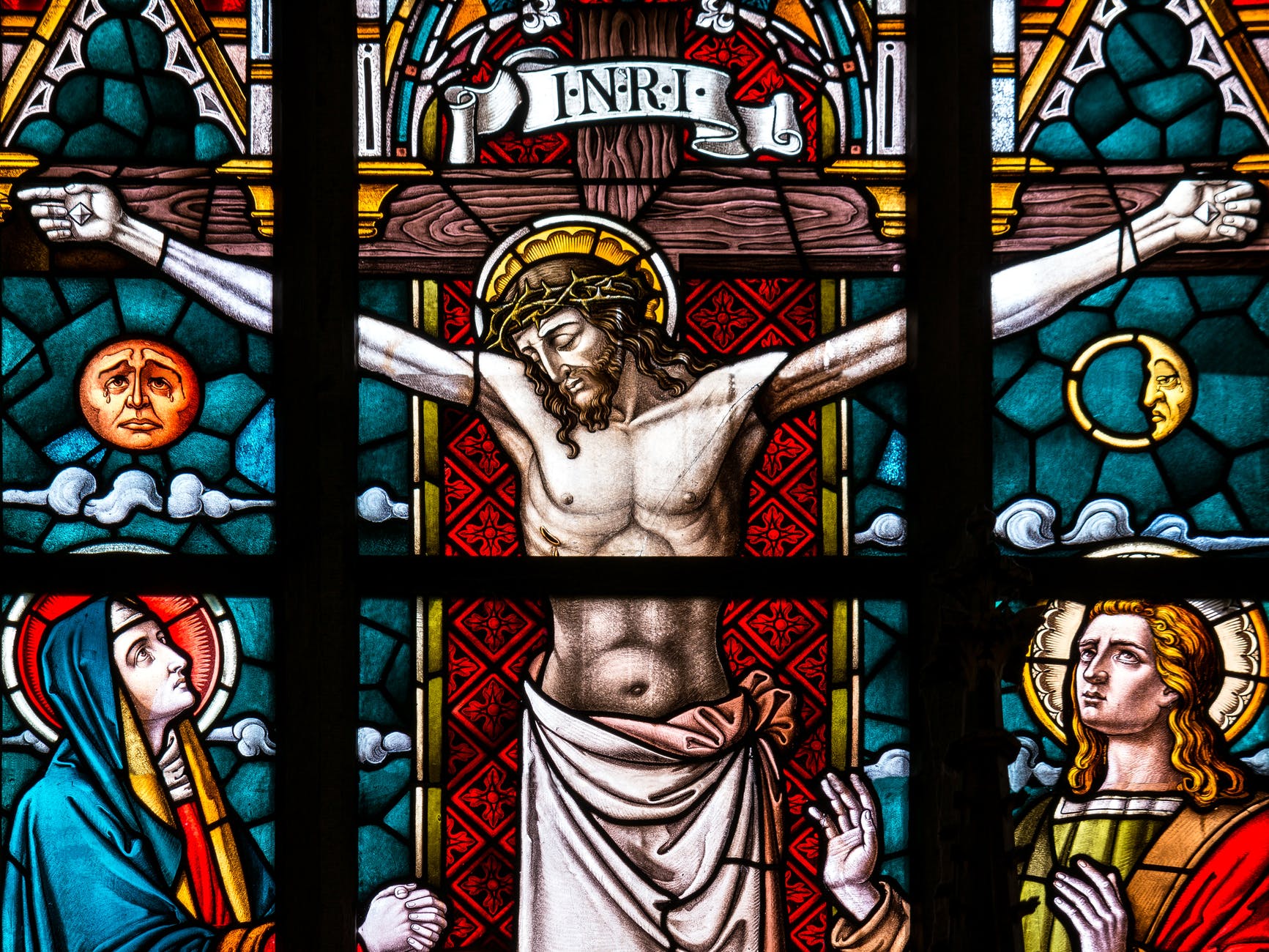
The events of Good Friday are well recorded in all four of the gospels, (see Matthew 27, Mark 15, Luke 23, and John 19 https://www.biblegateway.com/passage/?search=JOhn%2019&version=NIV ) but it is still difficult to imagine exactly what it must have been like that day. The first crow of the rooster came as Jesus was still on trial before the Sanhedrin, hours of questioning and betrayal that would continue as the sun rose and Jesus as passed on up the chain of power to Pontius Pilate for more questioning. The sun was still climbing as Jesus was beaten and paraded before the crowds. The swell of voices shouting for His execution would have echoed through the public square–“Crucify Him! Crucify Him!” “We have no king but Caesar!” The same taunting would continue as Jesus walked the long Via Dolorosa and came to Golgotha.
By nine that morning, Jesus, bloodied, whipped, exhausted, humiliated, betrayed, and struggling for every breath, was nailed to the cross. He was fully exposed to the bright morning sun, the heat, and all the stares of the angry mob who came to revel in His anguish. He was unable to wipe the blood or salty sweat that trickled from His brow and ran into His eyes; unable to swat away flies who buzzed around His face, elbows, or cheeks. He was unable to block out the noise–curses, curious questions, His Mother’s agonized cries, and, in the lull, the ordinary noises of a crowded city preparing for a celebration.
As noon approached, there would be the aromas of roasted lamb, market fish, baking bread. The crowds were quieter now, some may have left to seek out lunch or relief from the heat. But the heat and the sun disappeared as darkness rolled in. The angry energy gave way to fear and dread. The earlier shouting was now a an ominous rumbling among the remaining spectators. It was quiet enough to hear Jesus address His Mother and His disciple, John, and answer the thief on the neighboring cross, promising to see him in Paradise. It was possible to hear Jesus cry out later, His voice raspy and broken, but clearly in anguish, “Eloi, Elioi, lama sabachthani!?”
Perhaps it even got so quiet, as it sometimes does in darkness, that you could hear the three men on the crosses struggling to take each breath–their tortured muscled straining to lift their weight enough to get air past their parched lips and tongues–in and out, as distended muscles demanded more oxygen than their bodies could provide. Did the members of the crowd listen to their own heartbeats in those moments?
The unnatural darkness would have magnified the moment when Jesus, the Light of the World, breathed His last breath. And I imagine in the moment after that a silence so deafening, so complete, as the Word of God, the Creator of Life and Giver of Breath departed the Earth– as though all light and sound imploded at the loss. A split second only, but one so intensely silent that it must have taken the breath of every onlooker.
And then, the sound returned full-force– the Earth quaking, the skies crashing, Creation gasping, the Temple Veil ripping, and terrified people rediscovering their ability to cry out. Noise–piercing, and violent and sudden, bringing with it a return of the angry energy of before. But the energy is different now. Subdued. Nervous. Desperate. Empty…





 Pursuing Prayer