Hannah and the Priests

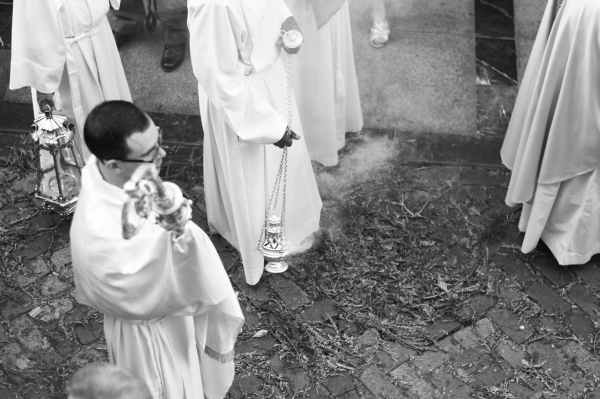
The story of Hannah in 1 Samuel is filled with priests. Her husband, Elkanah, is of the priestly class, and regularly goes to Shiloh to offer sacrifices. Chapter one quickly mentions Hophni and Phinehas who were the resident priests there. And of course, there is Eli, their father, the High Priest at that time. Hannah has access to counselors, spiritual guidance, and men whose ancestral calling is to bring people closer to God. Yet none of them can bring Hannah out of her anguish and offer comfort.

Hophni and Phinehas are noticeably absent in this story. The mention of their names calls attention to this absence. They were supposed to be the acting priests, but they don’t interact in any way with the grieving Hannah, or her husband, Elkanah. Further reading reveals that they were very wicked and due to be judged for abusing their priestly role. https://www.biblegateway.com/passage/?search=1+Samuel+2%3A12-36&version=NIV

Eli himself is a somewhat indifferent priest. The first mention of him is as the father of the wicked Hophni and Phinehas. Next, we find him sitting in a chair at the doorstep of the tabernacle. He is not serving; he is not overseeing; he is not doing anything. When he first observes Hannah, he jumps to a wrong and judgmental conclusion– that she is drunk and raving. He doesn’t go over to see if he’s right in his assumption. In fact, there is no mention in the passage that he ever rises from his chair.
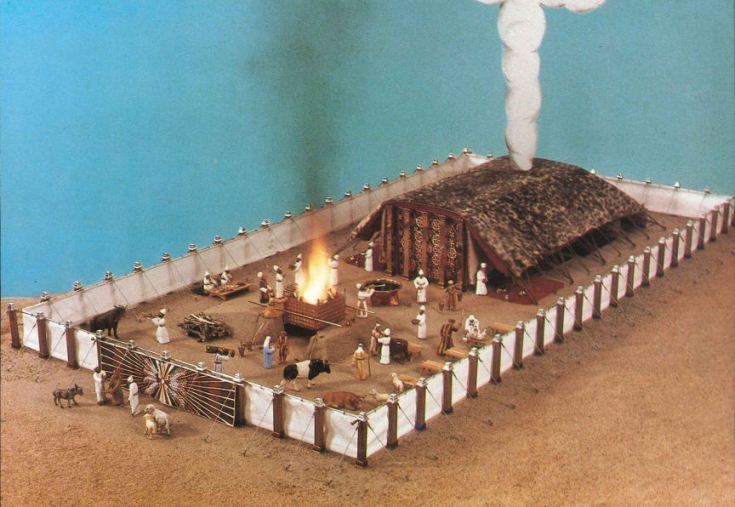
We might gloss over this passage, without grasping the importance of this detail. Nowhere in the long lists of a priest’s duties was there an option of sitting at the door and just watching people go in and out. The priests all had duties– some were in charge of the sacrifice (as Elkanah sometimes was). Others were in charge of the lamps, the incense, the care of the utensils and tools, offering prayers, singing, playing instruments, reading from the books of the law, and keeping the tabernacle clean and in good repair. None of them required sitting. Eli isn’t busy doing the work of the Lord; he is literally sitting down on the job.
In short, Eli is not a spiritual giant– he offers a standard blessing after Hannah pleads her case for not being a drunken disturber of the peace, but he doesn’t offer much in the way of true comfort or counseling. His first words to her are to “Go in peace.” The blessing seems to be almost an afterthought. Still, Hannah goes away encouraged, and comes back the next day to worship before returning home.

What can we learn from this encounter and these details in Hannah’s story?

One possible reaction is to become critical and dismissive of the clergy. I think this is the wrong reaction, but I want to address it in this context, because it can keep us from finding help and blessing if we let it. I know countless people who have walked away from the church because of one disappointing encounter with a minister, pastor’s wife, deacon, or fellow parishioner. Eli was not a stellar example of Israel’s priesthood; he was a flawed human. He had rebellious sons, and was likely depressed or anguished over his own troubles. Yet, he was still faithful to turn Hannah’s attention to the One who is always able to bring comfort and strength. Hannah could have chosen to focus on his rude and judgmental assumption about her, but she chose to focus on the hope he was able to offer.
I have gotten dismissive, even bad, advice from people in the church. I have been hurt, judged, and ignored by those who are supposed to be serving God. But just as God provides grace to cover our own failures and mis-steps, He asks us to extend forgiveness and grace to those–even those who serve Him.*

Having said that, I think there is a warning here for those who serve the Lord. Eli ends his days in tragic fashion, his family legacy in ruins, because of some of the details we glimpse even in this short passage about Hannah. Eventually, her son, Samuel, will be tasked with the job of delivering the fullness of God’s judgment against Eli and his sons. Eli’s priesthood was not a cushy position of sitting at the door of God’s tabernacle enjoying an afternoon breeze. He was in charge of setting the tone of reverence and worship for the nation. His sons were corrupt; everyone knew it, including Eli, but nothing was done about it. He sat there, and let evil happen around him.
Church workers, pastors, and priests who do evil and abuse their positions may get away with it for awhile, but God will not hold them guiltless. Nor will he hold those guiltless who cover up or deny the guilt of those around them. No matter how high the position, no matter how much “good” they have done, unless they repent of their actions, they will face God’s wrath over their evil acts.

Finally, we need to see Hannah’s response. Regardless of how evil the sons of Eli were, or how spineless Eli was as a parent and a High Priest, Hannah found faith– not in the priests– but in the God they served. She had seen the dedication of her husband, Elkanah. He served God with reverence, and he served his family with love and honor. She saw that Eli, even sitting down on the job, was still aware that hope and healing come from the Almighty.

I pray that today, we will be grateful to God for the faithful, imperfect servants he sends into our lives, and for his grace when we or others “sit down” on the job of serving others and showing Him the reverence He deserves.

Who was Hannah?

*Note: This is a repost of a series I did seven years ago. I have edited and added details since the first posting.

The Bible is an amazing book. It is a single narrative, but it is made up of several stories– even several different types of literature. There are stories that seem straightforward; others are clearly meant as parables or metaphors; still others are prophetic visions. Hannah’s story fits the first category. Hannah is to be understood as a real person living in a real time and place in history. She is also representative of a particular situation–she is childless in a society where a woman’s value is measured in her ability to bear children. She is loved by her husband but taunted and harassed by her husband’s other wife. She is consumed by grief and frustration. In our own time, she would likely have been diagnosed as clinically depressed.

I don’t know about anyone else, but I have a tendency to see Hannah through the rosy lenses of her eventual triumph. I know the end of the story. God answers her prayer, and her son, Samuel, becomes the last great judge of Israel. She makes an amazing sacrifice, sending her son away to live and learn at God’s temple, where she visits him once a year. But God gives her other children to comfort her. Her tormentor and rival, Peninnah, is silenced as Hannah’s grief and struggle turn to joy. I indulge her grief, because she “prays her way through it”, and gets the happy ending I think we all long for.

But Hannah’s story isn’t just about the outcome, and it isn’t a parable meant to show that earnest prayer will always result in getting what we desire. Hannah’s happy ending is not a guarantee or a promise for anyone else who suffers from grief or infertility (or both). I know this from experience, as I was barren. I wanted children; I prayed for the chance to have children. And while I now have stepchildren, they were adults before I married their father. I have step-grandchildren, but they just call me by my first name– they have other “grandmas” and “nanas”. I never had the opportunity to rock a little one to sleep or hear my own toddler call me “Mama.” And while our society doesn’t place the same value on childbearing as Hannah’s, nor use motherhood as a determiner of a woman’s worth, I know the sorrow of watching other women enjoy (or sometimes endure) the miracle of giving birth and nurturing their own offspring, knowing that it will never happen for me.

So, I’d like to take a closer look at Hannah– not as one of the “heroines” of the Bible, but as a woman in distress. And I’d like to focus on the others in her story. God doesn’t waste details, even if we don’t always understand why they are included. I think there are several hidden lessons in this story, and they reside in details we often skim or throw aside in the pursuit of the very real truth that God answers prayer.

To prepare for this journey, here is the text of Hannah’s tale:


1 Samuel 1 New International Version (NIV)
The Birth of Samuel
There was a certain man from Ramathaim, a Zuphite from the hill country of Ephraim, whose name was Elkanah son of Jeroham, the son of Elihu, the son of Tohu, the son of Zuph, an Ephraimite. He had two wives; one was called Hannah and the other Peninnah. Peninnah had children, but Hannah had none.
Year after year this man went up from his town to worship and sacrifice to the Lord Almighty at Shiloh, where Hophni and Phinehas, the two sons of Eli, were priests of the Lord. Whenever the day came for Elkanah to sacrifice, he would give portions of the meat to his wife Peninnah and to all her sons and daughters. But to Hannah he gave a double portion because he loved her, and the Lord had closed her womb. Because the Lord had closed Hannah’s womb, her rival kept provoking her in order to irritate her. This went on year after year. Whenever Hannah went up to the house of the Lord, her rival provoked her till she wept and would not eat. Her husband Elkanah would say to her, “Hannah, why are you weeping? Why don’t you eat? Why are you downhearted? Don’t I mean more to you than ten sons?”
Once when they had finished eating and drinking in Shiloh, Hannah stood up. Now Eli the priest was sitting on his chair by the doorpost of the Lord’s house. 10 In her deep anguish Hannah prayed to the Lord, weeping bitterly. 11 And she made a vow, saying, “Lord Almighty, if you will only look on your servant’s misery and remember me, and not forget your servant but give her a son, then I will give him to the Lord for all the days of his life, and no razor will ever be used on his head.”
12 As she kept on praying to the Lord, Eli observed her mouth. 13 Hannah was praying in her heart, and her lips were moving but her voice was not heard. Eli thought she was drunk 14 and said to her, “How long are you going to stay drunk? Put away your wine.”
15 “Not so, my lord,” Hannah replied, “I am a woman who is deeply troubled. I have not been drinking wine or beer; I was pouring out my soul to the Lord. 16 Do not take your servant for a wicked woman; I have been praying here out of my great anguish and grief.”
17 Eli answered, “Go in peace, and may the God of Israel grant you what you have asked of him.”
18 She said, “May your servant find favor in your eyes.” Then she went her way and ate something, and her face was no longer downcast.
19 Early the next morning they arose and worshiped before the Lord and then went back to their home at Ramah. Elkanah made love to his wife Hannah, and the Lord remembered her. 20 So in the course of time Hannah became pregnant and gave birth to a son. She named him Samuel, saying, “Because I asked the Lord for him.”

Taken from biblegateway.com

Lord, help us to read this story with new eyes. Help us to see how you work even in difficult circumstances and with imperfect people to bring hope and wisdom and salvation to a fallen world.

Next time: Hannah and Her Husband

Hannah and Her God

The story of Hannah is filled with a network of complex relationships– Hannah and her husband, her rival, her spiritual leaders, her son’s foster-parent, and the son she desired and yet gave away. But Hannah’s most complex and important relationship was with her God.

What can we learn by looking at this relationship?

  • Even when we don’t understand it, God has a plan, and it is always bigger than “us.” God closed Hannah’s womb– that was part of His plan. But it was not the end of the plan, or the point of the plan, or a hitch in the plan. Hannah’s barrenness was not a punishment for anything that she had done, but Hannah’s response to it (and the response of all the others) provides us with an example of faith, persistence, and obedience. Hannah didn’t know the end of her own story– she didn’t know that her son would play such an important role in the history of his nation or in the history of God’s ultimate plan of salvation for the human race. Hannah didn’t know her story would be contained in the pages of scriptures to encourage people centuries into the future. How would our response to current circumstances change if we considered that God may be using us them to bless, challenge, or encourage others through our stumbling steps of responding in faith? The results of our faith (or lack of faith) will have an impact far beyond just our immediate lives.
  • God is sovereign. Nothing happened to Hannah outside of God’s sight; nothing was beyond his control; nothing about this story took God by surprise. Hannah, even in her despair and frustration, could trust her all-knowing, all-seeing, all-powerful God.
  • God is more interested in our wholeness than our “happiness.” Our culture (and our selfish nature) tends to focus on our comfort, our accomplishments, and our happiness. When we are not happy, when we are frustrated in our goals, when we are restless or oppressed, we tend to think that God has turned His back on us. But it is often during times of grief, pain, loss, and darkness that we are stretched and reshaped to be stronger and wiser, growing closer to God and others. God doesn’t want us to wallow in despair and self-pity; but He will lead us through the very “valley of the shadow of death.” But, as Hannah experienced, God sees our sorrow, hears our cry, and answers our call.
Photo by Pixabay on Pexels.com
  • God is trustworthy and faithful. God knew Hannah’s heart. He knew her longing for a child. In Hannah’s case, He had caused her to be barren for a season, and then He gave her the desire of her heart and much more. But even if He had not given her a child of the womb, God gave her a loving husband, a compassionate (if imperfect) spiritual leader, a rival who could not triumph over her, and most of all, His presence and love.

Hannah’s Prayer

Then Hannah prayed and said:

“My heart rejoices in the Lord;

    in the Lord my horn[a] is lifted high.

My mouth boasts over my enemies,

    for I delight in your deliverance.

“There is no one holy like the Lord;

    there is no one besides you;

    there is no Rock like our God.

“Do not keep talking so proudly

    or let your mouth speak such arrogance,

for the Lord is a God who knows,

    and by him deeds are weighed.

“The bows of the warriors are broken,

    but those who stumbled are armed with strength.

Those who were full hire themselves out for food,

    but those who were hungry are hungry no more.

She who was barren has borne seven children,

    but she who has had many sons pines away.

“The Lord brings death and makes alive;

    he brings down to the grave and raises up.

The Lord sends poverty and wealth;

    he humbles and he exalts.

He raises the poor from the dust

    and lifts the needy from the ash heap;

he seats them with princes

    and has them inherit a throne of honor.

“For the foundations of the earth are the Lord’s;

    on them he has set the world.

He will guard the feet of his faithful servants,

    but the wicked will be silenced in the place of darkness.

“It is not by strength that one prevails;

10     those who oppose the Lord will be broken.

The Most High will thunder from heaven;

    the Lord will judge the ends of the earth.

“He will give strength to his king

    and exalt the horn of his anointed.”

1 Samuel 2:1-10 (NIV) taken from BibleGateway.com
Photo by Tookapic on Pexels.com

Blog at WordPress.com.

Up ↑