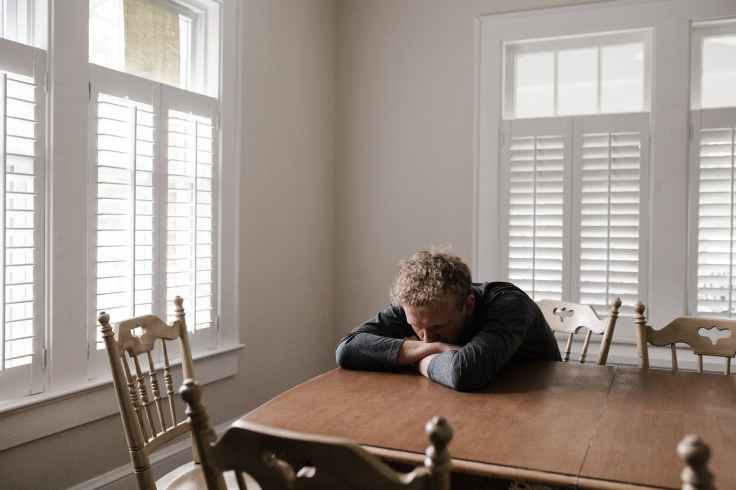
“Losing” a Loved One

Our family had a funeral this week. One of my mom’s cousins passed away. We are a close family– distance-wise, as well as emotionally close. So the funeral was huge…hundreds of people coming to pay their last respects. And most of us spouting the same old phrases and platitudes: “So sorry for your loss.” “She will be greatly missed.” “At least she’s not in pain anymore.” “It’s so hard to lose a loved one.”

Except– she’s not lost! She hasn’t gone missing. She died. And, because she is a believer, she is HOME! Yes, WE experience a sense of loss. We grieve and mourn her absence from us. And the pain and grief is very real. I still find myself grieving the “loss” of my dad after 25 years, and the more recent death of my mom earlier this year. But sorrow and grieving for us as Christians is tempered with hope, comfort, peace, and even joy and amazement. Linda, Mom, Dad, Grandma and Grandpa, and so many other precious believers are not Lost. They are not the victims of Death. In fact, as part of the funeral service, we were reminded of the words of the Apostle Paul in 1 Corinthians:

54 When the perishable has been clothed with the imperishable, and the mortal with immortality, then the saying that is written will come true: “Death has been swallowed up in victory.”
55 “Where, O death, is your victory?
    Where, O death, is your sting?”
56 The sting of death is sin, and the power of sin is the law. 57 But thanks be to God! He gives us the victory through our Lord Jesus Christ. 58 Therefore, my dear brothers and sisters, stand firm. Let nothing move you. Always give yourselves fully to the work of the Lord, because you know that your labor in the Lord is not in vain.

1 Corinthians 15:54-58

Yet Death does claim victims, and there are people who are “Lost,” who will be “greatly missed.” They are the ones who have died without hope, without peace, and without eternal life. In fact, many of them are still walking around– the living dead– the unsaved. I shed far more tears over those who are forever lost– those who will not accept the free gift of eternal life– than I will for those loved ones who have died in Christ. God welcomes us to be “found” in Him. He went to great lengths to defeat the power of Death, to bring true justice, and to shower us with Grace beyond our wildest imaginings. It is His gift to anyone who will trust Him. Yes, we will still taste death– and suffer pain and injustice, heartbreak and grief in this life. But these are the shadows. What comes after is the Light!

We shed some tears at the funeral this week, but we also laughed, hugged, sang, and said, “AMEN!” Linda ran the race, and she did not die (or live) in vain. She left a legacy of love and kindness that was celebrated this week. Heaven “gained” a loved one. And, while it hurts us not to be able to see her or laugh or sing with her right now, we know we will be reunited. And she is reunited with loved ones who have passed on before. But most of all, she is united with her Creator, her Redeemer, the Lover of her Soul, and her Lord. And ten thousand years from now, Linda will still be singing His praises!

Prays Hymn…

“Praise Him, Praise Him, Jesus our Blessed Redeemer…”
“Here I am to Worship. Here I am to bow down. Here I am to say that You’re my God…”

Have you prayed a hymn lately? Or maybe meditated on a single phrase from a recent worship chorus at Church? Music is often a language unto itself, and can be a great tool for prayer. Recently, I spoke of praying scripture. This is very similar, and in fact, many of the Psalms are both prayer AND scripture. There is something about music that can transcend words alone to communicate our thoughts, emotions, and even memory as we pray.

Just like praying scripture, there is also a temptation to use music to substitute for prayer, and we should seek to avoid that. But in general, music can be a great inspiration and addition to our pursuit of prayer. I find that hymns reach back through my memory to pull out great truths of faith that I can pray back to God, while newer worship choruses often capture emotions, including both praise and confession. At times, I have even used secular music, including love songs and the blues, to tap into emotions that I want to share with the One who loves me eternally and cheers me when no other can.

King David is the quintessential “singer/prayer” in the Bible, and his Psalms are wonderful to use. Many of them are still being put to new music and can be sung, as well as read or recited. But there are thousands of hymns, songs, choruses, cantatas, operatic masses, chants, raps, and more that can be presented as prayer. How?

  • Use whatever method fits you best– use the radio, an MP3, streaming service, CD, etc., to play a song, or sing it a capella; if you are a musician, you can play the song on your instrument and sing along or think of the lyrics as you play.
  • Go through one verse of the song over and over– or one line or phrase that has a particular meaning. Meditate on it before the one who inspired it. “A Mighty Fortress is our God…A Mighty Fortress are you, God… A bulwark never failing… NEVER failing…”
  • Do a “mash up” as you are singing one song another one may come to mind. Create a medley of personal worship. Some songs might even run into each other!
  • Don’t be afraid to add dance or movement. Clap along. Lift your hands. Sway.
  • If you are having trouble getting started, find a book of hymns or songs, or tune the radio to a station that plays good music.
  • Make up a song from your heart! Reach back into your memory for a children’s chorus (if you grew up in church). Change the lyrics to “redeem” a classic rock song (it sounds strange, but it is not impossible for most tunes!)
  • Make a joyful noise!– Don’t worry if you are not a great singer. God listens to your heart!


Guard Your Heart

Photo by Engin Akyurt on Pexels.com

Above all else, guard your heart, for everything you do flows from it.

Proverbs 4:23 NIV https://www.biblestudytools.com/proverbs/4-23.html

The world has a lot to say about hearts. We can be heartsick, heartbroken, half-hearted, all heart, hard-hearted, tender-hearted; we can lead with our heart or follow our heart, wear our heart on our sleeve, or have a change of heart. We can have a heart of gold, or a heart of stone. Our heart can be in the right place, or it can wander.

The Bible has a lot to say about our hearts as well. In Proverbs, we are told to guard our hearts above all else.

Our hearts are precious, but they are also fragile and fickle. Our hearts can be led astray, bruised, crushed, and hardened by sin– not just our own sin, but sins that are committed against us. And hardened hearts are not immune to damage– they don’t become stronger, just more rigid and brittle. We live in a world of damaged hearts. And damaged hearts are prone to damage other hearts.

God does not want us to lock up our hearts or wrap them in barbed wire, but He does want us to be watchful and active in protecting our hearts from the enemy. God created us with emotions, but not every emotion should be indulged or shared with others. We are told to rejoice with those who rejoice and mourn with those who mourn. But we are never told to encourage jealousy, anger, depression, envy, apathy, rage, boastfulness, or hatred. Letting these emotions control our actions can only lead to further pain, destruction, sorrow, and heartache.

We need to guard our hearts, not only from external threats, but from internal deception. We think we know our own hearts– we tend to trust them more than we trust God, or His Word, or the godly advice of friends or family. We act at the prompting of our emotions– sometimes in direct conflict with God’s Word and Wisdom, and to our shame and pain.

When we pray, God’s spirit can heal our heartache, and give us the strength of heart to reach out and heal others. But we must be careful not to attempt healing others in our own power and wisdom. Our heart may seem to be “in the right place,” but often, that’s how we got hurt in the first place!

Tender hearts, broken hearts, even hard hearts– God can heal them all and use them to heal others. That’s because God’s heart is perfect–and on Calvary, He poured it out to rescue you, redeem you, and restore you. In return, you can safely and confidently pour out your heart before God. He is your loving Father. He created your heart, and He can be trusted to protect it.

Mumbled Prayers

As I write this, I’m having an “off” day. I don’t feel well. I don’t particularly feel like worshipping or saying joyful prayers. I don’t even feel particularly like saying a prayer. But I will pray– even if it’s just a mumble or a groan.

God meets us where we are. He is not just the God of the joyful and productive; the “shiny, happy people,” or the ones who feel like overcomers. God is the God of the hurting; the God of the lonely; the God of those who are sad, tired, and feeling “off.” Of course, God doesn’t want me to go through life this way. I will have better days– days of accomplishments and celebration. But God does not leave me alone when I am grumpy, upset, or “blue.” He is right beside me, surrounding me with His presence. So I can mumble today, even if I sang yesterday or cry out in anguish tomorrow.

Prayer is a pursuit for every day– not just when we “feel like it” or when we are desperate for answers. It is a discipline. If I choose not to pray today, I may more easily choose not to pray tomorrow, or the next day. And God will still be waiting there, patiently, whether I mumble or give Him the “silent treatment.” Because prayer is more than just a pursuit and a discipline. It is part of a relationship. God already knows me intimately, but He wants ME to know HIM as well. And He wants me to know and experience His Love– even when I don’t feel it; even when I know I’m not very loveable. And that knowledge–that enduring relationship–will carry me through days like today. I can mumble, or whisper all the lies and sadness I feel on a particular day, but God’s presence will break through and wrap me in the cloak of Truth–the everlasting Truth of His Love and Faithfulness. Feelings will pass, but Faithfulness endures. And I pray to the God who is Eternally Faithful–even when I am temporarily feeling faithless and far away.

God is an expert at turning mumbles into melodies!

Promises to Keep

The month of June is “Anniversary Month” in much of my family. My parents and one set of grandparents were all married on June 1st. My brother and sister both celebrate anniversaries next week, as does my one of my brothers-in-law. Marriage is in trouble in our society– many marriages are ending in divorce, while others are choosing to wait longer before making a commitment or choosing not to marry at all.

Photo by Lombe K on Pexels.com

We tend to celebrate marriage as being all about feelings of love, but marriage is really about making and keeping promises. Two people stand before witnesses and take sacred oaths to be faithful, to love, honor, and cherish (and yipes! sometimes even to obey) one another for the rest of their lives. And most people who take such oaths do so with honest intent. Why, then, does it seem to be failing so often?

Photo by Asad Photo Maldives on Pexels.com

One of the reasons has to do with expectations. We expect the same giddy feelings of delight we have during courtship to carry us dreamily into the future. And we expect that the way we act during courtship will be the norm– the “happily ever after” fairy-tale life of story books and romance novels. We expect that we will always be the same as we are now: young, carefree, beautiful/handsome, and eager to please and be pleased by the boy/girl of our dreams… This is unrealistic. And even when we say we know better, we hang on to unrealistic expectations for our relationships, just as we do for other situations and circumstances. Even our “soulmates” can disappoint us, fail to understand us, suffer failures and setbacks, battle depression or addiction, lose their youth and good health, and even question their feelings for us.

Another related issue is that we usually take vows when we are young and our future looks bright. Circumstances can change; plans can fail. War, disease, financial ruin, the loss or miscarriage of a child or children, forced changes in living arrangements or work schedules– all can put enormous stress on a marriage.

But not all marriages crumble under the weight of unusual or unexpected circumstances. Some seem to erode slowly, even under “good” circumstances. Why?

One reason I’ve seen as I look around is a seeming inability to make and keep small promises. We make big, broad promises at a wedding– “for better or worse, richer or poorer, in sickness and in health..” “’til death us do part…” But we don’t promise to forgive him when he leaves the toilet seat up for the fifth time this week, or wait for her while she tries on every one of the six outfits she can’t decide on for the upcoming class reunion. We don’t promise to compromise on which family we will visit for Christmas each year, or what color we will have in the dining room. We think of marriage as a series of negotiations (which it IS), but ones in which one of us “wins” and the other “loses.” And if we consider that we are the “loser” in enough negotiations, we feel entitled to “break” our little promises.

Photo by Kindel Media on Pexels.com

Almost two years ago, my husband suffered an injury at work. He “punctured” his leg–the injury wasn’t huge, but it was deep, and on the back side of the leg, where he couldn’t see it. He knew it hurt, but thought it would heal up. Instead, it became infected. We had to go to the local wound clinic for several months, but between visits, I had to change the dressings, wash the wound, apply the various antibiotics and salves, redress the wound, etc.. David was still working full time, so the dressings would sometimes get sweaty and dirty on top of everything else. I promised to be faithful “in sickness and in health”– and that included washing out the pus-filled wound and caring for the pus-soaked dressings; it included wrapping his leg every other night for weeks. We went through hundreds of yards of gauze and anti-stick dressings, tubes of several different antibiotic salves, special compression socks, etc. Hundreds of dollars and hours later, his leg is slowly getting back to “normal.” During this same period, I was diagnosed with type 2 Diabetes. David has had to be patient with me as I learn to eat (and cook) differently. He has had to help me with glucose testing, dealing with low-sugar episodes, and put up with mood swings (even more than normal!).

And our health odyssey could be much worse– what about those who have to deal with cancer or dementia? But I think sometimes we minimize the commitment needed for the smaller, chronic conditions. The stress may be smaller, but it piles up, just the same. Our promises need to hold in the daily crises– big and small. And our promises need to hold when there is no crisis– and no adventure, either. Many marriages fall victim to “smooth sailing.” Things settle into a routine, and promises that were made to sustain the marriage in the face of “richer or poorer” fall apart in the settled comfort of middle class complacency. Vows take for “better or worse” fall apart in the “blah” and boredom of “good enough.”

Marriage is designed to be a picture of our relationship with Christ. As Christians, we are the “bride” of Christ! But we may need to review our vows and our commitment. Christ is eternally faithful; are we? In our flesh and our frail humanity, we cannot remain faithful on our own. But where are we? Have we lost our first love? Are we committed to Christ even in the midst of chronic illness or small setbacks? Are we flirting with the world because we have become “bored” with our Christian Walk? Has our joy been eroded by our failure to share our little stresses and secret sins with the Lover of our Soul?

Often, when we take a moment to remember our wedding day, we are reminded of the commitments we made, and the joy we felt on that special day. It can be bittersweet, if we have let circumstances or feelings pull us away from the one we love (or if they have moved away from their commitment). But it can be a wake-up call, as well, reminding us that promises made and promises kept are what leads to long-term joy and security. It can be helpful to take a few moments (or more) every once in awhile to remember when we came to Christ, and be reminded of the commitment we made– and the promises He has kept!

Read Jeremiah 31 for more about God’s “marriage” covenant with Israel

https://www.openbible.info/topics/the_bride_of_christ

Use the link above to read more about marriage in the context of Christ and the Church

Be Sure Your Sin Will Find You Out

Photo by Monstera on Pexels.com

When I was a child, my Mom used scripture to teach and correct me. One of her favorites was found in Numbers 32:23b “..you may be sure your sin will find you out.” This was a warning not to try to hide or excuse bad behavior. I could lie about cleaning my room, but sooner or later, Mom would find out. I could pretend to eat my peas at dinner, but sooner or later, my pile of uneaten veggies would show up as evidence. And I could be nice to my little sister around company, but that wouldn’t fool those who knew us well, or convince my sister that I wasn’t going to be bossy after they left. Most importantly, God would know what I did– and I would know that God knew!

Sin is more than just a simple action, or an accident. Sin is an infection–a poison. And it leaves traces, and scars, and has consequences– not just in actions or consequences, but in the shaping of our minds, attitudes, and character. Sin– concealed, denied, ignored, or excused–breeds and grows; it poisons our thoughts and emotions. Instead of reacting openly and honestly, we become defensive, secretive, paranoid, and apprehensive.

Photo by Meruyert Gonullu on Pexels.com

Praying involves communicating openly and honestly with God. Sin will get in the way of that communication. Not on God’s part– He is unchanging. But on our part– we will not be fully open with God. We will be suspicious of His goodness, and doubtful of His mercy. We will try to hide our guilt and our true motives. As early as the Garden of Eden, this is the pattern. Adam and Eve tried to hide from God after they had eaten the forbidden fruit. “Where are you?” asked God (Genesis 3:9). Certainly He knew where they were, and why they were hiding. But Adam replied, “…I was afraid because I was naked; so I hid.” (Genesis 3:10) When God asked Cain about his brother, Cain tried to cover-up the murder with distractions. “I don’t know. Am I my brother’s keeper?”(Genesis 4:9) God never asked Cain whether or not he was responsible for his brother. But God already knew that Cain had killed Abel; Cain’s attempts to redirect the conversation did nothing to hide his guilt– it merely confirmed that Sin had wormed its way into his thoughts and attitudes. Cain never asked for forgiveness. He never confessed to the murder of his brother. Instead, he received the punishment for his sin– banishment and isolation. Later, Cain’s descendants even bragged about their family history of murder and exile! (Genesis 4:23-24)

Photo by NEOSiAM 2021 on Pexels.com

Of all the people we might try to impress, God cannot be fooled by our false righteousness. He cannot be impressed or distracted by arguments or justifications. And He can’t ignore how Sin is poisoning us, and leading us toward death– both physical and spiritual death. Even “little” “secret” sins will infect our relationships– with God and with others– and cause us to grow emotionally and spiritually numb. Unfortunately, the poison of Sin can cause us to withdraw further from the very source of healing. We attempt to bargain with God; to justify or excuse our actions in our own eyes, asking Him to ignore our condition. We may even be defiant, knowing we deserve punishment, but doubting God’s willingness or ability to bring about justice. We march boldly in the opposite direction, doubling down on our bitterness, anger, or shame.

Photo by Karolina Grabowska on Pexels.com

We need to seek God’s mercy and grace through confession and repentance. God is faithful to forgive and eager to restore to us the joy of His salvation (Psalm 51:11) He will do what all our mind-games and excuse-making cannot do–He will remove our sins from us as far as the east is from the west (Psalm 103:12). And once the poison of Sin is drawn off, we can see and hear, think and act with a clear conscience, free of guilt and shame; free of secrets and excuses. We may still face the earthly consequences of our actions– punishment for things we’ve stolen or lives we’ve hurt, broken relationships or changed circumstances–but the eternal consequences of death and separation from God have been erased by the Blood of Christ and removed forever.

Photo by Akshar Dave on Pexels.com

And that will lead us to prayers of worship and thanksgiving, freely and joyfully raised!

For more discussion on this principle, see https://www.gotquestions.org/be-sure-your-sin-will-find-you-out.html

Looking at the Negative

(Please note: This is a re-post from a couple of years ago..)

Growing up in the age before digital cameras, I remember waiting for photos to be developed from a roll of film. We would drop off a roll at the pharmacy or photo shop, and pick up a package containing the prints and several strips of negatives from the original roll of film.

Photo by Pedro Sandrini on Pexels.com

I was fascinated by these negatives–images with the exact opposite of the prints– dark was light, light was dark, and everything seemed topsy-turvy. Sometimes things seemed creepy and even somewhat sinister–people with white hair and white pupils shining out of dark eyes; icy trees against a dark sky.

Photo by David Bartus on Pexels.com

Of course, the negatives were not the prints, nor were they intended to be the finished product. The negatives were included so that new prints could be made at a later time. We didn’t put the negatives in our photo album; we hid them away in a dark place, out of sight and far from the light. Most of them eventually got ruined or degraded over time, while the photos they produced were preserved and cherished.

Photo by Lisa Fotios on Pexels.com

Life holds a lot of “negatives”– negative experiences, negative emotions, negative thoughts, bad memories, scars–we all have them. But we are given the opportunity to produce something positive out of even the most negative of circumstances. It’s what God does– His light shines in the darkness and changes our view.

But we need to be exposed to the truth, and developed by faith, just like film. And we need to come back into the light, not as a negative, but as a faithful image of what (and who) God intends us to be.

Photo by Johan De Jager on Pexels.com

The world is full of negatives– distorted images and situations caused by exposure to sin, pain, grief, anger, bitterness, and hatred. We can dwell on such images, and fill our days staring at the negatives, never seeing the reality of what God has done all around us. Or we can allow God to develop the negatives in our life and create albums of God’s Grace–filling our eyes and minds with the truth and beauty that comes only from our Loving Father.

Philippians 4:6-8 NIV

Do not be anxious about anything, but in every situation, by prayer and petition, with thanksgiving, present your requests to God. And the peace of God, which transcends all understanding, will guard your hearts and your minds in Christ Jesus. Finally, brothers and sisters, whatever is true, whatever is noble, whatever is right, whatever is pure, whatever is lovely, whatever is admirable—if anything is excellent or praiseworthy—think about such things. (taken from bible.com)

Someday, God will finish destroying all the “negatives” in this fallen world, and reveal His full Glory. What a sight that will be!

Photo by Stijn Dijkstra on Pexels.com

Selective Hearing

Ninety years ago today, my grandparents were married in a small ceremony in Elkhart, Indiana. Thirty-one years later, my parents were married in another small ceremony in Cassopolis, Michigan. My grandparents were married almost 63 years before my grandmother passed away. My parents were married over 35 years before my dad passed. My mother, when I was preparing to marry, passed on some of the advice she had received from her grandparents (who were married over 50 years themselves!) . It involved what my great-grandmother called “selective hearing.”

Photo by Kevin Malik on Pexels.com

My great-grandmother, my grandfather, and my mother were all “fussers.” They tended to fret and stew over little things. They liked to “vent” their feelings in the moment when they felt them. Their spouses learned to listen without comment, or even walk away and let their partners “get it out of their system.” Later, they could have a calmer discussion if the situation warranted it. Similarly, if the “fretting” partner was impatient about something, the other would sometimes selectively “ignore” a summons or critical remark. It wasn’t that they were bad listeners– in fact they were excellent listeners–but they learned the wisdom of not immediately responding or reacting to things said in moments of emotion or frustration. They were listening beyond just the words that were being spoken– especially when the words were many and emotional!

Photo by Alex Green on Pexels.com

God is always listening to us. He hears our every cry for help, and also all of our complaints! In His wisdom, He also practices “selective hearing.” He may sometimes seem silent or even indifferent; but often He is letting us “talk it out of our system.” He remains with us, ready to give us the help we need, but not willing to indulge our emotional tirades or snits.

Photo by Andrea Piacquadio on Pexels.com

One of the greatest examples of this can be found in the Psalms. David (and other psalmists) often poured out all their fears and frustrations– “where are you, God?,” “why do the wicked prosper?,” “when will you rescue me?” Amazingly, many of their complaints and questions are not answered with a specific action. Yet these same psalms end with hope and assurance–as the psalmist “talks it out,” he is reminded of God’s essential character and faithfulness through the years. God’s steady and gentle presence, though silent, communicates His commitment and Love.

I tend to be a “fretter,” and my loving husband has learned to have “selective hearing” around me. His faithful presence and willingness to let me “talk it out” without judgment and recrimination is very freeing. David very seldom “frets,” but when he does, I am learning to respond with wisdom and selectively hear what is in his heart, and not just what comes out of his mouth in a moment of frustration.

Photo by Leah Kelley on Pexels.com

I am so thankful for the wisdom of God (and the wisdom of my husband), that doesn’t immediately jump into my occasional emotional whirlpool, but waits to pull me out and set me on calmer, solid ground! I am grateful for God’s “selective hearing!”

Fearfully and Wonderfully Made

I just finished reading a book about atheism– or more accurately, a book about the unreasonableness and faulty logic of modern atheism as espoused by many scientists and philosophers. https://www.goodreads.com/book/show/56614922-is-atheism-dead One of the arguments concerns the view, held by many atheists, that life exists only in the material– in other words, that only “matter” “matters.” They argue against the existence of the soul, or the uniqueness of mankind in relation to other living things. There is nothing beyond science and whatever science can explain. Therefore, there is no God. If there is no God, and we were not created in His image, they argue, then there is no Heaven or Hell, and nothing beyond what we can experience with our senses. There is no purpose for our lives; no consequences for our thoughts or actions; no higher power or authority than our own. We are simply a product of the evolutionary process and a sum of our material components. Our thoughts are simply products of brainwaves firing in a certain pattern; our emotions conditioned and triggered by no more than a series of chemical and physical reactions to stimuli.

Photo by Pixabay on Pexels.com

It is not my intention to argue or take the time to explain in the same detail that was in the book I finished, but I was struck by one of the points the author made. Without a belief in the God of creation, it is illogical and inexplicable that we should be affected emotionally by ANYTHING outside of the realm of material experience and scientific study. That means that we cannot fully explain or appreciate art, music, the grandeur of the night sky, the softness and warmth of a baby’s cheek, the thrill of a perfect sunset, the memory-evoking smell of a loved-one’s perfume or after-shave…our senses should not “move” our emotions. We can analyze a piece of artwork– it’s color or composition, the balance of light and dark, or the perfection of its perspective. But we cannot explain why it is “art,” or why it “speaks” to us (or turns us off!) We can discuss sound waves and tonality in music, but we cannot explain why certain songs move us to tears or cheer our spirits. We cannot say what makes a poem “connect” to something in our psyche, such that its lines come to us almost unbidden in times of distress.

Photo by Aron Visuals on Pexels.com

But all of this makes amazing sense in a world where God exists– a God that is the Author of Creation; of Glory; of Compassion and Wonder. God not only exists– He makes Himself known in the music of a waterfall, in the gentle fall of snowflakes, in the scent of lilacs, and in the smile of someone we love. And He has given us the ability to feel awe, and to strive to add beauty, art, and meaning to the world around us. This is unique among His creation. Birds sing; dogs romp and play; flowers bloom– but they do not fall to their knees in worship; they do not compose sonnets or build cathedrals in acts of sheer adoration. They are not moved to tears or stunned into silence by sun glinting on a spider’s web– even the spider ignores the beauty of its own functional creation.

Photo by Chase McBride on Pexels.com

We are fearfully and wonderfully made–and wonder-ful-ly made! Today is a great day to look and listen for God’s glorious touches all around us. And it’s a great day to reflect back to Him all the wonder and glory of Who He Is in praise!

The heavens declare the glory of God; and the firmament sheweth his handywork.  Day unto day uttereth speech, and night unto night sheweth knowledge. There is no speech nor language, where their voice is not heard. Their line is gone out through all the earth, and their words to the end of the world. In them hath he set a tabernacle for the sun, which is as a bridegroom coming out of his chamber, and rejoiceth as a strong man to run a race. His going forth is from the end of the heaven, and his circuit unto the ends of it: and there is nothing hid from the heat thereof.

Psalm 19:1-6
Photo by Pixabay on Pexels.com

Abide With Me

Often, when I pray for those who are in pain or grief, I will ask, “God, BE WITH…” This is a natural desire, but in one sense, it is also superfluous. God is always with us; always present, no matter our circumstances.

So when I ask God to “be with” someone, I am not really asking that He stop whatever else He is doing and go to that person. He is already there. I’m not asking Him to become aware of their heartache or suffering; He already knows. I’m not asking that He do something new or different from His will or His plan. What I am asking is that His presence would be revealed in and through the situation– that my friend or loved one (or stranger whose needs have been brought to my attention) would have a supernatural sense of God’s abiding, powerful, compassion and grace.

Photo by cottonbro on Pexels.com

Intellectually, I can know that God is omnipresent and omniscient. I “know” that God is always with me. The Bible is filled with God’s promises to “be with” His people. (See https://www.biblestudytools.com/bible-study/topical-studies/beautiful-verses-to-remind-you-that-god-is-with-us.html) But I also know, emotionally and experientially, that I don’t always feel His presence. I have moments of doubt and despair– I think all of us do. That’s part of the curse of Sin–being separated from the awareness of God’s continual presence. Even Jesus, as He was dying, felt the awful anguish of being separated from the Father, crying out, “Eloi, Eloi, lema sabachthani?” which means, “My God, my God, why have you forsaken me?” (Mark 15:34)

Photo by Alem Su00e1nchez on Pexels.com

God promises each believer that He (through His Holy Spirit) will dwell with us. He will “abide” with us. But just like living with a spouse and other members of a family, there are times when His presence seems to be in another room; and we feel alone. There may be many reasons for this– sometimes, it is because we have walked away, or turned our face away. But at other times, we long for that closeness, that awareness that God is right beside us, only to feel that He is far away. As strong as that feeling may be, we need to remember that it is NOT the reality. God still abides with us. He is still present, even if He is silent.

Photo by Liza Summer on Pexels.com

So, when I know that feeling, or when I know someone else is going through that feeling, I pray, not that God will come to us, or come back from being away, but that our awareness of God’s presence and closeness will be deepened or reignited.

Photo by Artem Beliaikin on Pexels.com

Someday, I won’t have to pray that prayer. Someday, and for all eternity, we will be surrounded by God’s Glorious Presence. But in this fallen world, what a privilege and hope to be able to pray to a God that abides with us!

Blog at WordPress.com.

Up ↑