
1 There was a certain man from Ramathaim, a Zuphite from the hill country of Ephraim, whose name was Elkanah son of Jeroham, the son of Elihu, the son of Tohu, the son of Zuph, an Ephraimite. 2 He had two wives; one was called Hannah and the other Peninnah. Peninnah had children, but Hannah had none.
3 Year after year this man went up from his town to worship and sacrifice to the Lord Almighty at Shiloh, where Hophni and Phinehas, the two sons of Eli, were priests of the Lord. 4 Whenever the day came for Elkanah to sacrifice, he would give portions of the meat to his wife Peninnah and to all her sons and daughters. 5 But to Hannah he gave a double portion because he loved her, and the Lord had closed her womb. 6 Because the Lord had closed Hannah’s womb, her rival kept provoking her in order to irritate her. 7 This went on year after year. Whenever Hannah went up to the house of the Lord, her rival provoked her till she wept and would not eat. 8 Her husband Elkanah would say to her, “Hannah, why are you weeping? Why don’t you eat? Why are you downhearted? Don’t I mean more to you than ten sons?”
We don’t normally spend much time studying Samuel’s father, Elkanah. Yet the story of Hannah and Samuel begins with this man. Not only that, but it begins with a lesson in his genealogy and heritage. We learn that Elkanah was from Ramathaim (a town in the hill country of the tribal lands of Ephraim). As a Zuphite, however, Elkanah (and thus his son, Samuel) were also descended from the Kohathites, and were of the Levitical priestly line.

Hannah was one of two wives of Elkanah. We don’t know why Elkanah had two wives, but we know that the other wife, Peninnah, had children; likely several (see verse 4). Hannah, however, was barren– and this was “because the Lord had closed her womb.” There is nothing to indicate that this a result of any sin on the part of Hannah or Elkanah–there is no reason given for God’s decision to keep Hannah from becoming a mother. There is also no reason to believe that Elkanah was angry or disappointed or embarrassed by Hannah’s condition. In the society of that time, a man could divorce his wife for minor offenses; in this society, barrenness would be seen as a major defect, a stigma, and grounds for divorce. Hannah faced the possibility of rejection, abandonment, and condemnation from her husband. Yet Elkanah loved Hannah, and honored her with a double portion for their yearly offering.
Even with a loving and supportive husband, however, Hannah is inconsolable. And it is here that I think many of do a disservice to Elkanah. The Bible tells us that Peninnah taunted Hannah and drove her to tears. When she would not eat, Elkanah asked some basic questions. Why are you weeping? Why don’t you eat? Why are you downhearted? and the one that always makes me cringe– Don’t I mean more to you than ten sons?

These questions always bothered me. It seemed to me that Elkanah was either clueless or in denial about the bitter rivalry going on under his very roof. And his questions seemed to underline his ignorance.
A closer look at the context, however shows that Elkanah may be more a victim of our modern cultural understanding than a victim of any deficiencies as a husband. It says on the day that Elkanah was to sacrifice– an indication that he was inside the tabernacle and on duty –that Peninnah was taunting Hannah. If Elkanah was ignorant of the torment Hannah faced, it may very well be that it was being kept from him by Hannah herself.
As a woman, I’m also guilty of expecting that my husband will “pick up” on non-verbal clues, or otherwise intuitively “understand” why I am depressed, or tired, or angry. Husbands, as loving and attentive as they may be, are not mind readers, and I have been guilty of making mine play a frustrating guessing game as he seeks to offer help. Men are also more likely to start by asking questions to “get to the root” of the problem, when we are seeking comfort and understanding, before we seek a solution. Elkanah and Hannah are no different in this respect than most of us today. Hannah is not a superwoman–she cries at the party and won’t eat. Elkanah is not a superman–he can’t “fix” Hannah’s sadness, nor can he feel the total depth of her despair.
Finally, Elkanah asks a question that gives us a window into his own secret anguish. “Don’t I mean more to you than ten sons?”
I want to rest here for a minute. I think we tend to get caught up in the words, and miss the heart of this plea. What is he really expressing? I don’t think Elkanah is trying to exaggerate his worth, nor is he trying to minimize Hannah’s desperation. But there is a heartfelt cry to be “enough.”
So many times, when we face infertility, miscarriage, or the loss of a child, we focus on the mother’s feelings of loss and emptiness. In this story, we look at Hannah as being an outsider in her own family– the wife who “can’t”–the one who is in distress. Elkanah’s question may even seem insensitive and arrogant. Listen to it again, though, and you can hear the broken heart of a man who loves his wife, even as she is pulling away and allowing her grief to consume her. “Don’t I mean more to you?” “Am I not enough to keep you from despair?” Yes, Elkanah has children with Peninnah, but he longs for happiness and fulfillment in his relationship with Hannah. The Bible never says how many children Peninnah had, but it seems clear that in Elkanah’s eyes, Hannah was worth far more than “ten sons.”
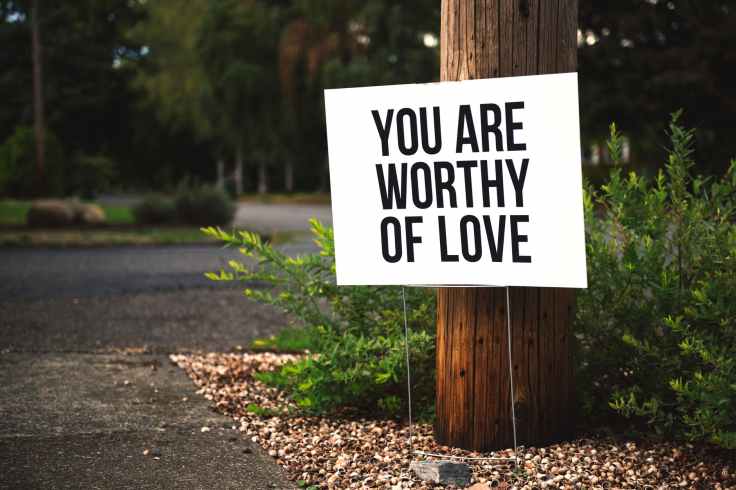
I am broken as I think of times when I have been so consumed in my own grief and “neediness” that I have pushed away those who love me most, shutting them out, and making them question their own worth.
How many times have I done the same to the Lover of My Soul?
How many times do I focus on the one thing I don’t have, or the two annoying people in my life, and ignore the blessings God has poured out? When was the last time I made an extra effort to communicate to my husband how much he DOES mean to me, instead of leaving him to wonder? How many tears have I poured out with my face turned away from my Loving Father?
Hannah’s husband asks some leading questions– they lead Hannah to collapse before the only one who can bring healing and joy. Hannah’s prayer comes from a point of being broken– far more than needing a child, Hannah needs the love and understanding her husband longs to give her, and the joy and blessing her Heavenly Father has been waiting to offer.
Elkanah’s heart is to have joy and oneness with Hannah– with or without children. God’s heart is to have a joyful and trusting relationship with you. And with me. Today, I want to be open with God about whatever is breaking my heart– even though He already knows. Hiding my hurt, wallowing in it, and saying to God, “No. You are NOT enough!” will keep me in a downward spiral. Letting God prove that He IS enough is the way forward into healing, joy, and peace.

We know the end of this story– Hannah pours out her heart to God and God responds with compassion and blessing. He opens Hannah’s womb, giving her and her husband a son who will go on to play a key role in Israel’s history and God’s story of redemption. He continues to bless Hannah and Elkanah with other children, and, hopefully, a renewed relationship of joy and commitment.
May our prayer journey today lead us toward the Love of our Good Father– whether from a place of brokenness, need, confusion, joy, frustration, or victory.


 Pursuing Prayer