Ugly Christmas Sweaters

It’s that season of the year, when several companies have their annual “Christmas Parties.” Some companies, in an effort not to offend any of their employees, investors, etc., have stopped calling them “Christmas” parties– they are “holiday” parties or “year-end” celebrations. In fact, at one place I worked, they stopped having any parties for the employees, claiming it was a “bad look” to “waste” money on such nonsense! Bah, Humbug!

But company Christmas/Holiday parties have a tendency toward the silliest and least meaningful ways of celebrating what this season and its holidays are all about. Often, the festivities involve a cash (or open) bar, some sort of anonymous gift exchange– white elephant or “secret Santa” with a spending limit of $5 or $10 dollars, and an ugly sweater contest.

And there is an entire industry predicated on the modern tradition of the “ugly” holiday sweater. Garish, loud, often bedecked with pom-poms, tinsel, or even battery-operated flashing lights, such sweaters can cost a minor fortune. They get worn once a year (twice if you have to go to a second party with a spouse, friend, or as a chaperone). And, while I don’t want them banned, I think they represent some of the worst excesses of our modern first world. They serve no higher purpose than to draw attention to bad taste and mock the core values of Christmas, Hanukkah, and other seasonal holidays. They are about tacky and fleeting entertainment, at the expense of higher virtues. 

I’m not trying to be a Scrooge or a Grinch. The holidays should be a time of joy and laughter. But is a tacky sweater really the best we can come up with? Is it in the top ten best ways to enjoy a season of miracles, love, light, giving, and hope? (I feel the same way about the focus on drinking– waking up hungover and sick; not being able to remember the end of the party– how is this “fun?”)

In our effort to have “Christmas” without “Christ” or Hanukkah without miracles; in our efforts to erase God from the celebrations of HIS goodness, we have created a level of fake celebration that echoes the story of “The Emperor’s New Clothes.” We’re walking around with ugly sweaters, each more elaborately ugly than the one before, considering it a triumph to be the biggest fool in a forest of foolishness.

Imagine giving that ugly Christmas sweater to someone who was homeless and had no warm clothes. Would it make you laugh to see someone in those circumstances wearing your once-a-year indulgence? Would your ugly sweater bring hope and healing to those who are refugees this season? Do you wear it when no one else can see it? The sweater isn’t about the season. It really has nothing to do with the meaning of the Holidays. It’s about impressing people with your willingness to stand out; your ingenuity in finding an uglier sweater than anyone else; it’s about YOU.

What would happen if, instead of an ugly sweater contest, seeing who can drink the most before passing out, or a white elephant exchange of worthless gifts, companies celebrated with worthwhile activities– building community ties, honoring achievements, or maybe even reflecting on miracles in our midst? What if our celebrations were less about empty amusements and more about reflecting on what is genuinely worth celebrating–health, friendships, family, hope, and purpose? They might be less amusing, but they might also be more memorable and meaningful.

There’s nothing “wicked” about ugly sweaters or white elephants– but they are becoming symbols of the kind of “Christ-less” Christmas that offers mild entertainment, but no hope for the dark days of a long winter. They are some of the symbols of excessive economic wealth in the midst of emotional and moral poverty. Naked and empty entertainment, pretending to offer light and satisfaction, but settling for glitter and gluttony.

Today, I’m going to wear a sweatshirt to keep warm, and I’m going to spend some time with my family– building memories that will last much longer than last season’s ugly sweater! And I will spend some time thanking God for the sweatshirt, my grandkids, and for the incredible gift of His Son–the real meaning of this season of love, gifts, miracles and hope–our real reason for celebrating Christ-mas!
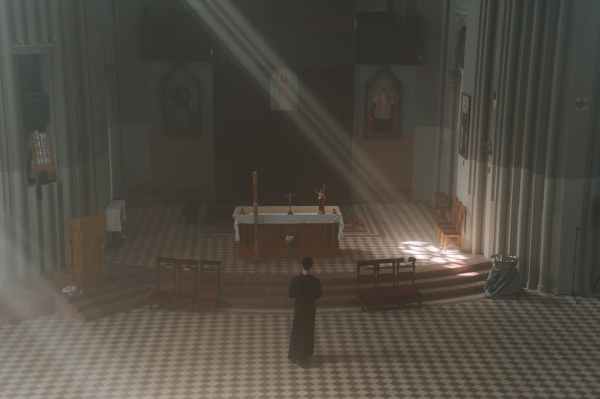
Where Are the Altars?

In the Biblical books of the prophets (Isaiah, Jeremiah, Ezekiel, etc.), there are many references to altars and sacrifices–both the ones built to honor Jehovah God, and those designed for idols.

Israel and Judah were guilty of building thousands of altars and shrines to false gods. Some of them were found even inside the Holy area of God’s own temple! As part of God’s judgment, He repeated that He would no longer accept the empty sacrifices of His people–He would no longer hear their prayers, unless they repented.

I read these words and wondered– Where are our altars today? When I was a child, many of the older churches had what we called an Altar. It was usually a raised platform, with a podium for the minister, and possibly a “host table” for communion. My childhood church also had a small table that held a large Bible. Sometimes, the platform would have a railing around the edge, with a couple of stairs on either side. And, while many churches “passed the plate” for offerings, some had a special plate on the railing of the altar, where people would march up and place their offerings for the week. There it would sit for the rest of the service–random dollar bills of random denominations in random states of being crumpled, folded, and worn, along with checks, and, sometimes even coins. All of them brought forward and placed on the altar.

In many churches, the altar was where congregants would come to receive communion. The most important church events happened “at the altar.” Weddings, baby dedications, Bible readings and sermons, even funerals– all happened at the altar.

And often, we would have an “altar call.” The pastor, or a guest evangelist would urge people from the congregation to meet at the altar– to repent, to receive forgiveness, to be renewed and refreshed as we offered ourselves to God. There we were– random denominations of people, in random stages of obedience or rebellion, all answering the call to follow Christ as Lord. Some stayed there for a few minutes, praying silently. Others might be there for an hour, crying out, trying to find the words to express pain, guilt, or gratitude and awe, that GOD would meet with US there! Sometimes, we would form small groups to pray and give encouragement; sometimes we would disperse, too moved to speak at all. The Altar was the focus of the service– the place where God met with us; where He received our worship and our offerings; where we were challenged and made ready for spiritual battle.

Today, many churches have stages, like any large theater or event center. There is no railing, but there are hundreds of spotlights and fog machines. There is no podium for the pastor–just a headset and maybe a small stand for notes. Sometimes, the pastor reads from a teleprompter. Often, he or she is joined by a full band or orchestra, and dozens of singers, actors, or other assistants. No one from the congregation approaches the stage– why would they get up from their comfortable reclining padded seat? No one even “needs” to bring a Bible– the sermon text is printed out on the giant screens hanging above the stage. Our worship is comfortable, and entertaining. Many of us don’t even go to a church building, anymore. We can livestream worship services, or watch from a satellite location. We don’t even have to change out of our pajamas! And we feel blessed, and filled with excitement to be part of something dynamic and spiritually uplifting.

But we have no altars. There is no place for someone to lay their offering before God; no place to meet with Him in repentance or revival. There is no place to remind us of sacrifice and atonement. Oh, to be sure, many churches have a large cross on display somewhere. Some even have the “host table” for communion– somewhere in the wings, just in case–but the concept of an “altar” has all but disappeared from churches in the West. It is an anachronism–something ancient and uncomfortably part of the distant mists of tradition.

I miss the altar. I believe God misses it, too.

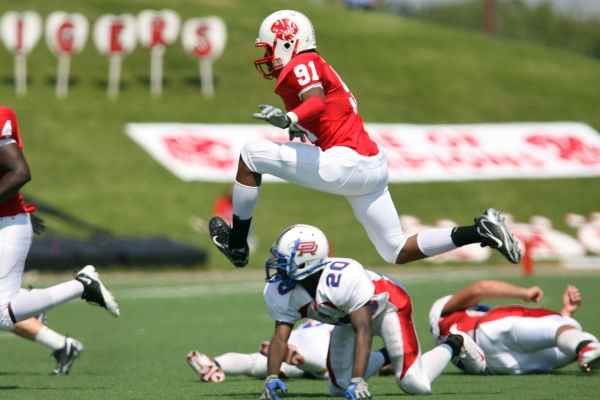
Reflections on the “Big Game”

I missed this year’s Super Bowl. For anyone who is unfamiliar with this tradition, the Super Bowl is the name given (and trade-marked– that’s why this post’s title is the “Big Game”) to the national championship game for American Football each year. The tradition is as old as I am– 57 years–and each year, it gets nearly as much hype as the World Cup (Football in most of the rest of the world!)

Photo by Joe Calomeni on Pexels.com

Though I missed watching the game, I have some reflections to share about it:

  • While it is an important sporting event for anyone interested in American Football, it is not (for most of us) a life-changing, “Super” anything. I have not watched a Super Bowl game in many years, and my life is every bit as rich and full as it was in years when I did watch. The teams come and go, the players change, and the even the most exciting plays will be largely forgotten in the coming years (except for what gets re-played on “highlights”). It is a Big game. But it is not real life, and it is not THE Big event of anyone’s life– even the players will have other events (marriage, the birth of a child, the death of a parent, etc.) that will compete with the three hours spent one Sunday in February on a football field.
  • Football is divided into two halves (four quarters, to be exact). In between the two halves is a period known as “Half Time.” This is a curious ritual. The two teams get about a half hour to rest, reflect, strategize, and regroup before the second half of the game. Meanwhile, the fans get treated to an entertainment. In high school and college football, this is usually a chance for the marching band to show off. It has a military flavor, with drums, flags, formations, and cheerleaders all getting the crowd enthused for the “home team.” But there is no “Home” team for a Super Bowl. The teams play in a neutral location. So the “halftime” entertainment is like a condensed rock concert. The entertainment has nothing to do with the game at hand, and has no clear purpose.
  • The Super Bowl is televised, and corporations, public service groups, and other interests spend millions of dollars to buy advertising rites, and millions more dollars creating what they hope will be memorable ads to be shown during this window of high visibility. Tickets for the live event are expensive, but millions of people are watching on TV from their homes, or at sports bars or special “Super Bowl” parties.
  • Super Bowl Parties are a huge “thing.” Fans spend hundreds and even thousands of dollars on special food, decorations, venues, team-related clothing and other “gear.”

I am not a big football fan, so I don’t understand a lot of the hype. I don’t begrudge anyone the fun of watching and enjoying sporting events, but I wonder about some of the emphasis placed on this event. What would happen if:

  • People spent the same kind of energy, time, or money on strengthening their family, or building up their community, or spreading the gospel?..There are “Real life” events that are far more important and urgent than a football game– especially one in which we are mere spectators–that should cause us to clear our schedule, make preparations, and keep us riveted. How many people can recall cheering on a new bride and groom, or a high school graduate or a recovering addict or a new Christian with even a tenth of the excitement they give to a groups of players they’ve never met or spoken to, for a game that has no lasting impact on their own life, their family or community?
  • Only those people who were actual football fans attended the Super Bowl or Super Bowl Parties? How many people are spending money, time, and energy on something they don’t even really care about, because of the “shiny” extras on the periphery– the snacks, the Halftime Show, being the “first” to see the newest ads, being part of “the fun”, going along with the “in” crowd?”
  • Churches, schools, charities, etc., could garner similar commitment and excitement from their members and communities? What if we could generate the same kind of money and enthusiasm to fill food banks or send relief to those impacted by hurricanes or earthquakes? What if prayer meetings and tent revivals broke attendance records? What if graduation parties and anniversary parties were as elaborate as Super Bowl Parties?
Photo by August de Richelieu on Pexels.com

Just some thoughts. As I said above, I missed the Super Bowl this year…I don’t know what I might have enjoyed, or what memories I might have had. I much prefer the memories I have of spending time with grandkids, or celebrating special birthdays with friends and family, or helping plan a graduation party for my niece and nephew, or sharing the joy of a baptism. To me, that is Super way to spend a day.

Blog at WordPress.com.

Up ↑