You’ve got to accentuate the positive Eliminate the negative Latch on to the affirmative Don’t mess with Mister In-Between
You’ve got to spread joy up to the maximum Bring gloom down to the minimum Have faith or pandemonium (is) Liable to walk upon the scene “Accentuate the Positive” by Harold Arlen/Johnny Mercer
This popular song came out in 1944, as thousands of soldiers were dying in World War 2, and millions were facing homelessness and starvation in Europe, Asia, and northern Africa. Its syncopated rhythms and upbeat lyrics helped focus minds and hearts on hope in a world torn apart by war, hatred, and despair. Further lyrics refer to biblical characters Jonah and Noah, and their experiences facing “dark” times.
The Bible gives us similar (and more specific) advice. The Apostle Paul wrote from prison to believers in hard-pressed Philippi:
6 Do not be anxious about anything, but in every situation, by prayer and petition, with thanksgiving, present your requests to God. 7 And the peace of God, which transcends all understanding, will guard your hearts and your minds in Christ Jesus. 8 Finally, brothers and sisters, whatever is true, whatever is noble, whatever is right, whatever is pure, whatever is lovely, whatever is admirable—if anything is excellent or praiseworthy—think about such things. Philippians 4:6-8 (NIV)
In other words– Accentuate the Positive and latch on to the affirmative!
To the Ephesian believers, he says:
The Old Way Has to Go (or, Eliminate the Negative):
And so I insist—and God backs me up on this—that there be no going along with the crowd, the empty-headed, mindless crowd. They’ve refused for so long to deal with God that they’ve lost touch not only with God but with reality itself. They can’t think straight anymore. Feeling no pain, they let themselves go in sexual obsession, addicted to every sort of perversion. But that’s no life for you. You learned Christ! My assumption is that you have paid careful attention to him, been well instructed in the truth precisely as we have it in Jesus. Since, then, we do not have the excuse of ignorance, everything—and I do mean everything—connected with that old way of life has to go. It’s rotten through and through. Get rid of it! And then take on an entirely new way of life—a God-fashioned life, a life renewed from the inside and working itself into your conduct as God accurately reproduces his character in you. What this adds up to, then, is this: no more lies, no more pretense. Tell your neighbor the truth. In Christ’s body we’re all connected to each other, after all. When you lie to others, you end up lying to yourself.Go ahead and be angry. You do well to be angry—but don’t use your anger as fuel for revenge. And don’t stay angry. Don’t go to bed angry. Don’t give the Devil that kind of foothold in your life. Did you use to make ends meet by stealing? Well, no more! Get an honest job so that you can help others who can’t work. Watch the way you talk. Let nothing foul or dirty come out of your mouth. Say only what helps, each word a gift. Don’t grieve God. Don’t break his heart. His Holy Spirit, moving and breathing in you, is the most intimate part of your life, making you fit for himself. Don’t take such a gift for granted. Make a clean break with all cutting, backbiting, profane talk. Be gentle with one another, sensitive. Forgive one another as quickly and thoroughly as God in Christ forgave you. Ephesians 4:17-32 (The Message)
But what does it mean when the song says, “Don’t mess with Mister In Between”? The Bible gives some advice on this as well. The Apostle James has much to say about such a man in the first chapter of his epistle. He talks about being steadfast, not doubting, not double-minded, and not swept up in temptation, blaming others, and justifying his own philosophies:
22 But be doers of the word, and not hearers only, deceiving yourselves. 23 For if anyone is a hearer of the word and not a doer, he is like a man who looks intently at his natural face in a mirror. 24 For he looks at himself and goes away and at once forgets what he was like. 25 But the one who looks into the perfect law, the law of liberty, and perseveres, being no hearer who forgets but a doer who acts, he will be blessed in his doing. James 1:22-25 (ESV)
To James, “Mister In Between” is a shadow man, a person without root or discipline, who will listen to the word of truth, but then turn back to the darkness of the world to justify inaction and/or wrong actions. Mister In Between wants to straddle the fence between sin and obedience, revenge and forgiveness, anger and patience, comfort and compassion. But that doesn’t work. Such a person lives in a false reality– one where his/her “truth” changes with each new experience or emotion, each new encounter with pleasure or grief.
Jesus Himself spoke of the dangers of living “In Between”:
Then he said to them all: “Whoever wants to be my disciple must deny themselves and take up their cross daily and follow me. 24 For whoever wants to save their life will lose it, but whoever loses their life for me will save it. 25 What good is it for someone to gain the whole world, and yet lose or forfeit their very self? 26 Whoever is ashamed of me and my words, the Son of Man will be ashamed of them when he comes in his glory and in the glory of the Father and of the holy angels… 62 Jesus replied, “No one who puts a hand to the plow and looks back is fit for service in the kingdom of God.” Luke 9:23-26;62 (NIV)
13 “You are the salt of the earth. But if the salt loses its saltiness, how can it be made salty again? It is no longer good for anything, except to be thrown out and trampled underfoot.14 “You are the light of the world. A town built on a hill cannot be hidden. 15 Neither do people light a lamp and put it under a bowl. Instead they put it on its stand, and it gives light to everyone in the house. 16 In the same way, let your light shine before others, that they may see your good deeds and glorify your Father in heaven. Matthew 5:13-16 (NIV)
We may not be in the midst of a World War (though some reading this may be experiencing war, persecution, and suffering), but we are all involved in a great Spiritual Battle. There are negative forces and philosophies warring with God’s Truth– Anger, Despair, Hatred and Vengeance, Pride, Envy, Power, Greed, and many more. We need to keep our thoughts positively turned toward “whatever is true”.. and noble and praiseworthy– we need to keep our thoughts, prayers, and actions in tune with the teachings of Jesus. We also need to “eliminate” the negativity in our lives– doubts, regrets, shame, lust, bitterness, jealousy, and empty adherence to things of this world– we need to turn our back on old ways of thinking and doing (or NOT thinking or doing) and focus on Jesus. And we need to avoid “messing” with Mister In Between– stop compromising, stop trying to straddle the fence between loving others and making them feel comfortable or superior in their sin at the cost of our own soul.
It sounds easy and jaunty to “accentuate the positive.” But it involves commitment, and the willingness to let go of the negative and the complacent that creeps into our lives. That’s my prayer for today. I hope it is yours, too.
3 If anyone teaches a different doctrine and does not agree with the sound words of our Lord Jesus Christ and the teaching that accords with godliness, 4 he is puffed up with conceit and understands nothing. He has an unhealthy craving for controversy and for quarrels about words, which produce envy, dissension, slander, evil suspicions, 5 and constant friction among people who are depraved in mind and deprived of the truth, imagining that godliness is a means of gain. 6 But godliness with contentment is great gain, 7 for we brought nothing into the world, and we cannot take anything out of the world. 8 But if we have food and clothing, with these we will be content. 9 But those who desire to be rich fall into temptation, into a snare, into many senseless and harmful desires that plunge people into ruin and destruction. 10 For the love of money is a root of all kinds of evils. It is through this craving that some have wandered away from the faith and pierced themselves with many pangs. 1 Timothy 6: 3-10 (ESV)
This past week, I have really been struggling with discontent. There are things I want that I can’t afford; things I want to accomplish, but I have other obligations that eat away at my time and energy. I want to lose weight and exercise more– the spirit is willing– but my body and will-power are weak. And I spiraled down into anger, frustration, depression, and comparison. It’s been an ugly week. Instead of thanking God that we have enough money to pay the bills and buy groceries, I complain about the price of the groceries and bills, and the lack of money left over for entertainment or new clothes I don’t need.
“Godliness with contentment is great gain” (v.6). It’s a verse I learned as a girl, and yet I’m still struggling with the concept. Part of that, I think may be that our culture’s teachings clash with the Bible. There are people in our culture– even pastors and Bible teachers– who twist the Gospel so that, as Paul says they (imagine) that godliness is a MEANS of gain. (v. 5). And I have listened to, and bought into, that concept– that God rewards (financially, socially, physically) those who practice “godliness”. But what kind of godliness bargains with God for reward? What kind of godliness leads to discontent and anger?
No. Godliness is not a game or a role to play at. It is, much like prayer, a pursuit and a lifestyle. It is discipleship– following the example of Christ’s life and teachings– changing the way I think and the way I live. And no amount of “following the principles” on my own will lead to that kind of change, because my motive will always be “gain.” Whether gaining money, or status, or achievements and accolades, this type of sham godliness will leave me discontented. And the price of that discontent will be my life.
The thief comes only to steal and kill and destroy. I came that they may have life and have it abundantly. John 10:10 (ESV).
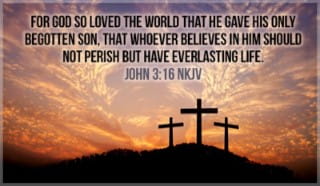
Jesus did not come to earth to gain fame or fortune. He was despised by many and crucified by the religious authorities of his day. He was misunderstood, and he was, in worldly terms, a failure. He was homeless, childless; there were no monuments to His achievements, no medals or honors bestowed on Him by the rulers of the day. BUT He came to make it possible for us to break the chains of Sin, guilt, worry, jealousy, and discontent. Jesus saw suffering around Him. He saw people with beautiful houses, high social status, productive farms or businesses, and great political power. But He was not drawn to them. He was content to do the Father’s will; content to travel from town to town, talking with lepers and prostitutes, with tax collectors and beggars. And His life changed the world! It is because of His life, death, and resurrection that I can have eternal life and abundant life now and forevermore (John 3:16).
That doesn’t mean that I have everything I want, or that I don’t have to struggle in the present. And it doesn’t mean that I am comfortable and complacent with what I do have. Sometimes, life is difficult and doesn’t seem very “abundant” in the moment. I still have bills. I still have diabetes. And I still have ambitions and unrealized goals. I just need to remember what the Gospel is really all about. It isn’t about becoming rich or well-respected, or productive in the eyes of the world. My life may be quietly abundant in the things that really matter– peace with God, time with family and friends, opportunities to reach out with hope and encouragement to those who need it, seeing beyond the moments of life to the value of life itself.
“Godliness with contentment” isn’t about wealth or achievement. It’s about the journey– and taking this journey WITH God–walking at His pace, walking where He tells me to walk, walking toward a greater goal. Discontent takes me along a different path– one that will never result in a life that is truly abundant and worth living. I waste my days wishing for this or regretting that or envying someone else’s victories instead of being able to join with them in celebration. It teaches me to be frantic, restless, and angry with myself and others. It leaves me exhausted and unfulfilled.
Money, fame, achievement– none of these is the “root of all evil.” Rather, it is the love of ANYTHING that displaces my “first” love for God that is the root of all kinds of hurt, grief, disappointment, and waste.
I’m very grateful for all the many blessings that God has given me– for Salvation, most of all. But God has blessed me with family, health, freedom, and so many other wonderful things. But there are several things God didn’t give me. Some of them are things I wanted (or thought I needed!) Others are things I never even imagined.
God didn’t give me a pony when I was younger. God didn’t give me blonde hair. God didn’t give me the genetics to be 5’9″ tall, athletic, and thin– I never became a ballerina or a model. God didn’t make it possible for me to study in France my junior year of college like I had wanted. God didn’t see fit to make “Mr. Right” fall in love with me in high school or college. God didn’t give me children to raise. God didn’t let my father live long enough to walk me down the aisle when I finally got married. And I never won the lottery (probably because I don’t play!– but still…)
It’s very human to look around and see what others have that we might desire– things that God did not choose to give us; even things that God has taken from us–and feel resentment, envy, and even anger. But we rarely look at those things others have that we would NOT desire. And we rarely look back and see how things we thought we wanted would not have been good for us, or how God removed things from our lives–even good things–for a better purpose. Sometimes, we cannot know or understand such things this side of heaven. But it might be a good practice once in awhile to look back and see what God DIDN’T give us– and thank Him for His wisdom and provision!
God allowed me to get chicken pox as a child– but He didn’t let me get Polio, or Diphtheria, Scarlet Fever or Whooping Cough. God didn’t give me blue eyes like my dad– but He didn’t give me Dad’s color-blindness, either. God prevented me from going on a date with one cute and popular boy who asked me out in high school. And the one in college. And the one I worked with. But God delivered me to my husband a virgin, and free of the guilt and shame of a string of failed relationships. God took my father at age 68. But He healed my father after a heart attack at age 50 (the reason I never got to study in France). We had and “extra” 18 years with Dad, and while Dad was sick most of the last years of his life, we didn’t have to see him suffer years of pain, misery, and helplessness. And about that semester in France? Some of my friends went that year– and they were plagued by injuries, nationwide strikes, and other issues. God knew what I wanted in each case; He also knew what was best for me.
A couple of years ago, I was diagnosed with Diabetes. God did not “give” me Diabetes. (That’s another mistake we often make.) God gives good gifts. (James 1:17) But we live in a fallen and imperfect world. Disease, injustice, pain, and heartache are part of this world. Someday, God will redeem the world and put an end to all of these, but for now, there is no guarantee that God will keep us in perfect health or happiness. So, I’m Diabetic. I’m not grateful because I have the disease, but I am grateful for so many things related to it. I am grateful that I live in a time when treatments are both available and accessible. I am grateful that I was diagnosed, rather than suffering a coma or dying without help. I am grateful that I have access to healthful foods and the ability to exercise– two things necessary to keep the Diabetes under control. I am grateful that I lived for so many years without the disease. I am grateful for a supportive husband and family members who help keep me motivated. And I am grateful that nothing about having Diabetes changes IN ANY WAY God’s love for me, and His plans to give me eternal life in Him!
Are there things, people, or situations in your life that God DIDN’T give you? Healing that was denied, or blessings withheld? Hurtful things that He allowed to happen in your life? That He took away from your life? God doesn’t want us to pretend that all is perfect in our world. He knows the pain of NOT getting what we wanted, and the agony of losing what we did want. But He also knows the joy that we haven’t yet experienced– the joy of renewal; the joy of restoration; and the joy of completion.
God didn’t give me a pony– nor the hard work of caring for it, or the heartbreak of losing it. God didn’t let me date the popular boy– but He gave me a man of gentleness and integrity. God didn’t give me children to raise, but He gave me grown children, and grandchildren to love. God didn’t “give” me the semester in France, but He did give me opportunities to meet people from France. He gave me opportunities to use the French language I studied– in Florida, Texas, and even the Dominican Republic! God didn’t let my father walk me down the aisle at my wedding. But He allowed Dad and David to meet and even know each other– years before we were married. God didn’t give me perfect health here on Earth– but there will be no disease or death in Heaven.
Thank you, God, for all that you have given me– even Diabetes–and for all that you have allowed to shape my life. Help me see You in every detail of my life– the pleasant, the painful, the difficult, and the mysterious– and to praise You in every circumstance. Thank you for today, and for all the plans you have for it, and for me. Thank You for being You!
25 Therefore, having put away falsehood, let each one of you speak the truth with his neighbor, for we are members one of another.26 Be angry and do not sin; do not let the sun go down on your anger,27 and give no opportunity to the devil.28 Let the thief no longer steal, but rather let him labor, doing honest work with his own hands, so that he may have something to share with anyone in need.29 Let no corrupting talk come out of your mouths, but only such as is good for building up, as fits the occasion, that it may give grace to those who hear.30 And do not grieve the Holy Spirit of God, by whom you were sealed for the day of redemption.31 Let all bitterness and wrath and anger and clamor and slander be put away from you, along with all malice.32 Be kind to one another, tenderhearted, forgiving one another, as God in Christ forgave you.
I grew up hearing that anger is a sin. Yet God experiences anger and wrath. And the Apostle Paul says in this passage that we are to “Be angry and do not sin” (Eph. 4:26a).
Anger is an emotion; feeding on anger, wallowing in it, stewing and screaming and acting out under the control of our anger– that is sin. That is why Paul goes on to say that we should “not let the sun go down on your anger ” (4:26b). Anger doesn’t have to be a bad emotion, but it is a bad master. We need to take control over our anger to resolve it, and let it go. In Genesis, God spoke to Cain about this very thing–Cain and his brother Abel had brought sacrifices to God; Abel’s sacrifice was pleasing to God, but Cain’s sacrifice did not find God’s favor. The sacrifices were voluntary– Cain and Abel were not in competition to see who could bring the “best” sacrifice. God had not ordered them to bring a sacrifice only to find fault with Cain’s efforts or the way he chose to present the sacrifice. The scriptures don’t even say that God rebuked Cain or pointed out a flaw in his offering. He simply found favor with Abel’s offering– Abel had brought the best he had; the firstborn of his flocks. Cain had brought “some” of his crops.
The difference in the sacrifices had nothing to do with the content or the manner of offering, but in the intent to worship God halfheartedly, instead of wholeheartedly. God saw that Cain was angry (as well as proud and envious of his brother). Instead of rebuke, God offered grace and wisdom:
Genesis 4:6-7New Revised Standard Version (NRSV)
6 The Lord said to Cain, “Why are you angry, and why has your countenance fallen? 7 If you do well, will you not be accepted? And if you do not do well, sin is lurking at the door; its desire is for you, but you must master it.”
God doesn’t want us to deny our anger or pretend we are never angry. But He does want us to acknowledge it, and deal with it. Why am I angry? What should I do about it? Anger can motivate us to do the wrong things, but it can also spur us to change our course, and do something good. Righteous anger can spur us to speak out about injustice, and seek to correct wrongs. Anger can lead us to our knees, asking God for direction, strength, or His intervention and justice. King David often prayed angry prayers asking God to strike down the people who were plotting against him, or those who were doing evil or mocking God’s people.
I wish I could say that I had mastered this area, but I’m writing as much for my own instruction today as anything else. Here are some wonderful steps we can and SHOULD take to deal with anger:
Pray! Anger can strangle us, or it can sneak up and suffocate us, but the worst it can do is drive us away from our source of help and hope. God WANTS us to come to him. He reached out to Cain in his anger, wanting to draw him near and help him overcome it; He offers us the same help. God can handle our anger– he can give us the power to let it go, and direct our feelings appropriately.
Own it–Angry people tend to deflect responsibility. Yes, other people can say or do things that make you angry, but they can’t make you say or do sinful things in response to their actions. You still bear the responsibility for what you do with your anger– even “righteous indignation.”
Question it!–This is something I have found helpful. Just as God asked Cain, ask yourself, “Why am I angry? Why am I downcast?” And then, answer them honestly. Many times, the root of my anger isn’t justified–instead it’s “just a lie”. I have no right to be angry with someone else when I chose to waste time, cut corners, or neglect to do what was necessary. I have no right to be angry or outraged because someone else feels differently or sees a different side of an issue. In fact, if I keep listening instead of exploding, I might find compassion overriding the anger. I might even learn something new! Or I might better understand why I feel or think as I do, and be better able to explain it to others, instead of just yelling the same thing over again.
Deal with it–This is a difficult one for me. I don’t like confrontation. If someone hurts me, I just want to walk away and lick my wounds. And we shouldn’t confront others WITH our anger, striking out at them and seeking to hurt them. But I have found that a lot of anger and hurt that I have harbored is not only unjustified, but is based on misunderstandings and pride. It takes humility, but it also takes courage to seek out someone to offer an apology you don’t want to give, or to ask for clarification instead of harboring hurt.
Don’t spread it! “Don’t let the sun go down upon your wrath” is not permission to “vent” to seven (or seven hundred) friends by spreading your hurt and outrage until you feel calmer. This is particularly true in the age of Facebook, Twitter, and Instagram. In the short-term, this may seem right– “they need to know what is happening”– but it is just the opposite. Anger often leads to rash judgments, and hasty actions that we can’t undo or call back. If you are not talking with the object of resolving a misunderstanding, apologizing, or offering a positive solution, you are engaging in sin. The old saying, “If you can’t say something nice about a person, say nothing at all” applies here. And it applies about situations and circumstances, too. I am angry about various practices and policies by governments, companies, even churches; what I need to spread is not my anger about them, but awareness of how God can change them, and why we should be seeking His justice, His righteousness, and His grace toward those who have been impacted by them.
Repent of any anger-related sin. Remember, anger itself is an emotion. God experiences it; we are made in His image, so we experience it, too. But God’s anger is Holy; ours is often tainted with other feelings and thoughts– pride, envy, greed– or even other human frailties like misunderstanding, exhaustion, hunger and pain. Instead of feeling guilt over the anger, we need to turn away from the sin that overpowers us in our anger.
For more Biblical wisdom about dealing with anger, see the following:
2 Corinthians 9:15 Christian Standard Bible (CSB) 15 Thanks be to God for his indescribable gift!
via biblegateway.com
I love this season of the year–as we approach Thanksgiving and prepare for Advent and Christmas, it is a good time to reflect and celebrate all the wonderful things God has done, and all the ways He has blessed us. But there is also a danger in this season. We are tempted to look around and compare our blessings (and our struggles) with others around us. We are tempted to be envious, depressed, and stressed about our circumstances. Or we look at our blessings and feel smug and self-satisfied, instead of grateful and humble.
What “Great” things am I thankful for? Sometimes I make a list of all “my” blessings–my health, my family, my home or car, my freedom (as though I had done anything to earn such blessings)–and I stop. Sometimes I make another list of all the “Great” things God has done in nature–beautiful sunsets and majestic forests, glistening snowflakes and spring blossoms–and I stop. Sometimes, I even thank Him for the trials and struggles and difficult relationships that He has allowed to refine me and build my character to be more like His– and I stop. Sometimes, I thank Him for the great things he has done for others–miracles of provision, safety, or healing.
But there is a deeper level of thankfulness– one that takes my breath away and causes me to fall to my knees– one that thanks God for WHO HE IS– truth, righteousness, salvation, mercy, wisdom, power, and boundless, unconditional love. Every great work of God has its origin in God’s Character. Every sunrise shows His faithfulness, every snowflake His infinite creativity. Even tragedy can reveal His tenderness and healing and precious promise that NOTHING can separate us from His love. In giving His greatest gift, God spared no expense; he held nothing back. Jesus defeated sin and death by becoming sin and experiencing death–FOR YOU and for ME! For anyone, for everyone, who will accept His gift and trust in His character. How often do I list all the great things God has done and stop before I let the amazement of the Great I AM to overwhelm me? How often to I celebrate Thanksgiving without ever reaching this level of true Thanks-giving?
Whether we celebrate Thanksgiving with turkey and pumpkin pie, or with beans and wienies; whether we celebrate with family, friends, strangers or alone; even if we celebrate on a different day, or in a different way, may we always find ourselves amazed by the Greatness of God. May we truly give God more than just thanksgiving this year. May we give Him all the Glory–Great things He hath done!
We are approaching Father’s Day. It is a day of celebration for many people, but it can also be a day of sadness for others. This year will be a milestone for our family, as my father passed away 25 years ago; and yet–we are preparing to celebrate the birth of my grand-nephew’s first child. This will make him a father, my nephew will become a grandfather, and my brother will become a great-grandfather! My husband is a father and grandfather, and so are three of his brothers. We also have brothers, brothers-in-law, nephews and cousins who are great dads. So we really have a lot to celebrate!
Fatherhood– the kind we celebrate– is more than just contributing genetic material to a new life, or claiming a child on an income tax statement, or showing up once in awhile for major events. Fatherhood involves sacrifice. It requires wisdom and patience. It involves ongoing commitments, and the tough love that says, “No” because it’s the right thing, rather than the easy thing to say. Fatherhood requires a man to be a teacher, provider, protector, defender, coach, and disciplinarian. It also requires humility, and grace, encouragement and sometimes tears. In addition, fatherhood requires prayer. No father is perfect, and no father can do all that he needs to in his own power. Fathers need our support and encouragement, our grace, and our prayers.
It is tempting to label our fathers. I have known “good” fathers. And I have known fathers who have abandoned or even abused their responsibilities, causing trauma, anguish, and hurt to their families, lasting for generations. My own father wasn’t perfect, but he was a “good” father. He was a man of humor and integrity, faithful, honest, loving and humble; a man of faith, and a man of honor. My father-in-law was the same. They left wonderful legacies of wisdom, hard work, and quiet strength. But I know of other fathers who have ruined the lives of their children (as well as their own lives) through fear, selfishness, addictions, abuse, anger, greed, and pride. Father’s Day can cause regret, envy, and bitterness in the hearts of many fathers and children alike. Many people would like to forget about their fathers on Father’s Day. Some don’t even know how to celebrate– they’ve never seen or heard from their father; some don’t even know his name!
But Father’s Day is not only for “good” fathers. It is a time to honor those who have been faithful, but it is also a time to reach out to those who need help. Good fathers are needed! And “bad” fathers need to be called out– not indulged or ignored, but held, guided, rehabilitated, or even incarcerated, for the good of their children. Hurting boys often grow up to be hurtful fathers. Hurting girls often end up in hurtful relationships. Hurtful fathers often struggle with their own baggage of hurt and disappointment from past generations, without knowing how to change. Fathers need more than a “day”, a cook-out, or another tie. They need a mission and a purpose; they need respect and forgiveness; they need encouragement and accountability.
My prayer today is that this Father’s Day can be a day of honor AND of healing for fathers and their children. I pray that struggling fathers will be encouraged and strengthened; that hard-working, faithful fathers will see the rewards of their efforts and find hope to keep going; that absent and apathetic fathers will wake up to the challenge and the gift of fatherhood; that broken fathers will find help and healing for themselves AND for their families; that hurting sons and daughters will find the grace to move beyond the pain of unmet expectations and abuse to become better men and women.
All that I pray for is made possible because we have a Heavenly Father– a perfect, loving, eternally wise Father– who loves us through our struggles and our pain. He knows our every need, sees our every tear, and hears our every prayer. He is ready to be our coach, our provider, our healer, our disciplinarian, and our protector. No matter our experiences or how we feel about our earthly fathers, or about being a father, we can trust Him to be all that we need. Our Heavenly Father will never abandon us, reject us, abuse us, or despise us. He will comfort, encourage, uplift, and guide us– now and forever. All we need to do is pray and accept Him for all that He is!
In the Dr. Seuss classic, “How the Grinch Stole Christmas!,” the bitter and devious Grinch tries to “steal” Christmas from the village of Whoville. He steals all the things the Whos of the village seem to need in order to celebrate a holiday he hates. He hates their gift exchanges, their feasting, their singing, and their general happiness, all of which serve to remind him of his own loneliness and gloom.
With mounting glee, the Grinch proceeds to pile up his hoard of goodies– presents, decorations, food, anything that could serve to make the holiday cheery and bright. He loads up all his stolen loot and takes it to the top of a mountain, where he plans to dump it. But first, he stops to savor the shock and pain he expects to hear as the Whos discover that their holiday has been ruined. He waits in the cold of a clear dawn to hear wailing and lamenting, but the sound he hears instead is singing…the Whos have come together to sing a hymn of gratitude and peace. There is no lamenting; there is no distress. Instead there is a peaceful acceptance that the new day has brought joy and goodwill that has nothing to do with all the trappings of celebration.
He hadn’t stopped Christmas from coming. It came! Somehow or other it came just the same. And the Grinch, with his Grinch-feet ice cold in the snow, Stood puzzling and puzzling, how could it be so? It came without ribbons. It came without tags. It came without packages, boxes or bags. And he puzzled and puzzled ’till his puzzler was sore. Thenthe Grinch thought of something he hadn’t before. What if Christmas, he thought, doesn’t come from a store. What if Christmas, perhaps, means a little bit more.
The first Christmas came without any of the festive trappings we’ve added over the years. There were no groups of cheery carolers; no jingle bells and tinsel; no greeting cards or candy canes. Jesus came in the dead of night, in the midst of chaos and terror, as people were groaning under the oppression of an invading empire, being forced to travel long distances to be counted and taxed by their oppressors. There were no Christmas parties, no brightly decorated trees, no stockings filled with treats, no cookies and cocoa on a cold night. The gifts would come later– and they would be followed by death threats and exile! But Jesus came! He came just the same!
This year, Christmas will come– with or without ribbons or tags. Christmas will come to those who are homeless, and those who are lonely in palaces and mansions. Christmas will come in spite of efforts to erase the holiday from our culture. It will come just like the dawn of each new day– quiet in its wonder and glorious in its simplicity. Christmas doesn’t come wrapped in shiny paper or announced with blaring horns and neon lights. Christmas comes just as Christ came so many years ago–wrapped in rags, laid in a straw bed on a cold, dark night; announced to simple people going about their business, signaled by a single star ignored by most, wondered at by others. Christmas will seep into the hearts and eyes of those with child-like faith and willing to sing when things are darkest.
God chooses to come in simplicity– He creeps like the dawning day; He sighs like a gentle breeze; He comes as a harmless infant, or a wandering teacher and healer. And when our Christmas Day comes without ribbons and boxes or feasting and lights– it will come just the same. Christ will enter darkened hotel rooms and alleys, He will sit beside hospital beds and in makeshift refugee shelters. He will sneak into homes where Christians huddle in secret, and He will knock gently on the doors of the lonely and the lost. Because Christmas DOESN’T come from a store. It doesn’t come from our bounty and our glittering decorations. It comes from the heart– the heart of God, who SO loved the world, that He came! And He will come this year, just the same!
3 If anyone advocates a different doctrine and does not agree with sound words, those of our Lord Jesus Christ, and with the doctrine conforming to godliness, 4 he is conceited and understands nothing; but he has a morbid interest in controversial questions and disputes about words, out of which arise envy, strife, abusive language, evil suspicions, 5 and constant friction between men of depraved mind and deprived of the truth, who suppose that godliness is a means of gain. 6 But godliness actually is a means of great gain when accompanied by contentment. 7 For we have brought nothing into the world, so we cannot take anything out of it either. 8 If we have food and covering, with these we shall be content. 9 But those who want to get rich fall into temptation and a snare and many foolish and harmful desires which plunge men into ruin and destruction. 10 For the love of money is a root of all sorts of evil, and some by longing for it have wandered away from the faith and pierced themselves with many griefs.11 But flee from these things, you man of God, and pursue righteousness, godliness, faith, love, perseverance and gentleness. 12 Fight the good fight of faith; take hold of the eternal life to which you were called, and you made the good confession in the presence of many witnesses.
“Godliness with contentment is great gain.” (1 Timothy 6:6) We are entering a season of Thanksgiving and Christmas, and it can be a wonderful time to count one’s blessings and give praise with a humble and thankful heart. But it can also be a season of discontent, envy, overspending, and even depression. Many people are restless. They want “more”– more stuff, more respect, more power, more popularity, better health, a bigger house, trendier clothes…the list can be endless. Advertisers work hard to stir up this kind of discontent in the hope that people will buy their products. Politicians stir up discontent and fear to get more votes. Even religious leaders can stir up discontent in the hope of gaining influence, respect, and money.
God will not stir up discontent in our hearts. Instead, He wants us to learn to be content and grateful for the blessings we already have, and to trust Him for the things we both need and desire. He will see to it that we get what we need to live a Godly life, even if it seems meager compared to others who boast of their circumstances. Those who trust in their wealth or power will find it is never “enough.” Discontent breeds more discontent– envy gives rise to anger and bitterness. Greed gives way to dishonesty and violence. It is the enemy of Godliness and Humility. It is the enemy of the Christian Walk.
But there is another danger to the Christian. We should desire to develop a spirit of contentment, but we must be careful not to let contentment become complacency. The Apostle Paul does not stop in his message to Timothy, but reminds him to both “flee” the temptation of greed and discontent, and “pursue righteousness, godliness, faith, love, perseverance and gentleness.” Contentment is not an excuse for complacency. We are to “fight the good fight of Faith.” We are to be content with what we have, but not complacent about where we stand or how we live.
Discontent says– “I don’t have enough. I need more! (Even if I must take it by force or manipulation)”. Complacency says–” I have everything I need. I am an island of self-sufficiency. I don’t need anything (including God!) Both attitudes are conceited and fail to acknowledge God’s provision and His Sovereignty. The discontented, greedy person will be at war with God’s laws. The complacent person may not be fighting against God’s laws, but s/he will ignore God’s will, and refuse to stand up for justice or mercy. The complacent person is complicit in evil, even when they are not the ones doing it. The complacent Christian is ungrateful, and has only half-hearted praise for the Author of the blessings they enjoy.
There are many “Christians” in both categories. Many who claim to follow Christ, but are really following what they think will bring them power, wealth, health, or popularity. Many are being lulled into complacency by their blessings and comfortable circumstances. Both groups have lost their focus. God is to be the center of our lives– not our own comfort or our own pursuit of it.
This season, may we be content, humble, and willing to give God the Thanks, Praise, and Worship He deserves. And may we not become complacent about doing good, standing firm in the Faith, and helping others.
The other day started out frustrating. I went to the pharmacy to drop off a medicine container for a refill. There was a line. The man in front of me had a dozen questions, and demanded to speak to a specific staff member. By the time I reached the front of the line, I felt as though I was already running late for the rest of the day. I said I would pick up the refill later in the day as I didn’t have time to wait. Then, I went to buy a birthday card for my nephew. When I went to check out, there was no one at the regular counter– I had to use the self-check machine. It asked if I had a “rewards member” number. I entered it, but the machine didn’t register the number. A staff member (who could have checked me out at the regular counter!) helped me re-enter the number. Instead of discounting the price of the card, the machine ADDED to the amount, “rounding up” for a particular charity. I asked the staff member why this happened, and she said that I must have agreed to round up my total. I said, “No,” I hadn’t done so, but she said I must have done so some time in the past, and the machine automatically rounds up every time I make a purchase.
It’s not that I want to be parsimonious–I like to think I am a generous person. But if I hadn’t typed in my “reward member” number, I would have saved a little money. To be more exact, I would have saved three cents! Now I know that sounds really petty, but sometimes, it’s the little things that really sting. After waiting (not all that patiently) at the pharmacy, this hidden consequence of a past act of generosity, coupled with the inconvenience of using the self-check, really made me angry.
I am reminded of a story in the book of 2 Kings 5 about a man called Naaman. Naaman was the commander of the Syrian army under the powerful king Ben-Hadad. But Naaman had a big problem. He had contracted leprosy. Not only would leprosy destroy his skin and extremities, but it would make him an outcast and a pariah, and ruin his legacy. When he heard that there was a prophet from Israel who could heal him, he pulled out all the stops and went to see him. But Elisha did not come to the door. Instead, he sent Naaman instructions through his servant, and told him to wash seven times in the Jordan River.
Naaman felt insulted and infuriated. Why? It was such a simple solution– no drastic diet, no expensive and painful treatments–just take a bath in the river! But the Jordan River was considered dirty. That’s where the poor and destitute bathed, and where animals drank. Naaman almost lost his opportunity to be cured through pride over such a little thing. Thankfully, he was talked into doing what Elisha had asked, and he was completely healed. He was so grateful, that he asked for some dirt (!) so he could build an altar to the God of Israel who had provided his healing!
So often, God uses the little things to point out what really matters. After my less-than-gracious reaction to a couple of minor inconveniences, I had to step back and take a look at my morning from God’s perspective. The line of people at the pharmacy all had needs, and, like the man ahead of me with questions, each one had a right to service. It wasn’t their fault I was impatient or feeling “late”– and, it turned out, I wasn’t really behind schedule after all. I just didn’t like waiting! And my anger over the self-check machine was out of proportion. I still found a birthday card for my nephew, and I had the ability to go to the store, pick out the card, pay for the card, and I got to spend time with my nephew later that day. And some worthy charity got a whopping three cents!
Sometimes we fail to see the importance of the “little” things in life. And we allow “little” problems to grow all out of proportion. We allow petty injustices to fester; we withhold forgiveness; we get angry over perceived slights, and hand on to pride or envy. We forget to lift up “little” burdens and requests; we are blind to the “ordinary” blessings that fill our lives; we lose opportunities to do the simple things that can help others–a smile, a word of encouragement, a helping hand–we miss out on the miracles that hide among the “little” inconveniences of our day.
My prayer today is that God will open our eyes to the “little” things in our lives– opportunities, mercies, blessings in disguise– and that we, like Naaman, will find healing and joy where we least expect it!






































 Pursuing Prayer