“Now I Lay Me Down…”

We used to teach children to say bedtime prayers by rote:

Now I lay me down to sleep;
I pray the Lord my soul to keep.
If I should die before I wake,
I pray the Lord my soul to take.

prayermotherdaughter

I don’t actually remember praying this exact prayer at bedtime– partly because it seemed morbid and conjured the stuff of nightmares more than peaceful rest.  Thankfully, my parents taught me more about praying than just this little prayer.  We learned the Lord’s Prayer, and to lift up our friends and family to God’s care.  We prayed for family stationed far from home, family members who were ill or suffering in some way, and for neighbors and classmates we cared about.  We prayed for missionaries and the people and places that called them far away.  We prayed for our nation and leaders. And we prayed confession, and thanksgiving, and worship, and intercession.

cheetahs-cubs-two-together-162318.jpeg

But I was reminded of this old prayer when I watched a video our aunt sent us the other day.  It was a short documentary about a nature photographer who spent over 18 months building up trust with a wild cheetah in order to get “close up” shots of her in the wild– hunting, eating, resting, bathing.  All was going well, until she disappeared on him.  Several months later, a park ranger located her– and her five newborn cubs! The photographer knew he was taking a huge risk, but he drove his jeep (known to the mother cheetah) and went to the area where she was now caring for her young.  He got out of the jeep and sat down in the grass nearby.  Mother cheetah was nervous, but she did not attack.  Hoping this was a good sign, the photographer did the unthinkable– he lay down in the grass, helpless, to show that he was not a threat.  As he moved from the sitting position, the mother cheetah stood up and watched.  As he lay sprawling on the ground, she too lay down, letting her cubs know that they were free to explore.  They came over to the photographer– they bit at his toes, climbed all over him, and let him pet them and poke at them with his finger.  He never sat up, lifted his head, or played rough with them.  He never grabbed them by the nape or spoke.  When they got tired of “the new thing” and returned to their mother, the photographer was able to sit up, move close to the family, and take some incredible photos of the whole group.

animal animal photography big cat carnivore

Why did this remind me of a child’s prayer?  The photographer kept saying in the voice-over that it was all about trust– he was patiently building a relationship with this single cheetah for over a year and a half, showing her that he could be trusted.  And he was rewarded by her reaction when he signaled that he wanted to be close to her cubs.  His act of lying down and essentially putting his life in the balance caused her to respond with a similar act showing her trust was complete.  And her act of trust signaled to her cubs that this “new thing” was safe to approach– he could be trusted.  Gaining her trust was a matter of life and death for the photographer. A mother cheetah in the wild can run faster than a sports car and kill without a second thought to protect her young.

But she lay still and rested in her trust of this man.

How often do we “lay down” in our trust of God– stop brooding, worrying, fidgeting, and fighting to make sense of things, to build a safety net, to get ahead, to keep up with the neighbors, to feed our dreams and aspirations?  The Psalmist in Psalm 23 says, “He makes me to lie down in green pastures…”

high angle view of lying down on grass

Trust isn’t just about lying down and resting– we are commanded to “Go” to “run the race” and to “stand firm in the faith”.  But what would it look like if people could see followers of Christ at rest in the certainty of God’s provision and power?   What if we opened our eyes to see God patiently building a relationship with us, waiting for the day that we would trust Him enough to enter our daily life?  How much more might our children learn to trust God if they saw parents who followed God’s cue to lie down in peace and hope, instead of scurrying around trying to do God’s work in their own (used up) energy?   What if, instead of praying with a morbid expectation of dying, we lay down to sleep, knowing that our soul is eternally safe, and that our future is secure and blessed because of the One who hears our prayer?

man person cute young

“Now I lay me down to sleep;
I know the Lord my soul will keep.
If I should live another day,
He then will light my every way!”

Journaling Prayer

Full disclosure– I’m not any type of expert on either prayer or journal writing.  But I do keep a prayer log of sorts, and I want to share how that works for me, and why I think it is helpful.

My prayer “journal” is actually a set of four standard notebooks I picked up on sale about two and a half years ago at an office supply store.  Each notebook has 100 pages.  I have labeled each page with a day (February 12, for example) at the top– three months to each notebook.  Below the date, I list people I know who are celebrating birthdays or anniversaries that day, as well as people who died on that day.  Below that, I save space for urgent prayer requests as I become aware of them.  To the side, I list a place (a country, city, or community) to pray for that day.  In the front cover or each notebook, I have a list of focus areas to pray for each day of the week, as well– things like family, leaders and authority figures, cultural issues, missions, etc.  The back side of each page is left to record answers, results, and updates.

The journal/notebook approach is not meant to lock my prayer life into a fixed routine; it is not a checklist of what I must pray for each day (and nothing else or added to everything else).  I don’t take the notebook with me everywhere– instead, I have a small notepad in my purse to jot down thoughts or requests. Sometimes, I record these in the larger notebook later, but not always.  I review the journal once a day, but I pray throughout the day– sometimes raising the names and places in the journal, other times people or situations as they come to my heart or mind.  The point is not to make an unnecessary burden of prayer.  The point is to remind me that prayer is a pursuit–an ongoing discipline as well as an intimate pouring out of my heart to God.

I’ve come to delight in turning the pages to see:

  • who is having a birthday/anniversary today– who might be encouraged with a FB post, a call or card or e-mail message
  • where in the world can I lift up people I may or may not know?  There are enough days in the year to pray for every country in the world, every U.S. state, and several major world cities or local communities–and while my list is in alphabetical order, I could have organized by geographic location, or simply listed random places for each day.  Some days, the places are familiar; other days I am inspired to look up information on places like Burkina Faso or find out more about West Virginia…
  • what was I praying about a year ago? Often, I find that my prayers have fallen into a particular pattern– and maybe I need to redirect my focus. Have I been mostly coming to God with burdens, or do my prayers reflect a heart of worship? Humility? Dependence on Him?
  • how faithful God has been over the years! Maybe there’s a burden that I’ve been praying about over many months or years, but far more often, I have forgotten the “urgent” need I was praying about just a few months ago–God answered in ways I did not anticipate. And those requests that are still “unanswered?” God HAS an answer. I just don’t know it yet.


Does the journal make me a better person or a better pray-er?  Well, prayer isn’t a competition, so while I would hope that it helps me develop perseverance, compassion, faithfulness, hope, trust, and wisdom in the practice and pursuit of prayer, it doesn’t make me or my prayer life “better” than someone else’s.  It is, however, a tool that is helping me chart the progress in this pursuit, and so I recommend it based on that experience.

If you feel (like I did for so many years) that your prayer life is haphazard and you want to grow in prayer, I encourage you to start with a simple journal– you don’t have to write out every thought or every request.  You don’t have to have a plan for every day.  But keep a remembrance of your prayer life –even a single item each day for a week, or a month–to look back on, and to move you forward.

For more detailed information, see my page about prayer journaling. Or do a search for “prayer journals.” You may find a system that works better for you– not because prayer needs to be systematic, but because prayer is a journey, and every journey can benefit from a journal!


My Father’s Heart

I can still remember as a small child of 3 or 4, after my Dad came in from mowing the lawn, climbing up and snuggling close to his chest to listen to the beat of his heart. Dad smelled of new-mown grass and honest sweat, and his heart was beating—thumpity, THUMP-Thump, thumpity THUMP-thump–I could almost feel it beating through his chest. It would start out racing, and gradually slow to a steady Thump-thump Thump-thump.

Looking back, I marvel at my Dad’s patience. Here he was, fresh from working on the lawn, hot, sweat-covered, and exhausted, only to be met with a wiggly child, intent on chattering, and interrupting his precious “relaxation” time. But as I wiggled, Dad’s tender arms would come around me, and both of us would become quiet and just enjoy being together, listening to the beat of his heart. They were precious moments.

My dad worked long hours at a mind-numbingly boring job. He worked for a large pharmaceutical company, but he wasn’t a chemist, or an engineer. He was a “bagger.” His company produced anhydrous citric acid for industrial and commercial use. As the name implies, citric acid is caustic, even in powder form, and Dad had to wear special gloves and shoes, plastic glasses with side shields, and other gear to protect his skin, hair, and eyes from the possibility of burns. He worked, sometimes 16-18 hour shifts (overtime, or time-and-a-half) at a station in a small, hot room. His job was to fit a bag to the end of a chute, push a button, and stand there as 50 or 100 pounds of citric acid filled the bag. He then carefully took the bag off the end of the chute and moved it to another machine, where the top edge would be stitched closed. Finally, he would lift and carry the full bag to a conveyer belt, so it could travel to the shipping room to be loaded on to skids and sent all over the world. Sometimes, he would cover someone else’s shift in the shipping room, loading the bags onto the skids or even loading the skids onto trucks or train cars, but most of the time, he was alone in a drab, overheated, powder-filled room.

I once asked my father how he could stand to do what he did every day. It was hot, heavy, boring, and mostly thankless work. Fit the bag, push a button, move the bag, push a button, move the bag again, and start all over. Always on his feet, always lifting his arms. No one to talk to; nothing to watch or listen to but the machinery around him. But my dad was content. He didn’t find his identity in his work, although he was proud to have a good-paying, steady job. He was thankful for his ability to be consistent and productive. He was proud of his good attendance record and his dedication. But he wasn’t married to his work, and he wasn’t working for money or fame or status. He was a Christian first, and a husband and father next. He was as steady as his heartbeat. Always reliable, even-tempered, trustworthy– solid.

My father worked at the same company for over 28 years (in fact, the company changed names twice while my dad worked there!). When he retired, we threw him a surprise birthday party/retirement party. But Dad’s heart was wearing out. All those years of work were taking their toll Dad spent two years of retirement enjoying some travel and relaxation, but his last two years were spent in and out of the hospital with surgeries and complications, physical limitations, and chronic pain.

Finally, the day came when Dad’s heart broke. He had been in the hospital overnight, and the surgeons had done all they could. They had “zapped” dad with the defibrillator. They had done compressions until his breastbone was broken and each compression was pressing shards of bone into his chest and close to his lungs. One last time, I stood, with my mom and sister, watching Dad’s heartbeat on the monitor. It was steady, but so, so weak. Dad’s once-solid arms were too weak to reach up from the bed; his blue eyes were dim, and he struggled to breathe. We said a last prayer and told Dad that all was ready for him to go Home at last. And his heartbeat faded to a straight line on the monitor.

Dad’s heart was huge in life– steady and strong, patient and solid. His faithfulness gave us all a glimpse of our Father’s heart in Heaven. Dad was a humble man. He was a man who sacrificed the life he could have lived to take on a thankless, boring, demanding job so we could have nice things and opportunities as his children. He also took the job so that, after those long hours, he would have time off during the week, so he could come to some of our school programs, and take family day-trips, and just “hang out” with friends and neighbors in the community. He mowed our lawn, but he also mowed lawns all around the neighborhood– for shut-ins, elderly couples, and those who were sick or didn’t have a mower. His heart was not only strong, it was incredibly tender. Dad cared about the little things…he loved children and animals; he cried for the National Anthem, and at prayer meetings. When I read about Jesus welcoming little children, it made perfect sense, because it is exactly what my own father would have done and said.

Dad wasn’t perfect, of course. He was only human. He made mistakes. And he died. But he made a profound impact on those who knew him, and he lived a life that drew people to Faith and Hope in Jesus. The Bible doesn’t make clear whether or not we will have “hearts” like our present human hearts when we are with the Father in eternity. But I know my Father’s Heart. It’s even better than my Dad’s. Some days, even here on earth, I can hear its steadfast, solid rhythm in the greetings of neighbors, in birdsong, or on the wind. And I can stop wiggling, and just be held in His tender arms.

I Already Prayed About That…

Have you ever been in a season where you felt like you were praying about the same situation over and over with no results? No answers, and no indication that God has even heard? And you feel frustrated and even guilty about praying AGAIN about it?

Photo by SHVETS production on Pexels.com

We live in an “instant” culture. Instant banking, instant coffee, drive-through fast food, and 24-hour news cycles give us the expectation that we can get whatever we want or need with the push of a button or flip of a switch. Just yesterday, I pulled into the grocery store parking lot, and, seeing how full the parking lot was, I drove two miles away to a different store, because I anticipated long lines at the checkout! I don’t like waiting. I don’t like “wasting” time.

Photo by RODNAE Productions on Pexels.com

But God often puts us in a “holding pattern.” He may seem silent or distant, non-responsive or even absent. And in our impatience, we may stop bringing our burden to God, and seek elsewhere for answers or relief. Even when we know that God has promised to hear us, and never leave us alone, we long for instant gratification. And when we don’t get it, we start to wonder and doubt.

Photo by Liza Summer on Pexels.com

Sometimes, I feel angry in my impatience. I want answers! I want to know the next step forward! Other times, I feel hurt. Does God not hear me? Does He not understand my need? Sometimes, I even feel guilty. I know that God “knows” everything. Why do I keep bothering Him with the same thing? Am I asking for the wrong thing? Am I asking in the wrong way?

Photo by Nathan Cowley on Pexels.com

It is okay to have questions. It is normal to wonder. And I don’t have a “quick fix” answer for times like this. I think most of us experience these questions at some point. And the Bible has many examples throughout history of others who waited– some patiently, and others not so much…

Abraham and Sarah waited years for a family. In their impatience, they tried to do it in their own wisdom with heart-breaking results that echo down through thousands of years. Hannah prayed for years while enduring the taunts of her rival, Peninnah, before God gave her a son. A woman who touched Jesus’s robe had prayed and waited years for healing from her constant bleeding and pain. I know of parents who prayed for years that their wayward son or daughter would return home– some kept praying until they died, never seeing an answer.

But one comforting takeaway from all these Biblical and real-life examples– God DOES see and hear us. He left all those stories for us to read, knowing that we, too, would face trying and overwhelming circumstances. God doesn’t always give us an immediate or conclusive answer in our struggles. If He did, we would never develop a real and solid faith. God is less interested in answering our questions than He is in sharing our struggles. He does not want to walk ahead of us and smooth out our every path. Instead, He wants to walk beside us in the hills and the valleys of life.

Photo by Ivan Samkov on Pexels.com

So even if “I already prayed about that..” I can keep praying with confidence. God hears. He knows. And He cares enough to slog it out right by my side. And yours.

Timid Prayer

The Bible is full of examples of prayer– long prayers, elegant prayers, short prayers, confident prayers, even arrogant and angry prayers. Much has been written about praying boldly and with confidence. But I want to say just a few words about timid prayers.

Photo by Karolina Grabowska on Pexels.com

Sometimes, our awe of God is so powerful, and our awareness of our own shortcomings so deep, that it makes us pause. We “know” that God hears us; we “know” that God has made it possible to approach Him with assurance in His Love and Grace. But what we “know” and what we “feel” don’t always align. Sometimes this may make us “feel” as though our prayers are lesser, somehow– that God may still listen to our prayers, but will count them as less worthy or that they will be less effective.

Photo by Ian Panelo on Pexels.com

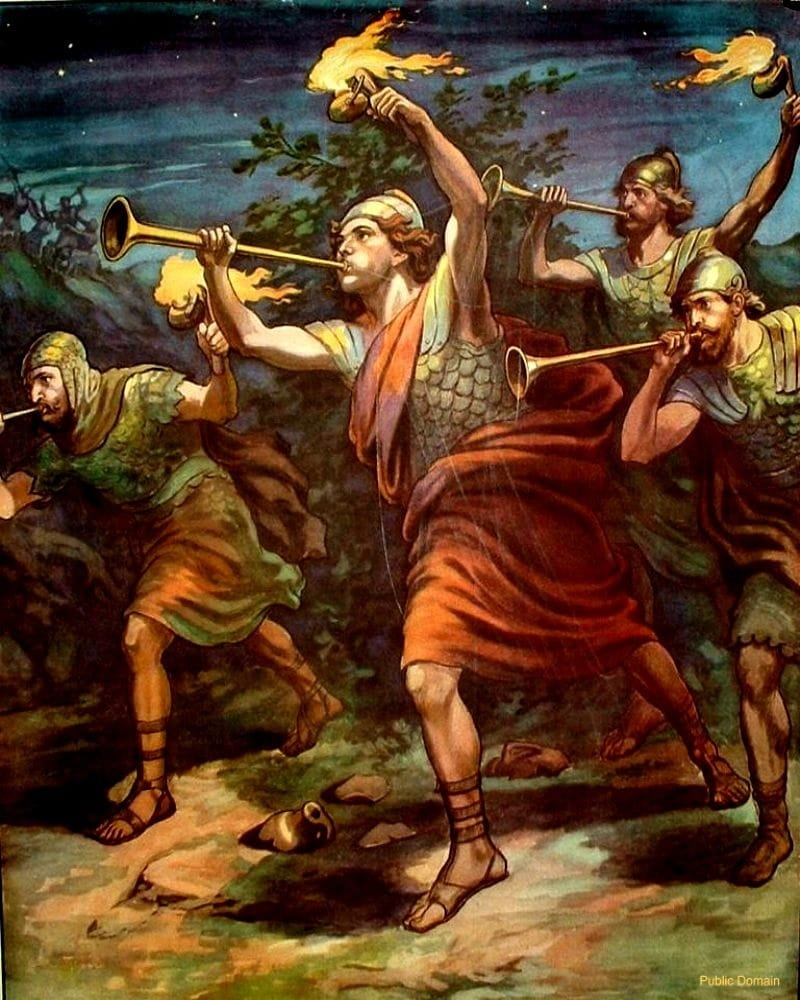
God listens to the spectrum of our prayers–including those when we are timid and fearful, confused and anxious, even those for which there are no words (see Romans 8:26)! Gideon (see Judges 6-8) was timid and reluctant; and yet he prayed for God’s help to strengthen his resolve. He ended up defeating a mighty army with just 300 men, and was listed in Hebrews 11 as one of the heroes of Faith. David’s psalms and prayers include many that are timid and questioning, yet God described King David as a man after His own heart. Even Moses doubted his abilities and prayed that God would send someone else to speak to Pharaoh. God answered Moses’s request, sending Aaron to help, but it was through Moses that God delivered an entire nation!

Sometimes, our timidity can be traced to our doubts or fears. Sometimes, it can be traced to guilt or shame. There are many reasons why we may “feel” timid, frightened, or unworthy to come before a Holy God, to ask for His help or guidance when we feel inadequate, or to admit that we have failed. But we must remember that NOTHING can separate us from God’s Love or from the privilege of praying to Him. A timid heart is not always a humble heart, but a humble heart is often a timid heart. And God promises to give grace to the humble (James 4:6).

Photo by Meruyert Gonullu on Pexels.com

We should rejoice with those who pray boldly (and not arrogantly). But never despise the lowly and timid prayer. After all, what makes prayer effective and powerful is not who is doing the praying or what words we use, or even how we feel– it is to WHOM we pray that makes all the difference.

Every Day Counts

Tomorrow, my mother will celebrate her 87th birthday. Her life spans an incredible period of history. She can remember times of poverty and hardship during the Great Depression. She remembers hearing about the attack on Pearl Harbor on the radio, and worrying about her father in the Navy, and her mother working long hours in the factory. As a young wife, she sent a husband to fight in Korea, while she awaited the birth of their son. In her day, she cooked on a coal-fired stove, attended a one-room schoolhouse, wore poodle skirts and saddle shoes, and used outhouses. She has lived through the age of television and the internet– she watched a man walk on the moon (in black and white) and watched the World Trade Center towers burn and collapse (in color) on TV screens in real time. She learned to take shorthand in pencil, to type on a manual typewriter, and has done data-entry on a desktop computer.

Photo by Pixabay on Pexels.com

Mom has seen a lot of changes in her life. But years ago, she developed habits that have not changed. Every day, she reads a passage of scripture, and every day, she spends time in prayer and meditation. That doesn’t mean she is perfect–some days she misses, due to illness or unexpected interruptions–and this practice, in itself, doesn’t make her a “better” person than anyone else. But daily habits do matter. When Mom lost her parents and her only sister in a matter of nine months, and then lost my Dad just three years later, her faith was tested. But it never wavered. When she had to undergo heart surgery a few years ago, her faithful habits made an impression on the hospital staff, as well as her friends and family. Throughout the recent COVID-19 lockdown, when Mom has lived alone and had to deal with cancelled doctor’s appointments, limited access to medicines, changing her routines, not being able to socialize, not being able to attend worship services, losing a close friend, etc., she has shown resilience, patience, and faith that set a marvelous example to anyone who knows her. Whether her day turns out to be momentous, boring, disastrous, or just ordinary, Mom determines to spend part of it connecting to, and worshiping, her Savior.

This seems like simple advice, but it takes practice and determination, and help from the Holy Spirit. It is tempting to look at our lives in hourly increments, trying to fill each moment and each day with meaningful activity. It is tempting to make prayer and Bible study “part of the plan,” two of the many activities in our busy schedule. And when things don’t go according to our plan, we wring our hands and lament the “waste.” Even when things go “as planned” we still consider worship and meditation one of many routine practices, like exercise, or dusting, or taking a shower. But each day is a gift– each moment is more than an opportunity to be busy “doing” and “making plans.” Each day– even the ones we think of as failures and wasted time–matters. Every day is a new opportunity to see God or to hear His voice–whether in the beauty of a sunrise, or the tears of our children; in the aftermath of a disaster, or an unexpected promotion at work; in stillness, or the noisy commute; in success and in setbacks.

Photo by Pixabay on Pexels.com

Daily habits like prayer and Bible study won’t change the circumstances that come our way; they won’t necessarily help us make plans that make life easier or less frustrating. But they will teach us to place our focus where it truly belongs–on the One who is with us every day and every moment, through good times and bad–on the One who holds today (and tomorrow) in His hand. It doesn’t matter that we fill out a chart, or make a certain goal of pages read or half-hours spent on our knees– it DOES matter that we make it the cry of our heart to seek God every day that we can. Seek His wisdom, seek His mercy, seek His glory. Today.

Blog at WordPress.com.

Up ↑