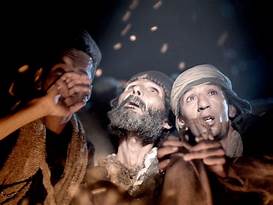
Be Not Afraid

Have you ever anticipated something so wonderful, that, when the time came, you were almost afraid of it? Afraid that the anticipation would exceed the wonder of the actual event? Afraid that the wonder would be eclipsed by some unforeseen tragedy? Afraid that your dreams were too big? That you could never deserve such happiness or blessing?

 That night there were shepherds staying in the fields nearby, guarding their flocks of sheep.  Suddenly, an angel of the Lord appeared among them, and the radiance of the Lord’s glory surrounded them. They were terrified– but the angel reassured them. “Don’t be afraid!” he said. “I bring you good news that will bring great joy to all people. The Savior—yes, the Messiah, the Lord—has been born today in Bethlehem, the city of David!  And you will recognize him by this sign: You will find a baby wrapped snugly in strips of cloth, lying in a manger.” Suddenly, the angel was joined by a vast host of others—the armies of heaven—praising God and saying
 “Glory to God in highest heaven,
    and peace on earth to those with whom God is pleased.”
When the angels had returned to heaven, the shepherds said to each other, “Let’s go to Bethlehem! Let’s see this thing that has happened, which the Lord has told us about.” 
They hurried to the village and found Mary and Joseph. And there was the baby, lying in the manger. After seeing him, the shepherds told everyone what had happened and what the angel had said to them about this child. All who heard the shepherds’ story were astonished, but Mary kept all these things in her heart and thought about them often. The shepherds went back to their flocks, glorifying and praising God for all they had heard and seen. It was just as the angel had told them.” Luke 2:8-20 NLT (Emphasis added)
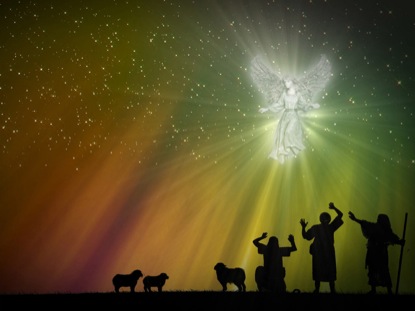
The shepherds on that first Christmas were terrified– their ordinary night had been shattered by the appearance of an angel of the LORD. And that was only the beginning! The angel announced the birth of Messiah– Christ, the LORD– in the nearby village of Bethlehem. And then an angelic host– a vast army– of angelic beings chose to worship in the skies that, just moments before, had been dark, still, and lonely.
“Fear not!” “Be not afraid!” Through the terror and overwhelming glorious radiance came a calm voice. “I bring good tidings of great joy!” “..shall be to ALL people…” “PEACE on earth!” “Christ is Born!”
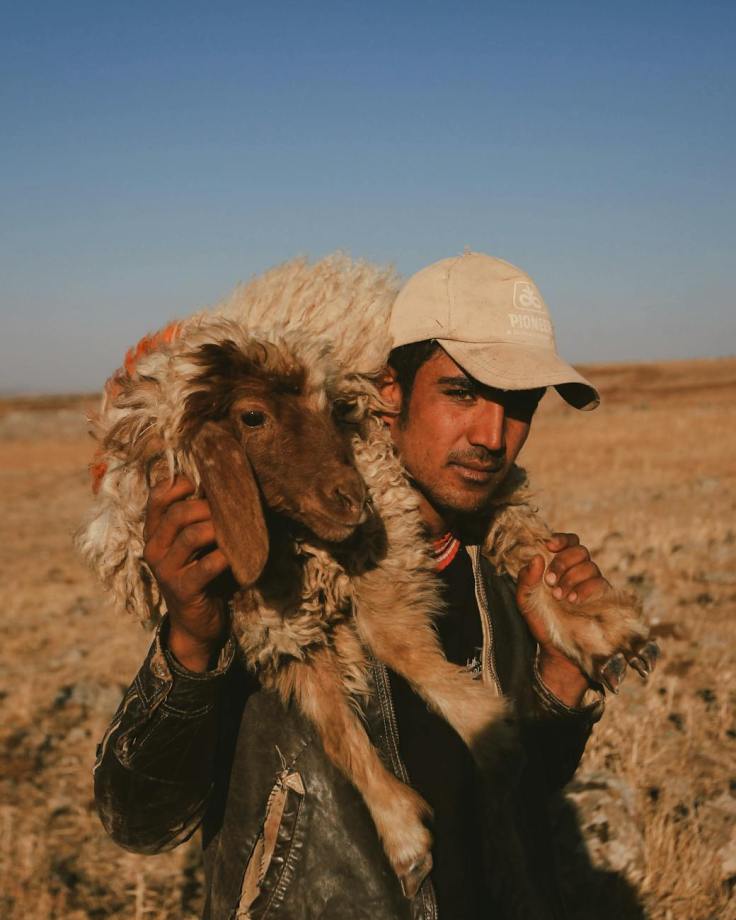
The fulfillment of centuries of longing was finally here. The central hope of the entire nation of Israel had arrived. And the angel left no doubt that the shepherds were welcome, even commanded, to GO and see this miracle with their own eyes. The Biblical account says that they did go– but it also says they stopped to discuss it first. They talked it over and decided to face the mixture of thrilling joy and weak-kneed trembling. Could it really be?! The Messiah! Here and now! But…a babe? Wrapped, not in robes of glory, but in swaddling cloths? And…lying in a manger? Surrounded by sheep and donkeys? What if this was a cosmic hoax? What if there was a mistake? Would they be disappointed? Ashamed? Turned away because of their lowly status?

“Be Not Afraid!” The shepherds talked it over. How could they NOT go and see? What if the news was true?! And in going, they became the first ordinary witnesses of the most extraordinary birth in history! They came. They saw. They believed! And they worshipped.

And then, they shared their experience with others. They went back. They probably shared the news first with the sheep, rehearsing how they would spread the fantastic tale to those who still lay sleeping. But they may also have shouted it in the streets, waking up all the neighbors with the joyous news. The Bible doesn’t give us details. But it does tell us that they went back with joy and gladness. And conviction–“It was just as the angel had told them.” Nowhere in the Bible story did they show any more fear. They had no doubt. The wonder of Christ’s birth was everything they had been told to expect, and more!

This Christmas, we look back at the shepherds, and we try to recapture the wonder of that Holy Night, and the visit of the angels, and the discovery of a tiny Savior in a manger. And we will have the opportunity to celebrate, just as the shepherds did.

What will be our response to His coming? Will we spend this season glorifying a praising God? Will we “astonish” our neighbors as we tell about the Savior’s birth, and His subsequent death and resurrection? Will we heed the angel’s calming tones to “Be Not Afraid” as we encounter the Messiah? As we go “back to (our) flocks” and fields and daily life?

I pray that we will “consider well” this Christmas how “our good God” gave us His “beloved Son”– born in a humble manger, willing to die a humiliating death He did not deserve so that we could be free from the curse of Sin and Death. And may we pray for the courage and conviction to live out and speak out the Joy and Glory of His coming!


Knock…


Matthew 7:7-12 New International Version (NIV)

Ask, Seek, Knock

“Ask and it will be given to you; seek and you will find; knock and the door will be opened to you. For everyone who asks receives; the one who seeks finds; and to the one who knocks, the door will be opened.

“Which of you, if your son asks for bread, will give him a stone? 10 Or if he asks for a fish, will give him a snake? 11 If you, then, though you are evil, know how to give good gifts to your children, how much more will your Father in heaven give good gifts to those who ask him! 12 So in everything, do to others what you would have them do to you, for this sums up the Law and the Prophets.

I have heard many sermons using this passage, and the sermons always focus on our (active) end of the directive–Ask!  Seek!  Knock!   But what does this passage say about God?

God is omnipresent, and He has revealed Himself in creation, and through the lives of His people.  But God is also reserved– He does not give us all the answers; He doesn’t spoil us by catering to our every wish; He keeps certain things behind closed doors.

ancient antique architecture building

“Knock, and the door will opened to you.”  There is no mention of a key or key card, a pass code, or any need for ID– just knock.  God will open the door.  I imagine thousands of (figurative) doors in my life– opportunities, blessings, challenges, relationships– each beckoning.  But the doors cannot be opened from the outside.  I can strain and push, yell and shake my fist at the closed door in front of me, kick at it, even try to break it down.  But if I knock, the door will be opened.

This doesn’t mean that I have no choices or free will as I go along.  I can find other hallways, roadways, even freeways on which to travel.  And there are opportunities along those paths and roads that are not waiting behind a door.  But just like the questions we need to ask, and the quests for which we seek, the closed doors cause us to make a choice– will we knock or walk on?  Will we try to open the door in our own power, or knock and let God open the door from His side?

person standing between two buildings

Ask, seek, knock– God desires that we take steps toward Him.  He will not walk away, or reject those who sincerely desire His presence.  He will not give us “bad” gifts– though He allows us to walk through “the valley of the shadow of death”, He will not leave us there with no comfort or hope.  He will not “lock us out” of His goodness or His Grace.  In fact, HE stands at the door and knocks– waiting for US to open the door, as well.

woman wearing sleeveless dress

Someone may say– “I turned away from the door, walked down my own path, and now I’m trapped behind a wall of doubt and guilt and bad choices.  There are no doors left for me”.  Jesus stands ready to change all that.  There are no walls or dungeons He cannot enter– He will make a door, if that’s what it takes– just ask!  You may have to climb over some of the debris, but He will pull you up and over any obstacle you can imagine.

Someone else may say, “I have prayed and prayed, and God hasn’t opened the door for me…”  I don’t have an “easy” answer for you, and I don’t want to give a canned response– God isn’t a “one size fits all” God– His ways are good, but they are not always comprehensible.  I can only give an example from my own life.  I prayed for years that God would “open the door” for me to be married and have children.  I met several wonderful men, some godly, others just really nice guys who don’t follow Jesus.  I could have fallen into, or schemed my way into a marriage or sexual relationship with one of them– I could have tried to get pregnant for years before I found out I was barren.  I might have made a marriage work, might have adopted children, might have…But I kept knocking on THE door– the one that God set before my heart and soul– the door that called me to enter and be close to Him– to do it His way or not at all.  For over 25 years I knocked– sometimes faintly and with fear that the door would stay closed– sometimes with a sort of desperation.  And one day, the door opened– God’s door, God’s way.  I have no doubts or regrets about knocking at that door, or waiting for it to be opened from God’s side.  I had imagined what was on the other side of that door–what I have received is perfectly sufficient, even as it is totally different from what I imagined.  I never had children of my own– but as I waited for God’s timing, He led me to work with hundreds of children who blessed my life beyond description.  And in waiting, He led me to opportunities I would never have had if the door had opened in MY timing.  All I can say is this– God led me to desire something worthy and good and to His Glory.  I believed it was marriage and family–but even if I were still unmarried today, I would not stop praying; not stop knocking; not stop trusting in God’s goodness and His wisdom for my life.

inside of an abandoned building

Another may say, “I knocked on a door, and God opened it, but it only brought me pain and misery.”  Once again, I don’t have a quick or easy answer for you, and there is no answer that will magically take away pain and misery.  I don’t want to invalidate or deny your experience, and I don’t want to claim that I know why God has allowed you to go through such an experience.  I would only challenge you to be like Jacob, who wrestled with God and would not let go until he got a blessing.  I don’t know why God withholds some answers and allows pain that seems needless and senseless.  And even though I know of many instances where God has brought resolution and healing out of tragedy, I also know that it doesn’t erase all the tears and questions.  My own experience brought years of depression, bitterness, and isolation even as it brought incredible growth and opportunity– I still have memories that bring tears and painful thoughts–but I know that healing is possible, and I still believe that God is “good”– I believe that God is with us even in our pain and sorrow.  I believe that Jesus suffered greatly, not only on the cross, but throughout His earthly life– He faced rejection, betrayal, frustration, misunderstanding, hatred, bigotry, injustice, loneliness, homelessness, poverty, hunger, and more.  Pain is intense, but it is not eternal.  Evil is real and it is miserable, but it is not victorious.

Keep knocking.  Your door may seem like the ultimate barrier, but God wants to open it for you.

ancient architecture brick brick wall

My Hope is Built

We are in the midst of a revival week at my church. Our theme is Hope. So what does “hope” mean for the Christian?

Hope is more than just a dream or a wish or an expectation that something good might happen. Hope for the Christian is a confident expectation, based on God’s character and His promises. Hope is not a wispy airy thought; not a feeling that rides on circumstances or predictions. Hope is a future reality BUILT on a solid foundation.

But it must be built on a sure foundation. Hope that is centered on temporary or insubstantial things will itself be temporary and insubstantial. It will fade; it will founder; it will fail. But hope that is built on the eternal character of God will not disappoint us (see Romans 5:5). We may be shaken by circumstances; we may have questions about how or when our future will unfold– but we can have confidence in the final outcome. We can rest securely, even in the middle of the storms of life, knowing that God is in control; that God has a perfect plan and has the power to sustain us and to redeem our situation.

So where is my hope today? Is it being built, or is it flitting around in the clouds of whims and wishes and baseless dreams? When I pray today, will I have hope in God’s sovereignty, or will I hope in my own plans and my own strength?

1 Corinthians 13 ends with this statement: “And now these three remain: faith, hope and love. But the greatest of these is love.” We “love” to quote this verse, and others in the chapter, but the Apostle Paul ties Love to hope and faith. They work together. And notice that Paul doesn’t say these three exist, but that they “remain.” They are solid. They are eternal. They are the core of what makes us followers of Christ, who is the source of all three.

My Hope is Built. Just as a building takes time and stands the test of time, Hope is developed as I experience God’s faithfulness. And that comes as I continue to put my faith in God’s Sovereign control over my life and the lives of those I love. God is the master architect. What He builds will last. And I can Love with confidence and endurance, because it is anchored to a solid Hope that is built up in Faith. My hope is built on nothing less that Jesus’ Blood and Righteousness! On Christ the Solid Rock I STAND!

TGIF!

Many people look forward to Friday. For students and many workers, it marks the end of the working week and heralds the weekend. For many, it may also be payday! Fridays represent accomplishment; completion of work done, reward for recent efforts; a measure of our success. We chant “T.G.I.F.”– “Thank God it’s Friday.” But we might just as easily say, “Thank God it’s Finished!”

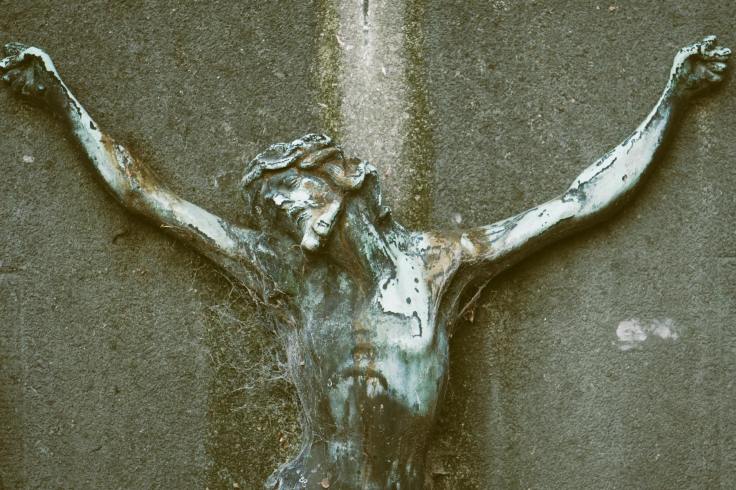
We’re in the Lenten season, leading up to Easter, and, of course, Good Friday. Much more significant than any ordinary Friday, Good Friday is the day we remember the Crucifixion of Jesus Christ. It was on that day that Jesus Himself cried, “It Is Finished!” just before He took his last breath.

On that first “Good Friday” there seemed to be little reason for celebration. Jesus had been found guilty in a hasty, overnight trial, by the Jewish Sanhedrin for saying that He was the Son of God– Blasphemy if one is NOT God, but simple truth if one is the promised Messiah! The Roman Governor, Pontius Pilate, after examining Jesus’ claims and trying to literally “wash his hands” of the case, turns Jesus over to be crucified by the angry mobs whipped up by the Jewish leaders. And Jesus is beaten, tortured, taunted, and nailed to a cross to die a gruesome, public death. “It is finished!” For Jesus’ followers, this meant defeat, fear, and gloom, rather than accomplishment or celebration.

But Jesus knew better. Even though His death was filled with suffering and humiliation, it was the culmination of His life on earth. And it was the necessary final scene before the next Act– the Acts of the Apostles–the coming of power and hope by the release of the Holy Spirit to indwell those who had put their faith in Jesus AS the Messiah! And so it is today. We have great cause to celebrate Good Friday. Without the Pain of the Cross, there would be no Glory of the Resurrection or Promise of Eternal Life!

Even though this Friday is not Good Friday, we can spend today reflecting on the life of Jesus– the incredible example He gave of how we are to trust in God, love others as God loves, and cherish life–both now and through eternity, as God’s gift. And we can be thankful that, because of Jesus, “IT IS FINISHED!”– the battle against Sin and Death is over. We can live abundant lives, without the fear of eternal death, and we can look beyond the curse of Sin to the Glory of Restoration and Renewal.

Thank God it’s Friday!

Just 10 Percent

Bible teacher and author Chuck Swindoll is credited with saying, “I am convinced that life is 10 percent what happens to me and 90 percent of how I react to it. And so it is with you. We are in charge of our attitudes.” When I was younger, I liked this quote, but I quibbled with the numbers. Surely, we are in control of our reactions and attitudes. And our circumstances don’t determine our lives completely. But just 10%?! What about those whose circumstances are overwhelmingly tragic?

I thought of some of my father’s experiences, and it seemed as though what happened to him in four short years should have had a greater impact on his life. During the four short years that my father was in high school (1945-1948), his family experienced at least three tragedies. Dad grew up on a farm. His dad was a dairy farmer, as was his grandfather. Dad grew up expecting that he would, along with his father and brothers, spend the rest of his life as a farmer. But then, everything changed. First, Dad’s oldest brother was drafted into the Army at the very end of World War 2. Though my uncle was not in combat, he was badly wounded in Germany, as his unit was sent in to find unexploded bombs and land mines, and ordered to clear out rubble. Dad had lost one cousin in the war, and several others had come home wounded or changed, but my uncle’s situation was post-war, and unexpected. It meant more work for my grandfather and the two younger sons, even as they were still in school. It meant uncertainty, as they waited for word from thousands of miles away over several months.

Uncle Jack recovered and returned to the farm. But then, on Christmas Eve, there was a house fire. While the family escaped without major injuries, the house was a total loss. Furniture, clothes, pictures, heirlooms, farm records and financial papers– all gone. Dad moved in with his aunt and uncle to continue his education. But two weeks before graduation, his father died suddenly from complications from emergency gall bladder surgery. My father’s world had been turned upside-down in just a few short years and at a critical juncture in his life.

Photo by Pixabay on Pexels.com

However, as I’ve matured and thought about it over the years, those events, among other tragedies and triumphs in Dad’s life, really DID only amount to a small percentage of his life. Even numerically/chronologically, those four years were less than ten percent of Dad’s time on earth. Dad couldn’t control the events of those years. He couldn’t have predicted them, and he couldn’t erase them or go back and undo them. But he chose how to respond and react to those events. He learned from them.

Circumstances in our lives, whether tragic or terrific, present us with choices. Will we turn to God, or away from Him? Will we become better, or bitter? Will we seek to assign blame, or seek solutions? My dad and his brothers were not able to continue the dairy farm their father had built up. Without the records and registration papers for the various cows, without their father’s experience and acumen, without money to upgrade their facilities and equipment, they had to sell most of what their father had built up. Uncle Jack kept the farm land, but he took a second job. Dad was drafted and sent to Korea for his own post-war odyssey, and came home to work at the local feed mill, and later in a factory job. He passed away several years ago, partly as a result of complications from gall bladder surgeries.

My dad’s life was impacted and shaped in part by tragic circumstances. But Pastor Swindoll is right– at least 90 percent of my dad’s LIFE was shaped by his attitude and character. My father was a man of faith and integrity. He cherished his family and his role as a father– partly because of the loss of his own dad; but also because of the lasting legacy his father had passed on. He spoke often of his wonderful memories growing up on the farm. He lost out on his dream of being a farmer. But he also made wonderful memories with the life he chose to pursue off the farm– picnics and vacations, family reunions, family devotions, watching baseball (live or on TV), sharing laughter and tears, and making sure we knew we were loved and protected. He ministered to people in the community, mowing lawns for widows, or visiting shut-ins. He taught us to love music, baseball, and animals. He taught us the value of prayer, reading the Bible, and living a life of faith. Dad could have been bitter. He could have chosen to wallow in self-pity or anger. He could have become obsessed with rebuilding the life he “lost” to circumstances. He could have decided that God had “robbed” him of the future he had expected to have. But he chose to believe that God had a plan for his life; one that was bigger than his boyhood dreams and bigger than his expectations. Dad didn’t rise to great wealth and power. In the world’s view, his life was not a great success. He never became rich or famous; he wasn’t powerful or important in politics or business. But the memories he treasured and the relationships he developed were far more than 10% of his life!

As I get older, and look back on the circumstances of my own past, I am encouraged and challenged to think that they represent only a small fraction of my life. I can’t control many of my circumstances– health setbacks, financial struggles, accidents and tragedies. But I can control my attitude and my response. I wanted to marry young and have children and raise a family. But that never happened. I married late, I was barren, and my step-children were already grown. I wanted to live in a big farmhouse; instead I live in a small apartment. But I would not go back and undo the circumstances that have shaped my life. I have marvelous step-children and grandchildren. I have had opportunities that were only possible because I was single for so long and because I was childless. I have a better appreciation for the family I have– including nieces and nephews and cousins– than I might have had if I had been wrapped up in my own smaller family. Dad taught me to trust God’s plans for my tomorrows. That’s what he did. And I choose to do the same– after all, God controls 100% of my future!

Anticipation…

Yesterday was the first Sunday of Advent. Four weeks later, we will have Christmas Day. For some, the time will pass in a frenzy of shopping and wrapping– the time will fly by! For some, the time will pass in meditation and reflection– it may seem to crawl. For some, the time will pass with no difference from any other time of year. For most of us, there is a sense of anticipation…we are waiting for something: the “Christmas Spirit,” the festivals and events, the time spent with loved ones far and near…

Photo by Any Lane on Pexels.com

Christmas, more than any other day, brings this sense of expectation. We sing songs, listen to stories, reach out to friends and neighbors– all in anticipation of a single day. And sometimes, the anticipation and expectation exceed the realities of the day. We feel disappointed in the gifts, or the weather, or the circumstances. But our anticipation shouldn’t be about the single day on the calendar. Christmas is so much more than just a day, or even just the “spirit” of the day.

Photo by Any Lane on Pexels.com
Photo by Ivan Samkov on Pexels.com

We don’t know the actual, historical day when Christ entered human history as a baby. As the Gospel of John relates– “In the beginning was the Word, and the Word was with God, and the Word WAS God.” (John 1:1) But this Word, this Only Begotten Son of the Father, this second person of the Trinity, DID enter human history as a member of the human race. He came and dwelt among us, His creation. He walked and talked, ate and slept, worked and wept, lived and died as a man. The Lord of All Creation tasted freshly baked bread and felt the first raindrops of Springtime. The King of the Universe wiggled His toes in the sand, and wiped sweat from His brow. The Lamb of God shared belly-laughs with His friends over a shared joke. The Lion of Judah wept over the death of His friend. The Author of Life knew what it was to die, abandoned and betrayed.

None of this is anticipation for us, as it was for the prophets of old. It is history. Christ has already come. He already lived a life of compassion and grace, wonder and weariness, agony and anticipation, and, most of all, Love. “For God so loved the world that He gave His only begotten Son, that Whosoever believeth in Him should not perish, but have everlasting Life.” John 3:16 Christmas for us is not about anticipating Christ’s arrival. Christmas is the celebration of what that arrival means for us all these years later and forevermore. And we can celebrate all the wonder of Christ on any day of the calendar year. But there IS real anticipation at Christmas– the anticipation of Eternal Life and Christ’s triumphant return. Just like the prophets waited and wondered, we wait in Hope of a glorious reunion.

Christmas, December 25, 2022, may be a disappointing day–it may be dreary, gloomy, lonely, or disappointing in its circumstances. It may bring us bad news, or heartache. But it will also bring us another opportunity to rejoice– to rise above whatever circumstance brings to focus our thoughts forward and upward, where Christ, who once came as a baby, now reigns and rules and waits– anticipating the same reunion that brings us hope and healing.

Photo by Bich Tran on Pexels.com

Blog at WordPress.com.

Up ↑