Push and Pull and Prayer

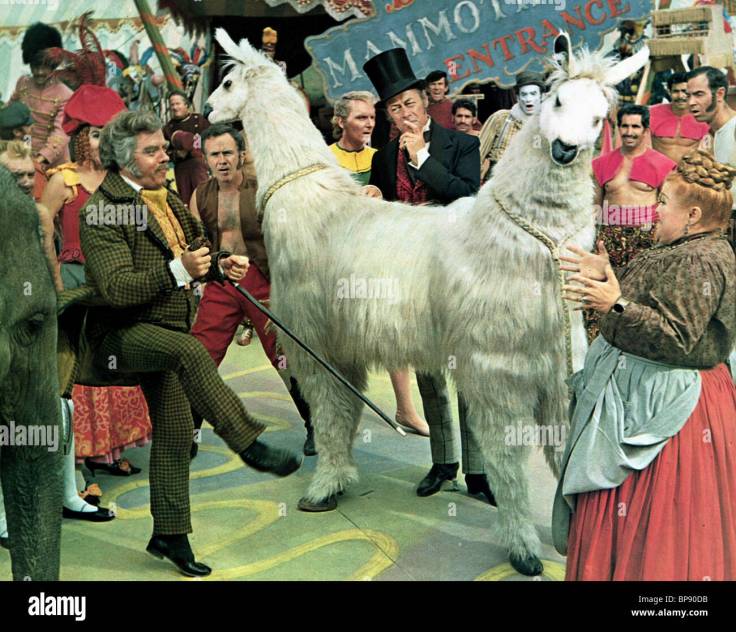
Many years ago, I watched the movie, Dr. Doolittle. (This was the old version with Rex Harrison, long before Eddie Murphy or Robert Downey Jr. starred in the more recent remakes.) I can still remember the wonder of seeing a “Pushmi Pullyu– a quirky, mythical-type creature that looked like a conjoined llama. It had two heads and two sets of front legs pointing in opposite directions. If one half of the creature wanted to run forward, the other half would have to try to run backward. It was large, awkward, timid, but rather useless for working, herding, etc.

Then, last week, as I was entering the ladies’ rest room at church, I was astonished to find it opening with only the lightest of touches. Just as I tried to push open the door, someone on the other side was pulling it open on her end. Both of us commented on how easily the door swung open as I pushed and she pulled at the same time. We didn’t plan it– we couldn’t see the other person helping us along– but the result was worthy of remark.

There are many things in life that have a push and pull element, including prayer. When we push and pull in opposite directions, awkwardness, complications, and chaos can be the result. How many times have I prayed very specifically for a desired result, only to find that MY will, MY timing, and MY wisdom is NOT the same as God’s?! God still hears– and answers– my prayers. But my expectations and desires cause me to be frustrated and even ungrateful for God’s response. Instead of seeing His protection and provision, I see only delay or denial. I’m trying to push God in one direction as He pulls me in another!

How much easier when I pray for God’s will to be done “on earth as it is in Heaven!” (Matthew 6:10) When I truly push in God’s direction, doors open and peace wraps around me like a comfortable blanket. I may not “see” God’s actions on the other side of the door, but I can sense His presence in a remarkable way!

The same is true when asking for prayer from others. Sometimes, we refuse to ask for help or prayer– maybe we’re too proud; maybe we are too ashamed to admit our weakness or need; maybe we just isolate or withdraw. At other times, we may ask for help (or offer help) that is contrary to what we (or others) really need. I remember one friend from college who would consistently ask for advice, only to come up with dozens of excuses why she couldn’t (or wouldn’t) follow any of it! And I’ve been there, too!

Praying with and for others is a great privilege and responsibility. It is not enough to simply listen to a quick request or make an offhand promise to “pray about it” later. It is important to listen carefully, show compassion, and pray according to Scripture and God’s will. Showing compassion may involve asking questions, getting some background about the circumstances, offering practical help, or stopping to pray WITH the person NOW as well as praying later.

Thankfully, prayer is not meant to be like a Pushmi-Pullyu. God designed prayer to be much more than a means of asking for help. And His power is designed to help us become “more than conquerors” (Romans 8:37). In fact, the Apostle Paul reminds us that God is “able to do exceedingly, abundantly, above all that we ask or think, according to the power that works in us” (Ephesians 3:20)

Why Ask Why?

I’ve been asking myself “why?” a lot lately in regards to this blog.  Why am I spending my time writing about prayer?  Wouldn’t I be better served to spend my time productively– making something useful, keeping the apartment cleaner, going to the gym–even spending more time in prayer instead of dissecting it and babbling on to an invisible audience?

But the truth is that I began writing this blog in response to another question, a more basic question thrown at me (not personally, but thrown out to all who believe in the power of prayer)–  “WHY?”  They weren’t asking the question because they really wanted to know my reasons for praying; instead, they wanted to make me feel ashamed and embarrassed, to doubt God’s goodness and my faith.  In fact, they weren’t asking “WHY” so much as asking “HOW”.  How can you continue to believe in God and continue praying in light of random shootings, manifest injustices, rampant corruption, and senseless tragedies?  How can you say that God is good, when people continue to get away with evil?  If God exists, where is he, and how can you just sit back and trust in him?

The fact that I DO continue to trust God doesn’t mean I don’t have questions and concerns, and even righteous anger about the state of the world and the tragedies that fill it.  The questions come pouring out, sometimes keeping me awake at night, sometimes catching me at a raw moment– and they are important questions.  To pretend that I never wrestle or struggle with the questions is to say that good and evil, justice and mercy, that God himself– none of it really matters enough to seek an answer.  God forbid!!

But there is a vast difference in asking “Why?” and challenging God by saying “How? or How come?”

pexels-photo-1027931.jpeg

Consider a small child who asks, “Why is the sky blue?”  (Don’t you just love the inquisitiveness of small children?)  “Well…” I can explain that the sky itself isn’t really blue…I can go on to talk about scientific principals– the property of light, refraction through water molecules and dust particles, and more..I can point out that the sky doesn’t always appear blue, etc.  At the end of my long and factual discourse (assuming the child hasn’t already interrupted), s/he is likely to simply shake their head and ask, “But, why?”  WHY?  Because I haven’t really answered the heart of the question.  I explained HOW, not WHY.

Now suppose I don’t feel like being pedantic, and I simply answer “Because.”  You can guess what comes next.  The child will ask, “Because WHY?”  Because “Because” isn’t a sufficiently satisfactory answer.  The child wants more; he/she yearns for more comprehension; more understanding.

As an adult, we find this kind of questioning frustrating and annoying.  I think it is because we have been conditioned to think that questions either have a “How come” explanation that sweeps away much of the wonder and mystery, or a “because” answer that leaves us unsatisfied. We are frustrated by questions to which we already have a pat answer, and we are frustrated by questions to which we have never received a satisfactory answer.

As an adult, I may well ask, “Why is there evil in the world?”  This is an important question; one I should be asking.  Experts can and will give me all kinds of “how” answers– how the brain is wired, how emotions work, how society has failed various groups of people, how political structures create oppression, how religion teaches intolerance, how poor diet or lack of sunny days … there are a million explanation of “how” evil exists or why it persists.  And many of these explanations contradict each other, so they can’t even give a conclusive answer.  But just throwing up my hands, and saying, “just because” does nothing to answer my question OR provide understanding that could help alleviate the effects of evil in the world.  “Because” communicates my powerlessness to comprehend.

BUT

Something amazing happens when I stop merely asking people for answers to these questions and start asking God.  I don’t get a magical, comprehensive, incontrovertible answer to life’s thorny questions.  God doesn’t send me a “cheat sheet” with all the “right” answers.  I’m not suddenly an expert on good and evil or what should be done to eliminate crime and disease and poverty.  I still have to wade through the “how come” explanations and use my limited judgment to decide what course of action I can take to try to make a positive difference.  And I will make some mistakes along the way.  But when GOD says, “Because”, there is an authority, a majesty, and a wisdom that can never be present in my answer.  I say “because,” because I have no more to say; no better answer.  God says, “Because,” because HE IS the answer! And the cause!  And he gives explanations in his word for many of my questions– even if I don’t like the answers!  He doesn’t explain “how come” the sky is blue–even though science can tell me the “how come.” God doesn’t have to explain the blue sky –He causes it to be blue.  “Why is the sky blue?”  God makes it so.  “But why?”  Because He is God and I am not.  God explains “how come” there is evil in the world– it’s called SIN–but he doesn’t leave it there.  “Why?”  Because we have the free will to choose good or evil.  “Why?”  Because God wants willing obedience and loving companionship with us.  “Why?” Because God is love!  “So why does he allow evil to continue?”  Because he has a plan that involves redemption and restoration and renewal.  He is the cause of this plan, he is its author and finisher.  Moreover, he is the cause of my desire to ask “why?”, to seek for a more fulfilling answer, to yearn for a solution to the very evil that prompts my questions.

pexels-photo-490411.jpeg


I won’t stop asking “why.”  Not because I don’t have any answer, or because I don’t know the answer.  It’s just that the answer is so much bigger, so much better, so much MORE than I can handle in the shortness of this lifetime. And it’s important that I not only keep asking the question, but that I keep defending the answer. Because perhaps today, or tomorrow, or every day next week, someone may ask me WHY?


1 Peter 3:14-16 English Standard Version (ESV)

14 But even if you should suffer for righteousness’ sake, you will be blessed. Have no fear of them, nor be troubled, 15 but in your hearts honor Christ the Lord as holy, always being prepared to make a defense to anyone who asks you for a reason for the hope that is in you; yet do it with gentleness and respect, 16 having a good conscience, so that, when you are slandered, those who revile your good behavior in Christ may be put to shame.


“Little” Prayers

I was challenged the other day by someone who suggested that my prayers are “too little.” Well, not precisely “my” prayers– I head up a small prayer group at church, and we pray for people in our congregation and our community. We keep a running list of people who are suffering from various health issues or housing issues, relationship issues, etc. We also pray for our church staff, for missionaries that our church supports, for upcoming ministry opportunities and programs, and other seemingly “small” requests. These are posted on a list and shared with some of our church members who are shut in or who want to lift up their neighbors in very specific ways.

I don’t think this person meant to be insulting but I see our prayer group quite differently. These “little” prayers are heartfelt, and I believe they reflect the heart of our Savior. Yes, Jesus offered salvation through His death and resurrection to “whosoever believeth” (John 3:16) throughout all the ages, but in His ministry, Jesus was extremely personal and intimate. Among His disciples, Jesus taught them to ask for “our daily bread” and for simple forgiveness as “we forgive” those who have hurt us. (Matthew 6:9-13) And I think our prayer group reflects that aspect of prayer. So, even though our list may seem “small” as we pray for Ned’s pneumonia, or Clarice’s upcoming CAT scan, next week’s teen outing, or Chris’s continuing housing issue, it is also showing compassion and worth to each individual, sharing in their “burdens” (Galatians 6:2) because God loves each of us without condition or limit!

On the other hand, I think I know what this individual was trying to convey. We are also called to pray “big” prayers. Jesus encouraged His disciples to have “big” faith– the kind that moves mountains (see Matthew 17:20– although Jesus says that even faith as small as a mustard seed can result in this kind of answer!) “Little” prayers can be the result of “little” faith. We pray for God to intervene in ordinary things without asking Him to unleash His power and majesty. God is able to do infinitely more than we ask or imagine (Ephesians 3:19-20) through the power of Christ in us! So are we tapping into that promise, or limiting our prayers to what we think God might do on a small scale?

I don’t think our prayer group is doing this at all. We often pray for peace in the Middle East and in other war-torn regions. We pray that the spirits of Anger, Lust, Deception, and Rebellion will be bound and that the eyes of the lost will be opened; that hearts will be softened toward the Gospel, and that our brothers and sisters facing persecution will be, strengthened, emboldened, and protected/rescued. We pray for Revival and renewal across nations and continents. And we pray that in these “little” situations, God’s love, wisdom, and power will be shown clearly– even to those who deny His existence.

Prayer is a huge topic, and a lifelong pursuit. I was challenged by this comment the other day to look closely at how our group functions; at how I present prayer each week; at how we perceive the calling and responsibility of prayer. In the Proverbs, we are told that “As iron sharpens iron, so one person sharpens another.” (Proverbs 27:17) Comments like the one that challenged me the other day are golden opportunities to learn, review, and grow in our daily pursuit. The Church is strengthened when we allow for each member to speak– especially if it stretches our view of things we take for granted!

I don’t believe there are any prayers that are “too little” to bring to God– He delights in our smallest steps of Faith; in our complete and simple dependence on Him. But I also don’t believe that our prayers can or should be limited by the mundane and ordinary. We should come boldly to the throne of Grace– not because of who we are or what we’ve done, but because of the Awesomeness and perfect Sufficiency of the God we serve!

Prayer and Marriage

As a young girl, I prayed about being married. Most of my prayers were pretty shallow– more about the wedding than the marriage. I dreamed of dresses and decorations, flowers and a shadowy “prince charming” type of groom, whisking me off into the sunset and living happily, dreamily ever after.

The years went by…MANY years! I prayed and dreamed through my twenties; I prayed and hoped through my thirties; and I prayed with less hope and more desperation in my early forties! But my prayers changed as I saw marriages around me. I saw many marriages that were solid, even through tough times. And I saw many “fairy tale” marriages crumble. I saw a lot of heartbreak, anger, and tears, as people who had once vowed to love one another “’til death us do part” fought over furniture and who got the kids over minor holiday weekends. I heard from frustrated wives who felt like they had made a huge mistake, marrying the “man of their dreams.” Some of them compounded the mistake by looking around for a replacement “Mr. Right.”

Instead of praying about a wedding, I began praying about marriage. Instead of praying for “Mr. Right,” I started praying that God would help me become “Mrs. Right.” And I prayed that God would show me what I should do for others during the time that I was single, as well as what I could do for him in a marriage relationship.

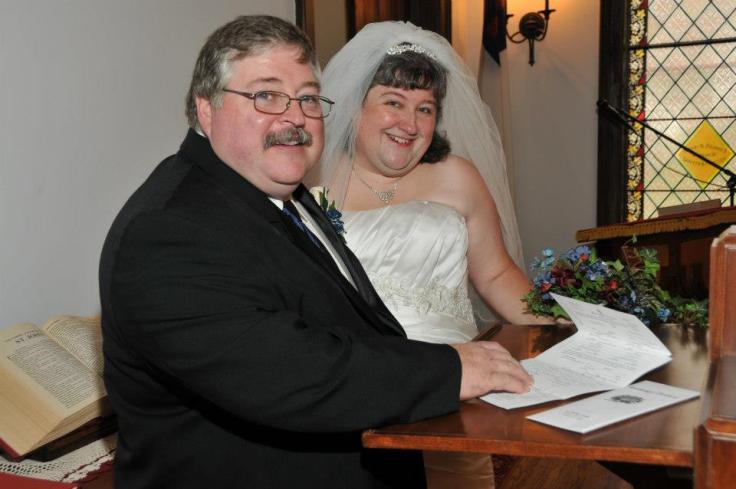
Thirteen years ago, I married my husband, David. He isn’t “Prince Charming,” though he can be charming and noble at times. He is, as I am, a flawed human being. David was married before, and he carries the hurt of betrayal and loss of trust from the past. I carry the hurt of being rejected and passed over for so many years. Marriage doesn’t make the past disappear. Marriage is not a “cure” for such hurts.

But marriage is more. God instituted marriage from the beginning for a man and woman to come together in a mysteriously intimate relationship that models what God’s love is like. (See Genesis 2:24; Matthew 19:5; Ephesians 5:31 and others.) David and I don’t exist to “complete” each other. We don’t cease to be our own individual selves. And yet, we are not the same as we were before our marriage. We are more than the sum of our parts– we are ourselves, yet we are one– the Fairs. He is David Fair, and I am Lila Fair, but WE are THE Fairs. And spiritually, we are also one WITH Christ– as individuals and as a couple. We walk forward as One. We make decisions together. We share hopes and dreams, as well as struggles and disappointments. We fight sometimes– not against each other, but against differences or misunderstandings that could weaken US as a couple and weaken our relationship with Christ.

I don’t pray any less often or less fervently now that I am married, but I pray daily about my marriage. I thank God that He was with me through all the “single” years. I thank God that He continues to work in our marriage– that David and I know more about love and faith, hope and fulfillment than we did 13 years ago! I pray that David and I will grow together for many years to come. I pray that we will impact our family as we live out what a Godly marriage is supposed to be. I pray that our marriage will inspire young men and women who are looking (as I once was) to see what a solid marriage involves– that the way we talk to each other, and behave, and work, and live will give hope to future couples, and glory to God.

Marriage and prayer go hand in hand. Prayer cannot guarantee that marriage will be easy–or even than it will survive. Marriage takes two people praying and walking in the same direction! But marriage–and life– without prayer will never be all that God intends it to be.

Batting Averages

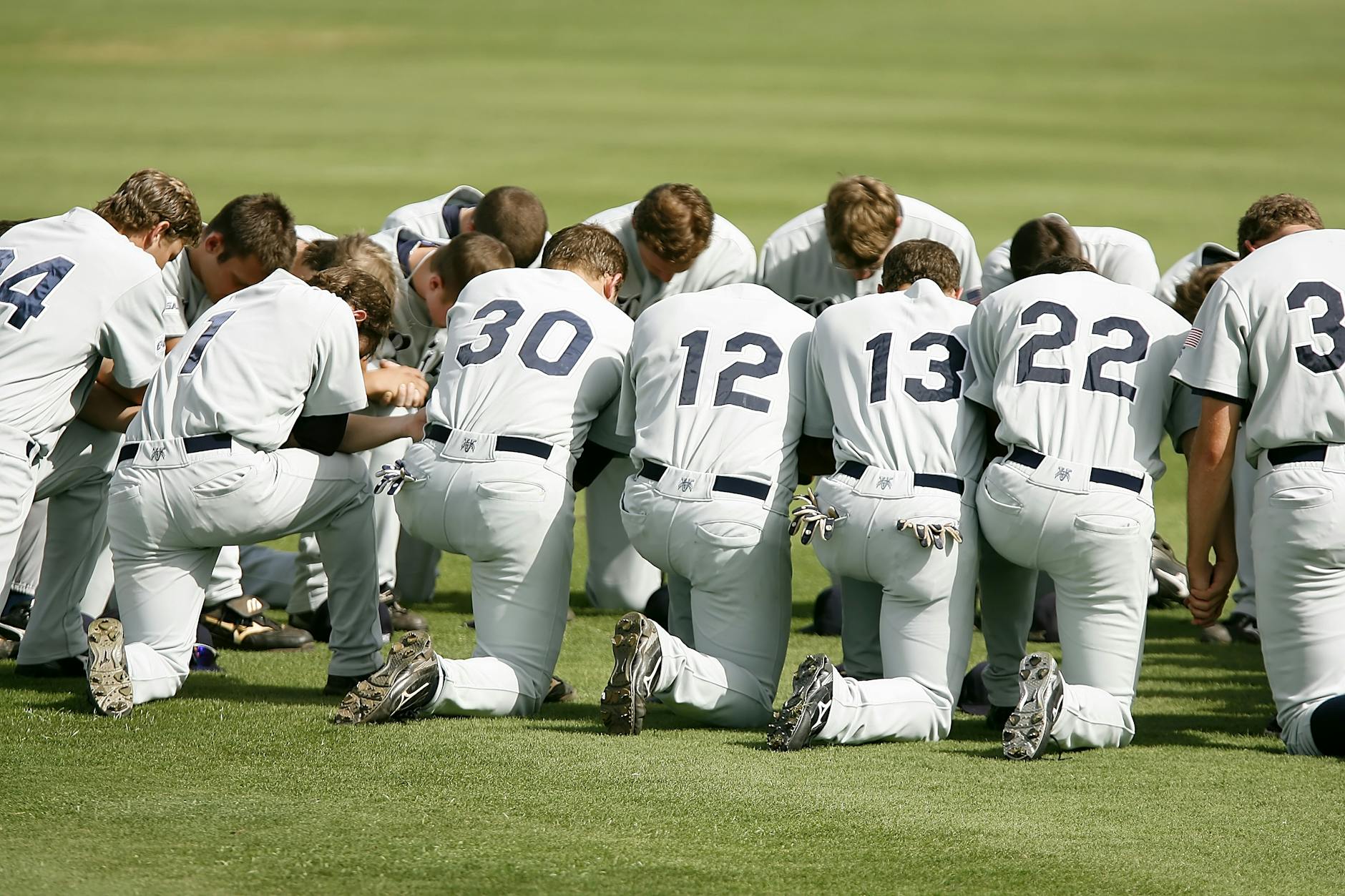
It’s Baseball season, and one of the statistics that many people follow is the batting average. The batting average is the number of hits achieved over the number of times “at bat.” So, if a batter hits the ball once over the course of three times “at bat” during a typical game, he is batting at 33% or .333. Batting averages may fluctuate during the season. A typical batting average is around .250, or one hit for every four times at bat. That means the average player fails to get a fair hit 75% of the time! A really great hitter may reach a temporary batting average of .500! That means he is still failing at half of his attempts.

I don’t like to fail. I don’t like the feeling that my first efforts are sometimes just not good enough to succeed. But often my first efforts are not my best efforts. And it is better for me to fail and to learn, than to have easy success and grow proud and complacent. Failure means that I still have something to learn; I still have room for improvement; and I still need “coaching.” I can’t have success on my own.

I have a “prayer batting average.” And to outward appearances, my “average” is pretty low. For each time I pray, I may get a “hit”– an instant, positive, definitive answer– for one of ten or so of my many requests. That’s just the way it goes. I may pray for six people to be healed or have their health restored; two people to resolve relationship issues; one person to get a job or find a better apartment; and three lost souls to be saved. God will not immediately grant all those requests. That’s not because I am a failure at praying, however. Prayer is not a “magic bullet.” Prayer is a dialogue with God. When I pray over a long period of time for a certain outcome, God may be working to change the situation in His own way and in His own time. And He may also be working to change MY perspective or outlook on a particular situation.

Like the baseball player who practices his swing, I pursue prayer with a goal of becoming better at it–better at understanding how it works, and why it is so important to a closer relationship with God. My goal is not to have God automatically answer prayer “my way.” Rather, it is to understand how God is working in, and through, and around the situations I can see. In His wisdom, He works in ways I cannot see to accomplish His perfect will.

And as I continue to pursue prayer, God allows me to participate in that perfect will– even when my “batting average” seems low or inefficient. Life is filled with “fast balls” and “wild pitches.” I must learn when to swing, how to swing, and how to work as a “team player” in the Kingdom.

So today, let’s not get discouraged if our prayers don’t seem to be “hits.” Our job is not to be perfect– our job is to pursue fellowship with the One who IS!

Photo by Pixabay on Pexels.com

Praying for Rain

Spring has arrived.  In my part of the world, that means many people are hoping for milder temperatures, gentle spring rains, and new growth after the cold and colorless winter.  Most of us love the idea of spring, and the promise it brings.  Those soft days of baby birds chirping outside our window as the gentle raindrops roll down; of newly budded trees and flowers opening to the warmth of the sun; the smell of freshly turned earth in gardens and fields; the bleating of lambs and the down of chicks and ducklings; children squealing in delight as they leap from puddle to puddle in their colorful boots; the world slowly waking up in a thousand shades of green..

rain-boots-umbrella-wet.jpg

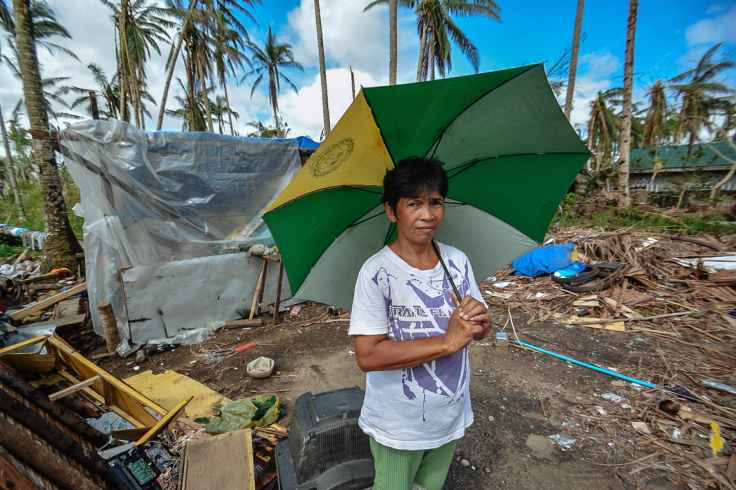
Of course, it never seems to go exactly like that– sometimes the weather this time of year can be volatile– tornadoes, freak ice storms, sudden heat waves, flooding, or a mix of all of the above in a matter of hours!  Chirping birds can’t be heard over the roar of traffic and blaring car radios.  The smell of exhaust chokes out the aroma of rich dirt or fresh flowers.  The same rain that brings puddles also brings mud and run-off and potholes in the road.  And, possibly because we have such expectations of spring, it seems to fly by and disappear almost before it comes.  There is a joke that sort of summarizes the unpredictable nature of spring around here– “I love spring in Michigan (or insert another Midwest state)– last year it was on a Wednesday!”

Like the season of spring, prayer holds promise and expectation.  God promises to hear our prayers, but sometimes our expectations are not in line with God’s answers.  Farmers pray for dry days to plow and plant, and rain to come before and after to soften the earth and water the seeds.  Little League players want the rain to come on Monday, and the diamond to be dry by Saturday.  School children want the rain to come overnight, so the playground will be dry for recess.  Commuters want the rain to fall after they drive to work and before they have to drive home.  All may pray for rain, but not in the same way, for the same reasons, or at the same time.

pexels-photo-890600.jpeg

We all want the promise of easy growth, gentle weather, and comfortable routine.  But God’s plan may involve blustery days and muddy driveways.  God will bring rain, and sunshine, in his time.  He will calm the storms and blow away the clouds.  He will send us flowers and rainbows, and perfect days for flying kites and playing baseball.  And maybe, this year, it will be on Wednesday!  But the stormy days remind us of three things:

  • God is with us through the storm.  He is with us when the rains come; and when the clouds roll back to reveal the rainbow.  He knows the pain you feel when you view the storm damage and assess the loss.  Even as the seasons change, he has promised to be with us always
  • God is stronger than our storms.  His ways are wiser than ours, and his plans are better.  We may be drenched and covered in mud when we expected to be dry and comfortable, but the race isn’t finished yet.  We may fall down, but we’re not out!  He can give us the resources and the power to rebuild, renew, and start over.  No matter how short (or long) our season of storms, it is only a season– it will pass.  Just as winter gave way to spring, spring leads to summer–sometimes overnight; sometimes in fits and starts.
  • God is eternal.  Storms and seasons are local and temporary.  I may be experiencing spring in Michigan, but others are experiencing rainy season in India, or “fall” in New Zealand.  It can be sunny here, and snowing in Minnesota, and raining at my cousin’s house in Alabama.  And when I am praying for rain, someone close by is praying for sunshine.  But someday, and for all eternity, God will be our source of light– there will be no need for storms and seasons, no need to pray for rain.

crocus-flower-spring-buhen-53595.jpeg

The Lost Art of Saying Grace

“God is great, God is Good…”
“Come, Lord Jesus, be our guest…”
“For what we are about to receive…”
“Bless us, O Lord, and these, Thy gifts…”

Saying grace at the family dinner table used to be a tradition.  So much so, that it has been made fun of several times in the movies and on television.  Some families recited a favorite prayer; others selected a family member to do the honors.  Some families held hands; some closed their eyes; some stood.  But NOBODY touched their plate until the Amen.

Grace has fallen out of favor in recent years.  Some families still practice it for the holidays or special occasions, but many of us have lost the art of saying grace.  In fact, many of us no longer have a family dinner table.  Some of us eat, sleep, and live alone; others share a house, but rarely a meal, and never a grace.  I would like to think that many of us WOULD say grace more often if  we made time and effort for it, but many others actually hold grace in contempt, calling it old-fashioned; a senseless ritual, or a meaningless tradition.

I want to look a little more closely at grace– how and why we say it, and what it means (or should mean) as part of our daily walk with God.  Calling grace a meaningless tradition may sound harsh, but it may also be a valid criticism.  If “Come, Lord Jesus…” could be replaced with “Gentlemen, start your engines…”, then it might be time to rethink the entire practice.  Similarly, if we dust off grace, only to say it for company, or to show that we still acknowledge tradition and have “good manners”, we’re missing the point.  Grace should be more than just a moment to bow our heads, say a few familiar words, and dig in…grace has become laughable and spoof-able precisely because it has become senseless, formulaic, awkward, and grudging.

I am a big fan of Jimmy Stewart. And this short clip from the beginning of the movie Shenandoah is a prayer said sarcastically by a bitter man who lost his wife and promised her that he would continue to raise their children in a “Christian” home, in spite of his own anger against God. (He later has a change of heart in the movie.) There are many other film and TV scenes that make fun of saying grace without any remorse, repentance, but with a heavy dose of disdain.

I read a tragic statement by someone who claimed that saying grace is actually “graceless”– tactless and inane.  The writer suggested that when we thank God for food, we are really thanking him for feeding us, and choosing to bless us, as he allows others to starve– that saying grace makes us feel more special/less guilty in light of social and economic inequities, which he blithely allows.  In other words, saying grace, in this person’s opinion, makes us arrogant and apathetic to the condition of others, while giving an unjust God undeserved thanks.

I would posit that it should be just the opposite.  I suppose there are many who pray with the arrogant mindset suggested above, but their mindsets and their hearts are not mine to judge.  True grace is not about the recipient of the grace, or the other potential recipients of grace, but about the giver–God– and his worthiness to receive our sincere thanks.  If I believe that God is indeed unjust, then it makes little sense to feel “blessed” or “special” at all– an unjust God is also capricious and unreasonable is not likely to be impressed or swayed by my smug “thank you,” anyway.  So not praying doesn’t make me any less arrogant or apathetic toward others, nor does it move me to be more grateful or more generous than one who prays.  It merely passes the blame for all injustice to God, leaving me off the hook, and making me feel more just than God.

tablegrace

However, if God is loving and gracious, promising perfect justice in his time, and forgiveness to those who seek him; a God who promises to be close to the poor in spirit, those who hunger and thirst for righteousness, and who are broken and contrite; I am not thanking him for who I am, for what I have, or for what I think he should do.  I am thanking him for who he is and for what he has chosen to give.  Some days, I may NOT have a lot to eat, or pleasant surroundings. I may be the victim of injustice done by evil people. But I can still thank God for what I DO have and for who HE is. And on those other days, in thanking him for the very things I would take for granted, I am reminded that blessings are not given for me to boast about or hoard, but to share with others.  That’s what saying grace SHOULD do–cause us to reflect on God’s goodness, our true neediness, and our call to share God’s blessings with a needy world.

Grace is also an invitation– asking God to be part of every moment of our day.  According to his Word, he’s always present, anyway.  But grace is a way of acknowledging and welcoming that presence.  And that invitation isn’t limited to Thanksgiving or Sunday dinner with the whole gang.  That invitation can be made anywhere, by anyone, at any meal (or snack, or midnight raid on the fridge!)

Is God welcome at our dinner table?  Does he share in our drive-thru breakfast, or our trip to the deli?  Do we allow him to join us at the restaurant, where others might overhear and find us quaint and old-fashioned?  Does he sit with us in front of the TV or computer as we absent-mindedly munch on a sandwich?  Grace isn’t about our goodness, our riches, or worthiness to enjoy God’s blessings.  Grace is about a gracious God who has poured out blessings on a graceless and fallen world; a God who loves us all equally and offers to give us something more precious than food– freedom, forgiveness, and family–forevermore.

gracelady

“God IS great; God IS good; Now we thank him for our food.”
“Come, Lord Jesus, be our Guest; let this food to us be BLESSED”
“For what we are about to receive, may the Lord make us TRULY grateful.”
“Bless us, O Lord, and these, THY gifts, which we are about to receive from THY bounty. Through Christ, our Lord. Amen.”
“Dear Heavenly Father, thank you for this day and this food. Bless it to our good and to your glory. May all we say and do bring honor to Your Name. Amen.”


Happy New Year!

Today is New Year’s Day. And for most of us, nothing is really that much different than yesterday. Some of us have the day off from work; others don’t. Some of us will begin new ventures this year; others won’t. But we face January first with expectation and hope. Why?

There is something about looking forward. Sometimes, it can fill us with dread– especially if we imagine the worst or have some reason to expect a dire outcome or consequence for one of our past actions. But most of the time, we look forward to a new year with some level of confidence and even eagerness. We make plans, promises, and resolutions. We fill in calendar pages and make appointments in our planners. We dream about goals and accomplishments we hope to fulfill by this time “next” year. And hope makes us happy.

What makes you happy and gives you hope today? Is it your career? Your family? The savings you have in the bank? Is it your ability to make things happen? Or your past success in planning for the future?

What if 2025 brings disaster– to you personally, or to the world around you? What if the economy fails? What if war comes to your town (if it hasn’t already!) What if this is the year you face Cancer? Can you still have hope? Can I still wish you a “Happy New Year?”

We don’t know what this year will bring. But we CAN know the timeless and eternal Hope that is in Jesus Christ. Even if we face uncertainty, grief, struggles, pain, loss, injustice, or misery. We may not find “happiness” in this year, but we can find joy and peace that surpass all understanding (see Philippians 4:7).

How can we do this? The Apostle Paul tells us in the very same passage to “be careful for nothing.” (see v. 6) That doesn’t mean to be careless, but rather not to try to control all the variables and circumstances in our life. Instead, we are to take everything–EVERYTHING– to God in prayer. So every day of 2025, we can offer up the day, the night, and all that happens within them to a loving God who KNOWS our future. He not only knows what will happen TO us; He knows what can happen THROUGH us, AROUND us, FOR us, and WITHIN us! He knows what resources we will need, and how those resources can be made available. He knows what is truly best for our growth, fulfillment, and joy. That doesn’t mean that we won’t have to suffer or that we won’t have questions and even some doubts. And it doesn’t mean that we sit back and do nothing. But we can do our best to step out in Faith, knowing that God can redeem even our mistakes– if we let Him.

There is one other part of the Apostle Paul’s directive–Gratitude. We can be thankful, even in the midst of pain and suffering, frustration and grief. Not because we are suffering, but because we are NEVER alone, and NEVER forgotten. God’s plans may involve suffering, but they never end there. Just as we turned the page on 2024, God will one day make ALL THINGS NEW.

Someday– and it could happen in 2025 for all we know– we will be ushered into something completely new. Not a new year, a new decade, a new millennium, a new epoch, a new age, or a new phase, but a completely new Heaven and Earth.

And THAT’S a Happy New worth hoping for, waiting for, and being thankful for. Right now, and every day of 2025!

Praying With Confidence

I had a surprise last week. Something I had prayed for– arrived early! Why was I shocked? Hadn’t I prayed about this very thing? Did I think God was too busy to hear my prayer? Or not powerful enough to answer?

Sometimes, when we pray for things, we have a high expectation that God will answer our prayers exactly as we wish. But other times, we pray hesitantly, as though we are asking too much, or asking for the wrong thing. You see, I wanted a certain book order to be delivered in time for us to take the books to a Ham-fest, where we could resell them. But I had waited to order them until nearly the last minute. So my prayers were made with the fear that God’s will might not align with my own. I was surprised and delighted when the books came a day earlier than I expected!

Not only was I surprised by the early arrival of the books, I was surprised to realize that I had been praying without the confidence that God would answer. I knew He COULD answer my prayer. But I wasn’t sure that He SHOULD answer my prayer. After all, if only I had ordered sooner, I should have expected the books to come in time. I didn’t “deserve” to have God answer the prayer above and beyond my expectation…

And this is a horrible way to think. God doesn’t give us what we “deserve.” And, to be clear, He won’t give us what goes AGAINST His will. If I were to steal books in order to resell them, that would NOT be an answer to prayer. But God WANTS to bless us! His ways are not our ways, so sometimes, He “blesses” us in ways we don’t see or understand. But God is a good, good Father.

We don’t have to pray in fear. We don’t have to worry that we are asking for “too much.” We can pray in confidence– even knowing that God may not answer in the way we hope or expect. And we shouldn’t be surprised when God answers in good, and even miraculous ways that go beyond our hopes and expectations!.

“Father, thank you for being so Good and so Faithful in answering prayer. Whether little concerns or big problems, I can trust You to do what is best and to meet my needs. Help me to trust you even more in every area of my life.”

Prayers of Protection

My husband and I just returned from a week-long vacation. We had a very nice time, just getting away for awhile, relaxing, doing some fishing, and enjoying nature. We like to travel, and we like to take the “back roads” and scenic routes. Even so, we pray for God’s protection as we travel.

Praying for “travel mercies” or safety as we travel is not a magical formula. We were not expecting that God would somehow grant us a problem-free trip. Prayer doesn’t change the possibility that we could be involved in an accident, or our car might break down, or we might be subject to bad weather or natural disaster (on that note, we are praying for those impacted by Hurricane Helene– both residents and travelers). Rather, praying for safety in our travels is an acknowledgement that God knows what the future holds, and we do not. God is able to protect us from harm in a miraculous way, if He so chooses. But He is also able to bring us THROUGH tough times and even disasters. Prayer reminds us that we are not the sole authors of our own circumstances.

Nor does prayer negate our obligation to practice safety–we obey the traffic laws, check to make sure the car is in good condition, we wear seatbelts, and pay attention to driving conditions. Prayer simply reminds us that we are not the sole authors of our circumstances. We expect certain outcomes, but God knows both the expected and the unexpected outcomes; we proclaim our trust in Him, no matter what.

So what happened on our vacation? Was it all smooth sailing (or driving in our case)? Not quite. Yet I believe that God answered our prayers and showed His faithfulness. We took our Jeep and drove almost 500 miles away from home without any major incident. We did have to “pump up” one of our tires, and we experienced some rough driving when we went “off road” due to a wrong turn we took. (We ended up on a designated trail for off-road vehicles, thinking it was a short-cut to a rocky beach!) And, just as we were entering our home town at the end of our trip, we witnessed (but were not involved) in a bad crash involving a vehicle fleeing from the police.

I believe that God was with us–not just because we had a good trip with minimal troubles, but because He has promised to never leave us! I know faithful Christians who have died in terrible car accidents. Two years before I was born, my mother and grandmother almost died in an auto accident. God was still with them! Someone once asked me to think about all the “close calls” and even unknown dangers that none of us can see–We have no idea how many times over we “should” have died or “might” have faced grave dangers. In fact, on another vacation a few years ago, we were within 30 miles of home when we hit a deer. No one was hurt, but it could have been a disaster. The accident that injured my mother was along a route that she drove every day. In fact, most accidents happen within 25 miles of home. How easy to pray for protection for a long trip into the unknown and forget to pray when we are traveling to church on Sunday or to the movies on Friday night! Yet God may have protected us from death a hundred times over in our lives without our knowledge. It is only when we see the frightening possibilities that we acknowledge the miracles of His protection in our lives.

It can be difficult to see the hand of God when a miracle doesn’t happen. When “good” people die or suffer extreme pain as the result of a freak accident. We want life to “make sense.” We want our plans to, well, go as planned. And it can be too easy to claim credit when things DO work out just the way we expected. God did not let bad things happen to other people because He didn’t love them. And He didn’t let David and I have a great vacation because He somehow loves us MORE than others, or because we are somehow “better” or “more deserving” of a good vacation.

God answers prayers of protection– not because He has to, and not always in the way we expect Him to–God’s ways are NOT our ways. But we can trust Him, and continue to pray for protection and mercy as we travel through each new day. He IS Faithful. He WILL not leave us to face the unknown alone.

Blog at WordPress.com.

Up ↑