Today is New Year’s Day. And for most of us, nothing is really that much different than yesterday. Some of us have the day off from work; others don’t. Some of us will begin new ventures this year; others won’t. But we face January first with expectation and hope. Why?
There is something about looking forward. Sometimes, it can fill us with dread– especially if we imagine the worst or have some reason to expect a dire outcome or consequence for one of our past actions. But most of the time, we look forward to a new year with some level of confidence and even eagerness. We make plans, promises, and resolutions. We fill in calendar pages and make appointments in our planners. We dream about goals and accomplishments we hope to fulfill by this time “next” year. And hope makes us happy.
What makes you happy and gives you hope today? Is it your career? Your family? The savings you have in the bank? Is it your ability to make things happen? Or your past success in planning for the future?
What if 2025 brings disaster– to you personally, or to the world around you? What if the economy fails? What if war comes to your town (if it hasn’t already!) What if this is the year you face Cancer? Can you still have hope? Can I still wish you a “Happy New Year?”
We don’t know what this year will bring. But we CAN know the timeless and eternal Hope that is in Jesus Christ. Even if we face uncertainty, grief, struggles, pain, loss, injustice, or misery. We may not find “happiness” in this year, but we can find joy and peace that surpass all understanding (see Philippians 4:7).
How can we do this? The Apostle Paul tells us in the very same passage to “be careful for nothing.” (see v. 6) That doesn’t mean to be careless, but rather not to try to control all the variables and circumstances in our life. Instead, we are to take everything–EVERYTHING– to God in prayer. So every day of 2025, we can offer up the day, the night, and all that happens within them to a loving God who KNOWS our future. He not only knows what will happen TO us; He knows what can happen THROUGH us, AROUND us, FOR us, and WITHIN us! He knows what resources we will need, and how those resources can be made available. He knows what is truly best for our growth, fulfillment, and joy. That doesn’t mean that we won’t have to suffer or that we won’t have questions and even some doubts. And it doesn’t mean that we sit back and do nothing. But we can do our best to step out in Faith, knowing that God can redeem even our mistakes– if we let Him.
There is one other part of the Apostle Paul’s directive–Gratitude. We can be thankful, even in the midst of pain and suffering, frustration and grief. Not because we are suffering, but because we are NEVER alone, and NEVER forgotten. God’s plans may involve suffering, but they never end there. Just as we turned the page on 2024, God will one day make ALL THINGS NEW.
Someday– and it could happen in 2025 for all we know– we will be ushered into something completely new. Not a new year, a new decade, a new millennium, a new epoch, a new age, or a new phase, but a completely new Heaven and Earth.
And THAT’S a Happy New worth hoping for, waiting for, and being thankful for. Right now, and every day of 2025!
I had a surprise last week. Something I had prayed for– arrived early! Why was I shocked? Hadn’t I prayed about this very thing? Did I think God was too busy to hear my prayer? Or not powerful enough to answer?
Sometimes, when we pray for things, we have a high expectation that God will answer our prayers exactly as we wish. But other times, we pray hesitantly, as though we are asking too much, or asking for the wrong thing. You see, I wanted a certain book order to be delivered in time for us to take the books to a Ham-fest, where we could resell them. But I had waited to order them until nearly the last minute. So my prayers were made with the fear that God’s will might not align with my own. I was surprised and delighted when the books came a day earlier than I expected!
Not only was I surprised by the early arrival of the books, I was surprised to realize that I had been praying without the confidence that God would answer. I knew He COULD answer my prayer. But I wasn’t sure that He SHOULD answer my prayer. After all, if only I had ordered sooner, I should have expected the books to come in time. I didn’t “deserve” to have God answer the prayer above and beyond my expectation…
And this is a horrible way to think. God doesn’t give us what we “deserve.” And, to be clear, He won’t give us what goes AGAINST His will. If I were to steal books in order to resell them, that would NOT be an answer to prayer. But God WANTS to bless us! His ways are not our ways, so sometimes, He “blesses” us in ways we don’t see or understand. But God is a good, good Father.
We don’t have to pray in fear. We don’t have to worry that we are asking for “too much.” We can pray in confidence– even knowing that God may not answer in the way we hope or expect. And we shouldn’t be surprised when God answers in good, and even miraculous ways that go beyond our hopes and expectations!.
“Father, thank you for being so Good and so Faithful in answering prayer. Whether little concerns or big problems, I can trust You to do what is best and to meet my needs. Help me to trust you even more in every area of my life.”
My husband and I just returned from a week-long vacation. We had a very nice time, just getting away for awhile, relaxing, doing some fishing, and enjoying nature. We like to travel, and we like to take the “back roads” and scenic routes. Even so, we pray for God’s protection as we travel.
Praying for “travel mercies” or safety as we travel is not a magical formula. We were not expecting that God would somehow grant us a problem-free trip. Prayer doesn’t change the possibility that we could be involved in an accident, or our car might break down, or we might be subject to bad weather or natural disaster (on that note, we are praying for those impacted by Hurricane Helene– both residents and travelers). Rather, praying for safety in our travels is an acknowledgement that God knows what the future holds, and we do not. God is able to protect us from harm in a miraculous way, if He so chooses. But He is also able to bring us THROUGH tough times and even disasters. Prayer reminds us that we are not the sole authors of our own circumstances.
Nor does prayer negate our obligation to practice safety–we obey the traffic laws, check to make sure the car is in good condition, we wear seatbelts, and pay attention to driving conditions. Prayer simply reminds us that we are not the sole authors of our circumstances. We expect certain outcomes, but God knows both the expected and the unexpected outcomes; we proclaim our trust in Him, no matter what.
So what happened on our vacation? Was it all smooth sailing (or driving in our case)? Not quite. Yet I believe that God answered our prayers and showed His faithfulness. We took our Jeep and drove almost 500 miles away from home without any major incident. We did have to “pump up” one of our tires, and we experienced some rough driving when we went “off road” due to a wrong turn we took. (We ended up on a designated trail for off-road vehicles, thinking it was a short-cut to a rocky beach!) And, just as we were entering our home town at the end of our trip, we witnessed (but were not involved) in a bad crash involving a vehicle fleeing from the police.
I believe that God was with us–not just because we had a good trip with minimal troubles, but because He has promised to never leave us! I know faithful Christians who have died in terrible car accidents. Two years before I was born, my mother and grandmother almost died in an auto accident. God was still with them! Someone once asked me to think about all the “close calls” and even unknown dangers that none of us can see–We have no idea how many times over we “should” have died or “might” have faced grave dangers. In fact, on another vacation a few years ago, we were within 30 miles of home when we hit a deer. No one was hurt, but it could have been a disaster. The accident that injured my mother was along a route that she drove every day. In fact, most accidents happen within 25 miles of home. How easy to pray for protection for a long trip into the unknown and forget to pray when we are traveling to church on Sunday or to the movies on Friday night! Yet God may have protected us from death a hundred times over in our lives without our knowledge. It is only when we see the frightening possibilities that we acknowledge the miracles of His protection in our lives.
It can be difficult to see the hand of God when a miracle doesn’t happen. When “good” people die or suffer extreme pain as the result of a freak accident. We want life to “make sense.” We want our plans to, well, go as planned. And it can be too easy to claim credit when things DO work out just the way we expected. God did not let bad things happen to other people because He didn’t love them. And He didn’t let David and I have a great vacation because He somehow loves us MORE than others, or because we are somehow “better” or “more deserving” of a good vacation.
God answers prayers of protection– not because He has to, and not always in the way we expect Him to–God’s ways are NOT our ways. But we can trust Him, and continue to pray for protection and mercy as we travel through each new day. He IS Faithful. He WILL not leave us to face the unknown alone.
(SPOILER ALERT)– this post is about The Lord of the Rings and contains many references to plot devices. If you have not read the books or seen the movies, you will be confused and the narrative will be spoiled..
It’s no secret that I am a big fan of the Lord of the Rings by J.R.R.Tolkein. I’ve read through the trilogy several times, and I love to watch the movie version, as well. Even though it is a fantasy story, many of the situations and lessons are “true.” We may not face orcs or dragons or undead ring-wraiths, but we do face difficult challenges, such as war, grief, confusion, and oppression. We WILL face difficulties in life; we need to face them with resolve, courage, wisdom, and action. We may not have to destroy the Ring of Power, but we may have to battle addictions, habits, and relationships that threaten to destroy us.
One of the elements of the Lord of the Rings that captured my imagination from the very first readings was the “fall” of the wizards, Gandalf and Saruman. Saruman, who is introduced as one of the council of “good” wizards, and a mentor/friend of Gandalf, seems like someone who will be able to help the Fellowship in their quest to destroy the Ring of Power. But Saruman has “fallen” under the thrall of the evil Sauron. Using one of the “seeing stones,” Saruman has seen into the Dark Lord’s plans, and has decided that his own wisdom and power are enough to equal those of Sauron. His “fall” is one of self-delusion and arrogance. And his fall is described in terms of color. Where once he was called Saruman the White (the color of light when all the colors come together), Saruman becomes a prism, reflecting all the colors, but broken up, diffused, and no longer giving a true light.
Gandalf’s “fall” in the chasm as he battles the demonic Balrog is both dramatic and unexpected. Coming on the heels of Saruman’s betrayal, it sends shockwaves through all of Middle Earth. It left me devastated. After all, Gandalf is wise, good, and powerful. Having read The Hobbit, it was comforting to have a familiar guiding force to lead this new “adventure.” It is his knowledge and encouragement that has provided leadership and stability for the Fellowship of the Ring. His sudden and tragic absence leaves a gaping hole and many questions. His is a literal “fall.” He falls into blackness– fire and shadow and utter silence.
It strikes me that the wizards of The Lord of the Rings are not unlike the gods and heroes we make for ourselves. We imagine God (and often human heroes, including pastors and other religious figures) as being benign old men, walking among us, offering just enough wisdom, power, and “magic” to entertain, enlighten, and encourage us. We listen for good advice (whether or not we actually take it!), and we take comfort in the fact that they seem to know all that is going to happen. Of course, the wizards in the books are not REALLY gods–they know many things, but they cannot see all ends; they have great power, but they cannot defeat Sauron on their own (nor successfully challenge him, as Saruman learns); they are not always where they say they will be when they said they would be there.
“You’re late, Gandalf!” “A wizards is never late, Frodo Baggins. Nor is he early. He arrives precisely when he means to.” (From the Fellowship of the Ring)
Not only is Gandalf “late” for Bilbo’s special party (according to Frodo), but he completely misses his meeting with Frodo and the other hobbits in Bree, due to circumstances beyond his control. And, when the company seems to need him most, he falls into the great chasm and they must flee to the Elves at Imladris. Galadriel offers some encouragement, but it is tinged with dire warnings. Saruman’s “fall” highlights his shortcomings– he can only “see” victory through compromise, deception, and the machinery of war. Everything about him becomes twisted and sullied. In the books, he ends up being a two-bit tyrant, defeated in his attempt to take over the Shire. In the movies, he “falls” from his tower of Orthanc and sinks into the stinking pools festering around his ruined ambitions.
What about our visions and expectations of God? Sometimes, it seems as though He is “late” or “absent” in the midst of our difficulties. We want Him to come in and save the day– tell us exactly what to do next, or make an obstacle disappear, or bring a host of warriors to fight our battles. Other times, it seems as though our vision of God is seen through a prism…if God is really good, how could He let _______ happen? If God is really just, why is there still so much injustice around us? And what about others who follow a different “God.” Which one is real? Which one is “Right?” How can we know? In fact, those who follow Christ are following a God who faced betrayal and death– and He seemed to be defeated. And sometimes, it seems as though He has left us to the mercy of the evil that surrounds us.
God sometimes seems to be “fallen into shadow.” He seems to be absent. Or at least distant and silent. Just as in The Lord of the Rings, we can be left like the Fellowship– shocked, dismayed, left feeling lost and hopeless. Where is God in those moments?
But when I re-read the books, or when I sit down to binge-watch the movies –again– I find myself seeing things from a different perspective. Gandalf and Saruman both “fall” before even the middle of the story. Saruman’s betrayal seems not just tragic, but nearly insurmountable. Gandalf’s absence leads (indirectly) to the breaking up of the Fellowship into smaller, leaderless factions. But here’s what I see clearly in reflection– the Shadows that seem to swirl around the wizards are just that. They are shadows. There is darkness in the Land of Mordor. But Frodo and the rest of the Fellowship carry their own light. (Frodo, in fact, carries a literal light in his gift from Galadriel). They stay true to one another and true to their quest. As Sam points out at Osgiliath, they have had many chances of turning back and giving up, but they hold on to the hope that Good will win over Darkness, and Truth will defeat oppression and deceit, and yes, even the Ring of Power. Gandalf’s absence, while shocking and discouraging, is not permanent, nor is it devastating. It only seems so in the shadow of uncertainty and the chaos of war and suffering. The other members of the Fellowship actually develop their character, their strengths, and their gifts when Gandalf isn’t there to make things easier. He has already given them the wisdom they need– even if they don’t realize it. Gimli and Legolas become a team as their unlikely friendship develops. Merry and Pippin mature into warriors and diplomats. Aragorn becomes the King he was always destined to be. Frodo and Sam–unaware of Gandalf’s victory until the very end, still face all their dangers, including betrayal by Gollum, and save all of Middle Earth!
And so it is with our difficulties. We are looking around for help, wondering how we will continue if God is in the shadows; if God remains silent. We want to see His hand moving the chess pieces, or hear His voice calling out our next step. When we don’t hear it, we can make bad choices– we can give up hope, compromise with the enemy, or trust in our own power to see us through–or we can stay true to His Word and keep running the good race (see 2 Timothy 4:7-8) God does not abandon us– unlike the wizards, He is omniscient and omnipresent– but sometimes He stays in the shadows, knowing that it is for our development and maturity. I don’t have certainty about my choices and my actions, but I have the Bible and I have the Holy Spirit.. I have prayer. And I have the people God sends into my life to give advice and encouragement. I may not know if I can trust even the advice of religious leaders, but I can compare their advice with what I read in God’s Word and what I see in their actions. When I read the Bible, I read about promises God made to the nation of Israel– promises He kept. I read in Ezekiel, and Daniel, and again in Matthew and Revelation about His promises for the end of the ages.
It may look dark for the characters in The Lord of the Rings as they battle their way through Middle Earth. But I DO know how the story ends! I know that Gandalf does not stay in the shadows– he comes back more powerful than ever! And Saruman’s army of orcs is defeated; Saruman’s poisonous plot to usurp the mind and will of King Theoden is discovered and the king restored to health. And the Fellowship (excepting Boromir) is reunited after Frodo and Sam are successful in destroying the Ring. And I may not know the next step in my own story, but I know how my story will end! God may seem to be AWOL or “in the shadows” during my current circumstances– in my grieving, struggling, and pain. I may not see justice and peace in my near future– I may not see them in my lifetime– but I can KNOW that God is never late. He is never too early. He will arrive precisely when He means to. No shadow will be able to hide Him; no darkness will be able to comprehend Him. He will come in the blazing light of His Glory– and He will come to make all things new!
I have to start this by saying I don’t always feel particularly hopeful as I look around and hear all that is happening. There are a lot of reasons to be discouraged, even depressed. Upheaval, suffering, injustice, disasters, anger, death, and evil surround us at nearly every turn. I can say that my Faith sustains me, and it does, but I still feel beaten down and exhausted by all the chaos and hurt and anger and misunderstanding.
Faith sustains us in times of trouble, but our hearts can still feel heavy. Faith tells us that God is in control, but we can feel powerless in the midst of suffering. What keeps us motivated to look for the best on even the worst of days? What allows us to have joy even as we grieve and strain and suffer? Faith is our anchor, but what renews our strength, and keeps us looking beyond the storm?
In 1 Corinthians 13, the Apostle Paul talks about things that are temporary– possessions, knowledge, gifts, prophecies– and three things that remain: Faith, Hope, and Love. Last time, I wrote about Faith. But Hope is a more difficult and more nebulous concept. The writer of Hebrews defines Faith for us– “the substance of things hoped for; the evidence of things not seen” (Hebrews 11:1). But there is no substance or evidence for Hope. Hope is not a physical anchor; it is not a realization. Neither is it a mere wish, or dream; at best, it is an expectation. Yet Paul says it “remains,” even when other things pass away.
How is this possible– that a Christian should Hope after all else has been lost, abandoned, or destroyed? Isn’t Faith more solid, more important, than Hope? Aren’t knowledge, obedience, and perseverance more important and more tangible? Isn’t hope wispy, fleeting, and conditional? Lately, it sure seems so. I say that I hope we all get through these tough times; that we will come through all this stronger, wiser, more compassionate, more just, more prepared, etc., but what am I really hanging on to? Where is my Hope?
My Hope DOES have substance and a sure foundation–in the life, death, and resurrection of Jesus Christ, and in the sure promises of my Heavenly Father! I may have wispy dreams and half-formed wishes of what I would like to see in my life or in the world around me tomorrow, or next year. I may have dreams and visions of what Peace and Justice and Health look like– and I may never see them materialize in my lifetime. I may have to adjust my vision within the temporary world of possessions, and gifts, prophecies and human systems of government and society. But I can remember the life of Christ; in spite of His circumstances, He remained true to His purpose. In His death, He remained compassionate, humble, and loving toward those who hated Him. In His resurrection, He brought eternal Hope to all who choose to trust Him. I can Hope because He fulfilled God’s promises. He WAS Hope. He gave Hope, and He demonstrated Hope. And He pointed to the Hope of His return and our eternal destiny!
I can be inspired by the dreams and hopes of other Christians throughout the years, even if their dreams have not been realized. I can be inspired by the prophecies of others, even if they don’t match my visions. And I CAN see beyond the darkness of the moment (or the year) to see that people (even I) can change; situations can change; circumstances can change; rhetoric and tone can change for the better. Painful valleys and unexpected upheaval may not be what I would want, but sometimes, it serves to clear out the “sinking sand” where dream houses would otherwise be built.
And Hope is necessary to Prayer– Faith tells us that God hears, even when we can’t see Him or hear His answer. Hope tells us that God cares. He is not aloof in hearing our prayers. He doesn’t answer us out of some worn sense of duty or obligation. He doesn’t just give us His law or even His forgiveness– He gives us restoration and Hope and abundant life! Hope for change in our own lives; hope for progress and healing in our world; hope for victory over sin and evil. Most of all, hope for eternity. God is just and merciful, but He is also gracious and loving beyond all measure. I can cry out when all other hope is gone– His Hope Remains! His Hope is a Solid Rock. His Hope comes with an eternal guarantee.
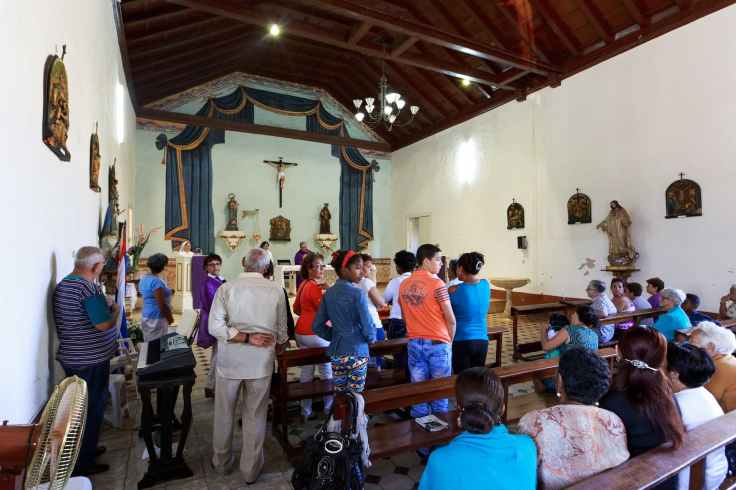
I attend a weekly prayer meeting at our church. A small group of us meets one morning a week to share prayer concerns, pray for our pastors and church workers, missionaries, community members in need, etc. It usually lasts just about an hour. On a “good day,” we have about seven people.
I grew up in a small rural area, and our little country church had a weekly Wednesday evening prayer service. On a “slow night,” we might have seven people. Sometimes, we had thirty or more (nearly half the church congregation)! They lasted about an hour and a half. When I was in college, we had groups that met once a week for prayer. It wasn’t always the same group, but it met at the same time, and, again, we sometimes had as many as thirty in attendance– for prayer. Often, we met in a dorm room, so it was cramped, and many of us were sitting or kneeling on the floor. Once, we had a fire drill, and my feet had “fallen asleep” and I had to be helped as we walked to the exit!
I don’t say this to disparage our current small group, but to point out some of the differences between life in the 1970s, 1980s and today. My current church has activities every Wednesday evening, and much larger attendance than the little country church ever attained. And prayer is still a small part of the Wednesday evening programming. Prayer is encouraged in small groups, individually, and we pray during service. But sustained time set aside for prayer– what the old hymn refers to as “Sweet Hour of Prayer”–in a group setting is becoming more of a rarity.
There are many reasons for it– some good, some not so good.
On the “good” side, it must be noted that corporate prayer today has expanded far beyond the traditional in-person prayer meeting. Prayer can be skyped, group-chatted, zoomed, and conference-called. Prayer can be “hosted” in one location, with satellite groups around the world praying in real time together. In such ways, thousands, and even millions of people can be joined in prayer. This is an amazing development!
And, along with such developments, prayer has become far more global, and far more immediate. I can receive a text or e-mail notifying me of a prayer request from nearly anywhere in the world, and know that I am joining with a host of other Christians when I stop and take a few moments to pray right then.
So what’s the “downside” of cyber prayer?
Speaking as one who has lived the experience of meeting with the same people at a dedicated time over many years specifically to pray, I have observed the following benefits:
In-person prayer meetings offer a more intimate time of fellowship, compassion, and service. I’m not just seeing other people on a screen, reading a text message, or even filling an auditorium seat as part of a huge “movement”– I’m sitting in a circle, breathing the same air, hearing the same hum of the furnace or fluorescent lights, the sound of others breathing, sighing, or even crying quietly around me. Sometimes, I’m holding another person’s hand, or giving them a hug. I am not just among fellow believers, I’m with family. We get to know one another in a deeper way. I know their families, their personal struggles and victories. I learn the rhythm of their prayers, and the issues closest to their hearts– and they know mine! And that can be a scary thing at first– building the kind of trust that intimate fellowship demands. But it pays off a thousand-fold!
In-person prayer meetings are also focused in a different way. Cyber prayer usually focuses on a specific need– sometimes an immediate, or even temporary issue. In-person prayer focuses on the long term discipline of praying. I have prayed with groups over years for lost relatives or unresolved health issues. And while that may seem depressing to read about, in practice it teaches patience, and deepens faith. As a group, we see God’s answers develop according to HIS timing and HIS plan. Sometimes, we see issues resolved quickly; other times, we see how God strengthens us in our trials; and still other times we see God do surprising and miraculous things just as we’ve almost given up hope. And there are some answers we may never “see.” But, primarily, we are not praying for an outcome– we are praying as a pursuit of Christian living; developing a life of prayer, faith, and obedience. We spend much of our time in prayer lifting up requests, but we also spend much of our time in praise, worship, adoration, confession, and thanksgiving– because prayer is a holistic pursuit.
Which brings me to another benefit, one that may not seem obvious at first. Meeting consistently and weekly for prayer is a habit. It builds a character of faithfulness and true compassion like very little else I’ve encountered. God can “show up” wherever two or three are gathered (see Matthew 18:20), and because God is beyond time and space, He can be present in a church meeting room, in cyberspace, or in outer space! But we are temporal. We have to learn patience, hope, and faithfulness. We learn to be trustworthy of the feelings and confidences of others by sharing our hearts. We learn to serve by the practice of serving those around us over an extended period of time. We learn patience by waiting on the Lord, stopping our busy, deadline-driven, goal-oriented lifestyle to make time for the development of our faith.
Finally, in a post-COVID society, sustained, regular, corporate prayer is also sustained, regular, corporate fellowship. We live in an increasingly isolated society. With more people on the earth than ever before, we are more lonely, depressed, anxious, and self-absorbed than ever before. Even in Church! Many people attend service regularly, but still feel unconnected and uninvolved. And others get “involved” in every activity, often burning themselves out trying to “outdo” themselves (or others). Activities that promise fellowship can sometimes fall “flat” in the face of social expectations. We attend, hoping to “get something” out of an experience. We want to be entertained, challenged, encouraged, uplifted, etc. But often, our expectations are not met. We don’t feel included, or we feel overwhelmed. We imagine we are being compared to others (or we do the comparing!), and feel that we fall short. We don’t know enough, do enough, are not “enough.” And we give up. We give up on the church, on other Christians, on God.
Committing to attend a weekly prayer meeting pulls us “out of ourselves.” We learn to pray for the needs of others. We learn to share our own needs and allow others to pray for us. We learn to be transparent and authentic. We learn to forgive.
Prayer is amazing– in any form. Communicating with the God of the Universe is an unspeakably miraculous opportunity, made possible BY God, THROUGH God, for OUR benefit. Prayer in the cyber age is diverse, global, immediate, and effective. But let’s consider the blessing of old-fashioned Prayer Meetings, and not forsake the practice of meeting together (see Hebrews 10:25) , in person, with no other goal than to spend a sweet hour in prayer!
Have you ever been the “victim” of a surprise party? Maybe you sensed that something was “up”, but you were still shocked and elated to see old friends or family all wanting to wish you well on (or near) your birthday, anniversary, wedding, retirement, or even “just because”. Even if you “catch on” or if someone “spoils” the surprise, it can be a wonderful celebration. (Or, on occasion, a disaster.)
Have you ever been on the planning side of a surprise party? Several years ago, we threw a surprise birthday/retirement party for my father. It required several months of planning. We invited cousins from out of town, co-workers, neighbors, and old friends. We gathered old pictures and mementos to display, ordered cake and balloons, and tried to keep the excitement under wraps, lest my father guess our intentions. All the details fell together, except we couldn’t figure out how to get him to the party without guessing. Dad was a genius at “sussing out” secrets and surprises, and also at setting them up. We wanted to turn the tables and give him the best surprise of his life.
Then, less than a week before the party, my aunt (my mom’s sister) died in a car accident. The funeral was arranged for the same day as Dad’s celebration. We suddenly had to wrestle with a decision– to cancel or to forge ahead. With so many coming from out of town, we decided to stick with the original plan. It would be difficult– my aunt’s funeral was scheduled earlier in the day, and there would be about an hour to drive from one event to the other. Dad was certainly surprised–already dressed in his best suit, he drove from a funeral in one town to a party in his honor 20 miles away. From flowers and tears to laughter and cake…it was a day unlike any other. The first several minutes were surreal and jarring. But it was also cathartic. As difficult as the day was, we honored both my father and my aunt. Being surrounded by family and friends, some of whom joined us for both events, became a healing and encouraging experience. It was not the surprise we expected–certainly not the surprise we had planned.
Several years later, (in fact, after my father had passed away) we planned another surprise party– this time for my mother. Mom had, of course, been part of the planning (as well as the trauma) of the first event. As with the first party, we invited family from out of town, ordered cake and balloons, gathered photos and memorabilia, and wondered how to get her to the event without suspicion. All went as planned, and we had a wonderful time. Mom was delightfully surprised, and even more so for having been through the experience of the prior party.
What does any of this have to do with prayer? Well…we prayed for both parties. We prayed that all would go well, that Dad and Mom in their turn would be surprised, that guests would arrive safely, and that the parties would both please and honor the recipient. God answered both prayers. His ways are not our ways– but He is eternally good. He gave us strength for each day in its turn, in the midst of surprises– pleasant, painful, and both together!
But, far more, the two parties offer an illustration of God’s grace in the area of knowledge and foreknowledge. “If I had only known…” is a common phrase, and one that we could readily apply to the Dad’s party. But if we had known the end from the beginning, would we have changed our plans? When we say that we want to know the future, we’re generally asking to know a specific outcome of a specific event– without considering the greater consequences and impact of that outcome. When we pray, we generally pray for a specific outcome, again without knowing the full consequences. What seems like a disastrous outcome to us may be God’s way of preparing us for an unexpected blessing. God doesn’t send bad gifts– disasters come (and God allows them in His sovereignty)–but He doesn’t send disaster and pain to mock us or ruin our lives. Instead, in the midst of tragedy, He gives us unexpected strength, comfort, and sometimes, even joy.
If we had known that Dad’s party would be shadowed; that my aunt would die so suddenly, we might have given in to despair and bitterness. And though the party brought unexpected comfort, it did nothing to erase the overall grief of my aunt’s passing. But we learned so many things that day. We were reminded that our time with Dad was precious– that life itself is precious– in a solemn and powerful way. We were able to receive comfort from unexpected sources. We would not have shared our tragedy in such a public way with those who did not even know my aunt. But circumstances forced us to do so, and in the process, we were able to continue to honor her in the celebration.
If we had known all that would happen at Dad’s party, and not seen it through, we might never have risked planning a party for Mom. If we knew in advance all the joys and tragedies we would face, we would never learn how to trust God for the next step in life. Even more, we would live in constant dread of looming tragedies and negate all the joy of discovery and wonder. We might not be driven to take risks if we already knew their outcome, and we might not learn from our mistakes if we already knew their consequences…and because our lives are so short, we might only see the short-term consequences, and never see the ultimate outcome.
God is above and beyond time– He is the creator of all things, including time. He has decreed for us a beginning and an end to life on earth, and He has decreed that we should life our lives with a certain amount of suspense– of not knowing what the future holds. It holds both triumph and tragedy– trial and temptation. Life is filled with surprises– catastrophes, ecstatic joy, and “a-ha” moments–as well as peacefully uneventful moments to reflect and enjoy.
As we pray today, we can be thankful that God’s knowledge is perfect, and that His power is sufficient to hold us in the midst of shock, lift us in the midst of tragedy, and surprise us with joy along the way. And we can ask Him to grant us the wisdom to trust Him fully when we don’t see the end from the beginning– or from the middle–of the storm.
We’re are approaching the end of another year. It’s time to finish old projects, close out budgets, put away the old calendars, and get ready to start writing a new year in our planners and checkbooks. As we prepare for a “new” year, we set new goals, start new projects, and think ahead to what “will be.”
But, if you think about it, New Year’s Day will just be another day in a new week. The week actually begins on Sunday, regardless of when January first falls. We will go to sleep– possibly after midnight–and wake up just as we’ve done all the days of the past year, and all the days to come in the “new” year. Time is cyclical, as well as chronological. Time doesn’t go backward, but neither does it stop and “start over” when we complete a weekly cycle or at the end of a month, or year, or even a millennium. It just keeps repeating the natural cycles of day and night, moon cycles, and yearly orbits around the sun.
Yet, New Year’s Eve and New Year’s Day are important reminders about the nature of Time. God created the cycles of time– days and weeks, months and years–even though He exists outside of the boundaries of time. And God created the world with a beginning, and an “end.” As humans, we exist within these boundaries. Our years have beginnings and ends; our lives here have a beginning and an end, as well, even if the rest of the world keeps cycling around our short time on this planet.
New Year’s Eve reminds us of our own mortality. We need to be aware of the brevity of life, and the value of our time. We will come to an end. We will “run out” of time. Our plans and actions need to be accomplished in the time we have left. We may see the dawn of the new year, and of the year after that– but we do not know the moments and days we have left in our earthly lives.
But New Year’s Day also reminds us that God has NO end! His mercies are new EVERY morning, every week, and every new year! New Year’s Day reminds us that we can break old cycles and start fresh. We can look forward, instead of always looking back at past mistakes and regrets. And we can rely on God to continue to sustain us through days and weeks and years as they come and go.
Someday, we will be enter eternity. Time will no longer limit us. There will be no deadlines or endings for our dreams and activities. We will never “run out” of time. And we will never face an end of our access to God’s goodness and His Presence.
That is true today, at the “end” of this year, and it will be equally true in a few days, in the “new” calendar year. The calendar may change, but God never will! And we will never “run out” of time to spend with Him– if we have trusted Him for Salvation. What a wonderful thought as we “close out” one year and step into the unknown future of another!
Wherewith shall I come before the Lord, and bow myself before the high God? Shall I come before Him with burnt offerings, with calves of a year old? Will the Lord be pleased with thousands of rams, or with ten thousands of rivers of oil? Shall I give my firstborn for my transgression, the fruit of my body for the sin of my soul? He hath shewed thee, O man, what is good; and what doth the Lord require of thee, but to do justly, and to love mercy, and to walk humbly with thy God…
Micah 6:6-8 (KJV)
“What does God want from me?!” Ask a dozen people this question, and you will very likely get a dozen different (and even conflicting) answers!
Abject obedience? Memorizing a creed or list of rules? Shiny, happy, saccharine sweetness? Sacrifice? Humiliation or self-abasement? Blind faith? Isolation and meditation? Constant repentance and confession? A crusader’s militancy? Your answer reflects your relationship with and belief in God and His character.
But instead of asking a dozen people, you can ask God Himself! The prophet Micah does this, and receives a simple but startling answer– God requires three things: to do justly (or practice justice), to love mercy, and to walk humbly with Him. Jesus also gives us a simple answer in the book of Matthew. When asked by a lawyer, “Master, which is the greatest commandment?,” Jesus replies, “Thou shalt love the Lord thy God with all thy heart, and with all they soul, and with all thy mind. This is the first and great commandment. And the second is like unto it, Thou shalt love thy neighbour as thyself. On these two commandment hang all the law and the prophets.” (Matthew 22:36-40 KJV) In giving this answer, Jesus was referring to writings He had dictated hundreds of years before to Moses (Deuteronomy 6:5, and Leviticus 19:18 respectively).
God is very clear– there is no single and measurable act we can do, no oath we can take, no quest we can complete, and no gift we can give that will, in itself, please Him. There is no magical number of times we must confess, or sacrifices we must make, or rites we must go through to be acceptable. But, as simple as the answers appear, it is impossible for us to meet the requirements on our own. We do not love God with all our heart, soul, and mind– we do not walk humbly with Him; nor do we do what is just, or love mercy toward our neighbors– we do not love others as ourselves.
Even though Micah wrote before Jesus came to earth, he proclaims that God “hath shewed” us how to please Him. His commands teach us His priorities and His character–God values life (Thou shalt not kill); He values family (Honor thy Father and Mother/ Thou shalt not commit adultery); He loves truth (Thou shalt not bear false witness) and Holiness (Thou shalt not have any other gods before Me/Thou shalt not make graven images/Thou shalt not take the name of the Lord in vain). God loves those who trust and rest in His provision (Thou shalt not steal/ Thou shalt not covet/Remember the Sabbath). He is pleased to provide good things; He is a God of Love.
Jesus came to “fulfill” the law– to demonstrate both who God is, and how He wants to help us live life to the fullest. He also came to prove that the law, while good, is not a means to an end for us to please God.
I have a heart to explore this further over the next few days. I pray that what God has laid on my heart will draw me closer to Him, and that sharing it might help others to do the same.
4-5 Celebrate God all day, every day. I mean, revel in him! Make it as clear as you can to all you meet that you’re on their side, working with them and not against them. Help them see that the Master is about to arrive. He could show up any minute! 6-7 Don’t fret or worry. Instead of worrying, pray. Let petitions and praises shape your worries into prayers, letting God know your concerns. Before you know it, a sense of God’s wholeness, everything coming together for good, will come and settle you down. It’s wonderful what happens when Christ displaces worry at the center of your life. 8-9 Summing it all up, friends, I’d say you’ll do best by filling your minds and meditating on things true, noble, reputable, authentic, compelling, gracious—the best, not the worst; the beautiful, not the ugly; things to praise, not things to curse. Put into practice what you learned from me, what you heard and saw and realized. Do that, and God, who makes everything work together, will work you into his most excellent harmonies. 10-14 I’m glad in God, far happier than you would ever guess—happy that you’re again showing such strong concern for me. Not that you ever quit praying and thinking about me. You just had no chance to show it. Actually, I don’t have a sense of needing anything personally. I’ve learned by now to be quite content whatever my circumstances. I’m just as happy with little as with much, with much as with little. I’ve found the recipe for being happy whether full or hungry, hands full or hands empty. Whatever I have, wherever I am, I can make it through anything in the One who makes me who I am. I don’t mean that your help didn’t mean a lot to me—it did. It was a beautiful thing that you came alongside me in my troubles.
Philippians 4:4-22 (The Message)
I have been blessed with the opportunity to do a couple of short-term mission trips. I am not a “Missionary” in the traditional sense. I have not left friends and family behind to move to a new culture or live among strangers for years to spread the gospel. I basically took some working vacations, met dozens of wonderful new friends, learned about the work they are doing in their community, and joined in helping them with a couple of small projects (painting, sorting donated clothes and shoes, working in the school, helping organize a library, putting together scrapbooks, etc.) I was able to go back and visit five times over a dozen years and watch as the children grew up, the school added on, the staff changed, and the mission work focus became broader and more community-focused.
Two things about visiting the mission field– you meet amazing people and you hear amazing stories. Some people will become life-long friends. Some people teach you and touch you in unexpected ways, even if they cross your path only on a single day. Some stories make you re-evaluate all the things you take for granted. Some stories leave you laughing or crying along with your new friends. Some just leave you speechless.
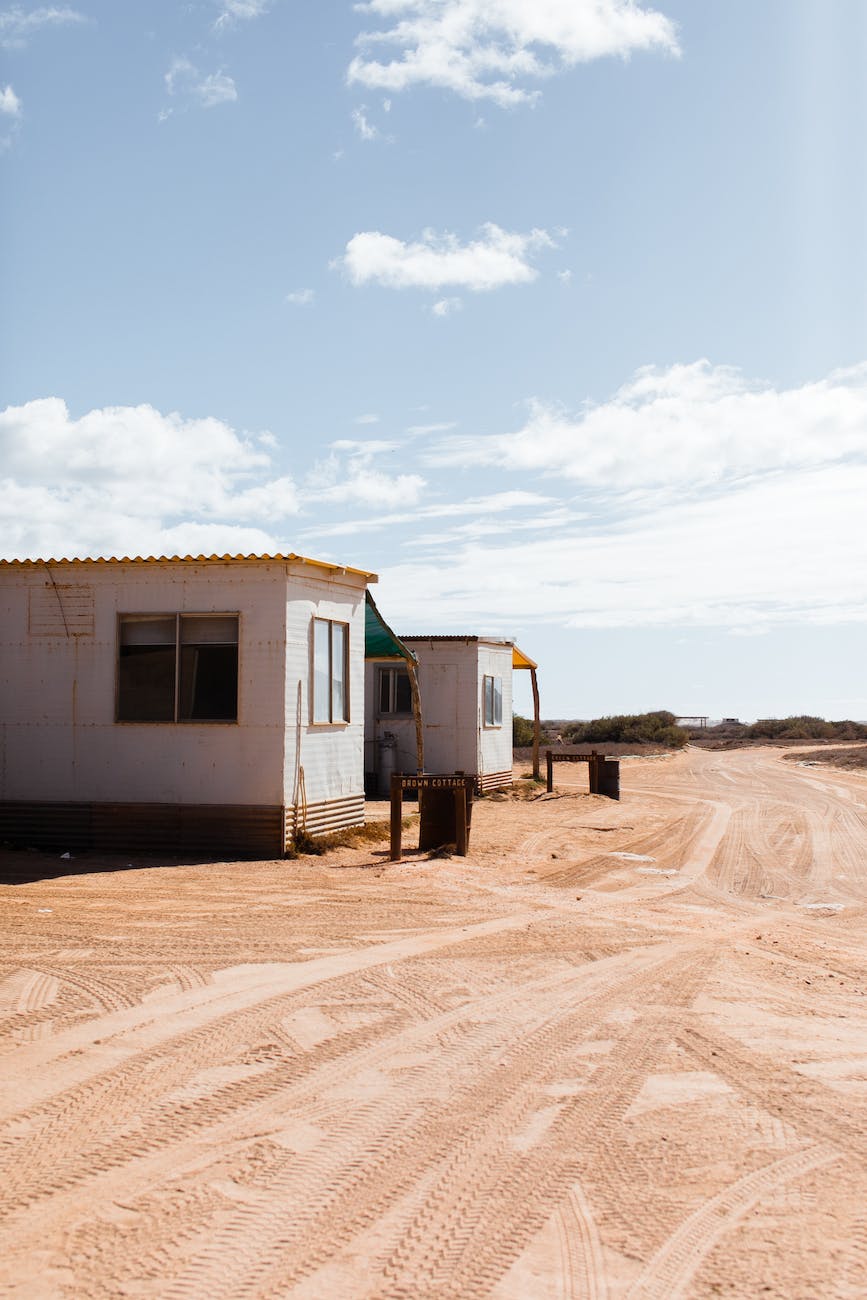
One such story happened on my first visit. We went on a “field trip” to see a developing community not too far from the border between the Dominican Republic and Haiti. Hundreds of Haitian refugees had flooded into the D.R., and at least two mission groups from the U.S. and Canada were working to provide housing, healthcare, and schooling for homeless families. Several teams of workers had already started building small cinder-block houses, a couple of bath houses/bathroom facilities, etc. in an area that used to be a sugar cane field. The houses were serviceable, and had basic electricity and running water. However, the water was only good for washing, not for drinking. The houses were close together, with very small plots for gardening, but the land was rocky and dusty. There was a centralized “administration” building, with a small clinic and other basic community services, a small elementary school, and a small chapel. Most of the homes had an electric light bulb hanging from the ceiling, but no other appliances. Meals were still cooked over a small open fire in the main room of the house. Cots or bed rolls took up most of the other room. The bathrooms were in the communal bath houses.
Not the actual location, but this is not too different from what the first houses were like– very basic.
I set the scene above so the circumstances are clear. These families were happy to be alive, and to have any shelter at all, but they were not living in luxury, nor were they moping and in despair about their condition. Part of our visit was to bring awareness to what efforts were already underway, and what needs were still outstanding. Medicine was scarce; many of the families had at least one person who was HIV positive, and many of the others had issues resulting from malnutrition and untreated childhood diseases. Jobs were hard to come by– the sugar cane plantations and rum factories had a history of exploiting their workers, and very few other jobs were open to Haitians who either didn’t speak the language or had no work permit/official identification. The mission organizations were not set up to provide jobs, income, or food and water. They were surviving on donations, which were sporadic and usually consisted of non-perishable items like clothes and hygiene items (toothpaste and soap).
Into this scene, the mission had received a princely donation of several hundred pairs of flip-flops. One of the bigger department store chains in the states and an overstock of black and white flip-flops– different sizes, but all the same style and colors. There were enough that everyone in the community could have a new pair of shoes! However, after the shoes were distributed, the administrators noticed that people were still going around barefoot. Very few of the people were wearing the new shoes. Finally someone asked if there was a problem with the shoes.
The answer they received is the heart of the story, and a lesson I have never forgotten. The people were very grateful for the shoes. But their greater need wasn’t for shoes. God had heard their prayers and supplied their need. Several enterprising members of the community had bundled dozens of pairs of flip-flops, carried them nearly eight miles into the nearest beach-front town, and found a spot along the beach where they sold the shoes to foreign tourists. Other groups did the same thing. Using the money from the sale of the flip-flops, they bought bottled water and produce at other roadside stands, carried them back to the community. This way, such items would be readily available while they waited for crops to grow in their gardens or a closer source of drinking water could be found.
On a later trip, we visited this community again. There were flowers, gardens, and two or three “colmados” (Dominican-style corner markets), which had grown out of two or three houses being torn down and reassembled. The community was flourishing. The “administration” center was still used mostly as a clinic and community meeting center, but some of the community members were administrators there. The school and church had grown, and there was now an arts and crafts center; community members were making candles, necklaces, wood carvings, and other items for sale at the beach, where they now had an established booth. God had used hundreds of unwanted, discarded shoes to supply an opportunity for people to work together and build a thriving community. There are still issues– health issues, domestic issues, economic issues– plaguing this settlement. But it is now “home” to hundreds of families who once had nowhere to go, and it is a beacon to surrounding communities, giving hope to hundreds more in the area. And, while some of the community members still go barefoot, most have shoes– shoes they chose and bought and paid for with their own money!
I’ve told this story before, because it is such a strong lesson in looking for and making use of every opportunity. God’s gifts are never wasted on us IF we choose to see them as gifts. Even our abundance– our “leftovers” and “overstocks” can benefit others in ways we might never imagine. And our efforts– even small ones taken in the midst of struggles– will pay dividends when we trust in God to supply our true needs.











































 Pursuing Prayer