Jehovah Jireh– The God Who Provides

Often when I am praying, I’m asking for something– “Bless this food,” “bring healing to _______,” “help the victims of (insert recent natural disaster) to find shelter, food, water, etc.,”..

God is a provider. He is the owner of everything, yet He chooses to share good things with us. He provides for the birds of the air and the flowers of the field. He provides for insects and elephants. He provides water and sunlight for all the plants– whether in the rain forest or the desert. He provides air for us to breathe and provides plants to recycle what we breathe out. He provides for the orphan and the widow, the homeless and the dispossessed. And for those who seem to “have it all”– God is the ultimate source of their riches, too.

In the book of Job, we meet a man who seemed to “have it all.” He was wealthy, healthy, respected, and surrounded by family. And when it all disappeared in a flash, his response was very telling. He said, ” Naked I came from my mother’s womb, and naked I will leave this life. The Lord gives, and the Lord takes away. Blessed be the name of the Lord.” (Job 1:21 CSB). Job had learned that in good times or bad, God was his provider. And Job’s faith in God’s provision and His faithfulness gave him hope, even in the worst of his troubles.

The first time we hear of Jehovah (or Yahweh) Jireh is in the story of Abraham and Isaac and the sacrifice at Mount Moriah. God asks Abraham to take his son– the son of the promise; the son for whom he had waited so long– and give him as a sacrifice. Nowhere else in the Bible does God ask for a human sacrifice– in fact, God says He detests the practices of the nations and religions who sacrifice their children to Molech or other gods. Yet, when Abraham obeys, in spite of whatever fear or horror is conjured up by the command, God stops him and provides a ram as an alternate sacrifice. Abraham names Him Jehovah Jireh– the LORD who will provide–as a result of that experience. (See Genesis 22)

But Jehovah Jireh means more than just God providing what we need in the moment or what we ask for in prayer. It also means, “the LORD who perceives, or experiences.” God does not just stand removed from our situation and write a blank check for us to cash when or how we see fit. God is with us (Emmanuel) and sees our deepest and most profound needs. He also sees our daily and even seemingly silly needs. He knows, He cares, and He provides good gifts. God did not send Abraham and Isaac alone on their perilous mission. He was right there, ready to step in and provide what was needed. What an amazing turn-around for Abraham. He went from anguish to absolute joy in those precious moments, and learned to know God in a personal, experiential, and powerful way.

Sometimes, we lose sight of that. Sometimes, it seems as though God is far away and indifferent, or even cruel. When Job accepted the loss of his wealth, his health, his status, and all of his children, it was not easy for him to say, “Blessed be the name of the LORD.” God had taken away nearly everything– in fact, the only things Job had left were some unhelpful finger-pointing friends and a complaining wife! But God restored everything that Job had lost, and then some! God does take away. And it hurts. He doesn’t stop us from experiencing heartache and grief. But even then, He is Jehovah Jireh– the LORD who experiences; the LORD who perceives. He does not leave us without hope or comfort, if we seek His face. As the Psalmist says: “The nights of crying your eyes out give way to days of laughter.” (Psalm 30: 5b The Message)

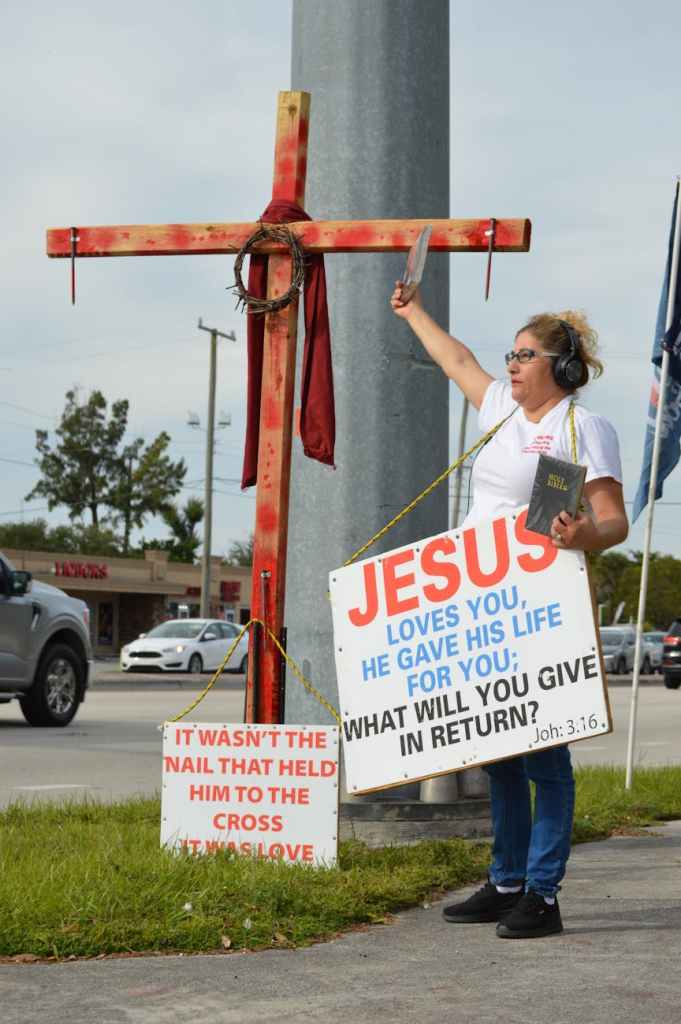
The story of Abraham and Isaac; the story of Job and his losses– each points us to another truth about how God is our provider. He provided His own Son to be our sacrifice– to pay the debt for our Sin, and to give us Eternal Life (see John 3:16). God experienced all the anguish and loss of death so that we would only have to taste it once. Jesus lost everything to gain our redemption. And He rose victorious over death, so we can have hope and joy in this life and in the life to come!

Recently, I was worried about finances– not because we had no money, but we had unexpected bills. I asked the LORD to provide, knowing that He could, but expecting that we would have to raid our “rainy day” fund to get through the week. But God had an amazing surprise– an unexpected gift of $100! Just when we needed it. God could have provided ten dollars, or a thousand dollars. He could have allowed us to dip into the “rainy day” fund and provided some unexpected money the following week. But I believe God saw, not just our monetary need, but my need to be reminded of His loving care and faithfulness. God knew what we needed. He provided what we needed. And He shared in our experience of dependence on Him and joy in His creative answer.

I don’t know where I will be today or tomorrow. I don’t know what needs are on the horizon. And I don’t know how or what God will provide. He may not provide healing for a disease, but strength for the fight. He may not provide a cash gift for our material needs, but He may provide opportunities to trade with neighbors or earn extra money when we need it next. Whatever God chooses to do– whatever He gives or takes away– He is my provider of abundant life. “Blessed be the Name of the LORD!”

(For more about this Name of God, see https://www.christianity.com/wiki/god/what-does-it-mean-that-god-is-jehovah-jireh.html)

Nothing to Fear But Fear Itself

When I taught public speaking in a local public high school several years ago, we had an entire unit on “stage fright.” Studies showed that the fear of public speaking ranked right alongside the fear of death! But why? Why are we afraid to speak in front of a group? Especially a group of our peers?

It turns out that stage fright has two perfectly logical and definable causes: first is the desire to do well/be successful/be understood, appreciated, and accepted. But this natural desire collides with the realistic possibility that we will make a mistake, or that something will happen to keep us from being understood (like a problem with microphones, or interruptions), or that our message will not be accepted or appreciated. Neither of these thoughts, individually, is unreasonable. But the more we exaggerate them, the less our brain can process the duality. We cannot guarantee that all will go perfectly, nor can we assume that all will go horribly wrong. But the more we worry about all the things that MIGHT go wrong, the more we create stress. Ironically, the stress and fear we generate often leads to mistakes we otherwise might NOT have made!

Part of combating fear, then, is to acknowledge that we want to do well– our best, in fact– in spite of whatever circumstances we might face. Instead of exaggerating what MIGHT go wrong, we must put more energy into what we can control, practice, and mitigate. We also have to stay realistic about what we are likely to achieve in our efforts. This is especially true in a situation where we face an unknown or potentially hostile audience. Our goal is to do the best we can with what we have, not worry about achieving the impossible or controlling what is beyond our ability to control.

I was thinking about this recently as I watched several political candidates in debates, town halls, interviews, and even in their TV ads. Many of them show fear, and even a bit of panic over questions from interviewers, reactions from audiences, and attacks from their opponents. It can be nerve-wracking to face “gotcha” questions from an interviewer– questions that ask you to defend or explain things you said years ago or actions you took under different circumstances. But it can also be an opportunity to clarify a position, show growth and how to learn from past mistakes, or create healthy discussions.

The same holds for Christians who face a hostile or unknown audience for the Gospel. We can be very fearful of sharing the Good News if we allow ourselves to fall into worry and negative thinking. We can face “gotcha” questions from opponents– “Why does a ‘Good’ God allow Evil and suffering in the world?” “Why does God send people to Hell?” “What about good people who die without hearing the Gospel?” “I know you. You’re not perfect. Who are you to judge me?”

But the truth is that God hasn’t asked us to have all the answers to “gotcha” questions. He hasn’t asked us to produce “mic-drop” moments in which we stun our opponents into humiliation. But we ARE to be ready, willing, and able to defend– and let’s be clear about this– OUR hope in the Gospel. It is not our job to force everyone around us to accept a particular doctrine, or set of beliefs. It is not our job to make others change their minds or hearts. It IS our job to testify to the Goodness that God has shown to us– even while acknowledging that we continue to suffer in this life– not to explain away God’s actions or other people’s experiences. We don’t have to be out there winning arguments. We just have to be prepared to Speak UP!

The Apostle Peter seems not to have suffered from “stage fright.” He always spoke out– and sometimes regretted it later! But he gives us this wise advice in his first epistle:

 If with heart and soul you’re doing good, do you think you can be stopped? Even if you suffer for it, you’re still better off. Don’t give the opposition a second thought. Through thick and thin, keep your hearts at attention, in adoration before Christ, your Master. Be ready to speak up and tell anyone who asks why you’re living the way you are, and always with the utmost courtesy. Keep a clear conscience before God so that when people throw mud at you, none of it will stick. They’ll end up realizing that they’re the ones who need a bath. It’s better to suffer for doing good, if that’s what God wants, than to be punished for doing bad. That’s what Christ did definitively: suffered because of others’ sins, the Righteous One for the unrighteous ones. He went through it all—was put to death and then made alive—to bring us to God. 1 Peter 3:14-18 (The Message)

Peter doesn’t give us a false promise that everyone will like us or accept our message. In fact, he makes it clear that even Jesus was rejected and suffered at the hands of those who heard the truth from His own lips! Our goal is not to force someone else to accept the truth– but to testify to the truth as we know it, understand it, and live it out. We are not the ones who will judge who goes to Heaven or Hell. We are not the ones who wrote the Law. But we speak of these things because we hold them to be eternal, vital truths. Our job is to let Christ speak through us– not just in our words, but in our Christlike attitude and actions.

We don’t have to fear the crowds– though they may pose very real dangers. We don’t have to fear even those who oppose or oppress us. If we are following our Savior, the only thing in this world to fear…is fear itself.

“Lord, today, I ask for a heart of joy and boldness as I prepare to have an answer for those who would question my Faith and Hope in You. Help me to remember how much You love them, even if they are not willing to accept my words or actions. May I speak to them as You would– with unwavering truth, and unwavering compassion. Thank you for the reminder that you have not given me a ‘spirit of fear, but of power and of love and of a sound mind.’ (2 Timothy 1:7 New King James Version) Keep my mind focused on You and immune to fear. In Jesus’ name, AMEN!”

I Already Prayed About That…

Have you ever been in a season where you felt like you were praying about the same situation over and over with no results? No answers, and no indication that God has even heard? And you feel frustrated and even guilty about praying AGAIN about it?

Photo by SHVETS production on Pexels.com

We live in an “instant” culture. Instant banking, instant coffee, drive-through fast food, and 24-hour news cycles give us the expectation that we can get whatever we want or need with the push of a button or flip of a switch. Just yesterday, I pulled into the grocery store parking lot, and, seeing how full the parking lot was, I drove two miles away to a different store, because I anticipated long lines at the checkout! I don’t like waiting. I don’t like “wasting” time.

Photo by RODNAE Productions on Pexels.com

But God often puts us in a “holding pattern.” He may seem silent or distant, non-responsive or even absent. And in our impatience, we may stop bringing our burden to God, and seek elsewhere for answers or relief. Even when we know that God has promised to hear us, and never leave us alone, we long for instant gratification. And when we don’t get it, we start to wonder and doubt.

Photo by Liza Summer on Pexels.com

Sometimes, I feel angry in my impatience. I want answers! I want to know the next step forward! Other times, I feel hurt. Does God not hear me? Does He not understand my need? Sometimes, I even feel guilty. I know that God “knows” everything. Why do I keep bothering Him with the same thing? Am I asking for the wrong thing? Am I asking in the wrong way?

Photo by Nathan Cowley on Pexels.com

It is okay to have questions. It is normal to wonder. And I don’t have a “quick fix” answer for times like this. I think most of us experience these questions at some point. And the Bible has many examples throughout history of others who waited– some patiently, and others not so much…

Abraham and Sarah waited years for a family. In their impatience, they tried to do it in their own wisdom with heart-breaking results that echo down through thousands of years. Hannah prayed for years while enduring the taunts of her rival, Peninnah, before God gave her a son. A woman who touched Jesus’s robe had prayed and waited years for healing from her constant bleeding and pain. I know of parents who prayed for years that their wayward son or daughter would return home– some kept praying until they died, never seeing an answer.

But one comforting takeaway from all these Biblical and real-life examples– God DOES see and hear us. He left all those stories for us to read, knowing that we, too, would face trying and overwhelming circumstances. God doesn’t always give us an immediate or conclusive answer in our struggles. If He did, we would never develop a real and solid faith. God is less interested in answering our questions than He is in sharing our struggles. He does not want to walk ahead of us and smooth out our every path. Instead, He wants to walk beside us in the hills and the valleys of life.

Photo by Ivan Samkov on Pexels.com

So even if “I already prayed about that..” I can keep praying with confidence. God hears. He knows. And He cares enough to slog it out right by my side. And yours.

Where Two or Three Are Gathered

I grew up in a church that made prayer a priority. I know many churches that still do this, but I know that some churches today just leave prayer up to the individual Christian. They may open the service with a prayer, and close with a prayer, and even offer a prayer service in the mid-week, but they do not focus on prayer as a congregation. With many churches, corporate prayer doesn’t seem very practical– they are just too large, or too focused on spending their time in worship. But I think something of value is lost when the church doesn’t come together in prayer.

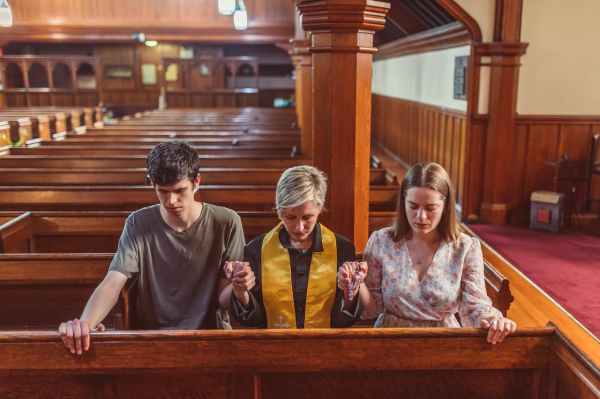
Prayer IS an individual pursuit. It should be part of each Christian’s daily walk. And most of what I write (and practice) about prayer happens personally. But Jesus practiced both personal and corporate prayer. Even in His agonizing prayer in the Garden of Gethsemane, He wanted close friends to be nearby praying, rather than sleeping (see Matthew 26:36-46 and Luke 22: 39-46). When instructing His disciples in how to pray, He used the term, “Our Father,” not “My Father.” Christianity , including prayer, cannot be practiced in isolation. We need to pray for others, and with others, and be prayed for by others!

Photo by Tima Miroshnichenko on Pexels.com

In the small country church where I grew up, prayer was woven into the service. Prayer requests would be shared, and people would take turns praying aloud, until one prayer leader would close the prayer time with an “Amen!” In the church where I currently attend, we still share prayer requests on-line, and a list of requests gets sent out once a week. Occasionally, we will break into small groups during service to pray for particular focus or a specific request. Additionally, we have a mid-week prayer meeting, where we spend an hour just praying as a small group.

Why do I emphasize the need for group or corporate prayer? Over the years, I have seen many benefits:

  1. I love “hearing” the hearts of others. We don’t all pray exactly the same. Even if we are reciting a prayer (like The Lord’s Prayer) there are different voices, different inflections, different tones, that bring a richness and diversity to prayer. And that is a great reminder that God is the God of ALL of us, even as He is the God of EACH of us. He is OUR God, every bit as much as He is MY God.
  2. There is comfort and even power in praying together. My personal prayer may be sincere, but it is usually silent, and may be influenced by my surroundings, my mood, my distracting thoughts, etc.. But there is a different atmosphere when two or three (or more) are taking turns praying, adding to the thoughts and prayers of others, and pouring out their hearts in concert with other believers. I get a broader perspective when I pray with others. I hear more than just my own voice and my own thoughts. It doesn’t change whether or not God listens to my prayer, but it changes the way I think and feel– it isn’t just “MY” prayer– it is “OUR” prayer.
  3. I learn more about prayer by practicing with others. I know many people who will not pray in a group, because they feel their prayers are “lacking” somehow. And this is a dangerous way to think! I have learned amazing lessons of faith from simple prayers; amazing lessons of doctrine from eloquent prayers; amazing insight from broken and contrite prayers; and even lessons from “runaway” prayers that go on and on. And praying in a group is not about how much you say, but by how much you are present in the moment.
  4. Corporate prayer is a rich tradition. Jewish priests would lead the entire nation of Israel in prayer during various festivals. Many of the psalms are written as prayer-songs for a congregation to sing together. The early church made prayer a part of their meeting together (see Matthew 18:20, Acts 2:40-47, Romans 15:6, others…)
  5. Corporate prayer strengthens my faith and the faith of others. Intellectually, I “know” that God listens to and answers my prayers, but when I pray with others, it strengthens my experiential knowledge that God is listening– because I am listening, and being listened to!
  6. Corporate prayer challenges my perspective in relation to my own sinfulness and God’s grace. Corporate prayer should not be used as a “True Confessions” session, where we try to outdo each other in confessing secret sins or wallowing in self-righteous recitations. But it should bring us into a realistic awareness of our very human nature, and of God’s amazing Grace. Corporate prayer takes us out of our “self” and focuses on God’s sovereignty in ways that personal prayer sometimes misses. Corporate prayer tends to focus on gratitude, humility, and thinking of others more highly than yourself. And that is often a stepping stone to confession and the awareness of God’s forgiveness.
  7. Corporate prayer lends itself to structure. That’s not to take away from unstructured and spontaneous prayer, but corporate prayer tends to have a stated purpose, and sometimes a stated format. From “round robin” prayer, where people pray in a particular order around a circle; to “popcorn” prayer, where people jump in and take turns until a certain time has elapsed; to structured prayer, where people pray in a strict order and with definite purpose for a slotted time, corporate prayer tends to be more disciplined that personal prayer. That doesn’t make it better or worse, but it is a different way to pray, which can help foster discipline in other areas.
Photo by Luis Quintero on Pexels.com

Are you part of a prayer group at your church or in your community? If so, cherish this rich opportunity. If not, make a point of connecting with other believers– at church, in your community, or even on-line. Share requests. Set aside time to pray together, or even separately, but at the same time. Live stream prayer. Pray with someone over the phone, if you don’t have a prayer group or congregation nearby.

It will change your prayer life!

For more information about corporate prayer: https://www.allaboutprayer.org/corporate-prayer.htm https://www.crosswalk.com/faith/prayer/reasons-why-corporate-prayer-is-powerful-and-essential.html

Blog at WordPress.com.

Up ↑