What to Throw Away…

19 “Do not store up for yourselves treasures on earth, where moths and vermin destroy, and where thieves break in and steal. 20 But store up for yourselves treasures in heaven, where moths and vermin do not destroy, and where thieves do not break in and steal. 21 For where your treasure is, there your heart will be also

Matthew 6:19-21 (NIV)

When my mom died earlier this year, she left a house filled with “stuff.” Mom saved EVERYTHING! She saved old calendars, expired drivers’ licenses, used peanut butter jars, all her children’s baby clothes and shoes, graduation and wedding invitations, Christmas Cards, broken cameras, and so much more. She owned a seven-bedroom farmhouse, but she lived for many years in just a few square feet in four different rooms. She slept on half a twin mattress; the other half was covered with boxes. She ate on just a patch of her kitchen table; the rest was piled over with papers and “stuff.” There was a narrow path through the dining room to the bathroom and bedroom. Mom was a hoarder.

Mom was also stubbornly independent, and refused to get rid of things or have others help her throw things away. It contributed to her falling and breaking her hip, and later falling and breaking her leg. We eventually persuaded her to move to assisted living and later to a small house that she could navigate safely. But she would not sell the old house or let us throw away her “treasures.”

Shortly before she died, Mom gave us permission to begin the difficult task of “going through” her house. She joked that we would all hate her after she died and we had to finish the task. We joked back that we would never be able to finish in our own lifetimes! Mom knew that she should have thrown things away. But she had chosen to live surrounded by the memories of broken toys and yellowed letters of yesterday.

Well, the house is almost empty. We decided to sell it, and had to clean it out so it could be shown. The bulk of the work fell to my brother and his wife. They are retired, and they live closest to the old house. But even so, it has taken months, and tons of sweat, to find the floors and walls and windows that were covered and blocked by “stuff.” There are still a few pieces of furniture and some items in the basement, but hundreds of boxes, bags, crates, and containers had to be taken to my brother’s house, my house, my sister’s house, donation centers, recycling centers, and, sadly, to the dump.

We had very few “things” left from my father. His family had lived through a house fire when he was a young man, and he learned early that even precious things cannot be saved. He tried to throw things out; Mom would “rescue” some from the trash and bring them back in! He saved a few momentos, mostly photos, and when he died, he was no longer there to advise Mom about what must be put in the trash. But even his “stuff” was hidden among worthless old shoes and dishes and old boxes.

My Mom DID have several treasures– at least to us. She had saved school papers from our childhood, birth and baptism certificates, photos, my dad’s old work uniform, my grandfather’s Navy cap, afghans and doilies my grandmother made, and several worn and tattered Bibles she had so faithfully studied over the years. And Mom was generous in her own way– she sent out thousands of greeting cards and gave wonderful and thoughtful gifts to her many friends and family members. But she kept broken things, rusty and dusty things, used-up things, and things that were useless. And the hardest part of sorting through over 20,000 square feet of “stuff” was finding and determining what to keep and what to throw away.

Life is a lot like that house full of “stuff. It is full of memories, experiences, hopes, dreams, guilt, fears, relationships, emotions, and disappointments. And we have to make choices about what to treasure and what to throw away. Here are some guidelines I’ve learned through my recent experience:

  • Treasure the lesson– throw away the bitterness.
  • Keep the memories– throw away the t-shirt.
  • Save the relationship– throw away the anger.
  • Keep the recipe– throw away the container/magazine it came with.
  • Eat the chocolate–but throw away the fancy box it came in.
  • Throw away the broken dishes, the worn towels, and the pot without a handle.
  • Treasure the stories– trash the dusty, musty books (Yes, that’s coming from a librarian!)
  • Don’t just worth on appearance alone–DON’T throw away an opportunity to show kindness where it is least expected and most needed. There may be treasure among the rubbish!
  • Use the stationery you got for Christmas–throw away the wrapping paper.
  • Throw away last year’s calendar– those days are gone. Make space for this year.
  • Keep your promises–let go of your disappointments.
  • Hold your dreams loosely– be ready to accept what IS as a gift; what WILL BE as a mystery.
  • Treasure the empty spaces in your house and in your life– throw away the extra baggage.
  • Keep space for new blessings–pass the old blessings on to others.
  • Things can never take the place of time spent with the people you love. I appreciate some of the things Mom left behind, but the real treasure was the wisdom she imparted, the laughter and tears we shared over the years, and the faith she lived out as she loved others.

Mom’s joke about us hating her after she was gone– that didn’t happen. And our joking prediction was wrong, too. It was frustrating to go through everything; it was hard work and it might not have been necessary if Mom had chosen differently. But it wasn’t wasted work. We still have dozens of boxes to sort through, but I am finding small miracles and memories (and lessons!) in each one. Mom may not have been able to judge what she should throw away, but she did know what to keep above all!

I hope I am learning what to throw away, as well as what to give away and what to keep. Mostly, I hope I am learning to let go of the things that might prevent me from accepting better things. God will not always take away the things that hold us back, or bury us in the past. But He asks us to store up our treasure, not in a house or a storage barn, or a safe deposit box, but with Him! Things will break, rust, rot, and be lost. Feelings and thoughts can keep us trapped in the past, and blind to the present and future. But God’s gifts– Faith, Hope, Love, Peace, Patience, Discipline, Forgiveness–these last forever, and never lose their value!


Evidence of Things Not Seen

*Note: This was originally posted in August of 2021.

Now faith is the substance of things hoped for, the evidence of things not seen. For by it the elders obtained a good testimony.

Hebrews 11:1-2 NKJV via Biblia.com

And without faith it is impossible to please him, for whoever would draw near to God must believe that he exists and that he rewards those who seek him.

Hebrews 11:6 ESV via biblegateway.com
Photo by Aaron Burden on Pexels.com

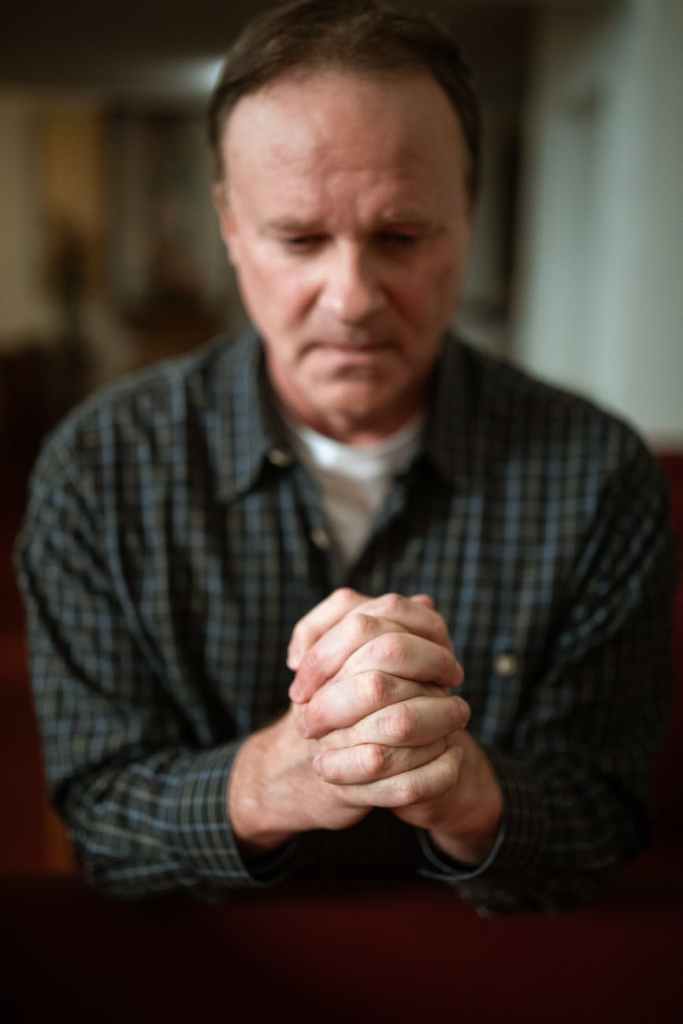
Prayer is an act of faith. Whether a prayer of confession, adoration, thanksgiving, supplication, or a combination of all these types, we pray to an invisible God. We do not see Him, but we acknowledge that He exists, and that He hears us when we pray. We also acknowledge that He forgives sins, is worthy of our adoration and thanksgiving, and that He cares about our needs and desires.

Photo by Luis Quintero on Pexels.com

Faith is defined by the writer of Hebrews as “the substance of things hoped for, the evidence of things not seen.” There are many who scoff at this type of faith, claiming it is “blind faith.” Because we cannot see God, because we do not hear Him audibly, because we cannot touch Him–they claim that our faith is nothing more than wishful thinking or delusion. But our faith is actually “evidence” of God’s existence– not because we make a claim to believe, but because we act on and live out our belief. One brief prayer whispered in panic is not compelling, but a lifetime of praying and faithfully acting on the belief that God listens and responds–that is evidence that commands attention.

Photo by 3Motional Studio on Pexels.com

Sometimes, we become so familiar with the ancient stories of the Bible, that we discount the very real faith shown by the “elders.” Noah didn’t build a rowboat or even a trading ship– he built an Ark to withstand a flood he could not have imagined. Abraham left his home to go to a land God would show him– he had no map, or any way of knowing what awaited him. He lived as a nomad in tents the rest of his life. But what about his life before? He didn’t begin as a nomad and a wanderer. And there was nothing to suggest that he would ever become the patriarch of an entire nation/many nations. The shepherd boy, David, was told that he would someday be king. Yet he put himself in mortal danger several times, and refused to challenge King Saul in order to claim the crown. Daniel was certainly aware of the danger he was in over the course of his service to foreign kings, yet he stood firm in his convictions, when common sense would have had him compromise to keep his position (and his life!).

Faith (and praying in faith) doesn’t always some easily. We are bombarded with images and sounds that suggest that God does NOT exist, or that He does not listen or respond. I have prayed many times for people to be healed of cancer, only to see them die. I have days filled with stress or frustration, when my prayers seem to go unheard. Does this mean that my faith is void, or based on nothing more than a vapor?

Photo by Merlin lightpainting on Pexels.com

No, because faith is the evidence, not of the things I am seeing or experiencing now, but of things unseen. My perspective is narrow and distorted. I may see my friends’ deaths as the “end.” I may see my temporary trials as impossible obstacles and heavy burdens. I may see my past as a prison, trapping me in the bad choices I have made, or the hurts I have suffered. Faith is the evidence that such things, while they are real, and devastating, are not the entire picture, or the final word. Faith is the evidence that life is worth celebrating, even on the “bad” days. Faith is the evidence that God is bigger than injustice, or disease, or heartbreak, or death.

Photo by Anna Tarazevich on Pexels.com

Faith isn’t “proof” of God’s existence for those who will not believe. But it is strong and solid evidence for those who are searching. When I pray for someone else’s health, I am not ordering God to do what I want. If He doesn’t answer with immediate or total healing, it is not because I don’t have enough faith or because He just doesn’t listen to me. Buy when I lift others up in prayer, I am acting on the promise that God will listen and act according to His perfect and sovereign character. I have seen miracles of healing; I have also seen miracles in suffering and even death. “Things not seen” often includes things outside of my knowledge or perspective– things that I can only see after I take steps of faith that take me out of my limited vision.

Photo by ZaetaFlow Sec on Pexels.com

As I write this post, I’m having one of those “bad” days– frustrating, filled with stress and pain. And not just my own– I’ve had several friends and family members who are dealing with death, disease, job loss, broken family issues, and more. Two of my childhood classmates died within a week of each other earlier this month, while three families in our church are dealing with hospitalizations and a death. And that isn’t even covering the crises in Afghanistan, Haiti, Tennessee, and elsewhere– floods, persecution, earthquakes and hurricanes, upheaval, and more. Those are the things we see. Faith is not blinding ourselves to those realities. It is choosing to believe that there is much more that we do not see–that God is in control, and that He is capable of redeeming and restoring even the mess that surrounds us.

I sat down to write this post, and had to stop–my faith was taking a beating. But I prayed. I listened for that still, small voice that led me to revisit Hebrews 11. I phoned a friend. Small steps of faith, but God is faithful. He gave my faith a booster shot. He can do the same for anyone who comes to Him in faith.

A Prayer For Fathers

Photo by Pixabay on Pexels.com

We are approaching Father’s Day. It is a day of celebration for many people, but it can also be a day of sadness for others. This year will be a milestone for our family, as my father passed away 25 years ago; and yet–we are preparing to celebrate the birth of my grand-nephew’s first child. This will make him a father, my nephew will become a grandfather, and my brother will become a great-grandfather! My husband is a father and grandfather, and so are three of his brothers. We also have brothers, brothers-in-law, nephews and cousins who are great dads. So we really have a lot to celebrate!
Fatherhood– the kind we celebrate– is more than just contributing genetic material to a new life, or claiming a child on an income tax statement, or showing up once in awhile for major events. Fatherhood involves sacrifice. It requires wisdom and patience. It involves ongoing commitments, and the tough love that says, “No” because it’s the right thing, rather than the easy thing to say. Fatherhood requires a man to be a teacher, provider, protector, defender, coach, and disciplinarian. It also requires humility, and grace, encouragement and sometimes tears. In addition, fatherhood requires prayer. No father is perfect, and no father can do all that he needs to in his own power. Fathers need our support and encouragement, our grace, and our prayers.

Photo by Kaysha on Pexels.com

It is tempting to label our fathers. I have known “good” fathers. And I have known fathers who have abandoned or even abused their responsibilities, causing trauma, anguish, and hurt to their families, lasting for generations. My own father wasn’t perfect, but he was a “good” father. He was a man of humor and integrity, faithful, honest, loving and humble; a man of faith, and a man of honor. My father-in-law was the same. They left wonderful legacies of wisdom, hard work, and quiet strength. But I know of other fathers who have ruined the lives of their children (as well as their own lives) through fear, selfishness, addictions, abuse, anger, greed, and pride. Father’s Day can cause regret, envy, and bitterness in the hearts of many fathers and children alike. Many people would like to forget about their fathers on Father’s Day. Some don’t even know how to celebrate– they’ve never seen or heard from their father; some don’t even know his name!
Photo by Ketut Subiyanto on Pexels.com

But Father’s Day is not only for “good” fathers. It is a time to honor those who have been faithful, but it is also a time to reach out to those who need help. Good fathers are needed! And “bad” fathers need to be called out– not indulged or ignored, but held, guided, rehabilitated, or even incarcerated, for the good of their children. Hurting boys often grow up to be hurtful fathers. Hurting girls often end up in hurtful relationships. Hurtful fathers often struggle with their own baggage of hurt and disappointment from past generations, without knowing how to change. Fathers need more than a “day”, a cook-out, or another tie. They need a mission and a purpose; they need respect and forgiveness; they need encouragement and accountability.

My prayer today is that this Father’s Day can be a day of honor AND of healing for fathers and their children. I pray that struggling fathers will be encouraged and strengthened; that hard-working, faithful fathers will see the rewards of their efforts and find hope to keep going; that absent and apathetic fathers will wake up to the challenge and the gift of fatherhood; that broken fathers will find help and healing for themselves AND for their families; that hurting sons and daughters will find the grace to move beyond the pain of unmet expectations and abuse to become better men and women.

Photo by Anna Shvets on Pexels.com

All that I pray for is made possible because we have a Heavenly Father– a perfect, loving, eternally wise Father– who loves us through our struggles and our pain. He knows our every need, sees our every tear, and hears our every prayer. He is ready to be our coach, our provider, our healer, our disciplinarian, and our protector. No matter our experiences or how we feel about our earthly fathers, or about being a father, we can trust Him to be all that we need. Our Heavenly Father will never abandon us, reject us, abuse us, or despise us. He will comfort, encourage, uplift, and guide us– now and forever. All we need to do is pray and accept Him for all that He is!

Dust in the Wind

Several years ago, there was a popular song lamenting that, “all we are is dust in the wind.” The song evokes a feeling of hopelessness– we are weak, small, and helpless as dust in the wind. It speaks of impermanence, brevity, sadness, and despair in the face of forces greater than ourselves, and offers a warning not to “hang on” to earthly vanities.

The Bible speaks to this –God told Adam in the Garden of Eden that he would die and return to the dust from which he was formed (Genesis 2:7 and 3:19). Abraham was told that his seed would be “like the dust of the earth;” spread out across the earth and unable to be counted. The book of Job is filled with images of dust and ashes, as Job, homeless and afflicted, sits covered in them, talking of his life and death, and the emptiness of loss.

Photo by Skitterphoto on Pexels.com

But there are surprisingly few references to dust in the New Testament. Jesus tells his disciples to visit cities, and where the people will not listen, the disciples are to leave and “shake the dust from (their) feet” as a testimony against them (Matthew 10:14; Mark 6:11; Luke 9:5)

There are two aspects of dust I want to look at today. First, as the song suggests, dust is carried along by the wind. It has no permanence, no weight, no importance, no resistance, and is swept away by a chance wind, or by design with a broom or dust cloth. Dust is not cherished, but discarded. But dust is not destroyed by the wind– it is carried, lifted, moved, and dispersed, but not destroyed. The dust of today will be somewhere else many generations from now, and the dust that settles on our floors, tables, and under the bed may have been blown there from thousands of miles and centuries away! In just such a way, our lives– fragile and brief, leave traces of words spoken, kindnesses shared, and sacrifices made, that live long after our bodies return to ashes and dust. There is an amazing glory in a mote of dust carried by the stillness into a beam of sunlight. It sparkles and dances and drifts in a graceful spiral, suspended in light and air. And there is glory in a life lived in the light, seeking stillness and grace, being carried by the slightest whisper of God’s eternal love.

Secondly, dust that is not in motion, not in the light, IS discarded, unwanted, corrosive, and dead. There is no glory in layers of accumulated dust covering the beauty of an antique dresser or building up in the corner of a room. Dust that is NOT carried on the wind sits, worthless and destructive. It gets absorbed into an unsightly pile of sad, dead matter, and it sits– going nowhere, doing nothing. We shake it off, brush it off, wash it off, sweep it away, and get rid of it.

Photo by Darius Krause on Pexels.com

Dust comes from death– dead skin cells, dead plant and animal matter–and I think there is a very real reason it is mentioned so often in connection with sin, sickness, unbelief, judgment, and death (though not in all cases). God does not want to leave us unmoved and dead– He wants to bring us to glory and give us new life in Him. We are dust in the wind– but that is not all we are. Instead, it is what we are for a brief moment in time– being carried to a new destination, or sinking and settling into despair.

Photo by Анна Васильева on Pexels.com

I pray that we will be lifted up in prayer and faith today, to dance in the light of God’s glorious grace, and carry our mote of glory and grace to wherever God my send us.

“I’m Praying For You!”

Each month, I want to give some practical suggestions on ways we can better pursue a lifestyle of prayer.

Photo by Tima Miroshnichenko on Pexels.com

This month, I want to encourage you to let people know you are praying for them. This seems like such a simple thing, and not necessarily a way to improve one’s prayer life. After all, didn’t Jesus teach us not to brag about our praying? Aren’t we supposed to pray in private, not calling attention to ourselves? (See Matthew 6:1-15)

There are four “do’s” and a couple of “don’t’s” when it comes to telling others about praying that I want to emphasize today. Not because I have a perfect formula, but these are things I have found true in my own experience, and I think they line up with Biblical principles:

DO:

  • When you hear a need, pray about it. Don’t put it off; don’t promise to pray at a more convenient time. Do it now. If that means stopping in the middle of a conversation and praying with someone who is pouring out their heart– do it (assuming that it is possible). Not only is this practicing obedience to the prompting of the Holy Spirit, but it is honoring the importance and value of the other person. (see Philippians 4:6; Romans 12:12; Ephesians 6:18; others…) Showing others that their needs are important and that God cares about their needs is NOT boasting or being hypocritical. Just remember to approach with humility. Don’t be offended if they refuse in the moment; don’t use the opportunity to pray “over them”– pray beside them; pray with them; pray for their needs, not your own virtue-signaling. If you are worried about your actions being misconstrued or offensive in some way, ask first. “May I pray for you right now?” “Would you mind if we just stopped and said a quick prayer about this situation?” They can always refuse to let you pray immediately, but at least they will know you sincerely want to bring their burden before God. Also, if there is practical help you can give in the moments following, don’t hold back. Maybe their need is beyond your ability, but if you can direct them to counseling, aid from a local church group or non-profit, or offer to follow-up, you should do what you honestly can. Don’t promise beyond your ability, but don’t just pray and walk away, either.
  • The same goes for on-line requests for prayer. Don’t just scroll past someone’s need. It takes three seconds or less to type, “Praying”, or “I’m praying for you.” Again, if there is practical help you can offer, this is an opportunity to do so. There is no need to go overboard– but letting others know that someone “out there” is praying can be an enormous encouragement.
  • Be specific. Generic prayers aren’t “bad,” but they are often hasty and leave something lacking. The same goes for practical help. One of the mistakes I often make is to say, “If there’s anything I can do, give me a call.” I mean it– I want to help, and don’t know just how. But this puts the burden of asking on the person you meant to help! If you don’t know what to do– say so– but give them something solid to go on. It may be a phone number or e-mail, or an idea of a service you are able to offer–“I have Wednesday afternoons off if you need someone to drive you/go with you to an appointment.” or “If you ever want to meet for coffee…” or “I know the church has a Benevolence fund for unexpected bills and expenses. I could contact someone or give you their contact information,” etc..
  • Follow through! If someone asks for prayer for an ongoing concern, make a point of checking in every so often. Call, send a note or text, stop them at church and let them know you are still thinking of them and praying for them. This can also be another opportunity to offer practical help, a hug, or other form of encouragement. Often a week or two can be time enough to reveal practical steps to meet some of the smaller needs related to a big crisis or situation.

DON’T:

  • Say you will pray and then forget to do it. I used to be bad about this on-line. It only takes three seconds to promise to pray or to type a message about prayer, but don’t say it/send it if you aren’t going to act on it. Either stop then and there to pray about it, or stop and write it down where you will see it later and act on it! Good intentions are NOT enough to bring real encouragement and change. And good intentions do not form a disciplined and growing pursuit of prayerful living. In fact, such lost opportunities can become a barrier to our prayer life AND our relationships with others.
  • Break confidences. If someone asks publicly for prayer, it is fine to respond publicly that you will pray or are praying. It is NOT fine to then share someone else’s burden with ten of your other neighbors or closest friends. It is not fine to repost someone else’s request without their permission. It is not fine to publicize others’ private burdens, confessions, or pain. You may want to ask others to join in prayer, but don’t share details and names. Even if you have permission to share a prayer request, it is not for you to pour out someone else’s feelings, relationships, or struggles. This is another area in which I’ve had to learn a lot. I tend to over-share my own struggles when asking for prayer, and I want others to be concerned, so they will pray also. But it is very easy to fall into gossip, oversharing, and speculation, which has no place in prayer– and no place in my relationships! Share only those specifics that are helpful– “S______ is battling cancer. She has an appointment with her oncologist this week and would like prayer.” It is tempting to give the time and date of the appointment– and S______ may be ok with you doing this so people can be praying “in the moment.” However, she may be concerned about too many people knowing when she will or won’t be home, which might tempt a burglar. She may not want to receive a host of phone calls later that afternoon from people wanting “updates” or wanting to “cheer her up” when she is exhausted. Respect others’ privacy.

We are commanded to pray for one another (see Galatians 6:2; Colossians 4:2, etc.) And prayer is the most powerful tool we have to help those around us. Even though I recommend “practical” help along with prayer, I do not mean to say that prayer is impractical. Prayer IS practical and powerful. It should never be dismissed as “lesser than” other forms of help. But neither should it be used as an excuse not to meet needs in others ways as God gives us resources.

Photo by Luis Quintero on Pexels.com

Making a habit of praying for others– really responding to needs immediately and faithfully in prayer– is a great way to experience its power. We will see God working through the prayers we offer– not just in the way He answers in the lives of others, but in the way He will change our hearts and minds about situations, relationships, and in growing Faith and confidence. It will train you to listen for needs, and to prepare to help. It will also train you to see needs in your own life, and make it easier to trust God with the needs in your life. You will find it easier to share your needs with others, and to accept help when you experience how much your efforts (even small ones) can encourage others. It may even encourage you to begin networking with others to meet needs and be proactive, instead of just reacting to needs after they are felt! If you are already strong in this area, be grateful for the way God is using you in the lives of others. If you are struggling in this area, I hope you will persevere. God is gracious in giving us opportunities to grow and serve!

But Did I Pray?

I cried a bit.
I threw a fit.
Made a fuss;
Kicked up some dust…
But did I pray?

I made a plan.
I took a stand.
I marched around;
Made some sound.
But did I pray?

Photo by Andrea Piacquadio on Pexels.com

I went on-line;
Looked for a sign.
I read a book;
Took another look.
But did I pray?

I hit a wall.
I made some calls.
I spoke to friends.
I followed trends.
But did I pray?

I shook my head
And then I said
A hasty word.
I felt unheard.

I wondered why;
Had another cry.
I drove my car
And searched the stars.
But did I pray?

Prayers are simple.
Prayers are quiet.
I wanted answers.
I wanted a riot.

My heart was proud.
My voice was loud.

But what can I say?
I didn’t pray.

“Be still, and know that I am God..” Psalm 46:10

Two or More

10 If one falls, the other pulls him up; but if a man falls when he is alone, he’s in trouble.11 Also, on a cold night, two under the same blanket gain warmth from each other, but how can one be warm alone? 12 And one standing alone can be attacked and defeated, but two can stand back-to-back and conquer; three is even better, for a triple-braided cord is not easily broken.

Ecclesiastes 4:10-12

At least once each month this year, I want to write about practical ways to develop our Pursuit of Prayer. Today, I want to focus on seeking out a partner or prayer group.

There are many benefits of adding corporate or communal prayer to our lives. Most of our prayers will take place between just ourselves and God. We may pray during our quiet time, early in the morning, or just before bedtime. Our prayers may be short or long; full of joy or sorrow; silent or even mumbled. But when we pray with at least one other person, the following should happen:

  • We should be more focused. It may sound shallow or presumptuous, but praying aloud in front of a “human” audience has a tendency to keep us focused on the words we use and the thoughts we are sharing. And, while we can fall victim to the temptation to show off our eloquence, or say what we think others want to hear, we can also be sharpened by the reality that God AND others are listening! Have you ever “caught” yourself praying without really “hearing” your own thoughts? Sometimes, prayers can become rote or stale. We can pray on “automatic pilot”– repeating requests or phrases without really meaning them. Praying aloud in front of others won’t necessarily stop that from happening, but it should make us more focused.
  • We should learn from the prayers of others. Listening to others pray gives us insight into THEIR thoughts and hearts. It can also give us insight into how others communicate with the Father. Sometimes others have knowledge of issues and requests of which I am unaware or unburdened. Sometimes, they have a different way of relating to the Father– not “better,” but different in perspective or experience. I have been startled, convicted, encouraged, and emboldened by listening to the prayers of my brothers and sisters in Christ. And there is a “flip-side” to this, namely
  • We should allow others to learn from our prayers. I know many people who feel their prayers are somehow “inferior.” They use simple words, or their words don’t flow smoothly. They are ashamed to pray in public. And yet, thousands have been inspired and humbled by so-called “simple” prayers. They teach faith and humility; trust and caring; and even courage and strength. If everyone’s prayers were the same, or if everyone’s prayers were about their own abilities or eloquence, they would lose much of their power– because prayer is not about US; it is about God working THROUGH us.
  • We can agree in prayer. As one of us prays aloud, the other(s) can pray along silently in agreement. This may seem like a simple truth, or a trivial point, but it is not. Prayer, like the rest of our life, is meant to be done in communion with others–we are not meant to be solitary and self-sufficient. There is exponential power in communal prayer, as we come together in agreement on various issues. It is one of the reasons that so many revival experiences begin with a small group of people who pray fervently. This isn’t just a metaphysical phenomenon. Hearing others pray about the things weighing on my heart encourages me to keep praying when I am alone again. Hearing others pray with the same heart encourages my faith and resolve. Hearing others agree in prayer may even plant a seed that wasn’t there before. Conversely, hearing others pray may cause me to reevaluate my own thinking, or help us better hear faulty thinking and disagreement over certain issues, causing us to seek resolution and truth over long-held but unquestioned beliefs. Praying aloud can help bring us closer toward unity!

  • Our prayers become more powerful. “Where two or three are gathered…” Matthew 18:20 says that where two or three are gathered together in my (Jesus’) name, he will there in the midst of them. This verse is often taken out of context. It does NOT mean that Jesus will ONLY be with groups of two or more. Jesus promises never to leave or forsake ANYONE who puts their trust in Him. Others have taken this promise (along with its preceding verse) to mean that where two or three people pray together, Jesus is obligated to give them whatever they ask for. This is also misleading. Jesus is with us, not to give us a particular outcome or answer, but to guide us into truth and faith. It means that Jesus is with each person, AND with everyone who gathers together in HIS name. His presence is magnified; His power is magnified (if such a thing is possible…) Just as in the passage in Ecclesiastes, the power of a united group– even a small group of two or three PLUS JESUS– cannot be over-emphasized. Remember the story of Shadrach, Meshach, and Abednego? Satan does not worry when Christians gather together to protest or complain. It warms his heart to see a small group of Christians come together to gossip, boast, or argue. But he shudders when Christians meet together in Faith to pray! It is much more difficult for him to distract, distort, and discourage us when we pray together–for each other, with each other, beside each other!
  • We become more accountable. This happens best when we meet regularly for prayer with another/others. It doesn’t have to be daily or even weekly, but when we meet consistently, we challenge one another to be faithful, active, and accountable in our prayers and in our living. I pray more often alone when I pray more often with a friend or group! I pray with more focus and purpose. I pray more intentionally.

If you don’t have a regular prayer partner or prayer group, I encourage you to seek out a friend or a group of people who will meet regularly. Even if it is not a “Prayer” group– it may be a Bible Study group, a group of friends meeting for lunch once a month, or a neighbor who carpools or commutes with you. Make prayer part of your friendship or group on a regular basis.

It Is Well With My Soul

I’ve been reading through the book of Job this past week. Job’s story challenges us– especially if we trust in our circumstances to confirm God’s love for us. Job was a seeming pawn in a situation beyond his control or understanding. He lost nearly everything– his cattle, flocks, all his children, and even his health. The only thing he did not lose was his nagging wife, and his faithful, but very unhelpful friends.

Photo by Parij Photography on Pexels.com

At first, Job’s friends seem very supportive. They stay with him, saying nothing, just offering their presence for a week! But then, they start spouting the kind of useless aphorisms and accusations that make Job’s bad situation infinitely worse. They “remind” him that good people don’t suffer–only the wicked experience pain and loss. This knowledge, they assure him, comes from their own experience, and the wisdom of the past. When Job protests that he is innocent, that his suffering is NOT because of his own wickedness, they become increasingly angry and irrational– making up accusations and heaping blame on Job for daring to “question” God.

But Job’s friends, even though they speak with confidence and sound very much like many people we hear today, are wrong. Job’s experience is real–suffering comes to the innocent, while the wicked often “get away with” their sin, living lives of ease and comfort at the expense of others. We see it in the world around us– innocent people are the targets of mass shootings, or war, or famine, or disease. Meanwhile, criminals get “off” on a technicality; decorated war “heroes” destroy entire cities; powerful tyrants bend laws and oppress the helpless.

Photo by Ron Lach on Pexels.com

Where is God in all this? WHO is God in all this? There are many different responses, but I want to look at three that are all present in the book of Job:

  • Mrs. Job: “Curse God and Die.” Some people look at evil and suffering, and they decide that God must be a fraud. Either He cannot or He will not destroy evil, or He would have done so before now. They declare with great defiance that either God does not even exist, or He must be malicious, capricious, petty, and weak.

  • Job’s friends: “Everyone knows that God rewards good and punishes evil.” Doesn’t the Bible say this? Isn’t this what we learned in Sunday School? Surprisingly, most of us would say, “Yes, that is exactly what I learned as a child, and it is exactly what the Bible says!” But look closer. The Bible says that “All have sinned and fall short of the glory of God.” (Romans 3:23) It goes on to say that “The Just shall live by faith” (Habakkuk 2:4 and Romans 1:17)–not their good works. God DOES reward goodness, and he DOES punish evil– but He also redeems the wicked and causes the good to go through times of trial and suffering. God is more than a two-dimensional dispenser of rewards and punishments. God’s ways are not our ways (Isaiah 55:8), and there are times that He chooses not to explain His ways “in the moment” of our suffering, or in the moments when wickedness seems to be “winning.”
    Unfortunately, when bad times come; when we experience pain, or watch someone else going through inexplicable suffering, if our view of God is incomplete or two-dimensional, we are left repeating the little we KNOW (or think we know) about God, and defending, not God’s character, but OUR knowledge. This is especially true if we have not been tested ourselves.
  • Job: “Though He slay me, yet will I trust in Him.” (Job 13:15) “I know that my redeemer lives, and that in the end he will stand on the earth. And after my skin has been destroyed, yet in my flesh I will see God; I myself will see him with my own eyes—I, and not another. How my heart yearns within me!” Job 19:25-27 Even when Job struggled with his pain and suffering–even as he defended his character to his accusing friends, Job KNEW that God was GOD. He knew all that his friends were saying ABOUT God, but he also knew God–even when he didn’t understand His actions. And after all the arguments had been made and all the “easy” answers had been spilled out, GOD did not slay Job; he did not leave him in his agony. Neither did He provide Job with detailed answers or explanations. But He redeemed the situation– Job ended up with more blessings than before. More importantly, Job ended up with a greater understanding of who God is.

When all is not well with our health, or our finances, or our safety, or our relationships, it can still be “well with (our) Soul.” God does not change, but He does ask us to trust Him, even when His ways are not our ways. God will reward good and punish evil– but it may not be in our lifetime or as we imagine. God may stay silent during times of great stress and pain, but He will not leave us! In every situation, we can trust Him.

Will we?

As Far as the East is From the West..

In blogging about prayer and in keeping a prayer journal, there is one type of prayer I don’t dwell on very often.  Prayers of confession and repentance are very important, but I don’t  include them in my journal and I don’t spend much time analyzing them.  It’s not that I want to ignore them or that I want to give a false impression that I don’t say them.

arrogant

I’m a saint–but only in the sense that Christ’s blood is my atonement and my only hope of salvation.  He who started the work is still working, and there’s a lot of work yet to be done.  So, while I include prayers of confession and repentance in my practice of pursuing prayer, I don’t write them down or share them publicly.

Photo by Mikhail Nilov on Pexels.com

Here are some of the reasons I don’t spend more time talking about confession:

trueconfessions
  • Confession is not meant to be a public spectacle.  It is generally private and very personal between an individual and God.  Apologies may be public, and repentance may include public atonement or recompense, but those are not prayer; rather they are the actions taken in conjunction with  and as a result of prayer and confession.
  • Confession is fundamental– it’s not a prayer option, or a stylistic preference–every one of us has sinned, and we all need to admit to our sins, bring them before the throne of God’s grace, and ask for his forgiveness.  Hiding sins, denying sins, or lying about them will get in the way of all our other prayers.
  • Writing about past sins keeps them alive and keeps the focus on me and on my faults, rather than on God and on His Grace.
  • Making confession public has a tendency to devolve into gossip and self-justification.  Descriptions of my sinful actions will necessarily be from my incomplete and very biased point of view.  Other people can be misrepresented and hurt.
  • But the last reason is my favorite– I don’t waste time writing down and discussing past sins because GOD HAS FORGOTTEN THEM!  Writing them down, rehearsing them, analyzing them–even analyzing how I might approach confession won’t change God’s response:

10 he does not treat us as our sins deserve
    or repay us according to our iniquities.
11 For as high as the heavens are above the earth,
    so great is his love for those who fear him;
12 as far as the east is from the west,
    so far has he removed our transgressions from us.

Psalm 103:10-12 New International Version (NIV)
  • The key is that we DO confess– humbly, consistently, and with a heart of true repentance.  What follows is a free and forgiven conscience, no longer weighted down or pulled off focus by guilt and doubt.
pexels-photo-941693.jpeg

Happy Birthdays

Today marks 90 years since my mother was born. She didn’t live to see this birthday; she died back at the end of February. But birthdays were important to my mother– hugely important. She never forgot a birthday. Mom was pretty sharp into her later years. She might forget someone’s name–for awhile. She might forget a few details about what happened yesterday or last year, but she didn’t forget to take her medication. She would eventually remember that name she couldn’t come up with earlier in the day. And she had an elaborate system of calendars, date books, and directories to help her remember birthdays.

Photo by Bich Tran on Pexels.com

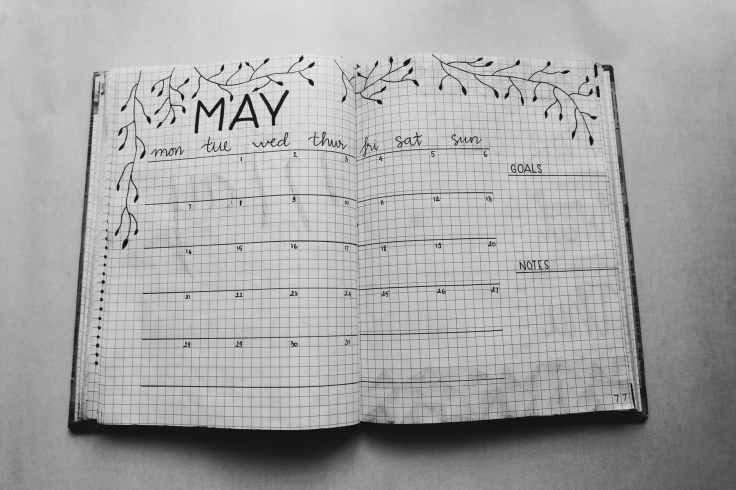
Mom had a large desk calendar. Each day’s “square” was covered in her handwriting– names, numbers, etc., reminding her of birthdays and anniversaries of her relatives, friends, neighbors, and church family. If she knew your name and birthday, it was on her calendar. If she knew your age, it was on there, as well. If she knew your anniversary, it was there, too. If she knew. your birthday and/or anniversary AND your address, you received a greeting card– and it generally arrived on the exact date! Mom did this for literally hundreds of people each year.

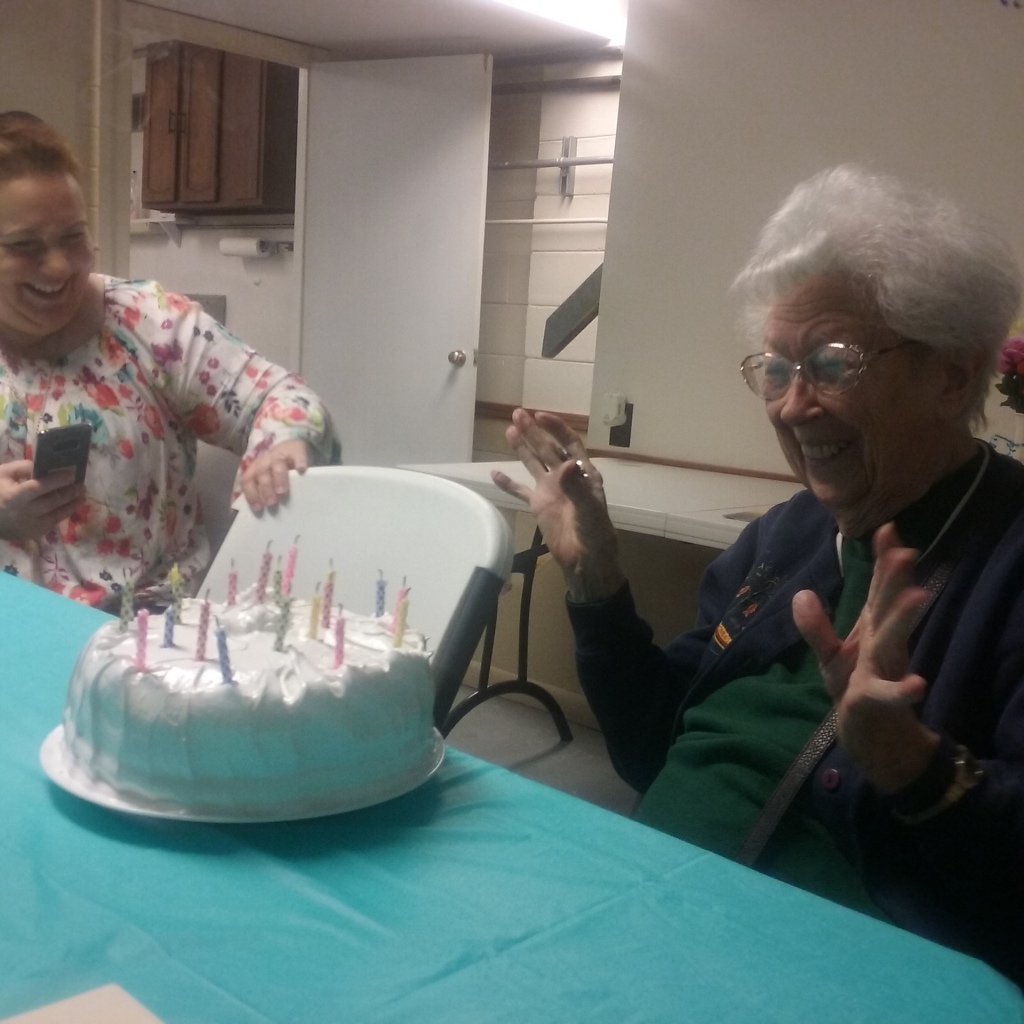
Today hits me hard. Not because Mom made a fuss about her own birthday–even special ones like a 90th. She enjoyed getting a card or gift, or having some cake or ice cream on her birthday, but that’s not what I miss. I miss the absolute joy she had in remembering others, and in being remembered. I can still see the look of childlike glee on her face when she and a friend were both surprised with a birthday party a few years ago. She was delighted for her friend as much as for herself. I can remember her insistence that certain cards be placed in the mailbox on certain days, so that they would not arrive too early or late, but just at the right time for someone’s special day. I remember shopping with her for box after box of greeting cards. Even though she bought “in bulk,” filling a basket or cart with multiple boxes of cards, she was very choosy about them– looking over the designs and the messages inside each box. Often, she had “buyer’s remorse” about a particular box of cards: she wasn’t satisfied with the tone or the greeting. In a box with four different designs, she might send out cards with two of the designs and just leave the others untouched.

Birthdays were important to Mom because individuals were important to her. She wanted every person she knew to feel loved, remembered, and special. Because they ARE! Not just by Mom, but by the God she loved and served.

Mom loved birthdays, including her own. But Mom had another birthday. Mom won’t celebrate another earthly birthday– she won’t get any cards or ice cream today– but she is celebrating her “other” birthday today. She did not knew the exact date, but she was born into eternal life when she accepted Jesus as her savior, and that birthday has no end. It is much more important than her earthly birthday, and fills her (and all who love her) with a greater joy. I can only imagine the gleeful expression on her face at this moment that “was” her birthday, and in every moment since she went “home.” And it’s in large part due to my Mother’s witness and influence that I also have a “second” birthday. I don’t knew its exact date, though I remember it was a beautiful summer day. Later this year, I will celebrate my earthly birthday–and it will be a bit sad without Mom’s card and her smile. But I know that we will someday share much more than a cake with candles, or a greeting card or a wrapped gift.

Photo by Pixabay on Pexels.com

Mom taught me to appreciate birthdays– and to share the joy of wishing others a “Happy Birthday.” And to anyone celebrating an earthly birthday today, “Happy Birthday!” But I am looking forward to the day that I can share eternity with all those who have a “second birthday” in Christ! I’ll see Mom again, but even that will pale in comparison to experiencing God’s presence and the love He lavishes on His Children!

Just think– God loves you so much that He never forgets your earthly birthday. He not only knows your birthday, He remembers the exact moment of your conception, and every moment since! He knows you and loves you so much that He wants you to have another Birthday into eternal life with Him! And that is better than any earthly birthday card, cake, gift, or party you could ever celebrate! If you have a “second” birthday, even if you don’t know the exact date, I want to wish you a “Happy Birthday” as well– today and every day!

Blog at WordPress.com.

Up ↑