“Idol” Thoughts…

I was in an odd mood the other day, and I started thinking about “Christian” Book Stores. There used to be several bookstores in the area that were “Christian” book stores. They sold Bibles, Bible study guides, devotional guides, prayer journals, hymnals and song books, contemporary Christian CDs, Christian DVDs, and all sorts of “Christian” gift items– tee shirts, wall hangings, jewelry, even candles! If it looked, sounded, felt, or even tasted “Christian” you could probably find it there.

Photo by Pixabay on Pexels.com

Many of these stores are now out of business. And it made me sad at first, but I think it’s worth a little analysis:

Photo by Tim Douglas on Pexels.com
  • Maybe the most obvious reason why any store or set of stores goes out of business is the law of supply and demand. As more and more Christian book stores popped up, they filled the market with more and more “stuff.” Every store had Bibles and books, but the demand was for “stuff.” Bracelets and CDs, Mother’s Day gifts, Christmas- and Easter-themes decorations…Bibles were relegated to the back of the store on a couple of shelves. And most of the stores ended up with the same “stuff” as the other stores– the same candles and t-shirts and throw-pillows and coffee mugs with the same “Christian” sayings. Other store chains caught on– you could buy the same coffee mug or DVD at Hobby Lobby, or Walmart– at half the price! And, of course, with e-publishing, streaming services and Spotify, etc., books, DVDs and CDs are almost a thing of the past, anyway. Years of buying “stuff” has resulted in families who can’t even give away all their “precious” used art and decorative items from 20 years ago. The demand just isn’t there.
  • More subtle is the psychology of the “Christian” Book store patron. Buying mugs and key chains and bracelets at a “Christian” book store is a form of virtue signaling. Buying a t-shirt with a provocative Christian message can make you feel like you’re witnessing for Christ– without actually having to engage in conversation or develop a relationship with anyone! That feels great for awhile, but the reality is that feelings and virtue signals change. It’s not trendy to wear WWJD bracelets anymore– it’s not even trendy to be a “Christian” anymore–much better to be an open-minded, accepting, and loving “Christ follower.” “Christian” has a bad connotation these days– judgmental, narrow-minded, and hateful. People who used to proudly stroll the aisles of Christian book stores are now full of disclaimers about their church affiliations.
  • More subtle still is the psychology of the “Christian” Book Store itself. There really is no such thing as a “Christian” book. There are books written by Christians, and about Christians, and for Christians, but a book is an inanimate object. It cannot be a “Christian” or a “Christ Follower,” or a “Believer.” The same is true about any of the other products sold at any store. There are no “Christian” pot holders or hand lotion sets or wall art. A store catering to a “Christian” audience must not expect to be wildly popular in a secular world. We don’t see a trending wave of Buddhist book stores or Muslim book stores, or book stores specializing in Wiccan coffee mugs– though we may see such trends come and go in the future.
Photo by Inna Lesyk on Pexels.com

What makes me saddest about the disappearance of the “Christian” Book stores is not that there are fewer cool t-shirts to consider buying, or that I have to travel farther to find a bookstore with a great “Christian” Sci-fi section, or a larger selection of devotionals. It is that, on some level, my “Faith” became an idol. I filled my bookshelf with “good” books, while neglecting to read the most important book of all. I spent time browsing aisles of great music, but less time singing from my own heart. I spent money on items that proclaimed my Faith, but spent less time and energy living it out.

There is nothing “wrong” or sinful about “Christian” Book Stores. I am very grateful to live in a country where I can freely shop for Bibles, and even a couple of throw pillows that remind me how much God loves me. I love that I can wear cross necklaces, or listen to wonderful songs about Christ without facing imprisonment or torture. But I want to be careful not to take for granted a culture that makes following Christ easy. I don’t want to worship the “Christian” culture and not the Christ it claims to love.

Photo by Tara Winstead on Pexels.com

One of the first items I remember not being able to find in the “Christian” Book Stores was a prayer journal. Oh, they had several leather-bound journals where you could write notes, or ones that had “prayer prompts” written on gilt-edged pages. But I wanted one like the one I had found years before– it had pages with information on various people groups around the world as prayer prompts, and space to list names and even answers to prayer. I have since created my own notebook-style prayer journal that tries to replicate that older one.
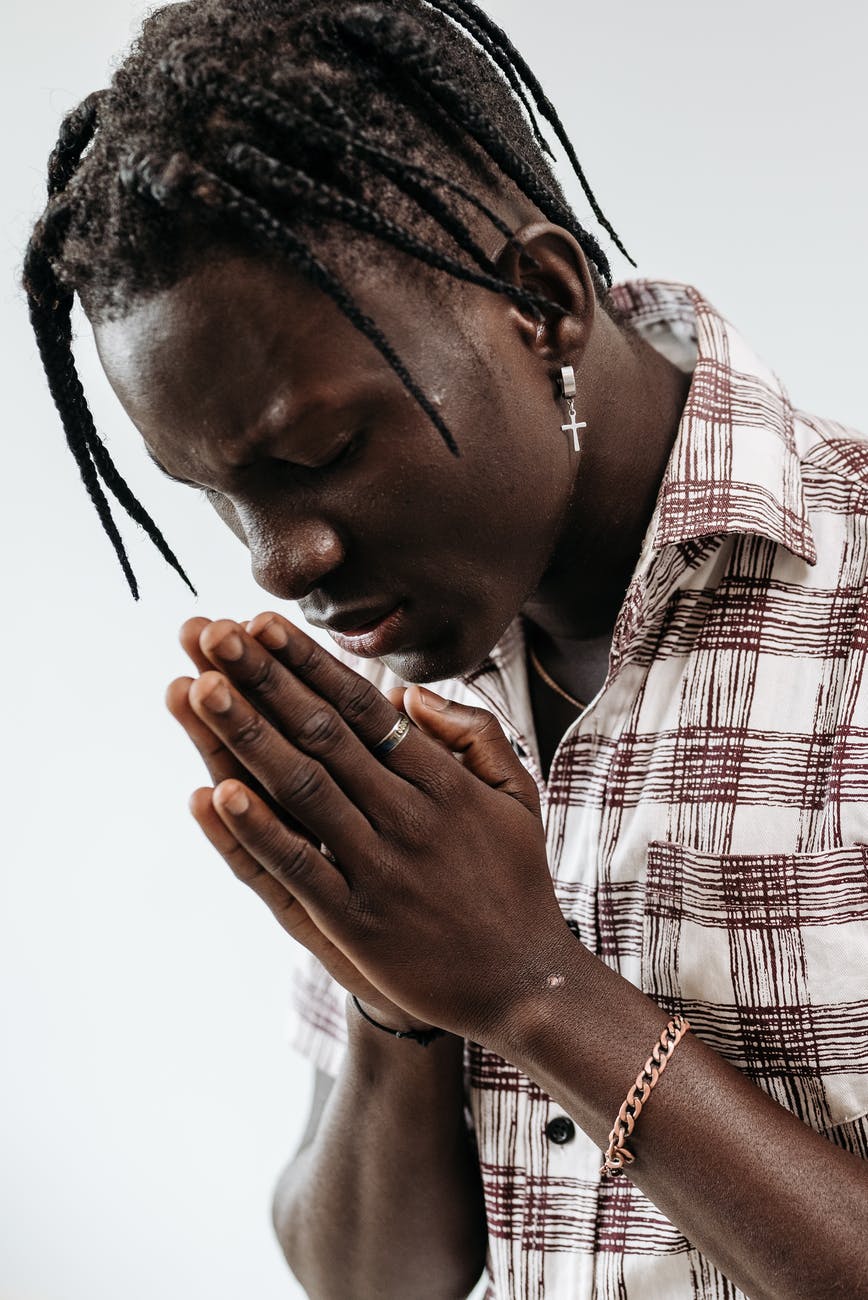
Photo by Pavel Danilyuk on Pexels.com

And perhaps that is a good thing. “Christian” books promise a lot–journals that prompt us to pray; devotionals that basically do the “worship” for us; even Bibles that speak to us in comfortable language, so we don’t struggle with unfamiliar words. But ease and comfort do not produce growth. “Christian” book stores do not necessarily produce strong Christians, either. Only Christ, through the work of the Holy Spirit, can do that. Christian Book Stores can be a valuable tool, or an idol.

A Hope That Does Not Disappoint

Have you ever had your hopes dashed? Have you even been disappointed in something that (or someone who) seemed to promise such hope?

Photo by Andrea Piacquadio on Pexels.com

In Romans 5:5, the Apostle Paul speaks of a “hope that does not disappoint” us– the hope that comes through the Love of God as poured out by the Holy Spirit. Yet, we still have times of disappointment, dashed dreams, and painful grieving. So what is Paul talking about?

Photo by Ketut Subiyanto on Pexels.com

Well, in context, he is speaking about the hope of our eternal salvation– we can have complete confidence in Christ’s finished work in obtaining our salvation and peace with God. While we may have doubts about many things in life, we need never doubt God’s promised salvation. But that does not mean that God has promised us an earthly life without disappointments, struggles, grief, or pain.

Sometimes, when we pray, we bring certain expectations– “hopes”– that God will act in the way we desire. We pray for miraculous healings, or an end to financial struggles, or finding the “perfect” spouse. God never promises any of these things. In fact, Jesus promised His disciples that “in this world, you will have trouble” (John 16:33)! But He goes on to say, “take heart, for I have overcome the world.” When our prayers seem to go unanswered, or God seems deaf to our desires, we can feel disappointed, even resentful. Our loved one dies. Our marriage falls apart. We lose our job, or our home.

It can be difficult in the moment, but we need to take stock of what it means to “hope.” If we put our hope in earthly things– even wonderful things–we WILL be disappointed at some point. People get sick and die. They make mistakes. Houses crumble, or face destruction by fire or storm. Relationships –no matter how much we may work at them–can fall apart. Our own bodies and our own wisdom can betray us. Circumstances cannot provide a secure base for our hopes. That doesn’t mean that we can’t cherish dreams and aspirations, but Hope must be based on something sure and eternal.

Photo by Luis Quintero on Pexels.com

When we pray, we can bring all or our expectations, aspirations, dreams, and more– but our Hope must not be anchored in the circumstantial answers we want. We will face bitterness in our disappointment. But when our Hope is rooted in the God who keeps His promises, we will see beyond the temporary disappointments in our circumstances, and find that Hope will endure and sustain us THROUGH them.

Photo by Ketut Subiyanto on Pexels.com

People will disappoint; circumstances will let us down; expectations will deceive us. But Hope remains and sustains. We can pray, not with fear or doubt, but with confidence that God will hear us, and give us what we need most to face even our worst disappointments. After all, He promises that they are temporary in light of His eternal Love and Care.

And what a wonderful Hope on which to anchor!

A Garden of Prayer

It’s gardening season– many with gardens are reaping an early harvest of tomatoes, peas, beans, and other vegetables. I live in town, and have no space for a garden, but I have memories of working in my mom’s and grandma’s gardens. Gardening takes a lot of work, and involves a lot of elements. A life of prayer also requires a lot of discipline and certain elements:

Photo by Gustavo Fring on Pexels.com
  • Plowed ground– we need hearts that are softened and humble, ready to listen and respond.
  • Seeds of faith– even those as small as a mustard seed!
  • “Son”-shine–we can follow the examples of the prayers of Jesus, as well as His teachings on prayer.
  • Living Water–Jesus gives us living water in His words and His life. The more we spend time with Him (through prayer and in His Word), the more we will experience the nourishment He provides!
  • Cultivation– it is not enough just to plant a seed and leave it. We need to spend time in devotion, worship, prayer, scripture reading, and fellowship daily if we want growth. We also need to “weed out” sinful habits and thoughts that keep us from trusting God’s will and timing.
  • Workers for the harvest–Our lives should be producing fruit. But fruit that isn’t harvested and shared will go to waste! And we should also be ready to harvest the fruit of others– encouraging and building one another to better growth and adding to the Kingdom.
  • Helper “Bees”– like Bee Kind; Bee Patient; Bee Humble; Bee Generous; Bee Industrious; Bee Joyous; Bee Faithful; Bee Grateful; Bee Truthful; Bee Gentle; etc.
Photo by Pixabay on Pexels.com

Prayer is always “in season,” and always produces a harvest. It takes dedication and faith, but it is so worth it!

The Blessings of a Faithful Grandmother

Yesterday, my wonderful maternal grandmother would have celebrated her 110th earthly birthday. I have so many happy memories of times spent with her– of shared laughter and tears, walking barefoot through many yards and gardens, “overnights,” looking through her button tin, or her old jewelry box, helping her make homemade egg noodles, or cherry pie… But more than all these, I remember the feelings of peace, joy, and unconditional love whenever she was near.

My Grandmother, Beulah B.

Gram was one of the wisest persons I ever knew. She was patient and kind with everyone. I cannot remember ever hearing her say a spiteful or sarcastic word. She had a quiet sense of humor, and made everyone feel welcome and valuable. She was generous– not just with gifts, but with time and attention, especially for children. She was a hard worker, but she never seemed to look frenzied or “overworked.”

She and my grandfather were married for almost 63 years. She lived with him through many difficult times– during the Great Depression, there were many times when they could not be sure where they would live or what they would eat. Many nights were spent sleeping in spare rooms with family members. Grandad went to war in 1942, and Gram “held down the home front”– taking care of two little girls, and working the night shift as a riveter, while living with her parents. Things were better financially after the war, but Gram kept working– this time as a secretary. She and Grandad still moved around a lot–rented homes, apartments, mobile homes–each time making it look and feel better than it had ever been, or ever would be again. Gram planted flowers everywhere; Grandad collected animals. At the time of her death, Gram and Grandad were living in a rented house– the very house where Gram had been born 82 years earlier!

Gram’s given name was Beulah, named for her paternal grandmother. Her name means “married.” And Gram lived up to her name, and all it suggests. She was faithful, fruitful, and a wonderful companion and champion in her marriage. When she died, my grandfather was lost without her. We nearly lost him that very day. He only lived another four months after she passed.

If I had to choose a word to describe Gram, above all others, it would be faithful. She was faithful in everything she did– faithful to her marriage, faithful to her children and extended family, faithful at work, and faithful to God. Gram’s Bible was worn, and old, but she lived out its pages every day. Her trust in God was absolute– and it had been tested through all the hard times she had experienced. She KNEW she could trust in God’s provision and timing, because she had experienced it first hand. She did not make a fuss about her deep faith, nor did she ever deny the source of her peace and strength. Her life was not easy, but it was bountiful!

Today, as I reflect on her legacy, I am so grateful for her quiet example in my own life, and in the lives of others. I pray that I may leave such an impression before I pass on– that someone will be inspired to a lasting faith and find joy in their life’s journey because I have been faithful. Below is one of her favorite hymns: (I especially enjoy the piano in this clip, because it is close to how my Gram would have played it!)

Look UP!

(Note: this was originally posted in September of 2019. Please enjoy…)

Psalm 121:1-2 Revised Standard Version (RSV)

121 I lift up my eyes to the hills.
From whence does my help come?
My help comes from the Lord,
    who made heaven and earth.

https://www.biblegateway.com/passage/?search=Psalm+121%3A1-2&version=RSV
Photo by Felix Mittermeier on Pexels.com

Genesis 22:10-14 Common English Bible (CEB)
10 Then Abraham stretched out his hand and took the knife to kill his son as a sacrifice. 11 But the Lord’s messenger called out to Abraham from heaven, “Abraham? Abraham?”
Abraham said, “I’m here.”
12 The messenger said, “Don’t stretch out your hand against the young man, and don’t do anything to him. I now know that you revere God and didn’t hold back your son, your only son, from me.” 13 Abraham looked up and saw a single ram caught by its horns in the dense underbrush. Abraham went over, took the ram, and offered it as an entirely burned offering instead of his son. 14 Abraham named that place “the Lord sees.” That is the reason people today say, “On this mountain the Lord is seen.”

https://www.biblegateway.com/passage/?search=Genesis+22%3A10-14&version=CEB
Photo by Pixabay on Pexels.com

Where to we look when we’re in trouble or need answers? I worked for many years in libraries– we “looked up” all kinds of answers for people. We looked in dictionaries, thumbed through heavy reference books, and scrolled through many websites. But even though we called it “looking up”, we spent most of our time looking down!

Photo by Pixabay on Pexels.com

Many people spend hours looking down at phone screens all day, or looking ahead as they drive down the road. Very few of us spend time looking up to see the clouds, the sunset, the towering buildings or trees on the horizon. And we spend too little time “looking up” to see how God is working in, around, or through our circumstances.

Abraham set off with his son, Isaac, to make a sacrifice. He had made provisions– he brought enough food for three days’ journey (and three days back!). He brought wood, and even fire. But God had asked him to “offer” Isaac as a sacrifice, so he took no ram–but he brought a knife. God’s instructions were ambiguous–He did not tell Abraham that he must kill his son, Isaac, only that he was to take him up the mountain and “offer” him.

The writer of the book of Hebrews references this event:

Hebrews 11:17-19 New International Version (NIV)
17 By faith Abraham, when God tested him, offered Isaac as a sacrifice. He who had embraced the promises was about to sacrifice his one and only son, 18 even though God had said to him, “It is through Isaac that your offspring will be reckoned.”[a] 19 Abraham reasoned that God could even raise the dead, and so in a manner of speaking he did receive Isaac back from death.
Footnotes:
Hebrews 11:18 Gen. 21:12

https://www.biblegateway.com/passage/?search=hebrews+11%3A17-19&version=NIV
Photo by icon0.com on Pexels.com

Abraham had looked up at the mountain; he had “looked up” how many provisions to take along; but at the crucial moment, when he looked up, he finally saw God’s provision. It was never God’s intention that Abraham actually kill his beloved son. It was God’s intention that Abraham (and Isaac) listen and act in faith. And so they did. The ram was already there– waiting for Abraham to look up!

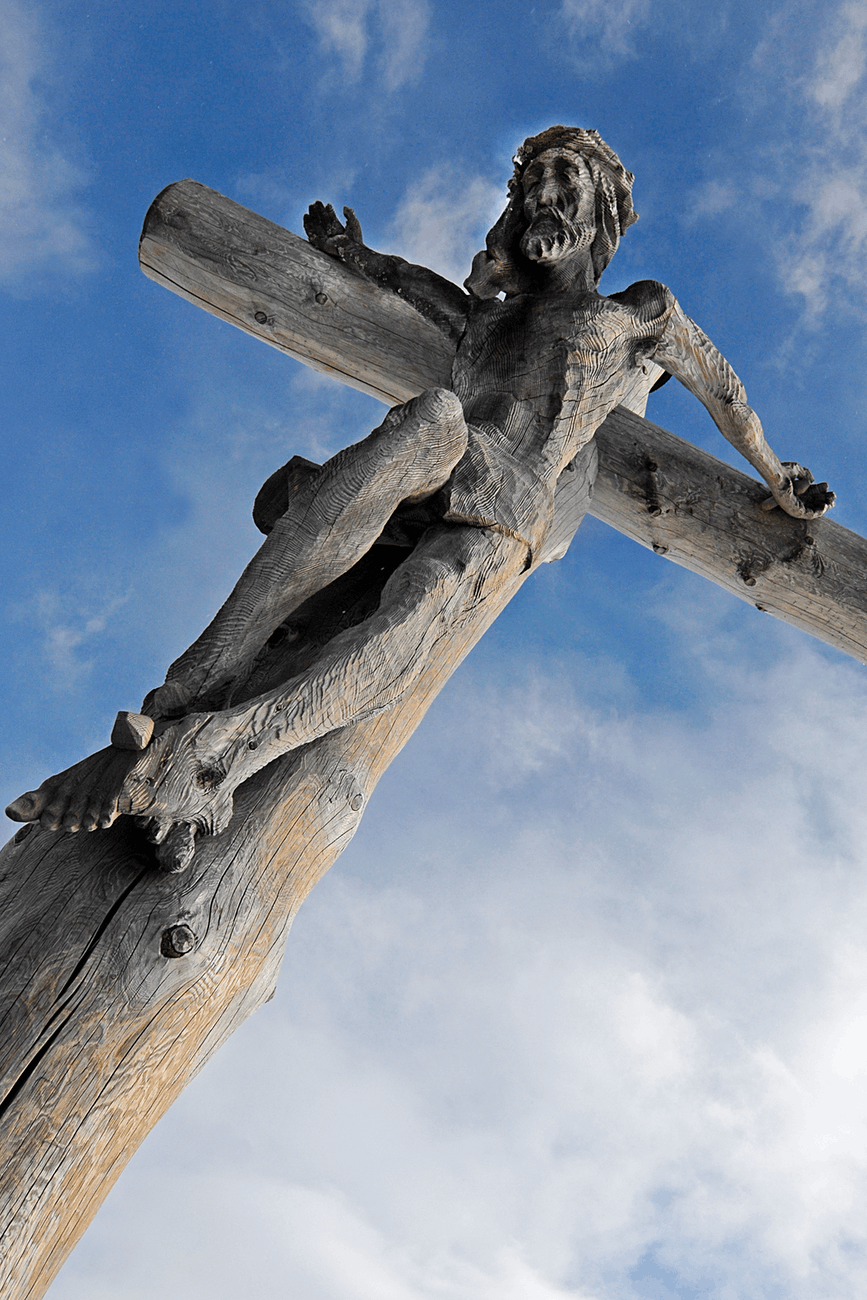
Later, when the Israelites (Abraham’s descendents!) were wandering in the wilderness, they were faced with many trials. God sent pillars of cloud and fire to lead the people as they “looked up” and followed them. When snakes came into the camp, God had Moses make a pole with a brass snake at the top. Anyone suffering from a snake bite could “look up” at the pole and be cured. Jesus referred to this story as an illustration of us own crucifixion–saying that in just the same way, he would be “lifted up.” Those who “look up” in faith to the crucified and resurrected Jesus can be cured of their sin, and given new life! https://www.christianity.com/jesus/is-jesus-god/old-testament-prophecies/jesus-is-like-the-bronze-serpent-moses-lifted-up.html

Photo by Pixabay on Pexels.com

Let’s “look up” today in faith, knowing that God sees our circumstances; knowing that as we act in obedience, God will provide our every need.

Looking For God In the Storm

On Monday night, several strong storms moved through our area. There were also severe storms in other places, like Mexico City, and around Manila– high winds, heavy rains, hail, and flash flooding. Our town did not see much damage, but some nearby towns had many trees down and power outages, followed by near record-high heat.

Often when storms come, we question– “Where is God?” Doesn’t He see our suffering? Why does He allow it? We look for evidence of God’s goodness in spite of the storms in our life. We may even look for evidence of God’s goodness in the aftermath of a storm– “Well, it could’ve been worse..” But in the past couple days, I have seen evidence of people finding God IN the storm. At least a couple of friends were watching the storm approach and/or pass by, and they were able to capture a picture showing lightning striking through a rainbow!! Others have pictures of a glorious red sunset. Both pictures remind us of God’s faithfulness and His promises. God never promised that we would never see storms, but His rainbow reminds us that He will have mercy. A red sunset also speaks to sailors and farmers of better weather to come with a new dawn. God is not absent, waiting to speak after the storm is past. He is right there in the middle of the storm for those who are looking.

Photo by Pixabay on Pexels.com

Another thing I noticed is that several people have become evidence of God’s care in, through, and in the aftermath of the storms. Several people have volunteered to help clean up downed trees, or offered to provide food and water, or even (air-conditioned) shelter for those without power. Many such people have suffered some damage themselves. But their hearts are open to help their neighbors in their time of need.

Photo by Kampus Production on Pexels.com

I don’t recommend that we put ourselves in grave peril to see signs in the raging storms, nor am I trying to shame those who cannot volunteer to help in times of crisis. When storms come, it is wise to take shelter and TRUST that God sees us, knows our greatest needs, and will not leave us without hope. But it is also a great time to look for ways we can both SEE God and SERVE others.

Praying can help us in both ways. We should seek to praise God at all times–even in times of storms and trials. Instead of focusing only on the problems we face, we can be reminded of all the times God has been faithful in the past and remember all the promises He has kept! Instead of focusing on our own losses or pains, we can focus on praying for the needs of others and praying for wisdom in how to be helpful and encouraging. Because God is with us. Always!

Photo by Efigie lima Marcos on Pexels.com

The same mighty power that brings the storm is available to withstand it. God IS present IN the storm, just as He is present before and after. Sometimes, we ignore Him during times of ease and comfort. Sometimes we miss His voice in the raging wind and pounding hail. Sometimes, like Jesus’ disciples, we forget that God controls the winds and waves, and we let fear get the better of us for awhile. We wonder if God is “asleep on the job.” (See Mark 4:35-40) But a single word is enough to calm whatever storm is raging around us.

What a powerful God! What an encouraging reminder.

For Righteousness’ Sake

Blessed are those who are persecuted for righteousness’ sake,
For theirs is the kingdom of heaven.

Matthew 5:10 (NKJV)
Photo by Meruyert Gonullu on Pexels.com

Yesterday was Easter (in parts of the world)–the celebration of Christ’s resurrection and victory over Sin and Death. We have much to celebrate. But we also have a mission. We have the assurance of eternity in Heaven, but in THIS world, Jesus warned us, “you will have trouble.” (John 16:33). We will be misunderstood, mocked, and persecuted. We will have to face the temporary consequences of living in a fallen world– anger, greed, abuse, violence, betrayal–even bad weather and natural disasters!

In giving the Beatitudes, Jesus turned common expectations upside-down. Blessed are the poor in spirit; blessed are the meek; blessed are those who are persecuted for righteousness’ sake… We don’t consider poverty, powerlessness, suffering and persecution blessings to be desired. Yet Jesus, the One we follow, gladly endured all of these for our sake! Notice that the “blessing” is the same here as in the first of the Beatitudes– “for theirs is the kingdom of heaven.” The Kingdom of Heaven is not reserved for those who are victorious in their own power or through force of will or extraordinary effort. But it is reserved for those who persevere in the face of evil–those who lean, and those who rest, and those who stand IN THE POWER of God.

Notice, too, that we are blessed if we are persecuted “for righteousness’ sake.” There is no blessing for suffering due to our own stubbornness or foolishness. There is no blessing for those who are persecuted for their own pride and judgmental nature and unforgiveness toward themselves or others. (see 1 Peter 3) https://www.biblegateway.com/passage/?search=1+Peter+3%3A8-17&version=CEV

Photo by MART PRODUCTION on Pexels.com

We live in a culture that celebrates “victimhood.” Those who suffer injustice– even perceived of implied injustice–are considered to have a special status. Those who claim to have been offended or hurt by individuals or groups often demand recognition for their “bravery” or retribution for their suffering. This happens even among certain Christians, who claim to be “persecuted,” when they are merely suffering the consequences of their own hubris and self-righteous posturing. This is a monstrous injustice to fellow Christians who are truly suffering persecution “for righteousness’ sake.”

Photo by Cameron Casey on Pexels.com

My prayer today is that I will emulate the example of Christ– that I will serve, humbly, willingly, sacrificially, enduring any persecution that comes as a result, and lifting up fellow Christians who are suffering, as well as their persecutors! For righteousness’ sake– for the sake of the Kingdom of Heaven.

Search Terms, Algorithms, and Prayer Requests

I used to work in a public library. I was the Youth Services Librarian, which meant that most of my time was spent working on building up the collection of children’s books, planning and presenting programming and story times, and going into schools to do book talks and promote library offerings. But I also spent time at the reference desks– both in the Children’s Area and the Adult Services area– and some of my time was spent finding answers to a wide range of questions:

  • Does the library have books or articles about Okapis (for a 4th grade report)?
  • Do you carry tax forms for my out-of-state business?
  • What are the school colors for _______ college (a small community college in Nebraska)?
  • Do you have a picture of the Egyptian queen Hatshepsut?
  • What is the title of a children’s book that featured muskrats making chicken soup?
  • My great-aunt left me a set of dishes and I want to know if they’re worth anything.
  • Do you have a recipe for pemmican?
  • What color is yak’s milk?
Photo by Andrea Piacquadio on Pexels.com

Some questions were easy to answer. Some required a little research within the library’s resources. Some were next to impossible and required hours of searching databases, or calling on expert help. Searching a database can be tricky. You need to find solid key words and search terms. For instance, our computer catalog did not recognize the the search term “cooking” or “cookbook.” You had to use the term “cookery” to get the best results. You could also use “cook***” to force the algorithm to look at all words that contained the letters c-o-o-k and any other letters that followed, such as cooks, cookies, cookery, etc. (Many library databases have since been updated, so searches will automatically redirect or refine common terms like this.)

Photo by Pavel Danilyuk on Pexels.com

Databases and search engines are amazing things, but they have limitations. They will only search for what you type in, and they will only search in the way they are programmed to do so. Computers (currently) “think” laterally–they do not make leaps of imagination, nor do they second-guess what you might have meant to ask but didn’t. If I want to know about pemmican, but I misspell it, the search engine may not find what I’m looking for.

Photo by Pascal Renet on Pexels.com

That’s where algorithms come in. If I misspell pemmican by leaving out the second “m”, the algorithm will look for words close to what I typed, based on thousands of other inquiries. It may ask if I meant to search for pelican, instead. Or it may ask if I want pemmican. But if my spelling is really bad, or if the word I type in is actually another word, the search engine may miss my real inquiry altogether, and send me on a fruitless search. If I’m searching for a children’s book with muskrats and chicken soup, and the search engine doesn’t find both terms in a description, the algorithm will usually stick with the first term, and give me a list of children’s books with muskrats. Hopefully one of them also includes chicken soup… If I type the key words in reverse, I will get a list of children’s books with chicken soup…hopefully one of them includes muskrat characters! And algorithms can be skewed by advertisers or other interest groups that pay to have their information appear more often or first whenever certain search terms are entered.

Photo by Pressmaster on Pexels.com

How does any of this relate to prayer requests?

When people request prayer, they are usually focused on what they perceive as their greatest need. They are searching for an answer; a solution to a specific problem or situation. “Pray for complete healing.” “Pray that my son/daughter will…” “Pray that I get this job.” And it is tempting to pray very specifically. This is not wrong. But sometimes, it limits how we see prayer and how we look at God’s answers. The opposite is also true. Sometimes, we pray so broadly, that we may not see God’s answer for what it is. Sometimes, we pray, hoping to change some sort of algorithm and get to the “top of the list” or get the “right” answer. This is not what prayer is about…we know this, but sometimes, our wants blind us to what we are actually asking (or asking others to ask for).

Photo by Luis Quintero on Pexels.com

So what are some of the key words we can use in our prayer requests and prayers? Jesus gives us a fantastic blueprint in The Lord’s Prayer (Matthew 6:9-13):

“Our Father”–remembering to whom we are praying is vital. We are not praying to a distant, absent-minded, shadowy figure; He is our Father. He knows what is necessary, and what is best.

“Who art in Heaven”–God is Omnipotent. There is nothing we can ask or imagine that is too big, too difficult, or too much to ask. That doesn’t mean that God will give us whatever we want, whenever we want it, but it does mean that God is not limited by the same things that limit us!

“Hallowed by Thy Name.”–God is not our “genie in a bottle.” He doesn’t work for us, or at our command. God is sovereign; He commands the Universe. And even though He makes Himself known and wants a relationship with us, He is not like anyone else–He ALONE is GOD. When His answers seem “wrong,” or don’t make sense, it isn’t because He didn’t hear us, or because He doesn’t love us, but His ways are not our ways (Isaiah 55:8-9).

“Thy Kingdom come, Thy will be done on Earth as it is in Heaven”–There are a lot of “good” things that are NOT part of God’s best will for us. There are a lot of difficult and painful things that God can use for our good. He wants to hear the cry of our heart–“I want to be healed.” But He also wants to hear our willingness to accept that healing may not be immediate or easy.

Photo by sergio omassi on Pexels.com

“Give us this day our daily bread”– It is not “wrong” to pray for things in the future, or to pray for “big” or complex things, but our dependence on Him is shown best when we acknowledge our everyday basic needs are met by Him.

“And forgive us our debts as we forgive our debtors, And lead us not into temptation, but deliver us from evil”–Don’t be fooled. God will not ignore our hidden resentments, hatred, disdain, rebellion, and unforgiveness. Our requests can be sidelined by holding on to grudges and harboring secret doubts about God’s essential fairness, as well as hanging on to sinful habits.

Photo by Foss Valentine on Pexels.com

God doesn’t need algorithms or special prayer “search terms”. We can come to Him with our requests, and He knows precisely what we want and what we need. But we will learn more about ourselves and about who God truly is when we refine our hearts and our prayer life.

St. Francis Visits a Contemporary University…

St. Francis was allowed to visit a 21st century university, which housed a chapel bearing his name. He was both honored and confused by the opportunity. Walking about the campus, he was amazed at the number and variety of students rushing to and fro; they were not looking at the grounds or the sidewalks or at each other– they were focused on their devices. It was a noisy campus, full of the sounds of buses and other traffic, music and podcasts playing, people arguing… Finally, St. Francis arrived at “his” chapel. It was a beautiful building, quiet and simple in its design. It was empty, except for a single student, saying her prayers. At the entrance, there was a plaque with a well-known prayer:

Photo by Keira Burton on Pexels.com

Lord, make me an instrument of Your peace; 
Where there is hatred, let me sow love; 
Where there is injury, pardon; 
Where there is doubt, faith; 
Where there is despair, hope; 
Where there is darkness, light; 
And where there is sadness, joy. 

O Divine Master,
Grant that I may not so much seek
To be consoled as to console; 
To be understood, as to understand; 
To be loved, as to love; 
For it is in giving that we receive, 
It is in pardoning that we are pardoned, 
And it is in dying that we are born to Eternal Life. 
Amen.

Photo by MART PRODUCTION on Pexels.com

Francis took a seat, absorbing the peaceful stillness, yet wondering at his assignment. Why had he been sent here? Why this moment in time? Taking his cue from the student, he also spent some time in prayer. Then he walked back outside.

He was struck again by the students– they were everywhere, but they were isolated. No one noticed him or stopped to speak. He tried to talk to someone–anyone–but they were all busy and not inclined to pause or interact. He noticed a coffee house across the street. Carefully avoiding speeding buses and weaving bikes, he crossed and entered the shop. It was a little quieter than the commons, but most of the customers were sipping their drinks and staring at screens–personal devices or the huge screen above the counter, streaming the latest news. War, scandal, protests, mud-slinging politicians, all made their appearance, only to be replaced by a commercial break and the next headline. No one stopped in horror at the litany of injustice, death, greed, or duplicity. They simply sipped their lattes and went back to scrolling through their Instagram accounts.

Photo by Valeri Mak on Pexels.com

The door opened to admit the student he had seen earlier in the chapel. She glanced up at the big screen, shook her head, and ordered a coffee. She found a table, and sat down. The coffee house was busy; it was the last empty table. She smiled as another student came in. She invited the other student to sit with her. She started a conversation. At first, the other student was jumpy and disinclined to talk. But soon, the two students were chatting. The sound of it attracted attention. Some customers were bothered by the new noise; others were intrigued by the sound of real conversation– even laughter! Two other students brought their chairs and drinks over and joined the conversation. They spoke of missing their families, of struggling with certain classes, and enjoying others. They spoke of future plans, and the obstacles that stood in the way. They spoke of fears for the future, as well. Francis noticed that one student listened from a distance, but did not join the others. He seemed weary and despondent. Francis walked over and asked if he could just sit at his table for awhile. The young man was startled, but said, “Suit yourself.”

Photo by cottonbro on Pexels.com

Francis sat in silence, his head bowed. Finally, the young man spoke quietly. “I saw you watching that girl. Just a word of warning– she’s a nut job. She comes in here about once a week, talking nonsense. She’s not even a student here.”

“And yet, I saw you were also watching her. She intrigues you.”

“I don’t know how she does it. She comes in here, talking about love and joy and faith, and people listen to her. They eat that stuff up. Don’t they know it’s all garbage? Look at the news! But she comes in, all smiling and happy– she’s crazy.”

“But she still intrigues you. Could it be that she is at peace, and you are not?”

“Peace?! Peace is nothing but an illusion. Power is what counts. Action. Look at her– she’s not doing anything to make the world better, and yet she acts like she’s got all the answers. It’s sickening!”

“Why do you keep watching her?”

“I don’t even know. She’s so stupid. She’s all wrong, and she acts like everything is fine.”

“Have you spoken to her? How do you know what she thinks and feels?”

“I’ve told you. She’s crazy. I don’t want to talk to someone like that.”

“Are you afraid?”

“Afraid of what?”

“That she’s not as crazy as you think. That she might laugh at your thoughts, the way you laugh at hers. That she won’t talk to you, like she talks to the others… Maybe you’re afraid of what you would say.”

“What do you mean?”

“What would you say to her if she spoke to you? Would you listen, or would you argue? Would you wipe the smile off her face and take away her joy and faith? Would you make the world a better place by winning your argument with her?”

Photo by ZHANNA TIKHONOVA Tt on Pexels.com

The young man was at a loss for words. He suddenly noticed that other conversation had stopped. People were looking at him– even the young woman he had been talking about. His face turned red, and he jumped out of his seat and dashed out of the coffee house. The group dispersed, and Francis was left alone with the young woman.

“He may be right, you know,” she said with a wry smile. I don’t think I do enough to make the world a better place. I just sit and talk with people, and listen, and pray. It’s not much. Not enough to make a real difference.”

Photo by SHVETS production on Pexels.com

Francis put a hand on her shoulder and shook his head. “It is enough in God’s economy to be available. To be humble and willing and faithful. Keep up the good work. And may God bless you.”

The Privilege of Prayer

Pursing prayer sometimes leads to taking prayer for granted. Prayer becomes a habit; a daily activity; even a task to check off the list. But prayer is so much more. Prayer is a lifeline; a divine mystery. I can’t explain how prayer “works.” But I know from experience that it transcends the words I speak and the emotions I feel as I pray. I’m not praying to “a higher power” or an abstract “spiritual being.” I pray to the One who created me, and the One who loves me more than I can even comprehend.

Photo by Michelle Leman on Pexels.com

More than that, I am praying to the One who oversees the universe, and all the inhabitants thereof. There is something powerful and mysterious about prayer. I was reminded of that just recently, when I asked for prayer for my mother, who fell and injured herself. She is 88 years old, and very frail. She is also beloved by many in her family and community. Within minutes of posting a very general request for prayer, several dozen people had responded– some with a simple message of “praying” or “sending prayers.” The next day, I was more specific, and again, dozens of people responded within minutes– “praying for your mother,” “prayers for healing,” etc.. Suddenly my prayers became more confident and hopeful. And I was reminded of all the prayers I lift up each day–those “daily prayers” that sometimes seem like little tasks. They are unique, personal, and important– not just to me, but to many others.

Photo by Snapwire on Pexels.com

I shared recently about praying for others’ requests. This is also a privilege. In a mysterious and divine way, when we pray for others we join in God’s work of bringing hope, healing, and love to others. I can pray for others (and they can pray for me) regardless of where I am, or what my situation may be. I cannot always DO something, or BE somewhere. I can always pray. And where I can act, prayer often sharpens and directs my actions to be more effective.

Photo by Tima Miroshnichenko on Pexels.com

If you’ve ever tried to help in the aftermath of a disaster (as a member of the general public and not an emergency worker or someone deployed to help), you know it can be frustrating. If you’ve ever been caught in a disaster zone, you know it can be frightening AND frustrating. People do their best to help and offer hope, but in times of chaos and lack of communication, people can be left behind and resources can be misdirected or spoiled before they can get to those who need them most. Prayer never gets misdirected. It never goes unanswered or forgotten; it is never a wasted effort. God is faithful. His ways may be difficult for us to understand, but they are not warped, doomed, or limited in any way.

Photo by Kampus Production on Pexels.com

There is great comfort in that reality. Sometimes, we just need to be reminded of how powerful and necessary our prayers are. God loves to hear them. He loves to answer them. He loves to use them for His glory and our wholeness. What a privilege to carry EVERYTHING to God in prayer!

Blog at WordPress.com.

Up ↑