There is an old joke about a church that invited a visiting pastor to speak. The church secretary called him to ask the title of his sermon, and he very pompously announced that he would be speaking about “Justification by Faith, and Not of Works.” He was astonished to find, when he arrived to preach, that his pronouncement had been misinterpreted. The sign outside read, “Come this Sunday– Just a Vacation by Faith, and No Work!”
Christians often give the impression, and sometimes operate under the false belief, that we are on vacation– permanently; that our lives are, or should be, ones of carefree enjoyment and counting our blessings. We say things like “Let, go, and Let God!”; “This world is not my home!”, and “Won’t God Do It!” We wait for God or someone else to “fix” the problems around us, saying that “I’m praying about it.” It’s not wrong to say any of these things in context– we SHOULD let go of our needless worry and our constant running after the things of this world. We should remember that our citizenship is in Heaven. We should remember that it is God working all things together for good, and that “He who began a good work (in us) will be faithful to complete it.” And prayer should always be the first step we take. But that doesn’t excuse us from action. The Bible never paints a picture of saints on vacation. We have a race to run, seeds to plant, and battles to fight. We are not tourists in our neighborhoods and communities. We have a job to do. God gave us hands, and feet, and voices, and brains. He intends that we use them for his service.
We must remember this in our prayer life, as well. We need to “carry everything to God in Prayer,” the little things, the tough things, the awkward things. We must speak words of truth and encouragement, and challenge, to ourselves as well as others. We must not grow weary of doing good. God has promised an abundant life, with an easy yoke and rest for our souls. He promises to strengthen and encourage us in the work we do. Best of all, he promises that we will be “Justified” by our faith in HIS finished work. Our work will not be in vain, and our faith will be rewarded– not with a splendid vacation, but with eternal life with our Creator. Now that’s a trip worth working for!
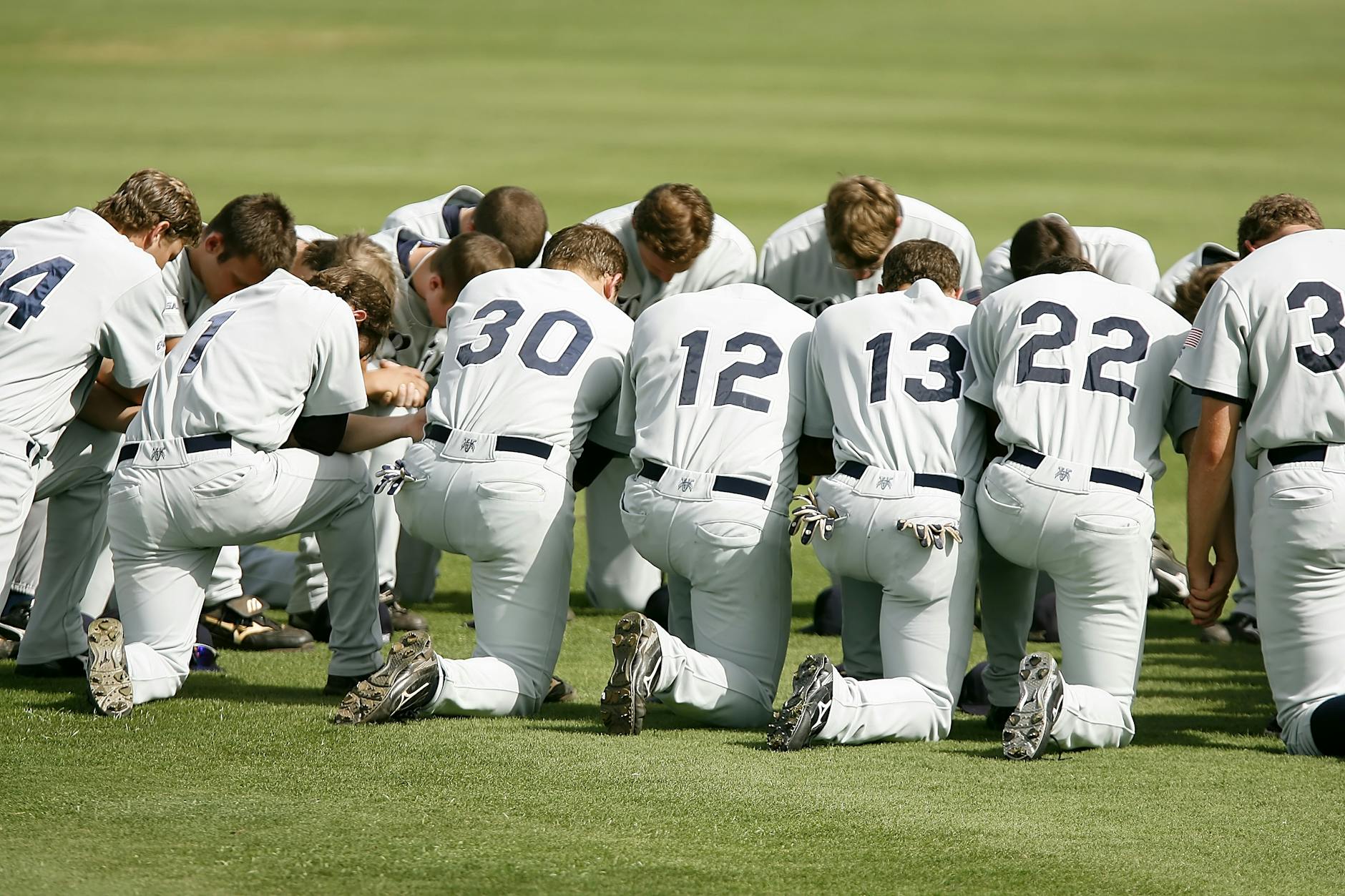
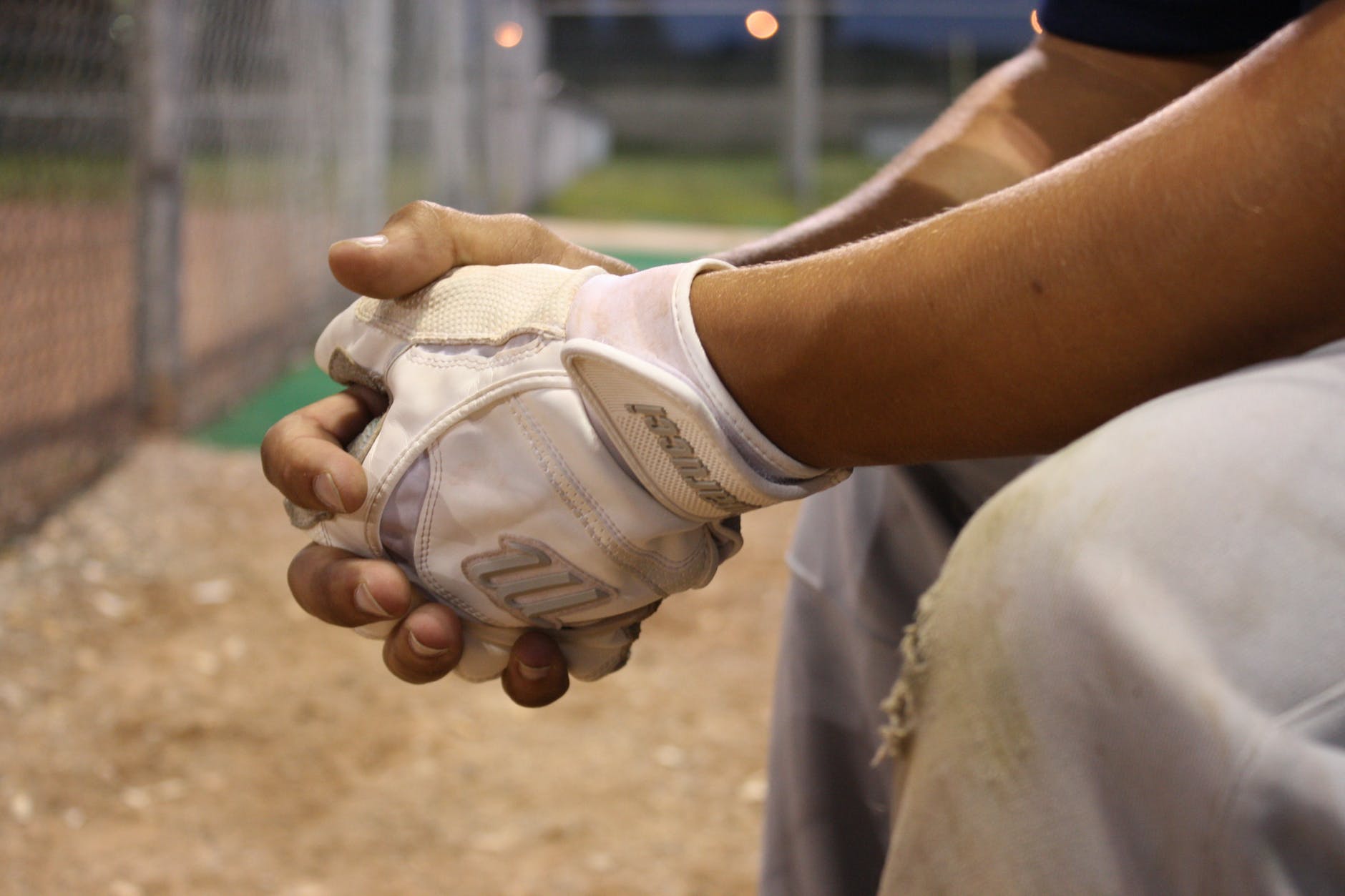
It’s Baseball season, and one of the statistics that many people follow is the batting average. The batting average is the number of hits achieved over the number of times “at bat.” So, if a batter hits the ball once over the course of three times “at bat” during a typical game, he is batting at 33% or .333. Batting averages may fluctuate during the season. A typical batting average is around .250, or one hit for every four times at bat. That means the average player fails to get a fair hit 75% of the time! A really great hitter may reach a temporary batting average of .500! That means he is still failing at half of his attempts.
I don’t like to fail. I don’t like the feeling that my first efforts are sometimes just not good enough to succeed. But often my first efforts are not my best efforts. And it is better for me to fail and to learn, than to have easy success and grow proud and complacent. Failure means that I still have something to learn; I still have room for improvement; and I still need “coaching.” I can’t have success on my own.
I have a “prayer batting average.” And to outward appearances, my “average” is pretty low. For each time I pray, I may get a “hit”– an instant, positive, definitive answer– for one of ten or so of my many requests. That’s just the way it goes. I may pray for six people to be healed or have their health restored; two people to resolve relationship issues; one person to get a job or find a better apartment; and three lost souls to be saved. God will not immediately grant all those requests. That’s not because I am a failure at praying, however. Prayer is not a “magic bullet.” Prayer is a dialogue with God. When I pray over a long period of time for a certain outcome, God may be working to change the situation in His own way and in His own time. And He may also be working to change MY perspective or outlook on a particular situation.
Like the baseball player who practices his swing, I pursue prayer with a goal of becoming better at it–better at understanding how it works, and why it is so important to a closer relationship with God. My goal is not to have God automatically answer prayer “my way.” Rather, it is to understand how God is working in, and through, and around the situations I can see. In His wisdom, He works in ways I cannot see to accomplish His perfect will.
And as I continue to pursue prayer, God allows me to participate in that perfect will– even when my “batting average” seems low or inefficient. Life is filled with “fast balls” and “wild pitches.” I must learn when to swing, how to swing, and how to work as a “team player” in the Kingdom.
So today, let’s not get discouraged if our prayers don’t seem to be “hits.” Our job is not to be perfect– our job is to pursue fellowship with the One who IS!
Our current culture is obsessed with “fixing” things– including ourselves. Makeovers, plastic surgery, Botox injections, even gender reassignment. We seem to be convinced that God, who knit us together in our mother’s womb, got it “wrong.” I’m not opposed to someone wanting to look or feel more attractive, and there are many surgeries and makeover techniques that can actually improve our physical health. Not all such actions come from a rebellion against God’s design, but in many cases, people are trying to remake themselves in their own “fantasy” image– women having plastic surgery to make themselves look more like a Barbie doll, or like their online avatar; some people even risking their lives just to look like something they’re not.
The smug Christian may answer such behavior with, “God made you that way, and God doesn’t make mistakes!” But such an answer is dismissive of some very real concerns. In fact, it may lead people who experience dysphoria and chronic health crises to conclude that God either doesn’t care about them, or that He simply doesn’t exist.
What about my family member who was born with a rare condition? She experienced strokes in utero– she was stricken in the womb–and she had to have urgent brain surgery at six months. She is bound to a bed or wheelchair for life. Yet God created her. Did He make a mistake? What about the person who was born a biological boy, but an accident in his infancy crushed his “boy parts” and the doctors did emergency surgery and reassigned his gender? Was God sleeping on the job? If He knows all that will happen to us, why not just create that person to be a girl from the beginning? What about children born with a cleft palate? Or those born without hands? How can a loving God sit back and let such things happen? And how can a Christian say, “God doesn’t make mistakes.”
I don’t have a mic-drop, definitive, uncontestable answer for such questions. I don’t know why God chooses to allow certain people to suffer physically, mentally, or emotionally, through no fault of their own. I don’t understand why some people develop ALS or dementia, either. What I do know is that God’s original creation was perfect. And when Sin entered the world, it wasn’t just that people sinned– the whole world was infected. It’s not just that people are born with defects– all of nature suffers. There are diseases that cause deformity in animals, diseases that attacks certain species of trees or plants. We have earthquakes and volcano eruptions, sink holes, and hurricanes. And some people carry genetic diseases that impact their life from conception to death. Others will face mental health issues– some of which won’t show up for many years.
But God doesn’t MAKE such things happen. How do I know this? Jesus Himself addressed this issue during His ministry. In the gospel of John, chapter 9, Jesus and His disciples come across a man born blind. The disciples assume that the “cause” of this man’s affliction is a particular sin– either his own or his parents’. They assume that bad things happen to people because God is punishing them for something they’ve done. But Jesus dismisses that reasoning. “This happened so the power of God could be seen in him” (John 9:3 NLT). LIFE is God’s gift– not necessarily perfect health or a problem-free existence. In fact, later in John’s gospel, Jesus says, “In this world you WILL HAVE TROUBLE. But take heart! I have overcome the world.” (John 16:33 NIV–emphasis added)
God doesn’t make mistakes– He offers redemption. There are some things in this world that we have the power to “fix”– we can forgive those who wrong us. We can work to bring justice and peace to those around us. We can build and re-build relationships. But there are many things that only God can “fix.” God has the power to heal bodies, minds, and hearts. He has the power to give us the strength necessary to endure trials and afflictions and grief. And He can give us a peace that passes all understanding when we trust Him in the middle of life’s struggles.
That doesn’t mean that we will always understand or enjoy what life brings our way. We DO live in a fallen and disease-ridden world. But this is NOT the ultimate fate for those who trust God.
It is when we refuse to trust God and His design that we lose out on the strength, peace, and joy of walking (or even lying in bed) by His side! It is when we try to “fix” things in our own power that we miss out on seeing the mighty power of God working for our ultimate GOOD. God allows for mistakes– but His joy and His plan are to make all things NEW!
“Your right hand, O Lord, glorious in power, your right hand, O Lord, shatters the enemy.” – Exodus 15:6
“You give me your shield of victory, and your right hand sustains me; you stoop down to make me great.” – Psalm 18:35
“So do not fear, for I am with you; do not be dismayed, for I am your God. I will strengthen you and help you; I will uphold you with my righteous right hand.” – Isaiah 41:10
There are many verses in the Bible about the mighty right hand of God. God’s might and power, His authority and sovereignty are all represented by his “right hand.” It is His right hand that protects us, upholds us, and gives us victory over the Enemy. God’s right hand spread out the heavens, and rules over the stars.
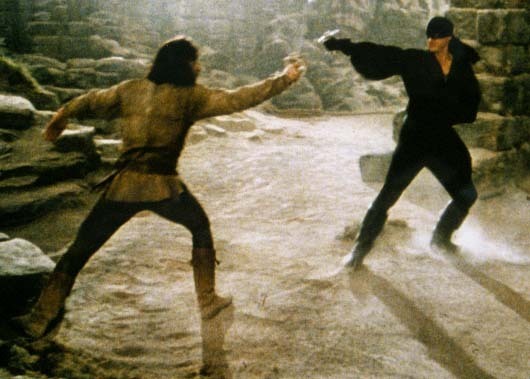
Today, I was thinking about one of my favorite movies– The Princess Bride. In one scene, two mighty swordsmen are fighting a duel. They are fighting with all their might, but they are evenly matched, and neither one is winning. Then, with a flourish, the challenger moves the sword from his left hand (which he had been using) and confesses that he is really right-handed. To his surprise, his opponent does the same! Each man has been fighting with his “lesser” hand, giving his opponent a (supposed) advantage. The fight continues with a similar ferocity. The two opponents later become allies in finding and saving the Princess.
So what if God fought for us with His left hand? What if (and I suppose He is) God is ambidextrous? God could defeat the enemy blindfolded and with one arm tied behind His back! Yet God assures us that His protection and provision are never second-best. If we suffer the attacks of the enemy, it is NEVER because God just didn’t fight hard enough, or that He didn’t have the means to win that battle. He doesn’t send in a junior varsity team of Angels to fight on our behalf. He doesn’t call a “time out” in the middle of fighting to catch His breath or re-evaluate His strategy.
God’s “Mighty Right Hand” isn’t just a metaphor for super-human physical power. He isn’t a muscle-bound hero in a comic book or legend. His mighty right hand is not an eternal fist. God is the One who holds the entire universe in His Hand. It is open. He doesn’t hold us in a choking grip; He holds us in the same gentle hands that hold a newborn chick or a delicate snowflake. God’s mighty right hand is also our safe haven. God’s hand guides and directs, as well.
God IS powerful and sovereign. He could choose to use His mighty right hand to squash us, or pound us into dust. He could hold us in a suffocating grip. But God’s mighty right hand is always directed by His LOVE. His Love cradles us, defends us, lifts us up, encourages us, works alongside us, and welcomes us into His arms!
There is an old comedy/vaudeville gag, where a character enters a stately home, or an office, or arrives at an important event. They are greeted by a “straight man” character, who tells them to “walk this way”. The “straight man” then turns and begins walking in a manner that uses exaggerated mannerisms. The comedic character doesn’t just follow in the general direction of the other character– s/he imitates the exaggerated mannerisms as well.
In the last of three prayers from the song, “Day by Day” (see this past Monday and Wednesday), I want to explore how to “follow Thee more nearly.”
I have this quibble with the song lyrics– I know that “nearly” rhymes with “clearly” and “dearly”, but it is not grammatically correct, as it implies that I almost, not quite, but nearly want to follow Jesus, instead of saying that I want to follow Him more closely, or become a better reflection of His character. That said, I sometimes think that I fall into the comedic trap of thinking that “walk this way” merely means following Christ with exaggerated mannerisms– I follow “more nearly” when I should be following more closely.
Years ago, a good friend of mine suggested that I read a book called “God On a Harley” (Review and summary here) It is a fable, and an interesting read. I don’t recommend it for theological content (the Christ it presents is more of a New-Age life coach, not a Messiah), but I’m glad I read it for two reasons: It challenged my conventional view of Jesus, and it challenged the way I thought about discipleship. At the time I was reading the book, I was also considering making some big changes in my life– changing careers, moving away from my home town, and trusting God to be “sufficient” in my singleness and lack of guaranteed income.
When we talk or think about Jesus’ time on Earth, we generally focus on His birth, His miracles, His death, and His resurrection. We don’t usually think of His everyday life…where He ate or slept or how He lived. If He were to walk among us today, He wouldn’t appear like the paintings we see– flowing long blond hair (which has always been inaccurate), white robe and sandals. He might wear a T-shirt and jeans, ride the bus or subway train, and hang out at Starbucks or the corner convenience store. Jesus didn’t live in a “holy huddle.” And, though He famously walked on water, He mostly walked the streets. He lived and walked and ate and spent His days among ordinary people–in fact, it was His willingness to eat with and talk to the marginalized, the forgotten, the ostracized people of Him time, that got Him in trouble with the religious leaders and those in power.
I don’t think Jesus in our time would be a tattooed, beer swilling, biker– but I’m convinced that He would be found sharing a story or a pizza with one; and with the kinds of people many of His “followers” would shun. The Jesus I want to follow “more nearly” is Holy, but He is not “Holier-than-thou.” I can’t follow Jesus more nearly if I’m following an image that only exists in a picture or my self-righteous imagination. In my youth, I had a picture of what “following Christ” looked like– but it was more about following expectations and selfish desires– successful career, marriage, giving to the “right” charities, becoming a pillar of the community. There is nothing wrong with any of those things, but if God calls me to serve in humble (even humiliating) ways, doing thankless tasks, and spending time, not helping the needy at my convenience, but truly serving– pouring out my time and my heart until only His strength keeps me going–I have learned the joy and honor that transcends anything I once imagined.
I’m not a biker, but I love the image of Jesus on a motorcycle, asking me to come along for a ride. If I want to follow Him “more nearly,” I couldn’t come up with a better metaphor. If Jesus came and asked me to ride off with Him on a Harley, several things would happen that relate to discipleship:
First, I have to commit. You can’t “sort of” ride along — you either get on the bike or you stay behind. You might know all about the motor, you might know how to ride, you might know the traffic laws, you might even watch a video of someone riding, but you won’t experience the horsepower under you, the wind in your face, the road slipping away behind you. The same is true of the Christian life. You can know about God; own a Bible– even memorize it; you can sing God’s praises, all without experiencing a relationship with Him. But you’ll never know the full power of His grace and acceptance until you commit.
Part of that commitment is to be willing to go when and where He’s going…you can’t go on the ride and stay at home. You can’t go two hours after He does. And that brings me to–
Trust! You won’t get on the bike if you don’t trust His ability to drive and His wisdom in knowing how and where to go. Once you’re on the bike, hanging on from behind, you can’t see all of the road ahead. You can’t steer or hit the brakes. In my own experience, I ended up leaving teaching after seven years with no “safety net.” I had no job waiting in the wings, no money saved up, and no “plan” other than to take whatever honest work I could find and follow God’s leading. I learned by experience that I can trust God’s ways to be better than mine; better than my expectations!
Riding together takes teamwork. Just because God is doing the driving and steering doesn’t mean that I just sit back and watch the scenery (though I can do a lot of that, too). If I’m not paying attention at curves, intersections, stops, turns, etc., I can throw everything off-balance.
Riding together, with my arms wrapped around Him is the closest I can “follow” Jesus. It’s not about what I know, or what I can “do” for God– it’s choosing to be in a deepening relationship with Him. As I live with Him, listen to Him, and trust Him, the knowing and doing will come naturally.
I want to follow with abandon– not just to walk several steps behind, or wander in His general direction, or watch what He’s doing from a distance. I want to hang on and share the adventure. That’s the way I want to “walk” with Him. That’s my prayer, “Day by Day.”
How can I love Jesus more than I already do? If I can love him more, does that mean that I don’t love Him enough? That I don’t really love Him as much as I think I do? That I love Him the wrong way? How can I “love thee more dearly…day by day”
I want to explore the second prayer in the folk rock song “Day by Day” from the musical “Godspell” (see my last post). When I write about pursuing prayer, this is a major focus of the pursuit– to develop my love for Jesus. But there’s more to it than just spending more time, or even “better” time in prayer.
I love my husband, and that love grows over the years– not because we are in an eternal “honeymoon” period, where life is rosy and all I know about him is the wonderful image I’ve built up–but because in living with him, working with him, even struggling with him, I learn to value who he really is. I learn about qualities I never knew he had. I learn to trust him and respect his judgment; I learn about the deepest part of his heart that he only shares with those closest to him. And even though I learn about his faults, I see him desiring to be the best that he can be. In his turn, my husband does the same with me– learning my strengths and weaknesses. Together we learn how to work together to strengthen and support each other. We even learn how to argue better!
But we all know marriages (and no marriage is immune) where doubt, distrust, disdain, and despair creep in. The very qualities that attracted us in the beginning become sore spots that tear us apart. The joy is swallowed up in little hurts that go unresolved; little misunderstandings that grow into lengthy silences and slammed doors. Struggles that should bring us together cause us to run to separate corners. Our feelings change, our hopes are dashed, and our relationship crumbles
Relationships require trust–if I say that I love God, but I don’t trust Him, I’m not being honest with myself. If I pray to Him, but I don’t really think He’s listening; if I read His word but make excuses for my continued disobedience–I don’t really love Him. I may idolize Him, even worship Him. But I don’t really love Him.
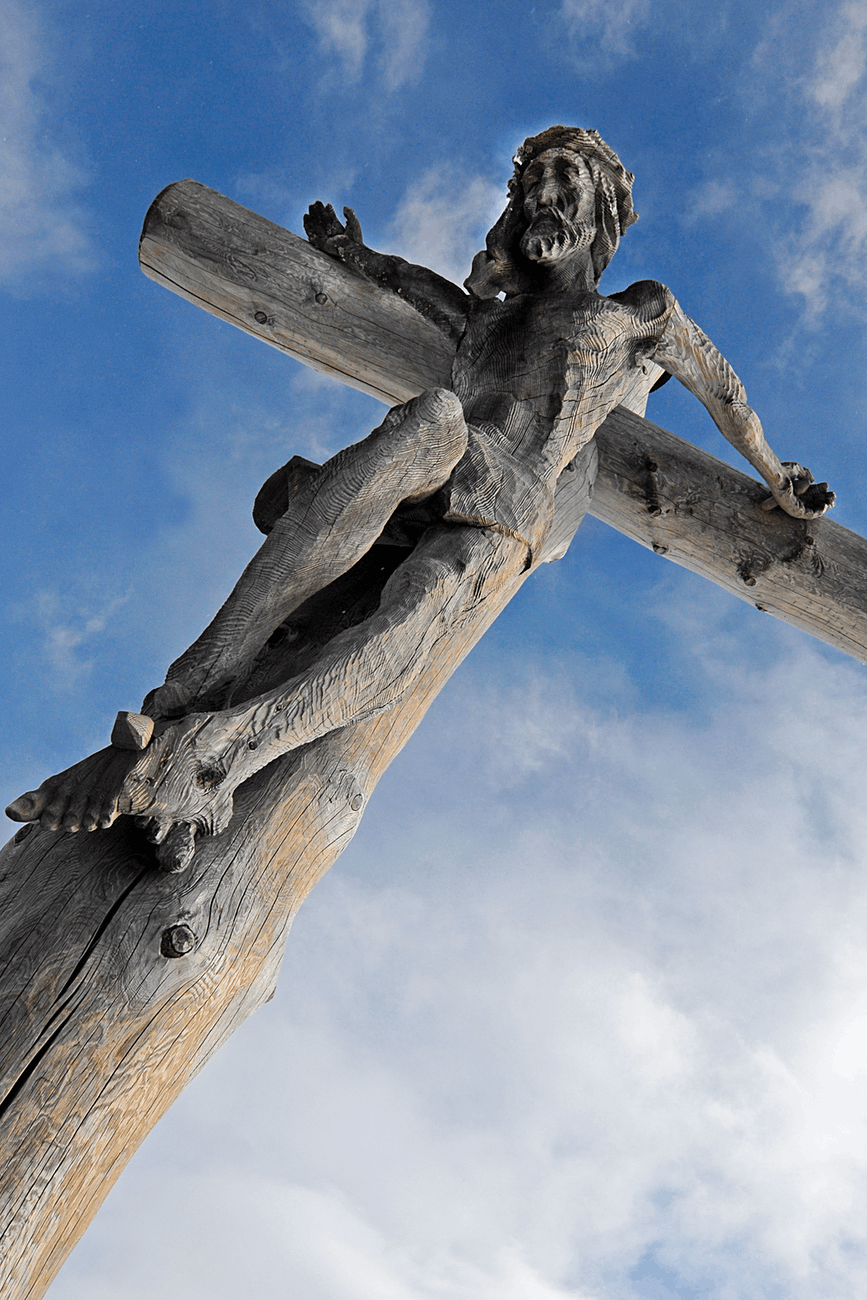
Unlike a marriage partner, family member, or close friend, God’s love for us never changes. We never have to pray that Jesus should love US more dearly. It’s impossible. The same love that spoke the universe into being and designed you to be the awesome and unique person you are, is the same love that stretched out his arms so they could be nailed to the cross– the same love that calls out to you no matter what you’ve done or who you are and offers you peace, joy, and rest. Loving Jesus isn’t a matter of measuring how I feel about Him from day to day, but spending each day learning to know Him better for who He is and not just what He has done or what He can do for me. The prayer should be for me to really learn better how to honor Him, how to trust Him, how to obey Him, praise Him, listen to Him, and walk close to him.
In the Broadway musical, Godspell, there is a simple ballad, “Day By Day,” in which the singer(s) express a desire to be closer to Jesus. Day By Day/YouTube There are three “prayers”– 1) to see thee more clearly; 2) Love thee more dearly, and 3) follow thee more nearly. I have heard various opinions and critiques of the musical, from the use of clown makeup and vaudeville tunes, to the marginal grammar of this song. But I’d like to spend some time digging in to the three simple prayers.
Today, I want to look at (literally) the first prayer– “to see thee more clearly”. There is one prayer, but I think it can be broken down into two parts.
First, I want to SEE God. God is Spirit–an invisible essence– and yet he manifests himself in a million different ways all around us. God is in the inky, endless blackness of a moonless night, and in the vibrant colors of spring blossoms; in the glaring reflection of the sun off the lake, or the gray and palpable mist over the meadow. He is in the wrinkled face of my neighbor, and the exuberant smile of a toddler, and the beauty of a horse running or an eagle soaring. But I can see all of this and more and still not see God. I can focus on the creation and miss the creator. I can focus on the beauty and learn nothing of the artist. I can see the amazing variety of people in the world– skin tones and eye shapes, facial expressions, and body language, dimples and hairstyles and nose-wrinkling, and hand-wringing, and miss the Love of God for each one.
Sadly, I can sing this prayer, pray for insight, and still miss seeing God. I can trample His creation, dismiss His presence, and hate the people He loves enough to die for; people who bear the stamp of His image.
And I want to see Him “more clearly”–I want to see him as he really is, and not as I imagine him to be. We live in an age of glossy retouched photos of models and celebrities; we “see” their image, without knowing what they truly look like, and without knowing anything about who they really are inside. In many ways, God is only slightly less invisible than the real people around us. How many people do we ignore in a day’s time? How many do we glance at, only to get stuck on a single detail (a hair on their sweater, or something caught in their teeth, or a receding hairline or blotchy face). How many people surprise us by not being like the image they project? I don’t want to see a Photoshop Jesus; a glossy, smiling image of someone who says only what I want to hear, and looks like nothing ever touches him. I want to see the Jesus who wept over the death of his friend; the Jesus who laughed with delight as he talked with children; the Jesus whose eyes were full of compassion even as he was dying on the cross. I want to see the Living Word of God.
Jesus is close– closer than we think. I want to spend today seeing him more clearly.
Baseball season is off to a great start! I love baseball, and I love word-play, so it’s probably no surprise that I really love the Abbot and Costello routine, “Who’s on First?” (watch here)
The idea behind the famous routine is that Abbot is trying to explain the positions on the baseball team, but the players’ names lead to all sorts of needless confusion. You don’t really have to know a lot about baseball to be entertained by the comedy routine, but the more you do know, the funnier it gets. Baseball depends on coordinated team effort– knowing who is playing where can make the difference between spectacular plays and disasters– both offensively and defensively. But as much as I would love to talk about both baseball and comedy today, I really want to use baseball as a metaphor for prayer.
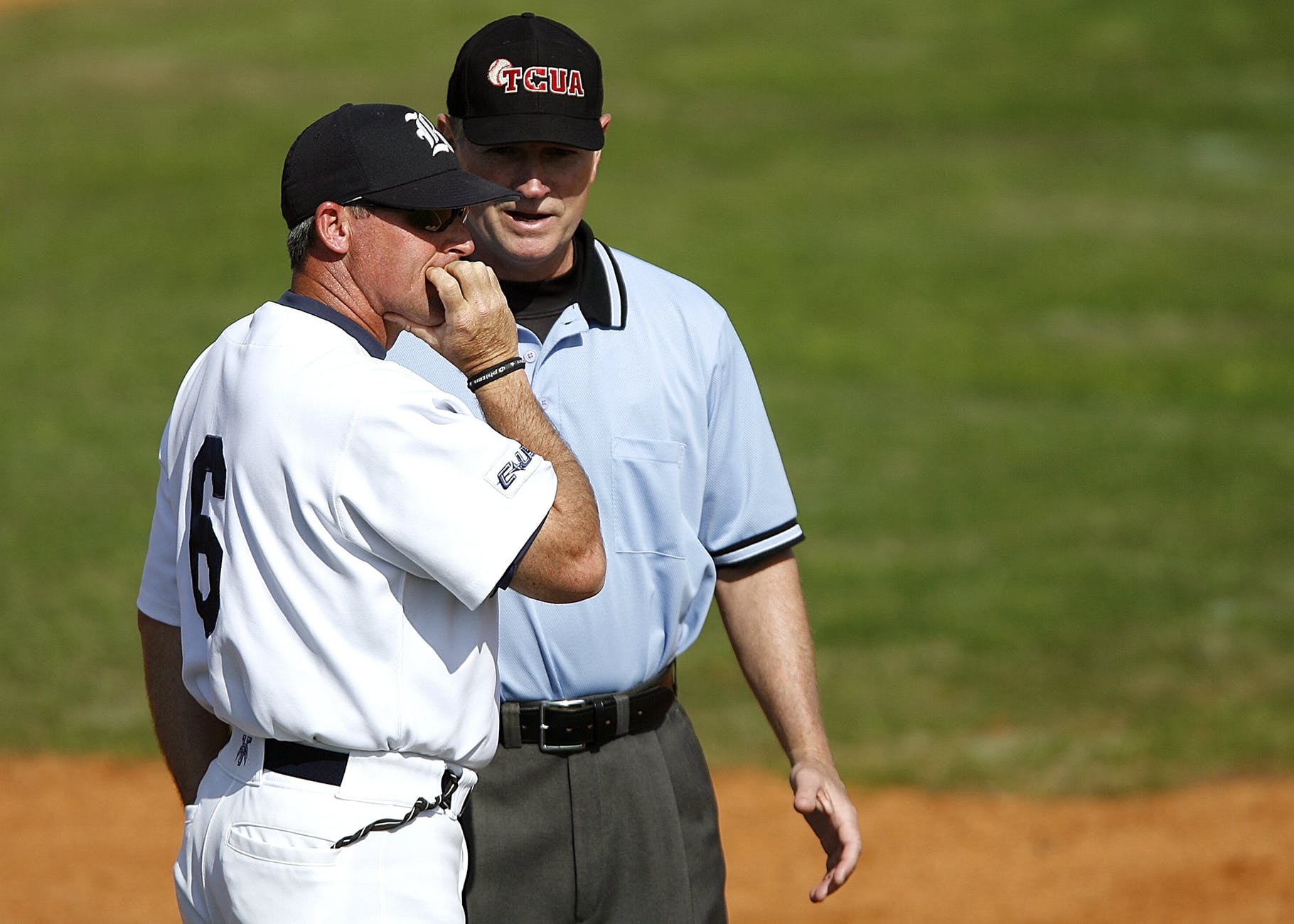
Prayer is very personal, especially confessional prayer, but often it is also communal and a coordinated team effort. Every player (pray-er) wants to play our best, and we are gifted for certain positions on the “team.” Some of us are great at pop-ups– catching people “in the moment” and praying with them, sharing their burdens and joys with concise sentence prayers. Some are sluggers– prayer warriors who “knock it out of the park.” Some are outfielders, patiently persistent in praying for the lost, and ready to chase down a line drive or jump up to make the save. Some are basemen– praying to keep the enemy from gaining ground, or catchers, defending home base from all attempts to score. Some are good at bunting–providing the necessary support and sacrifice so that someone else can advance. And some are master pitchers–crafting prayers that strike out or even shut-out the enemy. Our coach, our mascot, our general manager and MVP? The Almighty, Triune God! He knows our strengths, weaknesses, and how we can improve our performance and standing. He also wants to help our team become closer and stronger. After all, baseball is wonderful, but Christian living is even better– it has eternal consequences!
When we ask, in relation to prayer, “Who’s on First,” we need to remember a few things:
Always listen to the coach!
Remember you are not alone.
PRAY to win!
Look out for and support your teammates.
Each inning is a new beginning– don’t live in the last inning.
Don’t let the current score determine your play.
Don’t let the other team’s players or their fans take you “off your game.”
(Spoiler alert)– We are the champions!
Let’s get suited up and ready to take the field for today’s game…after all, you or I may be on first!
Pursuing a lifestyle of prayer means more than just coming to God with a list of requests and a couple of scattered “Thank You’s” every now and again. Prayer is a discipline– that means being a disciple of prayer! How can I learn to pray for effectively? Commune with God in a richer and more satisfying way? There are many tools and methods that can help with this. One of them is called the ACTS method.
ACTS is an acronym for Adoration, Confession, Thanksgiving, Supplication. And praying in this order can radically transform the way we enter into prayer and the way we respond to God’s answers. On a busy day, I often start prayer with my supplications– my requests, my needs, my hopes and desires. I may be approaching God, but my thoughts and heart are all about “what’s in this relationship for me!” “I want healing for ______, and protection for my family, and a resolution to this problem at work, and…”
But the ACTS method flips this order–it starts with Adoration. It begins by coming to God and acknowledging who HE IS. Worship will outweigh worry. Adoration accentuates God’s Ability and His Authority over whatever is on our mind. It also leads naturally into
Confession. Not the kind that masks false humility– “Woe is me, I’m so unworthy. I am a worm, and I don’t deserve to be happy or free or victorious in Christ.” Rather, confession comes as we recognize who we are in relation to God. We are not worthy of God’s blessings in our own righteousness, but IN CHRIST, we are able to come boldly before God in dependence and joyful acceptance of HIS righteousness. And we can’t accept it if we are still hanging on to old habits and sinful ways of thinking. We must agree with God, let go of whatever is holding us back, and gladly prepare to move forward!
Now we are in Thanksgiving mode. We are reminded of God’s mercy, and His faithful care of us. He has been faithful to answer prayers in the past, and to be with us, even in times of trouble and seeming silence. He IS there. He DOES listen. His mercies are new every morning! (Lamentations 2:22-23)
NOW, we are ready to present our Supplications. In fact, we are ready to follow the direction of the Apostle Paul, when he told the Philippian believers: “Do not be anxious about anything, but in every situation, by prayer and petition, with thanksgiving, present your requests to God. And the peace of God, which transcends all understanding, will guard your hearts and your minds in Christ Jesus.” Philippians 4:6-7 (NIV).
There are many times when we pray in desperation or in a hurry about a specific need, when this approach can be modified. But for deep prayers during a quiet time, or in a small group, the ACTS method can really boost our connection with the Holy Spirit. We begin by thinking we are praying about “something,” and are amazed to re-discover that prayer is really about “someone!”
I have found that such prayers also cause me to more readily ACT in the matters I bring up for request. I’m not just turning them over to God because I am helpless and He is my last resort. Even when I “know” that is not the case, when I focus on the problem and not the Provider and Protector, I forget that He can give me the power to “do all things” (see Philippians 4:13) in Christ’s strength and for His Glory!
Note: This is a re-post from seven years ago, but I thought it was worth revisiting…
Have you ever had one of those days where things just don’t seem to make sense? It doesn’t have to be a “bad” day, necessarily–just a day when things don’t seem to “fit.” I had one of those days yesterday.
I journal my prayer life– I have notebooks with names and places for each day of the year. Yesterday, my notebook included the city where my daughter lives and the names of three people celebrating birthdays, among other needs. One of the names was a complete mystery to me. I couldn’t remember who this person was, or how I knew either her or her name…I was drawing a blank and didn’t know how I should pray for her. Was she a former classmate? Was she a daughter or mother or sister of someone I knew better? I ended up praying a very general prayer– for her health, her family, etc., but it bothered me.
Hours later, speaking with someone on the phone, another name came up, along with a prayer request– a man suffering with an illness who happened to have the same surname. Coincidence? Possibly, but the name stood out, and I prayed again– for both. Now I was really curious. I did some digging. The first person WAS the sister of someone I knew, and their father is the one suffering from an illness.
God is amazing, and one way is how he gives us the opportunity for “a-ha!” moments like the one I had yesterday. I have spoken to several Christians who are sometimes separated by several time zones from those they normally call on for help or advice. In crisis moments, they have cried out to God. Thousands of miles away, someone will be awakened from a sound sleep with a sudden urge to pray for their distant friend, or another will be stopped in their tracks and send up a random prayer as their mind wanders. Often, this will be in the exact moment of the crisis, and God will intervene with a miraculous healing or rescue or provision. Days later, the two parties will connect and be astonished at the timing.
What used to puzzle me about such prayers was this– if God already knows the need, and plans to act, why involve the second (or third) party? Because stories like this, while impressive and inspiring for those who believe, rarely cause a skeptic to come to faith, and aren’t necessary for those who already believe.
I think God has many answers, and I know I don’t have all of them, but here are three things I believe God is doing through such puzzling circumstances and outcomes:
While it doesn’t turn a skeptic into a believer, it DOES give the skeptic something to explain away– one such instance might be ignored as coincidence, but five? two hundred? And we have a Biblical precedent in the book of Acts, chapter 12, when Peter is rescued from prison and shows up at the very house where believers are praying for his release! Even they didn’t believe at first, and left Peter out in the cold!
It IS an inspiration and an encouragement as a follower of Christ to know that he not only hears our prayers, but he recruits others to think about us, bear our burdens, and share in our trials.
Last (on my short list; I’m sure God has many other wonderful answers I haven’t imagined yet), I believe that God’s purpose for us involves communion– eternally living, sharing, and loving together with Him and with each other. It is one of the highest honors and greatest privileges to be involved in God’s work through prayer…it is something we all can do, anywhere, anytime, but it requires being humble and willing to stop what we’re doing, commit our moments and our hearts in prayer for others (sometimes without knowing why!), and trust God to do all that we cannot.
Prayer sometimes seems puzzling, but that’s because we don’t see all the answers– yet. Someday, what a marvelous and miraculous picture will unfold– and we have the opportunity to fill in the gap; to be the answer to 34-down; to be the missing piece of the pine tree in the upper right corner– to answer the call and finish the puzzle!


































 Pursuing Prayer