“He remembers His covenant forever, the promise He made, for a thousand generations.” – Psalm 105:8
“God remembered Noah and all the wild animals and the livestock that were with him in the ark”– Genesis 8:1
“God heard their groaning and he remembered his covenant”–Exodus 2:24
Throughout the Bible, God “remembers” His people and His Promises. But that doesn’t mean that He ever “forgot” either one.
God is omniscient– He “knows” everything– He “forgets” nothing. When God says He remembers, He is not suddenly conscious of something that slipped His mind. He doesn’t suddenly recall a person or promise that He hasn’t thought about in a while. Sometimes, it may seem that we are forgotten. God may seem distant, or silent, or preoccupied when we call out to Him. The descendants of Jacob lived for four hundred years in Egypt, and many of them must have felt as though God had abandoned them and forgotten His promises. But when it says, “God heard their groaning and He remembered His covenant (Exodus 2:24), it doesn’t mean that God suddenly heard their groaning, or that He had not noticed their suffering and slavery in the years leading up to that time. When “God remembered Noah and all the wild animals and the livestock that were with him in the ark” (Genesis 8:1), it doesn’t mean that God was letting them drift along in the ark aimlessly while He went off and played golf or took a nap!
God is always watching– always aware– always in control. NOTHING can take Him by surprise or sneak in or out of His conscious awareness. When God says He remembers–that is for OUR benefit. God is reminding us that He will never– can never– forget His promises. It is a reminder that He will NEVER leave us or forsake us– even when we can’t see Him, or understand what He is doing. It is a call for US to remember just how faithful, powerful, and omnipotent God really is!
I love this reminder, because there are many days when I feel alone, ignored, unheard, or “passed by.” There are days when I question whether God really hears my prayers. But I don’t have to wonder or worry. God will never forget me. His love is eternal and unshakable. God’s thoughts toward me are a constant cosmic embrace– even if I don’t feel them in the pain of the moment.
When God “remembers,” it is a powerful testament to His eternal plans for us. He shows up, not when we expect, or not when we have earned His comfort or His grace; He shows up in His perfect timing and for His Glory. Our job is to “remember” who has us in His thoughts, and in His Hands. What a great thing to remember today!
At the age of 14 months, just after I had learned to walk well, and had learned to say “Mama” and “Da-da”, I became very ill. Our doctor was baffled– I was tired and weak, I was losing weight, but I wasn’t carrying a fever. It wasn’t any of the “usual” culprits– we did find out I was allergic to penicillin, but other antibiotics had no effect. We tried a different doctor– he was also stumped, and all the while, I got weaker. My desperate parents prayed for healing as the weeks went on. I was too little to even describe any symptoms– I whimpered and slept; I ate very little, and became too weak to walk.
God was listening to my parents’ prayers, even though the situation seemed impossible and tragic, and God seemed silent and distant. My mother, in the years since this incident, has shared with me the “breakthrough” moment for her– that moment when her prayers changed from “heal my little girl”, to “thy will be done.” Not immediately, but shortly after that, the new doctor was inspired to look for another cause. After some blood tests, he determined that my body wasn’t absorbing and processing protein. As soon as I began a regimen of protein booster shots, my health began to improve. I was still sickly as a child; I had immunity issues, and I was small for my age, but I was out of grave danger. I had to relearn how to walk, and my return to solid foods (especially meat) was a gradual one. I have no actual memory of these events, but I learned a valuable lesson about prayer.
When we pray “Thy will be done,” we sometimes think it is “our” will vs. “God’s” will… that God’s will is always opposed to ours; that it will lead to us losing whatever it is we are holding on to. That may be the case, sometimes. We grapple with God’s will, struggling and wrestling, like Jacob, until we are forced to give in. Some of us limp our way to the altar of prayer. But God’s will is not set in relation to ours– His will is His own. It is higher than ours. It is perfect and complete. That doesn’t always make it pleasant, comfortable, or easy. In my family’s case, it meant months of trips to get shots– every day for the first few weeks; every week for months afterwards, and every month after that until the time I started Kindergarten (a year later than I might have if I had been healthier). For many, “Thy will be done,” means saying goodbye to a loved one. Sometimes it means losing a limb, or letting go of a cherished dream. But what we see; what we experience; these are mere moments in God’s plan for our eternity. Like the booster shots I had to have as a child, they bring a momentary sting, and the fear of them may loom large, but in God’s plan, they bring us the opportunity for life and health and ultimately, triumph.
Sometimes God’s will means walking through the fire, or walking through the valley of the shadow of death. Long before my birth and health scare, my mother had lost twins, and been a divorced mother of a young son. She had already faced death and heartbreak and hardship. After this incident, she would be hurt by my brother’s teenage rebellion, face depression, and go through health issues with my father before his death; but she would also gain another daughter and live to see grandchildren and great-grandchildren who brought her joy. In my own life, I have faced the shattered dream of wanting children of my own. I struggled for years with singleness, when I wanted to be married and have a family. But God’s will was for me to learn patience, compassion, and empathy for others who hurt in these areas. And he has blessed me with a family I would never have imagined–not only the husband, step-children, and grandkids, but all the students and children I met through my careers in education and public libraries.
It is natural and easy to pray for what our will, our feelings, or our intuition tells us is best– healing for the sick (immediate healing is even better), success for our ventures and those of our families and friends, safety in travels and daily routines, prosperity, and happiness. It is not wrong to want these things. But it is better by far to remember that God is sovereign and good. Giving him complete control over our situations is not weakness; it is not “giving up”. Instead, it is investing our future– putting it in the hands of the one who holds tomorrow, and all of eternity! It is trusting the one who is most trustworthy to make the most of our hours and days, our treasures and our dreams.
Even Jesus taught His disciples to pray “thy will be done on earth as it is in heaven” (Matthew 6:10b). But He didn’t just teach that phrase to His disciples– He prayed it Himself in the Garden of Gethsemane. “Father, if you are willing, take this cup from me; yet not my will, but yours be done” (Luke 22:42). Jesus knew he would face humiliation, torture, and death. He knew that He would take on the punishment for all the sins of the world– punishment He did not deserve– and that He would be subject to the full wrath of God. In His humanness, He was anguished to the point of sweating drops of blood. Yet He chose to pray, “Thy will be done.”
I have never been in that kind of anguish– even when I was so very sick or depressed about seemingly broken dreams. But I still find it difficult to fully surrender to God’s sovereign will when the future is in doubt, and when the present looks overwhelming. But growth and victory come when I let God take the reins and guide me through the valleys and wilderness walkways of life. His will is mysterious and sometimes scary, but He is always faithful. And I know that from experience.
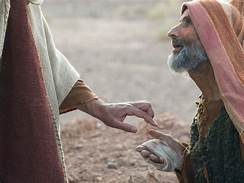
It happened that as he made his way toward Jerusalem, he crossed over the border between Samaria and Galilee. As he entered a village, ten men, all lepers, met him. They kept their distance but raised their voices, calling out, “Jesus, Master, have mercy on us!”Taking a good look at them, he said, “Go, show yourselves to the priests.”They went, and while still on their way, became clean. One of them, when he realized that he was healed, turned around and came back, shouting his gratitude, glorifying God. He kneeled at Jesus’ feet, so grateful. He couldn’t thank him enough—and he was a Samaritan. Jesus said, “Were not ten healed? Where are the nine? Can none be found to come back and give glory to God except this outsider?” Then he said to him, “Get up. On your way. Your faith has healed and saved you.”
Luke 17:11-19 (The Message)
Have you ever been thanked for doing your job? I don’t mean praised or tipped or even promoted…have you ever had someone look you in the eye and thank you for a job you did? Not because they had to, or because it was expected–not because they were trying to flatter you– but because they were genuinely grateful? It is a powerful, humbling, and even startling experience. I can count in the fingers of both hands the number of times I have been genuinely and personally thanked for things I did in the course of various jobs. Such expressions have come from unexpected sources, and have made lasting impressions.
Our culture has been one of polite gratitude– I grew up being reminded to thank salespeople, waitresses, bellhops, bank tellers, gas pump attendants (yes, I’m THAT old!), ushers, and anyone who held a door, or provided a small service. We’ve lost a lot of that– we EXPECT good service (some of us expect even more than that) and are more prone to complain if we don’t get it. And, in the age of self-service and entitlement culture, we are less likely to receive the kind of good service I remember as a child. The end result is a lot of complaining and resentment. But even “good manners” is not the same as genuine, heart-felt gratitude. Someone can say all the right words and still leave you feeling drained and even hurt. Someone can leave a huge tip after being beastly–you still remember the abuse. And someone can be grateful but leave you unsure if they even noticed your effort.
The Gospel of Luke tells a story that illustrates this well. Jesus, while traveling through the region between Galilee and Samaria, comes to a village with ten lepers. Keeping their distance, but wanting to catch Jesus’s attention, they shout out and ask for a miraculous and merciful healing. Jesus takes pity on them. He doesn’t shun them, but He doesn’t make a big fuss, either. He simply sends them on their way to show themselves to the local priest and be declared healed. It is after they leave that they realize they are indeed clean! Nine if the men continue on, grateful (we assume) and overjoyed. But one man makes the decision to turn around and thank Jesus face-to-face. He shouts and glorifies God and thanks Jesus repeatedly. And he was a Samaritan–an outsider; a rogue Jew–the type of person who wouldn’t be expected to show “good manners” to a Jewish teacher. Jesus points out to His disciples that there were ten men who were healed, and only one who came back to show his gratitude. He then speaks directly to the healed man, and assures him that his faith has both healed him and saved him.
This story does not go on to tell us whether or not the ten men offered the “appropriate” thank offerings that were set up in the Laws of Moses. It does not mention whether or not these men spoke of their healing or their gratitude among their friends and neighbors. We should not assume that the nine others were ungrateful in any way. Yet Jesus calls attention to the tenth man. Not because he was more important than the others, or felt more gratitude than the others, but because he took the effort to show it in person. It didn’t cost him any money or a lot of extra time, but it made an eternal impression that was recorded for us to learn from centuries later.
What a small thing, to say “thank you” for a helping hand, or friendly advice, or good service. It doesn’t require a costly demonstration, or empty flattery. Just a simple, direct, and heart-felt expression of gratitude. But what a powerful gesture. One so powerful, even Jesus was moved to stop and comment on it. Think how much good we could do if we took the extra moment to say, “thank you” to someone today? Think how much we have to be thankful for!
Heavenly Father, THANK YOU for all that You do and have done; for all that You ARE! Thank you for those who do good, who show kindness, and who give their time and effort in service. May we be truly grateful, and quick to show our gratitude today. Amen.
In the Biblical books of the prophets (Isaiah, Jeremiah, Ezekiel, etc.), there are many references to altars and sacrifices–both the ones built to honor Jehovah God, and those designed for idols.
Israel and Judah were guilty of building thousands of altars and shrines to false gods. Some of them were found even inside the Holy area of God’s own temple! As part of God’s judgment, He repeated that He would no longer accept the empty sacrifices of His people–He would no longer hear their prayers, unless they repented.
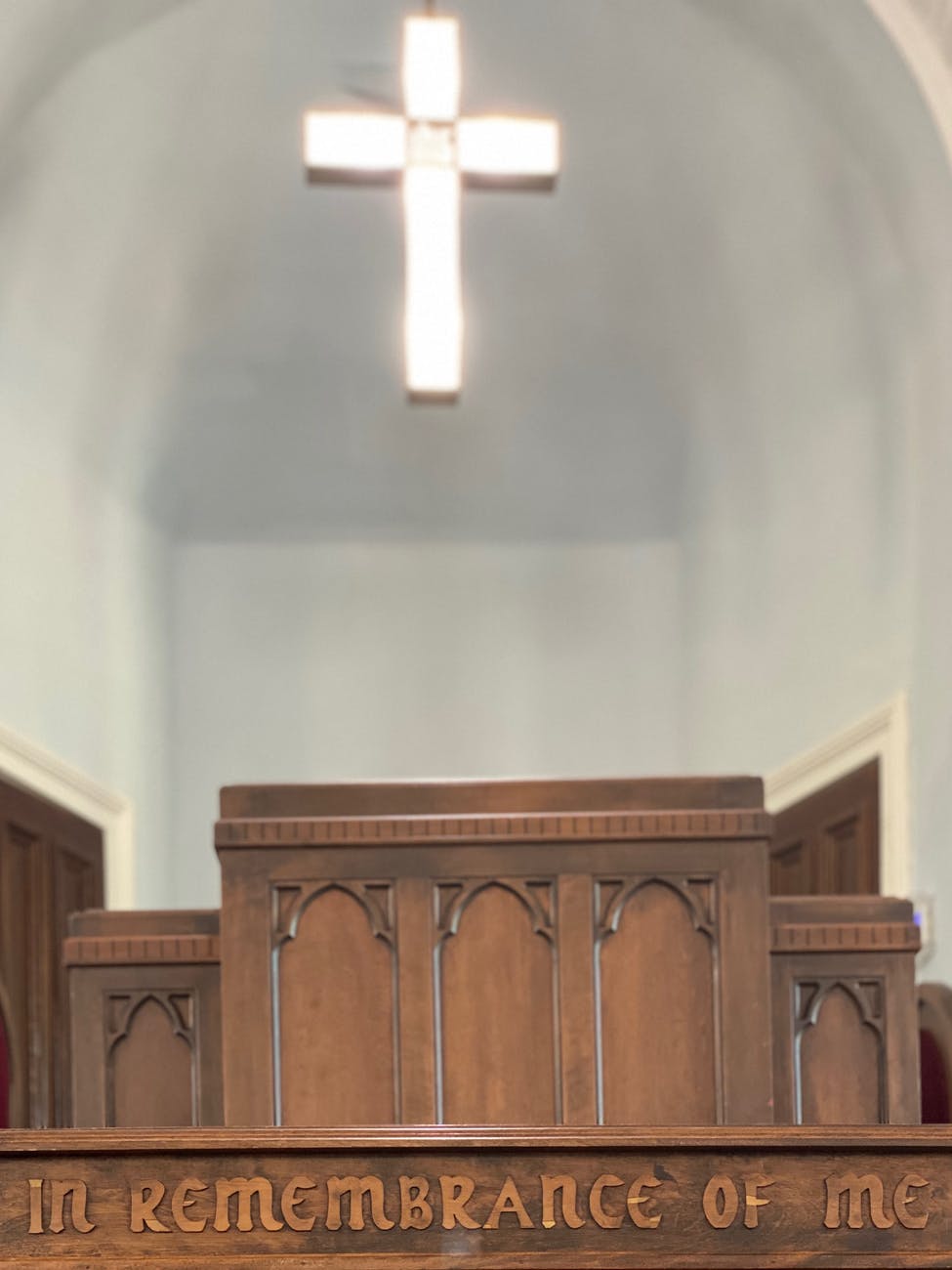
I read these words and wondered– Where are our altars today? When I was a child, many of the older churches had what we called an Altar. It was usually a raised platform, with a podium for the minister, and possibly a “host table” for communion. My childhood church also had a small table that held a large Bible. Sometimes, the platform would have a railing around the edge, with a couple of stairs on either side. And, while many churches “passed the plate” for offerings, some had a special plate on the railing of the altar, where people would march up and place their offerings for the week. There it would sit for the rest of the service–random dollar bills of random denominations in random states of being crumpled, folded, and worn, along with checks, and, sometimes even coins. All of them brought forward and placed on the altar.
In many churches, the altar was where congregants would come to receive communion. The most important church events happened “at the altar.” Weddings, baby dedications, Bible readings and sermons, even funerals– all happened at the altar.
And often, we would have an “altar call.” The pastor, or a guest evangelist would urge people from the congregation to meet at the altar– to repent, to receive forgiveness, to be renewed and refreshed as we offered ourselves to God. There we were– random denominations of people, in random stages of obedience or rebellion, all answering the call to follow Christ as Lord. Some stayed there for a few minutes, praying silently. Others might be there for an hour, crying out, trying to find the words to express pain, guilt, or gratitude and awe, that GOD would meet with US there! Sometimes, we would form small groups to pray and give encouragement; sometimes we would disperse, too moved to speak at all. The Altar was the focus of the service– the place where God met with us; where He received our worship and our offerings; where we were challenged and made ready for spiritual battle.
Today, many churches have stages, like any large theater or event center. There is no railing, but there are hundreds of spotlights and fog machines. There is no podium for the pastor–just a headset and maybe a small stand for notes. Sometimes, the pastor reads from a teleprompter. Often, he or she is joined by a full band or orchestra, and dozens of singers, actors, or other assistants. No one from the congregation approaches the stage– why would they get up from their comfortable reclining padded seat? No one even “needs” to bring a Bible– the sermon text is printed out on the giant screens hanging above the stage. Our worship is comfortable, and entertaining. Many of us don’t even go to a church building, anymore. We can livestream worship services, or watch from a satellite location. We don’t even have to change out of our pajamas! And we feel blessed, and filled with excitement to be part of something dynamic and spiritually uplifting.
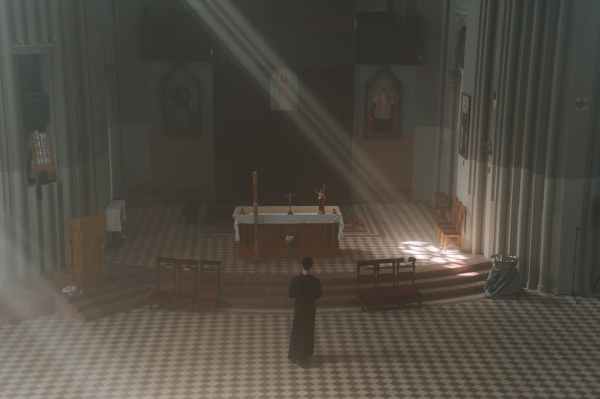
But we have no altars. There is no place for someone to lay their offering before God; no place to meet with Him in repentance or revival. There is no place to remind us of sacrifice and atonement. Oh, to be sure, many churches have a large cross on display somewhere. Some even have the “host table” for communion– somewhere in the wings, just in case–but the concept of an “altar” has all but disappeared from churches in the West. It is an anachronism–something ancient and uncomfortably part of the distant mists of tradition.
As I write this, I’m having an “off” day. I don’t feel well. I don’t particularly feel like worshipping or saying joyful prayers. I don’t even feel particularly like saying a prayer. But I will pray– even if it’s just a mumble or a groan.
God meets us where we are. He is not just the God of the joyful and productive; the “shiny, happy people,” or the ones who feel like overcomers. God is the God of the hurting; the God of the lonely; the God of those who are sad, tired, and feeling “off.” Of course, God doesn’t want me to go through life this way. I will have better days– days of accomplishments and celebration. But God does not leave me alone when I am grumpy, upset, or “blue.” He is right beside me, surrounding me with His presence. So I can mumble today, even if I sang yesterday or cry out in anguish tomorrow.
Prayer is a pursuit for every day– not just when we “feel like it” or when we are desperate for answers. It is a discipline. If I choose not to pray today, I may more easily choose not to pray tomorrow, or the next day. And God will still be waiting there, patiently, whether I mumble or give Him the “silent treatment.” Because prayer is more than just a pursuit and a discipline. It is part of a relationship. God already knows me intimately, but He wants ME to know HIM as well. And He wants me to know and experience His Love– even when I don’t feel it; even when I know I’m not very loveable. And that knowledge–that enduring relationship–will carry me through days like today. I can mumble, or whisper all the lies and sadness I feel on a particular day, but God’s presence will break through and wrap me in the cloak of Truth–the everlasting Truth of His Love and Faithfulness. Feelings will pass, but Faithfulness endures. And I pray to the God who is Eternally Faithful–even when I am temporarily feeling faithless and far away.
God is an expert at turning mumbles into melodies!
Have you ever been in a season where you felt like you were praying about the same situation over and over with no results? No answers, and no indication that God has even heard? And you feel frustrated and even guilty about praying AGAIN about it?
We live in an “instant” culture. Instant banking, instant coffee, drive-through fast food, and 24-hour news cycles give us the expectation that we can get whatever we want or need with the push of a button or flip of a switch. Just yesterday, I pulled into the grocery store parking lot, and, seeing how full the parking lot was, I drove two miles away to a different store, because I anticipated long lines at the checkout! I don’t like waiting. I don’t like “wasting” time.
But God often puts us in a “holding pattern.” He may seem silent or distant, non-responsive or even absent. And in our impatience, we may stop bringing our burden to God, and seek elsewhere for answers or relief. Even when we know that God has promised to hear us, and never leave us alone, we long for instant gratification. And when we don’t get it, we start to wonder and doubt.
Sometimes, I feel angry in my impatience. I want answers! I want to know the next step forward! Other times, I feel hurt. Does God not hear me? Does He not understand my need? Sometimes, I even feel guilty. I know that God “knows” everything. Why do I keep bothering Him with the same thing? Am I asking for the wrong thing? Am I asking in the wrong way?
It is okay to have questions. It is normal to wonder. And I don’t have a “quick fix” answer for times like this. I think most of us experience these questions at some point. And the Bible has many examples throughout history of others who waited– some patiently, and others not so much…
Abraham and Sarah waited years for a family. In their impatience, they tried to do it in their own wisdom with heart-breaking results that echo down through thousands of years. Hannah prayed for years while enduring the taunts of her rival, Peninnah, before God gave her a son. A woman who touched Jesus’s robe had prayed and waited years for healing from her constant bleeding and pain. I know of parents who prayed for years that their wayward son or daughter would return home– some kept praying until they died, never seeing an answer.
But one comforting takeaway from all these Biblical and real-life examples– God DOES see and hear us. He left all those stories for us to read, knowing that we, too, would face trying and overwhelming circumstances. God doesn’t always give us an immediate or conclusive answer in our struggles. If He did, we would never develop a real and solid faith. God is less interested in answering our questions than He is in sharing our struggles. He does not want to walk ahead of us and smooth out our every path. Instead, He wants to walk beside us in the hills and the valleys of life.
So even if “I already prayed about that..” I can keep praying with confidence. God hears. He knows. And He cares enough to slog it out right by my side. And yours.






























 Pursuing Prayer