The Ghost of Christmas Yet to Come

Welcome to a New Year! And everything that lies before us is shrouded in mystery. But is that a cause for fear or excitement?

That is the question that weighed heavily on the mind of Ebenezer Scrooge in “A Christmas Carol.” Scrooge carried resentment and bitterness from his past, and isolation, anger, and disdain about the present. And he greatly feared a future he could not manage or define.

After visits from the Ghost of Christmas Past and the Ghost of Christmas Present, Scrooge was left emotionally off-balance and fearing the worst. Finally, he was visited by the third mysterious spirit, the Ghost of Christmas Yet to Come. He already knew the sad fate of his friend, Jacob Marley. Would this spiritual visitor show Scrooge a dire future already fated, or merely shadows of what might be? And the Ghost delivers strange sights– predators gleefully trading in the belongings of the recently deceased, heartless business acquaintances discussing the funeral arrangements of one of their fellows, and grieving family members in the household of Bob Cratchit. But what was his own fate? Where was Ebenezer Scrooge in the Christmases yet to come?

The answer comes in a cemetery, where Scrooge sees a newly-dug grave and a stone bearing his own name!

Death always seems to come as a surprise, even when we know that we will all die someday. Our own death may haunt us, but usually from a safe distance. It will come someday. Once we are old. Once we are weak, and sick, and ready to rest. Once we have achieved our goals and fulfilled our purposes. But that’s not how death works. It comes in its own time, not ours. It comes, not as an expected closure, but as a rude interruption of our hopes and dreams.

Ebenezer Scrooge, forced to deal with his mortality, and the legacy of his past and present, realizes that life is not what we forge out of our own plans and our strength of will or our hard work. Life is a gift. But life is not a given. Life has a purpose, regardless of the purposes and goals we bring to it. And that purpose has to do with giving and receiving other gifts– generosity, hope, forgiveness, encouragement, time, fellowship, and Love.

This Ghost never speaks to Scrooge with words. Instead, he shows Scrooge a world in which Scrooge has no more chances to give or receive gifts. He has chosen to hoard his wealth, his time, and his heart– and the result is that he will die alone, unmourned, a useless shell of rotting flesh. His fear and bitterness have brought no comfort to anyone, and have left the world a colder, icier, more horrible place.

But there is hope, even in this haunting experience. Scrooge wakes from this night and realizes that he is ALIVE! The Ghost has given him a great gift– the chance to live– the chance to experience connection and hope, joy and creativity, excitement and generosity.

What will this new year bring to US? Can we face an uncertain future with hope? Can we accept the gift of Life– even with its pain and struggle– as a priceless opportunity? Can we reach out to others, even knowing that we will sometimes be rejected, betrayed, and used? Can we strive to make things a little better– in our homes, our communities, our place of work, and in the wider world?

Scrooge did, and so can we! “A Christmas Carol” does not finish with a cold gravestone– even though we must know that Scrooge has to die one day. The story ends with music and light and gaiety, as Scrooge embraces the mystery of his own future and learns to live in hope and charity with those around him.

As we step into the future, may we also embrace the Life that God has given us, the joy of sharing time with others, and the expectation of good gifts that God will continue to give us in the future. As Tiny Tim says, “God bless us, everyone!”

My prayer is that you will experience excitement as we all take the next steps– God’s spirit will light the way; God’s word will be a lamp unto our feet (Psalm 119:105). God’s glorious gift of Christmas– the coming of Christ to be our Emmanuel, our example, and our Savior–will be the carol that we sing as we travel into the unknown!

The Ghost of Christmas Present

If you missed my last blog post, I’m looking at the story of A Christmas Carol, by Charles Dickens. It may not seem like a “jolly” Christmas story, or even a “religious” story, but it is “spiritual.” Ebenezer Scrooge is literally haunted by three spirits over the course of Christmas Eve. Last time, I spoke of the Ghost of Christmas Past. Today, I’d like to look at the Ghost of Christmas Present.

I know, Christmas was a few days ago– we’re currently at the cusp of New Year’s Eve, but these few days between Christmas and New Year’s Day can often feel jumbled up and run together. And, traditionally, the Christmas season is not just one day, but twelve days, stretching from December 25 to January 6. So today is still technically part of “Christmas.”

In “A Christmas Carol”, Scrooge is actually visited by four spirits. The first is the ghost of his old friend, Jacob Marley, who offers Scrooge both a dire warning, and a chance of redemption. Scrooge has already been visited by Marley, and by the ghost of Christmas past– a look at the moments and people who have shaped Scrooge’s life up to the present. Scrooge has seen both happiness and tragedy in his life, but the “light of truth” carried by the first ghost has shown how Scrooge has rejected happiness, instead embracing a life of fear, loneliness, and greed.

The next spirit, the Ghost of Christmas Present, focuses less of Scrooge himself, and more on the people he has ignored or rejected. This spirit shows Scrooge what he is missing by hoarding his wealth and isolating himself from the rest of the world. It is a picture that many of us would do well to study!

One of the first stops is the home of Bob Cratchit, Scrooge’s underpaid, put-upon clerk. Scrooge makes use of Bob’s time and skills, without ever showing any interest in him as a person. Scrooge is oblivious to Bob’s existence outside of the counting house. He assumes that Bob has a family, but he has no idea who makes up that family. The Ghost of Christmas Present forces Scrooge to see that Bob and his wife have several children, including a sickly and crippled son named Tiny Tim. Though they have very little money (thanks in part to Bob’s meager wages!), they have plenty of love and happiness. Scrooge fears many things that may happen, while his clerk faces very real fears that “haunt” him every day. Yet Bob does not complain, does not exhibit bitterness, and does not hide away from the world.

Next, the ghost takes Scrooge to see his nephew. Scrooge keeps his nephew at a distance because of his bitterness and fear. But in doing so, he is missing out on his nephew’s kindness, wit, and warm circle of friends. Scrooge has treated his nephew with disdain, fearing that the younger man is jealous of all his riches. But the ghost shows Scrooge that his nephew actually feels sorry for his uncle. Again, Scrooge has great wealth, but his nephew is content, and even very happy with his lower station in life. He loves his wife and enjoys friendships that make him wealthier in many ways than his uncle!

Finally, the ghost of Christmas Present shows Scrooge a sight he would never willingly see– the suffering and neediness of the poor, whom Scrooge has sneeringly consigned to death. Rather than seeing humanity, Scrooge sees only people who might drain him of his wealth– the undeserving poor who “cost more than they are worth.” The ghost reminds Scrooge of an earlier off-handed remark about helping those who would rather die than go to workhouses: “If they’d rather die, then let them do it–and decrease the surplus population!” The ghost warns Scrooge that he should be very careful in declaring who is among the ‘surplus population’. In heaven’s eyes, Ebenezer Scrooge himself might have less worth than ‘the least of these.’

 And the King will answer them, ‘Truly, I say to you, as you did it to one of the least of these my brothers, and sisters you did it to me.’ “Then he will say to those on his left, ‘Depart from me, you cursed, into the eternal fire prepared for the devil and his angels. For I was hungry and you gave me no food, I was thirsty and you gave me no drink, I was a stranger, and you did not welcome me, naked and you did not clothe me, sick and in prison and you did not visit me.’ Then they also will answer, saying, ‘Lord, when did we see you hungry or thirsty or a stranger or naked or sick or in prison, and did not minister to you?’ Then he will answer them, saying, ‘Truly, I say to you, as you did not do it to one of the least of these, you did not do it to me.’ (Matthew 25:40-45 ESV)

Scrooge’s feelings and senses are overwhelmed by what he experiences. The present surrounds him– the sights, the smells, the laughter, the cold of a dark winter’s night, and the heat from a roaring fireplace; the stench of the docks and homeless camps, and the aromas of Christmas dinner; the colors and lights of decorations, toys, and costumes; the ringing of bells, and the singing of Christmas Carols. Once again, Scrooge can hear music and laughter, he can sense the love and compassion, but he can only participate on the periphery. The music haunts him, but it comes from others, not from his own frozen heart.

So, what happens to us in this Christmas present? Do we feel connected to the joy and gratitude, the love and hope of the season? Or are we isolated by worry, frozen in fear, enslaved by anger or greed? Christmas is often a time of great sadness and loneliness. And sometimes, the laughter and the lights seem hollow and fake. Especially in the days just after Christmas, we can feel let down, abandoned by the promise of merriment and fulfillment brought by parties and gifts and feasting and entertainment. Outside, the winter is still cold, the bills keep coming in the mail, and fears and worries cloud our days. Some of our fears are very real– disease, grief, loss, sudden changes in circumstances and relationships–Christmas lights and music alone cannot cut through the fog.

My prayer for today, and for the New Year at our doorstep, is that we would open our ears and eyes and hearts to what is around us– acknowledge that we live in a fallen and often worrisome world, but recognize that there are opportunities all around us, as well. We don’t have to isolate. We don’t have to live in constant fear. Christmas isn’t just a day; it isn’t just a season– Christmas is about Christ coming to dwell with us!

Open your ears! Listen to the music of the season– “Peace on Earth! Good Will to Mankind!” “JOY to the World! The LORD has come!” “Let Heaven and Nature Sing!” “Glory to the Newborn King!” Keep listening to the promises of God’s Word– “Never will I leave you nor forsake you!” “Lo, I am with you always!”

Open your eyes– see the wonderful opportunities to share both joy and sadness with others. Seek out the great opportunities to give and receive help and love and fellowship! See the good things that the LORD has done– the friendships and family in your life; the beauty of nature, the ‘wonder of His Love!’.

Open your heart– Receive the greatest Gift! Redemption; new birth; eternal and abundant Life! Choose life and gratitude and humility. Practice childlike faith, hope, and JOY!

Leaning…

(Note: this is an edited and updated post from a couple of years ago.)

“What a fellowship; what a joy divine,
Leaning on the Everlasting Arms…”

Bethel Church, Penn Twp., Michigan

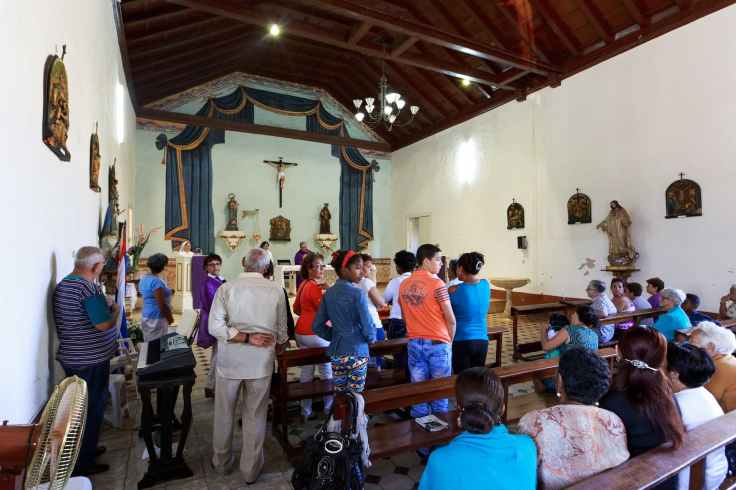
Years ago, growing up in a small community, and attending a tiny rural church in southwestern Michigan, we sang this song often at church. As a child, I liked the tune, but had little idea what the song meant. In fact, when I was very small, before I could read, I misunderstood the lyrics– I thought the congregation was singing “wienies” on the everlasting arms. I made my grandmother laugh when she heard my interpretation! She helpfully corrected me. So I knew the basics. I knew the word fellowship– that was what we called the pot-luck meals and social times we had in the church basement. I knew that Joy was like happiness, only better. I knew that “divine” referred to God and Heaven, and Holy things. But I also knew that leaning was frowned upon– I was told to stand up straight, sit up straight, and never lean back on the two hind legs of the chair in class. How could there by fellowship, and divine joy in leaning? And what were the Everlasting Arms? It sounded like the name of a hotel. It was a long time before I began to understand the joy of leaning, or even falling into the “everlasting” arms of the Savior.

As I have lived, I have grown to understand and cherish these words. There IS a fellowship and a joy divine in learning to lean on the Everlasting Arms of Jesus; to experience the strength and peace that passes my own understanding when I trust fully in Him, instead of in my own plans, whims, dreams, or wishes. There is no shame in leaning on God– in fact, if we don’t learn to lean on the solid wisdom and faithfulness of God, we will slouch into bad habits, “fall” into false teaching, or simply collapse in our own limitations and weaknesses, much like a chair leaning on just two legs! And this fellowship is not only with my Creator, Sustainer, and Savior; it is with all the brothers and sisters around the world who have learned to trust Him, too. I can travel to foreign countries, with different languages and customs, and still feel the kinship and “belonging” with other Christians. It is deeper and more mysterious than just the recognition that we are fellow human beings. It goes even deeper than the love for others who are loved by God. It is the recognition that God’s Holy Spirit surrounds us, flows in and through us, strengthens us, and unites us IN HIM. We are fellow travelers; fellow workers; fellow members of a universal family– one that is more inclusive than nationality, race, ethnicity, language, ideology, or denomination. We can (and do) lean on the ONE who is eternally trustworthy, eternally faithful to walk beside us, empower us, comfort and heal us, and lead us home. And we can lean on each other, knowing that our mutual strength comes from Him.

I love worship services, and I’m thankful that we have an active church where people worship; where the Bible is taught and revered; where families and individuals are welcomed and loved. But I sometimes miss the old “prayer meetings” in the church where I grew up. Every Wednesday night, while the children were (supposedly quietly) playing games, singing songs, and listening to the great stories of the Bible, a faithful (and sometimes rag-tag) group of adults were upstairs in a huddle. Some pulled up chairs and sat in a circle; others knelt the whole time. They prayed for nearly an hour–prayers of thanksgiving and prayers of urgent needs; prayers expressing worship, and prayers expressing inadequacies and failures; prayers for the children downstairs, for other members of the church family; prayers for the community, the country, and the world. As I became a teenager and a young adult, I was privileged to join in. I watched wise, older men and women express their confidence in God’s provision, and pour out their hearts for their children and grandchildren. I listened to young adults asking for wisdom and guidance as they raised families and witnessed to co-workers. I felt the joy and grief and true “fellowship” that came when several hearts turned as one to God.

I have since attended many “prayer meetings”– some planned, some spur-of-the-moment; some held in churches; others held in homes or dorm rooms, even on street corners or grocery stores; some lasting only a few minutes; others lasting hours. I am blessed to be able to attend a weekly “prayer meeting” on Wednesday mornings at my local church. There is something mystical about communal prayer– listening and sharing in prayer with others. The prayers of God’s people are compared to incense– and communal prayer is like a delicately-balanced blend of fragrances, infusing the very room with blessing, and even a touch of Glory. (For more about how prayer is likened to incense, see https://the-end-time.org/2017/06/13/how-is-incense-like-prayer/) It is yet another miracle of the power of prayer, that we can combine hearts and voices to honor God; to lift up very human concerns to the One powerful enough to hold each one in the palm of His hand. It should not replace personal prayer and Bible Study, or communal worship services, but it is a wonderful practice for any Christian to “come alongside” in prayer with fellow believers. It is also humbling to think about how such a seemingly small act can have far-reaching consequences.

God “inhabits” the praises of His people (Psalm 22:3). When we show up and participate in communal worship and prayer, we get a greater sense of God’s presence, His power, His Glory, His Love, and His eternal purpose. What a Fellowship! What a Joy, Divine!

Prayer in the Cyber Age

I attend a weekly prayer meeting at our church. A small group of us meets one morning a week to share prayer concerns, pray for our pastors and church workers, missionaries, community members in need, etc. It usually lasts just about an hour. On a “good day,” we have about seven people.

I grew up in a small rural area, and our little country church had a weekly Wednesday evening prayer service. On a “slow night,” we might have seven people. Sometimes, we had thirty or more (nearly half the church congregation)! They lasted about an hour and a half. When I was in college, we had groups that met once a week for prayer. It wasn’t always the same group, but it met at the same time, and, again, we sometimes had as many as thirty in attendance– for prayer. Often, we met in a dorm room, so it was cramped, and many of us were sitting or kneeling on the floor. Once, we had a fire drill, and my feet had “fallen asleep” and I had to be helped as we walked to the exit!

I don’t say this to disparage our current small group, but to point out some of the differences between life in the 1970s, 1980s and today. My current church has activities every Wednesday evening, and much larger attendance than the little country church ever attained. And prayer is still a small part of the Wednesday evening programming. Prayer is encouraged in small groups, individually, and we pray during service. But sustained time set aside for prayer– what the old hymn refers to as “Sweet Hour of Prayer”–in a group setting is becoming more of a rarity.

There are many reasons for it– some good, some not so good.

On the “good” side, it must be noted that corporate prayer today has expanded far beyond the traditional in-person prayer meeting. Prayer can be skyped, group-chatted, zoomed, and conference-called. Prayer can be “hosted” in one location, with satellite groups around the world praying in real time together. In such ways, thousands, and even millions of people can be joined in prayer. This is an amazing development!

And, along with such developments, prayer has become far more global, and far more immediate. I can receive a text or e-mail notifying me of a prayer request from nearly anywhere in the world, and know that I am joining with a host of other Christians when I stop and take a few moments to pray right then.

So what’s the “downside” of cyber prayer?

Speaking as one who has lived the experience of meeting with the same people at a dedicated time over many years specifically to pray, I have observed the following benefits:

In-person prayer meetings offer a more intimate time of fellowship, compassion, and service. I’m not just seeing other people on a screen, reading a text message, or even filling an auditorium seat as part of a huge “movement”– I’m sitting in a circle, breathing the same air, hearing the same hum of the furnace or fluorescent lights, the sound of others breathing, sighing, or even crying quietly around me. Sometimes, I’m holding another person’s hand, or giving them a hug. I am not just among fellow believers, I’m with family. We get to know one another in a deeper way. I know their families, their personal struggles and victories. I learn the rhythm of their prayers, and the issues closest to their hearts– and they know mine! And that can be a scary thing at first– building the kind of trust that intimate fellowship demands. But it pays off a thousand-fold!

In-person prayer meetings are also focused in a different way. Cyber prayer usually focuses on a specific need– sometimes an immediate, or even temporary issue. In-person prayer focuses on the long term discipline of praying. I have prayed with groups over years for lost relatives or unresolved health issues. And while that may seem depressing to read about, in practice it teaches patience, and deepens faith. As a group, we see God’s answers develop according to HIS timing and HIS plan. Sometimes, we see issues resolved quickly; other times, we see how God strengthens us in our trials; and still other times we see God do surprising and miraculous things just as we’ve almost given up hope. And there are some answers we may never “see.” But, primarily, we are not praying for an outcome– we are praying as a pursuit of Christian living; developing a life of prayer, faith, and obedience. We spend much of our time in prayer lifting up requests, but we also spend much of our time in praise, worship, adoration, confession, and thanksgiving– because prayer is a holistic pursuit.

Which brings me to another benefit, one that may not seem obvious at first. Meeting consistently and weekly for prayer is a habit. It builds a character of faithfulness and true compassion like very little else I’ve encountered. God can “show up” wherever two or three are gathered (see Matthew 18:20), and because God is beyond time and space, He can be present in a church meeting room, in cyberspace, or in outer space! But we are temporal. We have to learn patience, hope, and faithfulness. We learn to be trustworthy of the feelings and confidences of others by sharing our hearts. We learn to serve by the practice of serving those around us over an extended period of time. We learn patience by waiting on the Lord, stopping our busy, deadline-driven, goal-oriented lifestyle to make time for the development of our faith.

Finally, in a post-COVID society, sustained, regular, corporate prayer is also sustained, regular, corporate fellowship. We live in an increasingly isolated society. With more people on the earth than ever before, we are more lonely, depressed, anxious, and self-absorbed than ever before. Even in Church! Many people attend service regularly, but still feel unconnected and uninvolved. And others get “involved” in every activity, often burning themselves out trying to “outdo” themselves (or others). Activities that promise fellowship can sometimes fall “flat” in the face of social expectations. We attend, hoping to “get something” out of an experience. We want to be entertained, challenged, encouraged, uplifted, etc. But often, our expectations are not met. We don’t feel included, or we feel overwhelmed. We imagine we are being compared to others (or we do the comparing!), and feel that we fall short. We don’t know enough, do enough, are not “enough.” And we give up. We give up on the church, on other Christians, on God.

Committing to attend a weekly prayer meeting pulls us “out of ourselves.” We learn to pray for the needs of others. We learn to share our own needs and allow others to pray for us. We learn to be transparent and authentic. We learn to forgive.

Prayer is amazing– in any form. Communicating with the God of the Universe is an unspeakably miraculous opportunity, made possible BY God, THROUGH God, for OUR benefit. Prayer in the cyber age is diverse, global, immediate, and effective. But let’s consider the blessing of old-fashioned Prayer Meetings, and not forsake the practice of meeting together (see Hebrews 10:25) , in person, with no other goal than to spend a sweet hour in prayer!

Two or More

10 If one falls, the other pulls him up; but if a man falls when he is alone, he’s in trouble.11 Also, on a cold night, two under the same blanket gain warmth from each other, but how can one be warm alone? 12 And one standing alone can be attacked and defeated, but two can stand back-to-back and conquer; three is even better, for a triple-braided cord is not easily broken.

Ecclesiastes 4:10-12

At least once each month this year, I want to write about practical ways to develop our Pursuit of Prayer. Today, I want to focus on seeking out a partner or prayer group.

There are many benefits of adding corporate or communal prayer to our lives. Most of our prayers will take place between just ourselves and God. We may pray during our quiet time, early in the morning, or just before bedtime. Our prayers may be short or long; full of joy or sorrow; silent or even mumbled. But when we pray with at least one other person, the following should happen:

  • We should be more focused. It may sound shallow or presumptuous, but praying aloud in front of a “human” audience has a tendency to keep us focused on the words we use and the thoughts we are sharing. And, while we can fall victim to the temptation to show off our eloquence, or say what we think others want to hear, we can also be sharpened by the reality that God AND others are listening! Have you ever “caught” yourself praying without really “hearing” your own thoughts? Sometimes, prayers can become rote or stale. We can pray on “automatic pilot”– repeating requests or phrases without really meaning them. Praying aloud in front of others won’t necessarily stop that from happening, but it should make us more focused.
  • We should learn from the prayers of others. Listening to others pray gives us insight into THEIR thoughts and hearts. It can also give us insight into how others communicate with the Father. Sometimes others have knowledge of issues and requests of which I am unaware or unburdened. Sometimes, they have a different way of relating to the Father– not “better,” but different in perspective or experience. I have been startled, convicted, encouraged, and emboldened by listening to the prayers of my brothers and sisters in Christ. And there is a “flip-side” to this, namely
  • We should allow others to learn from our prayers. I know many people who feel their prayers are somehow “inferior.” They use simple words, or their words don’t flow smoothly. They are ashamed to pray in public. And yet, thousands have been inspired and humbled by so-called “simple” prayers. They teach faith and humility; trust and caring; and even courage and strength. If everyone’s prayers were the same, or if everyone’s prayers were about their own abilities or eloquence, they would lose much of their power– because prayer is not about US; it is about God working THROUGH us.
  • We can agree in prayer. As one of us prays aloud, the other(s) can pray along silently in agreement. This may seem like a simple truth, or a trivial point, but it is not. Prayer, like the rest of our life, is meant to be done in communion with others–we are not meant to be solitary and self-sufficient. There is exponential power in communal prayer, as we come together in agreement on various issues. It is one of the reasons that so many revival experiences begin with a small group of people who pray fervently. This isn’t just a metaphysical phenomenon. Hearing others pray about the things weighing on my heart encourages me to keep praying when I am alone again. Hearing others pray with the same heart encourages my faith and resolve. Hearing others agree in prayer may even plant a seed that wasn’t there before. Conversely, hearing others pray may cause me to reevaluate my own thinking, or help us better hear faulty thinking and disagreement over certain issues, causing us to seek resolution and truth over long-held but unquestioned beliefs. Praying aloud can help bring us closer toward unity!

  • Our prayers become more powerful. “Where two or three are gathered…” Matthew 18:20 says that where two or three are gathered together in my (Jesus’) name, he will there in the midst of them. This verse is often taken out of context. It does NOT mean that Jesus will ONLY be with groups of two or more. Jesus promises never to leave or forsake ANYONE who puts their trust in Him. Others have taken this promise (along with its preceding verse) to mean that where two or three people pray together, Jesus is obligated to give them whatever they ask for. This is also misleading. Jesus is with us, not to give us a particular outcome or answer, but to guide us into truth and faith. It means that Jesus is with each person, AND with everyone who gathers together in HIS name. His presence is magnified; His power is magnified (if such a thing is possible…) Just as in the passage in Ecclesiastes, the power of a united group– even a small group of two or three PLUS JESUS– cannot be over-emphasized. Remember the story of Shadrach, Meshach, and Abednego? Satan does not worry when Christians gather together to protest or complain. It warms his heart to see a small group of Christians come together to gossip, boast, or argue. But he shudders when Christians meet together in Faith to pray! It is much more difficult for him to distract, distort, and discourage us when we pray together–for each other, with each other, beside each other!

  • We become more accountable. This happens best when we meet regularly for prayer with another/others. It doesn’t have to be daily or even weekly, but when we meet consistently, we challenge one another to be faithful, active, and accountable in our prayers and in our living. I pray more often alone when I pray more often with a friend or group! I pray with more focus and purpose. I pray more intentionally.

If you don’t have a regular prayer partner or prayer group, I encourage you to seek out a friend or a group of people who will meet regularly. Even if it is not a “Prayer” group– it may be a Bible Study group, a group of friends meeting for lunch once a month, or a neighbor who carpools or commutes with you. Make prayer part of your friendship or group on a regular basis.

Running the Race

I am NOT a runner. If you ever see me running, I’ve either just encountered a snake, or there’s a wild animal chasing me. So I don’t know a lot about running a marathon, or even a 5-or 10-K race. Even in my daily life as a Christian, I prefer to use the term “Christian Walk!” But the Bible uses the imagery of a race to describe the Christian life. In our pursuit of Christ-likeness, including our pursuit of prayer, we need to think like a runner.

Photo by RUN 4 FFWPU on Pexels.com

For those of us who don’t run, this may pose a bit of a challenge, but the Bible gives us clear principles that provide good guidance.

  • Keep moving forward: “12-14 I’m not saying that I have this all together, that I have it made. But I am well on my way, reaching out for Christ, who has so wondrously reached out for me. Friends, don’t get me wrong: By no means do I count myself an expert in all of this, but I’ve got my eye on the goal, where God is beckoning us onward—to Jesus. I’m off and running, and I’m not turning back.” (Philippians 3:12-14 The Message) Runners don’t worry about what is behind them. They are focused on the goal– reaching the finish line. We need to stop focusing on our past, or the anxieties about the road ahead, and keep our focus on the ultimate goal.
Photo by RUN 4 FFWPU on Pexels.com
  • Travel light/Get rid of the baggage: “Therefore, since we are surrounded by such a great cloud of witnesses, let us throw off everything that hinders and the sin that so easily entangles. And let us run with perseverance the race marked out for us..” (Hebrews 12:1 NIV) What is weighing me down, that I need to let go of, if I want to keep running with endurance? I wrote earlier this month about the expectations attached to the “model” woman in Proverbs 31. Expectations, guilt, unforgiveness, shame, wanting to please other people, even our own self-talk can weigh us down, slow us down, and wear us out. It’s time to let go!
Photo by RUN 4 FFWPU on Pexels.com
  • Run with the pack: Running alone can be good for meditation, but we need the challenge and the encouragement of others if we want to train and grow stronger. Reconsider the passage I quoted above in its larger context: “Therefore, since we are surrounded by such a great cloud of witnesses, let us throw off everything that hinders and the sin that so easily entangles. And let us run with perseverance the race marked out for us, 2 fixing our eyes on Jesus, the pioneer and perfecter of faith. For the joy set before him he endured the cross, scorning its shame, and sat down at the right hand of the throne of God. 3 Consider him who endured such opposition from sinners, so that you will not grow weary and lose heart. (Hebrews 12:1-3 NIV–emphasis added) We need to surround ourselves with companions, role models, teachers, friends, and others who can encourage, sharpen, comfort, and help us in our pursuit. And we need to remember that NO challenge or opposition we face is unknown to Christ. He is our ultimate role model, and, along with the Holy Spirit, our greatest coach!
  • Run/train with purpose: “25 Everyone who competes in the games goes into strict training. They do it to get a crown that will not last, but we do it to get a crown that will last forever. 26 Therefore I do not run like someone running aimlessly; I do not fight like a boxer beating the air.” (1 Corinthians 9:25-26 NIV) I know many people who “know” a lot about the Bible; they’ve grown up in the church or attended seminary; they’ve memorized scripture or studied theology– only to leave the church and their faith. I know many others who have a “faith” that bears little resemblance to the Bible’s teaching– it is based mostly on their “feelings” about God and a “truth” that is relative to their circumstances and changing emotions. Pursuing the Christian life involves discipline– being a disciple–and that involves all areas of life– studying the Bible, and putting it into practice. It’s not enough to “know” about doctrine or to “feel” like a Christian. We must pursue Christ-likeness in our words, prayers, habits, relationships, etc..
Photo by RUN 4 FFWPU on Pexels.com
  • Don’t run on “no fuel.” “29 He gives power to the weak, And to those who have no might He increases strength. 30 Even the youths shall faint and be weary, And the young men shall utterly fall, 31 But those who wait on the Lord Shall renew their strength; They shall mount up with wings like eagles, They shall run and not be weary, They shall walk and not faint.” (Isaiah 40:29-31 NKJV). It is tempting to run on an empty stomach (see traveling light above), or to start running without stretching or warming up. Anything we do in our own wisdom and power– even “good” things like prayer and Bible study, can leave us empty and worn out. We need to come back to our source of wisdom and power–(See Hebrews 12: 2-3 again!)
Photo by RUN 4 FFWPU on Pexels.com

Running a race isn’t easy. Walking through life is a challenge, too. Pursuing Christ-likeness in our habits, including our prayer life, takes dedication, discipline, guidance, and endurance. But God is faithful to provide all that we need to finish the race and gain the prize!

No Particular Place to Go..

Back in 1964, singer Chuck Berry released a song called “No Particular Place to Go.” It was a catchy tune about a couple driving along on a date and having trouble with a new feature in the car– the safety belt– which ends up ruining their plans for a romantic stroll.

This may seem to have nothing whatsoever to do with prayer or Christian living, but stick with me…

Photo by Anna Shvets on Pexels.com

The writer of Proverbs includes a unique chapter https://www.biblegateway.com/passage/?search=Proverbs+9&version=NIV in which Wisdom and Folly–both women–call out to passersby inviting them to visit. Both say the same thing: “Let all who are simple come to my house.” But Wisdom has built her house, prepared the food and wine, and even sent out servants to help. Folly lounges outside her door, offering “stolen” water and “food eaten in secret–though she has done nothing to prepare for visitors, and so has nothing real to offer.

Photo by KoolShooters on Pexels.com

Both women call out, both women extend an invitation–the people are not looking for them; they are just passing by. And most of them have “no particular place to go.” And isn’t that the way with us sometimes? We don’t intend to fall into foolish habits, or get caught up in addictions. Nor do we look for wisdom in our fellowship over a meal, or in spending time at someone’s house. We can be very intentional in our actions, but fall victim to our interactions.

Photo by Julia Larson on Pexels.com

Spending time with people of wisdom– people who will pray with us and for us–is so important. Preparing our hearts for fellowship with others, and for time spent with God is not something we should leave for chance. Just as we take time to “map out” our goals for work or health or finances, we should take care to map out our relationships.

Photo by Mary Taylor on Pexels.com

That doesn’t mean we avoid reaching out to others, and inviting them to enjoy fellowship, or that we must turn down all invitations from others. But we must be careful not to be drawn into folly. Jesus ate with sinners– but He didn’t carouse with them. He spent most of His time with those who wanted to share His love for the Father, and those who wanted to learn wisdom.

Folly never has a “particular place to go.” She wanders aimlessly. She doesn’t see the danger ahead, and she doesn’t look for a better road. Folly drives off recklessly without fastening her safety belt. Folly scrolls through lies and ads and half-truths on the internet. She gets pulled into relationships that are unhealthy and activities that are unproductive. And she wakes up dazed and confused and unfulfilled.

Photo by MART PRODUCTION on Pexels.com

Wisdom walks in the way of insight– well-marked paths that lead to a clear destination. Wisdom seeks traveling companions who share the same destination. Wisdom pursues the truth, in person and on-line. Wisdom drives defensively and wears a safety belt (and knows how to operate it!) Wisdom seeks shelter that is safe, where she can be well-fed and find rest. She wakes up refreshed and ready to continue the journey.

Photo by Pixabay on Pexels.com

The fear of the Lord is the beginning of wisdom,
    and knowledge of the Holy One is understanding.
 For through wisdom your days will be many,
    and years will be added to your life.
 If you are wise, your wisdom will reward you;
    if you are a mocker, you alone will suffer.

Proverbs 9:10-12 (NIV)

Where Two or Three Are Gathered…

Something curious has been happening to “The Church” in the age of COVID. In many areas, public gatherings have been limited or even prohibited, leaving local churches scrambling to re-invent their worship services and other programs. For a few weeks last summer, my local church was “closed” to the public, but sermons and worship songs were filmed and sent out as podcasts. Families could stay at home and still “come to church.” Since our congregation is made up of many large families and many elderly couples who are at high risk for getting or spreading COVID, this seemed like a safe alternative. However, for those who are single or just a couple living alone, we were encouraged to find another couple or family and “do church together.” (My husband and I watched the podcasts, but we didn’t gather with any other couples.) I knew of several small churches that continued to have “regular” live services– with congregations of fewer than 50, and plenty of space, they could meet the state guidelines. Others had “Zoom” services, or live streaming services for their sermons and a small praise team. David and I visited a couple of small churches, and, as our church opened up for limited seating, we happily attended in person. The larger the congregation, the more difficult it has been to have “live” church. Many are still struggling to find a “safe” alternative for congregational worship.

Photo by Josh Sorenson on Pexels.com

Most of the churches in my area are currently open and trying to “get back to normal.” But something is still different. My husband and I went to Easter Service this year, and it felt really good to worship with familiar faces, even if they were still behind masks. There weren’t as many hugs or handshakes, and not as much “fellowship” before or after the service. The Joy of Easter was mingled with caution; the joy of seeing others was mixed with the fear that some familiar faces were still “missing.” We waved at familiar faces, and we sang familiar songs. But for me, at least, it seemed that we were still isolated from others. We “showed up” for church; we didn’t really “gather together.” I don’t know that anyone else felt what I did– and I don’t think this was any “lack” in our local congregation. But I think it will take some time and effort to reclaim “togetherness” in the sense that we used to take for granted at church.

Photo by Mary Taylor on Pexels.com

As I reflect on all this, I feel a sense of sadness and loss. And yet, I also sense a wonderful opportunity to rebuild and redefine our church community; one that remains close, not based on familiarity or shared worship style or similarity of situation or culture, but IN CHRIST! “Where two or three are gathered”…(see Matthew 18:20) We often use this verse as a promise of God’s presence whenever we have a service or a fellowship meeting. But the verse reads, “For where two or three are GATHERED IN MY NAME, there am I among them.”(ESV– emphasis added). This seems obvious, but I think we have a great opportunity to reflect and re-think what it means to “gather” in Christ’s name.

Photo by Andrea Piacquadio on Pexels.com

We have amazing opportunities to “gather” via social media, live streaming, digital sharing, etc., with brothers and sisters around the world. We have the opportunity to develop friendships and relationships around the world, and worship with thousands of others simultaneously. And that’s wonderful. But Jesus’s promise is not made to mega-gatherings of believers “showing up” for a worship “experience.” Jesus promised to be where “two or three” are gathered in His name. And that doesn’t just mean that we need to get involved in a small group Bible study or “plug in” to a small fellowship group– though both are great opportunities.

But what happens when Jesus shows up at the grocery store when you run into your neighbor and share a prayer request, or at the restaurant, when your family says grace, inspiring others to do the same? What happens when “IN MY NAME” becomes a bigger part of our everyday life? What happens when that friend on social media becomes a prayer partner, instead of someone who just “likes” our jokes and photos? What happens when we make an effort to gather with a few neighbors for Bible study– even if we all go to different churches for worship?

Photo by Anna Tarazevich on Pexels.com

9 Two are better than one, because they have a good reward for their toil. 10 For if they fall, one will lift up his fellow. But woe to him who is alone when he falls and has not another to lift him up! 11 Again, if two lie together, they keep warm, but how can one keep warm alone? 12 And though a man might prevail against one who is alone, two will withstand him—a threefold cord is not quickly broken.

Ecclesiastes 4:9-12 (ESV via biblegateway.com)
Photo by Helena Lopes on Pexels.com

I confess that COVID has shown me how much I’ve been living life and pursuing prayer in a bubble. I need to “gather” and interact one-on-one and in small groups with other believers. How much of Christ’s presence have I halved by hoarding it to myself or searching for Him in the church pews–how much more I can pursue relationships that include and invite Jesus to be “among” us, rather than just “with me.”

Thy Rod and Thy Staff, They Comfort Me

I don’t know about anyone else, but this phrase always made me feel uncomfortable. Growing up, I thought of rods and staffs (staves?) the same way I thought of the teacher’s wooden paddle at school– something to be avoided at all costs. They didn’t comfort me one bit; instead, they inspired fear and loathing. “Spare the rod and spoil the child (Proverbs 13:24)*,” meant that someone was due for a spanking. Spanking was in fashion when I was young, though my parents used it extremely rarely, and the dreaded teacher’s paddle never touched my tiny terrified tush. A rod, staff, switch, paddle, or hand– all were threats of punishment– sometimes inspiring fear and even resentment.

Photo by Ian Panelo on Pexels.com

And yet, in all my youth, I never stood in fear of my parents. They never beat me, or spanked me without cause, or withheld loving forgiveness and reconciliation. Their discipline, which rested almost exclusively with other methods, was for my benefit– teaching me to respect just authority, recognize the limits of my will, and develop patience, compassion, and responsible behavior.

Photo by Agung Pandit Wiguna on Pexels.com

God does not hold the rod and staff as instruments of terror. God’s love and wisdom are infinitely greater than the love and wisdom of human parents. And God’s sovereignty and authority are infinitely greater than that of any ruler or earthly power we know. God’s rod and staff are not weapons to be used against us. Instead, they are the symbols of authority and tools of our Good Shepherd. His staff is like the scepter of the King of Kings, or the staff of a warrior. He will gently use the rod to direct our steps or keep us from going off the path. And he will use the staff to protect us from the advances of the enemy. He has the authority to use these tools, and the grace and wisdom to use them for our good.

Photo by Ekrulila on Pexels.com

During times of trial and confusion, the Shepherd’s authority should bring us enormous comfort. When disease and fear are closing in, when we travel down the valley of the shadow of death, when evil seems to be prowling, stalking, and ready to pounce– we have a Shepherd who has every resource to keep them from devouring us. Circumstances like the current pandemic are not sent by God to terrorize us. In fact, God holds the rod and staff in hand– He has set the limits of COVID-19; He has provided (and will provide) opportunities for us to learn many good lessons and see many astonishing developments– treatments, protocols, cooperative efforts– that will be for our ongoing benefit; for those who do get ill, suffer loss, or even die from COVID-19, He gives grace and peace to those who seek Him. He comforts us in ways that go beyond our natural understanding.

One of my favorite stories is The Lord of the Rings, by J.R.R. Tolkein. In this saga, the wizard, Gandalf, always carries a staff. It looks harmless enough– a walking stick in the hands of an old man. But when faced with an enemy, or when members of the Fellowship are threatened, Gandalf uses his staff effectively to chase away shadows, defend his friends, and battle the most fearsome of monsters. Gandalf is no threat to the frightened Hobbits, or even to the mad king Theoden. But to the traitorous Saruman and wicked steward, Denethor, he stands in fearless opposition. That doesn’t mean that the Hobbits never face danger or that Gandalf fights all their battles for them. And, because Gandalf is not all-powerful and omniscient, he cannot guarantee their ultimate victory. But his presence is enough to instill hope and comfort wherever he goes.

God will let us see uncertain days– days when things look grim and we don’t see how anything good can come of our circumstances. But one thing is certain–our God is ever-present, and more than able to bring us hope, peace beyond understanding, joy, and comfort along the way– no matter, where; no matter what!

  • Note–If we see the “rod” and “staff” only as instruments of punishment, we are missing the point of this proverb. If we “spare” the rod of authority– never providing discipline and correction or teaching respect and responsibility– that is when we spoil the child. And whatever one’s views about corporal punishment, it should never be used to promote terror or abuse.

The Seven-Layer Prayer

Growing up, I loved going to pot-luck meals at our little country church.  Neighbors, family, and friends would bring large dishes of home-cooked deliciousness for all to feast on as we chatted, laughed, and encouraged one another.  There were certain dishes we all could count on–homemade yeast rolls, courtesy of Lulu M.  Jello with fruit was my mom’s standard.  Another lady almost always brought meat loaf.  Baked beans, candied carrots, fried chicken, chocolate cake, scalloped potatoes– my mouth still waters just from the memories!  The wonderful woman who has since become my mother-in-law brought her famous cookies, and often, a seven-layer salad.

Bethelchurch

I love Mom’s seven layer salad, and I have learned to make my own variation.  It’s easy, it’s delicious, it’s healthful, and it travels well.  I’ve seen other recipes that use different vegetables, don’t use eggs or meat or mayo–I’m sure they’re ok, but I’m happy to stick with the basic outline that follows below.

I was thinking about the seven-layer salad the other day– it’s a wonderful dish for this time of year– chilled and utilizing fresh produce, and I realized that you can use a similar “recipe” for prayer.  So here’s my modified “Seven-Layer Prayer” recipe:


  • First, start with a layer of “Let Us”
    • Prayer doesn’t happen without an act of the will.  We must be deliberate about setting aside time and thought for prayer every day.  We should “leaf” the busyness and chaos of the day and “romaine” in fellowship with the Father!

salad vegetables vegetarian lettuce
Photo by Daian Gan on Pexels.com

  • Next, add a layer of “Care”-rots (shredded).
    • 1 Peter 5:7 New King James Version (NKJV)
      7 casting all your care upon Him, for He cares for you.
    • Give your worries and cares over to the One who cares most about you and all those you love.
  • Now you can add the “Peas” that passes all understanding
    • Trust that God hears and answers prayer.
    • Trust that God is in control.
    • Trust that God is Good, Wise, and Loving.
    • Rest in the knowledge that “God’s Got This!”

beans carrots close up colorful
Photo by George Becker on Pexels.com

  • Here’s where I like to add some “Meet” (usually bacon!, sometimes ham or chicken)
    • While it’s vital that we spend time in personal, private prayer, God also wants us to meet regularly with others for fellowship, mutual encouragement, accountability, PRAYER, and guidance.
  • Now it gets a little dicey–diced onion (sometimes I substitute green onions or sliced or diced mushrooms)
    • Time to peel back the layers, and cut through to the root of anything that is getting in the way of a closer walk with God–confess it and give it over to Him.
    • Sometimes, this process may cause tears, or involve a little dirt– clean it up before you proceed!
  • Time for some dressing– mayonnaise or salad dressing.  Annoint your salad, and your prayer, with oil.  Remember, God has annointed you to spread His love and grace to others.  Don’t forget to add this to your prayer life.  Just as the dressing will coat all the elements of the salad, so God’s Spirit will surround and influence your words and actions done for Him!
  • “Cheese!”  It’s a “gouda” idea to round out prayer with a time of joyful thanksgiving.  Pile it on– God’s given us a LOT for which to be “grate”-ful!

board cheese close up dairy
Photo by Pixabay on Pexels.com

  • Finally, the garnish– Hard-boiled eggs.  These remind me of the new life we have in Christ, the Triune nature of God (we used to have lessons in Sunday School about the egg having three parts but being a single egg.  We don’t use the shell in the salad, of course, but you can’t make a boiled egg without all three parts…), and also, the yolk reminds me of Heaven’s streets of gold.  In prayer, we should remember God’s faithfulness in fulfilling His promises, and the hope we have in Him.

That’s the basic recipe for a seven layer salad– enough of each ingredient for a healthy “layer”.  I’ve added extra layers a couple of times–diced tomatoes or peppers are good if you are planning to eat the salad quickly, but they will cause sogginess  if you let the salad sit.  (Also, if you use peas, use fresh if you can– drain canned peas, or get rid of any ice crystals if using frozen peas. )

watering plants with a watering can
Photo by Kaboompics .com on Pexels.com

A good seven-layer prayer should also be presented fresh, and savored.  It’s delicious, it’s good for you, it feeds others, and it travels well!  Try some!

Blog at WordPress.com.

Up ↑