
“Powerful” Prayers

Are any of you suffering hardships? You should pray. Are any of you happy? You should sing praises. Are any of you sick? You should call for the elders of the church to come and pray over you, anointing you with oil in the name of the Lord. Such a prayer offered in faith will heal the sick, and the Lord will make you well. And if you have committed any sins, you will be forgiven. Confess your sins to each other and pray for each other so that you may be healed. The earnest prayer of a righteous person has great power and produces wonderful results.  Elijah was as human as we are, and yet when he prayed earnestly that no rain would fall, none fell for three and a half years! Then, when he prayed again, the sky sent down rain and the earth began to yield its crops. James 5:13-18 (NLT)

I heard someone the other day claim that a friend of ours “has a direct line to God.” The implication was that our friend’s prayers are more powerful and more effective, because she has an “in” with God that others just don’t have. The friend in question was quick to point out that God does not have “favorites.” He loves us all the same, and He listens to all our prayers with the same loving care and goodness.

There are, however, some prayers that are more “powerful” than others. There is an oft-quoted verse from James, chapter five that says, “The earnest prayer of a righteous person has great power and produces wonderful results.” James goes on to present the example of the great prophet, Elijah, whose prayers caused God to stop the rain for three and a half years and then caused the rain to fall again. Unfortunately, the lesson we often take from this passage is that Elijah was a powerful pray-er. If we were a great prophet like him, maybe we would pray powerful prayers as well. But James is clear– “Elijah was as human as we are”–in fact, this same Elijah, after his “powerful” prayer that brought the rain back, ran and hid in a cave and begged God to let him die!

There are two things that make prayer powerful, and neither of them have to do with WHO is speaking! The first is that prayer has to be earnest. Prayers that are sincere, heartfelt, and consistent with God’s will are powerful– regardless of the words used, the length of time the speaker has been following Jesus, or the “importance” of the subject. God looks at the heart; He sees (and hears) right through the words! He sees the motives. And if our motives are impure or selfish, our prayers will still be heard and answered, but perhaps not with the miraculous flourish that we expected.

Secondly, powerful prayers are lifted up by “a righteous person.” And this is where many people miss the blessing of this verse. Who, exactly, is “a righteous person”? NO ONE! At least, not on our own. If we think that our prayers will be powerful because of who we are, what we have (or haven’t) done in the past, or how religious we claim to be, our prayers will actually be LESS effective. Like so many things in the Christian Life, this concept is counter-intuitive and counter-cultural. Powerful prayers are not the ones delivered by those who think they are powerful. Powerful prayers come from those who accept that all power, and all righteousness as well, comes from Christ alone. Such people know they are not innately “righteous.” Their righteousness comes from Christ– through His death and resurrection– alone. And such prayers reflect a wholehearted trust that God knows best and will answer in His own loving and wise way.

Truly powerful prayers come from anyone who is fully trusting in God– not because of who they are, but because of who GOD is. My friend does have a “direct line to God”– but so does anyone who trusts Him completely! You don’t have to be an Elijah to have a powerful prayer life. And that’s a great comfort, because even Elijah wasn’t always a mighty prophet. Sometimes, he was frightened, defeated, and depressed. Sometimes, he was hurt and sullen. Sometimes, he was just plain worn to a frazzle! But God still heard him and used him to inspire a nation.
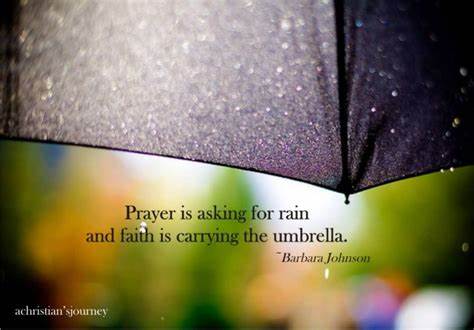

Fervor and Faithfulness

Do you pray fervently? Do you pray faithfully? I confess that sometimes I go through periods of fervent prayer, but it doesn’t always last. And, while my goal is to pray faithfully, I sometimes struggle with daily prayer seeming bland.

Thankfully, God does not demand constant fervor and faithfulness (though He does provide His Spirit to help us with both!) God wants us to come before Him exactly as we are; He KNOWS exactly what we are feeling, and He wants us to experience His presence THROUGH both the peaks and valleys. Experience has taught me that faithfulness in prayer can often lead to renewed fervor. Fervor and ardency can be influenced by our emotions. I pray most fervently when I feel needy, or when I am swept up in joy, or when I am surrounded by others who are riding a particular emotion. But I pray most faithfully when I choose to step out in spite of my emotions or circumstances.

Recently, I was reading in 2 Chronicles about “Good King Asa” of Judah. If you read chronologically through the Bible, you meet King Asa in 1 Kings (briefly in chapter 15), and again in 2 Chronicles (chapters 14-16) Both times, he is classified as a “good” king in Judah, one who “did what was right in the eyes of the Lord.” He reigned for 41 years, and was a champion of reform. He was a fervent and devoted king throughout most of his reign, and was mourned upon his death. But sadly, King Asa ended his reign in rebellion against the God he had so staunchly served for most of his life.

God had blessed Asa with astonishing military victories and years of peace and prosperity. But after 36 years of faithful and fervent service, Asa seems to have turned his back on his faith. Another army threatened to invade Judah, and Asa, instead of turning to God as before, brokered a treaty with another local king for protection. He sent silver and gold from “the treasuries of the House of the Lord” to King Ben-Hadad of Aram for help in repelling the army of King Baasha of Israel (the northern kingdom of the Jews). He bribed Ben-Hadad to break his treaty with Israel, and together, they sacked the fortifications and caused Baasha to back off.

In spite of King Asa’s victory, the Lord sent a prophet to rebuke him. King Asa, who had sought the Lord throughout more than three decades of devoted service, became so angry that he had the prophet thrown in jail. He then began oppressing his own people! Three years later, Asa developed a severe disease in his feet. But instead of calling on God, he consulted only his own court physicians. He suffered for two more years before finally dying. This “Good” King, famous for his passionate pursuit of reform and devotion to God, ended his life embittered, angry, diseased, and despotic.

God still chose to use King Asa for good– Asa’s reforms were a key ingredient in keeping Judah from suffering the fate of neighboring Israel. Asa’s reign was marked by years of peace and prosperity. Many of the faithful Jews living in Israel moved to Judah, where Asa’s reforms meant that could worship freely and fully. In fact, there was such a revival that people took extreme vows to follow God whole-heartedly. What a shame that the leader who inspired such devotion would himself fall victim to greed, pride, and bitterness, and fail to truly experience the blessings he had helped bring about!

I pursue fervent prayer. I want to serve God whole-heartedly, and I want all the joy and peace of a close relationship with Him. But I also want to serve God faithfully, even when I don’t feel the passion I had last week or last month. Because I know that God is both Eternally Fervent and Eternally Faithful!

If you are going through a season where the feelings just aren’t as “strong” as they have been in the past; if you are tempted to coast on the strength of past victories; if you are wondering why your prayer life is flagging, or lacking in the zeal you once had– DON’T GIVE UP! Don’t let your story end up like Asa’s.

We are called to FINISH the race. And yes, we want to race to “win the prize” (1 Corinthians 9:24). But remember that our strength comes from God, not our own desires.

Therefore, since we are surrounded by so great a cloud of witnesses, let us also lay aside every weight, and sin which clings so closely, and let us run with endurance the race that is set before us, looking to Jesus, the founder and perfecter of our faith, who for the joy that was set before him endured the cross, despising the shame, and is seated at the right hand of the throne of God. (Hebrews 12:1-2 ESV)

We don’t have to make a choice between fervor and faithfulness, but let’s not pursue one without the other. Let’s be fervent in the sprinting, and faithful in the long stretches. Let’s finish the race well!

Consistent, Fervent Prayer

What does it look like (or feel like) to pursue consistent, fervent prayer? Is it an endless repetition of the same words? Is it mindless pleading, mixed with angst and flowing tears? Is it rehearsing the same requests over and over in an attempt to “get the right words” that will cause God to act?

No. Jesus addressed this very issue in His Sermon on the Mount, and just before He gave us a wonderful example of how we can pray:

And when you pray, do not keep on babbling like pagans, for they think they will be heard because of their many words. Do not be like them, for your Father knows what you need before you ask him.

Matthew 6:7-8 (NIV)
Photo by Tima Miroshnichenko on Pexels.com

If God already knows our needs, why SHOULD we practice consistent, fervent prayer in the first place? Because God desires to hear our heart cry. When something touches our heart– even though God already feels our sadness, pain, and fear–God wants to SHARE it in personal and intimate detail. What He does not want is for us to use prayer to try to manipulate a particular outcome, or to push our own desires and agenda ahead of His wisdom and sovereign will.

Instead, we should meet with God as our Father, knowing that He knows us, cares for us, and cares about the things that concern us. Consistent, fervent prayer is simply sharing our concerns with a loving God honestly over time.

Photo by cottonbro on Pexels.com
  • Whining and “babbling” shows that we don’t trust God’s wisdom. It’s like a toddler, who keeps saying, “Please….pretty please…pretty please with sugar on top…” “But I want it…I REALLY need it… REALLY…”
  • Saying nothing is no better. It is closing our hearts away from the one who loves us unconditionally. Sometimes, we try to over-spiritualize, saying that because God already knows our needs, we need not mention them again.
  • We need to find a middle ground. We need to be humble enough to say that we need God’s help and His wisdom, and huble enough to accept that His ways and timing are not the same as ours.

So what DOES it look like? Probably a little different for each person, but I think there are some guidelines:

Photo by Ian Panelo on Pexels.com
  • Consistent prayer means that we pray every day, throughout the day. About everything! Not just obsessively about our worries or needs, but about our joys and sorrows, as well as our questions, wonders, adoration, praise and confessions. Much like speaking with our best friends–the best ones are willing to listen to the same story about our cat even if we’ve told it twice before. They will cry with us next week as we share our continuing frustration with a rebellious teen or our parent’s journey with dementia. The difference is that God has a purpose and a plan in sharing our grief and our weakness beyond anything we can imagine. He is the “God of all Comfort” (2 Corinthians 1:3-5) as well as a God of healing.
  • Fervent prayer isn’t just anguished prayer or dramatic, emotional prayer. It is intensely humble and full of faith. The Apostle James gives an excellent example in chapter 5 of his epistle: 17 Elijah was a human being, even as we are. He prayed earnestly that it would not rain, and it did not rain on the land for three and a half years. 18 Again he prayed, and the heavens gave rain, and the earth produced its crops. (James 5:17-18 NIV) When Elijah faced the pagan prophets of Baal and Asherah, he prayed fervently, but he left the drama to the others. Elijah chided the prophets of Baal, because they prayed with raving, shouting, dancing, and cutting themselves in an effort to get Baal to hear them. Elijah’s prayer, while simple, was answered immediately and with dramatic effect. This wasn’t just a show of God’s awesome power through His chosen prophet. It was also a clear sign that Elijah was in constant communication with the One True God. He didn’t have to “get God’s attention.” He knew God was right there with Him. (See 1 Kings 18 for the whole story.)
  • Consistent, fervent prayer is part of a journey, not a destination. The same Elijah who was able to call down fire from Heaven, ran and hid in a cave and prayed to die! God wants us to pursue prayer the same way we pursue righteousness– knowing that God is the source of our wisdom and strength. He wants our anguished prayers as well as our prayers prayed in absolute trust– He wants them all!
  • I find it helpful in my personal prayer to have a journal. In it, I keep a list of people and places, concerns and requests. Each day of the week, I have a focus point for my prayers, and a list of specific people to lift up, plus a place for immediate and ongoing concerns. This does the following for me:
    • It allows me to put concerns into perspective. On Mondays, I concentrate on family and friends. That doesn’t mean that I don’t pray for my family on other days, but Mondays are focused on family and friends. On Wednesday, I concentrate on praying for my community. On Thursdays, I pray for global issues. This doesn’t preclude urgent requests or needs, but it keeps me from obsessing about some concerns at the expense of others. And it reminds me that God is the God of my family, AND my community, AND those suffering from a recent earthquake or famine.
    • A Prayer Journal gives me a place to write out my requests. Sometimes, seeing it in writing reminds me that God already knows– my concerns are written on His heart! No need to use the same words over and over again–but God may want to hear how MY heart has changed since I wrote the request. Maybe I have new information that changes my outlook. Maybe I can see how God is already working in the situation…which brings up another advantage of journaling:
    • I have a space in my prayer journal for answered prayer. Sometimes, I’m praying for someone from my church with a health issue. I can come back and write out God’s response– maybe He provided miraculous healing; maybe He took them “home.” Maybe He is causing them to travel a long road — giving them opportunities to bear witness to His faithfulness in every situation. Perhaps He is causing their family or caregivers to see Him in a new way!
    • Finally, a Prayer Journal helps me to be more consistent. I can turn to it every day for prompts and reminders of God’s love and faithfulness. God IS Fervent and Consistent– He is Faithful, and His Love is limitless. And He is the one who can teach me to be the same!
Photo by RODNAE Productions on Pexels.com

Blog at WordPress.com.

Up ↑