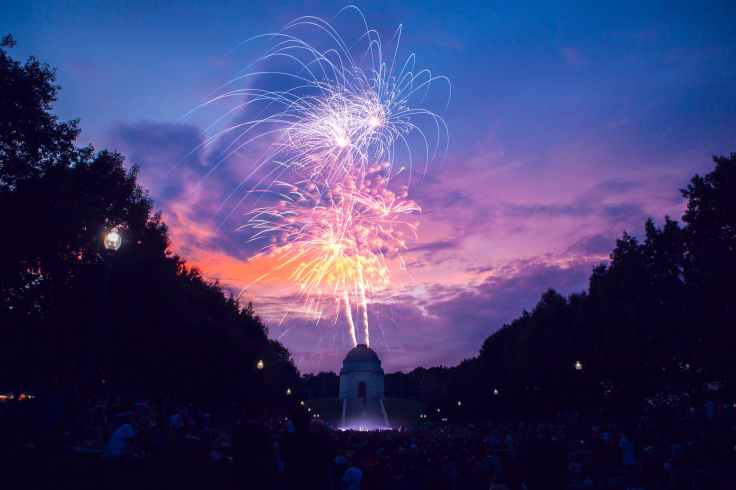
There have been a LOT of fireworks in our area over the past week, and we’re gearing up for even more this weekend. Tomorrow is July 4– Independence Day in America. This year marks 250 years since the signing of the Declaration of Independence from Britain by the American colonists.
What does this have to do with Pursuing Prayer?

There will be a lot of talk about Freedom tomorrow. Freedom from tyranny. Freedom from colonialism. Freedom to pursue happiness, etc. It IS called Independence Day, after all, so there will be much talk about the freedom to make one’s own way in the world; freedom from restrictive rules and old traditions. Freedom to dream new dreams and forge new paths.
Freedom is precious. It SHOULD be celebrated. But it can also be a dangerous ideal, when divorced from God’s Truth. The very first sin resulted from the wish for “freedom.” Free from God’s rule; free to choose disobedience, to protest God’s decisions and challenge His sovereign wisdom.
The Founding Fathers of the United States wanted freedom from the tyranny of distant and deaf kings and Parliament. They protested unfair taxation, soldiers who could come into their homes with no warrant, and laws passed thousands of miles away with no representation or recourse. They wanted freedom from corrupt laws and the indifferent men who made and enforced them. They believed so strongly in a form of government that would be described four score and seven years later as “of the people, by the people, and for the people” that they risked their lives and their legacies to bring it about.
Modern historians have championed the idea that our Founding Fathers were Deists– that they were not Christians, not devoted to the worship of a Judeo-Christian, sovereign and all-powerful GOD, but rationalists who paid scant lip-service to the prevailing monotheistic beliefs of the time. They argue that God was an afterthought for most of these men– that the bulk of their thought and planning revolved around Greek and Roman government and civics.
That line of thought dismisses the strongest language of the Declaration of Independence. “We hold these truths to be self-evident, that all men are created equal, that they are endowed by their Creator with certain unalienable rights…”

WE– not just a few of the members, but all who signed this document agreed with this language, so much so that “for the support of this Declaration, with a firm reliance on the protection of divine Providence, we mutually pledge to each other our Lives, our Fortunes and our sacred Honor.” (emphasis added)
HOLD– the founders weren’t just expressing a noble possibility about truth, justice, and rights. They were staking their lives on the absolute belief that God was THE creator and giver of all rights and freedoms.
THESE TRUTHS–not a plurality of good ideas or noble aspirations, but the very specific and timeless truths about our origins and heritage as human beings created by a loving, wise, and just God.
TO BE SELF-EVIDENT– even those founding fathers who were less devoted to the Bible teachings of the Church, recognized, as the Apostle Paul wrote: “…what may be known about God is plain to them, because God has made it plain to them. For since the creation of the world God’s invisible qualities—his eternal power and divine nature—have been clearly seen, being understood from what has been made, so that people are without excuse” (Romans 1:19-20 NIV). In fact, it was the self-evident nature of these truths that compelled later generations to root out the hypocrisy of slavery in a land founded on the truth that “all men are created equal” and that they have been given the “unalienable” right to liberty!
The Founding Fathers, in holding to these self-evident Truths, challenged, not God, but all existing human forms of government. Their Declaration ignited discussions, arguments, revolutions, and counter-movements around the world. Two hundred and fifty years later, we are still arguing about the meaning behind the Declaration of Independence, as well as the Constitution and Bill of Rights that arose from it. We celebrate our INDEPENDENCE with pyrotechnic shows and sparklers, parades, and concerts. But the fireworks, noise, and bursts of light also echo the explosions, bombs, gunfire, and deadly force that have been risked and braved ever since the Declaration was issued. We also celebrate a legacy of prayer and DEPENDENCE on God. America is not great because its people were better than the people of other nations. It did not become great by its military might or its wealth. It started out as a ragged smattering of colonies, and it came with many flaws and “baggage” from its colonial days. But throughout our history, we have held to “unalienable” truths– eternal truths– that echo God’s Word and God’s wisdom.

Many people today argue for freedom, not from tyrannical government, but freedom from God, from the Bible, from tradition, and from even common sense. The same people who claim oppression from their government are free to criticize it, march in protest, and move freely around and away from their “oppressors.” Protesters demand the freedom to be wealthy, well-fed, comfortable, and supported, without the responsibility to defend their neighbors, share their wealth (only ask that others do all the sharing!), or work for the common good. Others take for granted their right to own property and goods, to pursue an education (including free public schools and libraries), to have and express opinions and beliefs that do not conform to those of elected or appointed officials, to meet in public or private without fear of losing their lives or livelihoods, and the right to worship (or not) without being told how or who or when to do so.
This year, we can expect protests and expressions of disrespect for our government and its leaders. We can also expect that many Americans will claim to celebrate “freedom” even as they are slaves to sin and rebellion.
True Freedom calls for worship. The Founding Fathers laid a foundation for governmental and social freedoms, but they could not grant us–even in the amazing documents they created– eternal Freedom from sin and death. Only the Creator and Giver of All good gifts can do that.

Tomorrow, as we celebrate two hundred fifty years of American Freedom, let’s not forget nearly 2000 years of Christian Freedom! That’s worth more than just a great fireworks’ show. That’s worth a lifetime of worship and joy!