

Our current culture is obsessed with “fixing” things– including ourselves. Makeovers, plastic surgery, Botox injections, even gender reassignment. We seem to be convinced that God, who knit us together in our mother’s womb, got it “wrong.” I’m not opposed to someone wanting to look or feel more attractive, and there are many surgeries and makeover techniques that can actually improve our physical health. Not all such actions come from a rebellion against God’s design, but in many cases, people are trying to remake themselves in their own “fantasy” image– women having plastic surgery to make themselves look more like a Barbie doll, or like their online avatar; some people even risking their lives just to look like something they’re not.
The smug Christian may answer such behavior with, “God made you that way, and God doesn’t make mistakes!” But such an answer is dismissive of some very real concerns. In fact, it may lead people who experience dysphoria and chronic health crises to conclude that God either doesn’t care about them, or that He simply doesn’t exist.

What about my family member who was born with a rare condition? She experienced strokes in utero– she was stricken in the womb–and she had to have urgent brain surgery at six months. She is bound to a bed or wheelchair for life. Yet God created her. Did He make a mistake? What about the person who was born a biological boy, but an accident in his infancy crushed his “boy parts” and the doctors did emergency surgery and reassigned his gender? Was God sleeping on the job? If He knows all that will happen to us, why not just create that person to be a girl from the beginning? What about children born with a cleft palate? Or those born without hands? How can a loving God sit back and let such things happen? And how can a Christian say, “God doesn’t make mistakes.”
I don’t have a mic-drop, definitive, uncontestable answer for such questions. I don’t know why God chooses to allow certain people to suffer physically, mentally, or emotionally, through no fault of their own. I don’t understand why some people develop ALS or dementia, either. What I do know is that God’s original creation was perfect. And when Sin entered the world, it wasn’t just that people sinned– the whole world was infected. It’s not just that people are born with defects– all of nature suffers. There are diseases that cause deformity in animals, diseases that attacks certain species of trees or plants. We have earthquakes and volcano eruptions, sink holes, and hurricanes. And some people carry genetic diseases that impact their life from conception to death. Others will face mental health issues– some of which won’t show up for many years.

But God doesn’t MAKE such things happen. How do I know this? Jesus Himself addressed this issue during His ministry. In the gospel of John, chapter 9, Jesus and His disciples come across a man born blind. The disciples assume that the “cause” of this man’s affliction is a particular sin– either his own or his parents’. They assume that bad things happen to people because God is punishing them for something they’ve done. But Jesus dismisses that reasoning. “This happened so the power of God could be seen in him” (John 9:3 NLT). LIFE is God’s gift– not necessarily perfect health or a problem-free existence. In fact, later in John’s gospel, Jesus says, “In this world you WILL HAVE TROUBLE. But take heart! I have overcome the world.” (John 16:33 NIV–emphasis added)

God doesn’t make mistakes– He offers redemption. There are some things in this world that we have the power to “fix”– we can forgive those who wrong us. We can work to bring justice and peace to those around us. We can build and re-build relationships. But there are many things that only God can “fix.” God has the power to heal bodies, minds, and hearts. He has the power to give us the strength necessary to endure trials and afflictions and grief. And He can give us a peace that passes all understanding when we trust Him in the middle of life’s struggles.
That doesn’t mean that we will always understand or enjoy what life brings our way. We DO live in a fallen and disease-ridden world. But this is NOT the ultimate fate for those who trust God.
It is when we refuse to trust God and His design that we lose out on the strength, peace, and joy of walking (or even lying in bed) by His side! It is when we try to “fix” things in our own power that we miss out on seeing the mighty power of God working for our ultimate GOOD. God allows for mistakes– but His joy and His plan are to make all things NEW!





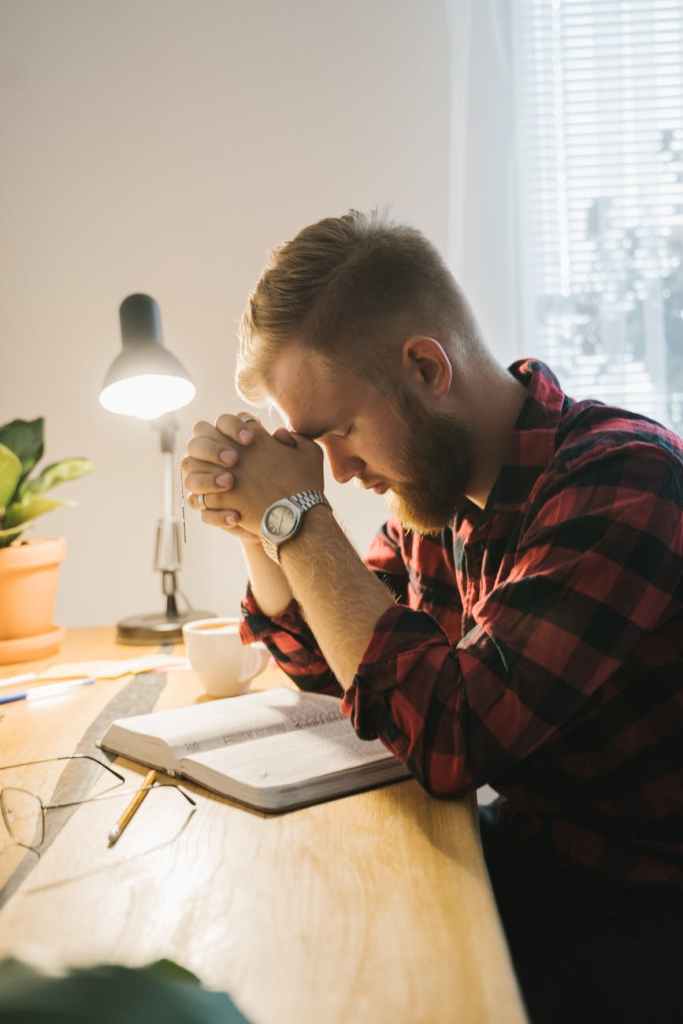
 Pursuing Prayer