How Great Thou Art!

O Lord My God! When I in awesome wonder consider all the worlds Thy hands have made…Then sings my soul…” (emphasis added) When was the last time you spontaneously broke into the kind of wonder and praise that we find in this old familiar hymn? If it has been awhile, let today be the day that you joyously and loudly sing praise to our Awesome and Great God.

Photo by Ketut Subiyanto on Pexels.com

So often, I come to prayer focused on myself– my needs, my unworthiness, my circumstances. But prayer is the act of communicating with the One who is all-sufficient, all-worthy, all-powerful, and all-loving. As we pray, it will often happen that all the cares and concerns melt away in the wonder and insight that we are actually talking to GOD!

But there are times when we miss the great opportunity to fully open ourselves to the Glory and Majesty of Our Father. Yes, we communicate; Yes, He still hears us. But we fail to come away with the full blessing of having spoken WITH God. We speak TO Him; we even speak OF Him. But when we speak WITH God, we are in the presence of such majesty, that we are left beyond words! Our Soul Sings! Our Heart is overflowing! Our mind is overwhelmed with the concept!

Prayer is so much more than what we say; so much more than what we think. God is so much bigger, so much greater, so much MORE than anything we can describe, anything we can imagine! And THIS is who we approach when we pray.

Photo by Tookapic on Pexels.com

If you have the opportunity, spend some time in nature today. Look up at the sky– clouds, stars, and the endless canopy of space– and let the Majesty of God fill your senses as you make time for prayer. If you cannot get outdoors, find a picture or film or website to remind you of the grandeur of God’s wonderful creation. And then, sing out, shout out, pray and praise the Maker of the Universe, and the Lover you Your Soul! This same God of the beginning is the God who was, who IS and who is to come! The same miracles He has done in the past, He will do NOW and through all time.

There is NOTHING too big or too difficult for God. There is nothing too small or unimportant for Him to do, either. And what He does, He does with Joy and in Love! He rejoices over every one who comes to salvation. He rejoices over every one who comes to Him empty and tired and discouraged– and He rejoices to give them rest, and hope, and strength for the journey ahead. He offers Grace and Beauty from ashes. He offers Eternal Life and Everlasting Peace!

And if that doesn’t make your soul sing, I don’t know of anything else that can!

Photo by Andrea Piacquadio on Pexels.com

For more information about the hymn– its origins and meaning– check out this site: https://www.godtube.com/popular-hymns/how-great-thou-art/


Where Do Prayers Go?

Do you ever pray “directional” prayers? Some people pray TO something or TOWARD something. It may be positioning yourself to pray toward the east or toward the rising sun, or even toward a particular holy place. Some people pray to the moon or stars or a statue or image of a person. Some people pray rather aimlessly into the sky or the ceiling or the floor.

Does it matter? What does the Bible say?

In Exodus, when God gave Moses the Ten Commandments, He said, “Thou shalt not make unto thee any graven image.” In other words, no carved images of any animal or person that takes the place of God. For some people, this extends to icons and statues of Jesus; for others, it means only idols from other religious traditions.

However, later in Israel’s history, when King Solomon dedicated the first Temple, he prayed that when people prayed toward the Temple in Jerusalem, that God would hear from heaven and intervene. For many, this edict still holds true– they focus many, if not all their prayers toward the city of Jerusalem. Others specifically pray to the “Wailing Wall”– the last part of the Temple that still stands. Tradition states that the Spirit of God “dwelt” in the Temple– therefore to pray to the Temple was to pray to the God who lived there.

Jesus did not command His followers to pray toward the Temple itself, but rather to pray directly to “Our Father, which art in Heaven.” Throughout the Bible, the image of prayer is linked with the image of smoke or incense– rising toward Heaven. Jesus sometimes is described as looking up toward Heaven as He prayed. But other times He bowed or knelt as He prayed.

So what are we to conclude? Which is the “correct” direction for our prayers?

There is no conclusive answer in the Bible. And I think this is because God is Omnipresent. He is everywhere at once, so that we can pray anywhere, facing any direction, without a fixed focus point. There is only one direction that is “wrong.” And that is when our heart is facing away from (in rebellion to) God. We can pray aimlessly to nothing and no one, or to something that we know is NOT the One True God–to creation itself or to an invisible but remote “Force.” But the Bible IS clear that we are to pray to God alone– Father, Son, and Holy Spirit– and directly and personally to Him. We do not need a personal altar in order to be heard; we do not need to be facing an icon or a building or the rising sun or an imaginary point in the stratosphere. God Himself, through Christ– will accept and respond to our prayers. God will hear us from anywhere, in any position or circumstance. Altars and images and icons may represent Christ and His Holiness– they can be helpful tools in reminding us of who we are in relation to Him–but they must never become replacements for His Spiritual Presence.

Our prayers end up– through whatever mysterious and wandering way– finding their true destination, which is the heart of God Himself, when we seek Him sincerely and whole-heartedly. In much the same way, God’s answers to us will find their way through His Holy Spirit, no matter where we are or what direction we are facing.

Photo by cottonbro on Pexels.com

God transcends space and time, and can be found by those who seek Him from the ends of the earth. I am greatly comforted by this truth. My Father is in Heaven– and right beside me, and dwelling within me! He is always listening, and always available.

Running the Race

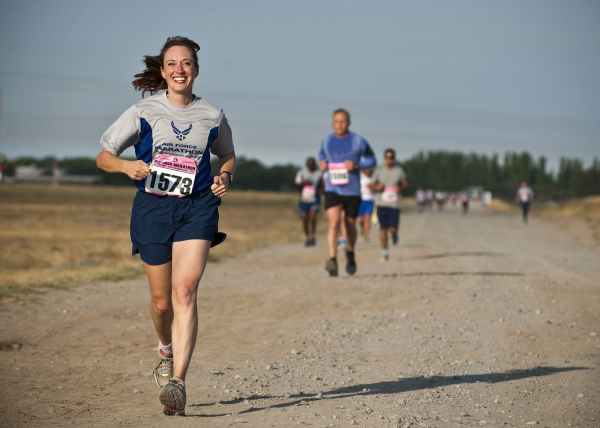
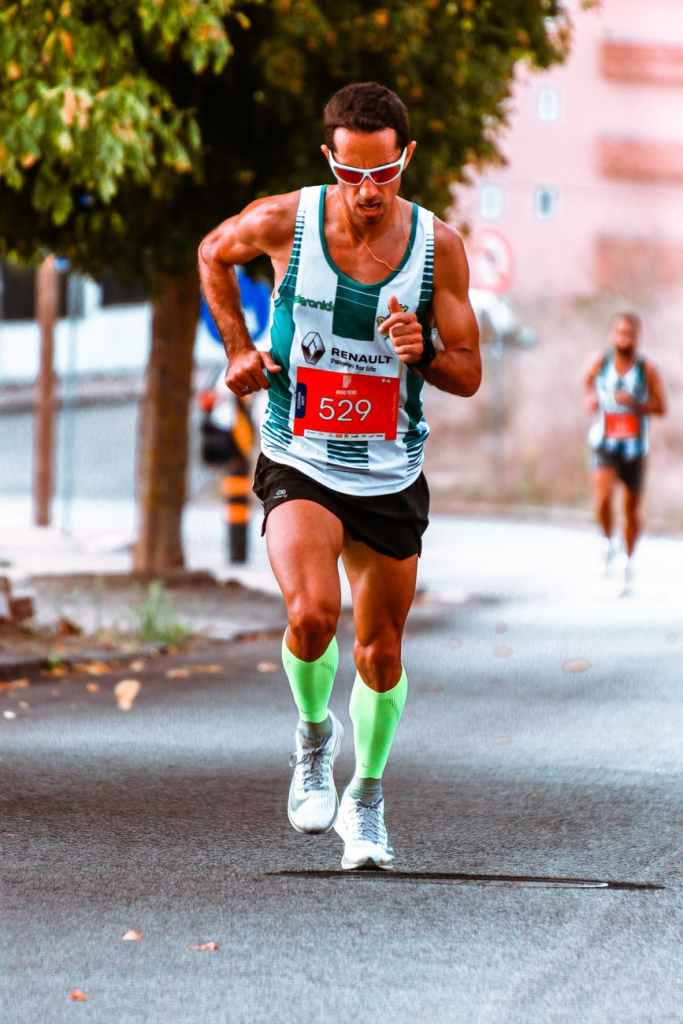
I am NOT a runner. If you ever see me running, I’ve either just encountered a snake, or there’s a wild animal chasing me. So I don’t know a lot about running a marathon, or even a 5-or 10-K race. Even in my daily life as a Christian, I prefer to use the term “Christian Walk!” But the Bible uses the imagery of a race to describe the Christian life. In our pursuit of Christ-likeness, including our pursuit of prayer, we need to think like a runner.

Photo by RUN 4 FFWPU on Pexels.com

For those of us who don’t run, this may pose a bit of a challenge, but the Bible gives us clear principles that provide good guidance.

  • Keep moving forward: “12-14 I’m not saying that I have this all together, that I have it made. But I am well on my way, reaching out for Christ, who has so wondrously reached out for me. Friends, don’t get me wrong: By no means do I count myself an expert in all of this, but I’ve got my eye on the goal, where God is beckoning us onward—to Jesus. I’m off and running, and I’m not turning back.” (Philippians 3:12-14 The Message) Runners don’t worry about what is behind them. They are focused on the goal– reaching the finish line. We need to stop focusing on our past, or the anxieties about the road ahead, and keep our focus on the ultimate goal.
Photo by RUN 4 FFWPU on Pexels.com
  • Travel light/Get rid of the baggage: “Therefore, since we are surrounded by such a great cloud of witnesses, let us throw off everything that hinders and the sin that so easily entangles. And let us run with perseverance the race marked out for us..” (Hebrews 12:1 NIV) What is weighing me down, that I need to let go of, if I want to keep running with endurance? I wrote earlier this month about the expectations attached to the “model” woman in Proverbs 31. Expectations, guilt, unforgiveness, shame, wanting to please other people, even our own self-talk can weigh us down, slow us down, and wear us out. It’s time to let go!
Photo by RUN 4 FFWPU on Pexels.com
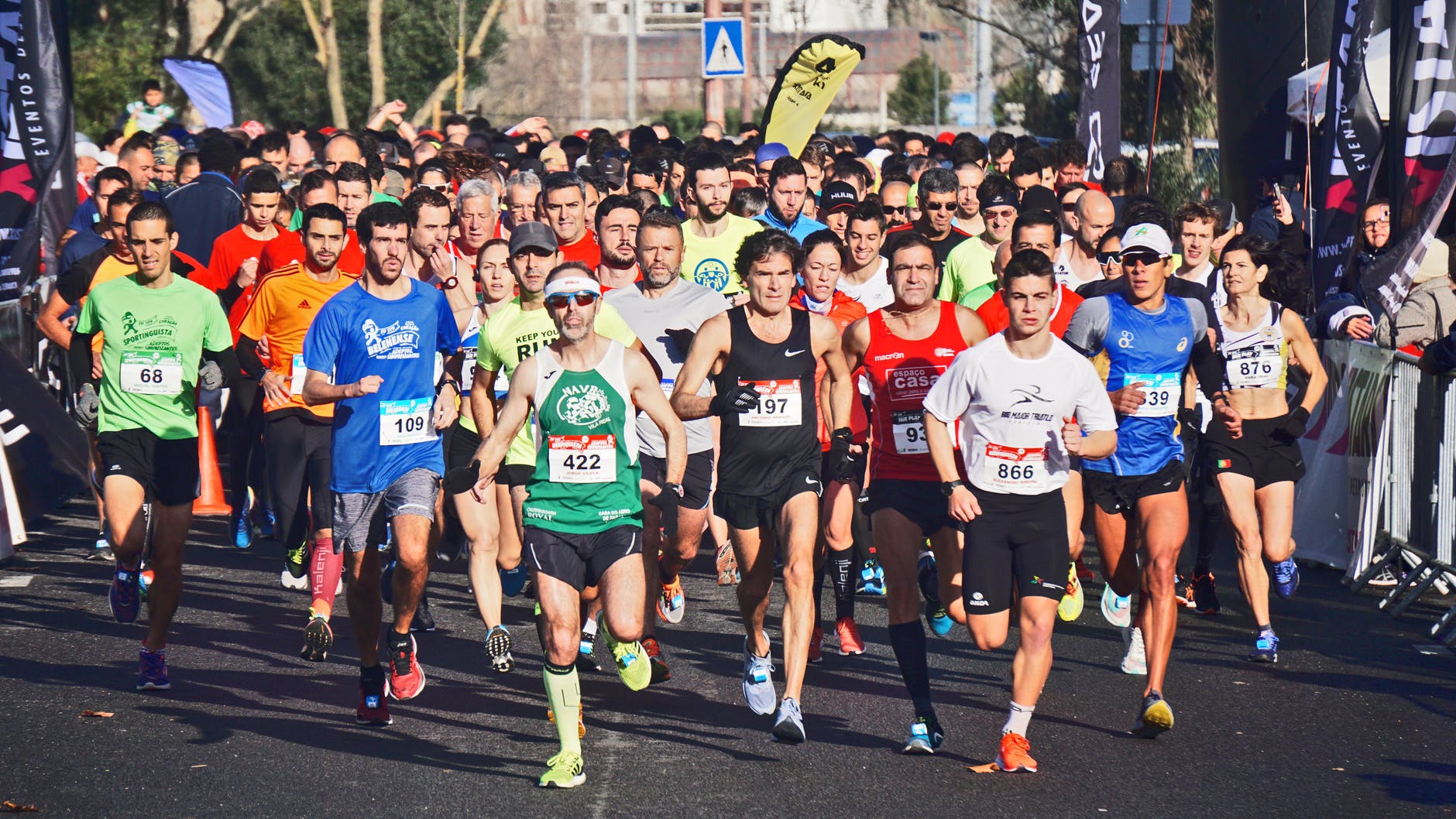
  • Run with the pack: Running alone can be good for meditation, but we need the challenge and the encouragement of others if we want to train and grow stronger. Reconsider the passage I quoted above in its larger context: “Therefore, since we are surrounded by such a great cloud of witnesses, let us throw off everything that hinders and the sin that so easily entangles. And let us run with perseverance the race marked out for us, 2 fixing our eyes on Jesus, the pioneer and perfecter of faith. For the joy set before him he endured the cross, scorning its shame, and sat down at the right hand of the throne of God. 3 Consider him who endured such opposition from sinners, so that you will not grow weary and lose heart. (Hebrews 12:1-3 NIV–emphasis added) We need to surround ourselves with companions, role models, teachers, friends, and others who can encourage, sharpen, comfort, and help us in our pursuit. And we need to remember that NO challenge or opposition we face is unknown to Christ. He is our ultimate role model, and, along with the Holy Spirit, our greatest coach!
  • Run/train with purpose: “25 Everyone who competes in the games goes into strict training. They do it to get a crown that will not last, but we do it to get a crown that will last forever. 26 Therefore I do not run like someone running aimlessly; I do not fight like a boxer beating the air.” (1 Corinthians 9:25-26 NIV) I know many people who “know” a lot about the Bible; they’ve grown up in the church or attended seminary; they’ve memorized scripture or studied theology– only to leave the church and their faith. I know many others who have a “faith” that bears little resemblance to the Bible’s teaching– it is based mostly on their “feelings” about God and a “truth” that is relative to their circumstances and changing emotions. Pursuing the Christian life involves discipline– being a disciple–and that involves all areas of life– studying the Bible, and putting it into practice. It’s not enough to “know” about doctrine or to “feel” like a Christian. We must pursue Christ-likeness in our words, prayers, habits, relationships, etc..
Photo by RUN 4 FFWPU on Pexels.com
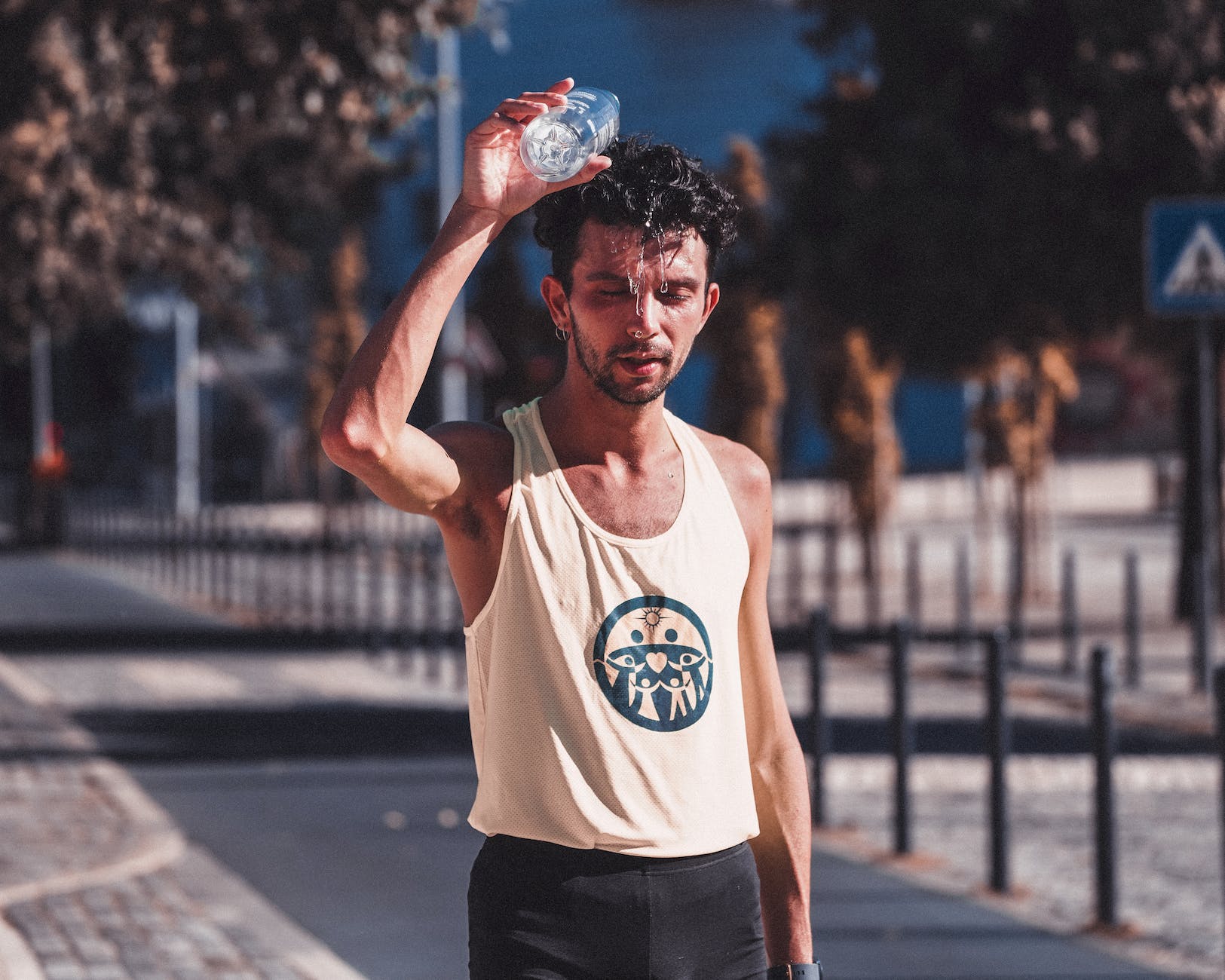
  • Don’t run on “no fuel.” “29 He gives power to the weak, And to those who have no might He increases strength. 30 Even the youths shall faint and be weary, And the young men shall utterly fall, 31 But those who wait on the Lord Shall renew their strength; They shall mount up with wings like eagles, They shall run and not be weary, They shall walk and not faint.” (Isaiah 40:29-31 NKJV). It is tempting to run on an empty stomach (see traveling light above), or to start running without stretching or warming up. Anything we do in our own wisdom and power– even “good” things like prayer and Bible study, can leave us empty and worn out. We need to come back to our source of wisdom and power–(See Hebrews 12: 2-3 again!)
Photo by RUN 4 FFWPU on Pexels.com

Running a race isn’t easy. Walking through life is a challenge, too. Pursuing Christ-likeness in our habits, including our prayer life, takes dedication, discipline, guidance, and endurance. But God is faithful to provide all that we need to finish the race and gain the prize!

Turn, Turn, Turn

Back in the 1960s, Pete Seeger “wrote” a new folk song, later recorded by a group called The Byrds.  All but the title and the last six words of the song were taken directly (though the word order was changed) from the book of Ecclesiastes.  Essentially, Pete Seeger wrote seven words and some music; the rest was written by King Solomon almost three thousand years ago!  Learn more about the song here…

timelapse photography of stars at night
Photo by InstaWalli on Pexels.com

When God created the world, he instituted times and seasons– day and night; winter and summer; weeks and months.  We are bound by time while we live here.  Sunlight and darkness help determine when we are active or sleeping (less so since the advent of electric lighting); summer and winter (or rainy/dry seasons) determine when we plant or harvest, what we wear, how we travel, and what activities we plan.

snow nature forest winter
Photo by Pixabay on Pexels.com

But Solomon reminds us that there are also “seasons” that don’t depend on the weather or the amount of light filling the horizon.  There is a time to be born and a time to die; a time for laughter and a time for weeping; a time for war and a time for peace.  Our world is not static– it is filled with changes, and times for turning away from one thing and facing another.

For everything there is a season, and a time for every matter under heaven:

a time to be born, and a time to die;
a time to plant, and a time to pluck up what is planted;
a time to kill, and a time to heal;
a time to break down, and a time to build up;
a time to weep, and a time to laugh;
a time to mourn, and a time to dance;
a time to cast away stones, and a time to gather stones together;
a time to embrace, and a time to refrain from embracing;
a time to seek, and a time to lose;
a time to keep, and a time to cast away;
a time to tear, and a time to sew;
a time to keep silence, and a time to speak;
a time to love, and a time to hate;
a time for war, and a time for peace.

Ecclesiastes 3:1-8 (ESV)
Photo by Jenn on Pexels.com

Our prayers will change with these seasons– prayers of wonder and prayers of wondering why; prayers of great boldness and reluctant, halting prayers; prayers that come from joy, and those that come with wracking grief.  There will be seasons of chaotic busyness, and seasons of loneliness and long hours; seasons when we help lift the burdens of others before our own, and seasons where others help us lift burdens we cannot bear alone.  There will be seasons of fierce, pounding spiritual warfare, and seasons of relative peace and rest.

green grass field during sunset
Photo by Brett Sayles on Pexels.com

Solomon lays out the concept, but I like Pete Seeger’s addition of the phrase, “turn, turn, turn.”  It reminds me that the seasons of my life will change, but I need to change as well.  I need to turn, first of all, to see where God is working in my life and the lives of others– that’s where I need to be and where I need to be focused.  God will never leave me nor forsake me, but He loves me too much to “leave” me in a rut– He needs me to move on and finish the race He has set out for me.  Change can be difficult, but without it, there is no growth!

Photo by jonas mohamadi on Pexels.com

Second, I need to turn from habits and activities that are “out of season”–young parents will have a completely different way of mapping out their time, including time for prayer and Bible study, than empty-nesters.  People in mourning will have a different approach to prayer and worship than those who are in a season of celebration.  There is a season to break down–to end bad relationships and turn from bad habits–and a time to build up healthy relationships and habits.  There is a time to speak– to share prayer requests and spend time in corporate prayer; to ask questions and persist in our requests.  But there is also a time to stay silent– to meditate and listen more than we talk; to be still and know, instead of pace and ponder.  I don’t wear a heavy coat in the middle of summer or run barefoot in the snow– I need to turn in alignment with the season I am passing through.

barefoot basket blooming blossoming
Photo by Pixabay on Pexels.com

Finally, I need to turn away from temptation and sin.  God gives me the power, through His Spirit, to turn and walk away from the quicksand of complaisance, the tidal waves of desire, the live wire of unchecked rage, or the bottomless pit of envy, but I must turn away from them.

This life is full of seasons and change– some good, some dangerous.  But God is outside of time and seasons.  He provides endless variety, but He never changes His essential nature.  No matter where we turn, He can be found!

photography of maple trees
Photo by Johannes Plenio on Pexels.com

Esprit de Corps

Photo by Paulo Mu00e1rcio Dos Santos on Pexels.com

It is important to spend time alone with God, but it is also necessary that we spend time with others. This may not always be possible in a physical sense. This past year of pandemic and lockdowns has kept many of us apart. Even church services, Bible study groups, and “fellowship” events have been limited or suspended. But we have other ways of being “together.” Phones, internet, and letters are just a few of the ways we can stay in touch. And prayer is another. This is nothing new, but I’ve been reminded recently that prayer is more than just a personal pursuit. It is also a corporate pursuit. We do not live alone, and we do not pray in a vacuum.

It can be tempting to feel isolated and even apathetic when we are forced by circumstances to spend more time alone. We often succumb to the lure of “escapism”– binge-watching, gaming, or other forms of mindless entertainment to pass the lonely hours. It is not “wrong” to relax or be entertained for a time, but we can lose sight of our purpose and “sleep-walk” through our days, losing opportunities to connect with others and be a blessing (and be blessed in return)!

Photo by Kampus Production on Pexels.com

The term, “esprit de corps” is used by tight-knit groups– military units, dance and theatre groups, etc.–to describe their unity, devotion, and camaraderie. It should be natural for us to apply this same phrase to Christ-followers. After all, we are the “corps”– the body– of Christ! To pray for and with one another should be a given, and a “core” feature of the Church. To stay in touch, to build up and encourage one another, to forgive, accept, and protect one another, to defend the honor of the Church and ALL its members– this should go without saying. But I’m saying it here, because I see so many examples of division, in-fighting, finger-pointing, shaming, and other nonsense. And I’m saying it because I see so many examples of people like me, who withdraw, stay silent, and allow ourselves to become weary and jaded, instead of reaching out and pulling together. (Hebrews 10:23-25)

Photo by Public Domain Pictures on Pexels.com

I pray everyday for people from around the world– but am I willing to pray for those down the street who hurt my feelings last week? Am I willing to risk reaching out to call or write to someone who may be discouraged, or having doubts and struggles? Do I pray with gusto; eager to lift others up and bring blessing to them, even in difficult times? Do I cheer on fellow believers, even if we disagree about politics or music? Do I champion the Church, even when some believers or even congregations bring momentary shame to the name of Christ?

“Esprit de corps” is not a phrase of apathy, or discouragement. It is not just an idealistic motto. It is not a phrase of grudging duty to a group or idea. It is bold, and forward-looking. It is united and strong. Just as the Body of Christ must be in the days ahead.
For more info on corporate/group prayer, see https://www.compellingtruth.org/corporate-prayer.html

Photo by Luis Quintero on Pexels.com

BTW– There are several terrific prayer groups online–Groups that pray for your requests; groups that share requests locally; groups that pray globally for healing or intercession; groups that will connect you to local churches or Bible studies.
*As with any online activity, please be careful. Not every group that calls itself “Christian” or talks about prayer is legitimate. Avoid sites that seek to get personal identifying information, or ask you to send a fee to join their group. Many local churches will be happy to add you to their “prayer chain” to pray for (and/or encourage or visit) people in your own community. Other church groups may have “Zoom” or “Skype” prayer meetings, or other corporate prayer opportunities.

20/20 Vision, Blind Faith, and Prayer

As we approach the arrival of a new year, there is a lot of talk about vision–20/20 vision, that is. For the past few years, I’ve heard of companies, community groups, even churches using the year 2020 as a target date for planning, and using the phrase “2020 Vision” in their mission statements, fund-raising drives, and talking points.

Photo by Christina Morillo on Pexels.com

The phrase comes from 20/20 vision, considered clear or “good” vision. Someone with 20/20 vision has no need of corrective lenses or surgery to improve their reading, or correct their sight. Figuratively, 20/20 vision suggests good planning or foresight. So it is desirable to plan with clear “vision” and forethought, rather than jumping into a project, or from one unmet goal to another.

But, while it’s clever to borrow the idea of 20/20 vision and tie it to the coming year, it doesn’t guarantee that our future plans will be wise or successful just because the calendar says 2020. In the same way, just because we have 20/20 vision, it doesn’t mean that we can see everything around us perfectly. We will see clearly those things on which we focus– those things that are right in front of us and not obstructed. Even with “good” vision, we cannot see things that are hidden from sight or things that are outside our scope of vision.

Photo by malcolm garret on Pexels.com

Even the old phrase, “Hindsight is 20/20 vision,” doesn’t mean that we will always gain clarity with time. Sometimes we understand past experiences in a different light after time has passed. But sometimes, we are still left wondering and asking about events from our past; no wiser or less damaged by setbacks or failures, and no better prepared for future trials and pains.

If vision, even good vision and planning, is no guarantee of future success, perhaps it would be better to trust to “blind faith.” After all, doesn’t the Bible say, “walk by faith, not by sight?” Except the Bible doesn’t exactly say that. Instead it says:

So we are always confident, knowing that while we are at home in the body we are absent from the Lord. For we walk by faith, not by sight. We are confident, yes, well pleased rather to be absent from the body and to be present with the Lord.

2 Corinthians 5:6-8 (NKJV via http://www.biblegateway.com)

This verse often gets taken out of context and twisted to suggest that “faith” is opposed to “sight,” and therefore faith must be “blind” to reason, experience, or reality. Many good articles and sermons have been written to clarify the concept (see one example here:
https://www.biblestudytools.com/blogs/theologically-driven/walk-by-faith-a-misused-verse.html). Faith is not blind–or should not be blind. Rather, it utilizes the ability and practice of seeing what is hidden or indistinct in the present. If our faith is based on empty myth, rumor, conjecture, or cloud dreams, it is not faith at all–it is nothing more than a mirage. Faith is seeing beyond the obvious, the blatantly visible, and trusting more than just what we can immediately see. We don’t walk through life ignoring reality, or dancing across a superhighway full of speeding cars. But we see our circumstances as having hidden elements; our lives have unseen depths, and are lived on both physical and metaphysical spheres. There is more to life than meets the eye– and while faith may not always show us a clear picture of what lies beyond our sight, it causes us to know that something beyond our “20/20 vision” exists and matters.

Photo by Daniel Spase on Pexels.com

The great old hymn, “It Is Well With My Soul,” speaks to this as well. No matter what our circumstances look like, we can have confidence that “It is well, it is well, with my soul!” “And Lord, haste the day when my faith shall be sight..” We look forward, even as we look around, and look back to the finished work of Jesus our Savior. We see the present, but we walk in the knowledge that there is more than what our eyes behold.

Faith doesn’t negate the need to use our senses and common sense to navigate life. And using planning and vision for the future doesn’t negate the need for faith. Rather, they work together. And they work together best in prayer.

When we pray, we are exercising our faith– speaking to the One we do not see, though we know Him and trust Him. And we bring to Him our plans and visions and hopes and dreams. We lay them in His Hands, trusting that where our vision is “good,” He will empower and bless us; where our own vision is lacking, His Spirit will help us to refocus and see enough of what lies beyond to keep walking forward.

Photo by Harrison Haines on Pexels.com

As we walk into a new year, may we have more than just 2020 vision– may we have faith and hope in the One who has perfect vision!

Blog at WordPress.com.

Up ↑