Praying “Seventy Times Seven”

The Apostle Peter once asked Jesus if he should forgive someone up to seven times. He seemed to feel this was generous and even noble, but Jesus said that Peter should be willing to forgive someone “seventy times seven” times (or seventy-seven times! (for an excellent discussion on this exchange, see https://www.biblestudytools.com/bible-study/topical-studies/why-is-seventy-times-seven-still-so-radical-today.html. For the context, see Matthew 18.)

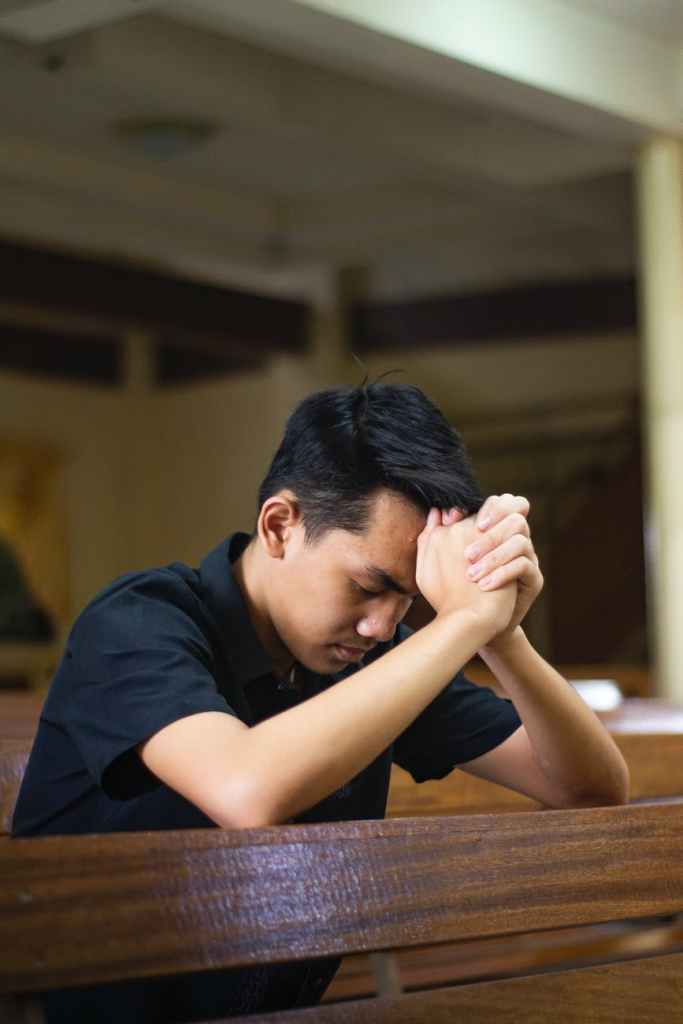
The same applies to praying for someone. I know many people who ask for prayer almost daily –often for the same “little” problems or complaints. The selfish, human part of me sometimes wants to judge what is “worthy” of my prayer, and what is not. But this is not for me to judge. Other people are too proud to ask for prayer. That does not make them better or stronger people, or less “needy” of my prayers. I need to be willing to pray for everyone as I have the opportunity: that includes when they request my prayers (over and over) or when they refuse to share their needs at all. Someone who is struggling with ongoing issues needs my compassion and wisdom, not my judgment. Someone who resents my prayers needs my compassion and wisdom, too. We are to pray without ceasing, not just when we think it is “worth” doing. (see 1 Thessalonians 5:17)

Photo by Liza Summer on Pexels.com

There is a caveat here. My prayer life should not be determined by others’ expectations. I should gladly pray for the person who asks; however, I should NOT let someone else determine how or what I should pray. In other words, if someone is asking me to pray for “healing,” I will gladly lift up their situation and leave it in God’s hands. I will ask God to heal that person according to His will and in His timing. If they are asking me to pray for total instant healing, I will still pray, but I won’t demand of God what is not His will to do. If they are asking me to pray that they win the lottery because they gambled away their rent money, or avoid prosecution for a crime they committed, I will not pray for things that so clearly contradict God’s will. If someone else is telling me not to pray for them, I will not promise NOT to pray at all, but I will not insist that they listen in; nor will I pray that God “fix” them as I would like. I will pray for their safety, healing, well-being, etc.– again, according to God’s will and timing. Some people are afraid that I will pray for them to be saved against their will. Some people think that because I pursue prayer as a lifestyle, that I have an “in” with God– that He will do what I ask, when I ask, because it is me asking. That is not how God, or prayer, operates. I have seen God do miracles, but I have also asked Him for healing that never came in this lifetime, or for things that turned out very differently than I expected. And I have prayed for the salvation of others, but I don’t have the power or authority to change their will or pierce their conscience– that is the work of the Holy Spirit.

Photo by Dimitry Zub on Pexels.com

Sometimes, it is difficult to keep praying for the same stubborn person, or the same unresolved situation. When God doesn’t answer us how or when we expect, it can seem as though He isn’t listening, doesn’t care, or even taunts us with silence and frustration. It can be tempting to give up– to think that our prayers are “not working.” But, once again, that is not how God, or prayer, “work.” Often, while we are staring at the situation that doesn’t seem to change, we miss seeing the changes happening in other areas of our life, or the obstacles that are being cleared from our path going forward. This is true of prayers we lift up for others, as it is for ourselves. We continue praying anyway. Sometimes, prayer changes our outlook– sometimes prayer even ends up changing how we pray! Prayer isn’t about getting what we want; it’s about getting closer to the heart of God!

Photo by yash bhavsar on Pexels.com

So, if we are willing, we can keep praying–seventy-seven days in a row! Even 490 days! Not because God is counting the days or keeping score of our faithfulness, but because we know that God is faithful in ways we cannot see with out limited vision, or know with our limited understanding.

The Work is “Donne”

Wilt Thou forgive that sin where I begun,
Which is my sin, though it were done before?
Wilt Thou forgive those sins through which I run,
And do them still, though still I do deplore?
When Thou hast done, Thou hast not done,
For I have more.
Wilt Thou forgive that sin by which I have won
Others to sin? and made my sin their door?
Wilt Thou forgive that sin which I did shun
A year or two, but wallowed in a score?
When Thou hast done, Thou hast not done,
For I have more.
I have a sin of fear, that when I have spun
My last thread, I shall perish on the shore;
Swear by Thyself that at my death Thy Sun
Shall sine as it shines now, and heretofore;
And, having done that, Thou hast done,
I have no more.

A Hymn to God the Father John Donne, 1623
John Donne

I enjoy studying the poetry of John Donne. https://www.biography.com/writer/john-donne Even though he lived 400 years ago, he wrote about very timeless and personal topics. Donne lived during a time of religious tumult and persecution. Born into a Catholic family, he later converted to Anglicanism and became a powerful preacher, as well as a poet, and lawyer. Throughout his life, he wrestled with deep theological questions of sin, guilt, redemption, and death. Yet he did so with wit, humor, and passion. The poem above, written during a long illness and near the end of his life, is filled with puns on his last name, Donne. Would God’s redemptive work ever be “done” in “Donne?” He struggles with the knowledge that his sins, having been forgiven, must be forgiven again and again. Does God never say, “Enough! I am done!?” What about stubborn sinful habits? What about sins that have led others to sin? What about last-minute, unconfessed sins?

Photo by Teona Swift on Pexels.com

The real question is, “How sufficient is God’s Grace?” Does God sprinkle out Grace sparingly on each sinful act, or does Christ’s blood cover All? Do our stubborn, habitual acts of rebellion pile up to a point where God cannot forgive? Having forgiven us once, twice, seventy times seven– is there a limit to His willingness to pour out Mercy? Theologically, the Bible is clear. The answer is a resounding, “NO.” God will not withhold His Grace from those who have sought it. God will never be “Done” with “Donne.” Nor will He be “done” with any of us who have chosen to follow Him. But in his all-too-human logic, Donne jokingly suggests that though God “hast” done/Donne, He “hast not” done/Donne. In other words, while Donne “belongs” to God– he has confessed his sins, and eagerly seeks to follow Christ, he still wrestles with fears that his small sinful acts prove that God does not fully “have” him– that He still lives separated from God.

Photo by Sinitta Leunen on Pexels.com

But the final sin of the poem is fear– fear that somehow, at the last, Death will prevail, and Donne will “perish on the shore,” rather than be taken into Heaven. He pleads that Christ’s blood (“Thy Sun/Son”) will be sufficient; that God’s promise of eternal life will indeed hold true, and that the work of salvation is indeed “done.” In the end, the poet hopes that “Thou hast Donne.” And he must trust that God’s promises will hold, for “I have no more.” Donne cannot stop death, he cannot do anything to save himself from sin, but he can be “done” with worry and trust in “Thy Sun/Son.”

Photo by Samuel Theo Manat Silitonga on Pexels.com

I am strangely encouraged by Donne’s poem. We all have moments of questioning and niggling doubts. And even though we “Know” the truth, our fears and emotions can play tricks on our mind. But Donne, even while putting such doubts and fears on paper, takes them to the Source of Hope. This is not a poem of accusation or despair. It is an honest and passionate desire to hear God’s calm assurance. And it is part of a long tradition that runs through the Bible. Jacob literally wrestled with an angel of the Lord (Gensis 32), Moses argued with God about going back to Egypt (Exodus 4), David questioned God (Psalm 10); even Jesus asked God, “Why have you forsaken me?” (Matthew 27). But in our doubts and questions, God’s still, small voice echoes, “I will never leave you nor forsake you.” (Hebrews 13:5), “My Grace is sufficient for you.” (2 Corinthians 12:9), and “Neither height nor depth, nor anything else in all creation, will be able to separate us from the love of God that is in Christ Jesus our Lord.” (Romans 8:39).

Photo by S Migaj on Pexels.com

God’s work is ongoing, but it is also “done”– it is complete, whole, sufficient, and eternal. And even if we occasionally wonder and even question, we can choose to rest in His promises. Just as the poet concluded, if God “hast” done/Donne, “I have no more”– he needed to have no other fear of sin or sin of fear. And through Donne’s poetry, God’s assurance is being passed on– the work continues to be “Donne!”

Photo by Nicholas Githiri on Pexels.com

If You Only Knew…

36 One of the Pharisees asked him to eat with him, and he went into the Pharisee’s house and reclined at table. 37 And behold, a woman of the city, who was a sinner, when she learned that he was reclining at table in the Pharisee’s house, brought an alabaster flask of ointment, 38 and standing behind him at his feet, weeping, she began to wet his feet with her tears and wiped them with the hair of her head and kissed his feet and anointed them with the ointment. 39 Now when the Pharisee who had invited him saw this, he said to himself, “If this man were a prophet, he would have known who and what sort of woman this is who is touching him, for she is a sinner.” 40 And Jesus answering said to him, “Simon, I have something to say to you.” And he answered, “Say it, Teacher.” 41 “A certain moneylender had two debtors. One owed five hundred denarii, and the other fifty. 42 When they could not pay, he cancelled the debt of both. Now which of them will love him more?” 43 Simon answered, “The one, I suppose, for whom he cancelled the larger debt.” And he said to him, “You have judged rightly.” 44 Then turning toward the woman he said to Simon, “Do you see this woman? I entered your house; you gave me no water for my feet, but she has wet my feet with her tears and wiped them with her hair. 45 You gave me no kiss, but from the time I came in she has not ceased to kiss my feet. 46 You did not anoint my head with oil, but she has anointed my feet with ointment. 47 Therefore I tell you, her sins, which are many, are forgiven—for she loved much. But he who is forgiven little, loves little.” 48 And he said to her, “Your sins are forgiven.” 49 Then those who were at table with him began to say among themselves, “Who is this, who even forgives sins?” 50 And he said to the woman, “Your faith has saved you; go in peace.”

Luke 7:36-50 (ESV)
Photo by Victoria Borodinova on Pexels.com

The Pharisees in the New Testament seem to spend a lot of time judging and criticizing everyone. They rail at Jesus for healing people on the Sabbath, they grumble about His disciples not following the ritual hand-washing customs, and they are constantly critical of Jesus for “hanging out” with sinners and undesirables. We shake our heads and lament how narrow-minded they were. But I have to wonder what would happen in today’s world if Jesus were walking among us today. Would He “hang out” at our churches? Would He praise those who spend their time pointing out the hypocrisy of others? Would He be a “social justice” warrior?

Photo by Pressmaster on Pexels.com

Many of Jesus’s miracles were done quietly and without pretense. No one criticized “what” Jesus was doing. No one said, “you shouldn’t be healing people,” or, “how dare you turn water into wine.” Instead, they criticized “how” Jesus did His miracles and what He said about Himself, others, and God. In the book of Luke, we have a story that doesn’t even involve a miracle. Jesus was invited to be the guest of a Pharisee. Jesus didn’t turn down the invitation. He didn’t start out criticizing the host or the food. But when a woman crashed the party– a woman known all around town for her sinful ways–and made a scene, Jesus didn’t recoil in horror, order her to leave, or stop her from making a fool of herself. The Pharisee, believing that he had “unmasked” Jesus as a charlatan, concluded that Jesus didn’t “know” what sort of woman she was. But Jesus, breaking His silence, ended up “unmasking” the Pharisee, instead.

Photo by Klaus Nielsen on Pexels.com

Jesus “knew” what sort of woman made such a spectacle of herself–one who needed compassion and forgiveness. Jesus knew exactly “who” and “what” she was. But He also knew who created her, loved her, and wanted to redeem her to become someone better. Moreover, He knew what kind of man Simon (the Pharisee) was. He started out with a parable about cancelled debt and a question. Simon answered the question correctly, but he had missed the point. Simon “knew” the woman was a sinner; he didn’t recognize that he was a sinner, too! Simon thought he was smarter and holier than Jesus. He didn’t know himself, and he didn’t recognize Jesus as God in the Flesh.

Photo by Anna Tarazevich on Pexels.com

How often I make the same mistake! I think I “know” who God wants me to love and honor– those who say all the right words and wear the right clothes and belong to the right church. But if I want to follow in Jesus’s footsteps, I will have compassion on the people who most need it; I will be ready to forgive those who owe me the most; I will spare judgment where I do not “know” all that God knows about someone else.

Photo by MART PRODUCTION on Pexels.com

It is easy to lift up in prayer those I admire; those to whom I am already close. It is more difficult to pray for those who persecute me, or taunt me about my belief in Christ. It is difficult to withhold judgment about why they may dislike me or why they distrust Christians in general. It is tempting to pray for their “exposure” or punishment, rather than their well-being. It may be unpleasant to spend time with them or take them seriously. But it is essential that I do, with God’s help, what I would not do in my own pride and limited knowledge. Otherwise, like Simon, I am showing only how little I love the one who died for me– and the person I choose to hold in judgment and contempt.

Photo by Pixabay on Pexels.com

I have a lot of work to do in this area. Just today, I read a news snippet about a political office-holder; one with whom I heartily disagree. My first instinct was to pray that she be ousted from office in the next election, and publicly scorned. And perhaps that will happen. But my first priority should be to pray that she would be protected in her current role as public servant, and that God would give her wisdom and discernment in the months ahead. Not because she is a “better” person; but because Jesus died for her. If she were the woman in this story, would I be another Simon the Pharisee? I pray not.

Nothing But the Blood

As I write this, it is still Sunday evening. This morning, we sang a classic hymn at church– “Nothing But the Blood of Jesus.” It’s an old hymn, and familiar; we often sing such hymns on auto-pilot and without really thinking of the wonderful words and truths coming out of our throats.

Photo by cottonbro on Pexels.com

“What can wash away my sin?– Nothing but the blood of Jesus.” “What can make me whole again?–Nothing but the blood of Jesus.” When I come to God in prayer, confessing my sins, it is not my prayer that makes me clean. Nothing I can say or do will give me right standing before God. I am a sinner, and I fall short of God’s glory. I also trespass against His holiness, and even His mercy. I am guilty, and there is no “magic” prayer that will heal me or exonerate me.

Photo by Michelle Leman on Pexels.com

Yet I come before a Holy God and make my confession. Not because He doesn’t know that I have sinned. Not because my words will save me. I come because I know that the Blood of Jesus Christ has, and will make me whole and justified. I have no need to hide the truth of my condition, or try to make my own justification or sanctification. Christ has done it all.

Photo by Ian Panelo on Pexels.com

Prayers of confession are not for God’s benefit, but for ours. To hide our guilt, or to excuse it, is to despise God’s amazing gift of Grace. When we confess to God, it is not because He wants to humiliate us or cause us additional guilt– though this is often the lie we tell ourselves. God is eager to remove our guilt and to guide us in His righteous ways. But He will not save us against our own will or without our permission. He will not conspire with us to hide our secret sins, or pass the blame on to someone else. To do so would be to submit to OUR will. WE are NOT God, though we sometimes act as though our ways are better than His.

Photo by Pixabay on Pexels.com

I’m so glad that God is God– that His ways are perfect, and that I can trust Him completely. Even when I fall short, I can trust that God has already paid the price to make things right– something I could never do, and something I find too wonderful to fully comprehend.

Nothing but the blood can save me. And anything other than the blood will fail to set me free. My prayers of confession– no matter how polished or pious or piteous– cannot unlock the mystery of salvation and restoration. But they acknowledge the marvelous reality that it IS FINISHED! God’s Grace is sufficient! Hallelujah!

The Greatest Commandment

36 “Teacher, which is the great commandment in the Law?” 37 And he said to him, “You shall love the Lord your God with all your heart and with all your soul and with all your mind. 38 This is the great and first commandment. 39 And a second is like it: You shall love your neighbor as yourself. 40 On these two commandments depend all the Law and the Prophets.”

Matthew 22:36-40 (ESV via biblegateway.com)
Photo by cottonbro on Pexels.com

This is a familiar Bible passage, and one that Jesus quotes from the ancient writings (in Deuteronomy and Leviticus). All the laws and regulations of history boiled down to two commands. And they are not what one might expect. The greatest commandment isn’t to believe; it isn’t a “shalt not”; it isn’t even to “obey.” Instead, the greatest commandment is to LOVE– love God wholly and without reserve, and love your neighbor “as yourself.”

It sounds so simple, but we don’t do it. In fact, we spend countless hours and waste energy trying to make the commandments MORE complicated and adding conditions, additions, interpretations, excuses, and critiques.

There is not enough time or space to list all the ways we try to avoid the greatest commandment, but here are a few I struggle with:

Photo by Engin Akyurt on Pexels.com
  • My heart–I love the Lord, but I don’t always love Him with my whole heart. I love His creation; I love His promises; I love the “idea” of God. But I also love my comfort zone; I love my own moods (especially happiness and self-esteem); I love the admiration of my peers; I love God, but…I don’t always pray to God the way I would talk to my best friend. I don’t seek Him out ahead of everyone else. I don’t always seek His correction or welcome His Lordship.
  • My soul–Most of us would claim that we are “spiritual” on some level. But many of us (including me) don’t do a very good job of tending to our souls. We assume that behaviors and habits and a list of beliefs are “enough.” We spend very little time in prayer, worship, and Bible study (compared to the time we spend on chores, sleep, entertainment, driving around, daydreaming, etc.). I’m not suggesting that we all need to go into a cloister (especially in light of the second great commandment to love our neighbor). But souls, like bodies and minds, need to be nourished, exercised, and cared for. Very few of us make it a priority to nourish our soul-connection with God–to Love Him with all our soul. We skim over this part of the commandment, assuming it is much the same as loving Him with all our heart or all our mind.
Photo by Rakicevic Nenad on Pexels.com
  • My mind– My mind wanders– a lot! And I spend a lot of time learning “about God,” instead of learning “from God.” I want to know what God is like– to be able to explain Him or comprehend Him. But God is bigger than my ability to “know” or even to imagine. And yet, He invites me to “know” Him, not just know about Him. In fact, He invites me to “follow” Him, to be His disciple, to model my character and my thoughts after His own.
  • My neighbor–I want to love humanity. I want to love “everybody”– from a comfortable distance! But God calls me to love my neighbor– that person who cuts in front of me at the grocery store, or revs their car engine outside my bedroom window at 3 in the morning, or laughs at me when I’m having a bad hair day. And not just “love” them in the sense of tolerating them– God wants me to love them “as myself.” To value them, reach out to them when I might rather avoid them, or seek peace when they are “pushing my buttons.” God wants me to offer them grace and forgiveness, when I might expect to demand justice or recognition.
Photo by Keira Burton on Pexels.com
  • “As Myself”–Sometimes, I don’t love myself. Sometimes, I idolize myself. Other times, I despise myself. And the attitude I have rubs off on to others. God doesn’t call me to idolize my neighbor; to lie to my neighbor about Sin and its consequences, or to let my neighbor’s wicked behavior go unchallenged. Just as God wants to call me to repentance, He wants me to lovingly reach out to my neighbor, not enable her/him to live a lie. But if I am living a lie–not dealing with my own sin– I cannot demand from my neighbor what I am not willing to give to God. Similarly, I can’t give honest love to my neighbor when I despise myself– God created us both and loves us with an everlasting love! How can I give love I am not willing to receive?
  • My understanding of “commandment.” God has the authority to command my attention, my obedience, my worship, and my loyalty. But my “love?” God has given us the CHOICE to Love Him, and to Love others– He also gives us the imperative to live our lives filled with Love. It is not God’s will that we Love out of coercion, robot-like and against our own free will. Rather, God commands us to submit our will to Love in every situation. We are slaves to Sin, powerless to love perfectly–even when we try, or think we are doing well, we will fall into faulty thinking, ungoverned emotions, and uninformed, unloving reactions. We WILL break this greatest commandment, just as we will break other, lesser commandments. But God has also promised to listen to our confession and forgive us, redeeming our soul, cleansing our heart, and renewing our mind as we follow Him. God does not command us to Love perfectly in our own power. He does command us to choose Love–first and foremost for Him, and then for those around us whom He loves. In so doing, we will grow to understand the power of God’s commands as we experience the power of His Love!
Photo by Anna Shvets on Pexels.com

Praying For My Children From Another Mother

(Dedicated to all those who are step-mothers, adoptive mothers, foster mothers, or in other ways entrusted with children not of their womb.)

I did not give birth to them, Father. They are not the children of my womb; they are still the children of my heart.

Photo by Ketut Subiyanto on Pexels.com

And I know you love them more than I do. That they are YOUR children first, last, and foremost.

God, Thank You for giving me the privilege of letting me be part of their lives; for allowing me to share their hopes and dreams, their failures and their struggles; their smiles and their tears. Thank you for their unique interests and personalities. Thank you for their laughter, and their questions. Thank you for their hugs, and their pouts, and more questions…

Photo by cottonbro on Pexels.com

Father, help me to see them with your eyes– not through the lens of my own hopes or expectations; or my inadequacies and fears–help me to see who they are, and who you created them to be. Help me to help them to see how special they are in your eyes.

Help me to honor these children by not dishonoring the mother who gave them birth. May I never cause her children to despise her–or themselves– because of what I say about her. But help me to protect these precious children from anyone–anyone– who would hurt, abuse, exploit, or endanger them. May our home be a safe place to learn love and forgiveness and healing in a world of broken families.

Photo by Migs Reyes on Pexels.com

Help me to honor my husband as the leader in our home. Help me to model how to be a true “help-mate” and partner– not a nag; nor a dishrag–a strong, compassionate, supportive, and respectful team player.

Help me to foster good relationships among all the children of this household– to love them each differently, and yet the same. To be fair to each individual, giving them guidance and “space” according to their needs. To do and say all in my power to help each child feel secure in our love and secure in their “place” as part of this family.

Help me to forgive and ask forgiveness freely– through outbursts, baggage, fears, and tantrums– theirs and mine!

Most of all, help me to introduce each one to Your all-encompassing love, Your wisdom, and Your eternal care. May they see you in the things I say and do; in the way we love and forgive as a family; in the way we seek the best together.

Photo by Pixabay on Pexels.com

In the name of Jesus, whose earthly father was entrusted with a similar gift,

Amen

If We Confess…

Many years before he became America’s first President, a young George Washington supposedly chopped down his father’s cherry tree. But young George is not remembered primarily for his action of cutting the tree– he is noted for telling the truth and confessing to the act, rather than trying to cover it up or excuse it or escape his punishment.

Photo by Todd Trapani on Pexels.com

Hundreds of years earlier, King David committed adultery, and later had one of his most loyal warriors assassinated to cover up his sin. But when he was confronted with his sin by the prophet Nathan, David tore his clothes. He fasted and prayed, and confessed everything before the Lord. He accepted the bitter punishment that he had tried to avoid earlier, and he was reconciled to God.

If we confess our sins, he is faithful and just to forgive us our sins and to cleanse us from all unrighteousness.

1 John 1:9 (ESV)

This is a very basic tenet of Christianity, and one that most of us learn early in our journey of faith. But it is also one that we sometimes have trouble trusting fully. We find it difficult to confess our “petty” sins–they seem too little; we find it difficult to confess sins long past– why bring them up now? We find it difficult to own up to chronic sins– shouldn’t I be beyond this by now? And we find it difficult to confess that we know what is “right,” and still choose to go our own way. We haven’t been tricked or misled; we haven’t been ignorant or unaware. We have sinned. And God already knows it. God is already waiting to forgive us and to restore to the “joy of (His) salvation” (Psalm 51:12). But we must trust that God is both willing and able to “cleanse us from all unrighteousness.” That He will not continue to hold our sins over us.

Photo by David Garrison on Pexels.com

In the cases of George Washington and King David, we have stories of their failures– one pretty minor, and the other catastrophic. But God didn’t leave them in their failure– that isn’t the end of the story! God’s story is always one of redemption and renewal. King David went on to great victories– and even other failures–yet he remained a “man after God’s own heart.” George Washington endured many trials and setbacks, but God brought him to a place of honor, making him the first of America’s elected leaders, and the one who would be the model of limited power for a limited term of service to the Republic.

Photo by Artem Beliaikin on Pexels.com

God already knows the worst about each of us. Nothing can separate us from His love. Failing to confess won’t change God’s offer– all it will do is prolong our shame and grief, and delay the peace and forgiveness we crave.

God and Sinners, Reconciled!

Every year, we celebrate the birth of Emmanuel– God With Us. It is amazing to consider the Love of God that brought Him from His Heavenly throne to a lowly manger stall, the King of Glory contained in the tiny body of a sleepy infant.

Photo by nappy on Pexels.com

But we should be careful not to miss the rest of the story. As wonderful as it is to think that God would love His creation enough to visit among us, to “taste” life as a human, the story gets gloriously magnified as Jesus leaves the manger to enter a ministry. Jesus didn’t just live among us, He healed, taught, laughed, formed friendships, and served among people– many of whom scoffed, scorned, and rejected Him and His message.

And His message was this: God wants– in fact He passionately yearns– to restore the relationship WE have broken. Jesus didn’t come to “taste” human life– He came to GIVE His life as a sacrifice for those who didn’t deserve it, to extend forgiveness to those who had no right to ask for it. The Holy and Perfect God became the guilt and shame of Sin, so that we could be reconciled to Him. He accepted the penalty of Death, so that we could be given eternal life.

Photo by Edu Carvalho on Pexels.com

This miracle of reconciliation can be difficult to understand. I sometimes get “stuck” in the weight of my past–I know that Christ offers forgiveness, but I sometimes act as though the penalty hasn’t been removed; only suspended. But that’s not what Jesus taught. Like a leper cured of leprosy, I am clean–no scars, no stains, no relapse–all traces of my disease removed. In this world, I will still feel the sting of the consequences of Sin– betrayal, sickness, injustice, even death. But death is no longer my destiny; it is a temporary rest stop on my way HOME.

Photo by Anna Shvets on Pexels.com

Jesus didn’t come to “taste” human life; He came to “taste” death– and He came to destroy its power, so that we could know true Life, and live it to the fullest!

Joy! Peace! Reconciliation! Eternity! Emmanuel!

Who Forgives All Your Sins…

Praise the Lord, my soul;

    all my inmost being, praise his holy name.

Praise the Lord, my soul,

    and forget not all his benefits—

who forgives all your sins

    and heals all your diseases,

who redeems your life from the pit

    and crowns you with love and compassion,

who satisfies your desires with good things

    so that your youth is renewed like the eagle’s.

Psalm 103:1-5 (NIV) via biblegateway.com

https://www.biblegateway.com/passage/?search=Psalm+103&version=NIV

Photo by omar alnahi on Pexels.com

Sin isn’t a popular topic of conversation. Most of us would rather talk of victorious living; of accomplishments, righteous thoughts, life choices that “worked out” to our benefit. If we must talk of wrongs, we prefer to speak of “shortcomings,” or circumstances “forcing” us to make bad choices. We point fingers at those who could have/should have helped us, or warned us, or given us better guidance. We may even acknowledge shame or guilt for choices we’ve made, and speak of atonement, or lessons learned.

Photo by Reafon Gates on Pexels.com

But God has provided for forgiveness–not a denial of our guilt; not a “free pass” for our actions–something beyond our capacity to give or “earn.” God alone is capable of perfect judgment. He never makes excuses; nor does he accept them. He knows every detail of every choice you’ve ever made–the motivations, the circumstances, the alternatives–and He has the power to pronounce eternal judgment AND eternal forgiveness.

Photo by RF._.studio on Pexels.com

We have a tendency to give partial forgiveness, because we do not have God’s perfect knowledge or judgment. We get trapped in a cycle of guilt and shame, or blame and bitterness, because we want to see a perfect justice that is often missing in our fallen world. We tend to forget the benefits of God, instead focusing on the deficiencies of ourselves and our neighbors.

Photo by Andrea Piacquadio on Pexels.com

God forgives ALL our sins–but we must seek that forgiveness and accept it! God heals all our diseases– some of them here and now; others in eternity. God redeems our lives from Hell–something we could never do on our own.
God crowns us (read that again!) with love and compassion. He pours His love all over us– lavishly, unreservedly, undeservedly–and raises us up to eternal life.

Photo by Wildan Zainul Faki on Pexels.com

Why do we fear to confess our sins to such a Loving God? It’s not as though He cannot see or know them. It’s not as though He is powerless or unwilling to forgive them. He wants to remove our sins “as far as the east is from the west” (v. 12) And only He can do this. When we deny or ignore our sins, they are not removed, only suppressed. When we wallow in our guilt and shame, our sin is constantly present in our mind. Only God’s perfect forgiveness can free us to make courageous and compassionate choices, confident in His love and power to heal and guide us in His ways.

Photo by Pixabay on Pexels.com

Sin is ugly. And its power is too great for us to overcome on our own. Its consequences are deadly, and far-reaching– too great for us to make atonement in a lifetime. But its power is broken in the light of Christ’s crucifixion and resurrection. The sentence is commuted. We are reconciled to the God of Holy, Righteous Perfection. The consequences now belong to Christ yoked with us, working in and through us. We cannot perfectly atone for our actions; but we can give the burden of atonement to the One who can– and the One who can give us His power to bring healing.

Photo by Edu Carvalho on Pexels.com

Praise the Lord, O my Soul!

The Whale and the Worm

Photo by Daniel Ross on Pexels.com

God keeps calling my attention to the book of Jonah. It’s not a very lengthy or in-depth book. It has only four chapters, and it tells a single story of the prophet Jonah and his mission to preach to the people of the Assyrian capital of Nineveh. But it is filled with lessons about prayer, obedience, gratitude, repentance, and Grace. https://www.biblegateway.com/passage/?search=Jonah%201&version=NIV And we learn four important things about God: He sends, He saves, He sustains, and He suspends.

  • FIrst: God sends. The book of Jonah reminds me of reading Ernest Hemingway. It is compact, terse, and to the point. The very first verse reads, “The word of the Lord came to Jonah, son of Amittai.” There is no other intro, no back story, no conversation between Jonah and God… Yet there IS a back story: elsewhere in the Bible, Jonah is mentioned as a prophet of God. Jonah wasn’t an unlikely choice to take a prophecy to Nineveh. He wasn’t new to the whole “prophet” gig– he wasn’t a farmer or a fisherman or a young shepherd boy. He was an experienced seer and prophet.
    I mention this because God sends who HE wants to send. He didn’t have to give this message to Jonah. And when Jonah ran away, God didn’t have to chase him down and give him a second chance. There were other prophets who might have delivered the message without any fuss or drama. There were priests, soldiers, merchants, and shepherds who could have done the job (and likely done a better job!) The book of Jonah reminds us that God’s purposes are often multi-faceted. God’s purpose in sending Jonah wasn’t just about the Ninevites– He wanted to work in and around and through Jonah to reveal His character. He also sent the big fish (the Bible never says it was actually a whale), and later a gourd vine and a worm– all to minister to Jonah. They all appear in the story, but only to Jonah, not to any of the others!

    God will send us–or He will send people (or big fish) TO us. He will send people and things to bless us; and to test our patience! But God sends us what is meant for our good and His glory.
  • God saves: Each chapter contains an example of God’s salvation– In chapter one, God not only saves Jonah from drowning by sending the big fish; He also saves everyone else on the ship. An entire crew of hardened seamen are stunned by God’s power and grace. In chapter two, God rescues Jonah from the fish’s belly, and gives him another opportunity to fulfill his mission. In chapter three, God sees and hears the pleas of the Ninevites–He withholds His judgment and showers the city with amazing Grace. In the final chapter, Jonah wants to die (twice!), yet God provides comfort, compassion, and correction in response. At the end of this book, in spite of storms and raging seas, prophecies of doom and destruction, dangerous journeys, scorching sun, and disobedience, rebellion, and evil– NO ONE DIES!
Photo by Scott Webb on Pexels.com
  • God Sustains: God could have rescued Jonah without the “whale.” He could have calmed the storm. He could have caused Jonah to walk on water. He could have created a path of dry land for Jonah to walk on… But God caused Jonah to be in the belly of the fish for three days– a circumstance that Jesus used to foretell His own death and resurrection. God sustained Jonah even in the midst of his bitterness, anger, depression, and rebellion. He gave Jonah a miraculous rescue– one Jonah could have shared with the Ninevites to illustrate God’s Mercy. I find it curious that the King of Nineveh invites everyone to fast and pray, saying “Who knows..” Jonah KNEW! He was a living example of God’s Grace and Power. He could have shared this wonderful news with the people of Nineveh, yet he chose to share only the message of God’s wrath. Jonah had the biggest “fish story” in history, and he chose to keep it a secret! In spite of this, God sustained Jonah’s life– against Jonah’s own wishes! How has God sustained us in moments of crisis, doubt, and infidelity?

  • God Suspends: What does that mean? Well, in this book, it means several things. God suspends His judgment against the city of Nineveh–in later Bible books, we see that the people of Nineveh and Assyria return to their evil ways. They do not turn completely from their worship of idols and their detestable practices. Within a couple of generations, they experience the total destruction that Jonah predicted. God is Gracious and Merciful; He is also Righteous and Just. Jonah’s mistake was to despise God’s Mercy toward his enemies; the Ninevites’ mistake was to forget God’s Holiness. But God also suspends Jonah’s life– three times Jonah expresses a passive desire to die: he asks to be thrown into the sea (he does not know or expect that God will rescue him); he asks to die after the Ninevites are spared; and he asks to die when the worm destroys the gourd vine. But Jonah’s desire to die goes unfulfilled. God’s purpose is not that Jonah should die, but that Jonah should learn to LIVE and love: love his life; love his God (better); and love his former enemies. Sadly, we never find if Jonah ever learned his lesson. The author of Jonah leaves us “suspended” as well.
Photo by Artem Bali on Pexels.com

Our God sends “whales” to rescue us from our rebellious wandering, and “worms” to take away those comforts that keep us from seeing our real needs. He saves us, even though we don’t deserve a second (or third or thirtieth) chance. He sustains us, even in times of failure. And He suspends us, withholding His wrath and giving us loving compassion and correction.
Jonah is not a very lovable character– and that is a great comfort to me in times when I am faced with my own failures and missed opportunities. The people of Nineveh were despicable! They deserved justice and judgment. But God loved Jonah; and He loved the people of Nineveh. And He loves us– more than we deserve; more than we can imagine. He loves the unlovable. He loves the despicable. He loves those who cannot love themselves, and those we are convinced we cannot love.

Photo by Luis Quintero on Pexels.com

May we learn a lesson today from the “whale” and the “worm”– we can trust God for Mercy and for Justice. We can trust Him to save and sustain us; to send us and suspend us. And we can rest in His love and care–whether we find ourselves in a raging sea or caught in the scorching heat, or sent on a mission that tests our heart and soul to its limit.

Blog at WordPress.com.

Up ↑