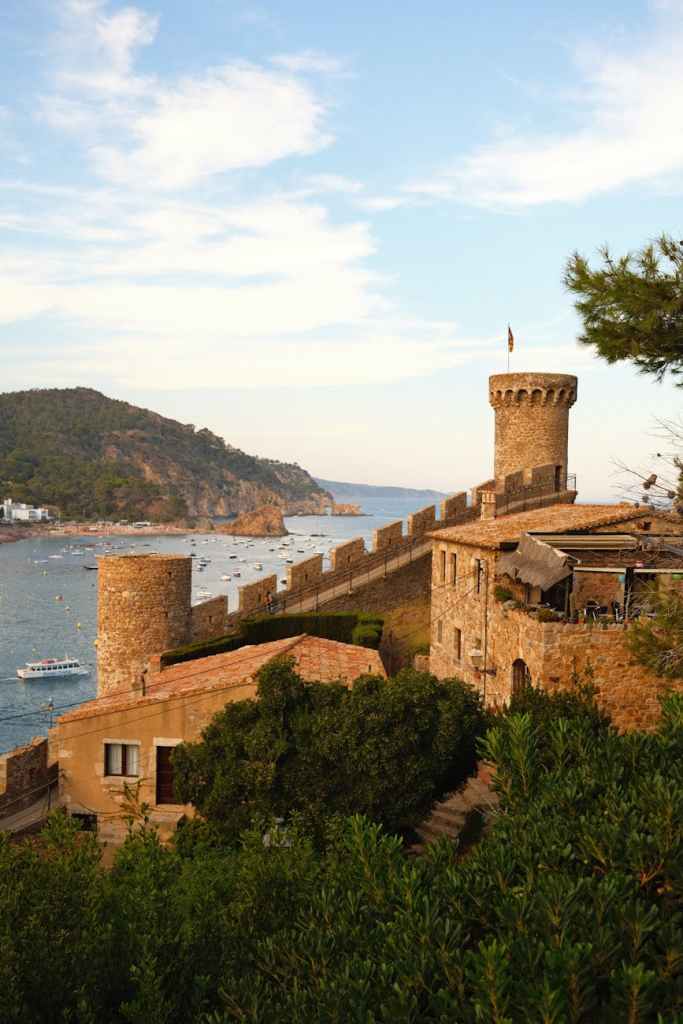
A mighty fortress is our God, a bulwark never failing; Our helper He, amid the flood of mortal ills prevailing: For still our ancient foe doth seek to work us woe; His craft and pow’r are great, and, armed with cruel hate, On earth is not his equal.
Did we in our own strength confide, our striving would be losing, Were not the right Man on our side, the Man of God’s own choosing: Dost ask who that may be? Christ Jesus, it is He; Lord Sabaoth, His Name, from age to age the same, And He must win the battle.
And though this world, with devils filled, should threaten to undo us, We will not fear, for God hath willed His truth to triumph through us; The Prince of Darkness grim, we tremble not for him; His rage we can endure, for lo, his doom is sure, One little word shall fell him.
That word above all earthly pow’rs, no thanks to them, abideth; The Spirit and the gifts are ours through Him Who with us sideth; Let goods and kindred go, this mortal life also; The body they may kill: God’s truth abideth still, His kingdom is forever.
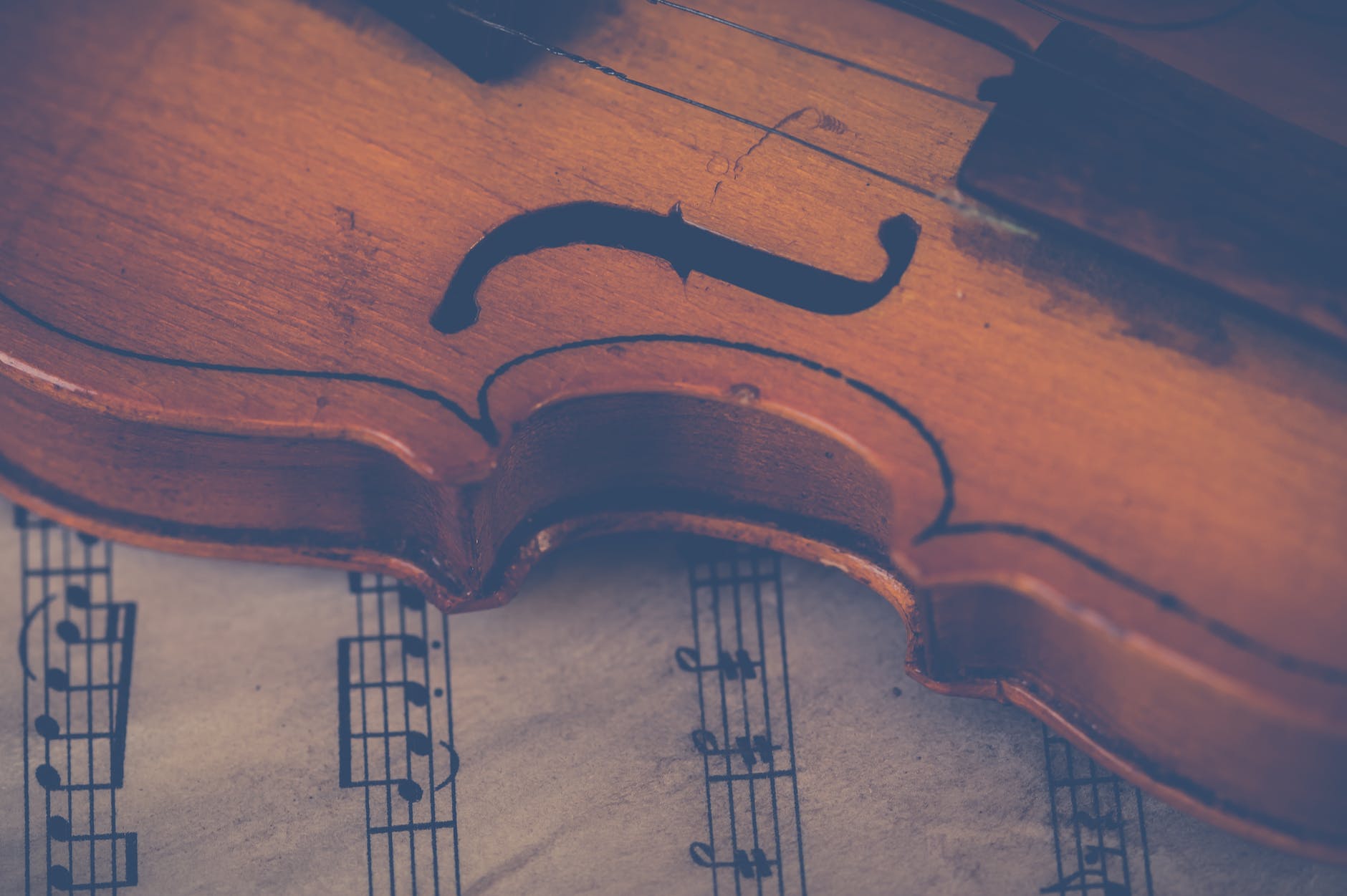
I love old hymns– I love music in general, but there is something powerful and “grounding” about old hymns and ancient praises that stick with us through thick and thin.
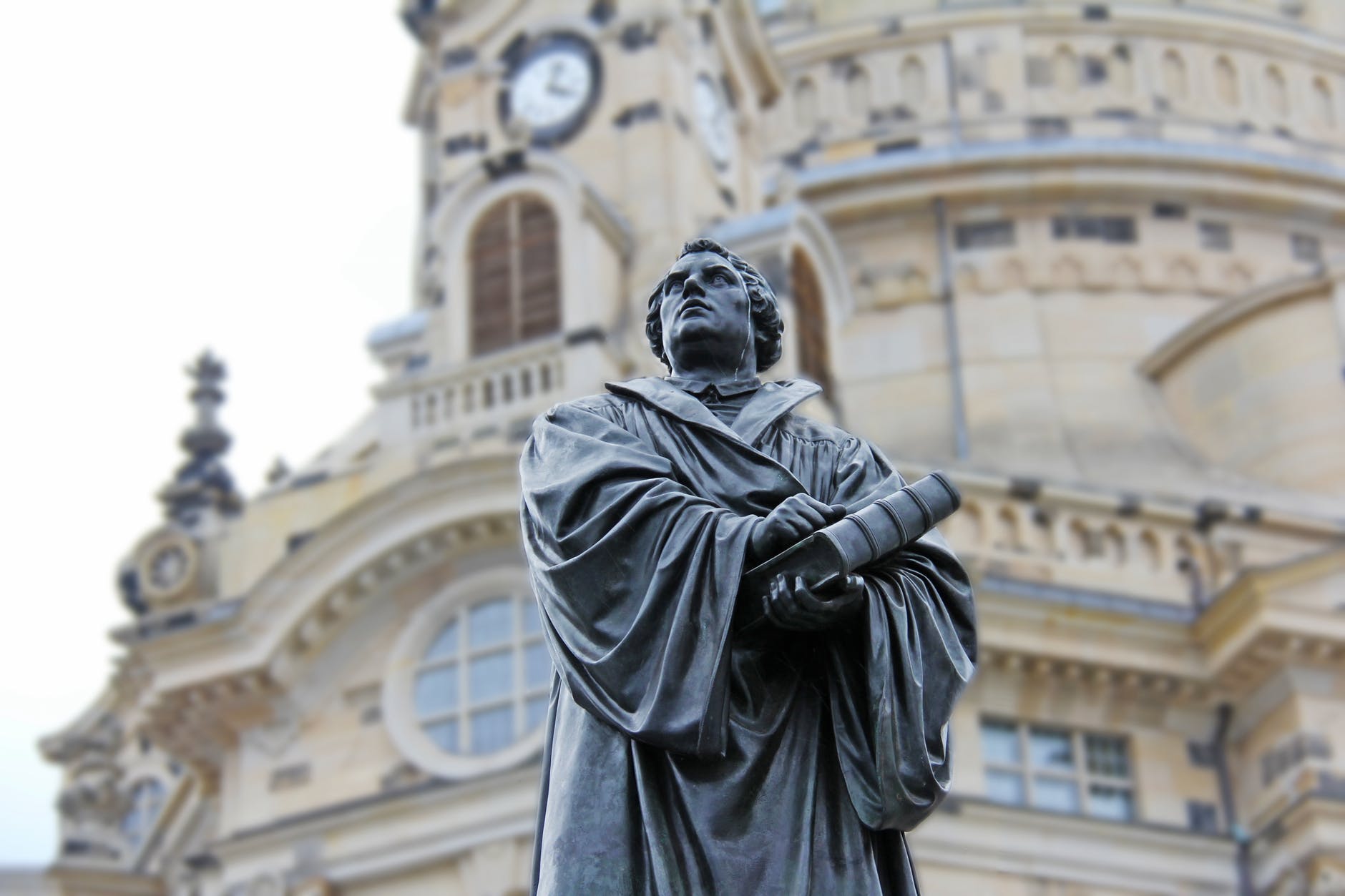
Martin Luther, author of “A Mighty Fortress”
This ancient (nearly 500 years old!) hymn has been attacked often. I saw an article recently that said it should be kicked out of hymnals and never sung. The author’s reasons: It had “old” words and it was gloomy and aggressive in its tone. True, it has words like “abideth”, “grim”, “kindred”, “battle”, and “doom”. (Although the song has been “rewritten”– not only translated into English, but “modernized” to take out the “old-fashioned words”–it’s not like you have to put up with the archaic words you don’t like or understand.) And it isn’t an upbeat anthem about dancing and lifting our hands in celebration. It’s not about daisies and unicorns and good vibes. It was written in a time when worship wasn’t about luxurious auditoriums and customized T-shirts with your church’s logo. Worship wasn’t “cool”–it was deadly serious.
And this hymn doesn’t celebrate the kindness and gentleness of God. It celebrates His Strength and Power; it celebrates Him as a warrior and a conqueror. It also reminds us that we have an Enemy; that we are involved in a pitched battle between Good and Evil– a battle we cannot win in our own power and with our limited resources.
Good hymns are not just there to help us celebrate the good times; they are there to remind us to keep going during the struggles and bad times that are sure to come in life. It doesn’t help that many times this hymn gets shortened. If you only read or sing the first and last verses, it can be confusing. It sounds grim. It assaults the ears and its words pound into our seemingly safe and comfortable worship.
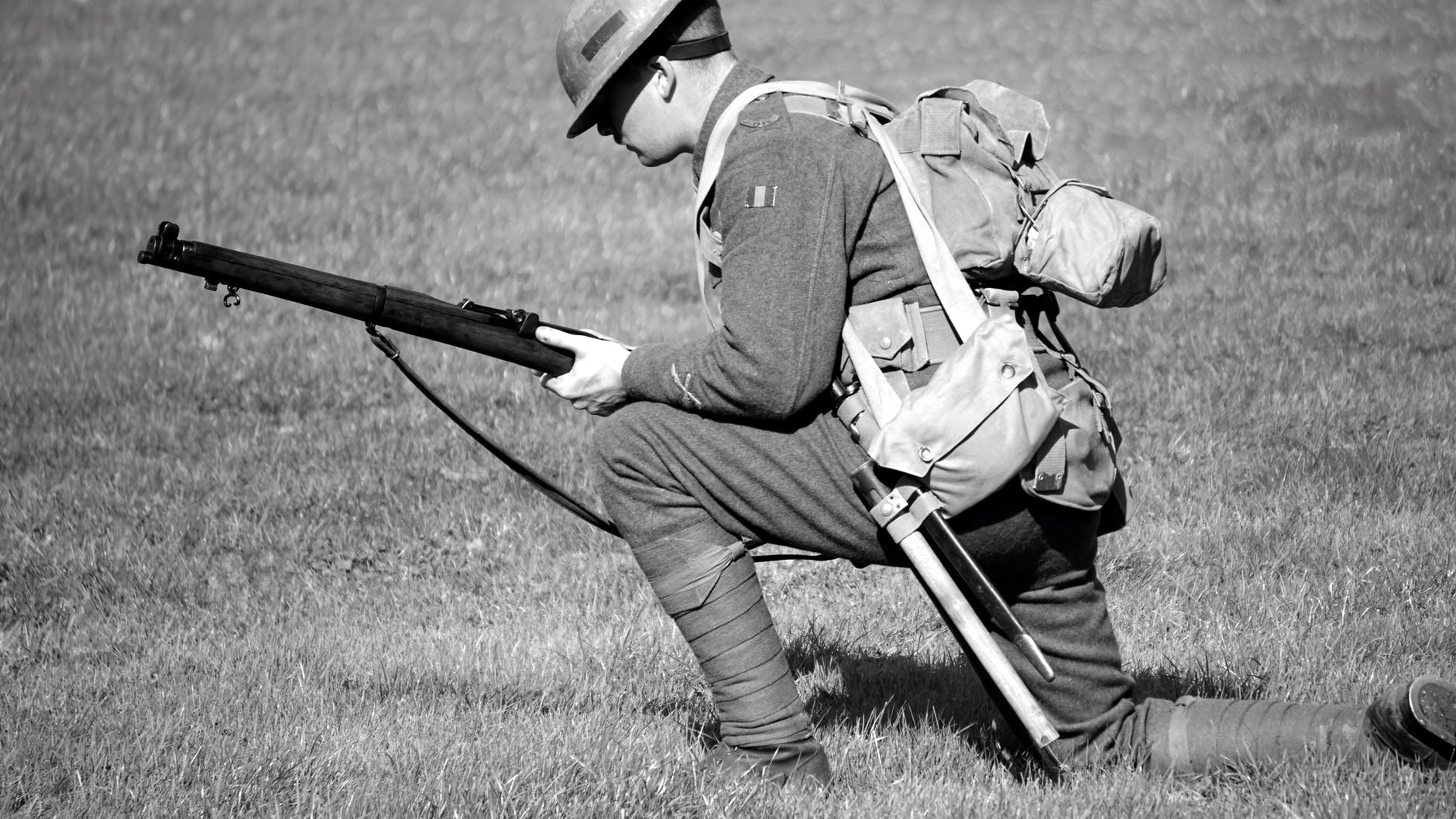
In its entirety, however, the hymn reminds us of a very real spiritual battle being waged for our souls, and the victory that is already ours through Jesus (“that little word!”). Jesus is not just a “crutch” for weak sinners. He is a mighty fortress for battle-scarred and wounded warriors. He is a refuge in the middle of a field of war between good and evil, and the garrison for the army of Goodness. He is the battlefield hospital, providing healing; he is the supply station, offering armor and weapons of war.
The outcome of war is already decided– the victory is sure–but the battles are still raging. Innocent people are dying today in the Middle East and Eastern Europe. History has left us with few illusions about lasting peace in this world. That doesn’t mean that we should not work to pursue peace in our time. But it does mean that our real peace comes from seeking shelter within the “never failing” bulwark that is Christ Jesus, and drawing power from Him to go back out and fight the battle before us.
God is our Fortress and our Deliverer (2 Samuel 22:2). He is an ever-present help in times of trouble (Psalm 46:1) and His Name is our strong tower (Proverbs 18:10). Today, I will take shelter in the Hope and Promise of God as I pray. I need not fear or be depressed about the evil in this world. God still Reigns!
Psalm 46 For the director of music. Of the Sons of Korah. According to alamoth. A song. 1 God is our refuge and strength, an ever-present help in trouble. 2 Therefore we will not fear, though the earth give way and the mountains fall into the heart of the sea, 3 though its waters roar and foam and the mountains quake with their surging. 4 There is a river whose streams make glad the city of God, the holy place where the Most High dwells. 5 God is within her, she will not fall; God will help her at break of day. 6 Nations are in uproar, kingdoms fall; he lifts his voice, the earth melts. 7 The Lord Almighty is with us; the God of Jacob is our fortress. 8 Come and see what the Lord has done, the desolations he has brought on the earth. 9 He makes wars cease to the ends of the earth. He breaks the bow and shatters the spear; he burns the shields with fire. 10 He says, “Be still, and know that I am God; I will be exalted among the nations, I will be exalted in the earth.” 11 The Lord Almighty is with us; the God of Jacob is our fortress.
When I am tempted to fret or worry, I like to read through Psalm 46. I love the way the psalmists use hyperbole to shrink fear and maximize faith– God is an “ever-present help”, we will not fear, “though the earth give way, and the mountains fall into the heart of the sea”, “He lifts his voice, the earth melts!” And I love that the phrase is repeated– “The Lord Almighty is with us; the God of Jacob is our fortress.”
There is so much to unpack in just 11 verses of psalm! But I want to stick to two that always stand out to me.
First, the phrase, “the God of Jacob.” God is the God of Abraham, Isaac, and Jacob. He is the God of Moses, the God of Israel, the God of David…His titles are many. But in this case, He is the God of Jacob. NOT the God of Israel– even though God changed His name. No, He is the God of Jacob– the “heel grabber,” the son who stole his brother’s blessing and tricked his brother out of his birthright– the same Jacob who fled his homeland and worked for twenty years for his duplicitous uncle Laban. This is not the God of the victorious, but the God of those who have had to learn the hard way. He is the God of the one who has acted unjustly, and the God of one who has been treated unjustly. He is the God of the one who wrestles and demands a blessing, the God of the second son, the disappointed husband, and the grieving father. THAT is the God who is with US when we are in trouble and feeling overwhelmed by our own past mistakes, or our own inadequacies, or our unfair circumstances.
Secondly, the phrase “be still and know that I am God.” This same God who wrestled with Jacob, who blessed him in dramatic fashion, was the God who was with him through all the long and lonely night watches as a shepherd. Jacob, with his two wives, their two servants, and all thirteen or more of his children (12 sons and at least one daughter, Dinah)–spent a lot of his time surrounded by noises, nagging, responsibilities, and discord. Yet he took time to ‘be still.” And, though it took many years, and often came “the hard way,” Jacob did learn to “know” his God. He learned to trust that God would protect him, guide him, and bless him– and the generations that would follow him!
I am so grateful for this Psalm to remind me of God’s everlasting presence, His power to save and protect, and His sufficiency for every circumstance in my life. I’m so glad that the “God of Jacob” is the same God who sees me, loves me, and rescues me. I’m humbled to know that I don’t have to be clever enough or brave enough, or “righteous” enough to earn God’s help. I’m glad that the Lord Almighty is always with me. (see Hebrews 13:5) However, I still struggle to “be still and know…” I want to know by doing; by studying and making things happen. But to know God– to really know Him– I have to be still, to wait in silence and anticipation, to trust in what I cannot see and cannot do in my own power. I have to know Him as the Almighty, Omnipotent, Sovereign God that He is, rather than a God of my own imagination or the God I hear about or read about from someone else.
What a mighty God! The God of Jacob is MY fortress! And in stillness, meditation, and trust, I can KNOW Him!



 Pursuing Prayer