What Might Have Been…

One of my favorite movies is “It’s a Wonderful Life.”  No matter how many times I watch it, it never gets old for me.

IAWLposter

Oh, I know it’s in black and white, and it’s out-of-date.  It’s politically incorrect on numerous levels, and it’s theologically incorrect, as well.  But for all that, I think it has a deep wisdom we are sorely lacking, and I think what it says about the power of prayer cannot be dismissed.

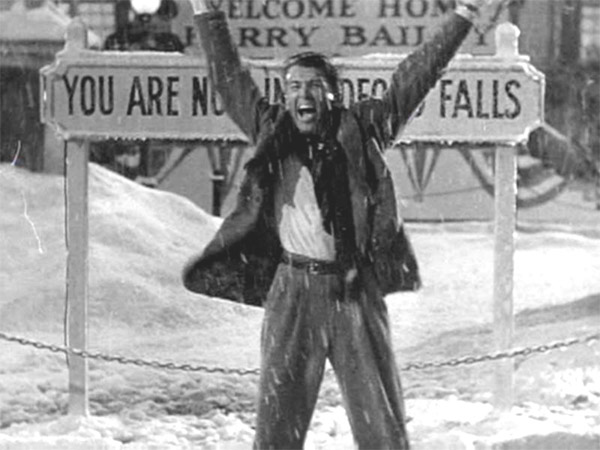
Much of the movie is spent tracing the less-than-wonderful things that happen to George Bailey.  George Bailey is the quintessential “nice-guy” who always seems to miss out–as a boy, he leaps into an icy river to save his brother’s life.  His brother is saved, but George ends up losing the hearing in one ear.  While his friends go off to college, George has to stay behind; when he finally saves enough money to enroll, he ends up having to give up his college plans to save the family business after the sudden death of his father.  He loses out on business opportunities, and keeps losing skirmishes with his nemesis, the  “scurvy spider” local magnate, Mr. Potter.  Finally, on Christmas Eve, George has had enough.  The weight of always doing “the right thing,” and watching others get ahead while he falls further behind, has taken its toll.  When his absent-minded uncle loses $8000, George faces scandal and prison after all his years of frustrating hard work in a job he hates.  After uncharacteristic angry outbursts and a short drinking binge, George is in utter meltdown.  In desperation, he prays.  It’s not an eloquent prayer, or an angry outburst.  It’s a wimpy, doubtful, squeak of a prayer, “Dear Father in Heaven, I’m not a praying man, but if you’re up there and you can hear me, show me the way…show me the way.”

ItsAWonderfulLife4.jpg

What the viewer knows, but George doesn’t, is that dozens of people he knows have all been praying for him.  We get to hear the voices of his wife, his children, his friends and neighbors, all praying simple and heartfelt prayers.  And we also know that God is at work– preparing to send an angel to help George.  But in the bar, at the end of George’s tearful and tremulous prayer, God is silent.

Not only is God silent, but George’s downward spiral continues after his prayer.  He gets punched in the jaw by a man he was arguing with earlier in the evening, and he doesn’t even have enough money to pay his bar tab.  Driving away, drunk, he runs into a tree and gets yelled at.  Reeling down the road and onto the bridge, where he intends to jump to his death, he almost gets hit by a truck.

jimmy_stewart_in_its_a_wonderful_life.jpg

While I like the sappy, happy ending of the movie, the incredible darkness and despair leading up to George’s encounter with Clarence, and the even darker “alternate universe” that George experiences are what keep me coming back to this movie– not because I’m a glutton for emotional wringers, but because George’s story is only wonderful when he gets to see it from God’s point of view.  Mr. Potter tells George that he is worth more dead than alive.  But Clarence shows George the true worth of his life, not as it might have been, but as it might NOT have been.

And so it is with our lives–all the “might-have-beens” and broken dreams and failures that weigh us down– God is NOT (as we so often picture Him) shaking His head and grumbling about our wasted potential and weakness.  And often, the people we most fear to disappoint, our family and friends, are rooting for us to stay the course– to finish the race. God wants to wipe away all the seeming failures; all the “what-if”s and the “what might have been”s and replace them with the bigger picture of “what is happening around you”, “what really IS”, and “what can be.”*

Its-a-Wonderful-life-foto.jpg

There was never anything wrong with George’s dreams of traveling the world and becoming a successful builder of skyscrapers “a hundred stories tall.”  George’s desire to have nice things for himself and his family was not evil, and, in fact, his ambition to do great things was not that different than Mr. Potter’s.  But George’s choices, while “right” were not  in his own immediate best interest.  What Clarence showed George was not “what might have been” had George made other choices in his life.  What he showed George was indeed far more wonderful– the ultimate IMPACT of George’s choices!  God didn’t “take away” George’s dreams or ruin his life.  But neither did He prevent him from making selfish choices or getting what he wanted in the moment.  George’s life wasn’t wonderful because of what happened to him– though the ending is miraculous, and George gets toasted by his hero brother as “the richest man in town.”  But what really made George’s life wonderful was that he was THERE– there to save his brother; there to fall in love with Mary; there to help and influence so many people; there to tuck his daughter into bed and “paste” the petals of her flower; even there to stand up to Mr. Potter when no one else did.

God answered George’s prayer.  And He answered the prayers of his friends and family.  But He didn’t answer in the way we would expect.  In fact, George jokes with Clarence that the answer to his prayer was getting slugged in the jaw.  But God’s answer came in the form of a childlike “angel” who struggles and questions his ability to make a difference– much like George himself.  God didn’t answer the superficial aspect of George’s prayer– He didn’t show him the way to get $8,000.  He didn’t show him the way to defeat Mr. Potter, or suddenly become more successful.  But He did show George the way to look for “what is” and “what can be”, instead of the “what might have been.”
quebelloesvivir17.jpg
  • For anyone who has lost a friend or family member to suicide–my prayer is that we too, would find comfort  and hope in the lives our loved ones lived, and not in the manner of their death.  God is gracious and loving above all that we can imagine.  Part of the hope and message of this movie for me is that, even if George had jumped at the end, his life was still wonderful in God’s eyes, just as it was to all who knew and loved him..
The Urgency of Death

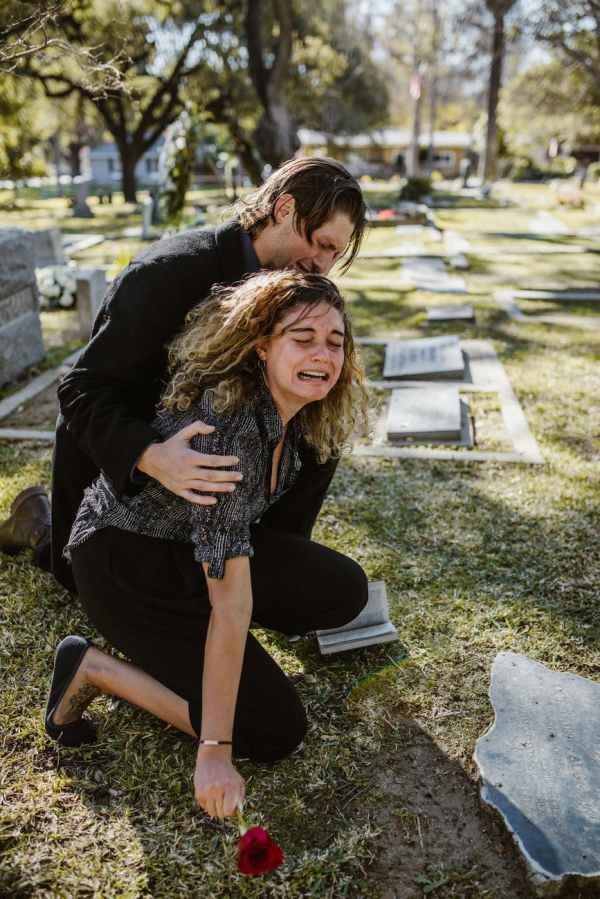
Just last week, one of my high school classmates died unexpectedly.  I’m getting to “that age” when more and more of my contemporaries are experiencing health issues– diabetes, heart problems, cancer, arthritis, even early-onset dementia– but this friend seemed to be in good health.  She had just been celebrating the birth of a grandson, and other milestones.  Death sometimes comes when (and to whom) we least expect it.  It is shocking, saddening, and frightening all at once.  

Photo by Andrea Piacquadio on Pexels.com

Death has an urgency that pushes other concerns away.  Death is final; permanent.  Death is powerful– we can’t cheat it, defeat it, or comprehend it.  Death frightens us, angers us, and mystifies us.  We begin to look at our own life and ask questions–Who am I?WHY am I?  What makes me “me”– individual and uniquely different from everyone else?  Is there a purpose to my being– to my being “me”, “here” and “now”?  How can I find and fulfill that purpose if it exists?  Do I have an eternal destiny after this life?  If so, how can I know what it might be?  Can I change that eternal destiny?

sunset ship boat sea
Photo by Pixabay on Pexels.com
Photo by Liza Summer on Pexels.com

Some people argue that our origins are accidental; our uniqueness is merely a random generation of genetic code; our purpose non-existent or self-determined; and our destiny no more than dust. They avoid talking about death–and the meaning of life. They want to “live in the moment,” but they don’t want to ask any questions of the past or future. And they mock anyone who does. Many of them hear me or read what I write and dismiss me as intellectually lazy, gullible, or crazy.  I’m all right with that, as long as they will be intellectually honest enough to admit to the questions; and open enough to acknowledge that there may be more than a quick denial as an answer.  Crazy– well crazy is as crazy does, I guess…I’ll let my actions answer that one.

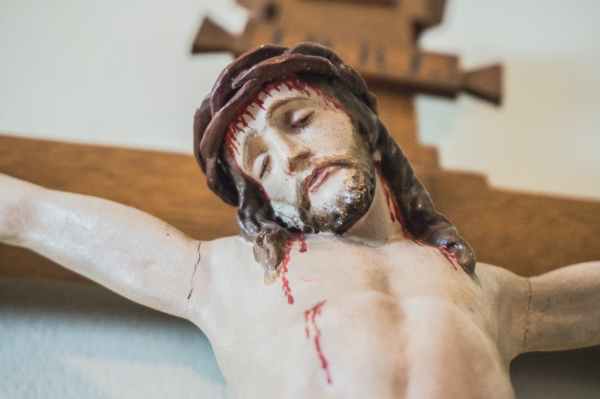
Death is powerful and mysterious, but I believe that God is more powerful, and omniscient– he has already crushed the power of death, and invites us to view death from a different perspective.  When we take everything– including death– to the Lord in Prayer, he takes the weight of it, the fear of it, the pain of it off our shoulders and carries it to the cross.  HIS death overshadows even our own, in its power to overcome. The urgency of death is not that it is the end of all things.  The urgency of death is that it signals the end of our opportunity to recognize and live out the purpose of this short life.

art cathedral christ christian
Photo by Pixabay on Pexels.com

If that isn’t an urgent reason to pray for those you love, I don’t know of a better one…

It’s also an urgent reason to pray for those around you who are grieving the recent loss of a loved one.  And don’t just be someone who prays..be an answer to prayer– reach out with a card, a note or e-mail, or spend some time with them.  Let them know that a) their loved one is not forgotten, and b) neither are they!

As Iron Sharpens Iron

As iron sharpens iron, so one person sharpens another.

Proverbs 27:17
Photo by igovar igovar on Pexels.com

Do you have a friend who “sharpens” you? Someone who keeps you honest? Someone who challenges you? Someone who holds you accountable? The Bible has much to say about relationships that we form– and some of it may surprise us. Earlier in Proverbs 27, the writer says, “Better is open rebuke than hidden love.” (v.5 NIV) and, “Faithful are the wounds of a friend, but the kisses of an enemy are deceitful.” (v. 6 NKJV).

Photo by Liza Summer on Pexels.com

I don’t know about you, but I want friends who encourage, friends who make me feel good about myself; friends who make life more pleasant and uncomplicated. I don’t enjoy hearing criticism, or having my beliefs and ideas challenged. I don’t enjoy conflict, and I tend to avoid it whenever possible. However, I also know the truth of verse 6 from experience–I can trust the constructive criticism of a good friend, even when it stings in the moment. A loving friend will take the risk of saying what needs to be said, and not just what I want to hear.

Photo by Tirachard Kumtanom on Pexels.com

There are three points that struck me recently as I came across these verses:

  • “Iron sharpens iron”–nothing gets sharpened by a marshmallow, and an iron blade that is left unsharpened will either lose its edge over time, or rust from disuse. We may not like conflict. But we need to be disciplined, and that means that we need to be held accountable. We need to be challenged and sharpened, or we will grow dull or rusty. God can use the “fire” of circumstances to soften our hard hearts, but He often uses other people to “spark” us into action. Left to my own devices, I can grow rusty and useless. I can feel sorry about a bad or sinful habit– I can confess it, and make plans to change. But I am more likely to grow and develop positive habits and actions if there is someone keeping me honest. I can have good ideas; I can know what the Bible says– but I can also fall into deception, lazy thinking, and pride. A good friend can help keep me “sharp” in both actions and thinking. We are not meant to do life alone, and God does not want “Holy Hermits.” He also does not want us to be so timid and accepting that we fail to sharpen others. It is really hard to risk a friendship by speaking the truth–but NOT speaking is sometimes more damaging to the friendship– and to our friends!
  • “Iron” is what sharpens “Iron”–We need to seek out truth and wisdom, and that’s what we need to offer others, as well. We should not waste time on petty disagreements, trying to “win” every point in an argument, or pointing out every minor fault. We also need to have mutual respect; being willing to listen, willing to let a few sparks fly, and willing to respect another’s strengths as we develop our own. This verse is not about letting someone else dominate you or shut down your voice, just as it is not about dominating or “fixing” someone else by forcing your opinions (even if grounded in the truth) down their throat.
  • “So one person sharpens another.” Notice it doesn’t say whether the person is a believer, a dear, personal friend, or a relative. Any person can “sharpen” us. I may disagree with another person– a coworker, a peer, a neighbor–and still respect that their ideas, their words, even their criticism.
Photo by SHVETS production on Pexels.com

How does this tie into our pursuit of prayer? Conflict and testing can make us better or bitter–in this analogy, it can make us humble or it can make us brittle. A humble person will be shaped and sharpened. A brittle person will snap or break.

Photo by Pavel Danilyuk on Pexels.com

When I am challenged or criticized, do I take it to God or do I take it to heart? Do I ask God to reveal truth or have I already decided what I want to believe? Not all criticism is constructive; not all challenges are meant to sharpen us. Do I react in anger? Do I become sullen? Do I crumble into a puddle of doubt? Or do I see it as an opportunity to become sharper, to change course, or to refine my thinking? Conflict and criticism do not happen in a vacuum–God is as close as a prayer, and willing to give wisdom, discernment, and strength!

How do I react to the other person? Do I become bitter toward them? Do I seek for ways to repay them with criticism or prove myself to them? Do I pray for THEM to change, without looking at my own responsibility? Do I appreciate the risk they may have taken to speak up? (Or do I appreciate the reasons they may have for feeling or thinking as they do, even if I am convinced they are in error?) Can I offer thanks to God for the way He may be using that person to sharpen me–even if that is not their intent? Can I pray for God to bless and strengthen them, even if we don’t agree?

Photo by Jopwell on Pexels.com

This is all easier to write than to put into practice. But I can say from experience that God has often used the most unlikely people to “sharpen” me in unlikely ways and unlikely moments, and I am so grateful for the “faithful” (and temporary!) wounds of friends. I am also grateful for others who challenge me to defend the Faith, and who open their hearts to me– even when we clash sometimes.

8,000,000,000 Cousins

I wrote a couple of weeks ago about what I call, “Prayer Points.” Each day of the week, I make a “point” of spending some of my prayer time on a particular issue– one day a week, I focus on the community; another day on global issues like poverty, war, and the environment. The other day, I was focused on “family and friends,” when I realized something, or rather, remembered something. I began by focusing on immediate family– my husband, our kids and grandkids. Then I spread the focus a little wider–our moms, siblings, and their families. Then aunts, uncles, and cousins…and their families! Pretty soon, I was thinking about second cousins and third cousins– the ones I see at family reunions, or catch up with on Facebook every once in awhile.

Photo by Quang Nguyen Vinh on Pexels.com

And that got me thinking about my family tree. I research and work on genealogy for my family. My family tree stretches back several generations, and “branches” out several times over. There are nearly 28,000 names in my family tree, and I’ve only scratched the surface! My family tree is a tiny drop in the world population of nearly 8,000,000,000 people (7.96 billion as of this month, and growing). But it represents an incredible mix of people. Some of my family are of European origin; some are Native American; some are of African descent, or Asian. Many of us are a mixture of races, ethnicities, and native languages. Some of us are rich; some are barely getting by. Some of us are tall; others are short. Some are healthy; others have health or developmental issues. But we are all family.

Photo by fauxels on Pexels.com
Photo by Cameron Casey on Pexels.com

And, by extension, we are ALL family– all nearly 8 billion of us! We are all God’s children, and when we pray for “family and friends,” we can include anyone! That’s a mind-blowing thought, and I was really excited to be reminded of the fact. But it’s also a sobering thought. I certainly don’t know all of the living people I’ve included in my family tree– most of the information has come from public records and other family’s research, rather than personal knowledge. No one can possibly know 7.96 billion people– we’re lucky if we can remember the names and faces of more than 5 thousand in a lifetime. We could not possibly pray for them all.

But far more sobering is the thought that there are people I do know for whom I might not WANT to pray– people who have hurt me, or people I have judged unworthy of my time or effort. Yet are they not also “my family?” What difference does it make in the way I pray when I remember that I have, not 50 cousins, or 500 or even 5,000 cousins, but almost 8 billion? That the next person I meet on the street or at the post office, or at church–she or he is not just my neighbor, or my friend (or enemy), but my cousin? Shouldn’t I consider how I can pray for them– even a quick prayer? Shouldn’t I listen better, look closer, and seek out opportunities to show love for another of God’s children?

Photo by RODNAE Productions on Pexels.com

It’s easy to speak in “relative” terms, but it can be a challenge to really live as “family.” Praying– sincerely and thankfully–for others can be a start.

No Greater Love…

This coming Monday we will be celebrating Memorial Day in the U.S. It is a day to remember those who gave their lives in battle, defending our nation, our people, and our way of life over the course of almost 250 years. We decorate the graves of fallen soldiers with flowers and flags and plaques honoring their sacrifices. It is a strange sort of “holiday.” We don’t like to think of wars and battles– we ache for those who are terrorized by wars in the current days. We don’t celebrate war and violence– our highest goal is to achieve and preserve peace and safety. And it can seem somewhat morbid to “celebrate” the fallen soldiers of bygone days.

Photo by RODNAE Productions on Pexels.com

But we are not celebrating their deaths. We are celebrating the causes for which they fought and died. We celebrate freedom, and justice; the rights of individuals to pursue liberty and fulfill their dreams. These are causes worth fighting for, and yes, even dying for. We mourn the loss of life, and we grieve the necessity of fighting and struggling to preserve basic rights. But we are grateful for and humbled by the examples of those who have shown the courage and strength to give their all. We honor these sacrifices when we decorate the graves of fallen soldiers, or hold services and memorials at cemeteries. It is not meant to be a time of joyful celebration, but a time of solemn reflection and humble gratitude.

Photo by Pixabay on Pexels.com

But Memorial Day can also be a time of reflecting on an empty grave– that of Jesus Christ, who gave His all for a cause even greater than liberty and justice in a particular nation or time or for a particular group of people. Jesus gave His life to reconcile an unholy human race with a Holy and Righteous God. He fought against Sin and Death, and conquered them both. And we cannot decorate a grave to honor His sacrifice, because, unlike all the soldiers we honor next week, Jesus did not just preserve a cause or a way of life– He became Life for us. His grave is empty as a symbol of Death’s defeat!

It was Jesus Himself who said, “Greater love has no one than this, that one lay down his life for his friends.” (John 15:13 NASB) Soldiers who lay down their lives often do so to save the lives of their comrades at arms– their friends and fellow warriors– as well as their countrymen and women, their neighbors, and their families. And it isn’t just soldiers who give their lives. Recent news stories tell of teachers, police officers, and other individuals who have sacrificed their lives for the sake of innocent shoppers, students, and neighbors. Such sacrifices are tragic, but they are also heroic, and deserving of our acknowledgement.

We take time to honor those who died for a cause. How much more should we honor the One who died to bring eternal freedom and life to each one of us! And how much more should we be willing to give our lives for the sake His Kingdom! There is no greater love that we can show.

Photo by RODNAE Productions on Pexels.com

Of Broken Femurs, Hearts, and Toilets

The past two weeks have been just a bit chaotic for our families. My mother fell and broke her femur, near her hip–not the hip she broke over a year ago, but the other one! Less than twenty-four hours later, my mother-in-law fell–and broke her femur. Each mom ended up in a different hospital for surgery, and in a different rehabilitation facility, located nearly fifty miles apart. Last week, two members of our extended family died on the same day in the same city; their funerals were a day apart in two different parts of the city, but handled by the same funeral home. On the day of the first funeral, we found out that another member of the family died. That same night, our toilet broke. Water poured into our upstairs bathroom, soaking the floor, running into the next room, and dripping down to the floor below. In the middle of all this, I slipped on the ice, fell hard, and bruised my ribs.

Photo by Liza Summer on Pexels.com

Where was God in all this? He was right there in every situation. God doesn’t disappear when the going gets tough– He is steady, sure, and faithful.

  • Neither of our moms suffered a concussion or any other major damage from their falls. They were able to get treatment and surgery, and they are receiving care and therapy. And, while this is something we might have taken for granted at one time, it is something for which we praise God, because it could have been much more tragic in both cases.
  • We live close enough to both moms that we have been able to help and visit (where we can because of continuing COVID restrictions). Though the facilities are fifty miles from each other, neither is fifty miles from our home. Also, both moms are able to receive phone calls, and we are able to receive updates from the staff at each place.
  • We have close families, and wonderful neighbors and friends– we are not alone in caring for our moms or grieving our loved ones, and there is a network of prayer, support and concern that staggers my imagination! I cannot imagine trying to navigate this without help– again, this is something we might take for granted, but God has been in the details long before any of this happened. Our families, friends, and neighbors represent dozens of church bodies from around the country and the world, as well as a significant group close to home– how marvelous that God allows us to work together as a body in every situation.
Photo by Pixabay on Pexels.com
  • Though we have lost three family members in rapid succession, all three were believers! All three left a legacy of faith, love, and hope. We mourn their loss, but we also celebrate their lives with joy and not regret.
  • David HATES plumbing, but he knew what to do to fix the toilet. The damage from the flooding was minimal, all of our towels are freshly laundered, and the toilet works again!
  • My fall could have resulted in ANOTHER broken femur– or a broken arm, concussion, etc.. While it hurts to sneeze or yawn or blow my nose, at least it doesn’t hurt to breathe, and I can move and go about my day, cautiously, but normally.
God allows difficult things to come into our lives– and I don’t have any definitive answer for WHY we have been experiencing so many trials all at once. But I can say this:

Photo by Andrea Piacquadio on Pexels.com
  • Trials make us stop and look and question– and that can be a good thing. God is big enough, wise enough, and sovereign “enough” to handle our tears, our fears, our weakness, and our momentary doubts. In fact, it is in recognizing our limitations that we can focus more on God’s limitless grace and boundless love!
  • Trials bring us closer to each other. Our chaotic couple of weeks are just a drop in the bucket among all the other problems of the world, but so many wonderful people have called or sent messages of hope and encouragement over the past two weeks, my heart is bursting– not with the pain, but with joy and gratitude.
  • Trials teach us patience (see my post on “Be Careful What You Pray For.”) The toilet breaking was my low point this past week– even though it did not directly touch on our health or a loved one. But God sent friends and angels to remind me that this was a very minor problem– even among all the others– and that God was “flushing” away some unnecessary angst if I would just let it go!

There is nothing that takes God by surprise– nothing that causes Him to pause and wonder, “what happens next.” I can praise God in the hospital as I watch my mom cry in pain. I can praise God when my husband finds his mother “alive” (when he couldn’t be sure). I can praise God when I’m flat on my face on the ice, winded and sore. I can praise God when toilet water is soaking my socks. I can praise God when I hug cousins who have lost their parents to cancer or dementia, or age, knowing that God is with us every moment, in every tear, every hug, every shared memory, and every hope that our loved ones now experience what we will also know someday.

I’m ready for 2022 to calm down a little bit. But if it doesn’t, I’m also ready to be broken again– whether through broken legs, broken toilets, or broken hearts. God is in the business of repairing and restoring broken things and broken people. And no one does it better!

Be Careful What You Pray For…

When I was a young woman, I prayed for patience. Several well-meaning friends and family tried to tell me that this was a mistake. “Be careful what you pray for,” they said. It was their belief that, if I prayed for patience, God would send situations into my life that would force me to be patient. God doesn’t “give” patience, they warned–He merely teaches us to be patient.

Photo by Anna Shvets on Pexels.com

I wanted more patience, in preparation for marriage and children; I wanted to be a patient wife and mother. But I was unprepared for this reaction of others. DON’T ask God for something good? Isn’t patience (long-suffering) one of the attributes listed as the “Fruit of the Spirit?”(Galatians 5:23-24) Why should I hesitate, or fear to ask God for something that will help me serve Him better?

Looking back, I suppose some of those same friends and family might say, “I told you so!” I’m sure they wanted a happy and easy future for me– one that didn’t include some of the challenges that I have had to face. And in their eyes, I was “tempting fate” to draw attention to my lack of patience. On the surface, it probably looks like that’s exactly what happened. I never had any children; I didn’t marry until I was in my mid-40s, and I have learned patience in many areas through many challenges.

Photo by Liza Summer on Pexels.com

But that’s just one perspective. What if I hadn’t prayed that prayer? Would God have let me drift through life without “needing” more patience? Would I have “avoided” the years of loneliness and lack of children? Would I have married and had a family and lived happily ever after without having to learn patience? Would my life have been totally different? Or would my circumstances have been the same, except that I never would have learned patience–never sought to become more patient during the same trials and challenges? What kind of life might I have had WITHOUT patience?

Photo by Liza Summer on Pexels.com

During the years that I was single, I worked full-time in youth-oriented jobs– teaching and serving in the youth department at a library. I learned patience by disciplining teenagers, cleaning up after toddlers, answering the same questions twenty times a day, and dealing with obstinate parents! I suffered with my students when one of their classmates died; and when it happened again the next year. I agonized with my student who chose to keep her baby after those close to her wanted her to have an abortion. And I rejoiced with her when she brought her son to visit me a year later. I suffered the frustration of parents whose children were rebellious, or had learning issues, or had been diagnosed with autism or ADHD. But I also endured the long nights when I had no little ones to tuck in or talk to (and learned to be thankful for the nights I didn’t have to deal with fever and sickness, or arguing–again– about the rules of the house!) But in the course of my work, I connected with hundreds of children and teens. They were never “mine” to hold or scold or say, “I love you”, but they touched my life, and I hope that I touched theirs as well. I didn’t choose my career path knowing that I would never become a “mom.” But I needed (and learned) patience in the process. I learned patience in the years I spent single–and I learned to appreciate my husband in ways I wouldn’t have as a young woman.

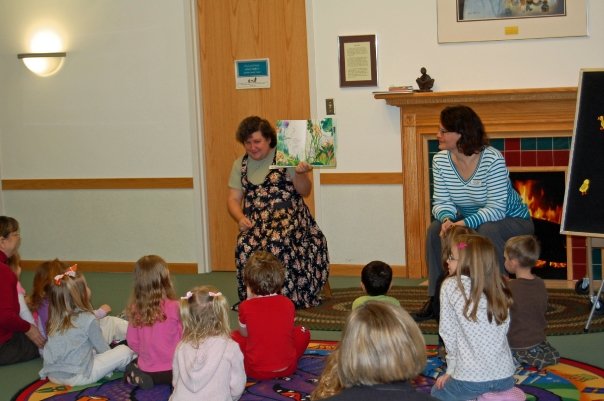
Story hour at the library c. 2009.

There IS some truth to the phrase, “Be careful what you pray for.” When we pray, we should pray for things that align with His will– like wisdom, patience, courage, or peace. We should not pray for things that contradict His will– instant popularity, wealth without work, or relationships or circumstances that dishonor Him. We should also be prepared for God to answer in the way He deems best–which may not look or feel like what we desired. It was His best for me not to marry young or have children of my own. He has since blessed me with a wonderful husband and step-children and grandchildren. But He might have chosen not to. And I would still thank Him for the life I have led. It’s been fantastic. I’ve met amazing people, had amazing opportunities, and traveled to wonderful places. I don’t feel like God ever “punished” me for asking for patience– instead, I feel that He has more than answered my prayer. That doesn’t mean that I have learned to be perfectly patient in every situation (just ask my husband!) But God is eternally good and faithful to give us what is in our best interest– if we ask, AND if we trust His answer more than our expectation. (see Hebrews 11:6; John 17; 1 Peter 5:7)

Photo by Tima Miroshnichenko on Pexels.com

Don’t be too afraid or too proud to ask God for any good thing. God will not only give you what you need, He will be with you every step of the way as you learn and grow, and develop into the person He wants you to be!

Identity Crisis

Who are you? If someone were to ask me such a question, how would I respond? Where would I begin? Name? Gender? Race or Ethnicity? Nationality? Marital Status? Age? Profession? Social or Economic Status? Religious Affiliation?

While I can be “identified” by such labels and descriptors, none of them get to the essence of who I “am.” More than just “identification”, there are four important ways to think of “identity.” Jesus dealt with two of them (and hinted at a third) in a discussion with His disciples:

Photo by Ismael Sanchez on Pexels.com

1When Jesus came to the region of Caesarea Philippi, he asked his disciples, “Who do people say the Son of Man is?” 14 They replied, “Some say John the Baptist; others say Elijah; and still others, Jeremiah or one of the prophets.” 15 “But what about you?” he asked. “Who do you say I am?” 16 Simon Peter answered, “You are the Messiah, the Son of the living God.” 17 Jesus replied, “Blessed are you, Simon son of Jonah, for this was not revealed to you by flesh and blood, but by my Father in heaven. 18 And I tell you that you are Peter, and on this rock I will build my church, and the gates of Hades will not overcome it. 
Matthew 16: 13-18 (NIV)

“Who do people say (I am)?”–Those who label us are usually those who are most removed from us– “people” who don’t know our personality, our life story–people who can only identify us by faint impressions and simple observations. Unfortunately, our world has become a place where we can feel trapped in this sort of surface identity. Others see that I am young or old, short or tall, Christian, Muslim, Black or Asian, American or Brazilian, Hispanic, female, blind, etc. Or they judge me to be rich or poor, native or foreigner, educated, clean, socially adept…or someone who thinks or speaks like them..or not. Others can shape our social identity, but we must resist the trap of letting them define it.

Photo by Pixabay on Pexels.com

Through the ages, people have tried to define Jesus– to identify, label, and dismiss Him, just as the people of His own time did. Some have seen in Him a “great teacher”, a “prophet”, a madman; some even question the reality of His physical existence. Jesus was aware of this when He asked for feedback from His disciples. But He wanted more.

Photo by Pixabay on Pexels.com

“Who do YOU say that I am?”– Those who are close to us can give us a more accurate reflection of who we really are. They know more of the complex nature of our personalities, our backgrounds, the events and experiences that shape our thoughts and emotions. Close friends will often give us a “reality check”, as well–drowning out the voices of other people who may give us a false sense of our worth and identity, and reminding us of where we’ve come from and where we are headed. Our friends and family can remind us that we are maturing (or not), that we have value far beyond our labels. When Jesus asked His disciples to answer the first question, they gave vague answers– “some say…others say”–the second question required a more personal, deeper answer.

Why did Jesus ask the question in the first place? Was He having an identity crisis? Did He not know who He was? Of course not. But He knew what it was like to be misunderstood, mislabeled, mis-identified. And He knew that sometimes, we need to stop and ask the question; we need to reevaluate where our identity comes from and not let others decide for us.

Photo by Jennifer Murray on Pexels.com

God created us as individuals with unique identities–no two alike, and each one infinitely precious. We, by our thoughts, feelings, actions, experiences and beliefs, become who we are. We can change our identity– not necessarily those parts that people tend to label; we can’t become taller or younger, for instance–but we CAN change our outlook, attitude, beliefs, and choices. Others can give us their observations, advice, encouragement or criticism, but we choose which voices to listen to, and which roads to follow in our life’s journey.

None of the other disciples had a ready answer for Jesus on this occasion, but Peter jumped in with an announcement, “You are the Messiah, the Son of the living God.” This was more than the question demanded. Peter could have said “I think you are the Messiah,” or even “You are my master, my teacher, and my friend.” But Peter cut to the chase–“You ARE the Messiah..” To which, Jesus replied that “this was not revealed to you by flesh and blood, but by my Father in Heaven…” Ultimately, our identity will be declared and confirmed by our Creator. Our identities, unique as they are, were created for purposes– we live and move and have our being within the scope of God’s creation, and within His plan for all of humankind.

Photo by Jonas Ferlin on Pexels.com

Father, who do YOU say that I am? Help me to become the person you created me to be, to fulfill the purposes you have for me, and to honor your Son, who came to reconcile us to Yourself. Amen!

Blog at WordPress.com.

Up ↑