The Price of Discontent

If anyone teaches a different doctrine and does not agree with the sound words of our Lord Jesus Christ and the teaching that accords with godliness, he is puffed up with conceit and understands nothing. He has an unhealthy craving for controversy and for quarrels about words, which produce envy, dissension, slander, evil suspicions, and constant friction among people who are depraved in mind and deprived of the truth, imagining that godliness is a means of gain. But godliness with contentment is great gain, for we brought nothing into the world, and we cannot take anything out of the world. But if we have food and clothing, with these we will be content. But those who desire to be rich fall into temptation, into a snare, into many senseless and harmful desires that plunge people into ruin and destruction. 10 For the love of money is a root of all kinds of evils. It is through this craving that some have wandered away from the faith and pierced themselves with many pangs.
1 Timothy 6: 3-10 (ESV)

This past week, I have really been struggling with discontent. There are things I want that I can’t afford; things I want to accomplish, but I have other obligations that eat away at my time and energy. I want to lose weight and exercise more– the spirit is willing– but my body and will-power are weak. And I spiraled down into anger, frustration, depression, and comparison. It’s been an ugly week. Instead of thanking God that we have enough money to pay the bills and buy groceries, I complain about the price of the groceries and bills, and the lack of money left over for entertainment or new clothes I don’t need.

“Godliness with contentment is great gain” (v.6). It’s a verse I learned as a girl, and yet I’m still struggling with the concept. Part of that, I think may be that our culture’s teachings clash with the Bible. There are people in our culture– even pastors and Bible teachers– who twist the Gospel so that, as Paul says they (imagine) that godliness is a MEANS of gain. (v. 5). And I have listened to, and bought into, that concept– that God rewards (financially, socially, physically) those who practice “godliness”. But what kind of godliness bargains with God for reward? What kind of godliness leads to discontent and anger?

No. Godliness is not a game or a role to play at. It is, much like prayer, a pursuit and a lifestyle. It is discipleship– following the example of Christ’s life and teachings– changing the way I think and the way I live. And no amount of “following the principles” on my own will lead to that kind of change, because my motive will always be “gain.” Whether gaining money, or status, or achievements and accolades, this type of sham godliness will leave me discontented. And the price of that discontent will be my life.

 The thief comes only to steal and kill and destroy. I came that they may have life and have it abundantly.
John 10:10 (ESV).

Jesus did not come to earth to gain fame or fortune. He was despised by many and crucified by the religious authorities of his day. He was misunderstood, and he was, in worldly terms, a failure. He was homeless, childless; there were no monuments to His achievements, no medals or honors bestowed on Him by the rulers of the day. BUT He came to make it possible for us to break the chains of Sin, guilt, worry, jealousy, and discontent. Jesus saw suffering around Him. He saw people with beautiful houses, high social status, productive farms or businesses, and great political power. But He was not drawn to them. He was content to do the Father’s will; content to travel from town to town, talking with lepers and prostitutes, with tax collectors and beggars. And His life changed the world! It is because of His life, death, and resurrection that I can have eternal life and abundant life now and forevermore (John 3:16).

That doesn’t mean that I have everything I want, or that I don’t have to struggle in the present. And it doesn’t mean that I am comfortable and complacent with what I do have. Sometimes, life is difficult and doesn’t seem very “abundant” in the moment. I still have bills. I still have diabetes. And I still have ambitions and unrealized goals. I just need to remember what the Gospel is really all about. It isn’t about becoming rich or well-respected, or productive in the eyes of the world. My life may be quietly abundant in the things that really matter– peace with God, time with family and friends, opportunities to reach out with hope and encouragement to those who need it, seeing beyond the moments of life to the value of life itself.

“Godliness with contentment” isn’t about wealth or achievement. It’s about the journey– and taking this journey WITH God–walking at His pace, walking where He tells me to walk, walking toward a greater goal. Discontent takes me along a different path– one that will never result in a life that is truly abundant and worth living. I waste my days wishing for this or regretting that or envying someone else’s victories instead of being able to join with them in celebration. It teaches me to be frantic, restless, and angry with myself and others. It leaves me exhausted and unfulfilled.

Money, fame, achievement– none of these is the “root of all evil.” Rather, it is the love of ANYTHING that displaces my “first” love for God that is the root of all kinds of hurt, grief, disappointment, and waste.

The Sweetest Frame…

I have several friends who are really great at photography– some have made it their profession. One of the hallmarks of a great photograph is “framing.” I’m not talking about choosing a frame for a printed photograph, but choosing natural elements that draw the eye to a focal point. It include perspective, focus, lighting, and even composition– which elements make it into the picture, and which ones are excluded. After all, photos, by their very nature, only show part of the whole reality. Even a panoramic picture cannot show everything at once, and the photographer chooses where s/he wants to place the focus and framing.

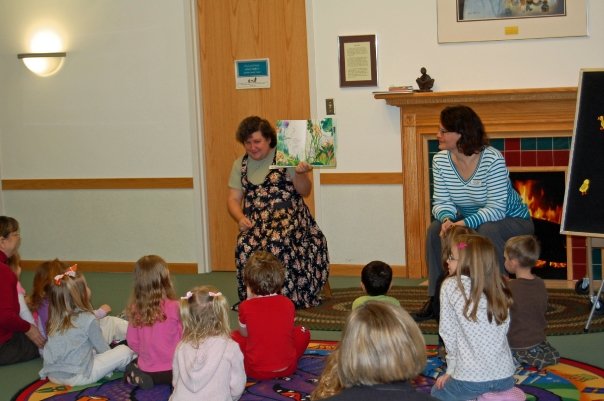
We have a tendency to “frame” our lives in a similar way. We focus on only part of the whole reality of life. We choose to “frame” our present situations, our past memories, and our future hopes– even when they are out of focus! We can do this in both positive and negative ways. At one point in my life, I felt I had found “the perfect job” as a youth services librarian at a local public library. It was pleasant work that made use of my skills, talents, and interests. It included a mixture of social interaction and self-directed projects. I loved the job, my co-workers, our patrons, the work environment–it was a pleasure and an honor to work there.

Library Story Time

But I was viewing my job (and myself in that job) through a frame. There was more happening in the wider picture of my life and development. After more than a dozen years there, things had changed. I still loved the work, and while some co-workers retired or moved, and the staff changed a bit, the work environment was still mostly peaceful and friendly. I still found the job challenging and rewarding, and I had gotten to know people in the community over the years who truly felt like family. But, as my role changed, so did some of the relationships. As new leadership came, so did new directions and new priorities. And I had become “comfortable”– and somewhat complacent as well.

In time, it became clear that my “perfect” job was not only not perfect, but becoming a source of frustration, stress, and unhappiness. And there were other things happening that demanded my focus. I was preparing to become a wife and move to a new community. My mother’s health was deteriorating, demanding more of my time and energy. My future husband wanted to open a shop– someone would have to work there, and we couldn’t afford to hire anyone, even part-time. That meant working a second job at the shop while trying to maintain my efforts at the library.

As the “frame” of my life shifted, I felt confused, even angry, with God. Why would He allow something so good to turn sour? Why did I feel like I was losing myself? Didn’t He want me to be happy and fulfilled? Didn’t He want me to use my talents to help others?

Now, after a few years’ perspective, I can see some of the “rest” of the picture. I had begun to see myself through the lens of my job, and I was depending on that vision, rather than focusing on what God was doing in, around, and through my life. There was nothing “wrong” with my job, per se, but God needed me to be willing to let go and move in new directions. Now I am preparing for another change, as we have decided to close our shop, and I will look for the next step– a new job, new opportunities, new challenges.

My nation just went through a contentious election. Many people are upset at the outcome, while others are relieved. But just as it happened with my job, I need to be careful NOT to depend on politics and governments to be “saviors.” No political party or platform or policy can “fix” sin and brokenness. The “system” isn’t the root of the problem. As individuals, we need to submit ourselves to the authority of those in government, but only AFTER we submit to the authority of God. HE is the King of Kings, the Lord of Lords, and His power exceeds that of Presidents, Cabinets, Congresses. Our nation must prepare for new challenges, as well as new opportunities.

I write all this, knowing that there are people going through much more traumatic “shifts” in their lives– the changing of a government administration, with its unknown power and potential can be worrying; the loss of a job, and a change of career is a disappointment. But it is not the same as the loss of a spouse or child, the sudden loss of a home to fire, or an unexpected diagnosis of cancer or other health issue. But the principle is not so different. God’s ways are eternal. Sometimes, we see the uncertainty and trauma in front of us, or surrounding us, and it becomes a frame for all of our thinking and emotions. But the “picture” is much bigger than just our immediate situation. God calls us to trust Him in all circumstances, knowing that His love for us is not just for this life, but for all eternity. Whatever we (or our loved ones) go through here is but a snapshot– one of millions that God will put together in a Glorious and Perfect collage.

Moreover, God gives us the privilege of listening to us when we call out to Him. We need not be afraid to ask, “Why this?” or “Why now?” or even “Why me?” But when we ask, we need to be willing to shift our focus, and remember where our Hope is Built– On Christ the Solid Rock. Even the sweetest “frame”– our career, our relationships, our identity, our politics, our happiness in this life– cannot compare with His faithfulness and eternal Sovereignty.

Why, O Lord?

We are a curious race, humans–we ask a lot of questions of ourselves, each other, and even of God. How did He make the universe? When will Jesus return? Who can we trust in this world? Where is Heaven? What must we do to be saved? But the majority of our questions are “Why” questions. Why did Jesus come? Why did He have to die? Why did God make snakes and mosquitoes and platypuses? Why are men and women so different? Why am I… (short/tall, fat/thin, clumsy, “odd,” misunderstood, etc.)? Why are You so mysterious? Why do bad things happen to “good” people?

I was thinking about this last question this week. I don’t have any definitive answer to that– no one I know has any better answer. God has not given us a definitive answer, either. We are to trust that His ways are wise and best and perfect, but faith and trust require–well, Faith and Trust! We know God has done good things in the past. We know He has redeemed what seemed like hopeless situations. We know His promises, and we have seen some of them fulfilled. Still, such a question can often leave us blindsided and tongue-tied.

There are many learned thinkers, philosophers, and apologists who have written whole books on this subject, but I want to just pose a couple of ideas to help us, not ANSWER the question, but understand the question a little better.

First, the question, “Why do bad things happen to good people?” is really two questions: “Why do ‘bad’ things happen?” AND “Why do they happen to ‘good’ people?” So let’s look at the questions separately.

“Why do ‘bad’ things happen?” What do we mean when we say “bad things?” There are many circumstances, events, diagnoses, and occurrences that may be called “bad.” Death is “bad.” Indigestion is “bad.” Stubbing one’s toe is “bad.” Being diagnosed with Alzheimer’s Disease is “bad.” Divorce is “bad.” Slavery and abuse are “bad.” House fires, job losses, being mugged, being stranded without heat in a blizzard, an outbreak of acne, being laughed at– all these are “bad.” But they are all different. Many “bad” things are the direct result of sin–we suffer the consequences of our own sin; we are the victims of the sins of others. The consequences of addiction can be horrific, but we often lack compassion for those who are suffering, because “they brought it upon themselves.” But what about the innocent victim of rape or child sex trafficking? Such acts leave victims traumatized and broken. Both are “bad,” but we are angered and frustrated even more when “bad” consequences also seem unjust and unfair. And what about natural disasters? Are they the result of sin, as well? The Bible suggests that they are. When God placed Adam and Eve in the Garden of Eden, they lived naked, carefree, and unafraid. Only after their sin did God place a curse on the land– Adam would now have to cultivate the land in order to get food. There would be enmity between the woman and the serpent. Eve (and all women after her) would have pains in childbirth. (see https://www.biblegateway.com/passage/?search=genesis+3%3A+14-20&version=NIV) There is no mention of hurricanes, blizzards, or earthquakes prior to the Fall of mankind, though it is speculation on my part, to say that there were none.

God has promised to make all things new. There will be a time when the consequences of Sin will be eradicated. We will not even remember the suffering we endured in life, in light of the blessings of eternity. So, though God doesn’t answer our question of why “bad” things happen, He does give us the assurance that such “bad” things do not determine our destiny, nor do they happen without His knowledge or outside of His will! We cannot understand God’s purposes in allowing us to suffer, though sometimes we may see a hint of good even in the midst of tragedy.

And God is loving and gracious in the face of our confusion and pain. We CAN ask God “Why?!” “Why me?” “Why this?” “Why now?” “Why them?” Why, O Lord!?” Many of the Psalms speak to this very question. But in the middle of his anguish, the psalmist often finds comfort and renewed strength to face the struggle, when he turns to God. Asking why is not always a sign of weak or failed Faith. Instead, it is acknowledging before God that we ache. We grieve. And we NEED HIM!”

And what about the second part of the question: “Why do (bad things) happen to ‘good’ people?” What makes a person “good?” Jesus was “Good,” And yet He questioned the rich young ruler, “Why do you call me good? No one is Good– except God alone.” (see https://www.biblegateway.com/passage/?search=Luke+18%3A18-27&version=MSG) We tend to think of the people we know and like as “good.” And we have a natural expectation that their lives should be “good” also– free of pain or struggle. But that is not realistic in this world. The actor, Michael J. Fox has been suffering for years with Parkinson’s Disease. This seems unfair and cruel. How could God let him suffer like this? But there are many thousands of people suffering from Parkinson’s Disease. Some of them are homeless addicts; some are in prison for rape or embezzlement. Is their suffering any less than that of Mr. Fox? Is it somehow less tragic or unjust?

The sad and shocking truth is that none of us “deserves” a pain-free, struggle-free life. Bad things DO happen. And they happen to people we like, and people we hate; people we judge to be “good” and people we judge to be “bad.” God does not “play favorites.” Yes, God can, and often does intervene on someone’s behalf through prayer, or for His own bigger purposes. But He does not “dish out” suffering to those He dislikes out of spite or revenge. Nor does He cause His faithful to float through life without ever tasting bitterness and grief. Jesus made many promises, but one of them was this: “in this world you will have trouble; but be of good cheer, I have overcome the world.” (John 16:33) He didn’t promise that you might have a little spot of trouble, or that you might look around and see others in trouble– He promised that we would have trouble. Not because we are “bad” or “good” but because that’s the way this world is.

I find it odd that atheists often pose this question as a way of trying to “prove” that God doesn’t exist. They pose the question as an accusation. “If there is a kind and loving God, why do bad things happen to good people?” But if they believe that there ISN’T a kind and loving God, how do THEY explain why bad things happen to good people? How do they define “good” people and “bad” things? Without a Good God, where is the expectation of good things happening to good people? Without God, there are no objectively “good” things or “bad” things happening– only random events without divine cause or purpose. You can’t blame a non-existent God for things He either caused or didn’t prevent. Such questions are meant to plant doubt in the mind of a believer, but they fail to answer the greater question– Why do Good things happen to undeserving people? Why do we sometimes find joy and peace and strength in the midst of our suffering? Why do human beings continue to Hope?

Finally– the ultimate example of God letting something “bad” happen to someone “good” can be seen in the central image of our Faith– the crucifixion of Jesus Christ. Jesus was sentenced unjustly to a torturous death and public humiliation. He was separated from God the Father, and carried the punishment for OUR sins so that WE could be reconciled to God. Even though the purpose of Christ’s suffering has been revealed to us, it doesn’t negate the agony and trauma He faced. And even HE cried out from the Cross– “My God, My God, WHY have YOU forsaken ME?!” (Matthew 27:46)

God does not answer the question of why “bad” things happen in this world. But in the crucifixion, Jesus proves to us that He shares and understands our suffering; that He has the power to overcome and redeem our traumas; and that He will hear our sincere cries of “WHY?!” He will hear when we turn toward Him, instead of turning our back on Him. He will hear our broken heart. He will heal our broken heart.

WHY?– Because He loves us!

Comfort or Courage?

My husband and I recently sat in the comfort of our apartment, and watched the movie trilogy of The Lord of the Rings. I’ve read the books several times, and enjoyed the movie several times, as well. The story is a classic tale of good v. evil, where it looks almost impossible for good to triumph. But, through the courageous acts of a few unlikely heroes (with the help of many others), evil is destroyed at last, and peace–eventually– returns to Middle Earth. It is one of my favorite stories, but it is not always “comfortable.”

The books and movies can be almost torture to watch, sometimes. There are battles, and betrayals, tragedies, and frustrations galore. From the midges that attack the party near the beginning of their journey, to the Ring Wraiths who relentlessly haunt Frodo as he carries the ring of power to its final end; from the unnatural armies of the Uruk-Hai, created by the betrayer Saruman, to the betrayal of Boromir from within their own fellowship; from the fall of Gandalf in the mines of Moria to the madness of Denethor in Gondor–there are plenty of times that the reader/viewer is tempted to turn away from such agony and despair. How could there be a “happy” ending? How could Frodo and Sam possibly survive long enough to finish the task, let alone return from it?

And yet, Sam himself provides an answer:

Yes, that’s so,’ said Sam. ‘And we shouldn’t be here at all, if we’d known more about it before we started. But I suppose it’s often that way. The brave things in the old tales and songs, Mr. Frodo: adventures, as I used to call them. I used to think that they were things the wonderful folk of the stories went out and looked for, because they wanted them, because they were exciting and life was a bit dull, a kind of a sport, as you might say. But that’s not the way of it with the tales that really mattered, or the ones that stay in the mind. Folk seem to have been just landed in them, usually – their paths were laid that way, as you put it. But I expect they had lots of chances, like us, of turning back, only they didn’t. And if they had, we shouldn’t know, because they’d have been forgotten. We hear about those as just went on – and not all to a good end, mind you; at least not to what folk inside a story and not outside it call a good end. You know, coming home, and finding things all right, though not quite the same – like old Mr Bilbo. But those aren’t always the best tales to hear, though they may be the best tales to get landed in! I wonder what sort of a tale we’ve fallen into?’ ‘I wonder,’ said Frodo. ‘But I don’t know. And that’s the way of a real tale. Take any one that you’re fond of. You may know, or guess, what kind of a tale it is, happy-ending or sad-ending, but the people in it don’t know. And you don’t want them to.’
https://thetolkien.forum/wiki/Sams-Speech

Movie version:

Often, when I am facing “an adventure,” I am praying for God to take away the circumstances; to change the world around me, so I can be comfortable. I love to read stories, but I don’t want to live through what it might take to make a great one! And yet, God calls us to “be strong and courageous” (Joshua 1:9). Jesus calls us to be courageous as well, “In the world you have tribulation, but take courage; I have overcome the world” (John 16:33b). And Paul reminds his protege, Timothy, that “God has not given us a spirit of timidity, but of power and love and discipline.” (2 Timothy 1:7)

Source: https://bible.knowing-jesus.com/topics/Courage

In the movie version of Lord of the Rings, the four courageous hobbits return to the Shire after all the fighting to find things almost exactly as they had left them– hobbits comfortably going about their business, oblivious to the grand and terrible adventures of their neighbors and the rest of the world. Hobbits, we are told early on, do not concern themselves with the “adventures” of the wider world. They like comfort. And the Shire, in some ways, represents a haven from the evils of the world of men and orcs and other creatures. In the books, however, evil spills over into the Shire, and the hobbits must face battles even when they expect to return to comfort.

Comfort is a wonderful feeling– ease and peace, no reason to worry or fret. Everything is familiar and good, expected, and desired. But comfort doesn’t build character. Courage does. Frodo and Sam, Merry and Pippin, all return to the Shire changed by their adventures. They are no longer “comfortable” living in ignorance of the wider world, no longer afraid of what might happen if they step beyond the borders of the Shire.

The same is true for us as Christ followers. Jesus commands us to Go into all the world. He does not promise comfort, in fact, He promises that we WILL have trouble. But He also promises that we will not face danger alone; and that we will see victory– His final victory. We DO know the end of the story! We do not know what tomorrow may bring, but we DO know that it won’t end in futility. Even our disasters will be redeemed! Even if tomorrow brings tragedy, grief, pain, or torture, we know it is not the way our story ends. But we must face tomorrow with courage. We must continue on THROUGH the story, even when it looks like we can’t go on. Courage, not comfort, will lead us to the victory.

Today, I pray that God will forgive me for the times I have asked for comfort and not for courage. For the times I have stayed in the Shire, instead of going forth to face the battles beyond. For the times I have been too afraid, or just too lazy, to obey His call to GO and be a light in this dark world.

My Father

One of my hobbies is genealogy. I have been tracing my ancestry (along with that of my husband and my in-laws) for many years. I am fortunate, in that I know who my parents, grandparents, and even great-grandparents were, when and where they were born, and when and where they died. Most my ancestors lived in the same area for at least five generations, some for seven or eight generations.

My great grandfather and his cousin, c. 1885

I know many others who struggle with genealogy, or have lost interest in “finding their roots.” Some are adopted, or their parents were adopted. The records have been sealed, or worse, lost, and they cannot find out even the name of a parent or grandparent to trace. Others have a murky and mysterious family history– someone in their family was illegitimate or born out of wedlock and no biological father can be confirmed.

Almost everyone who works on genealogy has, as one point, “hit a wall.” There are some people whose history is lost. They moved frequently, or they lived in a city or town where records were destroyed by fire or flood; some changed their name to avoid persecution or prosecution–some where enslaved and their names erased against their will; some lived at the edge of the wilderness, where few records were kept, and fewer still survived; some died young; some were illiterate, and left no written records. Many families have boxes or albums filled with unidentified (and unidentifiable) photos.

Some genealogists “hit gold.” They find in their family history a famous person from the past– a king or queen, military hero, chieftain, statesman, scientist, artist– some person of note. Often, however, these “finds” turn out to be red herrings. Early in my research, I thought I had stumbled on to a line of descent from one of the passengers on the Mayflower. How exciting! Except I had followed the wrong line. Two men of the same name in the same town had been born just two years apart. I had found the “right” name in a book about the Mayflower descendants, but it wasn’t actually the “right” one. A similar thing happened with the name of a signer of the Declaration of Independence. I even had a cousin who insisted that this signer was our direct ancestor. But it turned out to be incorrect. We WERE related to the signer, but not descended from him. It turns out he was a great-granduncle of our ancestor.

Human genealogy can be a rewarding pursuit, or a frustrating one. But our spiritual genealogy can be crystal clear, and is full of exciting news! Our Father is the King of Kings! We don’t have to wonder who He is or whether we will be accepted and listed as a family member. His grace extends to everyone who believes on Him– and it comes with the fullness of being His Children for all eternity.

My dad

When I pray to My Father, that is not just a polite or wishful phrase. God IS my father– just like my human father, only eternal and omnipotent! I have inherited various traits from both my fathers–creativity, wonder, curiosity, a sense of purpose and responsibility, love for others and for the world around me, love of music and nature, and a love of puns(!)–and I am an heir to all the riches of my Heavenly Father’s mercy and grace. I am a descendant of all the heroes of the Faith– not physically through human birth, but by spiritual re-birth– a daughter of Abraham, Isaac, and Jacob. All that God promised to them, He shares with me. Not because I deserve them, or could ever earn them; because He has made it so.

Father’s Day is coming up this Sunday. And it can be a time of reflection on our earthly fathers– their strengths, weakness, failures, and relationships. Father’s Day can bring many poignant memories, or waves of bitterness or regret. And looking into our long family history– if we can find it– may result in finding patterns of behavior that have led to pain or progress. But whatever your genealogy today–whether you know it, or take pride in it, or despair of it–you can live in the awe of being a beloved and privileged child of the King! And He wants to chat with you today! We have much to celebrate on Father’s Day if we reflect on our wonderful Heavenly Father!

What If HE’D Never Been Born?

One of my favorite Christmas movies has always been “It’s a Wonderful Life.” The movie tells the story of a man who finds himself desperate, sad, frustrated, angry, and suicidal on Christmas Eve –sounds like a real winner, huh? But before he gets to that point, Heaven is preparing an angel to come to his rescue. Through the eyes of the angel, the viewer “gets to know” George Bailey– his family, his friends, his struggles and his joys–and gets to see his life in perspective. The angel, Clarence, decides to give George an unusual gift– the chance to see what the world would be like, not just if he were to commit suicide, but what it would be like if he, George Bailey, had never existed. George is astounded and horrified to see the effects of his absence, and he learns to value his life, his family, and his friends as never before.

The dramatic effect of one person’s life cannot be overstated, but this is especially true of the life of Christ! Can we dare to imagine what life would be like today if Jesus had never been born?

Of course, the most obvious and tragic consequence is that there would be no Salvation by Grace. For a more complete discussion on this, there are several other essays and even books, including “What if Jesus Had Never Been Born” by D. James Kennedy and Jerry Newcombe. (Full disclosure: I have not read this book– I just found out about it as I was writing this, but I trust it is a good resource.) And all speculation on this subject is just that– the Bible is clear that it was always God’s plan for Jesus to come, to live, to die, and to defeat death, just as He did, just when He did. Any alternative vision is not from God, but from our own imaginations. But what other “ripples” do we take for granted in our world, that would not have happened (or would have happened very differently) if Jesus had never been born, or had not completed the work of His life, death, and resurrection?

  • There would be no Christmas. Not just the Christian celebration of Christmas, but much of what we call “secular” Christmas. While some cultures might have a local festival for winter solstice, there would be no worldwide celebration such as we know.
  • There would be no “Santa Claus,” no “St. Nick,” no “Father Christmas,” no “Papa Noel”, etc. The model for our modern Santa Claus, St. Nicholas, wouldn’t have been a Christian Bishop in Asia Minor, because there would have been no Christians there, or anywhere else.
  • No Christmas Cartoons– no story about Rudoph the Red-Nosed Reindeer; no singing elves and jolly Mrs. Santa Claus; no Heat Miser and Snow Miser (if you know some of the other Rankin-Bass productions..) Hours of childhood memories erased.
  • No other Christmas stories and movies– no Scrooge and Marley; no MIracle on 34th Street; no “Yes, Virginia, There is a Santa Claus”; no “Santa Clause” (and its successors) no “Christmas Story” or “Christmas Vacation”; not even Hans Gruber falling from the Nakatomi Tower. Millions of DVDs, books, VHS tapes, local theater productions– never existed.
  • We can kiss Frosty the Snowman goodbye, as well. Without the magical snowfall of Christmas, the story never takes shape– literally.
  • No Christmas Carols or Christmas music. I know of at least three local radio stations that are playing Christmas music exclusively right now. They started the day after Thanksgiving, and they will continue through the end of the month. Thousands of Christmas songs– from favorites like “O, Come All Ye Faithful,” and “O, Holy Night,” to annual disasters, like “Last Christmas,” and “Santa, Baby”– all wiped out.
  • No Christmas cards. Millions of cards are sent out each year, connecting family and friends around the world. Except there wouldn’t be any if Christ had never been born.
  • No Christmas Lights.
  • No Christmas shopping. (And while that may seem like a good thing for my personal budget, have you ever looked at what the Christmas season means for most Western economies?) No Christmas wrapping; no Christmas ornaments; no Christmas sweaters or socks; no Christmas candy or cookies…
  • No Salvation Army bell ringers at the stores– no Salvation Army; no reason to ring bells…
  • No Christian charities– not just the Salvation Army, but every other charity that was founded on Christian principles, or for Christian outreach…no downtown rescue missions, no soup kitchens, no international Christian efforts to rescue hurting children or provide relief for families. I by no means want to suggest that ONLY Christians are charitable, or that NO charities would exist without Christ. Charities are a mainstay of most religions, and always have been. The distinction I would make is that more Christian charities have been developed and have thrived in the last 2,000 years, than charities started by other religious and secular organizations, and there is evidence that they do more efficient and more broad-based work than their counterparts. https://www.christianpost.com/news/christian-charities-more-reliable-than-others-according-to-forbes.html
  • No Christian colleges or universities– Are you a fan of Notre Dame Football? Sorry. Notre Dame doesn’t exist. Neither do Harvard, Yale, Princeton, Cambridge, Oxford, Saint Andrews, Georgetown, and several other colleges and universities throughout Europe, North America, and elsewhere. Even universities that are completely secular today were once founded on the idea that education was a Christian virtue. This doesn’t mean that there would be no places of higher learning– there would just be far fewer than we know today.
  • No “Christian” books– and this includes books that introduce Christian concepts, allegories, and allusions. No “Pilgrim’s Progress,” no “Jane Eyre.” no “Lord of the Rings…”
  • No Churches– no cathedrals, no picturesque country chapels, no strip mall fellowships, no megachurches…
  • None of the Christian Memes; Promises; favorite verses… no Beatitudes; no Fruit of the Spirit; no “Golden Rule,” no Romans 8:28 or John 3:16 or Philippians 4:13…
  • No Twenty-First Century! Our calendar is literally based in part on the assumed birth of Christ. And while there are other calendars– Chinese, Aztec, Hebrew, etc., that are numbered differently, most of the world uses the Roman/Julian/Gregorian Calendar, which splits time into B. C. or B.C.E. — literally “Before Christ” or “Before the Christian Era”, and A.D. (Anno Domini– year of our Lord!) or C.E. “Christian Era.”

It paints a pretty bleak picture. Our world, as we know it, would be vastly different if Christ had never been born. That is not to say that the innovations, inventions, or achievements of the past centuries might NOT have happened at all– but they would have happened without the same purpose and effect. Many of the events of the past two millennia were inspired by, undertaken by, and driven by the message of the Christ– His birth, death, resurrection, and promised return! We hear about some of the negative things of the Church– wars and excesses, scandals and failures. But what about the successes– the transformation of violent cultures and conflicts into peaceful resolution, the drive to end slavery, cure illnesses, eradicate hunger–so many of the blessings we enjoy here on earth are the result of work done by those who long to love their neighbors as themselves and to see God’s will done “on earth as it is in Heaven!” The Joy and Generosity of the Christmas season cannot be separated from its central cause. The Wonder, the sense of the Miraculous and Holy, the sense that there is something “More” beyond a crisp winter morning or a day off work or a genial meal with friends–it all MEANS something. It doesn’t just come from nowhere, or a human desire to be kinder this one day each year. The character of George Bailey exemplifies an ordinary life that has meaning and purpose. His sense of purpose has gotten lost in the crush of bills, obligations, disappointments, and injustices. His prayer is one of quiet desperation; he is completely unaware that it is part of a vast chorus of prayers. But God hears it– and God sends Clarence!

There is a reason that George is visited by an Angel on Christmas Eve. Clarence may not be suave and sophisticated; he may not have intellectual arguments that can help George comprehend all of life’s wonder and purpose. But just like the angels at the first Christmas, Clarence comes from Heaven. He is God’s chosen messenger. He brings Heaven’s perspective and truth into a dark world, showing George what IS and HAS BEEN and what CAN BE– all because George was born– because CHRIST was born! It IS a WONDERFUL Life– not because of our circumstances, but because God’s Greatest Gift redefines our circumstances and transforms our perspective!

4-7 But when the time arrived that was set by God the Father, God sent his Son, born among us of a woman, born under the conditions of the law so that he might redeem those of us who have been kidnapped by the law. Thus we have been set free to experience our rightful heritage. You can tell for sure that you are now fully adopted as his own children because God sent the Spirit of his Son into our lives crying out, “Papa! Father!” Doesn’t that privilege of intimate conversation with God make it plain that you are not a slave, but a child? And if you are a child, you’re also an heir, with complete access to the inheritance.

Galatians 4:4-7 (The Message)

George emerges from his nightmare experience to find he is, in fact, “the richest man in town.” Oh, that we would wake up this Christmas morning fully aware of the rich heritage that is ours– because WE were born. Because HE was born! Because we can be BORN AGAIN!

Evidence of Things Not Seen

*Note: This was originally posted in August of 2021.

Now faith is the substance of things hoped for, the evidence of things not seen. For by it the elders obtained a good testimony.

Hebrews 11:1-2 NKJV via Biblia.com

And without faith it is impossible to please him, for whoever would draw near to God must believe that he exists and that he rewards those who seek him.

Hebrews 11:6 ESV via biblegateway.com
Photo by Aaron Burden on Pexels.com

Prayer is an act of faith. Whether a prayer of confession, adoration, thanksgiving, supplication, or a combination of all these types, we pray to an invisible God. We do not see Him, but we acknowledge that He exists, and that He hears us when we pray. We also acknowledge that He forgives sins, is worthy of our adoration and thanksgiving, and that He cares about our needs and desires.

Photo by Luis Quintero on Pexels.com

Faith is defined by the writer of Hebrews as “the substance of things hoped for, the evidence of things not seen.” There are many who scoff at this type of faith, claiming it is “blind faith.” Because we cannot see God, because we do not hear Him audibly, because we cannot touch Him–they claim that our faith is nothing more than wishful thinking or delusion. But our faith is actually “evidence” of God’s existence– not because we make a claim to believe, but because we act on and live out our belief. One brief prayer whispered in panic is not compelling, but a lifetime of praying and faithfully acting on the belief that God listens and responds–that is evidence that commands attention.

Photo by 3Motional Studio on Pexels.com

Sometimes, we become so familiar with the ancient stories of the Bible, that we discount the very real faith shown by the “elders.” Noah didn’t build a rowboat or even a trading ship– he built an Ark to withstand a flood he could not have imagined. Abraham left his home to go to a land God would show him– he had no map, or any way of knowing what awaited him. He lived as a nomad in tents the rest of his life. But what about his life before? He didn’t begin as a nomad and a wanderer. And there was nothing to suggest that he would ever become the patriarch of an entire nation/many nations. The shepherd boy, David, was told that he would someday be king. Yet he put himself in mortal danger several times, and refused to challenge King Saul in order to claim the crown. Daniel was certainly aware of the danger he was in over the course of his service to foreign kings, yet he stood firm in his convictions, when common sense would have had him compromise to keep his position (and his life!).

Faith (and praying in faith) doesn’t always some easily. We are bombarded with images and sounds that suggest that God does NOT exist, or that He does not listen or respond. I have prayed many times for people to be healed of cancer, only to see them die. I have days filled with stress or frustration, when my prayers seem to go unheard. Does this mean that my faith is void, or based on nothing more than a vapor?

Photo by Merlin lightpainting on Pexels.com

No, because faith is the evidence, not of the things I am seeing or experiencing now, but of things unseen. My perspective is narrow and distorted. I may see my friends’ deaths as the “end.” I may see my temporary trials as impossible obstacles and heavy burdens. I may see my past as a prison, trapping me in the bad choices I have made, or the hurts I have suffered. Faith is the evidence that such things, while they are real, and devastating, are not the entire picture, or the final word. Faith is the evidence that life is worth celebrating, even on the “bad” days. Faith is the evidence that God is bigger than injustice, or disease, or heartbreak, or death.

Photo by Anna Tarazevich on Pexels.com

Faith isn’t “proof” of God’s existence for those who will not believe. But it is strong and solid evidence for those who are searching. When I pray for someone else’s health, I am not ordering God to do what I want. If He doesn’t answer with immediate or total healing, it is not because I don’t have enough faith or because He just doesn’t listen to me. Buy when I lift others up in prayer, I am acting on the promise that God will listen and act according to His perfect and sovereign character. I have seen miracles of healing; I have also seen miracles in suffering and even death. “Things not seen” often includes things outside of my knowledge or perspective– things that I can only see after I take steps of faith that take me out of my limited vision.

Photo by ZaetaFlow Sec on Pexels.com

As I write this post, I’m having one of those “bad” days– frustrating, filled with stress and pain. And not just my own– I’ve had several friends and family members who are dealing with death, disease, job loss, broken family issues, and more. Two of my childhood classmates died within a week of each other earlier this month, while three families in our church are dealing with hospitalizations and a death. And that isn’t even covering the crises in Afghanistan, Haiti, Tennessee, and elsewhere– floods, persecution, earthquakes and hurricanes, upheaval, and more. Those are the things we see. Faith is not blinding ourselves to those realities. It is choosing to believe that there is much more that we do not see–that God is in control, and that He is capable of redeeming and restoring even the mess that surrounds us.

I sat down to write this post, and had to stop–my faith was taking a beating. But I prayed. I listened for that still, small voice that led me to revisit Hebrews 11. I phoned a friend. Small steps of faith, but God is faithful. He gave my faith a booster shot. He can do the same for anyone who comes to Him in faith.

Justice? Or Vengeance?

When violence strikes, I want justice. I want action. I want to make the evil stop.

Just the other day, there was another school shooting in the news. At least six innocent people lost their lives, and another community was ripped apart by grief, shock, and anger.

Photo by cottonbro studio on Pexels.com

But is it really justice that I am seeking? Or is it vengeance?

Justice is permanent. Justice is final. Justice takes time. Vengeance is visceral and immediate. Vengeance is a reaction; a retaliation. Justice, on the other hand, is blind to the emotions of the initial event. Vengeance is driven by emotion. Justice comes through the objective application of the law.

Justice is God’s business. I do NOT understand why or how God allows evil to happen in the first place. It hurts. It doesn’t make sense. It is destructive. But it is the nature of Sin. And Sin infects the entire world. We cannot escape from it. We cannot deny its existence. We cannot put an end to it. We can only follow the arduous and imperfect justice systems that are in place for our community or our country. We cannot achieve perfect justice. But God can. And He has promised to do so– in His time, and in His way. This can be comforting, but it can also be frustrating.

Vengeance is also God’s business. God has emotions, just like we do. But His are always under perfect control. God’s wrath is frightening in its power, and paralyzing in its purpose.

Beloved, never avenge yourselves, but leave it to the wrath of God, for it is written, “Vengeance is mine, I will repay, says the Lord.”

Romans 12:19 (ESV)
Photo by Pixabay on Pexels.com

As imperfect as our systems of justice may be, they are still systems, with order and time to look at the total situation. Vengeance doesn’t stop to count the cost. It doesn’t stop to listen to the full story. It seethes and coils like a rattlesnake, waiting to inject venom into the first victim to cross its path. Human vengeance never leads to peace.

Also, vengeance is limited to the strength and resources of the avenger. If a shooter takes the life of my loved one, my vengeance is limited to the actions I can take. I may kill the shooter; I may take the life of their family members; but I cannot bring my loved one back, nor can I guarantee that the killer will suffer the same amount or the same way I do. Vengeance never looks forward, and it never offers a solution to move forward. It lives in bitterness and anger and discontent.

Photo by Andrea Piacquadio on Pexels.com

As followers of Christ, we are asked to take a stance that seems impossible from a human standpoint. We are asked to keep our hands clean, to keep our minds at peace, and to give our grief, our anger, and our craving for vengeance over to God with no reservation and no option to set the limits or timelines.

To the world around us, this seems weak and even unjust. What if the evildoer “gets away” with her/his crime? What if the victim never gets “justice” in their (or our) lifetime? What if we never “see” justice done? What if God “fails” to avenge us or our loved one? What does the Christian “do” in the face of evil? Nothing?! Fall on our knees and pray?! Offer lukewarm assurances and empty promises?

Photo by Pete Johnson on Pexels.com

The problem with evil– especially shocking violent events– is that we can’t see beyond the immediate shock and pain. That doesn’t mean that there IS no pain or shock or anger or frustration if we choose not to react with vengeance. The pain is still very real, and overwhelming. But we choose to make room for faith that sees the larger picture. Faith makes room to see not just justice, but mercy. It allows us to see the overall tragedy of Sin, beyond our immediate tragedy of an individual act. Faith sees beyond our helplessness to God’s Sovereignty. It sees beyond the present pain to future healing.

Photo by Gvexx on Pexels.com

I pray for the families of the victims in this latest shooting– and for all those who have experienced such violence. And I pray that God will show me what I can do to make a positive difference going forward. I pray for the strength and the faith to let go of hatred, bitterness, malice, and outrage. Finally, I praise God, even in the middle of pain and shock, knowing that He can be trusted to bring perfect Justice– and perfect vengeance–the kind that leads to a peace beyond our understanding. These are not “easy” prayers. They are not blind prayers, or prayers prayed without tears and groaning and questions. But they are real prayers, not empty wishes that I could avoid all unpleasantness or that I could exempt myself (or others) from tasting sorrow, grief or pain. Rather they are prayers that acknowledge that Life is more than struggle; that Love and Mercy are stronger than despair, and God has already won the ultimate victory.

What Might Have Been…

One of my favorite movies is “It’s a Wonderful Life.”  No matter how many times I watch it, it never gets old for me.

IAWLposter

Oh, I know it’s in black and white, and it’s out-of-date.  It’s politically incorrect on numerous levels, and it’s theologically incorrect, as well.  But for all that, I think it has a deep wisdom we are sorely lacking, and I think what it says about the power of prayer cannot be dismissed.

Much of the movie is spent tracing the less-than-wonderful things that happen to George Bailey.  George Bailey is the quintessential “nice-guy” who always seems to miss out–as a boy, he leaps into an icy river to save his brother’s life.  His brother is saved, but George ends up losing the hearing in one ear.  While his friends go off to college, George has to stay behind; when he finally saves enough money to enroll, he ends up having to give up his college plans to save the family business after the sudden death of his father.  He loses out on business opportunities, and keeps losing skirmishes with his nemesis, the  “scurvy spider” local magnate, Mr. Potter.  Finally, on Christmas Eve, George has had enough.  The weight of always doing “the right thing,” and watching others get ahead while he falls further behind, has taken its toll.  When his absent-minded uncle loses $8000, George faces scandal and prison after all his years of frustrating hard work in a job he hates.  After uncharacteristic angry outbursts and a short drinking binge, George is in utter meltdown.  In desperation, he prays.  It’s not an eloquent prayer, or an angry outburst.  It’s a wimpy, doubtful, squeak of a prayer, “Dear Father in Heaven, I’m not a praying man, but if you’re up there and you can hear me, show me the way…show me the way.”

ItsAWonderfulLife4.jpg

What the viewer knows, but George doesn’t, is that dozens of people he knows have all been praying for him.  We get to hear the voices of his wife, his children, his friends and neighbors, all praying simple and heartfelt prayers.  And we also know that God is at work– preparing to send an angel to help George.  But in the bar, at the end of George’s tearful and tremulous prayer, God is silent.

Not only is God silent, but George’s downward spiral continues after his prayer.  He gets punched in the jaw by a man he was arguing with earlier in the evening, and he doesn’t even have enough money to pay his bar tab.  Driving away, drunk, he runs into a tree and gets yelled at.  Reeling down the road and onto the bridge, where he intends to jump to his death, he almost gets hit by a truck.

jimmy_stewart_in_its_a_wonderful_life.jpg

While I like the sappy, happy ending of the movie, the incredible darkness and despair leading up to George’s encounter with Clarence, and the even darker “alternate universe” that George experiences are what keep me coming back to this movie– not because I’m a glutton for emotional wringers, but because George’s story is only wonderful when he gets to see it from God’s point of view.  Mr. Potter tells George that he is worth more dead than alive.  But Clarence shows George the true worth of his life, not as it might have been, but as it might NOT have been.

And so it is with our lives–all the “might-have-beens” and broken dreams and failures that weigh us down– God is NOT (as we so often picture Him) shaking His head and grumbling about our wasted potential and weakness.  And often, the people we most fear to disappoint, our family and friends, are rooting for us to stay the course– to finish the race. God wants to wipe away all the seeming failures; all the “what-if”s and the “what might have been”s and replace them with the bigger picture of “what is happening around you”, “what really IS”, and “what can be.”*

Its-a-Wonderful-life-foto.jpg

There was never anything wrong with George’s dreams of traveling the world and becoming a successful builder of skyscrapers “a hundred stories tall.”  George’s desire to have nice things for himself and his family was not evil, and, in fact, his ambition to do great things was not that different than Mr. Potter’s.  But George’s choices, while “right” were not  in his own immediate best interest.  What Clarence showed George was not “what might have been” had George made other choices in his life.  What he showed George was indeed far more wonderful– the ultimate IMPACT of George’s choices!  God didn’t “take away” George’s dreams or ruin his life.  But neither did He prevent him from making selfish choices or getting what he wanted in the moment.  George’s life wasn’t wonderful because of what happened to him– though the ending is miraculous, and George gets toasted by his hero brother as “the richest man in town.”  But what really made George’s life wonderful was that he was THERE– there to save his brother; there to fall in love with Mary; there to help and influence so many people; there to tuck his daughter into bed and “paste” the petals of her flower; even there to stand up to Mr. Potter when no one else did.

God answered George’s prayer.  And He answered the prayers of his friends and family.  But He didn’t answer in the way we would expect.  In fact, George jokes with Clarence that the answer to his prayer was getting slugged in the jaw.  But God’s answer came in the form of a childlike “angel” who struggles and questions his ability to make a difference– much like George himself.  God didn’t answer the superficial aspect of George’s prayer– He didn’t show him the way to get $8,000.  He didn’t show him the way to defeat Mr. Potter, or suddenly become more successful.  But He did show George the way to look for “what is” and “what can be”, instead of the “what might have been.”

quebelloesvivir17.jpg
  • For anyone who has lost a friend or family member to suicide–my prayer is that we too, would find comfort  and hope in the lives our loved ones lived, and not in the manner of their death.  God is gracious and loving above all that we can imagine.  Part of the hope and message of this movie for me is that, even if George had jumped at the end, his life was still wonderful in God’s eyes, just as it was to all who knew and loved him..

When Nebuchadnezzar is Your Boss

Have you ever worked with a “difficult” boss or co-worker? Even a job you love can become a source of tension and even torture. Maybe they are lazy. Maybe they are unreasonable and demanding. Maybe they are incompetent. Maybe they are corrupt. Maybe they just “push all your buttons.” Whatever it is, it leaves you frustrated, stressed, and questioning your future.

Photo by Mikhail Nilov on Pexels.com

I’ve worked for several bosses through the years, and most of them were wonderful. But there were a couple…I can still remember uncomfortable confrontations and unresolved issues even years later. And I know several others workers who suffered under those same managers– many of them left to take other jobs because the situation took so long to resolve. A bad boss can really hurt a company or office. They can destroy morale, decrease efficiency, and make it difficult for anyone to know what the goals and expectations are– this week!

Photo by Andrea Piacquadio on Pexels.com

One of the difficult things about working under a “bad” boss, is that, often, what makes them a “bad” boss also makes them look “successful”– at least in the short term. They manage to turn in impressive “numbers”– it looks like production is up and waste is down; it looks like everything is in order to outsiders. Those who leave are often workers who have been with the company a long time– new hires come in at a much smaller salary, and with “fresh” ideas– at least initially. If there is an overriding goal, they will pursue it with fanatical focus, making them look committed, determined, and competent. If workers can see underlying problems, other people only see what looks like focused efficiency and “sour grapes” from harassed staff members.

Photo by August de Richelieu on Pexels.com

When I worked for “bad” bosses, they seemed to last about five years, before their cruelty, arrogance, or incompetence forced them to leave. They went on to “new” positions, where they followed the same patterns.

Photo by Victor on Pexels.com

In the Bible, there was a young man (just a teen when we first meet him) named Daniel. Daniel had grown up in a noble family in the capital city of Jerusalem. But Jerusalem was besieged and fell into the hands of a tyrannical ruler named Nebuchadnezzar. Daniel was captured, exiled, and taken into Nebuchadnezzar’s service. On the surface, this may have appeared to be a “plum” position; he got to live in the palace, and he served as an advisor. He had food, clothing, advanced education, and many “creature comforts” available to him that were lost to many of the other exiles who were forced into manual labor.

But Daniel’s position was far more precarious than it appeared. Nebuchadnezzar wanted men of intelligence, culture, and breeding– and he wanted them to be clean, healthy, and confident–but he also demanded results, and often, he demanded the impossible! Field hands might have brutal masters who would beat them for minor offenses, but Nebuchadnezzar didn’t inflict punishment– he simply “eliminated” anyone who didn’t produce the desired results!

In the history books, Nebuchadnezzar looks like a successful ruler– his armies had conquered every region they attacked. And by sending the people into exile– bringing the best and brightest to Babylon, and scattering the rest–Nebuchadnezzar kept the conquered regions from rebellion and revolt. He appointed satraps and governors to help manage the empire, and it looked like nothing could stop him from conquering the world! But Daniel wasn’t reading a history book. He was living and working under one of the harshest and cruelest rulers of his time!

The book of Daniel gives us at least three examples of Daniel and his friends being put in life-and-death situations involving some of Nebuchadnezzar’s more impossible demands. And in each case, God gives miraculous rescue to Daniel and his friends as they bravely serve this unwelcome “boss.”

When we study Daniel, we tend to focus on the miracles– the fiery furnace, the writing on the wall, the lion’s den, and the answers to impossible dreams. But God didn’t just send miracles, and He didn’t rescue them from having to serve in Nebuchadnezzar’s court (or in the courts of some of the equally bad rulers who followed!)

God’s purpose in our life may involve serving with or under people who abuse their authority, or who don’t “deserve” to be leaders. But His purpose also involves teaching us to serve, as Daniel and his friends did, with integrity, dignity, and consistency. It wasn’t easy for Daniel– he was the target of jealous plots, megalomaniacal panics, and culture wars. God didn’t rescue Daniel from his situation– Daniel remained in exile, likely for the rest of his life–but God rescued Daniel from being consumed or changed by his situation. And Nebuchadnezzar wasn’t a “mistake” that God made. He was God’s chosen tool to punish Israel for its unfaithfulness, and His chosen tool to show His sovereignty OVER even the great Babylonian Empire!

Daniel was known as a man of prayer– that’s how he ended up in the lion’s den (years later under another ruler)! Praying won’t keep us from experiencing “bad” bosses, or from facing difficult situations. But prayer can help us to persevere, to endure, and to be a shining example of God’s faithfulness.

I would love to say that I behaved like Daniel when I was in a “bad” boss situation. I didn’t. I endured, but I was impatient and vocal in my displeasure. I complained, I worked grudgingly, and I even changed jobs to get away from the situations. I don’t mean to suggest that it is always God’s will that we stay in a bad situation– I was lucky to be able to change jobs, and grateful for the opportunity to continue to do good work elsewhere. But in times when we are being tested and cannot change jobs, or have to endure chaos and upheaval for a long season–we need to be willing to be like Daniel, who was faithful, loyal, patient, and trustworthy. Daniel “kept his head” because he kept his heart turned toward the source of his real success– not the King of Babylon, but the King of Kings!

Photo by Pavel Danilyuk on Pexels.com

I don’t know what situation you may be facing today– what injustices, or upheavals you are enduring. But I pray that God would give you the strength and wisdom to be a Daniel. Look past the Nebuchadnezzar in your world, and serve the King!

Blog at WordPress.com.

Up ↑