What a Wonderful World

Years ago, Louis Armstrong recorded a song, called “What a Wonderful World.”  Video and lyrics here.  It’s a pleasant song, pointing out all the wonderful things to see and hear in the world around us…people sharing greetings, day and night, rainbows, children…but it is also a wistful song.  Armstrong sings it as an observer, more than a participant.  He sees all the wonder of the world around him, and he sees hope for the future.  The flowers and rainbows are there for all to see; but the greetings are not for him; the children are not his and will surpass him in knowledge and opportunity.

man beside window wearing black jacket

I could name a dozen other songs or poems with similarly ambivalent messages; songs about smiling, hiding one’s tears, hoping for tomorrow and happy days returning.  Such songs acknowledge that our world is filled with wonder, beauty, and joy; they also acknowledge that sprinkled amid the wonder there is heartache and disappointment.

city man person people

It is tempting in times of hardship to focus on the negative and miss the wonder that still exists around us.  It can also be tempting to resent the joy others experience as they soak in the wonder that seems to taunt us.

Some people ask, “How can you believe in God when you see all the pain and suffering and evil in the world?”  And others answer, almost flippantly, “How can you doubt God when you see all the beauty and grandeur in the world?”  To someone who is in pain, this is the kind of answer that rubs salt in open wounds.  It’s not that the answer lacks logic or merit, but it is devoid of compassion.

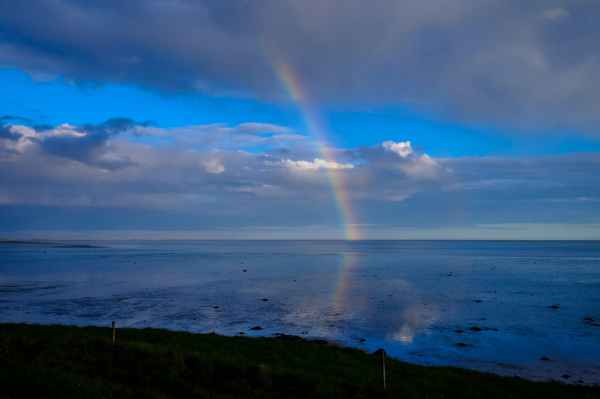
The truth is, that even in the midst of extreme suffering, we DO live in a wonderful world.  The sun still shines, there are still rainbows, and happy children, and, most of all, HOPE.

The Bible speaks of hope as one of the “remaining” virtues– Faith, Hope, and Charity (or Love).  We hear this, and study it, and recite it, but do we really appreciate it for the wonder it is?  Hope may fade in the midst of chaos, but it is not easily suppressed or smothered.  Hope gives us strength when we are struggling; it gives us a reason to look up from the ashes and see the sun.  Hope gives us the motivation to work and build after a disaster; to risk new adventures; to plan for a future.

adult bridal bride brunette

Our world needs hope–we need encouragement to reach out; to build and rebuild our communities; to look forward with vision, and set goals to reach that vision.  And we need hope to turn our eyes to the source of that hope– for we do not hope in vain!

big wooden cross on green grass field under the white clouds

Our Hope as Christians is based on God’s eternal faithfulness. God has given us promises– promises that He will keep, just as He has kept all His promises in the past! Our hope is solid. Our Joy is not dependent on what “may” happen in the future. Even in our fallen world, God is wooing us with wonder, beauty, joy, and HOPE.  It IS a wonderful world! But it pales in comparison with what is to come. What we will find in the redeemed world is beyond our wildest imagination.

“For this light momentary affliction is preparing for us an eternal weight of glory beyond all comparison, as we look not to the things that are seen but to the things that are unseen. For the things that are seen are transient, but the things that are unseen are eternal.” 2 Corinthians 4:17-18 (ESV)

Prayer and Marriage

As a young girl, I prayed about being married. Most of my prayers were pretty shallow– more about the wedding than the marriage. I dreamed of dresses and decorations, flowers and a shadowy “prince charming” type of groom, whisking me off into the sunset and living happily, dreamily ever after.

The years went by…MANY years! I prayed and dreamed through my twenties; I prayed and hoped through my thirties; and I prayed with less hope and more desperation in my early forties! But my prayers changed as I saw marriages around me. I saw many marriages that were solid, even through tough times. And I saw many “fairy tale” marriages crumble. I saw a lot of heartbreak, anger, and tears, as people who had once vowed to love one another “’til death us do part” fought over furniture and who got the kids over minor holiday weekends. I heard from frustrated wives who felt like they had made a huge mistake, marrying the “man of their dreams.” Some of them compounded the mistake by looking around for a replacement “Mr. Right.”

Instead of praying about a wedding, I began praying about marriage. Instead of praying for “Mr. Right,” I started praying that God would help me become “Mrs. Right.” And I prayed that God would show me what I should do for others during the time that I was single, as well as what I could do for him in a marriage relationship.

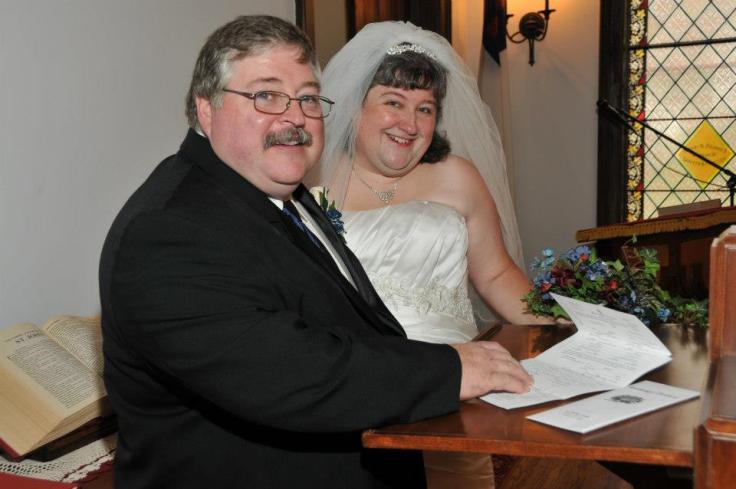
Thirteen years ago, I married my husband, David. He isn’t “Prince Charming,” though he can be charming and noble at times. He is, as I am, a flawed human being. David was married before, and he carries the hurt of betrayal and loss of trust from the past. I carry the hurt of being rejected and passed over for so many years. Marriage doesn’t make the past disappear. Marriage is not a “cure” for such hurts.

But marriage is more. God instituted marriage from the beginning for a man and woman to come together in a mysteriously intimate relationship that models what God’s love is like. (See Genesis 2:24; Matthew 19:5; Ephesians 5:31 and others.) David and I don’t exist to “complete” each other. We don’t cease to be our own individual selves. And yet, we are not the same as we were before our marriage. We are more than the sum of our parts– we are ourselves, yet we are one– the Fairs. He is David Fair, and I am Lila Fair, but WE are THE Fairs. And spiritually, we are also one WITH Christ– as individuals and as a couple. We walk forward as One. We make decisions together. We share hopes and dreams, as well as struggles and disappointments. We fight sometimes– not against each other, but against differences or misunderstandings that could weaken US as a couple and weaken our relationship with Christ.

I don’t pray any less often or less fervently now that I am married, but I pray daily about my marriage. I thank God that He was with me through all the “single” years. I thank God that He continues to work in our marriage– that David and I know more about love and faith, hope and fulfillment than we did 13 years ago! I pray that David and I will grow together for many years to come. I pray that we will impact our family as we live out what a Godly marriage is supposed to be. I pray that our marriage will inspire young men and women who are looking (as I once was) to see what a solid marriage involves– that the way we talk to each other, and behave, and work, and live will give hope to future couples, and glory to God.

Marriage and prayer go hand in hand. Prayer cannot guarantee that marriage will be easy–or even than it will survive. Marriage takes two people praying and walking in the same direction! But marriage–and life– without prayer will never be all that God intends it to be.

Alpha and Omega

What does it mean when I pray to “the Alpha and the Omega?”

“I am the Alpha and the Omega,” says the Lord God, “who is, and who was, and who is to come, the Almighty.” Revelation 1:8 (NIV)

God exists. He is not bound by space or time. He was, and is, and will always be. And He is LORD of all that is, or was, or is to come. He is the source of all things, and they do not exist before or after or beyond Him.

As that relates to prayer– there is NOTHING that can take God by surprise; nothing that can exhaust His energy or His resources; nothing He has begun that won’t be completed; nothing lost that cannot be recovered or renewed. I can pray to Him about the most hopeless situation, knowing that God has already seen it from beginning to end.

He is Alpha– “The Beginning”–Except that God has no beginning or end. We do, and we understand time as a linear function. Everything else that we experience has a beginning, a middle, and an end in time. Dawn signals the beginning of the day; sunset marks the end of the day. Weeks, months, and years all have a beginning and an end. Our life cycle has a beginning and an end– we are conceived and born; we live; and we die. But we have a God-given curiosity to know “beyond” our own beginning. We study to see what came before us– history, genealogy, archaeology, paleontology– we want to know where we came from. And this is distinctly human. Cats don’t wonder about their lineage; dolphins don’t scour the seabed looking for bones and shells that may tell them about their ancestors. Humans, created in the image of God, want to understand and experience eternity past. And that is what God is– He was before the beginning. He is the source of our beginning. The Apostle John sums it up:

In the beginning was the Word, and the Word was with God, and the Word was God. He was in the beginning with God. All things were created through Him, and without Him nothing was created that was created. In Him was life, and the life was the light of mankind. The light shines in darkness, but the darkness has not overcome it. John 1:1-5 (Modern English Version)

He is Omega–“The Ending”–God has no end. But we do (at least our earthly life does). We do not want to think of death as the “end.” Scientists are constantly trying to explain what happens “after” death. And in spite of those who claim that there is “nothing,” most people have a hope (or dread) of what comes next. Even those who do not “know” God have a sense of immortality and eternity. We obsess about our “impact” our “legacy” on earth. How will we be remembered by those who come after? How long will our name still be part of someone’s memory or history? What is our ultimate destiny? Our ultimate “end” is to be with God. It is our purpose. It is how our earthly lives will be judged to have had real meaning. Was God our beginning and our end? Was He our first and last priority? Our best and highest thought? Heaven awaits us. There will be an “end” to life as we know it. But for those who trust in Jesus, there will be no endless darkness or soulless existence:

No longer will there be any curse. The throne of God and of the Lamb will be in the city, and his servants will serve him. They will see his face, and his name will be on their foreheads. There will be no more night. They will not need the light of a lamp or the light of the sun, for the Lord God will give them light. And they will reign for ever and ever. Revelation 22:3-5 (NIV)

When I pray to God, I’m not praying to the God of the Old Testament, the God of Ages Past, or the God of my parents– well, I AM– but more than that, I am praying to the God who always was, who surrounds me every second of NOW, and who will always be exactly as He always has been– Almighty, All-Knowing, Holy, Abundant, Gracious, Loving, Trustworthy, and All-Sufficient.

An Old Prayer for a New Year

Our Father,
Who art in Heaven,
Hallowed be Thy Name.
Thy Kingdom come.
Thy will be done
In Earth as it is in Heaven.
Give us this day our daily bread,
And forgive us our trespasses
As we forgive those who trespass against us.
And lead us not into temptation,
But deliver us from evil.
For Thine is the kingdom,
The power, and the glory,
Forever and ever,
Amen

Jesus taught His disciples to pray when He was on Earth. It is a simple prayer, and it is meant to be used as a guideline.

As we enter a new year, we discard many of the “old” things in our lives, but I’d like to take a close look at how this “old” prayer can breathe newness and vitality into 2025.

Our Father— When we pray, we are praying to a very personal God; one who loves us each intimately. But we are also praying to the God who loves our neighbor, and our “enemy.” He is OUR Father. We can, indeed we must pray for others as we would pray for ourselves. And we must see God as our Father– the one who has both Love for us AND Authority over us. He is not removed from us, but He is not listening for us to dictate to Him what He should do.

Who art in Heaven–Yes, Heaven seems far removed from Earth, and God remains removed from us in the sense that we cannot see him with our eyes or hear him with our ears. But God IS in Heaven– He sits on the throne; He reigns; He rules, now and forevermore. God is not trapped here on Earth; he’s not just passing through on His way to some other galaxy; some other reality. He IS and will always be accessible, glorious, all-knowing, and all-powerful over all that we can ask or imagine (see Ephesians 3:19-20)

Hallowed be Thy Name–The very first three of the Ten Commandments all deal with the Holiness of God and the Sacredness of His Name. When we lose sight of WHO HE IS– when we think of Him as “the man upstairs,” or any other image that fails to acknowledge HIS awesome and majestic Holiness, we lose the very power of prayer. Prayer is not powerful because of WHAT we pray or who we pray for, or even in relation to who WE are in relation to God–it is powerful because of His Name, and His Character, and His Authority.

Thy kingdom come–We have a tendency to pray for the kingdom WE want; the outcomes we want; the visions that we have. Prayer is about more than that– it is about being willing and eager to listen for the outcomes GOD has planned, for HIS kingdom, HIS plans, HIS timing, HIS justice, HIS healing, HIS mercy, and HIS final word.

Thy will be done in Earth as it is in Heaven— Earth, and all the systems we know on earth, are broken and tainted by Sin. When we pray, we pray for something we have not ever experienced fully– that we would know God’s perfect peace; perfect fulfillment; perfect righteousness. Often our prayers are limited by what we know, including the brokenness of our own visions and desires. Prayer should take us beyond those limitations. We need to be open to what HE can do, even when it doesn’t match our expectations.

Give us this day our daily bread— What if we were content to let God give us, not what we want, or wish, but what we NEED for each day? Just enough strength and healing to get through one day of Chemo treatments; just enough peace to deal with the uncertainties we face in the next 24 hours; just enough grace to witness to our co-worker, without expecting an immediate positive response? At the same time, what if we are open to God providing enough “daily bread” to feed 5,000! God is sovereign to give us according to the NEED He sees.

And forgive us our trespasses as we forgive those who trespass against us. When we pray this– REALLY pray this– we must examine our motives for prayer and our actions toward others. Do we want God to forgive us in the same manner and to the same degree that we forgive others? This should be a transformative prayer every time we say it.

And lead us not into temptation but deliver us from evil— Jesus never said that God tempts us, such that we should have to ask Him not to. But we are likely to walk straight into temptation if left to our own devices. We need God to lead us away from temptation and protect us– deliver us– from the evil that we will encounter in this broken world. There is a deeper prayer here, as well. We tend to think of temptation and evil coming from various people that we encounter. The prayer here is not to protect us from other people, or the influence of others, but to lead us away from our own desires and protect us from Evil. It may help us with forgiveness (above) when we remember that our true enemy is not an individual person, but the Evil working in them.

For Thine is the Kingdom, and the Power, and the Glory Forever and Ever— We must be careful not to pray for our own kingdom (selfish desires) our own power (separate from God), or our own glory. God wants to know what is in our heart, and He wants to see our heart being discipled and shaped into an accurate reflection of His humility, His mercy, and His Love– that how His Kingdom operates!

AMEN!–“May it be so.” Our prayers, like our lives, are not perfect. We have not achieved or imagined all that we “should” pray for. God’s Grace is sufficient to cover when we ask for more (or less) than God has planned for us. Our spirit should trust that God will continue the work He is doing to make us more like Him as we pursue His will and His Kingdom (see Philippians 1:6)

This year, we will be tempted to try many “new” things. Some will be good for us; others may not be in our best interest. I hope that this year, we will grow in our pursuit of prayer– that we may find new ways to draw close to God in prayer. But let us not abandon the fundamentals that are included in this “old” and dear prayer of our Lord Jesus.

Happy New Year!

Today is New Year’s Day. And for most of us, nothing is really that much different than yesterday. Some of us have the day off from work; others don’t. Some of us will begin new ventures this year; others won’t. But we face January first with expectation and hope. Why?

There is something about looking forward. Sometimes, it can fill us with dread– especially if we imagine the worst or have some reason to expect a dire outcome or consequence for one of our past actions. But most of the time, we look forward to a new year with some level of confidence and even eagerness. We make plans, promises, and resolutions. We fill in calendar pages and make appointments in our planners. We dream about goals and accomplishments we hope to fulfill by this time “next” year. And hope makes us happy.

What makes you happy and gives you hope today? Is it your career? Your family? The savings you have in the bank? Is it your ability to make things happen? Or your past success in planning for the future?

What if 2025 brings disaster– to you personally, or to the world around you? What if the economy fails? What if war comes to your town (if it hasn’t already!) What if this is the year you face Cancer? Can you still have hope? Can I still wish you a “Happy New Year?”

We don’t know what this year will bring. But we CAN know the timeless and eternal Hope that is in Jesus Christ. Even if we face uncertainty, grief, struggles, pain, loss, injustice, or misery. We may not find “happiness” in this year, but we can find joy and peace that surpass all understanding (see Philippians 4:7).

How can we do this? The Apostle Paul tells us in the very same passage to “be careful for nothing.” (see v. 6) That doesn’t mean to be careless, but rather not to try to control all the variables and circumstances in our life. Instead, we are to take everything–EVERYTHING– to God in prayer. So every day of 2025, we can offer up the day, the night, and all that happens within them to a loving God who KNOWS our future. He not only knows what will happen TO us; He knows what can happen THROUGH us, AROUND us, FOR us, and WITHIN us! He knows what resources we will need, and how those resources can be made available. He knows what is truly best for our growth, fulfillment, and joy. That doesn’t mean that we won’t have to suffer or that we won’t have questions and even some doubts. And it doesn’t mean that we sit back and do nothing. But we can do our best to step out in Faith, knowing that God can redeem even our mistakes– if we let Him.

There is one other part of the Apostle Paul’s directive–Gratitude. We can be thankful, even in the midst of pain and suffering, frustration and grief. Not because we are suffering, but because we are NEVER alone, and NEVER forgotten. God’s plans may involve suffering, but they never end there. Just as we turned the page on 2024, God will one day make ALL THINGS NEW.

Someday– and it could happen in 2025 for all we know– we will be ushered into something completely new. Not a new year, a new decade, a new millennium, a new epoch, a new age, or a new phase, but a completely new Heaven and Earth.

And THAT’S a Happy New worth hoping for, waiting for, and being thankful for. Right now, and every day of 2025!

What If?

As I am writing this, people in my country are voting or preparing to vote in a Presidential election.  Many of them are voting in fear, confusion, or anger, and asking, “What if my candidate/cause/political party doesn’t ‘win’ today?”  “What if I voted for the ‘wrong’ policies or people?”  “What does the future hold?”

These are not uncommon or unrealistic questions, but they are questions that can waste our time and sap our energy in hypothetical posturing.  The writer of Ecclesiastes says:

alone beach calm dawn

Ecclesiastes 11:1-6 King James Version (KJV)

11 Cast thy bread upon the waters: for thou shalt find it after many days. Give a portion to seven, and also to eight; for thou knowest not what evil shall be upon the earth. If the clouds be full of rain, they empty themselves upon the earth: and if the tree fall toward the south, or toward the north, in the place where the tree falleth, there it shall be. He that observeth the wind shall not sow; and he that regardeth the clouds shall not reap. As thou knowest not what is the way of the spirit, nor how the bones do grow in the womb of her that is with child: even so thou knowest not the works of God who maketh all. In the morning sow thy seed, and in the evening withhold not thine hand: for thou knowest not whether shall prosper, either this or that, or whether they both shall be alike good. 

woman wearing grey long sleeved top photography

It is not wrong to wonder about the future, but we cannot be sure that our actions will always produce the results we long for– especially when we have little control over other people’s actions and consequences.  The first two verses of this passage warn us not to “put all of our eggs in one basket”.  As free citizens in a democratic republic, we shouldn’t put our trust in any one political party, platform, or politician.  Nor should we live in a social or political “echo chamber”, listening only to the views and ideas with which we feel most comfortable, or least challenged.  However, we should look at the long-term consequences of proposals and the reasons behind them before we promote change just for the sake of it.

The third verse reminds us that some changes and events are beyond our knowledge or control.  It’s not that our vote “doesn’t make a difference” or that we’re on “the wrong side of history”– it may mean that history has taken a detour surrounding a certain issue.  It may mean that God is allowing for something we have not imagined (as He did in the days of Habakkuk). Get some great “Insight” into the Book of Habakkuk here.

aerial photo of buildings and roads

But there is more wisdom to come in verses 4-6.  Waiting for certainty of outcome, or being distracted by our circumstances or every “wind of change” can lead us to miss the very real opportunities for present action.  God has given us everything we need (see 2 Peter 1:3-5) for godly living and godly decision-making.  That doesn’t mean that our decisions will always reflect popular “wisdom”; it doesn’t even mean that our decisions will be the same as all other fellow believers and followers of Christ.  It DOES mean that we can make our decisions without fear.  God knows us– He understands your heart and mind better than anyone; He knows why people who agree on spiritual matters may not agree on politics.  But more than that, God KNOWS the future!  He knows all the things that we merely guess at.  So we should act in the present with the best information we have, and leave the rest to the God who knows best.

girl wearing blue denim dress shirt

Modern politics relies heavily on conjecture– polls, predictions, pledges, projections, plans, and campaign promises.  But God is still sovereign over all nations, governments, and peoples.  Instead of asking, “What if..” we should be asking of God, “What now?!”   And we need to be ready to listen and obey!  Let’s pray today for the wisdom to listen more, act with confidence, and trust our future to the one who has already seen it!

“I Hate Waiting…”

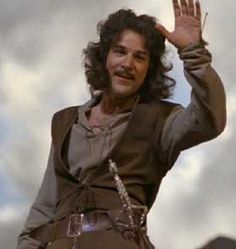
One of my favorite characters from “The Princess Bride” is Inigo Montoya. He has a few redeeming qualities– he is a loyal friend; he is intensely (obsessively) loyal to his father’s memory; he is basically honest; and he has a soft spot for lost causes, including a tender-hearted giant and a (mostly) dead pirate/rival/would-be hero.

But Inigo has many failings, as well. He is a drunkard, he lacks the skills to plan great achievements, and he has an over-developed sense of revenge that gets him in a lot of trouble. Also, he hates waiting. And he has done a lot of it– he’s waited over 20 years to track down his father’s killer and challenge him to a duel (the above-mentioned revenge).

When he first meets Westley (the above-mentioned pirate/rival/would-be hero), Westley is climbing a treacherous cliff. Inigo waits at the top as Westley struggles up the rocky crag, trying not to fall to his death. Inigo, ever concerned, calls down to ask how it’s going. He wants to know if Westley can “a-speed things up.” He REALLY hates waiting. Later, as he seeks to rescue Westley, he is told that he must wait at least 15 minutes for the magic potion to work and for Westley to regain consciousness. Inigo is delighted when Westley can talk and move his head a little, but he cannot wait for Westley to regain the use of his arms or legs before “storming the castle!”

Not many of us enjoy waiting. Some of us are better at it than others. And it is a character quality that God asks us to develop. Several times in the Bible, God asks us to “wait” or “wait on the LORD.”

When we pray, it is tempting to expect or even demand an immediate, clear answer. If we don’t get it, we fall into two temptations. The first is to despair and/or lose faith. If God doesn’t “show up” right away, we are tempted to believe that He just isn’t listening or doesn’t care about our situation. As time goes by, we may become bitter, angry, sullen, and depressed. We stop calling out to God; we turn away and seek answers (or escape) elsewhere.

The second temptation, the one I believe Inigo falls into, is to stop depending on God and carry the burden of our pain, our grief, or our situation all by ourselves. Inigo’s father was killed when he was eleven years old–his entire adult life has been wasted on a quest to avenge his father’s death. He hasn’t developed a life of his own– he has no career (he does odd jobs for crooks like Vizzini), no family, no plans for a sustained future– only his anger and bitterness over a twenty-year-old tragedy. And only when, in desperation, Inigo pauses for a moment and prays, does he find any real help in achieving his goals. In fact, at the end of the story, when Inigo finally achieves his revenge on Count Rugen, he is left with a dilemma. He admits to Westley that he has no idea what to do with the rest of his life! He has allowed the past to consume both his present and his future.

Another story that illustrates this temptation is the story of King Saul. In 1 Samuel 13, Saul has begun to attack the enemies surrounding Israel. He and his troops are hiding in caves and waiting for the prophet Samuel to offer a sacrifice and seek God’s counsel. The enemy is camped nearby with thousands of troops and chariots, and Saul’s men are beginning to panic and desert him. When Samuel doesn’t come at the appointed time, Saul disobeys God’s law by offering the sacrifices himself, even though he is not of the priestly line. Instead of standing firm, and encouraging his men, Saul gives in to the general panic and takes matters into his own hands. He takes a visible action — offering the sacrifice– without taking the right attitude of seeking God’s counsel.

Waiting can be difficult– especially when we are faced with fear, anxiety, danger, and lack of plan or purpose. But learning to wait for God’s ways and timing will teach us how to grow in Faith and confidence. Today, instead of asking God to “a-speed things up,” may we thank Him for all the times He has been faithful in the past, and trust that He will “arrive” at just the right time!

Choosing to Pray

Yesterday, I voted in a primary election. In a few months, I will vote in a general election for President. I live in a nation of choices. I can choose to vote for any of the listed candidates, or I can write in a name. I can choose not to vote at all. I can choose how to spend my money– I can invest, purchase, pay my bills (or not), gamble it away, or give the money to charity. I choose what to do with my time– I can sleep all day, go to work on time or arrive late, I can spend all my time on-line, or I can binge-watch movies or TV shows. I can keep a consistent schedule, or I can take each day’s time as it comes. I can choose where to go– I can stay indoors in my apartment, I can walk all over town, or I can get in my car and drive to another city. I can choose my attitude and outlook; I can choose my political and social stands, and I can choose my beliefs. Others may apply pressure and coercion, but they can’t take away my right to choose.,. For better or for worse!

However, my choices have consequences. If I choose to act against the law of the land, it is very likely that I will be caught and punished. I may be fined, or jailed. I may face a trial. In many countries, I may be executed for doing things that would be allowed in my home country. If I choose not to pay my bills or not to go to work, I may face economic hardship as a result– late fees, loss of a job, and a difficult time finding future employment. If I choose to eat only junk food, or no food at all, I will experience health issues. The choices I made today in the voting booth, and the choices I will make in November will have consequences– most of which I cannot predict with any accuracy. I think I know what will happen– and others may predict dire consequences if I don’t vote “their” way– and my one small vote may not seem consequential, but it counts! Even my small actions have a ripple effect on the rest of my life, and the way in which I conduct it. I will either “show up” or I will “stand back.” I will either accept responsibility in the small things and large, or I will try to blame others. I will practice self-control and discipline, or I will drift through life at the whim of emotions, influences, peer pressure, and deceptions.

When it comes to prayer, I also have choices. There are times when I feel “compelled” to pray– circumstances beyond my understanding or control will cause me to want to cry out for divine help. Hearing about others’ needs make me want to ask God to work in their circumstances. Sometimes, I feel waves of gratitude and worship that cause me to sing and praise God for His character, His faithfulness, and the blessings He has poured out in my life. But I am not required to pray. I choose to pray. Sometimes, my choice to pray is simple, natural, and automatic. At other times, it is a sacrifice to pray. Prayer is more than just “an option” in my life. It really is a pursuit. I choose to keep a prayer journal. I choose to focus on prayer every day– both in practice and in testimony (as in this blog entry).

So today, I will join with others this morning in corporate prayer. I will pray alone at home. I will pray throughout the day for my community, and for individuals as they come to mind or show up in my prayer journal. And some of the prayers will come naturally; others will require me to dig deep, to confess my own failures, and admit my need for God’s Grace, His Wisdom, and His Strength.

And the consequences? Well, I can’t predict how my prayers may impact my own life or the lives of others. I don’t know how God will choose to answer my prayers. I don’t pray because God always does what I want– I trust Him to do what is BEST; and I have learned that His timing and His ways ARE the best!–but I pray because I know it is the best and first action I should take in any situation. I’m not perfect in prayer. I don’t always pray first. I don’t always listen for God’s answer when I DO pray. And I also know the consequences of NOT praying– worry, confusion, anger, restlessness, disappointment, and more. Oh, I may not experience all of these things instantly. But eventually, my choices and their consequences lead to frustration when they are not coupled with prayer, trust, and obedience.

I hope you are praying, trusting, and following God today. I hope that is your choice every day. God will not force you to come to Him. But He is ALWAYS right there when you do! Your choice to pray may not change the world instantly, but it WILL have consequences!

When I voted yesterday, I got a sticker, proclaiming to everyone that I had made the choice to vote. What might happen if Christians (myself included) were bold enough to proclaim our choice to pray every day and in all circumstances!?

Comfort or Courage?

My husband and I recently sat in the comfort of our apartment, and watched the movie trilogy of The Lord of the Rings. I’ve read the books several times, and enjoyed the movie several times, as well. The story is a classic tale of good v. evil, where it looks almost impossible for good to triumph. But, through the courageous acts of a few unlikely heroes (with the help of many others), evil is destroyed at last, and peace–eventually– returns to Middle Earth. It is one of my favorite stories, but it is not always “comfortable.”

The books and movies can be almost torture to watch, sometimes. There are battles, and betrayals, tragedies, and frustrations galore. From the midges that attack the party near the beginning of their journey, to the Ring Wraiths who relentlessly haunt Frodo as he carries the ring of power to its final end; from the unnatural armies of the Uruk-Hai, created by the betrayer Saruman, to the betrayal of Boromir from within their own fellowship; from the fall of Gandalf in the mines of Moria to the madness of Denethor in Gondor–there are plenty of times that the reader/viewer is tempted to turn away from such agony and despair. How could there be a “happy” ending? How could Frodo and Sam possibly survive long enough to finish the task, let alone return from it?

And yet, Sam himself provides an answer:

Yes, that’s so,’ said Sam. ‘And we shouldn’t be here at all, if we’d known more about it before we started. But I suppose it’s often that way. The brave things in the old tales and songs, Mr. Frodo: adventures, as I used to call them. I used to think that they were things the wonderful folk of the stories went out and looked for, because they wanted them, because they were exciting and life was a bit dull, a kind of a sport, as you might say. But that’s not the way of it with the tales that really mattered, or the ones that stay in the mind. Folk seem to have been just landed in them, usually – their paths were laid that way, as you put it. But I expect they had lots of chances, like us, of turning back, only they didn’t. And if they had, we shouldn’t know, because they’d have been forgotten. We hear about those as just went on – and not all to a good end, mind you; at least not to what folk inside a story and not outside it call a good end. You know, coming home, and finding things all right, though not quite the same – like old Mr Bilbo. But those aren’t always the best tales to hear, though they may be the best tales to get landed in! I wonder what sort of a tale we’ve fallen into?’ ‘I wonder,’ said Frodo. ‘But I don’t know. And that’s the way of a real tale. Take any one that you’re fond of. You may know, or guess, what kind of a tale it is, happy-ending or sad-ending, but the people in it don’t know. And you don’t want them to.’
https://thetolkien.forum/wiki/Sams-Speech

Movie version:

Often, when I am facing “an adventure,” I am praying for God to take away the circumstances; to change the world around me, so I can be comfortable. I love to read stories, but I don’t want to live through what it might take to make a great one! And yet, God calls us to “be strong and courageous” (Joshua 1:9). Jesus calls us to be courageous as well, “In the world you have tribulation, but take courage; I have overcome the world” (John 16:33b). And Paul reminds his protege, Timothy, that “God has not given us a spirit of timidity, but of power and love and discipline.” (2 Timothy 1:7)

Source: https://bible.knowing-jesus.com/topics/Courage

In the movie version of Lord of the Rings, the four courageous hobbits return to the Shire after all the fighting to find things almost exactly as they had left them– hobbits comfortably going about their business, oblivious to the grand and terrible adventures of their neighbors and the rest of the world. Hobbits, we are told early on, do not concern themselves with the “adventures” of the wider world. They like comfort. And the Shire, in some ways, represents a haven from the evils of the world of men and orcs and other creatures. In the books, however, evil spills over into the Shire, and the hobbits must face battles even when they expect to return to comfort.

Comfort is a wonderful feeling– ease and peace, no reason to worry or fret. Everything is familiar and good, expected, and desired. But comfort doesn’t build character. Courage does. Frodo and Sam, Merry and Pippin, all return to the Shire changed by their adventures. They are no longer “comfortable” living in ignorance of the wider world, no longer afraid of what might happen if they step beyond the borders of the Shire.

The same is true for us as Christ followers. Jesus commands us to Go into all the world. He does not promise comfort, in fact, He promises that we WILL have trouble. But He also promises that we will not face danger alone; and that we will see victory– His final victory. We DO know the end of the story! We do not know what tomorrow may bring, but we DO know that it won’t end in futility. Even our disasters will be redeemed! Even if tomorrow brings tragedy, grief, pain, or torture, we know it is not the way our story ends. But we must face tomorrow with courage. We must continue on THROUGH the story, even when it looks like we can’t go on. Courage, not comfort, will lead us to the victory.

Today, I pray that God will forgive me for the times I have asked for comfort and not for courage. For the times I have stayed in the Shire, instead of going forth to face the battles beyond. For the times I have been too afraid, or just too lazy, to obey His call to GO and be a light in this dark world.

Just 10 Percent

Bible teacher and author Chuck Swindoll is credited with saying, “I am convinced that life is 10 percent what happens to me and 90 percent of how I react to it. And so it is with you. We are in charge of our attitudes.” When I was younger, I liked this quote, but I quibbled with the numbers. Surely, we are in control of our reactions and attitudes. And our circumstances don’t determine our lives completely. But just 10%?! What about those whose circumstances are overwhelmingly tragic?

I thought of some of my father’s experiences, and it seemed as though what happened to him in four short years should have had a greater impact on his life. During the four short years that my father was in high school (1945-1948), his family experienced at least three tragedies. Dad grew up on a farm. His dad was a dairy farmer, as was his grandfather. Dad grew up expecting that he would, along with his father and brothers, spend the rest of his life as a farmer. But then, everything changed. First, Dad’s oldest brother was drafted into the Army at the very end of World War 2. Though my uncle was not in combat, he was badly wounded in Germany, as his unit was sent in to find unexploded bombs and land mines, and ordered to clear out rubble. Dad had lost one cousin in the war, and several others had come home wounded or changed, but my uncle’s situation was post-war, and unexpected. It meant more work for my grandfather and the two younger sons, even as they were still in school. It meant uncertainty, as they waited for word from thousands of miles away over several months.

Uncle Jack recovered and returned to the farm. But then, on Christmas Eve, there was a house fire. While the family escaped without major injuries, the house was a total loss. Furniture, clothes, pictures, heirlooms, farm records and financial papers– all gone. Dad moved in with his aunt and uncle to continue his education. But two weeks before graduation, his father died suddenly from complications from emergency gall bladder surgery. My father’s world had been turned upside-down in just a few short years and at a critical juncture in his life.

Photo by Pixabay on Pexels.com

However, as I’ve matured and thought about it over the years, those events, among other tragedies and triumphs in Dad’s life, really DID only amount to a small percentage of his life. Even numerically/chronologically, those four years were less than ten percent of Dad’s time on earth. Dad couldn’t control the events of those years. He couldn’t have predicted them, and he couldn’t erase them or go back and undo them. But he chose how to respond and react to those events. He learned from them.

Circumstances in our lives, whether tragic or terrific, present us with choices. Will we turn to God, or away from Him? Will we become better, or bitter? Will we seek to assign blame, or seek solutions? My dad and his brothers were not able to continue the dairy farm their father had built up. Without the records and registration papers for the various cows, without their father’s experience and acumen, without money to upgrade their facilities and equipment, they had to sell most of what their father had built up. Uncle Jack kept the farm land, but he took a second job. Dad was drafted and sent to Korea for his own post-war odyssey, and came home to work at the local feed mill, and later in a factory job. He passed away several years ago, partly as a result of complications from gall bladder surgeries.

My dad’s life was impacted and shaped in part by tragic circumstances. But Pastor Swindoll is right– at least 90 percent of my dad’s LIFE was shaped by his attitude and character. My father was a man of faith and integrity. He cherished his family and his role as a father– partly because of the loss of his own dad; but also because of the lasting legacy his father had passed on. He spoke often of his wonderful memories growing up on the farm. He lost out on his dream of being a farmer. But he also made wonderful memories with the life he chose to pursue off the farm– picnics and vacations, family reunions, family devotions, watching baseball (live or on TV), sharing laughter and tears, and making sure we knew we were loved and protected. He ministered to people in the community, mowing lawns for widows, or visiting shut-ins. He taught us to love music, baseball, and animals. He taught us the value of prayer, reading the Bible, and living a life of faith. Dad could have been bitter. He could have chosen to wallow in self-pity or anger. He could have become obsessed with rebuilding the life he “lost” to circumstances. He could have decided that God had “robbed” him of the future he had expected to have. But he chose to believe that God had a plan for his life; one that was bigger than his boyhood dreams and bigger than his expectations. Dad didn’t rise to great wealth and power. In the world’s view, his life was not a great success. He never became rich or famous; he wasn’t powerful or important in politics or business. But the memories he treasured and the relationships he developed were far more than 10% of his life!

As I get older, and look back on the circumstances of my own past, I am encouraged and challenged to think that they represent only a small fraction of my life. I can’t control many of my circumstances– health setbacks, financial struggles, accidents and tragedies. But I can control my attitude and my response. I wanted to marry young and have children and raise a family. But that never happened. I married late, I was barren, and my step-children were already grown. I wanted to live in a big farmhouse; instead I live in a small apartment. But I would not go back and undo the circumstances that have shaped my life. I have marvelous step-children and grandchildren. I have had opportunities that were only possible because I was single for so long and because I was childless. I have a better appreciation for the family I have– including nieces and nephews and cousins– than I might have had if I had been wrapped up in my own smaller family. Dad taught me to trust God’s plans for my tomorrows. That’s what he did. And I choose to do the same– after all, God controls 100% of my future!

Blog at WordPress.com.

Up ↑