Look-alike Morals

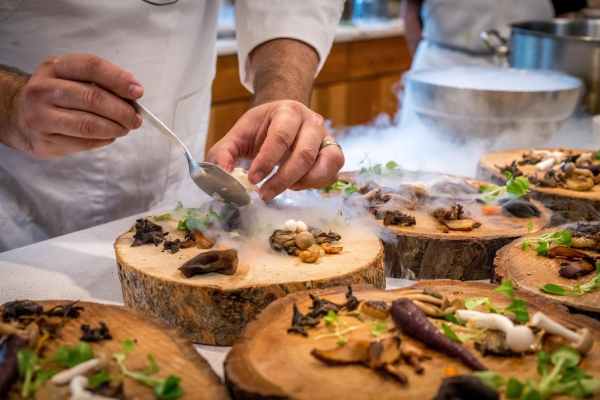
It is Morel season in my home state of Michigan. Morels are mushrooms that only grow in mid-Spring. They are usually found in or near wooded areas, and they are delicious! Thousands of eager hunters search woods, roadsides, forests, orchards, and glades looking for the elusive spores each year. While morels can be “grown,” they are not easy to cultivate. Finding them is like a treasure hunt in all the freshness of spring’s new growth!
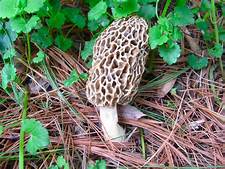
Morel mushroom

But there are several look-alike mushrooms– some of which are dangerous and even poisonous– growing now, too. It takes a good eye and some knowledge to tell the difference. False morels may have a similar shape, but they usually are slightly different in color and texture. Some false morels will appear brown, reddish, or even slightly purple, while true morels range from yellow, yellow-gray, or gray-black. False morels may be “puffier” or “spongier” than true morels. And while true morel “caps” attach to their stems, false ones may be detached or flared. It is important to know the difference and to be cautious when collecting the elusive morel.

false morel–gyromitra esculenta

The same is true of morals–there are plenty of people masquerading as men and women of integrity. They are polite, clean, charming; many are even respected members of the community. They may volunteer, give to charities, attend a local church, run for public office, hold a job requiring responsibility and trust. They look and act like honest, kind people. But they may be dangerous– even poisonous. They may even rise to positions in the church, destroying faith and trust among members of their flock, or spreading distrust and confusion among neighbors and even families.

So how do we “spot” the difference? Just as importantly, how do know which type we are!?

There are a few principles in the Bible that we can use to identify “false prophets” and those with “look-alike morals.”

  • First, we need to study what a true “Christ-follower” should look like. It is vital that we take the time to study for ourselves what the Bible says. Asking “what would Jesus do?” does us no good if we don’t know what He actually did and said! Putting all our trust in a role model or a dynamic leader is like choosing a mushroom because it “looks tasty–it could be a morel…”
  • Second, we need to look for people who try to “color” or “shade” the truth to look “tastier.” All the way back in the Garden of Eden, Satan used this trick with Eve– twisting God’s words, adding supposedly “hidden” knowledge, and dismissing the severity of God’s warning:

The woman said to the serpent, “We may eat fruit from the trees in the garden, but God did say, ‘You must not eat fruit from the tree that is in the middle of the garden, and you must not touch it, or you will die.’” “You will not certainly die,” the serpent said to the woman. “For God knows that when you eat from it your eyes will be opened, and you will be like God, knowing good and evil.”

Genesis 3:2-5 (NIV)
  • Closely related to this, we need to look for people who use words to spread division or discontent–including constant critics and complainers. It is tempting to get caught up in arguments about certain traditions, worship styles, external standards, new practices, personal revelation, etc.. But we must avoid such poison, and avoid spreading it! One poisonous mushroom can poison the whole “batch!”
    • Beware of those who arrogantly claim to have “new knowledge” or “new interpretations”– God does NOT change; nor does His Word. New insights and deeper or personal understanding should stand up under testing. Someone who is not willing to be questioned or asked to explain themselves may have a bad reason for their unwillingness. Just because something is traditional, or “old” doesn’t mean it must change.
    • Also beware those who are dismissive toward others in the church, whether they are critical of the teaching, the music, certain ministry programs, or individuals who serve. We are commanded to build one another up, not pass judgment based on personal prefrerences.
  • Look (and listen) closely to make sure we are still “attached” to our stem– the Living Word of God. Many Christians will quote “moral” sayings that are found nowhere in the Bible:
    • “God helps those who help themselves.”
    • “The devil made me do it.”
    • “There are many paths to God.”
    • “All you need is love.”
    • “God just wants us to be happy.”
    • “God will never give you more than you can handle..”
  • Finally, we need to look at the person’s “fruit.” Someone can have an impressive outward show of morals, yet miss out on “bearing fruit.” Such people may display all the trappings of earthly success, yet they seen to have no peace, or their lives seem joyless or filled with discontent or intemperence. In my own life, am I demonstrating Love, Joy, Peace, Patience, Kindness, Goodness, Faithfulness, Gentleness, and Self-Control? (see Galatians 5:22-23) Am I humble? Or am I impatient, unkind, judgmental, fickle, reckless, complaining, bitter, envious, angry, dissatisfied, greedy, worried, and prone to mock others– especially those in the church?

Beware of false prophets, who come to you in sheep’s clothing but inwardly are ravenous wolves.  You will recognize them by their fruits. Are grapes gathered from thorn bushes, or figs from thistles?  So, every healthy tree bears good fruit, but the diseased tree bears bad fruit.  A healthy tree cannot bear bad fruit, nor can a diseased tree bear good fruit.  Every tree that does not bear good fruit is cut down and thrown into the fire. Thus you will recognize them by their fruits.

Matthew 7:15-20 (ESV)
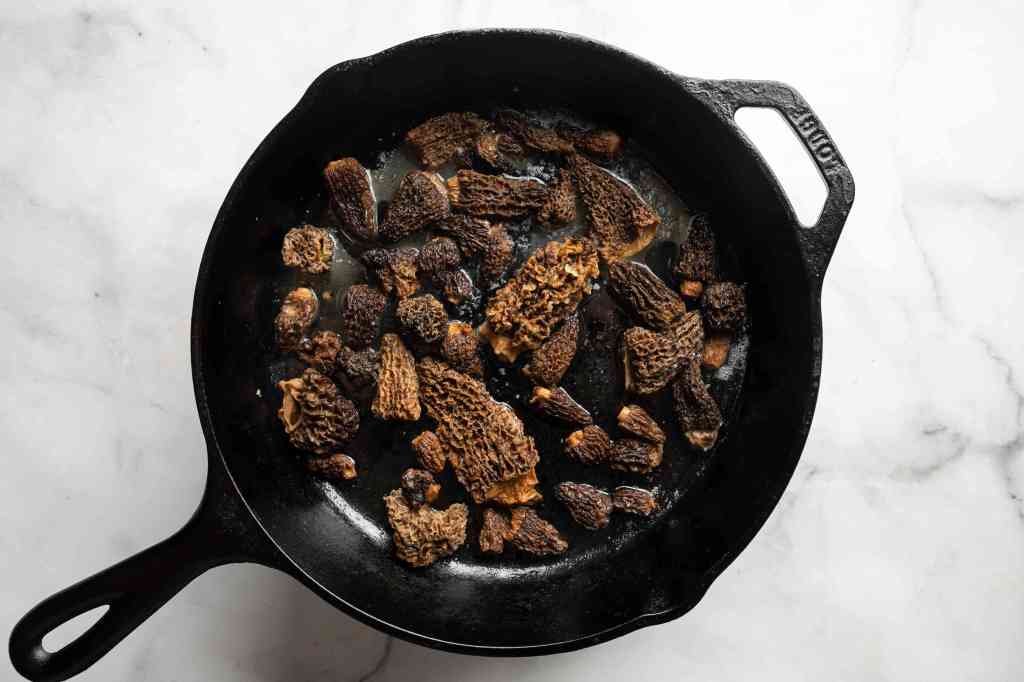
When we find true followers of Christ, we should be able to recognize the treasure of a life redeemed and transformed. While none of us is perfect while we remain in our present bodies, we should be producing a harvest of good fruit that sets us apart from “look-alikes” who are merely outwardly moral.

Driven to Pray?

I met up with an old schoolmate last week, and he asked a question that made me think a lot. He wondered whether our generation– specifically our classmates and friends, were “driven.” His observation was that many of his nieces and nephews seem to have a lot of drive and ambition that he doesn’t remember seeing (or experiencing) in our youth. He noted that few of our friends have gone on to become lawyers or doctors, engineers or CEOs.

I wasn’t sure how to answer his observation. I started, but didn’t complete, a master’s degree. I know several of our friends who are teachers, paralegals, and business owners. Many have what most people would consider at least moderately “successful” lives– happy families, rewarding careers, the respect of others in their communities. And yet very few have distinguished themselves on the national or international front– aside, perhaps, from him! He is a tenured professor, with several published books, and has studied and/or taught at several universities around the world. If HE can’t remember being driven or ambitious, how does he explain his own “success?”

But the observation struck a nerve with me on a personal level. I know that many of my former classmates and long-time friends may find it odd that I have “settled” for the life I live. I own a business, but it is a modest one. I have taught and worked in libraries, but I could have chosen to become a professor or administrator or library director; I could have taken any of a number of more “important” or lucrative positions over the years. But I wasn’t driven to “succeed” in that way. Did I waste my potential? Was I lazy or fearful of success? Did I not have the potential, or did I not have the drive to become “more” than what I am?

Ultimately, I am driven (I hope) by the Holy Spirit. Not to become a “successful” person by the world’s standards, or even by my own ambitions, but to become the person God made me to be– a person who reflects His character and His priorities. I hope that I am becoming a “successful” follower of Christ– no matter what that looks like on the surface to classmates, neighbors, or family. I don’t need to be rich, famous, popular, or “important.” I DO need to be developing Love, Joy, Peace, Patience, Kindness, Goodness, Faithfulness, Gentleness, and Self-Control (Galatians 5:22-23)

This week, as I have been meditating on the idea of “drive” and ambition and “success,” I started thinking about how it relates to prayer. I am driven to become more like Christ, and that includes being driven to live a life of prayer. But what really drives my prayer life? Because my pursuit of prayer and my practice of prayer may be “driven” by something other than pure motives:

  • Am I driven to pray because I believe that I am “ticking a box?” Have I read the Bible today? Check. Have I prayed some kind of prayer at some point? Check. Have I done a random act of kindness? Check. This is not really a spiritual pursuit of prayer. In fact, it can become idolatry– I can pray because I believe the act of praying makes me “better” or “good enough” to deserve God’s forgiveness or mercy. This drive comes from my own desire to control my growth and behavior. It is not “wrong” to set goals or make lists and stick to them. (After all, we are to be developing discipline and self-control!) But we must be careful not to shift our priorities from God’s discipline to our own lists and habits.
  • Am I driven to pray when/because others are watching? Am I seeking their approval more than I am seeking God’s face? Am I seeking to be “important” or pious, when God is asking me to be humble and obedient?
  • Perhaps I am praying out of fear, worry, or doubt. I am driven to pray in the same way that others are driven to consult a horoscope or carry a “lucky charm.” God wants me to trust Him. He knows that I will not always be perfect in Faith, but my prayers should not be double-minded (see James chapter one). I should not be using prayer to “hedge my bets” when faced with adversity. It is good to call out to God if we are frightened or uncertain, but we must develop Faith over fear. And in the end, God also wants us to be joyful in remembering and trusting in His promises
  • Am I driven by guilt or shame? It is good to confess our sins. But we also have to remember that IF we confess our sins, He is faithful and just to forgive us, and to cleanse us (1 John 1:9). If I am still confessing the same sins over and over, is it because I didn’t really trust God to forgive me, or because I didn’t really want to repent and change my ways– I just wanted a “free pass” to keep sinning, but not feel guilty for the consequences?
  • Maybe I am driven to pray for others because I think MY prayers can save them, or influence their life. Again, this can become idolatry. We have been given the amazing opportunity to pray for others. God already knows their needs– better than we can! And God can do miracles without any input from us. Yet He chooses to give us the privilege of praying and participating in His work! Again, it is commanded that we pray for one another, but we must remember to Whom we are praying. Our prayers for others are part of a circle– God’s Spirit moves us to compassion and concern– we take that compassion and lift up others before His throne. He knows what is best; He will do what is best. He wants us to participate, not to dictate!
  • Sometimes, I may be driven to “dictate” a particular outcome in my own life. My own ambition may be to become what I want, rather than what God wants for me. This can be a tricky concept. There are ambitions that God lays on our hearts– they are not wrong, but God’s timing may not match ours. I prayed for years to be married; to “find” the “right” mate, and to “be” the right mate. I even prayed that God would change my heart if my ambition was “wrong.” God’s timing was certainly not my timing. The ambition was not wrong, but my patience and trust needed to be developed.
  • Perhaps I am NOT driven to pray…maybe I lack the focus or lack the drive in my walk with Christ because I am drifting away from my first Love. I am driven to seek after something other than intimacy with my Creator. Maybe I am so content with my life “as it is” that I am not seeking direction and correction from the Holy Spirit. Perhaps I do not have the compassion and drive to pray for others because I do not see them fully as God sees them. Perhaps I do not trust God fully with the “little” things in my life because I do not see my need for His guidance.

I think it is not a bad thing to wrestle periodically with questions like this. Maybe today is the right time to ask, “Am I driven to pray? What drives me to my knees? What should be driving me there?”

Fruitcake?

Poor Fruitcake– the butt of dozens of Christmas jokes. Someone once said that there were 20 Fruitcakes produced in France in 1541– and they are all still in circulation today! I know a few people who like fruitcake, but most people just make fun of it. Technically, it IS a cake, but it is mostly made up of fruit and nuts soaked in rum or brandy or candied for preservation. Fruitcakes can be mailed, shipped, and saved for months without rotting, but the fruits never taste fresh, and much of their flavor is overwhelmed by the sugars used to preserve them. Fruitcake is heavy, and sweet. It is full of things that are “good for you,” but the end result is not very healthful.

Photo by Brett Jordan on Pexels.com

I was reading the other day in Galatians, and a couple of days later in Philippians– two passages that speak of Christians producing fruit. Our lives are to be characterized by virtues and acts of service that bring health and healing, joy and peace to those around us. And these virtues are the products of our Faith in Action– of The Holy Spirit working in and through us.

22 But when the Holy Spirit controls our lives he will produce this kind of fruit in us: love, joy, peace, patience, kindness, goodness, faithfulness,  23 gentleness and self-control; and here there is no conflict with Jewish laws.

Galatians 5:22-23 (Living Bible–emphasis added)

 So this is my prayer: that your love will flourish and that you will not only love much but well. Learn to love appropriately. You need to use your head and test your feelings so that your love is sincere and intelligent, not sentimental gush. Live a lover’s life, circumspect and exemplary, a life Jesus will be proud of: bountiful in fruits from the soul, making Jesus Christ attractive to all, getting everyone involved in the glory and praise of God.

Phillipians 1:9-11 (The Message–emphasis added)
Photo by Jane Doan on Pexels.com

“Fruit of the Spirit” is not something we can manufacture ourselves. Only God’s Spirit at work IN us can produce such fruit. And, while it is Fruit that will last, it doesn’t need to be dried or candied or soaked for preservation. Unlike the fruit in Fruitcake, the Fruit of the Spirit is eternally fresh and bursting with life and flavor. There is nothing wrong or evil about Holiday Fruitcake. But it cannot compare with fresh fruit for wholesomeness and healthfulness.

Photo by Polina Tankilevitch on Pexels.com

Sometimes, we try to manufacture our own “Fruit of the Spirit.” And this can be far worse than a harmless but calorie-laden Holiday Fruitcake. Even those who are opposed to Christ can manufacture a certain amount of Joy, or Patience, or Self-Control. Anyone can appear Gentle or Kind when they choose. But, separated from the source of life and growth, we cannot produce fresh fruit. Our Joy may be soaked in Rum. Our Patience may dry up. Our Kindness may be candy-sweet, but hiding malicious or selfish motives. Or we may surround our fruit with worldly “wisdom,” disguising and transforming it with cake and nuts.

Photo by Tobias Bju00f8rkli on Pexels.com

This holiday season, let’s not become dried out or artificially sweetened in our acts of service and Love. Let’s be producers of Godly Fruit– Love that reaches out to the Lost, the lonely, and the “unlovable” with true love and not just sentimentality; Joy that bubbles up from a thankful heart and a transformed mind; Peace that transcends our current trials and circumstances; Patience that endures hardship without losing hope; Kindness that wraps itself around the unworthy and never tires; Goodness that knows no conceit and seeks no credit; Faithfulness that inspires and produces hope in a faithless world; Gentleness that smooths over troubled waters without being overcome; and a rock-solid Self-Control and steadiness that produces trust– not in our own power or wisdom, but in the One who produces it in our lives. We should be humble and grateful, teachable, and ready to forgive, encourage, and pray for others.

Photo by solod_sha on Pexels.com

Don’t be a Fruitcake this Christmas– be a Fruit Basket instead!

Freedom and Blueberries

My husband and I went blueberry picking earlier this week. The local blueberries are at the peak of their freshness and flavor. Our friends have a farm, complete with a blueberry patch, where you can buy farm fresh blueberries by the box, or you can pick your own and pay by the pound. We went early in the morning, while the dew was still on the berries. The day promised to be hot and muggy, but not until we had finished our labors among the bushes. We saw butterflies and heard the happy chirping of birds nearby; otherwise, it was quiet and we focused on gently rolling dark, sweet berries into our hands and dropping them into our buckets. We picked a little over 12 pounds of berries (enough for several pies!) in a little over an hour–a good harvest at a leisurely pace.

Photo by Markus Spiske on Pexels.com

I love visiting the blueberry patch. It brings back wonderful memories of visits with my mom and grandma, my sister, my husband, and even my oldest nephews. I love the feel of the berries as I gently pull them off the bush and as they roll into the bucket. I love the feel of the bucket pulling as it fills with fruit. I love measuring out the berries for pies or cobbler or just making sure we have several quarts frozen for later use.

Photo by Adrienne Andersen on Pexels.com

I’ve been picking blueberries for years. I’ve picked from several different farms in several different locations all around the area. Some years, the berries are huge. Other years, they are small and tend toward sour (still good for pies and baked goods, but not as tasty to eat by the handfull!) In all those years, I took for granted the wonderful freedom of being able to enjoy this activity. This year was different.

Photo by Pixabay on Pexels.com
Photo by Polina Tankilevitch on Pexels.com

There were two reasons for the difference. First, this was the year after COVID kept many people from enjoying “normal” activities– even outdoors–throughout most of the world. Even the ability to pick berries was limited by social distancing mandates and fears of catching COVID from other pickers or from touching the same bucket or being in the same weighing area as someone else. This year, I knew what it was NOT to be able to do something I considered to routine.

Secondly, we’ve been talking about freedom lately at church– the freedom we enjoy as citizens of America, but more importantly, the Freedom we enjoy as citizens of God’s Kingdom. As citizens of this country, our friends have the freedom to own their farm and grow whatever crops they choose. They also have the freedom and the opportunity to sell their produce as they see fit– commercially to stores or privately at a farm stand, or as U-Pick. They have the freedom to set their own prices and hours. And we have the freedom to choose from many such farms to purchase delicious, fresh fruit–and even to select the fruit ourselves! I had always accepted this as a “given.” But many people have never had this incredible opportunity, and I am so thankful for the many years I have enjoyed it!

Photo by Anna Shvets on Pexels.com

That’s an amazing thing– and I have spent a lifetime taking it for granted. But even more amazing is the Freedom I have through Christ. I am free to choose my attitude and behavior each day. I am empowered by the Holy Spirit to make the kind of choices I would not make in my own selfish mindset. I am free to live without the painful load of guilt and regret over the past– not because it didn’t happen or doesn’t have consequences, but because it no longer defines who I am or who I can be. Just like picking the plump, juicy blueberries from the bush, I can harvest the Fruit of the Spirit; I can have a life filled with Love, Joy, Peace, Patience, Kindness, Goodness, Faithfulness, Gentleness, and Self-control! (Galatians 5:22-23) Just like being able to store up delicious fruit for the coming months, I can do what is required to please God– to act justly, love mercy, and to walk humbly with (my) God (Micah 6:8 paraphrased). Just like choosing which farm I will visit, I can seek out opportunities to reach out to people near and far with the incredible Gospel of Christ– in word AND in action.

Photo by Daria Shevtsova on Pexels.com

Who knew blueberries could be so powerful and so liberating! Thank you, Father, for blueberries. And thank you for the blessing of Freedom through Jesus Christ!

Praying for Happiness

A while ago, I was following a thread on Facebook. It was about good parenting, and the idea being discussed was about what a good parent would do to ensure their child’s happiness. Several of the people on the thread agreed that happiness was the highest priority, and that they would do anything to ensure that their child was happy.

Photo by Trung Nguyen on Pexels.com

I disagreed, but I felt it was better not to argue as part of the thread. I never raised any children of my own, and threads on social media tend to pull out our gut reactions, rather than our studied ones. At first glance, it seems natural and good to want the people we love to be happy. I certainly don’t want my family and loved ones to be miserable! But is happiness the very best I can wish for– pray for? So often in life, true and lasting happiness is a process that involves going through struggles and periods of frustration and even failure. I don’t enjoy seeing loved ones struggling, but I want them to learn the life lessons that will help them become all they were designed to be.

I think of the life of Samson (Judges 13-16). Samson was set apart from birth to be a Nazarite. During his childhood, his parents followed the rules set aside for such a designation. The Biblical account makes much of the rule about never cutting his hair, but there were other rules his parents likely followed as he was growing up, such as keeping him away from grapes, wine, wine vinegar, or any other fermented drink, and keeping him away from defilement by dead bodies. It’s never easy to be “different” when you’re growing up. I’m sure Samson had many questions, and moments of unhappiness as a child. But somewhere along the way, his parents seem to have made Samson’s happiness more important than his character development.

Photo by fabio.tsu on Pexels.com

Samson grew to be petulant and spoiled. He seemed to think he was entitled to whatever whim took his fancy. Now the Bible is clear that some of Samson’s desires were part of God’s plan to confront the Philistines, but Samson’s parents put up only a token resistance when he told them he wanted to marry a Philistine woman. At the wedding feast, Samson posed a riddle which exposed his lack of respect for his Nazarite vows. Not only had Samson killed a lion; he had come back later and eaten honey taken from the lion’s carcass– a defilement that broke his vow. Later, of course, he would use the unclean jawbone of an ass to kill a thousand Philistines in a single incident. Samson could have made an offering and renewed his vow, but we have no record that he ever did.

Photo by Pixabay on Pexels.com

The most famous story of Samson is his infamous liaison with a prostitute named Delilah. Though she does little to hide her intention to learn the secret of his strength and betray him to his enemies, Samson toys with her, lies to her, and finally reveals his sacred secret. Once his hair is cut, Samson loses his great strength and is captured by the Philistines and tortured. Only when he is blind, imprisoned, and shamed does Samson seek the Lord and ask for God’s blessing.

Photo by Sinitta Leunen on Pexels.com

Samson pursued a life of pleasure, and gave full vent to his lust, anger, and other strong emotions. I’m sure there were many moments of happiness in his life, but there were also moments of pain, tragedy, betrayal, and shame.

I think the story of Samson is full of lessons for us today. One of those lessons is that even when we are not faithful, God can still use us for His good purposes. God used Samson to judge the nation of Israel, and to bring punishment on the Philistines for their cruelty toward them. God could have disqualified Samson for having broken his vows time and time again, but God used even Samson’s weakness to highlight His strength.

But another lesson, I think is that God showcased exactly what can happen when we place happiness, pleasure, and ease ahead of everything else. Samson caused his own unhappiness and torture. There is no record of Samson bringing happiness to anyone else– only shame, tears, violence, and retribution. God caused Samson to be a model of all that the book of Judges is about– at the end of the book, there is a significant verse, “In those days, Israel had no king: everyone did as he saw fit.”

Photo by August de Richelieu on Pexels.com

I don’t want my family and friends to be “happy” at the expense of their character, or at the expense of others. I pray that they develop Love, Joy, Peace, Patience, Kindness, Goodness, Faithfulness, Gentleness, and Self-Control (Galatians 5:22-23). In the end, this will bring them a level of happiness that surpasses anything the world can offer.

Blog at WordPress.com.

Up ↑