(Please note: This is a re-post from a couple of years ago..)
Growing up in the age before digital cameras, I remember waiting for photos to be developed from a roll of film. We would drop off a roll at the pharmacy or photo shop, and pick up a package containing the prints and several strips of negatives from the original roll of film.
I was fascinated by these negatives–images with the exact opposite of the prints– dark was light, light was dark, and everything seemed topsy-turvy. Sometimes things seemed creepy and even somewhat sinister–people with white hair and white pupils shining out of dark eyes; icy trees against a dark sky.
Of course, the negatives were not the prints, nor were they intended to be the finished product. The negatives were included so that new prints could be made at a later time. We didn’t put the negatives in our photo album; we hid them away in a dark place, out of sight and far from the light. Most of them eventually got ruined or degraded over time, while the photos they produced were preserved and cherished.
Life holds a lot of “negatives”– negative experiences, negative emotions, negative thoughts, bad memories, scars–we all have them. But we are given the opportunity to produce something positive out of even the most negative of circumstances. It’s what God does– His light shines in the darkness and changes our view.
But we need to be exposed to the truth, and developed by faith, just like film. And we need to come back into the light, not as a negative, but as a faithful image of what (and who) God intends us to be.
The world is full of negatives– distorted images and situations caused by exposure to sin, pain, grief, anger, bitterness, and hatred. We can dwell on such images, and fill our days staring at the negatives, never seeing the reality of what God has done all around us. Or we can allow God to develop the negatives in our life and create albums of God’s Grace–filling our eyes and minds with the truth and beauty that comes only from our Loving Father.
Philippians 4:6-8 NIV
Donot be anxious about anything, but in every situation, by prayer and petition, with thanksgiving, present your requests to God. And the peace of God, which transcends all understanding, will guard your hearts and your minds in Christ Jesus. Finally, brothers and sisters, whatever is true, whatever is noble, whatever is right, whatever is pure, whatever is lovely, whatever is admirable—if anything is excellent or praiseworthy—think about such things. (taken from bible.com)
Someday, God will finish destroying all the “negatives” in this fallen world, and reveal His full Glory. What a sight that will be!
1 In the beginning was the Word, and the Word was with God, and the Word was God. 2 He was in the beginning with God. 3 All things were made through him, and without him was not any thing made that was made. 4 In him was life,and the life was the light of men. 5 The light shines in the darkness, and the darkness has not overcome it, 10 He was in the world, and the world was made through him, yet the world did not know him. 11 He came to his own, and his own people did not receive him. 12 But to all who did receive him, who believed in his name, he gave the right to become children of God, 13 who were born, not of blood nor of the will of the flesh nor of the will of man, but of God.14 And the Word became flesh and dwelt among us, and we have seen his glory, glory as of the only Sonfrom the Father, full of grace and truth.
I memorized this passage as a child. And one part of this passage stands out to me today, because the wording of the verse has not changed, but our cultural reading of it has changed a bit. I remember churches, and evangelists, using the phrases like, “Have you accepted Jesus Christ as your personal Savior (or Lord, or Lord and Savior)?” “Are you ‘born again?'” “Have you asked Jesus into your heart?”
I know in certain circles these phrases are considered “old fashioned”, “evangelical”, and even offensive. Some of us don’t identify as Christians anymore– many of us prefer the term, “Christ-followers.” “Born-again” Christians are seen as hypocritical, overbearing, judgmental, and intolerant– even violent! And there are individuals and groups who give evangelical Christianity a “bad name” by their behavior.
Evangelicals have a reputation for putting people’s backs up, and putting people “on the spot.” They want to know, “have you GOT Jesus?” As though Jesus is a product and you either own Him or you’re missing Him. Can you get Jesus at the corner store? Do you “get” Him the same way someone “gets” a virus? Is He infectious? Can you sell Him? Lose Him? Trade Him away?
The Apostle and Gospel writer, John, was an evangelical. He was keenly concerned that His readers, friends, listeners– basically everyone he met, GOT Jesus. He wasn’t trying to sell a product, force a certain doctrine down others’ throats at the end of a sword, or offend those he met. But he DID want to make sure that people didn’t miss out on the GLORY, the incredible WONDER, the eternal GIFT of LIFE that had lived and walked and dwelt among us.
Today, there are many who claim to “follow” Christ– they have great respect for His teachings; they want to live a “good” and even “righteous” life just as Jesus did; they believe He was a great role model. But they haven’t “received” Him. They believe what they have heard about Him; they believe “in” Him, but they don’t believe “in His Name.” Truly becoming a “follower” of Christ is to become a “Christian”– willing to be called by His name and identified with Him. Not just as a wise teacher or a gentle soul, but as a sacrifice–despised and rejected, misunderstood– and obedient even unto death. Not just the physical death of a martyr, but the social death of an outcast, the death of selfish dreams and worldly success through compromise, the loss of relationships, property, status, freedom… John knew all of this first-hand. He was standing by during the trial and crucifixion of Jesus Christ. He watched as his brother and friends were beheaded, tortured, crucified upside-down, and driven into hiding. He spent the end of his life in exile for the privilege of being a “Christian.”
Calling oneself a Christian, or a Christ-follower, or “born again,” doesn’t mean anything in and of itself. I can call myself a doctor, or an artist, or a prophet. I may have studied medicine, or created a painting, or made a prediction and be completely hypocritical. I may end up giving a bad name to myself, and causing people to be cautious about other doctors, artists, or prophets. That doesn’t make THEM hypocritical, and it shouldn’t cause them to stop doing what they do well. What matters is not what I say I am, or even what others say about me, but what and who I demonstrate that I am. I want to let my words and actions declare my relationship to Christ. At times, I would like to avoid the ridicule and misunderstandings. I’d like to be able to distance myself from the “bad examples,” but, like John, I long to testify to the GLORY of the one I follow and trust, more than I want to justify my own self at the expense of others. Yes, there are some “fake” Christians, and some who are sincerely wrong in how they attempt to live– and if someone were to catch me in a bad moment on a bad day, and show only that moment to the world, I would be counted among them– but my goal is not to ask if others have a perfect track record, or if they know all the right Bible verses or even if they have the “right” answers. My goal is to ask, ” Have you GOT Jesus?” “Do you KNOW Him– not just about Him?” When you pray, are you praying to an aloof idea or to a personal Savior? If He called you, would you answer, or let it go to voice mail? Would you scroll through and “like” His social media posts, or would you actually DO what He said?
Jesus came. He walked among ordinary people. Crowds “followed” Him, hanging on His parables, excited about His healings, and impressed by His miracles. But very few of them actually became His disciples and “received” Him. But to those who did, like John, He gave them the privilege to be called Children of God– not because they were smarter or wiser or more righteous in their own knowledge or efforts, but because they were made new, “born” again, and transformed by their relationship with Him. May that be so for all of us!
It’s the end of October, and tomorrow will be Halloween. Stores and houses around the neighborhood are decorated with frightening figures of skeletons, witches, ghosts, and gravestones. Some of my friends love this time of year, and they look forward to binge-watching movies about zombies or vampires– anything scary, spooky, or terrifying.
I don’t like Halloween. I don’t like scary movies. But I believe in the value of fright. Life is filled with things–natural and supernatural– that fill us with real fear. And that is as it must be in a fallen world. Sin and death, evil and darkness, fires, earthquakes, violence and plague–they are real and should produce both fear and caution. The Bible is not silent or dismissive of such things. God’s laws warn against evil spirits, calling on the dead, consulting with witches, fortune telling, even giving in to anger, envy, and hatred. God’s laws also provide for hygienic practices to ward off disease and plague.
And yet, the Bible also gives hundreds of warnings against giving in to fear and letting it control our lives. We are to be cautious and wise where fear is concerned. Over all, we are to remember that God is bigger and more powerful than our fears. God can calm storms, put out fires, even conquer disease and death! There is no power, no force, no terror, that can overwhelm God, or touch those under His protection.
Terror holds no power in God’s presence. Therefore, if we know God, we can experience no true terror. But where there is no God, terror will reign. It’s like the saying: “No God; No Peace–Know God; Know Peace”. Terror comes with darkness, with chaos, with lawlessness and loneliness.
There is only one other kind of terror– a Holy Terror. We can be terrified by the awesome Holiness of God. It is altogether more powerful and alien than anything we can even imagine. Even for those who know God, there is the knowledge that God is GOD, and we are not worthy to look on His face or enter into His presence on our own. Normally, when we think of terror, we think of things that are very unholy–evil things; supernatural forces of darkness. Yet Holiness can also inspire terror because it causes us to see our own unworthiness; our own sin and failure. I am reminded of the “face-melt” scene from Raiders of the Lost Ark– Nazis, who have been fearlessly and relentlessly pursuing the Ark of the Covenant, believing that it holds supernatural powers they can use to gain power over life and death, are suddenly and horrifically destroyed when they gaze inside–as they come in contact with the very Glory of God, their terror is absolute, and they are destroyed by its presence.
This season, may we celebrate that God, in His awesome and mighty power, constantly reminds us that we can “Know” Him without fear; instead of running, cowering, or melting, we can come to Him with confidence and joy! And in doing so, we can face any other terror, knowing that God is with us, and for us, and even filling us with His peace! We need not be filled with Holy Terror– instead, we can be filled with the Holy Spirit!
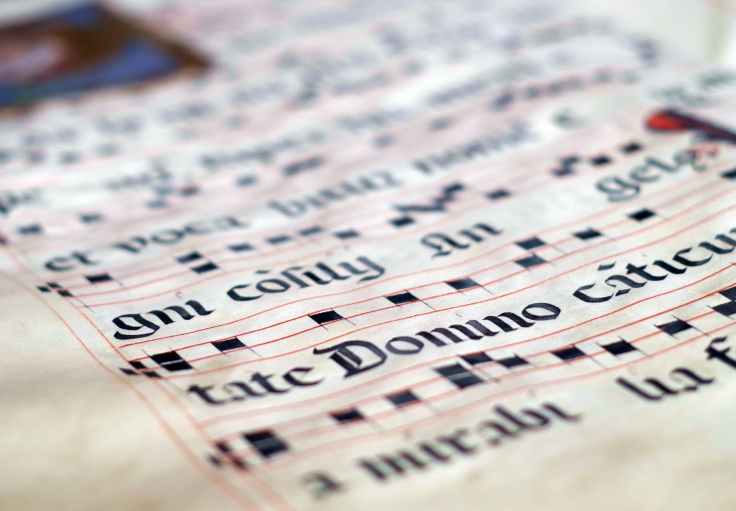
“Of the Father’s Love Begotten” by Aurelius C. Prudentius, 413, cento Translated by John. M. Neale, 1818-1866 and Henry W. Baker, 1821-1977
1. Of the Father’s love begotten Ere the worlds began to be, He is Alpha and Omega, He the Source, the Ending He, Of the things that are, that have been, And that future years shall see Evermore and evermore.
2. Oh, that birth forever blessed When the Virgin, full of grace, By the Holy Ghost conceiving, Bare the Savior of our race, And the Babe, the world’s Redeemer, First revealed His sacred face Evermore and evermore.
3. O ye heights of heaven, adore Him; Angel hosts, His praises sing; Powers, dominions, bow before Him And extol our God and King. Let no tongue on earth be silent, Every voice in concert ring Evermore and evermore.
4. This is He whom Heaven-taught singers Sang of old with one accord; Whom the Scriptures of the prophets Promised in their faithful word. Now He shines, the Long-expected; Let creation praise its Lord Evermore and evermore.
5. Christ, to Thee, with God the Father, And, O Holy Ghost, to Thee Hymn and chant and high thanksgiving And unending praises be, Honor, glory, and dominion, And eternal victory Evermore and evermore.
Christ’s Humility and Exaltation 5 Adopt the same attitude as that of Christ Jesus, 6 who, existing in the form of God, did not consider equality with God as something to be exploited.[a 7 Instead he emptied himself by assuming the form of a servant, taking on the likeness of humanity. And when he had come as a man, 8 he humbled himself by becoming obedient to the point of death— even to death on a cross. 9 For this reason God highly exalted him and gave him the name that is above every name, 10 so that at the name of Jesus every knee will bow— in heaven and on earth and under the earth— 11 and every tongue will confess that Jesus Christ is Lord, to the glory of God the Father.
An early Christian poet penned the words for this Christmas Hymn over 1500 years ago. He was echoing the words of the Apostle Paul from 400 years before that. Paul’s “hymn” was expressing truths penned by prophets and songmakers stretching back centuries before his time. From the earliest recorded writings of Moses we see the same themes: God is eternal–eternal in existence, eternal in power, eternal in glory; God extends himself on behalf of his creation–giving, sacrificing, inviting, forgiving; God exalts the humble–he notices the overlooked, elevates the lowly, honors the meek.
These themes have not changed in centuries, but our interpretation and usage of them has. I still love this old hymn, and the passage from Philippians, but I see people, Christians and non-Christians alike, using phrases like, “Let no tongue on earth be silent,” and “Every knee shall bow” not as invitations or extensions of God’s glory and sacrifice, but as threats. I find this understandable, but not defensible– especially coming from Christians.
I think our modern world has lost much of its wonder and ability to see “honor, glory and dominion.” We spend our days “debunking” any idea or person who might seem worthy of respect or honor, but we replace them with ideas and people who are less worthy of respect, because they make us feel superior and smug in our own complacent, convenient lives. We are satisfied by glitter, instead of seeking glory. We have given the word “dominion” the same negative connotation as “colonialism” or “conquest”. We do not choose to honor humility or service– we celebrate what is brash, flashy, loud, and self-serving.
Some of our modern churches and worship services fall into the same trap. We give more honor to the worship band and the comfortable seats than we do to the creator of the heavens. We spend our money on t-shirts and CDs proclaiming the wonders of OUR faith, but we don’t have any money to share with those in need just two streets away. I am not saying that this is unique to our time, or that the early Church was without fault. But there is a very different feeling one gets in entering a medieval church or cathedral–they were not built for human comfort, but to inspire the sort of knee-bowing, tongue-confessing awe found in the ancient hymns. Jesus grabbing a cup of Joe and plopping down next to us in a climate-controlled, renovated movie theater does not have the same effect. We are sometimes left with the impression that Glory is ephemeral and glittery, and God is more interested in our comfort than in our transformation.
So when we read that God is eternally glorious and that every knee WILL bow and every tongue WILL confess– we see this as coming from a self-important little-g “god” who compels his creation to worship him out of a vain desire for imputed glory. In contrast, the Bible presents a God whose very nature IS Glorious. We worship him when we see him as he is. When we choose in this life to exalt ourselves and ignore God’s invitation, and the ways in which he reveals his glory here on earth, it doesn’t diminish his glory or change his nature.
Consider a beautiful sunset. There was a glorious sunset in our area last Saturday night. Several of my friends posted pictures of it– it was awe-inspiring! That was its very nature. But many people missed seeing it, or recognizing its beauty. After all, the sun sets every day. This sunset came and went like all the others. The sky didn’t force anyone to look at it, but it was visible to anyone who would see it. God’s presence, when fully revealed, will be stunning in its Glory and impossible to ignore. Every knee WILL bow and every tongue WILL confess– simply in awe of it. God invites us to open our eyes, to catch glimpses (like Saturday’s sunset) of the glory he imputes to even the most ordinary and humble things in life.
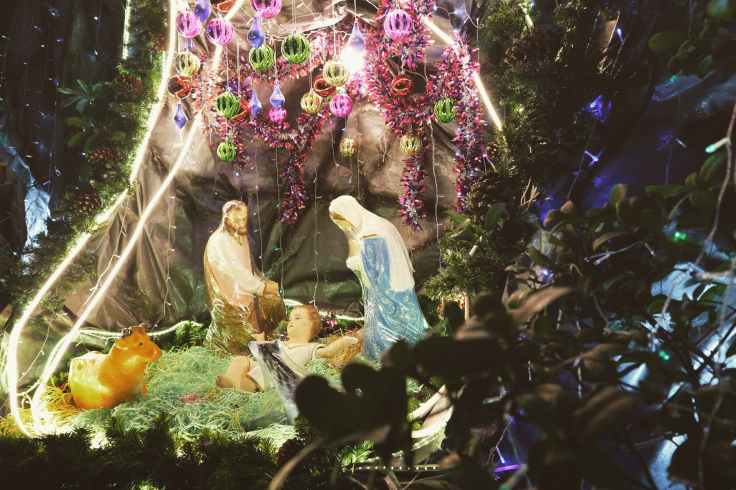
And so it was in the incarnation. God’s glory arrived in the form of a baby– one among thousands in Judea, His divine nature wrapped in the ordinariness of arms and legs, cooing and crying like any other baby, born in obscurity, yet announced from the beginning and heralded by the very hosts of heaven– Here HE is! Come and behold Him! Worship and adore Him! Evermore and Evermore!
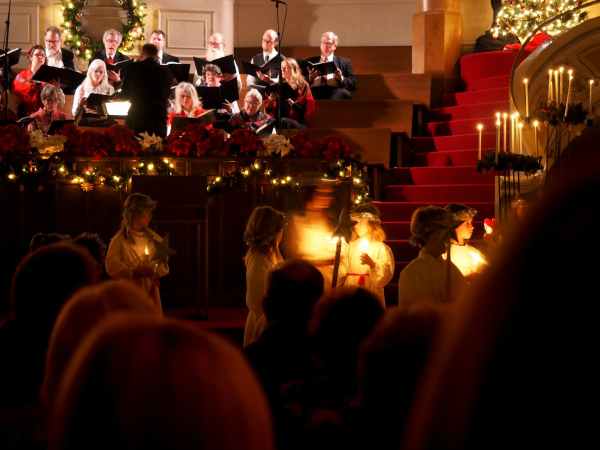
Angels we have heard on high Sweetly singing o’er the plains, And the mountains in reply Echoing their joyous strains.Refrain: Gloria, in excelsis Deo! Gloria, in excelsis Deo! Shepherds, why this jubilee? Why your joyous strains prolong? What the gladsome tidings be Which inspire your heav’nly song? Come to Bethlehem and see Him Whose birth the angels sing; Come, adore on bended knee, Christ the Lord, the newborn King. See Him in a manger laid, Whom the choirs of angels praise; Mary, Joseph, lend your aid, While our hearts in love we raise.
This has always been one of my favorite Christmas carols to sing. I love the movement of the melodic line and the harmonies, especially when singing the angels’ chorus: “Gloria, in excelsis Deo! Gloria, in excelsis Deo!” (Glory to God in the Highest Heavens!)
Yet, if we think about it, the angels seem almost to be having a joke. There is something ironic about hosts of angels praising the glory of God in His highest Heaven, when they are announcing that He is, at that moment, a wailing, helpless infant, wrapped in rags and borrowing a feeding trough for his bed, miles from the warmth and comfort of a home of any kind, let alone the glory of His rightful throne.
8 And there were shepherds living out in the fields nearby, keeping watch over their flocks at night. 9 An angel of the Lord appeared to them, and the glory of the Lord shone around them, and they were terrified. 10 But the angel said to them, “Do not be afraid. I bring you good news that will cause great joy for all the people. 11 Today in the town of David a Savior has been born to you; he is the Messiah, the Lord. 12 This will be a sign to you: You will find a baby wrapped in cloths and lying in a manger.” 13 Suddenly a great company of the heavenly host appeared with the angel, praising God and saying, 14 “Glory to God in the highest heaven, and on earth peace to those on whom his favor rests.” 15 When the angels had left them and gone into heaven, the shepherds said to one another, “Let’s go to Bethlehem and see this thing that has happened, which the Lord has told us about.” 16 So they hurried off and found Mary and Joseph, and the baby, who was lying in the manger. 17 When they had seen him, they spread the word concerning what had been told them about this child, 18 and all who heard it were amazed at what the shepherds said to them.
And this is how God chose to appear, and chooses to work– confounding the power of the powerful, the wisdom of the wise, and the goodness of the self-righteous. God does not glorify that which is already a spectacle. Instead he glorifies the lowly and unqualified things of the world by coming into them, working through them, and reshaping them for His use.
And so, may we have eyes, ears, and hands to work in the same way–to raise up, encourage, bless, and honor those who cannot yet see the Glory around them, the Glory God offers to share freely. May we be the host of God’s messengers to spread the Glorious news of Christ’s gift of life and salvation. May we be like the shepherds, jubilant in our acceptance of His great news. And may we be, like the babe himself–humble and kind–bringing Glory to the world around us, no matter how dark or unwelcoming it may appear. Remember, God himself is with us!