
“The Lord is my Shepherd…” (Psalm 23: 1)
How often do I recite this favorite Psalm without really thinking about it? In the words of this Psalm, I am loved, cherished, sustained, and led by Him. But am I in reality? Do I submit to His leadership and guidance? When I pray, am I really coming to meet with my Shepherd, or am I trying to meet with God on some other level or in some other relationship?

I’ve been reading through the first few books of the Bible. I’m in Numbers right now, and Moses is leading the Israelites through the wilderness. The spies have just returned from Canaan, and the people have rebelled against God, weeping and accusing God of leading them to the Promised Land only to have them die in battle with the giants of the land.
I read through this and shake my head, but haven’t I done similar things in my walk with God? I want to avoid the wilderness. I want to walk in the green pastures, but I don’t want to travel through the valley of the shadow of death to get there! I look at obstacles and setbacks as though God were sitting far away, arms akimbo, laughing at my struggles; in reality, He is right beside me all the way, waiting to help me overcome each obstacle and gain victory together with Him. I’m looking at the giants, when He wants me to trust Him for the milk and honey He has promised. I still have to face the giants, and the battles ahead– but I don’t have to face them alone. I don’t have to face them in my own strength, my own limited wisdom, or my limited vision.
But here’s what I am learning as I read through this section of the Bible right now:
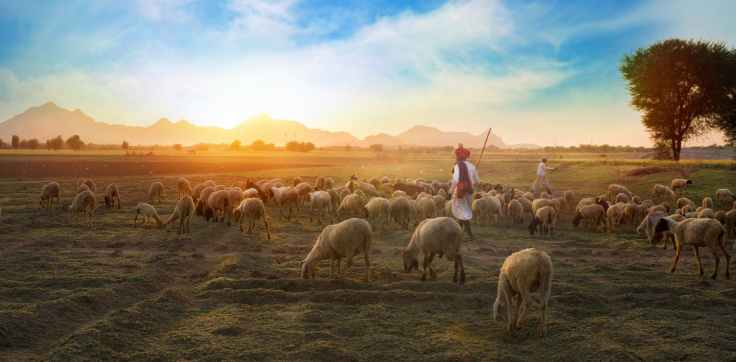
God IS with me. He doesn’t leave me or give me anything HE can’t handle. But I have to walk through the wilderness. I have to fight battles. I have to face giants. I have to learn to trust for my daily bread– whether it is manna or money to buy bread–daily. I have to listen to His voice; not impose my plans and ask for Him to bless them.
God doesn’t want me wrapped up or caged: He will not take away my freedom to follow (or NOT follow) Him. And when I wander, He may allow me to wander in circles for a while (hopefully not forty years!), but He will still be right there, ready to lead me when He sees that I am ready to move forward.
He will supply all that I really need– water from the rock, bread from Heaven– not because I have the money or resources, I think I’ve earned, but because He IS my provider. He can part the Red Sea; He can destroy Pharaoh’s armies. He can make the earth swallow up those who threaten me and defy Him. I am safe, even in the wilderness, when I stay close to the Shepherd!
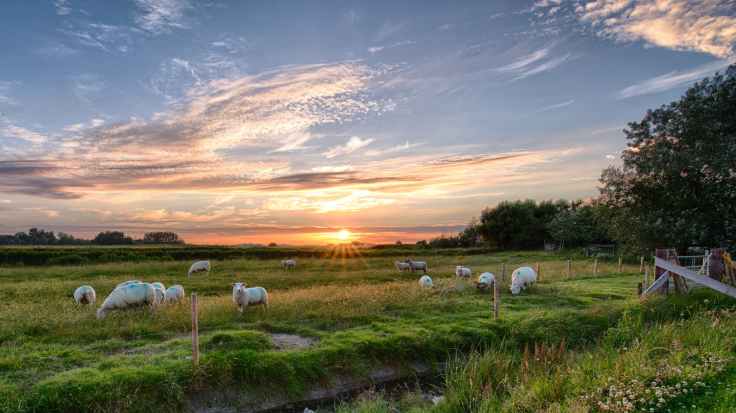
He will counsel and correct me. He will offer forgiveness again and again. He will not leave me lost or unable to return to His side. He will be a “Presence” in my life, wherever I go– day or night.
He sees me and He hears me– which is both comforting and fear-inducing. But it is a healthy fear; an awesome and reverent fear; one that keeps me humble. After all, I am a sheep, NOT the Shepherd! I can call out to Him, and He knows where I am (because He is right there, too), and He knows what I need. God saw the Israelites worshipping the Golden Calf even as He was speaking to Moses up on the mountain. God heard Moses as he pleaded for mercy, even in His anger and wrath.

He calls me by name. The Bible, especially the Old Testament, is full of individual names. Not just the ones we study in Sunday School; not just the ones in the children’s stories; but names of the leaders of the various tribes of Israel, and names of the spies, names of craftsmen God had selected to build the Ark and all the items needed for the Tabernacle, and names of those who rebelled. I am not lost in the crowd; I am not forgotten among the many. God knows me intimately– just as He knows you!
Even when my prayers seem like whining, bleating, plaintive “baa-ing”, I know my Shepherd hears. And He delights to hear from me. He delights in leading me through the wilderness and providing for my every need. And His promises sustain me when I don’t know what’s coming next, or I fear what I see on the horizon.
So I will pray today, and tomorrow, and every day, knowing that even my– especially my– “sheepish” prayers are not in vain.


 Pursuing Prayer