“Fruit-ful” Prayers

Our church has been presenting a series of sermons on being a BLESSing to our neighbors. BLESS is an acronym for Begin with Prayer; Listen with Care; Eat Together; Serve like Jesus; and Share Stories. We were challenged the first week to choose four close neighbors. We were to pray for them, and if we didn’t know them well, to reach out and make contact. This has been a true challenge for David and I, because we live in an apartment above our shop. Most of our neighbors are not residential, but commercial! Nevertheless, we decided on a couple of commercial “neighbors” and a couple of non-traditional “neighbors.” We started praying– praying for opportunities to get to know our neighbors a little better, and praying for their health, well-being, etc. We’re getting to know some of the workers at the two commercial locations, and getting to know our chosen “families” a little better. We’ve been more intentional about stopping to visit or chat, and making sure we listen and respond sincerely– this is not just a short-term “project” but an opportunity to build closer relationships. And we’ve been praying for opportunities to develop closer friendships.

So this week was the sermon I’ve been dreading– “Eat together.” You might wonder why this is so fearsome–doesn’t everyone like to eat? And I love meeting over a nice meal. I love to cook, as well. The problem? Our apartment is tiny and upstairs– NOT conducive to inviting people over for a warm, comfortable meal shared around a large table. We have two mismatched chairs around a small table in our tiny kitchen, and two more mismatched armchairs in the living room. No couches, no designated dining room, no space to “entertain” guests. I want to serve others. I want to grow friendships. But I’m not a hostess. Not in a cracker-box-sized apartment upstairs. I know this seems petty– I’ve known amazing hostesses who live in shacks and invite guests to sit on a dirt floor. I know. But I still struggle with the idea of entertaining others in my current circumstances.

I knew it was coming– we looked at all the examples in the Bible of good and even sacred things happening around the table and/or involving food– Passover Seders, Communion, the Wedding Feast of the Lamb (among others)… “But Lord,” I prayed, “I can’t invite the entire staff next door to my home for a meal. And some of the “residential” neighbors we are praying for are elderly and can’t manage the stairs to our apartment even if we had the room to host a meal. And it’s too expensive to invite some of the families or staff to a restaurant. How are we going to be able to bless others and “Eat” together?”

But God isn’t bound by conventional ideas– even when it comes to hospitality. At the end of the service, we were surprised by an announcement from our pastor– one of the families in our church owns a fruit farm. Last year, they had a bumper crop of apples, and they donated several bags of the apples to the church. There were enough apples for each family to take several bags to “BLESS” our neighbors! No meal to fix. No apologizing for the smallness and shabbiness of our living space. But a chance to share FOOD with my neighbors and bless them with wonderful apples! Thank you, God!

David and I wasted no time– we delivered most of the apples yesterday afternoon! And we had so many apples, we were able to bless more than just the four locations we had decided on earlier in the series. We were able to bless at least 13 different families/ businesses with at least one full bag of apples! We blessed families with small children, a retired couple; a single person on a fixed income; an extended family of four generations; we blessed people who go to another church; we blessed people who don’t attend church at all. We blessed the staffs at a couple of local businesses, and shared laughter (and concerns) with several friends, old and new.

Not everyone wanted the free apples. One family turned down our offer. Some people are suspicious of free gifts; some are too proud to accept food as a gift; some are simply not interested, or too busy. It is the same with the Good News. Some people do not want what we have to offer in Christ. Some are suspicious; some are too proud or even too ashamed to believe that God has Good News for them. Some are too caught up in their problems or their ambitions. We must not be discouraged, though. God has not given us such a precious gift without also giving us the opportunity share it with others. And we will see how God continues to work in mysterious ways. Some people were surprised and confused by the concept of “apples of blessing.” They wondered what we might ask for in return. We smiled and said there were no strings attached– we just wanted to share our blessing with them! Some people took more apples than we had planned to give them– that’s ok, too. Others wanted to bless us in return– we received over two dozen eggs in gratitude for a couple of bags of apples! Today, I’ll be delivering the last few bags to businesses that were closed yesterday (to share with their staff). I’m excited to share this gift–and I’m reminded of how good it is to share the free gift of the Gospel!

God didn’t change the circumstances of our apartment. I worried that I would be asked to host an elaborate meal, or that I would miss out on blessing others because of our circumstances. But in God’s economy, we can show hospitality, love, generosity, and compassion on the street. We can share food in a way that opens up opportunities to make memories, share stories, communicate prayer requests and concerns, serve others’ needs, and make new friends. There are dozens of ways we can open our hearts and our lives to our neighbors, serve them, and pray for them…

We kept one bag of apples– maybe someone in our neighborhood would like a pan of apple crisp! And now, David and I have a few extra eggs! Anyone interested?

Finding the Lost

The other day, God answered a prayer I had been praying for about a month. I had lost a letter. Such a small thing, and yet it was priceless to me. It was old, yellowed, and crumbling. I was a letter from a law office, sent in 1933, informing my great-grandmother that her long-lost great-granduncle had died in California. He had not made a will, so his fortune was to be divided between any of his surviving relatives. The law office had found 36 such relatives, one of whom was Lila Green, for whom I am named. The “fortune” had been greatly reduced by the Great Depression– his stocks were worthless, and his properties greatly reduced in value. Still, the share that came to my great-grandparents allowed them to pay off debts, keep their farm, and even invest at a time when others were destitute.

I had intended to scan the letter and include it in a book I am writing about the lives, times, and families of my great-grandparents. But I had put it aside and misplaced it.

Such a dingy, yellowed, fragile letter– just a single sheet in an equally yellowed and fragile envelope with a three-cent stamp still clinging to one corner. I could not remember where I had placed it for “later.” I looked everywhere, or so I thought. And I had prayed that God would show me where it was. It seemed as though God might be telling me to “just let go” of the letter. That it wasn’t necessary for the book, and I was wasting my time looking for it. Still, it hurt to think that my great-grandmother, grandmother, and mother had preserved the letter, just to have me lose it when it could be useful again.

And then, my husband asked me to look for some paperwork to finish our taxes. Oh NO! Surely I could find important papers from the past year– I was pretty certain I knew where they would be. Still, I prayed that God would help me find them quickly. And I did! But as I was putting the financial papers away in the aftermath, I found a book bag behind the box of receipts and tax papers. It looked empty– no books inside– but it wasn’t. There, waiting patiently, was the letter, along with some other old papers I wanted to keep in my family history files!

I was so thrilled! I danced around, thanking God for His answer to my prayer. I was far more thrilled, in fact, over finding that letter, than I was about finding the tax papers!

But what about the “lost” people I encounter each day? When was the last time I put aside my other tasks and spent time “searching” for ways to share the gospel? How much time have I spent reaching out to “find” the hurting, the needy, the hopeless? Have I done more than just say a quick prayer, or shed a couple of tears? Have I even prayed consistently for weeks or even years?

Of course I pray for family members I know and love; for old friends and classmates who are struggling; even for people groups or nations where Christians are being persecuted, and the Gospel is being hindered. But that’s not the same.

This letter reminds me that there are people– many of whom “look” rather worn or worthless– people for whom Christ gave His life to save. People who need someone to listen, and offer hope. They need to be “found.” Even so, not all of them will accept the Gospel message. I can’t force them to see God for who He really is; I can’t make them choose to follow Christ. But I can do a better job of letting them know how very much God loves them, and wants a relationship with them. Yes, even those who feel yellowed and used; even those who have been sitting, forgotten, lost in the shuffle.

15 1-3 By this time a lot of men and women of questionable reputation were hanging around Jesus, listening intently. The Pharisees and religion scholars were not pleased, not at all pleased. They growled, “He takes in sinners and eats meals with them, treating them like old friends.” Their grumbling triggered this story. 4-7 “Suppose one of you had a hundred sheep and lost one. Wouldn’t you leave the ninety-nine in the wilderness and go after the lost one until you found it? When found, you can be sure you would put it across your shoulders, rejoicing, and when you got home call in your friends and neighbors, saying, ‘Celebrate with me! I’ve found my lost sheep!’ Count on it—there’s more joy in heaven over one sinner’s rescued life than over ninety-nine good people in no need of rescue. 8-10 “Or imagine a woman who has ten coins and loses one. Won’t she light a lamp and scour the house, looking in every nook and cranny until she finds it? And when she finds it you can be sure she’ll call her friends and neighbors: ‘Celebrate with me! I found my lost coin!’ Count on it—that’s the kind of party God’s angels throw every time one lost soul turns to God.”

Luke 15:1-10 (The Message)

I thank God that He helped me find the old letter. But I am eternally grateful that He seeks out and saves people like me, and like you. I pray that today, I will have eyes that see, and a heart that reaches out to the “lost.”

Saint Patrick’s Breastplate

In honor of St. Patrick’s Day yesterday, I am reprinting one of his prayers, called St. Patrick’s Breastplate. For more on this and other prayers attributed to St. Patrick, see https://slife.org/saint-patricks-prayers/.


St. Patrick (also known as Padraig or Padrig) lived in the fifth century during the last of the Roman era in Britain. Held as a slave in Ireland as a young man, he escaped and returned to his home. However, he felt called to return to the land of his captivity as a missionary. Today, he is celebrated for his efforts to bring the Good News of Christianity to the very people who had enslaved him. The following prayer is attributed to St. Patrick. It is as relevant today as it was over 1500 years ago:

I arise today
Through the strength of heaven;
Light of the sun,
Splendor of fire,
Speed of lightning,
Swiftness of the wind,
Depth of the sea,
Stability of the earth,
Firmness of the rock.

I arise today
Through God’s strength to pilot me;
God’s might to uphold me,
God’s wisdom to guide me,
God’s eye to look before me,
God’s ear to hear me,
God’s word to speak for me,
God’s hand to guard me,
God’s way to lie before me,
God’s shield to protect me,
God’s hosts to save me
Afar and anear,
Alone or in a multitude.

Christ shield me today
Against wounding
Christ with me, Christ before me, Christ behind me,
Christ in me, Christ beneath me, Christ above me,
Christ on my right, Christ on my left,
Christ when I lie down, Christ when I sit down,
Christ in the heart of everyone who thinks of me,
Christ in the mouth of everyone who speaks of me,
Christ in the eye that sees me,
Christ in the ear that hears me.

I arise today
Through the mighty strength
Of the Lord of creation.

Come To Bethlehem

“O come, all ye faithful, joyful and triumphant,
O come ye, O come ye to Bethlehem!”

“Come to Bethlehem and see
Him whose birth the angels sing;
come, adore on bended knee
Christ the Lord, the new-born King.”

“O little town of Bethlehem,
how still we see thee lie!
Above thy deep and dreamless sleep
the silent stars go by.
Yet in thy dark streets shineth
the everlasting light;
the hopes and fears of all the years
are met in thee tonight.”

“Come!” It echoes in our Christmas Carols; it echoes throughout Jesus’ ministry. It thrums and courses through the prophets and into the Revelations, “Amen, Come Lord Jesus!”(Revelation 22:20)

Christmas is all about coming– the coming of the Christ Child; the coming of the angels to shepherds; the coming of the shepherds to see the newborn King; the coming of the Wise Men. And we are bidden to “come” to Bethlehem and share in the joy and wonder of God coming to be our Emmanuel– God With Us.

But the journey to Bethlehem is not as easy or a joyful as one might imagine. Bethlehem is crowded. It is dark and dreary. It is not “silent” as the hymns make out. It is noisy, dirty, and filled with people who “aren’t from around here.” There is no room here. There is no joyous welcome. There is not enough to eat, what with all the out-of-town travelers; shelves are bare, while garbage is piling up in the streets. Tempers are high, and patience is low.

“Come to Bethlehem.” At this moment, Bethlehem is caught in the chaos and struggle of war. Hospitals are in danger. People live in fear and violence. There is no peace and quiet– no silent streets or glorious angels in the sky– only the light and noise of rockets. We may not be able to physically travel to Bethlehem at the moment, but we can focus our prayers on the Middle East– to the hurting people in Israel and in Gaza– to earnestly pray for truth and peace there. We may not be able to travel back in time to Bethlehem, but we can travel across town to help our neighbors who need encouragement; we can step out of our safe and comfortable lives to share light in the dark regions of today’s world. And we can “Come” to prayer– to lift up those who are hurting, to ask for strength and courage to help, to own our own limitations and emptiness.

“Come to Bethlehem.” At this season, we are tempted to stay where it is cozy and familiar; or to travel somewhere warm and welcoming. We want the joy and peace of the Christmas Season to come to us! But we are bidden to come to Bethlehem, with its crowded streets and suspicious strangers; its unfamiliar alleys and rude Roman officials. We are bidden to come and share this message of peace where there IS no peace. We are asked to come where there is need and darkness and fear– to spread the Good News, not to sit on it.

“Come to Bethlehem.” Are we avoiding our own “Bethlehem?” Are there places we could visit to spread light; places we’re being called to, or places where we should go to “be counted,” but we refuse to come? Are there people we can encourage? Ways we can share hope and help– if we are willing to come away from our own comfort and (manufactured) joy?

Perhaps we long to hear the angels shouting “Glory to God in the Highest!” (Luke 2:14) But if we won’t “come” to Bethlehem, we may miss their song. We may miss seeing the message of Christmas if we insist that it comes to our pleasant palace, instead of seeking the Babe in the Manger of the Little Town of Bethlehem.

“Come to Bethlehem and See.” “Come, Let us Adore Him!” “Come!”

O, Christmas Tree

As I look out my window today, the sun is shining on hundreds of bare branches. The sky is blue-gray, and the branches are brown and mostly lifeless. Occasionally, a breeze will stir the thin upper branches, or the very last of the dead-looking leaves. When the snows come, the branches and twigs will glisten and stand out against the white-covered ground and slate-gray skies above.

But elsewhere in town, and in the forests and woods just outside of town, there are evergreens! Their green needles and sturdy, squat shapes may go unnoticed in spring and fall, when the other trees show off their glorious changing colors and elegant branches. Soon it will be their time to stand out. Their low branches help break the snow drifts, and increase visibility. Their greenery reminds us that life endures and continues.

I hesitated to write about Christmas Trees. There are no Christmas Trees in the Bible story of the Nativity. Decorated trees have a connection with pagan rituals from long ago. It wasn’t until the first half of the 19th century that Christmas Trees really became a tradition throughout most of Europe and spread to America. What connection do they really have with pursuing a Christian Walk? Only the ones we choose to apply…

  • Evergreen trees are a symbol of eternal faithfulness. They stay green year-round. They do not lose “leaves” like other trees (though they drop needles and cones). This can be a reminder to us of God’s faithfulness and His unchanging nature.
  • Evergreen trees are generally the “newest” trees. After a fire, for instance, pine and fir trees will be the first trees to spring up. Hardwoods take longer to recover and regenerate after a disaster. Just as the birth of Jesus represented the coming of new life and hope, an evergreen tree can symbolize new, fresh growth.
  • While there is no “Christmas” Tree in the birth of Christ, there is a tree in His death on a wooden cross. Hidden in the greenery and lushness of a Christmas Tree is the solid trunk that symbolizes the Cross that Jesus bore, and the Cross that bore Him. Even the needles on the tree call to mind the crown of thorns– sharp, painful, prickly. Jesus came to serve; He came to bear the shame and humiliation, the pain and suffering that WE deserve.
  • Christmas Trees “point” upwards. Unlike many other trees, they get narrower as you look up, and are broad near the bottom. This is a reminder that here on earth, we are to spread out–spread the Gospel, spread the Love of Christ to as many as we can. And our focus should be drawn up to God in Heaven. That is why we traditionally “crown” our trees with stars or angels– to remind us that Heaven should be our “top” focus.

This year, if you are putting up a Christmas Tree, I pray that your focus would not be on the tree itself. It may be real or artificial; green or white or some other metallic color. It may be decorated with glass bulbs, funky home-made crafts, expensive, individualized ornaments, chains of cranberries or popcorn, bright ribbons or twinkle-lights, paper chains, or even photos of loved ones. But all that can be distracting from the true meaning of a Christmas Tree and WHO it represents. And I pray that your focus would not be on the gifts placed in or around the tree, but that those gifts would truly remind us of the greatest Gift of all– Jesus! I pray that the tree would be another wonderful reminder of the one who created trees, knowing He would one day die on one! I pray that you would be encouraged to share new and enduring life and growth to others. I pray that you would be encouraged that God’s plans are eternal, and His Promises faithful and sure.

O Come, O Come, Emmanuel

During this season of Advent, we often sing this ancient hymn.  It dates back nearly 900 years, and continues to be sung and/chanted in Latin.  https://hymnary.org/text/o_come_o_come_emmanuel_and_ransom

The hymn is a contrast of weary longing and hopeful prophecy.  The promised Messiah has not yet arrived, but his coming is sure, and cause for great rejoicing.

The hymn is also a prayer– pleading for the coming of Messiah, even as it comforts with the reminder that he WILL come.  And it reminds us of the power of prayer– not just the power of approaching Almighty God, but the power of acknowledging our longings, our needs, and our dependence on God.  Even in our darkest hours, even in captivity and oppression, we can have hope in God’s timing and wisdom.  He DOES see our struggle; he DOES care, and he WILL send hope and rescue.

But the song also points out a pitfall–in the first verse, the prayer is for Emmanuel to rescue Israel from Roman Occupation; to end its immediate plight of being politically and economically oppressed.  There were many people who saw Messiah, heard him speak, even felt his touch, who rejected him because he did not do what they were expecting.  There are many today who cannot believe in Jesus Christ because he doesn’t take away their current circumstances of pain and suffering.

In their narrow focus, people miss the greater miracle of what Messiah is all about.  Jesus did not come to free us from temporary troubles and trials; to make us comfortably apathetic or arrogantly victorious over personal poverty or sickness.  He came to free us to be able to endure and/or overcome our circumstances; to offer hope where there seems to be no hope.  He came to show us that our circumstances don’t define us or cut us off from God’s love; that our past is not more powerful than His forgiveness and power to heal; that even suffering and oppression can be endured with joy, even as we work together to overcome them.

This year, as I ponder this hymn, I am both discouraged, and emboldened. I am discouraged, because I hear voices calling out for many things, but few of them are calling for a Messiah. We live in a world that desperately wants what Christ offers– peace, unity, forgiveness, eternal life– but without a Savior. We want to save ourselves, and we want to do it casually, heroically, and without acknowledging our helplessness. We read books, seek out gurus and life coaches, haunt the internet, all searching for answers that only God can provide. We long to see an end to injustice and oppression– or whatever seem unfair or difficult to us or those we champion– but we don’t want to submit to the example of a humble Christ who serves others.
But I am emboldened to pray that more of us would desire more than the “quick fix” or the “feel good” solutions of the world. I pray that we would earnestly desire that this Advent Season would be a time of yearning for MORE of Christ; more of His Joy; more of His Love for others; more of His Hope to spread around us. I want us to Rejoice– not in the bright lights and decorations, or even the beautiful melodies of Christmas carols– but in the real gift of Christmas! Emmanuel!

This season, as we sing this hymn, I pray that we would see the continuation of its message.  Emmanuel HAS come– Jesus not only came and won the victory over sin and death on Calvary; he has commissioned US to be the bearers of the Good News.  There are dark places in the world praying for hope and rescue to COME.  Will we share the love of Christ in our own neighborhoods?  When we bear the name of Christ, we should be on mission to rescue those who are captives, not of Rome, but of Sin and the tyranny of Death.  So that we all can  know the reason to Rejoice! Rejoice!

As In the Days of Noah

We’re getting some rain outside as I write this. Not pouring rain; nor torrential rain; just a steady drizzle. But it looks as though we will get rain for another two days at least. Without stop. Cloudy, wet, chilly, dreary weather.

The news has been dreary, too. War, political upheaval, economic disaster looming, and general unrest. And it isn’t just localized. There is trouble everywhere, and, seemingly, all the time. And yet…events march along as though things are normal– as though the future will be bright tomorrow. There are festivals being planned (some with rain dates, others may be cancelled or lightly attended if the rain continues or worsens); people seem to be in the same hurrying, scurrying rhythm as yesterday. Some complain, or seem a bit oppressed, but most don’t even comment on the catastrophic events unfolding around us. They buy and sell, eat and drink, and rush to and fro like always.

There seems to be a universal weariness– people are tired of bad news, anger, protests, and arguing, but no one seems to want to DO anything positive, unless it is to live in denial of what is actually happening. “Oh, they are just exaggerating.” “That might happen elsewhere, but it will never happen HERE!” “Things will work out– we just need to wait it out.”

It reminds me of the warning of Jesus in Matthew 24:

 For as in those days before the flood they were eating and drinking, marrying and giving in marriage, until the day when Noah entered the ark, 39 and they were unaware until the flood came and swept them all away, so will be the coming of the Son of Man.

Matthew 24:38-39 ESV

While I can listen to or watch bad news unfolding, it hasn’t impacted me directly. I don’t have to worry about bombs coming into my neighborhood (at least, I’m not expecting any today); I haven’t lost my home or a loved one in the past week. I watch the clouds and rain from the safety of a warm, dry apartment. It is easy to become apathetic. And, if I think about any of it, it is easy enough to say a quick prayer for “others” “over there.”

But I’m not building an ark. Jesus’s warning was not to “toss off a quick prayer” as we see signs of danger and await His return. Prayer is important, but it isn’t something to be done lightly. Living for Christ is more than wearing the name “Christ Follower” and a t-shirt or cross necklace. When was the last time I spent an hour in earnest prayer? When was the last time I fasted? When was the last time I felt compelled to act for the cause of Christ?

I’m not surprised that most people walk around angry, or apathetic about the state of the world. But as Christians, we should be working to make a visible difference. And that means our prayers must also be different than the comfortable “good wish” prayers that many of us (and I must include myself) often practice.

In the days of Noah, people were going about their daily lives without any clue of the horrors to come. And yet, there were signs, even then. There was evil everywhere– corruption, fighting, cheating, lies, danger, disease, famine, and oppression. But only Noah was building an Ark. He wasn’t caught up in watching CNN or trolling the internet, but he also wasn’t leading an “ordinary” life. His life stood out, because he listened to God. He was focused on what really mattered– saving those who would enter the Ark and survive the judgment to come. The Ark had room for more people– but they refused the invitation. Maybe they had a dentist appointment scheduled for that day; maybe they didn’t want to miss their “girls day out.” Perhaps they were planning a fishing trip or they were buying a house.

But he said to him, “A man once gave a great banquet and invited many. 17 And at the time for the banquet he sent his servant to say to those who had been invited, ‘Come, for everything is now ready.’ 18 But they all alike began to make excuses. The first said to him, ‘I have bought a field, and I must go out and see it. Please have me excused.’ 19 And another said, ‘I have bought five yoke of oxen, and I go to examine them. Please have me excused.’ 20 And another said, ‘I have married a wife, and therefore I cannot come.’ 21 So the servant came and reported these things to his master. Then the master of the house became angry and said to his servant, ‘Go out quickly to the streets and lanes of the city, and bring in the poor and crippled and blind and lame.’ 22 And the servant said, ‘Sir, what you commanded has been done, and still there is room.’ 23 And the master said to the servant, ‘Go out to the highways and hedges and compel people to come in, that my house may be filled. 24 For I tell you, none of those men who were invited shall taste my banquet.’”

Luke 14:16-35 ESV

Again, Jesus warns that we are to be prepared to drop the “business” of daily living; to be prepared for the Return of Christ. There is a cost involved in being a “Christian” or a “Christ Follower.” We are not to be like those who are walking around with our heads in the clouds, or worse, with our heads filled with apathy or gloom. We are to be salt and light in this dark world. We should be praying for boldness and wisdom to seek out opportunities to serve, to encourage, and to share the Gospel.

“Lord, take over my days and my prayers, that I would not settle for comfort, but seek you with a fervent heart, and seek not to just observe, but to serve!”

God Alone Knows..

Photo by Lgh_9 on Pexels.com

God alone knows how to humble you without humiliating you, and how to exalt you without flattering you.

E. M. Blakelock

This is at once a simple and extremely profound statement. God knows us so well, He knows exactly those areas where we tend toward pride and disobedience. But unlike our accuser, Satan, God doesn’t stand around saying, “AHA! AHA!” and pointing out our faults with glee. His loving discipline will cause us to be confronted with our errors–and our own pride and failure to obey may cause us to be humiliated by others–but God’s purpose is to bring us to repentance and transformation, not shame and dishonor. God wants us to learn from our mistakes, not be imprisoned by them.

Photo by Andrea Piacquadio on Pexels.com

In the same way, God knows our strengths and glories in our wise use of His gifts. But He loves us far to much to flatter us and lead us to improper pride. If we go there, we do so led by our own temptation. God may choose to do great things around us, for us, even through us– but they are God’s great deeds, and we are blessed to be part of the process.

One of Satan’s greatest lies is that we must be “like God”– knowing good and evil, and able to always choose the right course in our own power and wisdom. Such thinking leads us to wonder if God will be unable or unwilling to forgive us– that we must never falter, totter, or doubt. “All have sinned and fall short of the glory of God…” (Romans 3:23 NIV). But THAT is not the Good News of the Gospel– merely the reality of our lost state. Guilt without remedy is hopeless and dead! Such a picture places God in the place of prosecutor. But God is both our just judge (rather than an unforgiving one), and our faithful advocate! The Good News is that “…God shows His love for us in that while we were still sinners, Christ died for us.” (Romans 5:8 ESV) We can be “like God”– not through our own efforts, or by our own self-delusion– through the blood of Christ! God knows us; He knows every mistake we’ve ever made, and every good deed we’ve ever attempted, regardless of our motive or our success or failure. And HE makes it possible for us to have abundant, eternal life with Him.

God WILL humble us; and He WILL exalt us according to His wisdom. But God is more concerned about our ultimate well-being and redemption than in our temporary feelings, or our standing in human society. He is not a superficial God. His healing is deep, and His discipline brings life.  “He makes the sun rise on both the evil and the good and sends rain on both the righteous and the unrighteous. ” (Matthew 5:45 CEB) God isn’t impressed by any show of self-righteousness or claims of victimhood. “You didn’t think, did you, that just by pointing your finger at others you would distract God from seeing all your misdoings and from coming down on you hard? Or did you think that because he’s such a nice God, he’d let you off the hook? Better think this one through from the beginning. God is kind, but he’s not soft. In kindness he takes us firmly by the hand and leads us into a radical life-change.” (Roman 2:4 The Message)

Photo by Andrea Piacquadio on Pexels.com

My prayer for today is two-fold– first, that I would seek God’s opinion and His just judgment, so that I can confess, repent, and adjust my heart accordingly. Second, I would pray that I might seek to see others as God does; that my love for others would cause me to encourage and admonish with pure love, and not selfish ambition or spite.

Let Your Light Shine

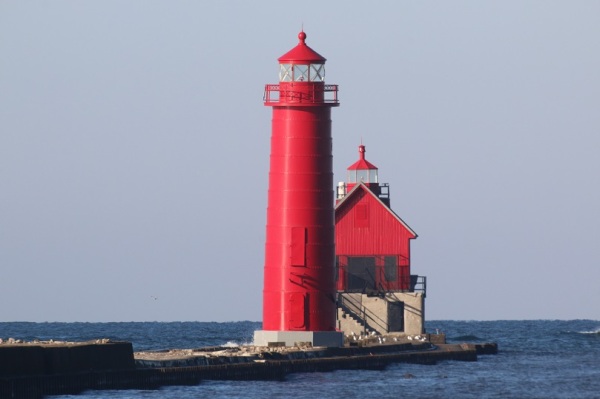
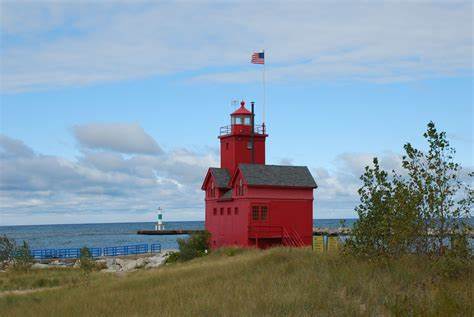
I live in an area not too far from Lake Michigan. All along the shores of this Great Lake are lighthouses. Some are small; some are tall; some are old and some use the latest technology Some are red; some are white; some are striped. Most are designed to warn ships of rocks, but others warn of shoals and hidden sand bars, as well.

Big Sable Point Lighthouse, Ludington

We think of lighthouses shining their light in the darkness, but lighthouses also shine in the daytime, through cloudy days, foggy mornings, and stormy afternoons. Most lighthouses also have fog horns, to warn ships when even the light won’t penetrate a thick fog.

This past week, a faithful lady at our church reminded us of a favorite song from childhood– “This Little Light of Mine.” We are called to be like Jesus, the “light of the world.” But what does it mean to “let our light shine”? And what does it mean to “hide it under a bushel?” (See Matthew 5:14-16)

Fresnel lens at Ponce Inlet Lighthouse, Daytona Beach, FL. Invented by French physicist Augustin-Jean Fresnel, the lens is much thinner than a conventional lens, which allows for a large aperture and short focal length at a lower weight.

Lighthouses use special lenses, called Fresnel lenses, to magnify the effect of refracted and reflected light. The resulting beam of light is stronger and can be seen for miles. Our own “little light”– our weak and imperfect faith; our limited talents and resources; our clumsy attempts– would not be enough to “save” anyone. But God magnifies our efforts as we reflect HIS radiance; His Love and Mercy. And many will be saved as we allow God to shine through us.

St. Joseph Lighthouse at sunset

Lighthouses are consistent– they don’t “turn the light off” when the weather is perfect, waiting only until someone spots a ship in danger. They don’t “dim” the light, or add extra strobe lights for the holidays or special occasions. Each lighthouse sends a consistent signal–steady and sure. But each lighthouse is unique– both in its outward appearance, and in it’s light pattern. This helps sailors tell them apart, and provides further help in navigation. As Christians, our light should also be consistent and unique. God created us with unique talents and opportunities–and we can “shine” the light of Christ in such a consistent and unique way as to help others “navigate” the trials of life. I am so thankful for the many faithful and uniquely gifted Christians who have inspired and guided me throughout my journey–and I want to be that kind of light for others!

Lighthouses are solid. They are normally built close to the shore, but not on the sandy beaches– rather on a rocky outcropping or a solid concrete and steel-reinforced foundation. As Christians, we have a solid foundation in Christ. We need to “shine our light” from that foundation– living out the Gospel of Christ– His life, death, resurrection, and imminent return. Building a bonfire on the beach may produce light, but it won’t stand out in a storm. Building our lives on any other foundation or religious “fad” may produce outward “success,” but it will not withstand storms.

Finally, and this may sound ridiculously obvious, but Lighthouses shine with purpose. They don’t twinkle or glitter; they don’t scream from the shore– “Look at ME! Look at ME!” They don’t shoot off fireworks to captivate onlookers from the shore. But they shine. They send a consistent warning, and provide consistent security to those who need it– and those who are seeking it! “This little light” may not be a blazing comet on the horizon, but without its steady pattern, there is darkness, confusion, and danger for those at sea (on lake in our case!) “No one lights a lamp and puts it in a place where it will be hidden, or under a bowl. Instead they put it on its stand, so that those who come in may see the light.” (Luke 11:33 NIV) We are commanded to shine– to Love others, to reach out with light, and hope, and yes, even a warning. To hide that light is to deny our purpose. To shine only for our own glory is to miss our purpose.

Holland (Michigan) Lighthouse

Father, help me to be a light in the darkness today. Help me to shine with Your Love, Your Mercy, and Your Goodness. Help me to be consistent, and to shine in the strength of Your Righteousness and Grace. Help me to use the unique gifts and opportunities You provide to show Your Character and Love to others.

Looking Back

Photo by cottonbro studio on Pexels.com

Another year is nearing an end, and it is common to look back and take stock of what the year has brought to, taken from, or challenged us with…

It can also be a time of regret– things not done, opportunities not taken, mistakes not corrected, hopes and dreams unrealized.

I keep two journals– a daily planner, filled with goals I hope to accomplish and plans I hope to fulfill; and my prayer journal, filled with requests, praises, answers to prayer, and names of people and places I wish to lift up in prayer. I spent some time the other day remembering and reflecting on this past year.

Photo by Guy Kawasaki on Pexels.com

As I stop to pray over the next/last few days of 2022, I want to remember two things in particular: God knew everything that would happen this year. And God was “there” for everything that happened; not just aware of what was going on, but as close as our own breath–loving, caring, and providing strength and comfort in every moment. He shared our tears and our laughter, and sent us mercies in the form of friends, neighbors, and even strangers– “angels unaware.”

God knew that on January fifth, my mother would fall and break her leg, starting her on a sixth month odyssey of hospitalization, rehabilitation, assisted living, and finally, moving into a new living arrangement near my sister’s house. He knew that my mother-in-law would fall the very next day, breaking her leg and requiring a similar journey through hospitalization, and two nursing homes, before finally being able to return to her home before Christmas.

Photo by Andrea Piacquadio on Pexels.com

God knew that I would be diagnosed with diabetes, and that David would face a challenging wound in his leg this year. Our lives and routines have been altered in ways we could never have predicted.

God knew that our extended family would face divorce, death, illness, job changes, and more. He knew that members of our church family would face cancer, heart disease, and death; just as many others would experience healing, weddings, and new birth.God knew what would happen worldwide– the death of a Queen, the changing of world leaders, war, famine, earthquakes and blizzards and hurricanes.

And God was there for every moment, joyous or terrifying; heart-breaking and uplifting moments, personal triumphs and worldwide tragedies. Miracles and losses, devastating news from the doctor, and joyous answers to prayer.

Looking back can be painful. Dwelling in the past–even on good memories, can be unproductive. But looking back to see how God has provided in our need, given us strength for life’s challenges, and brought unexpected opportunities gives us cause to sing praises and cause to hope for the coming year.

Photo by cottonbro on Pexels.com

Thank you God! Thank you for bringing us through another year– hopefully wiser and closer to You. Thank you for the opportunities you’ve given, and those you will bring into our lives in the year to come. Prepare us to be patient, hopeful, strong, and kind in the time to come. And help us to share this hope and strength, kindness and endurance to those around us, by pointing them to You. Amen!

Blog at WordPress.com.

Up ↑