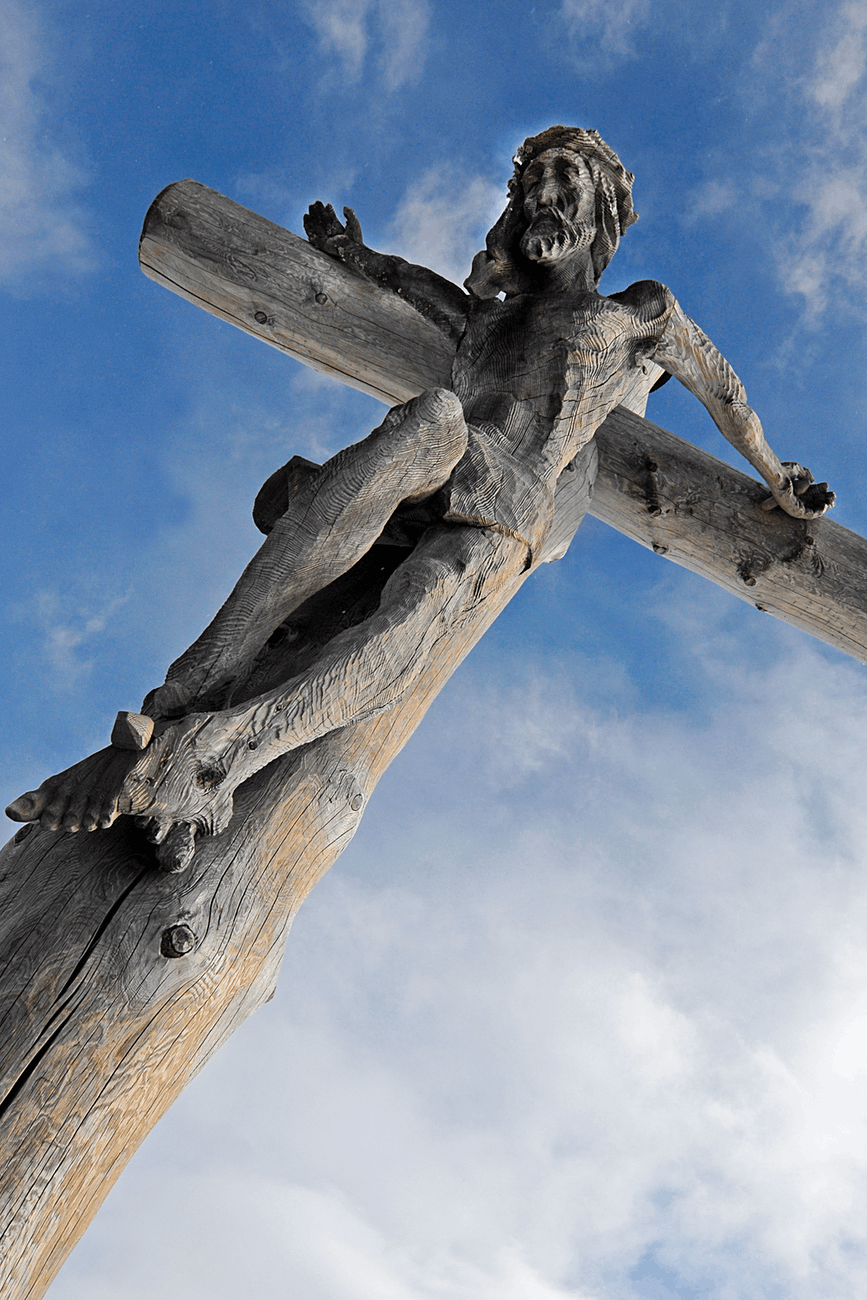

O Little Town of Bethlehem

O Little Town of Bethlehem


1. O little town of Bethlehem, 
how still we see thee lie; 
above thy deep and dreamless sleep 
the silent stars go by. 
Yet in thy dark streets shineth 
the everlasting light; 
the hopes and fears of all the years 
are met in thee tonight. 

2. For Christ is born of Mary, 
and gathered all above, 
while mortals sleep, the angels keep 
their watch of wondering love. 
O morning stars together, 
proclaim the holy birth, 
and praises sing to God the king, 
and peace to all on earth! 

3. How silently, how silently, 
the wondrous gift is given; 
so God imparts to human hearts 
the blessings of his heaven. 
No ear may hear his coming, 
but in this world of sin, 
where meek souls will receive him, still 
the dear Christ enters in. 

4. O holy Child of Bethlehem, 
descend to us, we pray; 
cast out our sin, and enter in, 
be born in us today. 
We hear the Christmas angels 
the great glad tidings tell; 
o come to us, abide with us, 
our Lord Emmanuel! 

Words by Phillips Brooks


Micah 5:2 English Standard Version (ESV)
2 But you, O Bethlehem Ephrathah,
    who are too little to be among the clans of Judah,
from you shall come forth for me
    one who is to be ruler in Israel,
whose coming forth is from of old,
    from ancient days.

God’s ways are not our ways.
I grew up in a tiny village in Michigan, and when we used to sing “O Little Town of Bethlehem,” I always imagined a similarly tiny town, draped in silence in the dead of night, sleeping right through the most glorious and stunning event in history.  It wasn’t difficult to imagine the same thing happening in my sleepy village– Christ could have come to any of a dozen sway-backed sheds or garages around town without fanfare as hundreds of strangers crammed into local houses and public buildings, eager to be done with a bizarre census that led them back to where their ancestors once lived.  There is nothing special about my hometown to anyone but those of us who grew up there.

Bethlehem was just such a small town.  Prophecy that a king would arise from such a backwater village was mostly ignored.  Four hundred years had passed since the last mention of Bethlehem by God or any of His prophets.  No one expected a miracle there, just as no one would expect a miracle in our little town today.

We expect big things to happen in big cities– bustling, surging, modern, energy-filled cities.  This is where grand events are held– political rallies, sold-out concerts, championship sporting events, groundbreaking new developments in business and medicine, coronations and ceremonies.  But God often works in the quiet spaces and unexpected places of our world and in our lives.  He comes softly and silently into the dark corners and forgotten nooks filling them with His glory.

And He gives us the privilege of sharing in this miracle– wherever we are, whoever we are, whatever our circumstances.  Christ did not spend most of His life on earth in the halls of power or the centers of commerce.  He didn’t “tour” the university circuit giving lectures, or fill great auditoriums while His image was splashed across a Jumbo-tron.  He walked humbly from small village to small town, spreading truth and love and drawing people to Himself, that they might believe and find true life.  He modeled how we can extend His grace– starting with those in our own small towns or neighborhoods–with simple acts and earnest prayers like the ones in this song:
“Cast out our sin, and enter in, be born in us today.”
“Oh, come to us, abide with us, our Lord Emmanuel.”

Reflections…

Matthew 7:7-12 New International Version (NIV)

Ask, Seek, Knock

“Ask and it will be given to you; seek and you will find; knock and the door will be opened to you. For everyone who asks receives; the one who seeks finds; and to the one who knocks, the door will be opened.

“Which of you, if your son asks for bread, will give him a stone? 10 Or if he asks for a fish, will give him a snake? 11 If you, then, though you are evil, know how to give good gifts to your children, how much more will your Father in heaven give good gifts to those who ask him! 12 So in everything, do to others what you would have them do to you, for this sums up the Law and the Prophets.

God created us in His image–when we look at someone else, we see an image of Almighty God, albeit one distorted by sin and the effects of a fallen world.  Jesus came to be a perfect reflection of the Father, and to restore our ability to more accurately reflect Him in the world around us.  As one who was able to perfectly fulfill the Law, Jesus summed up the Law and Prophets in a simple phrase we call “The Golden Rule”– Do to others what you would have them do to you.  We all want people to respect us, to help us, to believe us, to listen to us, to encourage us, to share with us, and to live in peace with us.  We also want people to respect our boundaries and privacy, and to forgive us when we mess up.

Unfortunately, we are more often a reflection of the evil around us than the God who made us–we treat others with disdain; we cheat and lie (or tell half-truths); we point fingers at our “wicked” neighbors, while giving ourselves a “pass” for our own “shortcomings”.  We put others down, make fun of their mistakes, spread rumors, and call them names.  We take advantage of them, make demands of them, use and abuse them.  We hold grudges, we “unfriend” them, and we exaggerate their faults to others.  In fact, we spend time complaining about how badly others treat us, while passing that same treatment on to someone new.  And we don’t even see the hypocricy–in ourselves!

woman holding bananas figurine

There is another simple phrase–“Hurt people hurt people.”  In other words, people who are carrying hurt and bitterness pass it on to others.  They see insults in the most innocent phrases; they hang on to grudges and suspicion; they criticize and condemn others; they spread anger and hatred and negativity.  They see evil intent in everyone else’s words and actions, and justify the evil intent of their own by pointing their fingers.  Many people do it while proclaiming their own “righteousness.”  “I just tell it like it is—I call ’em as I see ’em.”  “I just think you need to know…”  “If you treated me better I wouldn’t have to be so mean/angry/ etc.”  “You’re what’s wrong with this world..”  “I deserve better than this..”

man couple people woman

It’s little wonder, then, that so many people have a distorted view of God– they believe he’s harsh, unforgiving, critical and demanding, just waiting for them to mess up so he can punish them.  They believe this, in part, because sin twists our ability to see the truth.  But they also believe it because they see these characteristics in the very people who proudly (even arrogantly) carry the name of Christ.

“Do to others what you would have them do to you…”  “Ask, and it will be given to you….Knock and the door will be opened to you.”  God is not harsh; neither is he a doormat.  He wants us to live in harmony and peace– not demanding or stealing, but asking and giving generously.  He wants us to speak the truth in love, not justifying ourselves at the expense of someone else, or jumping to conclusions or snap judgments.  He wants us to knock on doors– not break them down or walk away in isolation; not locking everyone out or dragging them inside our space against their will.  Jesus modeled how we are to live.  He had no home, but welcomed those who wanted to follow him, and accepted invitations from Pharisees and sinners alike.  He spoke harshly only to those who were harsh and arrogant.  He said things that were provocative, but he did not stir up arguments, and he spoke words of healing to those who were hurt, even those who mocked him.  He had only what he carried with him, yet he withheld nothing that he could give when it was in his power to do so– sharing his food, sharing the wisdom of parables, sharing his healing touch and compassionate heart.  He mentioned Hell more than any other Bible figure, but never with relish; His desire is that all might repent and escape their just punishment.  Hurt people who encountered Jesus were transformed by his presence.  They still are being transformed!  But transformed people should be the ones to stop spreading hurt, shouldn’t they?  If hurt people hurt people, shouldn’t transformed lives transform lives?

accomplishment achievement adult african

As I prepare to pray, today, I need to go back and reflect on how I reflect God’s character–Am I distorting His image?  Am I hurting people, or pointing the way to the One who can provide healing and transformation?

action adventure alps conifers

Lord, help me to see you clearly, and reflect you more accurately to a dark and hurting world.  Help others to see in me your compassion, your love, and your desire to heal and restore.  Help me to reflect on all the good gifts you have given– joy, peace, hope, redemption, patience, kindness, self-control, love, perseverance, gentleness, goodness, trust, wisdom, truth, newness of purpose and life; help me to reflect those same good gifts as I go through this day that you have made.

How Must I Pray for My Enemies?

We are commanded to pray for our enemies. This is not an easy command to understand, let alone follow. Should I pray for the destruction of my enemies? Or should I pray for their success? Surely, God doesn’t want me to pray that they will continue in evil or succeed in corruption and destruction. So where is the balance? What does God want from me?

I wish I had a simple answer, but I don’t. The Bible, however, gives us several examples and guidelines. There are things we should pray for, and things that we need to give over to God.

DO pray for the following:

  • Pray for the protection of your enemies– protection from their own folly, protection from the temptations and wiles of the enemy, etc.
  • Pray for them to choose repentance and accept God’s salvation through Jesus Christ.
  • Pray for their physical, emotional, and spiritual needs. Is your enemy hungry? Suffering from grief or loneliness? Do they have cancer? Are they blind to God’s Grace because they have followed false teachers or doctrines? Pray for their health in all areas and be willing to offer practical help when possible.
  • Pray for their families.
  • Forgive them–pray for the strength to forgive and to let go of any bitterness or resentment against them for past wrongs or current actions.
  • Pray that God will bring peaceful resolution–and be willing to do whatever you can within God’s will to help bring that about.
  • Pray that God will bring Justice–not personal revenge for you. Pray that God will, in His way and His timing, uphold what is righteous and wholly just.

DO NOT pray for:

  • Their destruction. If they are not following Christ, they are already on the road to destruction! Praying for their death, or physical harm is not Biblical. This does NOT mean that we cannot pray that their deception should be exposed, or their power over others for evil should not be stripped away. Remember, our “enemy” is not the person or persons involved, but the EVIL they represent. If you are tempted to pray for someone’s death or wishing them to get cancer or cheering on those who would hurt them, YOU are just as guilty of grieving the Holy Spirit as they are!
  • Their triumph. “Praying for your enemy” is not the same as cheering them on. Forgiving them is not the same as praying that they get a “free pass” on past behavior.
  • God to “make” them change. God desires that we choose to follow Him. Pray instead that God will bring opportunities for others to want to seek Him, and to choose repentance.
  • Them to apologize, grovel, or be humiliated so that you can feel better. God MAY cause any of those things to happen, but we should not demand our own importance over God’s Grace.

Along with these guidelines, we should remember that we must treat everyone with respect and love. But that doesn’t mean that we compromise on the truth. Many of “our” enemies are really in rebellion against God and His Word. We can continue to love and respect their humanity and their need for compassion without condoning their behavior or accepting as valid their false narratives.

David spares Saul’s life in the cave (1 Samuel 24)

King David often prayed about his enemies. And some of his prayers may seem like the ones on the DO NOT list above. David often prayed that his enemies would be vanquished; that their names would be blotted out, or that they would fall victim to their own traps. But David also refused to harm his arch-enemy King Saul. Though God had promised that the kingdom would be taken from Saul and given to him, David refused to kill one who had been anointed as king of Israel (see 1 Samuel chapters 24 and 26). David killed many men in battle, and he committed murder in ordering the death of Uriah, but he showed kindness to Saul’s family, rather than punishing them (2 Samuel 9). God punished David for murder, but He blessed David for showing compassion to his enemies.

Jesus prayed for His disciples– that they would grow in Love and Grace. He instructed them to pray for those who have hurt them (Matthew 5:43-48). He never prayed for the destruction of the Pharisees or the Roman oppressors who caused so much suffering in Judea. Instead, he healed the son of the Roman official (see John 4:46-54) who asked for help. Even when the mob came to arrest Jesus in the garden before His crucifixion, He healed the ear of the soldier, after Peter cut it off trying to defend Him. And on the Cross, Jesus prayed that the father would “forgive them, for they know not what they do” (Luke 23:34)

Stephen, as he was being stoned, prayed for the forgiveness of his killers. Saul, who became the Apostle Paul, would have heard this prayer as he stood guarding the coats of the assassins. Throughout the epistles, we are reminded to pray for our enemies, AND to do our best to live in peace with them. (Romans 12:18; 1 Timothy 2:1-3; see also 2 Peter 3:9)

It is very tempting to want God to step in and do what we want– bring instant justice and punishment to those who harm us. But that is NOT God’s will. It IS His will that we should trust HIM to bring about true justice and to bring others to repentance. Including our “enemies.”

Restoration

A widow contacted a local church to come pick up an old rusty car that belonged to her late husband.  He had one request– that the car be kept in the old garage at the church parsonage and that anyone who wanted to could stop by and work on it.  He had purchased it years before with the intention of restoring it to drive around in during his retirement.  But time and ill-health had robbed him of his dream.  His hope was that someone might enjoy working on it, and if no one came to work on the car, perhaps the church could sell it to scrappers and at least get some money for it.  An ad was placed in the bulletin, and another in the local paper.  Hours were set up, when people could stop by to work on the car.

automobile car car repair classic

Soon, there was a great stir– several members of the congregation came forward to protest.  Some were concerned about the safety and liability involved in having the car in the garage where anyone could get to it.  Surely, it would be in the church’s best interest to have the car locked away, so only members of the congregation could get to it.  Others were arguing about how to restore the car properly– what was the original color of the chassis and the interior?  Could they find the exact parts for that make and model?  Who would work on the engine?  The interior?  The frame?  Surely the old man didn’t mean for just anyone to come in and work wherever s/he felt like working…how would the job get done?  Detailed schedules were posted and discussed; re-posted and opposed.

Weeks, and even months went by.  The church was divided; some threatened to leave.  And none of the church members had even visited the old car in the garage– it sat forgotten.  Except…

A young man in town had seen the notice in the newspaper.  He wrote down the original work schedule and followed it, quietly coming every Tuesday and Friday night after work, and patiently working to restore the car.  He cleaned and oiled parts, “tinkered” with others, sanded off rust, fixed hose lines and checked all the panels.  He patched upholstery and polished up the old tires.  He painted the chassis and found matching window wipers to replace the old ones.  He worked on the motor and the exhaust, and even the old AM radio.  He made sure the mirrors and windows were not cracked or chipped.  He even hunted around to find the right hood ornament to replace the one that was lost.  Only the pastor knew of his work, and even he had never joined the man or asked about his progress– he merely opened the garage door every time the young man arrived, and closed it when the young man left.

adult auto automobile automotive

After eight months, the division in the church had reached a fevered pitch.  One group demanded that the car be removed to a secure location and that the labor should be divided based on an elaborate chart that focused on how long someone had attended the church, their skill base, what time they were available to work, and whether they were currently an elder or deacon (or had ever served as an elder or deacon).

When the group arrived at the garage, they were shocked to discover that the car was completely restored, polished and glorious in its restoration.  Shocked and angry, they attacked the pastor– How could he have allowed this to happen “behind their backs?”  When the pastor admitted that he was as surprised as they were, their attention turned to the young man.  They hunted him down and demanded an explanation.  How dare he come and work on the church’s car without their knowledge or approval!  Who did he think he was?!

antique auto automobile automotive

The young man’s answer left them stunned.  He said, “I read an invitation that said anyone who wished could come and help restore an old car.  I came every week, and no one else ever showed up to help.  No one from your church did any work on this car.  No one ever came to check on it or see if any work had been done.  No one from your church gave me a word of encouragement, no one had a helpful suggestion or even constructive criticism.  No one offered me a word of gratitude.  No one helped hold a lamp or flashlight so I could see the hidden damage as I made repairs.  No one helped when I had to hoist the motor or clean off the grease and grime or polish the chrome.  The invitation was clear– whosoever will, may come.  I came.  I followed the directions I was given– I came on Tuesdays and Fridays, and I cleaned up each time before I left.  I put a lot of work into this car, and now I’m done.  I hope your church can decide on a good use for it; she’s a beauty, and I think she’ll run really well– I didn’t take her for a spin, but I hope someone will be able to enjoy her for many years to come.”

The crowd from the church still had one question– Why had the young man come in the first place, and why did he keep working on the car all those months?  Did he want the car for himself?

automobile car chrome classic

“No,” the man said; “when I first read the ad in the paper and I saw the word ‘restoration’, I was deeply moved.  Not too many years ago, I was living a very wild and dangerous life.  I felt alone and abandoned and I was filled with anger.  I was restless and destructive.  But one man in town took me under his wing.  He gave me a part-time job, and made me promise to stay in school.  But much more than that, he and his wife invited me over for dinner several times.  They made time out of their busy schedule to come and watch me play basketball after I finally made the team in my senior year.  When I joined the army, they sent letters and care packages.  The old man used to tell me that I reminded him of an old car he bought and kept in his garage.  He said it was an amazing machine that just needed restoration– he said I was an amazing person who just needed some restoration.  He told me that Jesus came to bring restoration to anyone who wanted to come to Him.”

“I finished my time in the army; I came back and started my own business.  I got busy and moved on with life.  I never came back to thank that man for his kindness, and he never asked for anything from me.  I guess I expected to thank him some day, but I found out that he had died.  I went to see his widow.  She was so gracious, asking about my family and wishing me the best, and then she mentioned her husband’s last request.  And when I saw the ad in the paper, I knew this was a way for me to thank the old man, but also to experience what restoration really means.  When I came to God, I was rusty, filthy, and broken.  God has sanded off the rust in my life, mended broken relationships, and given me new life.  It’s an honor to be able to bring restoration, no matter the circumstances.  God has done so much to restore my life, it’s the least I can do to help restore an old car.  I hope that somehow, this car can inspire renewal in someone else’s life the way its owner helped bring restoration to my life.”

road red street model

I wish I could say that the young man’s story changed the hearts of the angry deacons and elders.  A few of them were touched; some even convicted of their pride and selfishness.  But most were simply put out.

What have I done with the precious gift of restoration in my life?  God, lead me to someone today who needs to hear, and SEE, the miracle of restoration and Grace.

“Little” Prayers

I was challenged the other day by someone who suggested that my prayers are “too little.” Well, not precisely “my” prayers– I head up a small prayer group at church, and we pray for people in our congregation and our community. We keep a running list of people who are suffering from various health issues or housing issues, relationship issues, etc. We also pray for our church staff, for missionaries that our church supports, for upcoming ministry opportunities and programs, and other seemingly “small” requests. These are posted on a list and shared with some of our church members who are shut in or who want to lift up their neighbors in very specific ways.

I don’t think this person meant to be insulting but I see our prayer group quite differently. These “little” prayers are heartfelt, and I believe they reflect the heart of our Savior. Yes, Jesus offered salvation through His death and resurrection to “whosoever believeth” (John 3:16) throughout all the ages, but in His ministry, Jesus was extremely personal and intimate. Among His disciples, Jesus taught them to ask for “our daily bread” and for simple forgiveness as “we forgive” those who have hurt us. (Matthew 6:9-13) And I think our prayer group reflects that aspect of prayer. So, even though our list may seem “small” as we pray for Ned’s pneumonia, or Clarice’s upcoming CAT scan, next week’s teen outing, or Chris’s continuing housing issue, it is also showing compassion and worth to each individual, sharing in their “burdens” (Galatians 6:2) because God loves each of us without condition or limit!

On the other hand, I think I know what this individual was trying to convey. We are also called to pray “big” prayers. Jesus encouraged His disciples to have “big” faith– the kind that moves mountains (see Matthew 17:20– although Jesus says that even faith as small as a mustard seed can result in this kind of answer!) “Little” prayers can be the result of “little” faith. We pray for God to intervene in ordinary things without asking Him to unleash His power and majesty. God is able to do infinitely more than we ask or imagine (Ephesians 3:19-20) through the power of Christ in us! So are we tapping into that promise, or limiting our prayers to what we think God might do on a small scale?

I don’t think our prayer group is doing this at all. We often pray for peace in the Middle East and in other war-torn regions. We pray that the spirits of Anger, Lust, Deception, and Rebellion will be bound and that the eyes of the lost will be opened; that hearts will be softened toward the Gospel, and that our brothers and sisters facing persecution will be, strengthened, emboldened, and protected/rescued. We pray for Revival and renewal across nations and continents. And we pray that in these “little” situations, God’s love, wisdom, and power will be shown clearly– even to those who deny His existence.

Prayer is a huge topic, and a lifelong pursuit. I was challenged by this comment the other day to look closely at how our group functions; at how I present prayer each week; at how we perceive the calling and responsibility of prayer. In the Proverbs, we are told that “As iron sharpens iron, so one person sharpens another.” (Proverbs 27:17) Comments like the one that challenged me the other day are golden opportunities to learn, review, and grow in our daily pursuit. The Church is strengthened when we allow for each member to speak– especially if it stretches our view of things we take for granted!

I don’t believe there are any prayers that are “too little” to bring to God– He delights in our smallest steps of Faith; in our complete and simple dependence on Him. But I also don’t believe that our prayers can or should be limited by the mundane and ordinary. We should come boldly to the throne of Grace– not because of who we are or what we’ve done, but because of the Awesomeness and perfect Sufficiency of the God we serve!

“Praying” Favorites

There is a very dangerous mindset that many Christians fall into– that somehow, God has “favorites” among His children. That He listens to and answers prayer for certain people “better” or more often than others. As someone who has pursued a lifestyle of prayer for more than fifty years, I can categorically state that this is false. Time after time, the Bible teaches us that God does NOT play favorites. He listens to each of us and loves each of us with a boundless and eternal Love!

Yet, I often hear people say, “Please pray for me. You are a prayer warrior. God will listen to you.” Is this wrong? Is it wrong to ask others to pray for us?

Of course not. And it is good to find other Christians who are devoted to praying for others. We ARE “prayer warriors!” But that doesn’t mean that God listens to any of us more than anyone else, or that some prayers are somehow better or more powerful than others.

There are three aspects of this mindset that I think are particularly dangerous:

First– we can feel that our prayers are not important; that they are not “good enough.” Satan loves to have us wallow in our inadequacies and focus on our faults and shortcomings. Maybe I have trouble finding the “right” words when I pray. Maybe I don’t feel comfortable praying aloud in a group. And I hear someone else who sounds eloquent and polished. While that may impress or intimidate me, it cannot make a difference to God! NONE of us is “good enough” to impress God! He loves to hear from each unique and precious child! If we believe that God somehow has “favorites” in prayer, we will believe that He has favorites in other areas, too. That our gifts aren’t as “holy” as someone else’s, or that our faith depends on us working harder or doing “more.” And this is idolatry–saying that God’s grace is not sufficient for Him to accept us and bless us without some extra effort on our part.

Secondly– we can feel that prayer is for “other” people. If there are special people whose prayer lives are strong, then we can let them do the “heavy lifting” of praying, while we concentrate on giving or preaching, etc.. We SHOULD develop the particular gifts that God has given us– that is true– but prayer, just like spending time in worship, studying God’s word, practicing fellowship, and showing grace, is something everyone should be practicing. The Apostle Paul compared the Christian life to being an athlete or a soldier. We are ALL in training and part of a team. Prayer is not specialized training– it is basic and fundamental to the Christian Walk.

Finally–“Prayer Warriors” are fellow workers, not specialized saints. Some people practice prayer because they have more time to do so. Many of those who are considered “prayer warriors” are widows or widowers, retired, or even bedridden. Many of us are prayer warriors for a season. When we believe that God has “favorites” in prayer, we may elevate them beyond what we should. Once again, Satan loves to have us compare ourselves with others, rather than focus on how we can each serve God.

There are some Bible verses that speak to this, and many of them, taken out of context, can reinforce the wrong mindset. For example: James 5:16 says that the “fervent effectual prayer of a righteous man availeth much.” But the context is that of people praying for one another, not a single man doing the praying. It says more about passionate and persistent prayer than any identity as a prayer warrior among other “lesser” pray-ers.

First John 5:14 says, “This is the confidence we have in approaching God: that if we ask anything according to his will, he hears us.” That applies to any of us!

“The Lord is near to all who call on him,
to all who call on him in truth.” Psalm 145:18

“Call to me and I will answer you and tell you great and unsearchable things you do not know.” Jeremiah 33:3

“Let us then approach God’s throne of grace with confidence, so that we may receive mercy and find grace to help us in our time of need.” Hebrews 4:16

“But when you ask, you must believe and not doubt, because the one who doubts is like a wave of the sea, blown and tossed by the wind.” James 1:6

“If you believe, you will receive whatever you ask for in prayer.” Matthew 21:22

There are only two things that the Bible says about “better” or more effective prayers. We must pray in FAITH, and in OBEDIENCE, (or praying within the will of God). NOTHING else is required for God to listen and respond. We are all “prayer warriors.” Prayer is part of our warfare against the enemy. And while it is wonderful to come together and know that others are praying for you, it is also important to remember that God has no favorites. His Grace, Power, Protection, and Love are equally available to anyone who asks in faith! There may be millions of pray-ers, but only one Sovereign, All-Powerful, Majestic and Loving God!

The Weight of Prayer

Have you ever carried a burden that just got heavier each minute? Some pressing need, or a load of guilt and shame, or an unresolved issue that has been hanging over you for years with no relief. Sometimes, prayer is very heavy. It is a sacrifice, and a burden to keep praying for an unsaved loved one, or to fully confess the shame you have carried for years. Your needs (or the needs of loved ones) can push down on your spirit and make it difficult to even want to pray. Pain, grief, or persecution can cause you to shrivel up inside and even though you want to pray, you just can’t seem to find the words.

But oh! The relief of carrying our burdens to the throne of Grace! God may not give us immediate relief from the burdens of pain and suffering, but He will come alongside and shoulder a God-sized portion of our load. He has promised this. Jesus Himself said, “Come to me, all you who are weary and burdened, and I will give you rest. Take my yoke upon you and learn from me, for I am gentle and humble in heart, and you will find rest for your souls.  For my yoke is easy and my burden is light.” (Matthew 11:28-30 NIV)

Not only will God come alongside us as a result of prayer, His Spirit will help us in our weakness and inability to express our deepest emotions. “Likewise the Spirit helps us in our weakness. For we do not know what to pray for as we ought, but the Spirit himself intercedes for us with groanings too deep for words. And he who searches hearts knows what is the mind of the Spirit, because the Spirit intercedes for the saints according to the will of God.” (Romans 8: 26-7 ESV)

I have found this to be true through experience. And I have also found great relief when I can share my burdens with other Christians and know that they are praying for me and for my loved ones. One of the greatest burdens we can bear is that of isolation and hopelessness. Finding a trusted group of fellow believers can ease the pain of bearing such burdens alone. Often, Christian friends can offer limited practical help for immediate needs or provide counseling and wisdom in our next steps. Two words of warning– no group of friends, even Christian friends, can substitute for God. Friendship should not substitute for prayer and Godly wisdom. And true friends will always point you to God rather than trying to fix everything in their own power and time frame. A true friend will not only share the “weight” of your burden, but also the “wait” for God’s answer! Secondly, “sharing” is not the same as rehearsing the same guilty secrets over and over for attention, shock value, or entertainment. It is not gossiping about the same horrible boss or nosy neighbor you can’t seem to forgive or lamenting over all the things you might have done differently as a parent (or spouse or co-worker) last week.

Prayer is deep. It is heavy. And it is powerful. But it can also be freeing, removing the burden of worry, shame, guilt, and isolation. We may enter prayer with groaning and exit with praise! God inhabits our prayers! He is with us in the groaning and in the struggle. He sends us friends and “angels unaware.” And He remains with us in victorious celebration. He provides comfort, strength, and peace as we lay our burdens down. He provides companionship, help, and hope as He shares the weight of whatever we bring to Him.

Don’t “wait” to share your burdens. Let God do the heavy lifting!

Pray For Me, Not About Me

Gossip and judgment are nasty habits– what happens when they creep into our prayer life?

I’ve sometimes struggled with the idea of praying for those who have hurt me or mistreated those I love.  We are commanded to do it, but often, I am tempted to pray about my enemies instead of praying for them.  As if God didn’t know what they had done; as if he needed me to alert him to their bad behavior, and remind him of how I was slighted, misunderstood, or powerless to bring justice to my friend or family member who was wronged.  I want to tell God how to treat them– how to punish them, or abase them, or bring them to feel remorse.  I want to hang on to the indignation and sense of victimhood–after all, God is going to make it right in the end, vindicating me and humiliating them, right?  Except that’s not how it works in God’s economy…My vindication does not come at their expense, but through the blood of the truly innocent Lamb of God.  Let that sink in.  God is not in the business of torturing others to make himself feel more righteous.  If I want to follow Christ, my actions, and my prayers, should be full of his Grace, not my bitterness.

I am not alone in this– and I’m sure I have been “prayed about” often enough.  Even saints and matriarchs of old have done it.  And King David was guilty of it as well–several of the Psalms include angry, even vicious rants against David’s enemies.  It’s understandable; it’s only natural for us to feel indignant, angry, and hurt in the face of injustice, unkindness, hatred, and abuse.  And it’s not inappropriate for us to cry out for justice, or pour out our hurt and frustration. But it is wrong to stand in judgment and unforgiveness when we come before the throne of Heaven.

gossip

I believe that these are the difficult prayers that teach us to know God better– as well as ourselves.  To pray for those who have hurt us means that we must move beyond what they have done– not to deny it, or to excuse or forget about it, but to give it over to God –and deal with who they are.  They are lost exactly as we are lost, but for the grace of God.  They are redeemable, not because they can undo or atone for what has happened, but because God says that whosoever trusts in Him can be saved.  They are precious in God’s sight.  When we stop focusing on who hurt us, and how, we can instead focus on who heals us, and how he wants to heal others.

These prayers also serve to remind us that our true “enemies” are not the people who say or do unkind or even wicked things.  Our true enemies are not the ones who can hurt our feelings, or even our minds or bodies.  Our true enemies are the ones who would steal our souls– who tempt us to hold on to rage and despair, to hopelessness and doubt, to bitterness and shame.

It is so easy to write these words, and to “know” the right thing to do.  But it is a painful, heartbreaking, humbling, stumbling uphill climb to DO the right thing.  I still catch myself so often praying about certain people, instead of praying for them.  God knows my heart–he knows if my prayer is sincere.  And, as I struggle, I am reminded that the change I would wish to see in someone else mirrors the change I should wish to see in me  The same Grace that God sends to heal and comfort me is the same Grace he offers to everyone who will take it–even when they choose not to accept it.

So I hope I am learning to pray for those who sneer at me; those who lash out in their own pain, anger, or thoughtlessness.  To pray for their health and safety, their well-being, and their wholeness. For their sake–for the sake of the One who loves them eternally.  And in the hope that healing and restoration will triumph over what lies in the past.

From Fiery Furnace to “The Dew of Heaven”

God is all-powerful. He is sovereign over all the universe for all eternity. He is the King of Kings and the Lord of Lords. Yet, in His majesty, He is merciful; unwilling that any should perish.

In the book if Daniel, we encountered the familiar story of Shadrach, Meshach, and Abednego, who were thrown into a fiery furnace for failing to bow down to a giant statue commissioned by King Nebuchadnezzar. The mighty king of Babylon was an absolute ruler, and failure to obey one of his decrees could result in death. That it did not end in death for the three young men baffled and impressed their king. But it didn’t change him.

The very next story in the book of Daniel is one that is less familiar– it is another curious interjection into a book of (seemingly) disjointed stories. In chapter three, Daniel narrates his friends’ story, in which he is curiously absent. In chapter four, Nebuchadnezzar is the narrator, Daniel is one of the characters, and his three friends are never mentioned. (Because Nebuchadnezzar is narrating, he uses Daniel’s Babylonian name, Belteshazzar.)

The chapter begins almost as a mirror image of chapter 2, except the writing style is very different–more formalized, and written more as a proclamation. (https://biblia.com/bible/esv/Dan%204) Nebuchadnezzar is being troubled by a recurring dream. Once again, he calls in all the astrologers, sorcerers, etc., to interpret the dream. However (whether because Nebuchadnezzar is narrating, or because he has learned a little self-control), this time there are no threats involved, and when the lesser wise men fail, Nebuchadnezzar himself sends for Daniel, confident that Daniel can provide an answer. Nebuchadnezzar actually flatters Daniel as he asks for an interpretation, but Daniel is still cautious. This dream is more disturbing than the first, because it is more personal and immediate. God is warning Nebuchadnezzar directly that his pride has gotten out of control and God is about to step in a pronounce judgment on it. God will teach Nebuchadnezzar about humility by causing him to lose everything, including his mind!

Daniel carefully gives Nebuchadnezzar the interpretation and the warning from God, and adds his own wish that his king might escape punishment by humbling himself before the Almighty God. But in a year’s time, Nebuchadnezzar forgets. In the very act of praising himself, Nebuchadnezzar hears the voice of God, who drives him away from his kingdom, from society, and from rationality. For seven years, Nebuchadnezzar lives as a beast, eating grass, roaming outdoors, and covered with “the dew of heaven”. At the end of that time, he comes to his senses and is restored to his mighty kingdom a wiser, humbler, and grateful monarch.

What a contrast between these two rulers! Nebuchadnezzar demanded total loyalty and obedience. When it wasn’t given, the reaction was instant fury and a sentence of death. God is the One who ultimately deserves our total loyalty and obedience. When it isn’t given, the sentence is death (Romans 6:23a). But God, who has the complete authority to pronounce the death sentence, is more interested in deliverance than in destruction. Make no mistake, God will punish Sin; God will destroy those who persist in evil and rebel against Him. But God’s heart is reconciliation and redemption. God did not kill Nebuchadnezzar; He didn’t strike out at him in fury and cast him immediately into the fiery furnace of Hell–though He had the power and authority to do so. God had given Nebuchadnezzar his life, his power and his kingdom. He took it away. And then he restored it. God took away Nebuchadnezzar’s ability to reason– and he restored that too. And while Nebuchadnezzar was living as a brute beast– in the middle of his punishment– he was covered with “the dew of heaven.”

Curiously, this phrase, “the dew of heaven” is used all the way back in the book of Genesis. It is used by Isaac as he blesses his son Jacob (disguised as Esau). https://www.biblegateway.com/passage/?search=Genesis+27%3A+27-29&version=ESV Even as Jacob was practicing deception that would have dire consequences, God’s blessing was being poured out on him by his father. And centuries later, in his midst of punishment, Nebuchadnezzar was blessed by God, who provided for his needs, and ended up giving back all that had been lost because of Nebuchadnezzar’s pride.

God punishes– He punishes those He loves! He teaches, humbles, and disciplines. But He is not in the business of destruction. He was with Nebuchadnezzar throughout his period of madness and humiliation, ready to restore (and even increase) all that he had lost.

May we honor this God of grace and mercy– his mercies are greater than his wrath, and his grace is greater than all our sin! Nebuchadnezzar finally learned to praise, worship, honor, and obey the “Most High God.” May we do the same.

Where Am I?

Smack-dab in the center of Sin and Pride;
You could find me in Peril, Intrigue and Rebellion–
Guilt surrounded me, pain and despair held me fast.
But I was not in Repentance, Mercy, or Grace.

I had to die to “I”– let it go and let the Son redeem the Sin
Trade Pride for Prayer, and Hype for Hope.

But I am no longer lost or dead– and no longer a slave to sin or pride.
I can now be found in Faith, and Charity;
I thrive in Fellowship, I have a Friend in Jesus,
A Spirit to guide me, and a vision for Eternity.
It is not “I” who lives, but “I AM” who lives in me.
Salvation, forgiveness, life, and victory are all mine;
Alive in Him, I am found in Christ– sanctified,
And never alone.

sky sunset person silhouette


Romans 8:1-5 King James Version (KJV)

There is therefore now no condemnation to them which are in Christ Jesus, who walk not after the flesh, but after the Spirit.For the law of the Spirit of life in Christ Jesus hath made me free from the law of sin and death.For what the law could not do, in that it was weak through the flesh, God sending his own Son in the likeness of sinful flesh, and for sin, condemned sin in the flesh:That the righteousness of the law might be fulfilled in us, who walk not after the flesh, but after the Spirit.For they that are after the flesh do mind the things of the flesh; but they that are after the Spirit the things of the Spirit.


1 Corinthians 15:57 New International Version (NIV)

57 But thanks be to God! He gives us the victory through our Lord Jesus Christ.


  • A brief note about Scripture references and quotes:  I try to give scripture references and quotes in various translations, though I give most in the New International Version (NIV), the English Standard Version (ESV) or the King James or New King James versions (KJV or NKJV).  I don’t intend to cause confusion by doing this.  There are several excellent translations/versions available, and for a good comparison, there are several wonderful Bible study websites (two of my favorites are Bible Gateway and Bible Hub  ).  I simply find that there are some nuances that make for easier reading or use in the blog.  Often, one translation will have notes and cross references that are wonderful for further study, but confusing to include as part of the blog quote.  I encourage anyone to read the verses in whatever translation they have available, feel most comfortable using, or feel is most trustworthy.  I also welcome comments or corrections.

Blog at WordPress.com.

Up ↑