He Who Began a Good Work…

 And I am sure of this, that he who began a good work in you will bring it to completion at the day of Jesus Christ.

Philippians 1:6 (ESV)
Photo by Karolina Grabowska on Pexels.com

I have a lot of unfinished projects–scrapbook pages, crafts, stories I began writing, closets I started cleaning out..some projects were abandoned due to waning interest; others due to distractions or other more urgent tasks. A few of the projects I can pick up and continue (if I choose). Others must be discarded or started over again. I began each task with good intentions, but some proved to be more complicated than I anticipated. Their very presence reminds me that I bit off more than I could chew.

Sometimes, it feels like I am an unfinished project– because I am! While I still live, I continue learning and (hopefully) growing more like Christ. But every day I am reminded (as with my unfinished projects around the house) that I have a long way to go. And I occasionally wonder if God will get tired of me and set me aside– lose interest or just decide His efforts will be more rewarding somewhere else. And yet, Paul assures me that I will never be abandoned or left “undone”–God always– ALWAYS– finishes what He starts. And His finished project are always perfect.

Photo by Pixabay on Pexels.com

And what is true in my life is true in the lives of others, and in the wider world. We may not see the way forward. It may seem as though things or people around us are falling apart. But God sees the end from the beginning. And He works — sometimes in mysterious ways–to bring all things to their appointed end.

There are two “caveats” to the above statements:

“He who began a good work in you…” God created all of us in His glorious image, but He has not begun a good work in those who have not trusted Him to do so. It is God’s desire that all of us should reach perfection, and that none should perish. However, the Bible is very clear that not all of us will seek to be reborn, reshaped, redeemed, and reconciled to God.

Photo by Nikita Krasnov on Pexels.com

“…at the day of Jesus Christ.” We will not be perfected in “our” time, but in God’s. We will be tested, refined, purified, stretched and shaped, but what we will be “has not yet been revealed” (1 John 3:2) We should pray for continued growth; we should humbly submit to the renewing of our minds and hearts through the work of the Holy Spirit, but we should not consider that we have reached perfection or that we have learned all there is to know.

Photo by cottonbro on Pexels.com

I am so glad that I serve a God who will never tire of me, or find me “too much” to handle. And I am so glad I can fall on His grace and mercy when I fail in my tasks (or fail to complete them). God isn’t finished with me yet– but by His Grace, He will not leave me incomplete or lacking in any good thing!

The Work is “Donne”

Wilt Thou forgive that sin where I begun,
Which is my sin, though it were done before?
Wilt Thou forgive those sins through which I run,
And do them still, though still I do deplore?
When Thou hast done, Thou hast not done,
For I have more.
Wilt Thou forgive that sin by which I have won
Others to sin? and made my sin their door?
Wilt Thou forgive that sin which I did shun
A year or two, but wallowed in a score?
When Thou hast done, Thou hast not done,
For I have more.
I have a sin of fear, that when I have spun
My last thread, I shall perish on the shore;
Swear by Thyself that at my death Thy Sun
Shall sine as it shines now, and heretofore;
And, having done that, Thou hast done,
I have no more.

A Hymn to God the Father John Donne, 1623
John Donne

I enjoy studying the poetry of John Donne. https://www.biography.com/writer/john-donne Even though he lived 400 years ago, he wrote about very timeless and personal topics. Donne lived during a time of religious tumult and persecution. Born into a Catholic family, he later converted to Anglicanism and became a powerful preacher, as well as a poet, and lawyer. Throughout his life, he wrestled with deep theological questions of sin, guilt, redemption, and death. Yet he did so with wit, humor, and passion. The poem above, written during a long illness and near the end of his life, is filled with puns on his last name, Donne. Would God’s redemptive work ever be “done” in “Donne?” He struggles with the knowledge that his sins, having been forgiven, must be forgiven again and again. Does God never say, “Enough! I am done!?” What about stubborn sinful habits? What about sins that have led others to sin? What about last-minute, unconfessed sins?

Photo by Teona Swift on Pexels.com

The real question is, “How sufficient is God’s Grace?” Does God sprinkle out Grace sparingly on each sinful act, or does Christ’s blood cover All? Do our stubborn, habitual acts of rebellion pile up to a point where God cannot forgive? Having forgiven us once, twice, seventy times seven– is there a limit to His willingness to pour out Mercy? Theologically, the Bible is clear. The answer is a resounding, “NO.” God will not withhold His Grace from those who have sought it. God will never be “Done” with “Donne.” Nor will He be “done” with any of us who have chosen to follow Him. But in his all-too-human logic, Donne jokingly suggests that though God “hast” done/Donne, He “hast not” done/Donne. In other words, while Donne “belongs” to God– he has confessed his sins, and eagerly seeks to follow Christ, he still wrestles with fears that his small sinful acts prove that God does not fully “have” him– that He still lives separated from God.

Photo by Sinitta Leunen on Pexels.com

But the final sin of the poem is fear– fear that somehow, at the last, Death will prevail, and Donne will “perish on the shore,” rather than be taken into Heaven. He pleads that Christ’s blood (“Thy Sun/Son”) will be sufficient; that God’s promise of eternal life will indeed hold true, and that the work of salvation is indeed “done.” In the end, the poet hopes that “Thou hast Donne.” And he must trust that God’s promises will hold, for “I have no more.” Donne cannot stop death, he cannot do anything to save himself from sin, but he can be “done” with worry and trust in “Thy Sun/Son.”

Photo by Samuel Theo Manat Silitonga on Pexels.com

I am strangely encouraged by Donne’s poem. We all have moments of questioning and niggling doubts. And even though we “Know” the truth, our fears and emotions can play tricks on our mind. But Donne, even while putting such doubts and fears on paper, takes them to the Source of Hope. This is not a poem of accusation or despair. It is an honest and passionate desire to hear God’s calm assurance. And it is part of a long tradition that runs through the Bible. Jacob literally wrestled with an angel of the Lord (Gensis 32), Moses argued with God about going back to Egypt (Exodus 4), David questioned God (Psalm 10); even Jesus asked God, “Why have you forsaken me?” (Matthew 27). But in our doubts and questions, God’s still, small voice echoes, “I will never leave you nor forsake you.” (Hebrews 13:5), “My Grace is sufficient for you.” (2 Corinthians 12:9), and “Neither height nor depth, nor anything else in all creation, will be able to separate us from the love of God that is in Christ Jesus our Lord.” (Romans 8:39).

Photo by S Migaj on Pexels.com

God’s work is ongoing, but it is also “done”– it is complete, whole, sufficient, and eternal. And even if we occasionally wonder and even question, we can choose to rest in His promises. Just as the poet concluded, if God “hast” done/Donne, “I have no more”– he needed to have no other fear of sin or sin of fear. And through Donne’s poetry, God’s assurance is being passed on– the work continues to be “Donne!”

Photo by Nicholas Githiri on Pexels.com

More Evidence of Things Not Seen…

I have a story of a miracle that happened this past week.

This has been a difficult year for my husband and I. We had COVID back in February, and between hospital bills and David being unable to return to work for several weeks (and then being able to return only part-time), our finances have been rather tight. God has been faithful throughout, so it was a lack of faith that had me in a panic at the end of the week. Several of our monthly bills come due on the 10th each month, and we had only enough money in the bank to make a partial payment on one of them. David got paid on Friday (the 10th!), but that was still only enough to pay two bills. The one bill I was unable to pay was our health insurance premium– not a comfortable choice with our continuing health issues! We would be behind again, as I had paid last month’s bill a couple of days late. I had no idea when we would have enough money to make this month’s payment.

Photo by Mikhail Nilov on Pexels.com

So Friday, we got a statement from our health insurance/health share network. I was afraid to open it. It wasn’t our regular monthly statement, and it was on pink paper, which generally means a warning about a past due account, or worse, a cancellation notice. I was sick with worry– so much so that I put the statement aside, afraid to open it and read the worst.

Photo by Andrea Piacquadio on Pexels.com

By Saturday night, I was frantic. I couldn’t sleep, wondering and worrying. I “knew” that God was aware of our situation, and that He was in control. I also knew that another big bill would come due on the 15th– with no money in sight. I cried, and pleaded with God to help me trust Him, and to meet our needs.

Photo by Alex Green on Pexels.com

At that point, I heard a clear prompting from the Holy Spirit to find the statement and open it. How could I say I trusted God when I was too scared to even look at the situation? I found the statement and took it into the kitchen to open it and look, without waking my husband. My hands shook as I unfolded the pink paper.

Photo by Castorly Stock on Pexels.com

And as I read, I cried– this time tears of joy and repentance as I read the short note and saw the attached check. Our insurance comes through a health share network. The members of the network pay a base fee each month and can send extra money to help other members in need. Their generosity meant that a check– more than enough to pay our own monthly premium and the other looming bill on the 15th– had arrived just when we most needed it. My fears were turned to praise in an instant as I SAW what God had done, instead of seeing what I dreaded.

God didn’t send us thousands of dollars to meet all our desires. But He sent, through the faithfulness of strangers, enough to meet our needs, and, more importantly, enough to remind us of His power to provide and His grace to meet our spiritual needs.

I know God answers prayer. I know it because the Bible says so. I know it because I have seen it in the lives of others. And I know it from personal experience. I know that, even if that pink notice had NOT been an unexpected miracle, that God was still present, waiting for me to trust His wisdom and timing.

Photo by Munmun Singh on Pexels.com

“Faith is the substance of things hoped for; the evidence of things not seen”..(Hebrews 11:1). This weekend, what I imagined I saw through the eyes of doubt was really evidence of God’s great faithfulness. I just needed to open the eyes of faith– and open the evidence that was right before me all along!

When We All Get To Heaven…

Last week, I attended the funeral of my mom’s cousin. It was a joyful funeral–not only was it a celebration of a life well-lived, and an acknowledgement of God’s grace, but it was a reunion of sorts. Not only were there cousins I hadn’t seen in awhile, but I met people I hadn’t known before, but we were connected through my cousin and through the legacy of a tiny country church and the faithful witness of those who have been blessed there.

Photo by Suzy Hazelwood on Pexels.com

Friends and family spoke of my cousin’s generosity, his quiet and steadfast character, his diligence, and his love for Jesus Christ. We sang together, prayed together, and remembered. And some of the stories shared involved a small country church, once pastored by my cousin’s in-laws, and the site of many confessions of faith, prayer meetings, weddings, funerals, evangelistic services, pot-luck fellowships, Bible Schools, Easter services, Christmas programs, and weekly worship services. It was the church where I was introduced to the gospel. It was the church where I met my husband. It still stands, attended by faithful friends. It has, over the years, sent missionaries to Zambia, Nicaragua, Guatemala, Mexico, and the Philippines. It has supported local rescue missions, and local families in need. It is a tiny country church; I can remember when it had hard wooden pews, no fans or air conditioning in the summer, a damp and leaky basement with the occasional toad or salamander on the stairs, and no indoor bathroom.

Bethel Church

After the funeral, Mom and I went to the fellowship meal at another local church. It was beautiful, with a small cafe, a large sanctuary, two sets of bathrooms, a fellowship hall, and all the modern conveniences– located in an old strip mall. A far cry from the church of my youth, but filled with caring and gracious people who were there to provide food and comfort for the family. I don’t know how many local or foreign missions are served by the congregation there, but I suspect it would look similar to the list above.

Photo by Josh Sorenson on Pexels.com

As we found a seat for the meal, we were joined by a woman I had never met. As we made introductions, we realized two things– we were distantly related, and we had both attended Bethel Church as young children (though separated by a couple of decades). We both had fond memories of that small country church, and the wonderful people there.

Photo by SHVETS production on Pexels.com

Over the next few days, I thought about all the amazing people I have known–family members like my cousin, and this distant cousin I was able to meet; the various families who came and went over the years at Bethel Church and other churches I have attended; missionaries and evangelists, pastors, teachers, and their families; the people I have met through mission trips and conferences–and how many more amazing people I have NEVER met, but whose lives are intertwined because we belong to God’s family.

Photo by Maria Orlova on Pexels.com

Someday, we will all be in the same place at the same time–HOME– with our Loving Father! When we all get to Heaven, what a day of rejoicing that will be! Until then, we are scattered by distance and circumstance. We worship in different ways, different languages, in different types of buildings, in small house churches, cathedrals, arenas, and strip malls. We have different outreach opportunities, different social challenges, different budgets, and different worship styles. But we are connected:

Photo by Binti Malu on Pexels.com

4 There is one body and one Spirit—just as you were called to the one hope that belongs to your call— 5 one Lord, one faith, one baptism, 6 one God and Father of all, who is over all and through all and in all.

Ephesians 4:4-6 ESV

Heaven will be incredibly diverse; and uniquely cohesive– brought together by a Love that transcends differences, disparity, and even death. And we will meet those whose lives paralleled ours, even if we never met on earth. We will meet those whose faithfulness brought about the little country church where I grew up, and those who planted churches in malls, and jungles, caves, hills, forests, and “underground.” All our amazingly diverse stories will be woven into one eternal “Hallelujah” as we praise the author of them all.

Funerals can be anguished events. But I was blessed last week to remember God’s incredible faithfulness. One of the verses quoted during the service was Psalm 116:15–“Precious in the sight of the Lord is the death of His saints.” Earlier in the same Psalm, the writer has this to say, “I love the Lord, because He has heard my voice and my supplications.  Because He has inclined His ear to me, therefore I will call upon Him as long as I live.” I have seen and experienced God’s faithfulness– through the lives of other saints, through the work of His church, and as He has personally “inclined His ear to me.” May I be faithful to all upon Him for as long as I live. As my cousin was blessed and blessed others, may we hold true to our “One faith” as we await that day when we all get to Heaven!

Nothing But the Blood

As I write this, it is still Sunday evening. This morning, we sang a classic hymn at church– “Nothing But the Blood of Jesus.” It’s an old hymn, and familiar; we often sing such hymns on auto-pilot and without really thinking of the wonderful words and truths coming out of our throats.

Photo by cottonbro on Pexels.com

“What can wash away my sin?– Nothing but the blood of Jesus.” “What can make me whole again?–Nothing but the blood of Jesus.” When I come to God in prayer, confessing my sins, it is not my prayer that makes me clean. Nothing I can say or do will give me right standing before God. I am a sinner, and I fall short of God’s glory. I also trespass against His holiness, and even His mercy. I am guilty, and there is no “magic” prayer that will heal me or exonerate me.

Photo by Michelle Leman on Pexels.com

Yet I come before a Holy God and make my confession. Not because He doesn’t know that I have sinned. Not because my words will save me. I come because I know that the Blood of Jesus Christ has, and will make me whole and justified. I have no need to hide the truth of my condition, or try to make my own justification or sanctification. Christ has done it all.

Photo by Ian Panelo on Pexels.com

Prayers of confession are not for God’s benefit, but for ours. To hide our guilt, or to excuse it, is to despise God’s amazing gift of Grace. When we confess to God, it is not because He wants to humiliate us or cause us additional guilt– though this is often the lie we tell ourselves. God is eager to remove our guilt and to guide us in His righteous ways. But He will not save us against our own will or without our permission. He will not conspire with us to hide our secret sins, or pass the blame on to someone else. To do so would be to submit to OUR will. WE are NOT God, though we sometimes act as though our ways are better than His.

Photo by Pixabay on Pexels.com

I’m so glad that God is God– that His ways are perfect, and that I can trust Him completely. Even when I fall short, I can trust that God has already paid the price to make things right– something I could never do, and something I find too wonderful to fully comprehend.

Nothing but the blood can save me. And anything other than the blood will fail to set me free. My prayers of confession– no matter how polished or pious or piteous– cannot unlock the mystery of salvation and restoration. But they acknowledge the marvelous reality that it IS FINISHED! God’s Grace is sufficient! Hallelujah!

“It Is Finished!” Isn’t it?

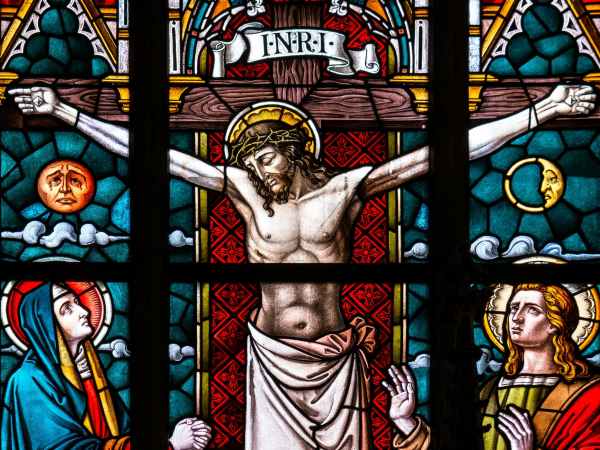
Just before Jesus took His last breath on the cross, He called out, “It is finished!” Theology teaches us that His statement reflects the completion of His mission– to defeat the power of Sin and Death, and pay the redemption price for all who will call on His name. The ultimate victory has been declared; the ultimate battle won!

Photo by Pixabay on Pexels.com

The past two weeks, I have wanted to say, “It is Finished!”– as I struggle with a hundred different tasks that never seem to end. I missed my self-imposed deadline to publish a blog entry on Monday; I stared at a pile of extra dishes in my sink and a growing mountain of laundry as I added “extra” tasks to my weekly list. My work here is not finished; my mission is not complete.

Photo by MART PRODUCTION on Pexels.com

But Jesus’ words remind me– It IS finished! My “mission” is not to wash every dish, make every deadline, “fix” every small problem that arises, or answer every question. My mission is to follow Jesus. He didn’t heal every leper, end poverty, sweep away the armies of Rome, or even convince the Pharisees to repent. Because THAT wasn’t His ultimate mission.

Photo by Mumtahina Tanni on Pexels.com

That does not give me an excuse not to do the dishes or try to make sure I post this by my next deadline. But it gives me Grace to keep going– not in my own strength or achievement, but in dependence on God’s power, timing, and mercy. His Grace is sufficient!

Photo by RODNAE Productions on Pexels.com

This is true of our prayer life as well. God doesn’t “grade” us on each prayer, or each day’s efforts; rather, He waits, patiently and lovingly, to hear us call on Him and listen for His voice in return. The “judgment” has already been given–Jesus’ work on our behalf has been accepted and declared “complete.” His Kingdom has come; His will is being done, even if our prayers seem small or inadequate for the mission.

There are some tasks that we will never see “finished” during our lifetime or through our limited efforts. But we can work and pray heartily and confidently in the knowledge that we will see it “finished” in God’s perfect timing. And we can rejoice in the privilege of working toward that end– even our smallest efforts and weakest moments are woven into the story of Eternity!

Laughing With the Sinners

There is a line in a song by Billy Joel (Only the Good Die Young) which reads, “I’d rather laugh with the sinners than cry with the saints. The sinners are much more fun.”

There is a myth about sin– that sin is fun and obedience is drudgery. Sinners laugh and live carefree, happy lives, while “saints” lead gloomy lives filled with tears, worry, and anguish. Heaven will be filled with sour-faced do-gooders playing harps, while Hell will be an eternal party.

Photo by Julia Larson on Pexels.com

Nothing could be further from reality. While sin gives momentary pleasure and temporary laughter, it also leads to devastating pain and haunting regret. Broken families, lost relationships, stress, and guilt are just some of the consequences of sin. The idea that “I’m not hurting anybody– I’m just doing what makes me happy” is a false comfort.

Photo by Victoria Borodinova on Pexels.com

Similarly, while obedience may require us to make sacrifices or suffer momentarily, it also leads to great reward–discipline, wisdom, integrity, and a legacy of hope and help. The idea that “I’m missing out on the fun” is also a false one. “Saints” may cry, but often their tears are for the misfortunes of others!

Unfortunately, the common stereotype of sinners laughing while saints cry or, more often, sit in judgment, is based on observation. I have known some very sour Christians. They may not be crying, but they frequently make others around them cry! They nag, scold, wag their fingers, consign their neighbors and family members to Hell, and act as though they are too good for everyone else. When challenged about their negative attitude, sometimes they suggest that they are just “waiting for Heaven.” Others plead a genuine concern for others, and they worry that the laughter they hear now will turn to mourning in the future.

Photo by Paul Theodor Oja on Pexels.com

But I have also known joyful Christians– laughing, singing, encouraging others, whistling while they work, even laughing in the face of suffering and persecution! They, too, are “waiting for Heaven.” But in the meantime, they are celebrating their new and abundant life in Christ. Their attitude and actions attract others, and reflect the love, joy, peace, and hope that transcends the mere “happiness” of a moment’s sinful pleasure.

Photo by Akshar Dave on Pexels.com

The Bible says much about the value of both laughter and tears; of joyous celebration and sober reflection. In the end, ALL of us are “sinners”–no one is righteous on her/his own. Jesus, when He walked the earth and interacted with people, wept and celebrated with them. The Pharisees reprimanded Jesus and His disciples for their “feasting” and spending time with prostitutes and tax collectors. And yet, Jesus had harsh words about sin and Hell, and often spent time alone and in anguish of heart.

Photo by Andrea Piacquadio on Pexels.com

The crying of saints is not, in itself, of any more value than the laughter of sinners. But laughter and happiness in the moment cannot save us from the sting of death or the yawning emptiness of an eternity without God. And that is no laughing matter! Unfortunately, the song is based on an empty myth. Death comes to all of us, young or old, “good” or “bad,” gloomy or exuberant in life. What makes the difference is not our laughter or tears, or even our efforts to obey or live “good” lives– what makes a difference is GRACE and FAITH. And I’d rather live with the redeemed than die with the defiant!

Take My Life..

We have entered the Lenten season, and many of us have made plans to “give up” something for the 40 days leading up to Easter–chocolate, or certain meats, or a certain habit. It is traditional to use this time leading up to Holy Week to focus on preparing our hearts to receive the Gift of salvation that comes from Christ’s resurrection on Easter.

But, in a larger sense, there is nothing we can do to prepare for Grace– it is completely unmerited favor. My willingness to deny my sweet tooth for six weeks cannot make me ready for God to allow His wrath to fall on His Holy Son, so that I can be declared righteous for all eternity. It is no more than a gesture.

Photo by Francesco Paggiaro on Pexels.com

God is not impressed by our Lenten traditions. This doesn’t mean that we should not make the gesture; it doesn’t mean that we cannot grow closer to God by such observances. But we must not place too much reliance on them. Jesus Christ is the Author and Finisher of our faith (Hebrews 12:2). He gave up far more than we can imagine in order to rescue us from all that we deserve. Jesus not only gave up His human life on the Cross, He gave up His throne, His status, His omnipresence, and His omnipotence. He allowed Himself to be subject to human authorities, and He served those He had created.

Photo by Pixabay on Pexels.com

Jesus didn’t just “give up” something on His way to the Cross. He offered everything He was! May we seek to do the same. May we pray, along with Jesus in the Garden, “..not my will, but Yours be done..” (Luke 22:42)

No, Not One…

I would like to be thought of as a good, honest, decent sort of person. I think most people would say the same; some might claim flippantly that they don’t care, but very few people are indifferent to public opinion. We want to be liked and respected by others– we want to be included. But we also want to be “right.” There is a confidence that comes from knowing that our opinions and morals are shared by those around us, and that we are accepted.

Photo by Kampus Production on Pexels.com

We live in a world full of “right-ness”, but much of what used to be considered good, right, and moral, is now seen as intolerant, mired in sexist or racist traditions, hateful, and “wrong.” And the temptation is to rise up in defense of what we know to be right– to be identified with it, and to claim it as our own. It is tempting to pray that others will “see the light” or even “get what is coming to them” in light of where they stand on moral issues.

Photo by Andrea Piacquadio on Pexels.com

But God’s standard is much higher. God loves us all with an unfathomable and everlasting love, but He is not impressed by our self-proclaimed righteousness. Nor does He declare us “better” or “more righteous” than our neighbors based on what we believe or how we argue. “There is NONE righteous, no not one.” (Romans 3:10) Our righteousness comes from Grace by Faith (Ephesians 2:8).

Just because God loves us all, and just because none of us can earn God’s favor by what we do or say, doesn’t mean that morality is relative or even irrelevant. We should still fight to correct faulty characterizations of God and His Righteousness. But we must be careful not to let it become a personal crusade; to let self-righteousness blind us to our own dependence on God’s Grace.

Photo by Nikita Krasnov on Pexels.com

If we spent as much time learning humility as we spend trying to humiliate our rivals, we might see that our reputation is safe in God’s hands!

Blessings Come Down…

I’ve been reading through the books of Genesis lately, and I was struck anew by the story of the Flood. God caused it to rain for 40 days and 40 nights, and the floods raged for 150 days (See Genesis 7). But the description of the flood does not focus only on rain– instead, it talks about God opening the “springs of the great deep and the floodgates of Heaven” (v. 11).

Photo by GEORGE DESIPRIS on Pexels.com

There are some who argue that before this time, there had been no rain on the earth (see Genesis 2: 5-6). The Bible is not clear whether there was rain after Adam and Eve were expelled from the Garden of Eden, but it appears that rain was unnecessary in the wonderful Garden itself. God had provided rivers and springs to provide water, and there were mists that rose and settled. If this was still so in Noah’s time, then the falling rain would have been terrifying in itself. Things that fall from the sky can inspire both fear and praise.

Photo by Pixabay on Pexels.com

Rain is generally considered a blessing–we need rain in its season, in showers of good quantity, to water crops, provide nourishment for trees and soil, and to replenish springs, pools, lakes, etc. And rain is part of the water cycle…moisture evaporates and rises (like the mists of old) into clouds, where it is held in storage until it rains back down to the earth. Water is a resource, but it is meant to be replenished, renewed, and reused. “New” water is not created, so much as recovered from steam or taken from its current source.

Photo by Jens Johnsson on Pexels.com

Not so with God’s blessings and His mercies. They are “new every morning.” (Lamentations 3:22-23) He sends them down like rain or snow, letting them fall in refreshing showers, reminding us that even when we are separated from God, He still loves us, watches over us, and delights to lavish His gifts on us.

Photo by Velroy Fernandes on Pexels.com

In return, we send up praise. The prayers go up, and the blessings come down. Which reminds me of a song we used to sing in Sunday School.

http://childbiblesongs.com/song-21-wise-man-built-his-house.shtml

God sends rain–God sends blessings. Whether we feel blessed often depends on where WE are. Are we safe in the Ark? In a house built on the solid rock of faith and dependence? Or are we living in perilous ignorance of God’s power to save and sustain us?

Photo by Bibhukalyan Acharya on Pexels.com

Blog at WordPress.com.

Up ↑